Let’s explore one of Christianity’s most cherished traditions—the sacred meal where bread and wine become central to worship. For millions, this practice isn’t just symbolic but a direct encounter with divine grace. Rooted in ancient teachings, it bridges believers across generations through shared faith.
The ritual traces its origins to Jesus’ final meal with his disciples, where he identified bread as his body and wine as his blood. This moment established a lasting connection between spiritual nourishment and communal worship. Today, participants describe it as a way to experience Christ’s living presence in their daily lives.
Why does this matter now? Beyond its historical roots, the practice offers modern believers a tangible link to their faith. It’s not merely about consuming elements but embracing a transformative relationship. Many find renewed purpose and unity through this centuries-old tradition.
Key Takeaways
- Originates from Jesus’ teachings during the Last Supper
- Bread and wine symbolize spiritual nourishment
- Viewed as an active connection to divine grace
- Strengthens community bonds among participants
- Combines ancient tradition with modern faith practices
Introduction to the Catholic Communion Ritual
At the heart of Catholic worship lies a sacred act that bridges heaven and earth—the holy Eucharist. This practice isn’t just about remembering events from the past. It’s a vibrant encounter where believers receive spiritual nourishment through tangible elements.
The Significance of the Eucharist in Catholic Faith
Central to this ritual is the belief that Jesus Christ makes himself truly present. Through consecrated bread and wine, participants connect with his body and blood. This moment fulfills Christ’s promise: “Whoever eats my flesh and drinks my blood remains in me, and I in them” (John 6:56).
The celebration strengthens believers’ faith by uniting them with divine life. As one early Christian text states: “We call this food Eucharist, and no one else is permitted to partake of it except one who believes.”
Overview of the Ritual’s Role in Worship
During Mass, the holy Eucharist becomes the focal point of spiritual growth. Here’s how it shapes Catholic practice:
| Element | Symbolism | Spiritual Impact |
|---|---|---|
| Bread | Christ’s body | Unity with Jesus |
| Wine | Christ’s blood | Renewed covenant |
| Communion procession | Shared journey | Strengthened community |
This sacrament deepens the celebration of God’s love while shaping how believers live their daily life. Through regular participation, Catholics maintain an active connection to their spiritual roots.
Historical and Theological Origins
The roots of this sacred practice stretch back to the earliest days of Christian gatherings. Believers saw themselves continuing what Jesus Christ began during his final meal with followers. Their shared meals weren’t just symbolic—they became bridges connecting heaven and earth.
Early Church Practices and Traditions
First-century documents like the Didache reveal strict guidelines for participation. “Let holy ones approach,” it instructs, “others must first repent.” This emphasis on spiritual readiness shows how seriously early Christians took the ritual’s transformative power.

At its core lay the bread and wine from the Last Supper. When Jesus called these elements his “body” and “blood,” he created a lasting pattern. Disciples obeyed his command to “do this in remembrance,” turning simple meals into profound encounters with divine presence.
Development Through the Centuries
As faith communities spread, worship styles adapted while keeping essential elements intact. House churches evolved into grand cathedrals, but the shared celebration remained central. Church leaders refined explanations about how ordinary food could carry extraordinary meaning.
By medieval times, theologians emphasized Christ’s real presence in the Eucharist. Yet through all changes, three constants endured: sacred nourishment through bread and wine, remembrance of sacrifice, and unity among believers. This balance between tradition and adaptation continues shaping spiritual life today.
Biblical Foundations of the Holy Communion
The foundation of this sacred practice lies in Jesus’ direct teachings. Scripture provides clear instructions about its purpose, with language that challenges metaphorical interpretations.
Scriptural Passages and Interpretations
John 6 contains one of the most striking declarations. Jesus states:
“Unless you eat the flesh of the Son of Man and drink his blood, you have no life in you”
(John 6:53). His listeners understood this literally—many left, finding the teaching too demanding.
Cultural context clarifies why symbolic readings fall short. In Aramaic speech, “eating flesh” meant hostility unless stated otherwise. Yet Jesus offered eternal life through this act, doubling down when questioned: “My flesh is real food; my blood is real drink.”
Jesus’ Teaching in John 6 and the Last Supper
The Synoptic Gospels record Jesus’ actions at the Last Supper. Holding bread, he declared: “This is my body”—not “represents” or “symbolizes.” The same pattern followed with wine: “This is my blood of the covenant.”
| Gospel Account | Key Phrase | Spiritual Promise |
|---|---|---|
| John 6 | “Eat flesh, drink blood” | Eternal life |
| Matthew 26 | “This is my body” | New covenant |
| Mark 14 | “Poured out for many” | Forgiveness |
These accounts form a cohesive message. Through tangible elements, believers receive divine sustenance—a truth preserved through centuries of practice.
The Doctrine of the Real Presence
Central to Catholic worship is a mystery that transcends symbols—the belief that Jesus Christ remains fully present in the Eucharist. This teaching, called the Real Presence, asserts that consecrated bread and wine become his actual body, blood, soul, and divinity. Unlike ordinary meals, this sacred act offers direct contact with divine life.

Understanding Transubstantiation
The term transubstantiation describes how this transformation occurs. While the bread and wine keep their taste and appearance, their spiritual substance changes completely. Think of it like sunlight passing through glass—visible yet transformed by what it carries.
Three key ideas define this concept:
- Full conversion: No trace of bread/wine remains spiritually
- Sustained connection: Christ’s presence lasts beyond Mass
- Sacramental unity: Participants join Jesus’ eternal sacrifice
Church Fathers and Patristic Insights
Early Christian leaders left no doubt about their beliefs. Saint Ignatius of Antioch (AD 110) called the Eucharist “the medicine of immortality.” Justin Martyr (AD 150) wrote that the food becomes “the flesh and blood of that incarnated Jesus.”
Their writings reveal four consistent themes:
- Literal interpretation of Jesus’ words at the Last Supper
- Emphasis on spiritual preparation before receiving
- Connection between Eucharist and eternal life
- Rejection of symbolic-only interpretations
This ancient understanding still shapes Catholic practice today. Through the Real Presence, believers experience what early Christians called “the pledge of future glory.”
Exploring catholicism communion in Modern Practice
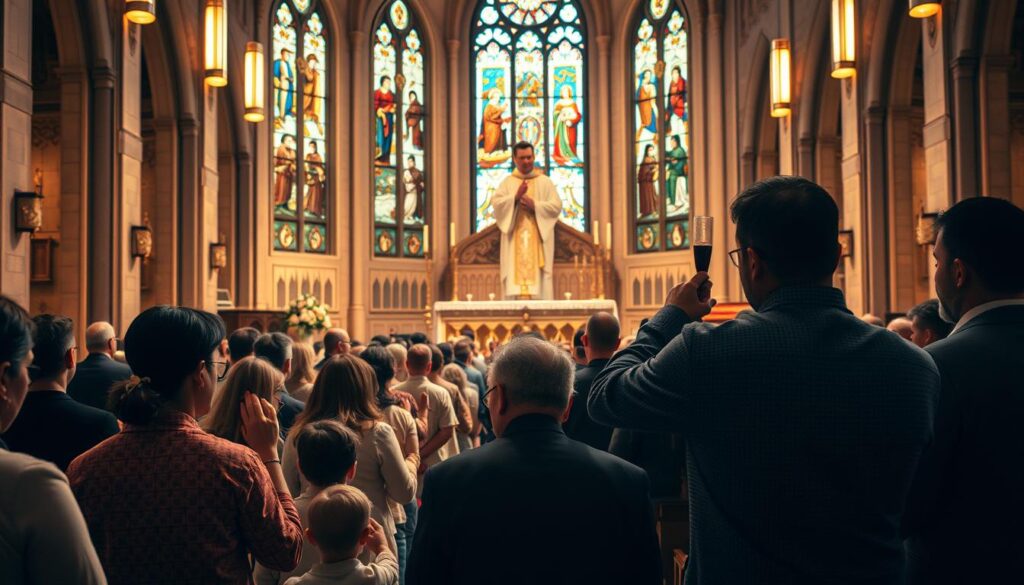
From bustling cities to remote villages, believers share a common rhythm in their spiritual lives. The celebration of Mass creates a universal heartbeat, connecting diverse cultures through identical prayers and rituals. This consistency lets travelers instantly recognize the sacred pattern, whether they’re in Chicago or Kinshasa.
Daily Devotion and Global Unity
Many Catholics start their mornings at Mass, seeking strength through the holy communion. Church law requires receiving the Eucharist yearly, but most do so weekly or daily. “The Mass isn’t just obligation,” says Maria, a nurse from Miami. “It’s how I plug into something bigger than myself.”
Preparation often includes fasting and reflection. Before approaching the altar, believers examine their hearts through prayer. This practice maintains reverence while making the presence of Christ accessible in modern routines.
| Location | Liturgical Element | Shared Practice |
|---|---|---|
| New York | Consecration prayers | Identical wording worldwide |
| Rome | Scripture readings | Same texts each day |
| Rural Africa | Communion procession | Universal reverence shown |
Educational programs help believers deepen their understanding. Parishes offer classes explaining how the Christ Eucharist bridges ancient tradition with contemporary life. Teens learn to see beyond the ritual’s surface to its transformative core.
Outside Mass, many engage in Eucharistic adoration. They sit quietly before the consecrated host, finding peace in what they call a “spiritual recharge.” This modern devotion complements the central celebration, extending its impact into daily living.
The Role of Sacraments in Catholic Life
Sacraments shape the spiritual journey of believers through visible signs of divine grace. These sacred acts mark key moments in a life of faith, creating stepping stones toward deeper connection with God. Three rites stand as milestones: initiation through Baptism, commitment in Confirmation, and ongoing nourishment in the Eucharist.
Baptism, Confirmation, and the Eucharist Connection
The journey begins at Baptism. Here, water and the Holy Spirit cleanse the soul, welcoming individuals into God’s family. Confirmation later strengthens this bond through anointing—a personal “yes” to living out one’s faith.
These sacraments find their fullest expression in the Eucharist. Through consecrated body and blood, believers receive strength for daily challenges. This sacred meal isn’t just a ritual—it’s a living encounter with Christ’s presence.
Together, these practices form a spiritual ecosystem. They transform ordinary moments into celebrations of divine love. Whether at a baptismal font or altar rail, Catholics discover unity through shared sacraments that transcend time and culture.
FAQ
What does the Eucharist represent in Catholic belief?
The Eucharist is seen as the “source and summit” of Catholic worship. It symbolizes Jesus’ sacrifice and his ongoing presence among believers. Through consecrated bread and wine, Catholics believe they receive Christ’s body and blood spiritually and sacramentally.
How is the Last Supper connected to modern practices?
The Last Supper, described in the Gospels, is the foundation of the Eucharistic celebration. Jesus’ words, “This is my body… this is my blood,” are repeated during Mass. This act links worship today to the events of Holy Thursday, emphasizing unity with Christ and the Church.
What does “transubstantiation” mean?
Transubstantiation refers to the belief that during Mass, the bread and wine become Christ’s body and blood while retaining their physical appearance. This doctrine, rooted in medieval theology, underscores the mystery of faith in the Real Presence.
Why is John 6 important for understanding the Eucharist?
In John 6, Jesus states, “Whoever eats my flesh and drinks my blood has eternal life.” This passage is central to Catholic teaching on the necessity of the Eucharist for spiritual nourishment and union with Christ. Early Church Fathers also cited it to defend the Real Presence.
How do sacraments like Baptism relate to the Eucharist?
Baptism initiates individuals into the Church, making them eligible to receive the Eucharist. Confirmation strengthens their faith, preparing them to fully participate in Eucharistic celebrations. Together, these sacraments form a spiritual journey toward deeper communion with God.
How do modern Catholics approach the Eucharist?
Many Catholics today emphasize personal reflection and community connection during Mass. Practices like Eucharistic adoration or retreats help deepen devotion. Pope John Paul II’s encyclical Ecclesia de Eucharistia also encouraged renewed reverence for this sacrament in daily life.