The Roman Catholic Church stands as one of humanity’s oldest and most influential institutions. For over 2,000 years, this global faith has shaped art, laws, and cultural values across continents. Today, it remains a cornerstone of spiritual life for 1.3 billion people worldwide.
Rooted in the teachings of Jesus Christ, Catholicism combines ancient traditions with a structured approach to worship. The pope guides followers through matters of faith and morality, supported by a network of clergy. This unique blend of history and hierarchy makes the religion distinct among Christian denominations.
Understanding Catholic beliefs unlocks deeper appreciation for Western achievements. Gothic cathedrals, classical music, and literary masterpieces like Dante’s Divine Comedy all reflect its spiritual influence. Even non-religious studies of philosophy or ethics often trace back to Catholic thought.
This guide explores core aspects of the faith without persuasion or bias. You’ll learn how traditions developed, why certain practices endure, and how Catholicism interacts with modern life. Whether you’re curious about religious history or seeking cultural context, this overview provides clear answers.
Key Takeaways
- World’s largest Christian denomination with 1.3 billion followers
- Led by the pope from Vatican City since ancient times
- Shaped Western art, architecture, and philosophy
- Combines scripture with centuries of theological study
- Maintains unified global practices despite cultural diversity
What Catholicism Means: Exploring “what catholicism”
At its core, the religion known as Catholicism represents unity across time and space. The term itself comes from the Greek katholikos, meaning “universal.” Early followers used this word to describe faith practices shared by all Christians, not just specific groups.
https://www.youtube.com/watch?v=p-MYs-sKXNM&pp=ygUTYmFsdGltb3JlIGNhdGVjaGlzbQ%3D%3D
Defining Catholic Identity
Modern Catholic identity rests on four pillars called the “Four C’s.” These foundations guide both beliefs and daily practices for Roman Catholics worldwide:
| Pillar | Description | Purpose |
|---|---|---|
| Creeds | Apostles’ and Nicene statements of faith | Unify core teachings |
| Councils | 21 global meetings since 325 AD | Address emerging things |
| Canon | Scriptures plus Apocrypha texts | Guide spiritual growth |
| Catechism | Modern teaching handbook | Explain complex doctrine |
The Essence of Being Catholic
True membership in the catholic church isn’t about cultural habits or family traditions. It’s about actively embracing these four pillars through study and practice. While rituals like the Rosary matter, they support the deeper framework of Roman Catholicism rather than define it.
This approach allows diverse people worldwide to share common spiritual ground. From Brazil to the Philippines, the same core principles shape local worship styles while maintaining global unity.
The Historical Roots and Evolution of the Catholic Church
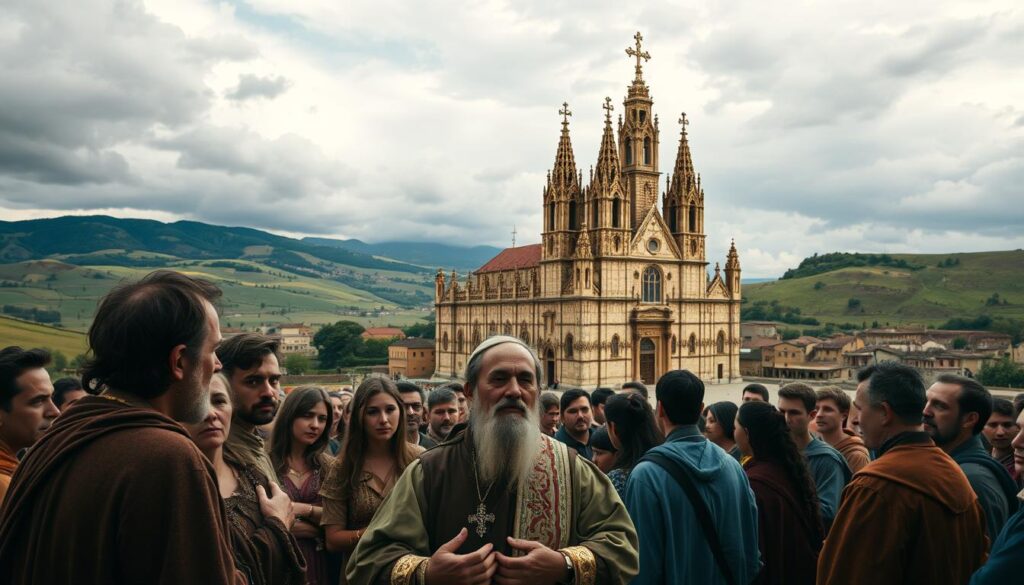
From humble beginnings in ancient Judea, a spiritual movement transformed world history. The Roman Catholic Church emerged through centuries of growth, adapting to cultural shifts while preserving core teachings from Jesus Christ and his apostles.
Evolving from the Apostolic Era
First-century followers faced persecution yet spread their message across the Roman Empire. Key figures like Peter and Paul shaped early churches, with tradition holding that Peter became Rome’s first bishop. As the Acts of the Apostles concludes: And thus we came to Rome
(Acts 28:14).
Three factors solidified Rome’s leadership role:
- Martyrdoms of Peter and Paul in the city
- Political importance as imperial capital
- Unifying responses to theological disputes
The New Testament reveals evolving structures to maintain unity. By the 2nd century, Bishop Irenaeus noted Rome’s special authority, stating its traditions come down to our own time through the successions of bishops.
Over years, this framework expanded into today’s global institution. What began as scattered house churches became coordinated communities sharing sacraments and creeds – the Roman Catholic Church in its earliest form.
Key Figures, Councils, and Milestones in Catholic History
Throughout its long journey, the Roman Catholic Church has been shaped by visionary leaders and decisive gatherings. These pivotal moments reveal how spiritual vision and collective wisdom forged lasting traditions.
Architects of Faith
Charlemagne’s crowning as Holy Roman Emperor in 800 AD strengthened ties between political power and papal authority. Centuries later, St. Francis of Assisi championed humility through his Franciscan order, proving spiritual renewal often comes from unexpected places.
St. Gregory the Great expanded the pope’s influence during the 6th century, establishing patterns for medieval leadership. Modern reformers like St. John XXIII surprised the world by convening Vatican II – the most recent ecumenical council that reimagined worship practices.
Turning Points in Doctrine
Twenty-one global gatherings have addressed critical matters of belief since 325 AD. These assemblies created unified responses to challenges while preserving core teachings.
| Council | Year | Impact |
|---|---|---|
| Nicaea I | 325 | Defined Christ’s divinity |
| Trent | 1545-63 | Reformed church practices |
| Vatican II | 1962-65 | Modernized engagement |
From the Council of Jerusalem in Acts 15 to contemporary meetings, these gatherings show how Roman Catholicism balances ancient roots with evolving understanding. Together, leaders and councils built a living tradition that continues guiding millions today.
Core Beliefs and Doctrinal Foundations
Central to Catholic identity are timeless principles that guide both thought and action. These foundations blend ancient wisdom with practical spirituality, creating a roadmap for daily life and eternal hope.
The Role of Creeds and Traditions
The Apostles’ Creed serves as a spiritual anchor, summarizing core beliefs in twelve concise statements. Catholics recite this during baptism and Sunday liturgy, reinforcing shared truth across generations. As St. Augustine observed: The creed is learned by listening; it is kept by believing.
Sacred traditions complement scripture through practices like Lenten fasting and Marian devotions. These rituals form a living chain connecting modern worshippers to early Christians. They answer theological questions scripture alone leaves open, maintaining doctrinal clarity through changing times.
Sacraments and Spiritual Practices
Seven sacred rituals mark key moments in a Catholic’s journey. Baptism initiates spiritual rebirth, while the Eucharist – called source and summit
of faith – transforms bread into Christ’s body through transubstantiation. This literal interpretation distinguishes Catholic doctrine from other Christian views.
Other sacraments include reconciliation for moral renewal and marriage as a lifelong covenant. Each channels divine grace, acting as spiritual milestones. Together, they create a framework for experiencing God’s presence in ordinary moments – from birth to final anointing.
The Role of the Papacy and Church Leadership
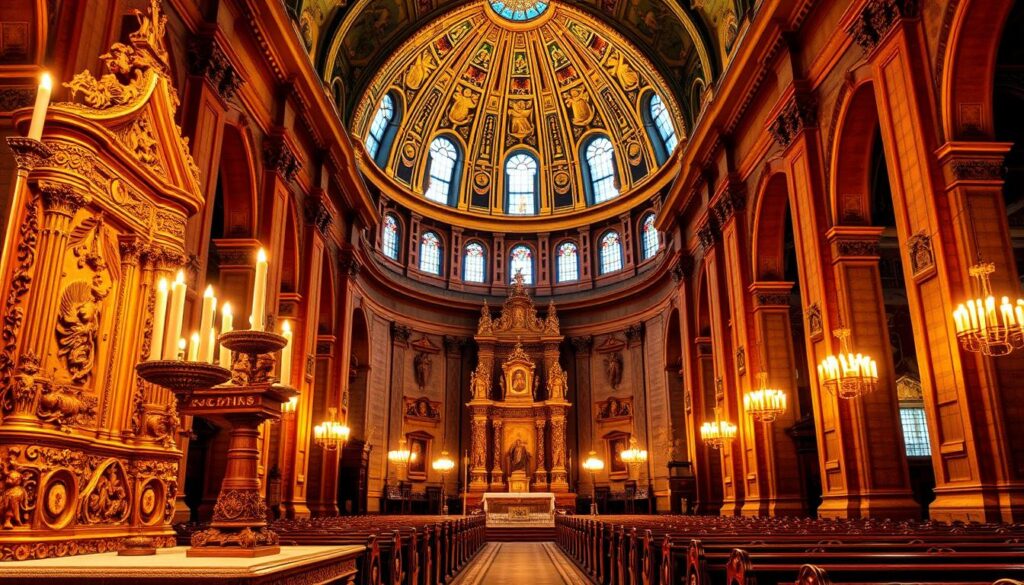
Guiding over a billion believers requires a unique blend of spiritual vision and organizational structure. At the heart of this system stands the pope, who serves as both spiritual leader and head of Vatican City – the world’s smallest sovereign state.
Papal Authority and Infallibility
The Roman Catholic Church teaches that the pope inherits Saint Peter’s authority as Christ’s earthly representative. While daily decisions may involve human judgment, papal infallibility applies only during rare doctrinal declarations made ex cathedra
(from the chair of Peter).
This special role was formally defined in 1870. It’s been used just once since then – in 1950, when Pius XII declared Mary’s bodily Assumption into heaven. As one Vatican theologian notes: Infallibility protects truth, not personalities.
Hierarchical Structure of the Church
Three tiers of clergy maintain global operations:
| Level | Role | Jurisdiction |
|---|---|---|
| Pope | Universal shepherd | Entire Church |
| Cardinals | Advisors & papal electors | Global regions |
| Bishops | Diocesan leaders | Local territories |
| Priests | Sacramental ministers | Parishes |
| Deacons | Service-oriented helpers | Communities |
The Roman Curia acts as the Church’s administrative body, managing everything from liturgy to global missions. This system allows the Roman Catholic Church to address modern challenges while preserving 2,000 years of tradition.
Scripture, Catechism, and Canonical Tradition
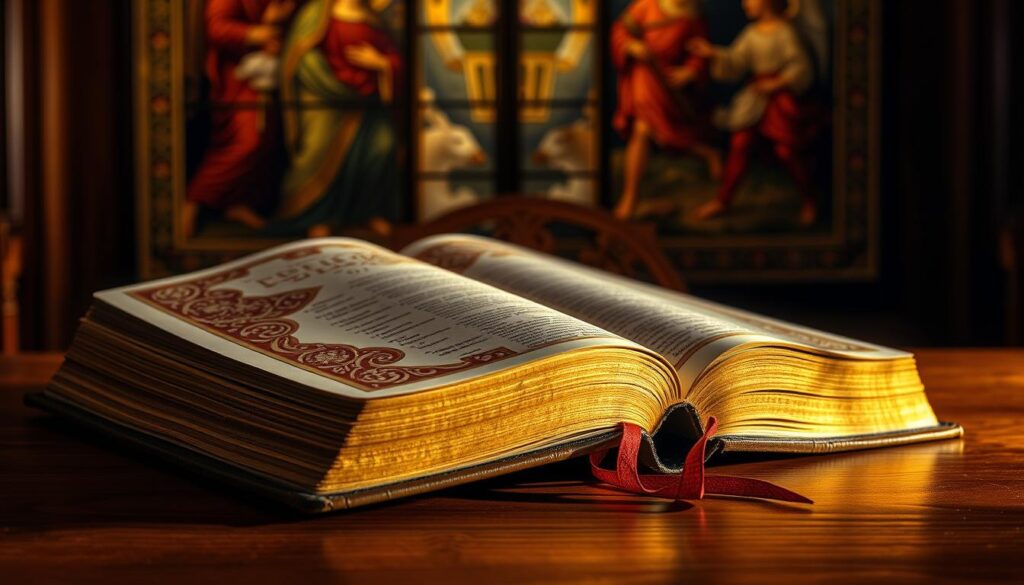
Sacred texts and teaching tools form the bedrock of Catholic spiritual life. The Catholic Church approaches biblical interpretation through a unique blend of scripture, traditions, and authorized teachings – a threefold approach distinguishing it from other Christian denominations.
Understanding the Canon and Biblical Foundations
While Protestant Bibles contain 66 books, the Catholic Church recognizes 73 – including Tobit and Maccabees. These additional texts, called deuterocanonical works, became part of official scripture after Pope Innocent I confirmed the canon in 405 AD.
The New Testament itself hints at early structures of authority. First Timothy 6:20 urges believers to guard what has been entrusted to you
, reflecting apostolic efforts to preserve unified teachings. This scriptural basis supports the Church’s view that tradition and leadership work alongside the Bible.
The Importance of the Catechism
Since 1992, the Catechism of the Catholic Church has served as the primary reference for doctrine. Pope John Paul II called it a sure norm for teaching the faith
, updating centuries of theological thought into modern language.
Earlier guides like the Baltimore Catechism used question-and-answer formats to teach generations of American Catholics. Today’s materials balance systematic instruction with practical applications in liturgy and daily life. Both approaches demonstrate how the Church transmits timeless truths across changing eras.
Comparative Perspectives: Catholicism and Other Christian Traditions
Christian traditions share common roots but have developed distinct paths over centuries. While all affirm core teachings about Jesus Christ, differences in practice and belief reveal rich diversity within the faith.
Roots of Division and Dialogue
The Roman Catholic Church and Eastern Orthodox churches parted ways in 1054 over papal authority and theological nuances. A key dispute centered on whether the Holy Spirit proceeds from both the Father and the Son – a clause still shaping communion practices today.
Five centuries later, Protestant reformers challenged Roman Catholics on scriptural interpretation and church governance. These movements emphasized personal faith over institutional structures, creating new worship styles while retaining sacramental elements like baptism.
Modern ecumenical efforts seek common ground on doctrine and social issues. Yet differences persist in how traditions approach leadership roles, sacraments, and sources of spiritual authority. Understanding these distinctions helps explain why Eastern Orthodox and Protestant churches maintain separate identities while sharing core Christian beliefs.
Through dialogue and shared service, many Roman Catholics now find ways to collaborate with other Christians. This evolving relationship highlights both unity in essential teachings and diversity in expressing faith.
FAQ
How does the Catholic Church define its relationship with the state?
The Church teaches that faith and civil governance should coexist respectfully, promoting moral values while respecting secular authority. Historical agreements like concordats often formalize this balance.
What role do bread and wine play in Catholic Communion?
During the Eucharist, bread and wine become the Body and Blood of Christ through transubstantiation, a core belief rooted in Jesus’ Last Supper. This sacrament unites believers spiritually.
How has the Catholic Church influenced family life and traditions?
Catholic teachings emphasize marriage as a sacred covenant and encourage rituals like baptism, Sunday Mass, and feast days to strengthen family bonds through shared faith practices.
What distinguishes Roman Catholicism from Eastern Orthodox traditions?
Key differences include papal authority, the Filioque clause in the Nicene Creed, and liturgical practices. The Great Schism of 1054 formalized their separation over jurisdiction and doctrine.
Why is the Council of Trent significant in Church history?
Trent (1545–1563) reformed clergy education, clarified doctrines like justification, and countered Protestant critiques. It shaped modern Catholic liturgy and sacramental theology.
How does the Church address modern social issues?
Guided by natural law and Scripture, it advocates for human dignity on topics like poverty, immigration, and bioethics. Recent popes, including Francis, emphasize mercy and dialogue.
What is the Catholic stance on clergy celibacy?
Celibacy for Latin Rite priests reflects devotion to serving God and the Church. Eastern Catholic Churches allow married clergy, showing diversity within global traditions.
How does the Vatican interact with the United States?
The Holy See maintains diplomatic ties, addressing shared goals like religious freedom and humanitarian aid. U.S. bishops also guide local practices while aligning with Rome.
Are Catholic doctrines open to change over time?
Core teachings (e.g., Trinity, Resurrection) remain unchanged. Practices and disciplines, like liturgy or fasting rules, can adapt under the Pope’s guidance to meet cultural needs.
Why is Latin still used in Catholic liturgies?
Latin preserves unity and tradition, especially in official documents. Post-Vatican II, vernacular languages dominate Mass, but some communities retain Latin for its historical richness.