For over 2,000 years, sacred traditions have shaped how millions find meaning in their spiritual journeys. This guide walks you through timeless principles that answer life’s deepest questions – from humanity’s purpose to our eternal destiny. Whether you’re exploring your roots or discovering new perspectives, we’ll break down complex ideas into relatable insights.
The foundation of this faith traces back to Jesus’ words to Peter: “You are the rock.” This moment birthed a global community united by shared values. At its heart lies the Nicene Creed, a concise summary of divine truths about God’s nature and humanity’s relationship with the divine.
You’ll see how ancient scriptures connect to modern life in American parishes. We’ll explore how grace influences daily choices and why rituals like communion remain central to worship. Each concept is presented with warmth, respecting personal journeys while celebrating universal connections.
By the end, you’ll grasp how these teachings influence everything from family traditions to social outreach. This isn’t just about memorizing doctrines – it’s about discovering a living framework that guides actions, relationships, and hope.
Key Takeaways
- The Nicene Creed outlines essential truths about God’s triune nature
- Jesus’ commission to Peter established the Church’s spiritual authority
- Teachings emphasize both divine grace and human cooperation
- Sacred rituals bridge historical events with modern practice
- Core principles address contemporary ethical and social questions
- Faith journeys are personal yet connected to global traditions
Introduction to Catholic Faith and Beliefs
At the heart of spiritual practice lies a structure that blends ancient wisdom with modern life. The four interconnected dimensions – understanding truth, ethical living, sacred worship, and personal prayer – form a roadmap for those seeking deeper connection. These elements work like puzzle pieces, fitting together to reveal a complete picture of spiritual growth.
Overview of Core Principles
The Church’s teachings flow from a simple truth: “God meets us where we are.” Sacred texts and traditions act as guideposts, helping believers navigate life’s challenges. Through sacraments and community, individuals find practical ways to live out their convictions while staying rooted in historical continuity.
Consider the Catechism, which organizes teachings into clear categories. It’s not just a rulebook – it’s a love letter from generations past, offering timeless answers to contemporary questions about purpose and belonging.
Purpose of the Ultimate Guide
This resource bridges centuries-old traditions with today’s fast-paced world. You’ll discover how Sunday rituals connect to Monday decisions, and why ancient prayers still resonate in smartphone-filled lives. The Church’s role as guardian of divine revelation becomes clearer through real-world examples.
Whether you’re curious about sacraments or social justice, this guide illuminates connections between doctrine and daily choices. It’s designed to help you see faith not as a static set of rules, but as a living relationship that grows richer with understanding.
Foundations in Scripture and Sacred Tradition
Imagine two rivers flowing from the same spring – one carved into stone tablets, the other carried through generations. This partnership between written revelation and living wisdom forms the bedrock of spiritual understanding. Together, they create a complete picture of divine truth that’s stood firm through changing times.
The Role of the Bible
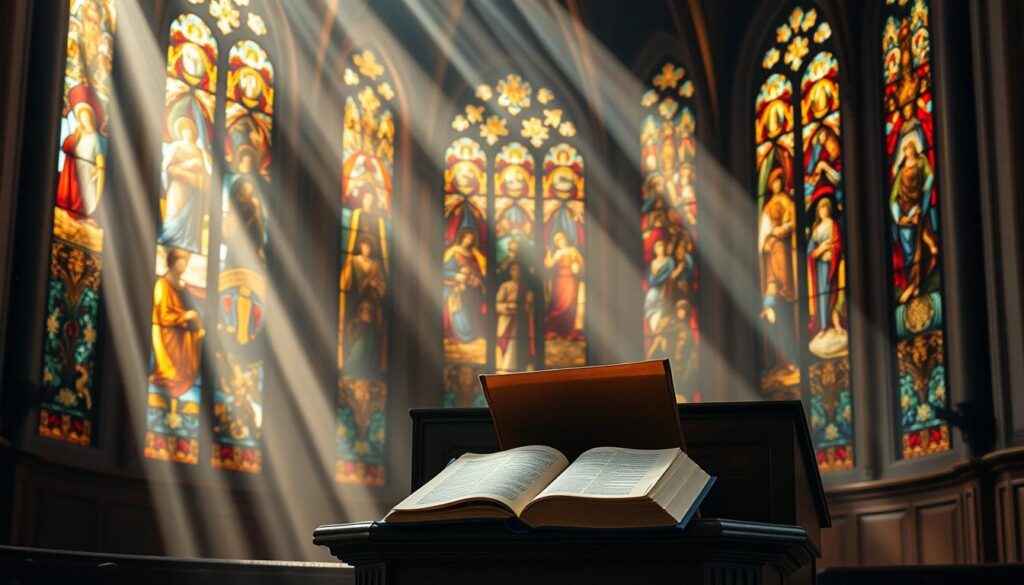
The Church treasures sacred books as God’s love letter to humanity. Early Christians faced a puzzle – with countless writings circulating, which ones truly carried divine authority? Through prayer and guidance, leaders identified 73 texts that form today’s Bible. This careful selection process ensured every book aligns with apostolic teaching.
Value of Sacred Tradition
Not everything Jesus taught made it into print. Oral teachings passed from apostles to bishops preserved essential truths about worship and community life. Think of Tradition as a family recipe shared through demonstration – its power lies in lived experience. This source of wisdom helps interpret Scripture within changing cultural contexts.
| Aspect | Scripture | Tradition |
|---|---|---|
| Source | Written texts | Oral teachings |
| Transmission | Preserved texts | Lived practices |
| Role | Divine authority | Practical guidance |
| Preservation | Monastic libraries | Church leadership |
This dual foundation explains why personal Bible study and Church guidance work together. When facing modern ethical questions, believers draw from both history’s written record and timeless communal wisdom. The result? A faith that’s deeply rooted yet vibrantly alive.
Exploring catholicism core beliefs
Two ancient declarations unite millions in worship worldwide. These concise summaries of shared conviction help believers articulate their deepest spiritual commitments. Let’s explore how these texts shape both personal devotion and communal identity.
Nicene Creed Explained
Developed in 325 AD, this statement clarifies essential truths about one God in three persons. Its famous opening lines declare:
“I believe in one God, the Father almighty, maker of heaven and earth…”
This creed addresses early misunderstandings about Christ’s divine nature. You’ll hear it recited at Sunday Mass, connecting modern worshippers to fourth-century Christians.
Apostles’ Creed Overview
Shorter and older, this version anchors baptismal promises. Parents and godparents affirm:
“I believe in God, the Father almighty, creator of heaven and earth…”
Its simplicity makes it ideal for teaching children and newcomers. Both texts work like spiritual anchors – memorizable yet profound.
| Feature | Nicene Creed | Apostles’ Creed |
|---|---|---|
| Length | Detailed | Concise |
| Focus | Divine Trinity | Basic Teachings |
| Usage | Sunday Mass | Baptisms |
| Origin | 4th Century | 2nd Century |
These declarations remain vital because they balance clarity with depth. Whether whispered in hospital rooms or proclaimed in cathedrals, they give voice to faith that transcends time and culture.
The Central Role of Jesus Christ in Catholic Doctrine
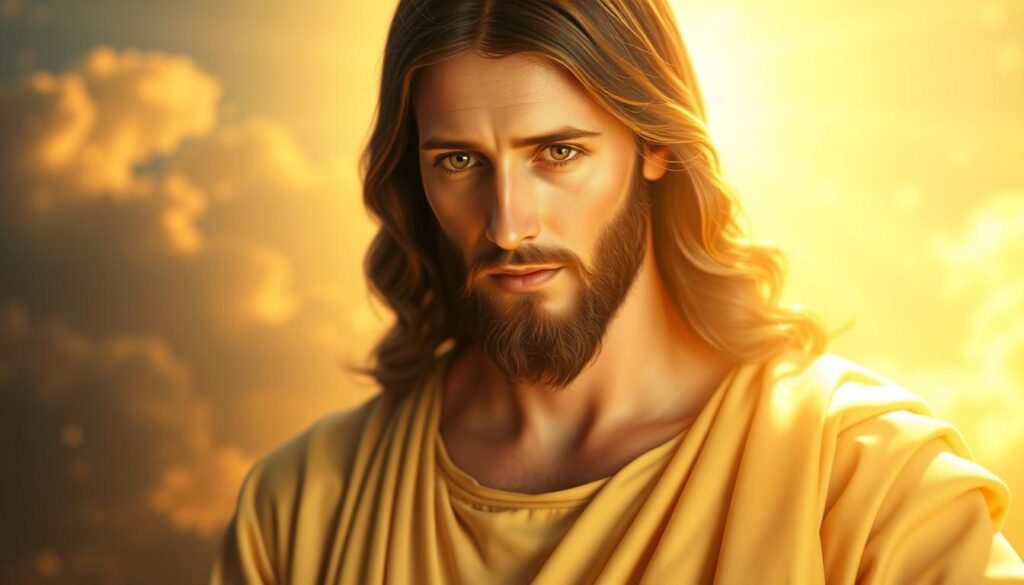
The story of a humble birth in Bethlehem echoes through centuries as a cornerstone of spiritual identity. At the center stands Jesus Christ – understood as both fully divine and genuinely human. This dual nature forms the heartbeat of spiritual practice, offering believers a relatable guide who walked earth’s dust yet reigns in heaven’s glory.
The Incarnation and Redemption
When “the Word became man”, divinity embraced human frailty. This act wasn’t symbolic – it meant God experienced hunger, joy, and sorrow firsthand. Through his suffering, Jesus transformed pain into a pathway for salvation, proving love’s power to redeem even the darkest situations.
His crucifixion wasn’t defeat but victory. By taking humanity’s brokenness upon himself, he bridged the gap between people and their Creator. This sacrifice offers hope that no mistake is beyond healing when met with genuine faith.
Resurrection and Ascension
The empty tomb changed everything. Christ’s resurrection wasn’t a metaphor but a physical reality witnessed by hundreds. It confirms that death has no final say, giving believers courage to face life’s toughest challenges.
Forty days later, Jesus ascended – not to abandon humanity but to prepare an eternal home. He remains present through sacraments and prayer, a constant companion in daily struggles. As the Son of God, he intercedes for all who seek truth, proving divine care never fades.
Understanding this central doctrine helps believers see their worth through heaven’s eyes. Every teaching ultimately points back to Christ’s example – inviting all to live with purpose, compassion, and unshakable hope.
Experiencing the Holy Spirit in Daily Life

Like a gentle breeze shaping a sailboat’s course, the Holy Spirit moves through ordinary moments with quiet power. This divine presence isn’t confined to grand miracles – it whispers through daily choices, relationships, and quiet reflections. Believers discover guidance in unexpected places, from workplace dilemmas to family conversations.
Gifts That Transform Ordinary Moments
The Spirit offers seven gifts that act like spiritual tools. Wisdom helps prioritize what matters most, while counsel clarifies tough decisions. These gifts aren’t mystical superpowers – they’re practical aids for modern life.
| Gift | Purpose | Daily Application |
|---|---|---|
| Understanding | Grasp deeper truths | Resolving conflicts |
| Fortitude | Courage in trials | Facing health challenges |
| Piety | Deepen worship | Finding joy in prayer |
| Fear of the Lord | Respect divine love | Making ethical choices |
Through sacraments like Confirmation, the Catholic Church invites members to embrace these gifts fully. Water in baptism and wine in communion become channels of grace, making sacred moments tangible.
Ever feel nudged to call a friend or help a stranger? That’s the Spirit’s quiet voice. By learning to recognize these prompts, faith becomes an active partnership. Over time, this awareness reshapes routines into journeys of spiritual growth.
Understanding the Sacraments in Catholicism
Seven sacred practices bridge the gap between divine grace and everyday life. These encounters use simple elements like water, bread, and words to make spiritual truths tangible. From newborn babies to aging grandparents, they mark life’s pivotal moments with sacred meaning.
Baptism and Reconciliation
Baptism acts as a spiritual reset button. Water washes away original sins, welcoming individuals into a global family. Later, reconciliation offers ongoing renewal – like a heart-to-heart talk with a trusted friend who offers both forgiveness and practical advice for growth.
The Eucharist and Other Sacraments
At Sunday Mass, ordinary wheat and grapes become extraordinary nourishment. The Eucharist isn’t symbolic – it’s considered Christ’s real presence. Five other sacraments address life’s needs: healing the sick, uniting couples, and empowering leaders. Each practice works through God’s power, not human perfection.
These sacraments transform routine actions into divine encounters. They answer our deepest needs – for belonging, healing, and purpose – proving sacred moments aren’t confined to ancient history.
FAQ
What role does the Bible play in Catholic teachings?
The Bible is central to the Catholic faith as God’s inspired Word. It guides worship, moral decisions, and understanding salvation history. Catholics also rely on Sacred Tradition to interpret Scripture within the Church’s teachings.
Why are the Nicene and Apostles’ Creeds important?
Both creeds summarize essential truths, like belief in the Trinity, Jesus’ resurrection, and the Church’s mission. They unite Catholics globally during Mass and affirm shared faith in God’s promises.
How do sacraments like Baptism shape a Catholic’s life?
Baptism cleanses original sin and initiates a person into the Church. Sacraments like Reconciliation and the Eucharist offer grace, healing, and deeper connection to Christ’s sacrifice for spiritual growth.
What does the Resurrection mean for Catholics today?
Jesus’ victory over death offers hope for eternal life. It reassures believers that suffering and death are not final, inspiring courage to live with love and purpose.
How does the Holy Spirit influence daily choices?
The Holy Spirit provides wisdom, strength, and discernment through gifts like fortitude and piety. Catholics pray for guidance to act with charity and align their lives with God’s will.
Why is the Eucharist called the "source and summit" of faith?
The Eucharist brings Catholics closest to Jesus through His Body and Blood. It nourishes souls, unites communities, and strengthens commitment to serve others as Christ taught.