Let’s explore one of humanity’s oldest and most vibrant spiritual paths. Unlike many belief systems, this tradition thrives as a dynamic network of practices rather than a rigid set of rules. Its beauty lies in how it intertwines philosophy, art, and daily life across countless communities.
The term “Hindu” first appeared through outsiders’ perspectives. Ancient Chinese and Persian travelers used it to describe people living near the Indus River. Over time, this label grew into a shared identity for diverse regional customs.
Today, over a billion people worldwide connect with these traditions. That’s nearly 15% of humanity! What unites them isn’t a single holy book or leader, but a shared cultural heritage that values personal spiritual exploration.
From colorful festivals to quiet meditation, practices vary widely. Some focus on loving devotion to deities, while others prioritize philosophical inquiry. This flexibility lets the tradition evolve while keeping ancient wisdom alive.
Key Takeaways
- Represents a family of interconnected customs rather than a single organized faith
- Originated as a geographical term before becoming a cultural identifier
- Engages over 1 billion followers globally through adaptable practices
- Blends spiritual beliefs with artistic expression and community values
- Encourages both devotional worship and philosophical questioning
Overview of the Hindu Faith & Its Global Impact
Across continents and cultures, a vibrant spiritual tradition shapes lives from Mumbai to Manchester. With over 1.2 billion followers worldwide, it stands as the third-largest belief system globally. Nearly 80% of India’s population and 90% of Nepal’s citizens maintain these practices, keeping ancient customs alive in modern society.
The United Kingdom showcases this tradition’s adaptability. Over 840,000 people there identify with these customs—1.5% of the population. Many British followers trace roots to Gujarat or Punjab, often through families who first settled in East Africa or Caribbean nations.
Diaspora communities thrive through cultural preservation and innovation. Temples double as community hubs, while festivals like Diwali light up cities from London to Los Angeles. These groups often excel in education and business, blending traditional values with contemporary success.
Global influence extends beyond temples and rituals. Yoga studios, meditation apps, and plant-based diets now shape wellness trends worldwide. This living tradition continues evolving, proving ancient wisdom can find fresh relevance in every corner of the world.
Historical Roots: From the Indus Valley to the Vedic Period
Journey back 4,500 years to uncover the origin of spiritual practices still thriving today. Along the Indus River’s fertile banks, one of humanity’s first urban cultures built cities with stunning precision.
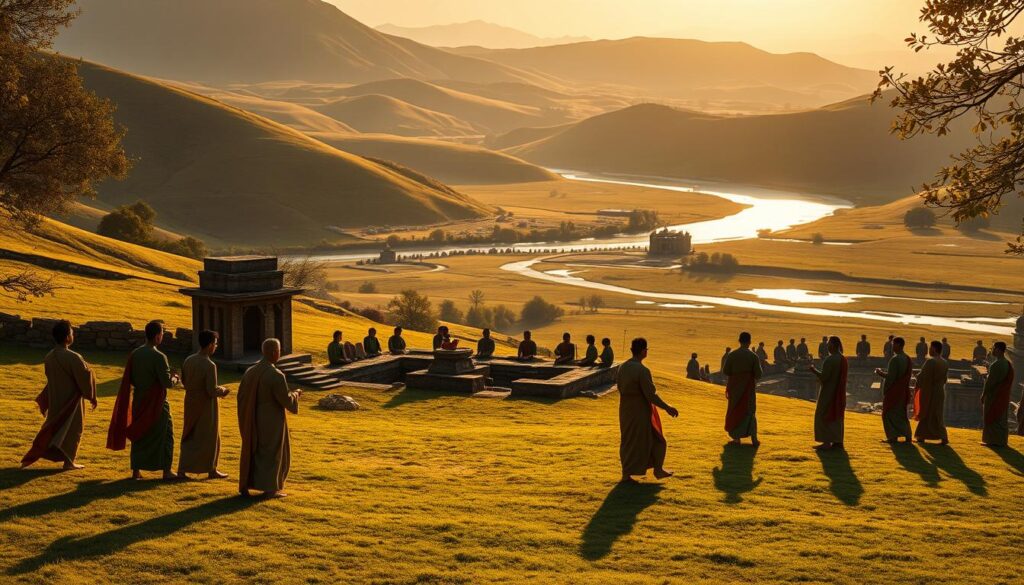
Indus Valley Civilisation and Early Rituals
Mohenjo-Daro’s streets tell silent stories through baked-brick houses and advanced drainage systems. The star attraction? A 39-foot-long bathing pool – the Great Bath – hinting at early rituals tied to water purification.
Clay seals show horned figures surrounded by animals. Some archaeologists think these might represent early divine forms. Small female figurines suggest mother goddess worship – practices echoing through traditions millennia later.
Transition to Vedic Religion and Cultural Continuity
Around 1500 BCE, new spiritual expressions emerged. Fire became central to sacred ceremonies. People gathered around blazing altars, offering grains and chanting verses now preserved in the Rigveda.
This time introduced key concepts like cosmic order (rta) and sacred sound. The Vedic world had three realms – earth, atmosphere, and sky – each home to different deities receiving smoke-borne offerings.
These developments didn’t erase earlier practices. Instead, they wove ancient water rituals into new fire ceremonies, creating spiritual threads still visible in modern worship.
Understanding the hinduism religion: Core Beliefs and Practices
At the heart of this ancient tradition lies a dynamic trio of concepts shaping daily choices and cosmic perspectives. These principles guide ethical living while answering life’s biggest questions about purpose and existence.
The Principles of Dharma, Karma, and Reincarnation
Dharma acts as life’s compass—it’s about doing what’s right for your stage of life and social role. Think of it as maintaining universal balance through everyday actions rather than rigid beliefs.
The law of karma reminds us every choice matters. Good deeds create positive ripples, while harmful actions bring challenges. This isn’t punishment—it’s nature’s way of teaching through experience.
Reincarnation offers a grand view of existence. Souls evolve through countless lifetimes, wearing different bodies like changing clothes. Each life presents new lessons until ultimate freedom is achieved.
Diverse Spiritual Paths and Devotional Approaches
Four main roads lead seekers toward truth. Some pour love into deity worship through song and prayer. Others seek wisdom through study or find purpose in selfless service.
Meditation fans discover peace in silent reflection. The philosophy celebrates this diversity—no single path fits all. Your neighbor might chant hymns while you volunteer at shelters, yet both fulfill dharma.
These ideas form a living framework that’s lasted millennia. They adapt to modern life while keeping ancient wisdom alive, proving timeless truths can thrive in changing times.
Deities and Divine Manifestations in Hinduism
Divine figures shape daily life for millions through stories, rituals, and personal devotion. These sacred beings represent nature’s forces, moral ideals, and cosmic principles—bridging the infinite and everyday.
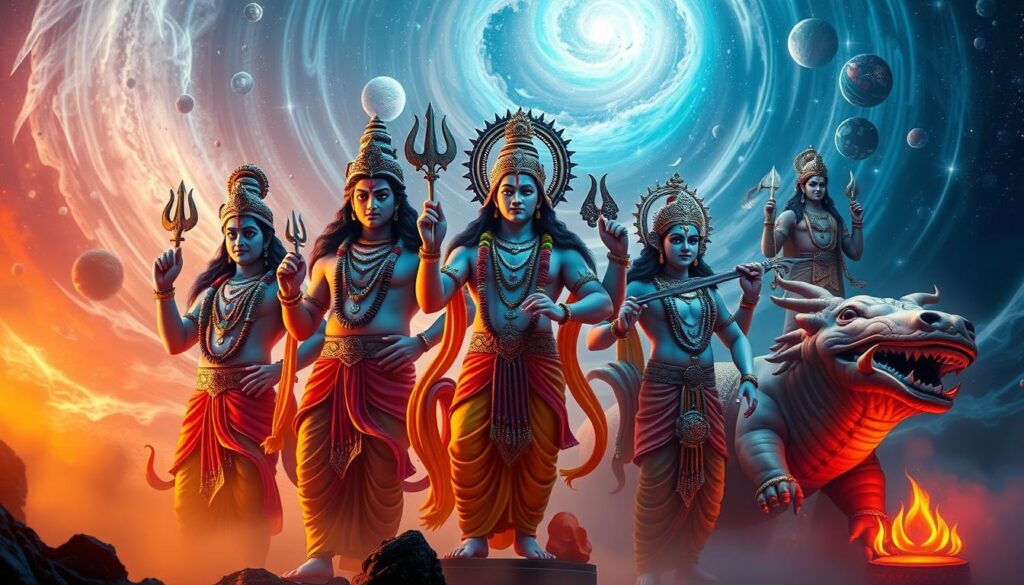
Sacred Figures Guiding Life’s Journey
Three cosmic forces form a powerful trio. Brahma sparks creation, Vishnu sustains harmony, and Shiva clears space for renewal. Together, they mirror life’s endless cycles—birth, growth, and transformation.
Goddesses command equal reverence. Devi appears as Lakshmi blessing homes with prosperity, Saraswati inspiring students, or Durga battling injustice. “The divine feminine isn’t gentle—it’s unstoppable,” explains a temple priestess from Kerala.
When the Divine Walks Among Us
Believers celebrate divine incarnations called avatars. These earthly forms appear during crises to restore balance. Krishna’s playful wisdom and Rama’s righteous leadership remain timeless guides for ethical living.
Regional customs highlight different deities. Coastal villages might honor ocean gods, while mountain communities celebrate earth goddesses. This diversity lets people connect with forms that reflect their lives and values.
From kitchen shrines to grand temples, these sacred figures make spirituality tangible. They remind followers that wisdom and grace live in every moment—if we know how to look.
Sacred Texts and Philosophical Foundations
Ancient wisdom flows through timeless writings that shape spiritual practices across generations. At the core stand the Vedas—sacred texts preserved through meticulous oral traditions for over 3,000 years. The Rig Veda, oldest among them, contains hymns still recited today with near-perfect accuracy.
These works are called shruti, meaning “heard” knowledge believed to originate from cosmic vibrations. Unlike human-authored guides, they form an unbroken thread connecting modern seekers to ancient sages. Later writings like the Upanishads explore profound ideas about consciousness and universal truth through poetic dialogues.
The Mahabharata and Ramayana epics bring philosophy to life through gripping stories. Families worldwide share tales of prince Rama’s exile or warrior Arjuna’s dilemmas. Within the Mahabharata lies the Bhagavad Gita—a 700-verse masterpiece offering practical advice for balancing duty and spiritual growth.
| Text | Time Period | Key Contribution |
|---|---|---|
| Rig Veda | 1200-900 BCE | Oldest hymns & rituals |
| Upanishads | 800 BCE-200 CE | Philosophical explorations |
| Bhagavad Gita | 500-200 BCE | Ethical living guide |
| Ramayana | 500-100 BCE | Moral storytelling |
Modern adaptations keep these works relevant. The Bhagavad Gita inspires business seminars, while Ramayana plays attract stadium crowds. This living tradition proves ancient texts can speak to every era—if we listen closely enough.
Diverse Traditions and Denominations in Hinduism
Four main spiritual paths reveal how ancient practices adapt to modern lives. Each offers unique ways to connect with the sacred while sharing common roots in timeless wisdom.
Paths of Devotion and Practice
Vaishnavism leads in numbers with 640 million followers globally. Devotees focus on Vishnu and beloved forms like Krishna. Daily rituals often include chanting mantras and studying sacred texts under guidance.
Shiva-centered traditions thrive through meditation and symbolic worship. Followers honor the cycle of creation and destruction through fire ceremonies and yoga practices. Many find meaning in balancing worldly life with spiritual growth.
Shaktism stands out by celebrating divine feminine energy. Temples feature powerful goddess forms that inspire courage and creativity. This path particularly resonates with those seeking to honor nature’s life-giving forces.
The Smartism approach values philosophical exploration. Followers may honor multiple deities while emphasizing personal ethics and scriptural study. This tradition often appeals to those who appreciate structured rituals with deep symbolic meanings.
These living traditions show how shared values blossom into distinct practices. From chanting communities to eco-conscious temples, they prove spiritual journeys can take countless forms while heading toward common truths.
FAQ
What are the origins of Hindu practices?
Early rituals trace back to the Indus Valley Civilisation, with fire ceremonies and reverence for nature. Over time, these blended with Vedic traditions, forming a spiritual framework centered on cosmic order and devotion.
How do concepts like karma shape daily life?
Actions (karma) influence future outcomes, encouraging ethical choices. Dharma guides moral duties, while reincarnation reflects the soul’s journey toward liberation (moksha). These ideas inspire personal growth and social harmony.
Which deities are most widely worshipped?
Vishnu (preserver), Shiva (transformer), and Devi (divine feminine) are central. Avatars like Krishna and Rama also play key roles, embodying virtues and intervening in human struggles.
What texts form the foundation of Hindu philosophy?
The Vedas outline rituals, while the Upanishads explore metaphysics. The Bhagavad Gita discusses duty and devotion, and epics like the Mahabharata and Ramayana share moral stories.
How do traditions like Shaivism differ?
Shaivism focuses on Shiva as supreme, while Vaishnavism emphasizes Vishnu. Shaktism honors Devi’s energy, and Smartism integrates multiple deities. Each path offers unique rituals and teachings.
Why are temples and puja significant?
Temples serve as spiritual hubs, hosting rituals that connect devotees to the divine. Puja (worship) involves offerings, prayers, and hymns, fostering personal bonds with deities.
How does caste influence social structures?
Historically linked to occupation, the caste system shaped roles in society. Modern interpretations emphasize equality, though debates about its impact continue in communities today.
Are vegetarianism and non-violence required?
Many avoid meat to honor ahimsa (non-harm), but practices vary. Some traditions permit select foods, reflecting regional customs and personal interpretations of sacred teachings.