Walk into many Christian worship spaces, and you’ll immediately notice a central symbol overhead or behind the altar. This emblem isn’t just decoration—it’s a visual declaration of faith. For certain Christian traditions, the design leans toward simplicity, reflecting a theological focus on spiritual truths over ornate artistry.
During the Reformation, leaders emphasized returning to core biblical principles. This shift influenced everything from teachings to symbols. The removal of figurative elements from the cross became a deliberate choice, symbolizing Christ’s victory rather than His suffering. This distinction remains visible in many congregations today.
Why does this matter? The empty cross serves as a reminder of resurrection hope. Unlike other interpretations, it shifts attention from death to life. This design choice also connects to debates about how faith communities express beliefs through visual elements.
From jewelry to architecture, this symbol bridges personal devotion and collective identity. It unites diverse denominations under shared values while allowing room for individual expression. Understanding its history helps explain why it continues to resonate with millions.
Key Takeaways
- The empty cross emphasizes resurrection over suffering, reflecting core Protestant theology.
- Reformation-era debates about religious imagery shaped modern symbol usage.
- Simplified designs connect to biblical focus and rejection of excessive decoration.
- This symbol unites various denominations while respecting their differences.
- Modern applications range from worship spaces to personal faith expressions.
The Historical Origins and Early Evolution of Christian Crosses
Long before becoming a universal emblem, Christian symbols whispered faith through clever disguises. Early believers facing persecution in Rome’s catacombs hid their devotion in plain sight. They etched anchors and boat sails into stone walls—ordinary objects masking sacred shapes.
Early Christian Use and Catacomb Symbolism
These hidden designs served dual purposes. They helped communities identify safe gathering spots while avoiding Roman scrutiny. The fish symbol (ichthys) also gained popularity during this era, though cross imagery remained subtler.
By the fifth century, open displays emerged as Christianity gained acceptance. The crucifix—literally “fixed to a cross”—became a distinct symbol. Unlike earlier abstract forms, it depicted Christ’s body, emphasizing sacrifice over secrecy.
The Shift During the Reformation and Protestant Iconoclasm
Medieval artisans transformed crucifixes into intricate artworks. Gold-leafed figures showed bleeding wounds and anguished expressions. “These images were meant to stir hearts,” notes a historian, “not just decorate walls.”
Reformers later sparked fiery debates. While Martin Luther kept crucifixes in worship spaces, John Calvin demanded their removal. Some followers took hammers to church art, believing physical representations distracted from spiritual truths.
Surprisingly, most non-Lutheran groups avoided cross displays until recent decades. A 1904 church council declared: “Empty walls best reflect empty tombs.” This mindset shifted gradually as communities sought visual anchors for modern faith.
Symbolism and Theological Debate in Christian Iconography
Visual symbols in faith traditions often spark deep debates about spiritual meaning. These discussions shaped how communities express beliefs through art and architecture. Let’s explore why certain designs became points of contention.
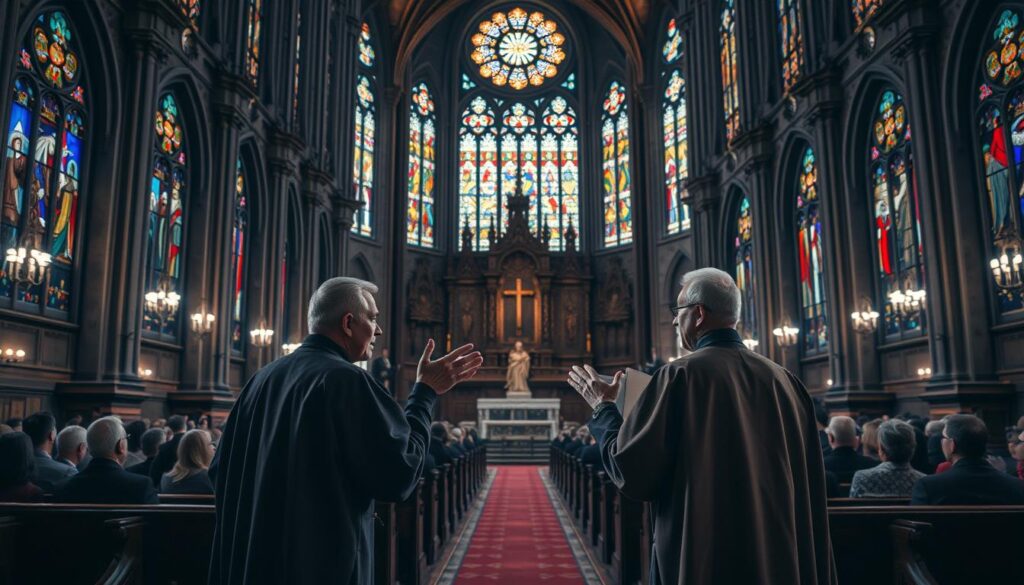
Protestant Objections to the Crucifix
Many reformers argued empty crosses better reflect core Christian teachings. Their first concern? Showing Christ’s body implies He remains on the cross, not resurrected. “Why fixate on death when we celebrate life?” asked one 16th-century theologian.
Second, they pointed to Exodus 20:4’s warning against crafted images. Carved figures risked becoming idols, distracting from pure devotion. This belief led some groups to remove all human depictions from worship spaces.
Third, reformers sought to distance themselves from Catholic practices. Ornate crucifixes symbolized institutional power they rejected. Simpler designs became markers of theological independence.
The Role of Images in Worship and Religious Integrity
Reformation debates went beyond theology. Critics slammed lavish church decorations as vanity projects for wealthy donors. Gold-plated art seemed to prioritize showmanship over sincerity.
Some medieval crucifixes drew crowds seeking miracles. Reformers saw this as spiritual tourism, not true faith. They advocated spaces where scripture and preaching took center stage.
| Aspect | Reformer View | Traditional View |
|---|---|---|
| Christ’s Depiction | Empty cross (resurrection) | Crucifix (sacrifice) |
| Art’s Purpose | Distraction from truth | Aid for devotion |
| Worship Focus | Scripture & speech | Visual symbolism |
These ideas still shape many modern worship spaces. Stark walls and simple furniture reflect ongoing commitments to spiritual clarity. Yet some congregations now blend tradition with innovation, finding new ways to honor ancient truths.
Exploring the “protestant church cross” in Contrast with the Crucifix
Visual faith statements take distinct forms across Christian traditions. The most striking difference appears in how communities present the central symbol of their belief.
Historical Differences and Reformation Influences
A cross crucifix displays Christ’s body, while an empty version focuses on resurrection. Reformers saw this distinction as vital. “Why dwell on agony,” argued Ulrich Zwingli, “when victory’s already won?”
This thinking led many groups to remove figures from worship spaces. They preferred clean lines that pointed to Easter morning rather than Good Friday.
Visual and Artistic Representations in Churches and Art
Walk into most protestant churches, and you’ll spot simple crosses in architecture and decor. The Latin style dominates, its longer vertical beam symbolizing humanity reaching toward divinity.
Some congregations use Greek crosses with equal arms, representing balance between earthly and heavenly concerns. These designs avoid decorative flourishes, keeping attention on symbolic meaning.
| Feature | Empty Cross | Crucifix |
|---|---|---|
| Focus | Resurrection | Sacrifice |
| Common Use | Reformed traditions | Catholic/Lutheran spaces |
| Artistic Style | Minimalist | Figurative |
This visual language extends beyond buildings. Jewelry choices often reflect theological leanings—empty christ cross pendants proclaim living hope rather than suffering.
Modern designers continue reimagining this ancient symbol. Yet the core message remains: life triumphs over death, purpose over pain.
Conclusion
Faith communities throughout history have shaped their visual language through spirited debates. What began as Reformation-era arguments about crucifixes evolved into a lasting symbol of hope. The shift from ornate depictions to simple designs wasn’t merely artistic—it embodied living hope over sorrow.
Early reformers saw empty crosses as declarations of resurrection truth. Their stance against crafted figures stemmed from New Testament principles and concerns about idolatry. This perspective transformed worship spaces, prioritizing scripture over sensory stimulation.
Today’s simplified crosses in many churches reflect centuries of theological refinement. They quietly affirm Christ’s victory while honoring Reformation-era calls for clarity. Yet these symbols also bridge generations, connecting modern believers to ancestral faith journeys.
Differences in Christian imagery remind us that shared beliefs can inspire diverse expressions. Whether simple or elaborate, each design points to the same life-changing story. Understanding these variations deepens appreciation for how communities honor sacred truths across time.
FAQ
Why do some Christian traditions avoid using crucifixes?
Many Reformers emphasized Christ’s resurrection over His suffering, leading to a preference for the empty cross. They believed it better reflected the New Testament’s focus on victory over death rather than dwelling on physical pain.
How did the Reformation change the way crosses were displayed?
During the Reformation, leaders like Luther and Calvin discouraged elaborate religious art, fearing it might distract from scripture. This led to simpler designs in worship spaces, focusing on Scripture and communal prayer rather than visual symbols.
What’s the difference between a cross and a crucifix in art?
A crucifix shows Jesus’ body, highlighting His sacrifice, while an empty cross symbolizes His resurrection. This distinction reflects theological priorities—some traditions prioritize hope and new life, while others emphasize remembrance of suffering.
Are images ever used in Protestant worship spaces today?
Yes, though cautiously. Many congregations use stained glass, banners, or simple crosses as reminders of faith. The key difference lies in avoiding imagery that could be seen as idolatrous or diverting attention from biblical teachings.
Did early Christians always use the cross as a symbol?
No! Early believers often used subtle symbols like fish or anchors to avoid persecution. The cross became widespread after Emperor Constantine’s conversion in the 4th century, evolving into a central symbol of Christian identity.