A seismic shift in religious thought reshaped Europe during the 1500s. Sparked by growing dissatisfaction with certain practices, this era saw bold thinkers challenge long-held traditions. At its core was a push for direct engagement with faith, prioritizing individual interpretation over rigid hierarchies.
The movement began when a German monk publicly questioned common teachings, igniting debates across nations. His critiques of practices like indulgences resonated with both ordinary people and political leaders. This wasn’t just about theology—it became a catalyst for social change and cultural evolution.
What made this transformation possible? Printing technology allowed ideas to spread faster than ever before. Local rulers saw opportunities to assert independence from central powers. Meanwhile, everyday believers sought more meaningful connections to their spirituality.
Key Takeaways
- Religious reforms of the 1500s emphasized personal faith over institutional authority
- Political alliances and new technologies accelerated the spread of revolutionary ideas
- Key figures risked persecution to redefine Christian practices and beliefs
- The movement adapted to regional needs as it expanded beyond its German origins
- Lasting impacts include modern concepts of individual conscience and accessible scripture
Historical Roots of the Protestant Movement
England’s journey toward religious independence began with simmering tensions and bold thinkers. Long before major reforms, scholars questioned how spiritual authority should work. Disputes over money and power between English leaders and the pope had brewed for 200 years.
Early Reform Influences and Humanism
John Wycliff lit the first sparks in the 1300s. He translated scripture into English, arguing that God’s word mattered more than institutional teachings. Centuries later, Erasmus brought fresh ideas to Cambridge. His work on Greek Bible texts trained thinkers who’d reshape England’s spiritual relationship with Rome.
| Key Figure | Contribution | Impact |
|---|---|---|
| John Wycliff | First English Bible translation | Made scripture accessible |
| Erasmus | Humanist scholarship | Trained reform-minded leaders |
| Cambridge Circle | Spread Luther’s concepts | Prepared ground for change |
England’s Gradual Distancing from Rome
Money conflicts planted early seeds of separation. When church funds flowed to Rome for years, local leaders grew uneasy. By 1520, Luther’s writings reached Cambridge’s “little Germany” group. Future archbishops here would later craft the church england‘s new direction.
Printing presses turbocharged these ideas. For the first time, ordinary people could read religious content themselves. This shift from Latin to everyday language changed how communities practiced faith.
Development of the protestant church 16th century
October 31, 1517, marked the beginning of a transformative era in Christianity. A German monk named Martin Luther nailed his 95 Theses to a local chapel door, questioning practices like paid forgiveness. This act became the catalyst for redefining spiritual relationships across Europe.
From Luther’s 95 Theses to a New Religious Order
Luther’s document argued salvation came through faith alone—not payments to religious institutions. He rejected the idea that people needed intermediaries to connect with divine grace. “Why does the pope not empty purgatory for love’s sake?” Luther challenged, highlighting contradictions in traditional doctrine.
The printing press turned these ideas into wildfire. Luther’s works spread 3x faster than previous religious texts. By 1525, his writings made up 1/3 of all German-language books. This accessibility let ordinary believers engage directly with scripture for the first time.
| Practice | Catholic Approach | Protestant Change | Impact |
|---|---|---|---|
| Salvation | Earned through deeds | Gift through faith | Personal responsibility |
| Scripture | Latin-only | Local languages | Wider participation |
| Leadership | Central hierarchy | Local governance | Regional diversity |
New communities formed around shared beliefs rather than geographic loyalty. Worship shifted from rituals to sermons explaining biblical texts. This freedom to interpret faith personally became a cornerstone of emerging traditions.
Key Figures and Their Reformation Ideas
Visionary leaders ignited a spiritual revolution that redefined faith across continents. These reformers didn’t just challenge authority—they reshaped how millions understood spirituality. Their teachings sparked debates, inspired movements, and created lasting divisions within Christianity.
Martin Luther’s Revolutionary Impact
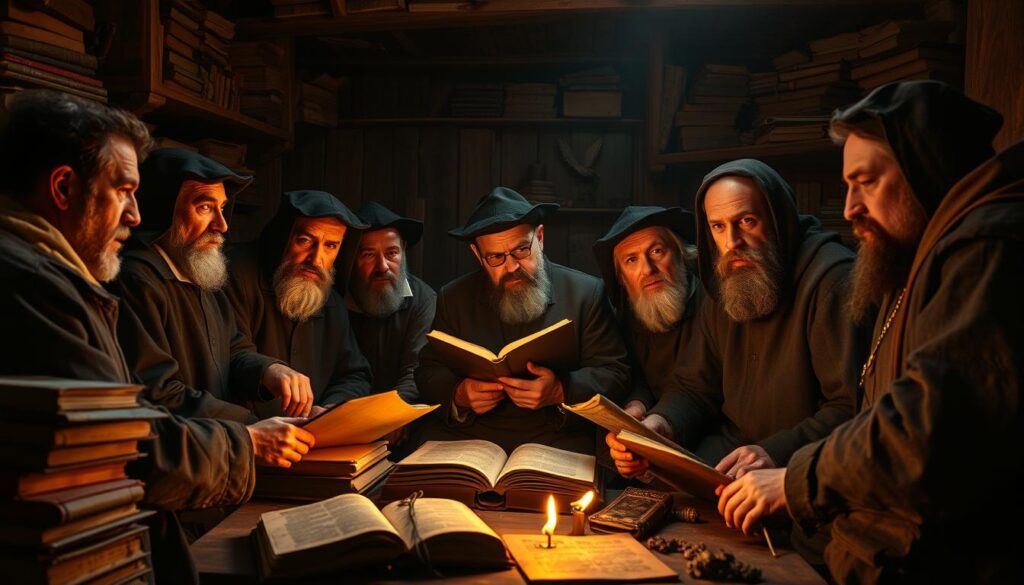
A German monk’s bold act in 1517 changed history. Martin Luther questioned payment-based forgiveness systems, declaring salvation came through faith alone. His famous defense at the 1521 Diet of Worms—“I cannot and will not recant”—made him an outlaw but cemented his legacy.
John Calvin, Zwingli, and Other Reformers
While Luther sparked change, John Calvin built systems. His Geneva-based theology emphasized God’s absolute power and predestination. Swiss leader Huldrych Zwingli took different approaches, viewing communion as symbolic rather than literal.
| Reformer | Key Doctrine | Lasting Impact |
|---|---|---|
| Luther | Faith-based salvation | Lutheran traditions |
| Calvin | Predestination | Reformed churches |
| Zwingli | Symbolic rituals | Swiss church models |
Radical groups like the Anabaptists pushed further, rejecting infant baptism. Their ideas about voluntary faith membership influenced later Baptist movements. Each leader’s unique background shaped Europe’s religious map forever.
Political and Social Impacts on Church and State
A royal love affair sparked England’s most dramatic power shift. When Henry VIII sought to annul his marriage to Catherine of Aragon in 1527, the pope‘s refusal set history on a new course. This personal crisis became a national transformation, reshaping spiritual authority across the realm.
Breaking Bonds With Rome
The king‘s determination to secure a male heir led to unprecedented action. Parliament’s 1534 Act of Supremacy declared Henry “the only Supreme Head on Earth of the Church of England.” This bold move transferred control from Rome to the throne, creating a religious structure answering directly to the crown.
Monastic institutions faced dissolution between 1536-1540. Over 800 monasteries closed, their lands enriching the royal treasury. Former monks found new roles as parish priests or pensioners—a seismic shift in spiritual matters and economic power.
Crafting a Hybrid Faith System
Henry’s reforms created a unique blend of traditions. While rejecting papal authority, the Church of England kept many Catholic practices. This balancing act satisfied neither hardline reformers nor traditionalists, but it cemented the king‘s control over both state and soul.
Resistance carried grave risks. Statesman Thomas More lost his life for refusing to endorse Henry’s marriage to Anne Boleyn. His stand highlighted the high stakes in this fusion of personal ambition and national policy—a legacy that still shapes church-state relations today.
Major Doctrinal Shifts and Liturgical Changes
England’s spiritual landscape transformed dramatically under young rulers and visionary thinkers. A series of reforms reshaped worship from mysterious Latin rites to communal English services. This revolution in religious life made faith accessible while preserving familiar traditions.
Transformation of Worship Practices and Doctrines
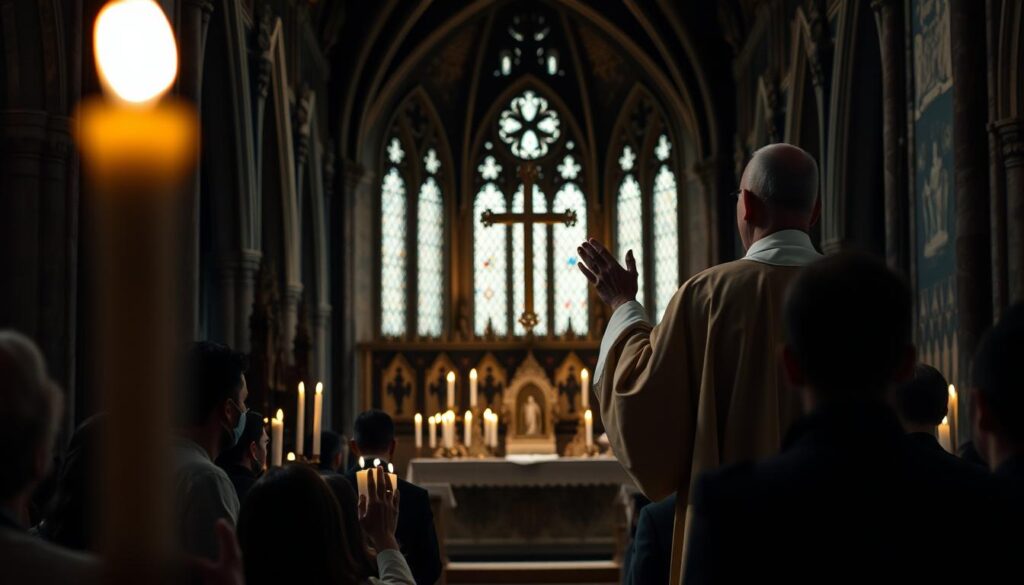
Thomas Cranmer’s 1549 Book of Common Prayer turned rituals into conversations. For the first time, congregations heard marriage vows and funeral rites in their native tongue. The shift from stone altars to wooden communion tables visually rejected catholicism‘s sacrificial symbolism.
Simplified services focused on scripture rather than elaborate ceremonies. Parishioners now received bread and wine during communion—a radical break from medieval beliefs. These changes sparked debates but gradually became England’s new spiritual norm.
The Influence of the 42 and 39 Articles
Elizabeth I’s 1559 settlement crafted a unique way forward. The 39 Articles (1571) blended Calvinist ideas with traditional structures. This compromise allowed the church england to stand apart from both Rome and Geneva.
| Document | Key Feature | Impact |
|---|---|---|
| 42 Articles (1552) | Denied purgatory | Clarified Protestant doctrine |
| Book of Common Prayer | English liturgy | Standardized worship |
| 39 Articles (1571) | Middle path | Defined Anglican identity |
By retaining bishops but rejecting papal authority, the church england created a lasting model. Historians note this balance helped stabilize a nation weary of religious turmoil. The Articles remain foundational to Anglican doctrine today.
The Reformation’s Influence on People and Society
While reshaping spiritual landscapes, the Reformation era left deep marks on everyday lives through both conflict and creativity. Communities faced upheaval but also gained new ways to express faith and identity.
Cultural Legacy and the Pursuit of Religious Freedom
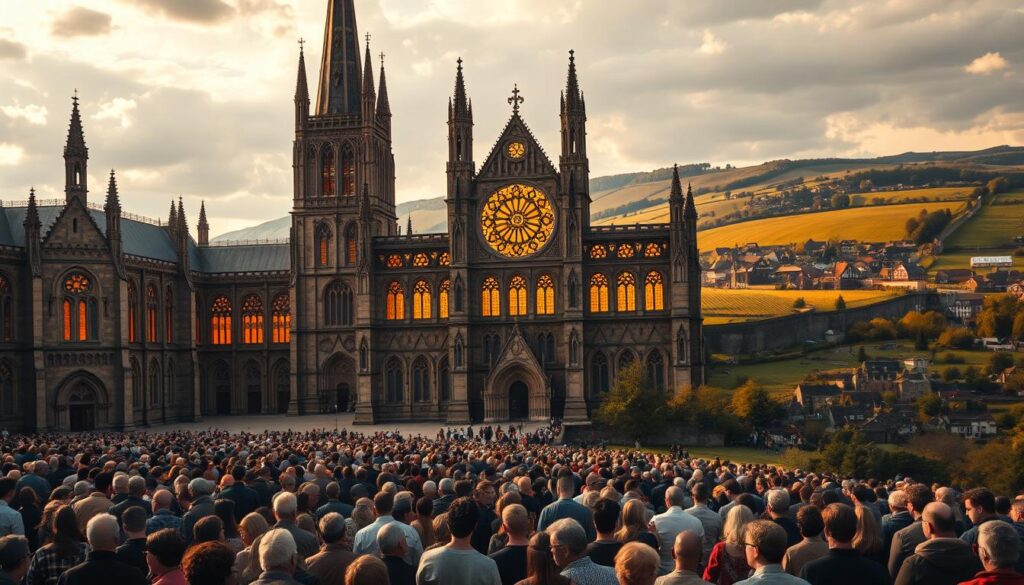
The Thirty Years’ War (1618-1648) showed the dark side of religious division. Historians estimate Germany lost nearly half its population—some towns vanished completely. Yet from this chaos rose stunning art and music. Johann Sebastian Bach’s compositions, for example, became timeless expressions of Lutheran devotion.
Education flourished as reformers emphasized literacy. By 1600, over 50 new universities opened across Europe. This focus on learning shaped future scientists, writers, and thinkers who valued inquiry over blind obedience.
- Baroque artists blended sacred themes with dramatic emotion
- Persecuted groups like the Pilgrims sailed to America seeking freedom
- Work ethic ideals influenced early capitalist economies
Mary Tudor’s brutal crackdown earned her the name “Bloody Mary” after 300 executions. This violence pushed many to question state-controlled faith. Over time, the idea that individuals could choose beliefs became revolutionary—a cornerstone of modern democracies.
From church music to college classrooms, the movement’s echoes still resonate. Its mix of tragedy and progress reminds us how ideas can both divide and uplift societies.
Conclusion
The religious upheaval of the 1500s reshaped societies in ways we still feel today. What began as calls for reform within existing structures blossomed into enduring traditions that value personal conviction. This transformative era taught us how ideas about faith can rewrite political systems and cultural norms.
Leaders who challenged the Catholic Church left mixed legacies. Their push for accessible scripture and individual interpretation fueled education advances. Yet violent conflicts showed how spiritual power struggles could devastate nations. The movement’s paradox? Seeking unity often deepened divisions.
Modern democracies owe much to these changes. Concepts like elected leadership and personal liberties grew from debates about religious authority. Even workplace ethics and public schooling trace roots to reformers’ emphasis on literacy and moral responsibility.
As we navigate today’s complex world, the reformation reminds us that questioning traditions can spark progress—but demands wisdom. Its true legacy lies not in old conflicts, but in showing how ordinary people can reshape civilizations through conviction and courage.
FAQ
What sparked the Protestant movement in the 1500s?
Discontent with corruption in the Catholic Church, combined with thinkers like Martin Luther challenging doctrines such as indulgences, ignited reforms. Luther’s 95 Theses in 1517 became a rallying cry for change.
How did Henry VIII reshape England’s religious identity?
Henry VIII severed ties with the Pope through the 1534 Act of Supremacy, declaring himself head of the Church of England. This political move, driven by his desire for a male heir, accelerated England’s shift toward reform.
Why were Luther’s ideas considered revolutionary?
Luther emphasized salvation through faith alone, rejected papal authority, and translated scripture into vernacular languages. His teachings empowered individuals to interpret the Bible, weakening centralized religious control.
What role did John Calvin play in the Reformation?
Calvin expanded reform ideas, stressing predestination and a strict moral code. His writings, like Institutes of the Christian Religion, influenced Reformed churches and shaped communities in Geneva and beyond.
How did political leaders influence religious change?
Rulers like Henry VIII used reform to consolidate power, while German princes protected Lutherans to resist papal interference. Politics often dictated whether regions adopted Protestant or Catholic practices.
What liturgical changes occurred during this period?
Latin Masses shifted to local languages, clergy were allowed to marry, and rituals like confession were simplified. The 39 Articles later defined Anglican theology, blending Protestant and Catholic elements.
Why are the 39 Articles significant?
These doctrines, finalized in 1571, outlined the Church of England’s beliefs, rejecting transubstantiation while preserving episcopal structure. They remain foundational for Anglican identity today.
How did the Reformation impact everyday life?
It encouraged literacy through Bible access, reshaped social hierarchies, and fueled debates about individual conscience versus authority. These shifts laid groundwork for modern concepts of religious freedom.