What began as an unplanned Sunday school lesson in 1897 Brooklyn became the spark for one of Christianity’s most enduring symbols. A local pastor, Charles C. Overton, found himself without a speaker that day—so he improvised a speech about a vision for a unifying emblem representing Christian values. This idea later blossomed into the iconic design we recognize today.
The banner’s simple yet striking design carries layers of meaning. A bold red cross rests on a white background, framed by a blue square in the upper corner. These colors echo themes of sacrifice, purity, and heavenly truth—cornerstones of the faith it represents.
Overton’s concept gained momentum through collaboration with hymn writer Fanny Crosby, who helped popularize its message. By 1942, major church organizations adopted it as an ecumenical standard. Its appeal crosses denominational lines, appearing in Baptist, Lutheran, Methodist, and other congregations nationwide.
More than fabric and dye, this symbol serves as a visual reminder of shared beliefs. It bridges theological differences while honoring the core principles that unite Christian communities. From Sunday schools to global missions, its presence continues to inspire collective purpose.
Key Takeaways
- Originated from a spontaneous 1897 Sunday school address in New York
- Design elements reflect core Christian values through color symbolism
- Gained official recognition from U.S. church councils in the 1940s
- Used widely across Protestant denominations as a unifying emblem
- Collaboration between pastor Charles Overton and hymnist Fanny Crosby shaped its legacy
Introduction to the Protestant Flag
A Sunday school teacher’s creative moment in 1897 Brooklyn gave birth to a lasting emblem of spiritual connection. At Brighton Chapel on Coney Island, Charles Overton sketched ideas for a shared Christian symbol during an unplanned lecture. This brainstorming session launched a movement that would span generations.
The design combines simplicity with deep meaning. A white background represents spiritual purity, while a crimson cross recalls Jesus’ ultimate sacrifice. The blue square echoes baptismal waters and divine loyalty. These elements form what many now recognize as a universal church emblem.
| Color | Meaning | Biblical Connection |
|---|---|---|
| White | Purity | Revelation 7:14 |
| Red | Sacrifice | John 19:34 |
| Blue | Faithfulness | Numbers 15:38-39 |
Over 120 years later, this banner still unites believers. You’ll spot it in church sanctuaries, Sunday school rooms, and global mission fields. Its presence reminds communities of their shared faith foundations despite denominational differences.
What began as local inspiration became an international movement. The design’s intentional colors and shapes help Christians today visually express their spiritual commitments. From rural chapels to urban cathedrals, this symbol bridges traditions through its timeless message.
Historical Origins of the Christian Flag
A routine Sunday gathering in New York took an unexpected turn, sparking a symbol that would endure for over a century. On September 26, 1897, Brighton Chapel’s Sunday school superintendent faced an empty podium when the guest speaker missed Rally Day. Charles C. Overton transformed this challenge into a defining moment for Christian communities nationwide.

The Impact of Early Sunday School Lessons
Overton’s improvised lesson asked students to reimagine the American flag draped before them. “What would a banner representing our faith look like?” he posed. This interactive approach let young minds explore symbols reflecting their spiritual values – a teaching method still used in church education today.
The Role of Impromptu Speeches in Flag Creation
The Brooklyn educator’s spontaneous talk planted seeds for a unifying emblem. Overton spent years refining his vision from that initial brainstorm session. His ability to pivot during unplanned moments shows how authentic leadership often creates lasting change.
This New York chapel incident proves great ideas can emerge when we embrace unexpected opportunities. The Christian emblem’s journey from classroom concept to global symbol took decades, demonstrating how meaningful innovations require time to mature.
Charles C. Overton’s Vision and the Birth of the Flag
By 1907, a visionary educator and a Methodist leader joined forces to turn Sunday school inspiration into tangible reality. Charles Overton’s decade-long process reached its climax when he partnered with Ralph Diffendorfer in New York. As secretary of the Methodist Young People’s Missionary Movement, Diffendorfer brought organizational muscle to Overton’s symbolic blueprint.
Inspiration Drawn from the American Flag
The collaborators intentionally mirrored the U.S. banner’s layout to create instant recognition. “We needed something familiar yet transformative,” Overton reportedly explained. They kept the red, white, and blue palette but infused each shade with spiritual meaning:
- White fields symbolized spiritual purity and peace
- Blue squares reflected baptismal waters and heavenly truth
- Red crosses honored Christ’s sacrifice through vivid color
This strategic design resonated during a surge of ecumenical cooperation. Overton’s Sunday school background helped shape a symbol that crossed denominational lines. The emblem became a visual handshake between traditions, its colors bridging differences while celebrating shared beliefs.
New York’s church networks became early adopters, spreading the design through missionary channels. By rooting their creation in familiar patriotic imagery, the duo made it easier for diverse congregations to embrace this new unifying standard.
Design and Symbolism: Colors and Cross
Three colors and a simple shape convey profound truths through intentional design. This visual language connects believers across generations while honoring spiritual foundations. Every element works together to create what many churches consider a sacred emblem.
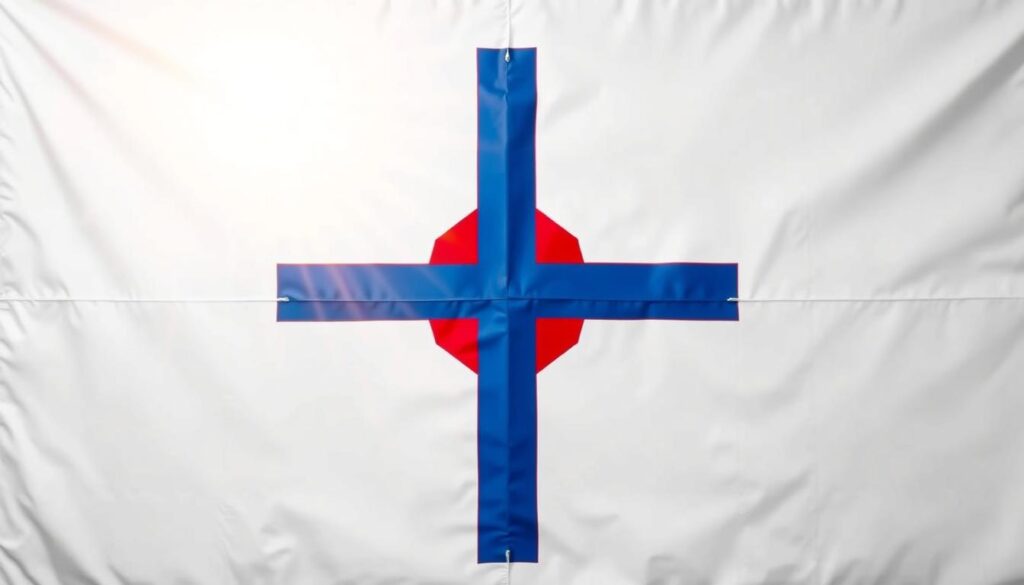
Interpreting the Red, White, and Blue
The white background forms more than just empty space. It represents spiritual purity and divine peace – qualities central to Christian teachings. This clean canvas lets other symbols shine while reminding viewers of faith’s transformative power.
Blue carries double meaning in the upper corner. Its waters reflect baptism rituals practiced in churches worldwide. The hue also symbolizes unwavering loyalty, mirroring the steadfast love described in scripture.
Crimson takes center stage with bold clarity. This specific red shade recalls the blood spilled at Calvary, making salvation tangible through color. Designers chose this vivid tone to spark immediate recognition of Christianity’s core message.
The Significance of the Latin Cross
Positioned prominently in the blue square, this cross style dominates without overwhelming. Its vertical beam points toward heaven while the horizontal arm embraces earthly concerns. This balance reflects Christ’s dual nature as both divine and human.
The cross’s color choice proves intentional. By using the same red as the sacrifice theme, designers created visual continuity. Churches appreciate how this symbol unites complex theology into one glance-worthy image.
Unlike national banners requiring precise measurements, this emblem adapts to any space. Whether displayed on small chapel walls or massive cathedral banners, its proportions remain flexible. This versatility helps diverse congregations feel ownership over their shared symbol.
The Symbolic Meanings of the Flag’s Colors
Colors speak a visual language in this sacred emblem, each hue telling part of Christianity’s foundational story. The design transforms ordinary shades into profound declarations of belief, creating what one theologian called “a stained-glass window in fabric form.”
White for Purity and Peace
The dominant white field represents spiritual cleanliness and divine harmony. It mirrors Christ’s sinless nature while symbolizing the peace believers experience through their faith journey. Many churches use this color during baptism and communion ceremonies to reinforce its sacred meaning.
This blank canvas invites personal reflection. As one pastor noted: “The white space isn’t empty—it’s room for growth in holiness.” Congregations see it as both a challenge to pursue purity and a reminder of God’s promise in Philippians 4:7.
Blue and Red as Emblems of Faith and Sacrifice
Navy blue anchors the design’s upper corner, echoing baptismal waters and eternal hope. This shade connects earthly rituals with heavenly promises, making faith tangible through color. Members often touch this section during prayers as a physical expression of trust.
The crimson cross delivers the emblem’s central message. Its bold red hue viscerally recalls Christ’s blood, transforming abstract theology into something viewers can feel. Positioned at the heart of the design, it ensures sacrifice remains the focal point of Christian teaching.
Together, these colors form a complete spiritual narrative. From cleansing white to faithful blue and sacrificial red, they guide believers through core doctrines. Churches display this chromatic story to make complex truths accessible to all ages.
Legacy and Impact of the protestantism flag
From Brooklyn classrooms to global sanctuaries, this emblem traveled with missionaries who carried their movement across oceans. By the 1930s, congregations from Nairobi to Seoul began displaying it outside their churches, creating visible connections between believers worldwide.
Latin American and African communities embraced the symbol especially fast. Mission workers reported its colors helped explain complex teachings through visual storytelling. “It became a silent teacher,” noted one Brazilian pastor in 1948. The design bridged language gaps while honoring local traditions.
| Region | Early Adoption | Cultural Adaptation |
|---|---|---|
| Africa | 1920s-1930s | Used in tribal reconciliation ceremonies |
| Asia | 1930s-1940s | Integrated with indigenous art styles |
| Europe | 1930s | Displayed during ecumenical gatherings |
Today, this movement thrives in unexpected places. Contemporary worship spaces from Lagos to Los Angeles blend the emblem with modern designs. Its presence reminds diverse churches they share foundational truths despite different practices.
The symbol’s global journey proves simple ideas can change the world. What started as a teaching tool now unites millions through color and shape. As one young believer in Kenya put it: “When I see those colors, I know I’m home.”
Display Guidelines and Flag Code
Church leaders needed clear standards to honor their sacred emblem properly. In 1938, pastor James Russell Pollock answered this need by drafting the first official display rules. His guidelines balanced respect for tradition with practical solutions for diverse worship spaces.
Protocol for Placement in Worship Spaces
The code specifies two primary locations in the sanctuary. Most churches position it at floor level outside the communion rail, to the right of the congregation. This placement ensures visibility while maintaining architectural harmony.
Alternative setups allow flexibility. Some congregations prefer mounting it on the right side of the altar or pulpit. This variation works well in sanctuaries with limited floor space or multiple focal points.
| Location | Purpose | Considerations |
|---|---|---|
| Floor level | Full visibility | Avoids blocking sightlines |
| Altar right | Symbolic prominence | Matches liturgical flow |
| Choir area | Community focus | Supports musical worship |
When displayed with the American flag, churches follow specific protocols. Both banners fly at equal heights, with the Christian emblem to the right of its national counterpart. This arrangement respects civic and spiritual commitments within the congregation.
The code’s most distinctive rule involves movement. Unlike other flags, it only dips to the cross during altar ceremonies. This practice reinforces its spiritual significance above earthly authorities.
Hymns and Pledges: Celebrating the Flag
Music became the heartbeat of this sacred emblem’s message when Fanny Crosby lent her lyrical genius to its story. Her 1903 collaboration with composer R. Huntington Woodman gave believers a powerful way to voice their allegiance through song.
The Hymn That United Voices
Crosby’s “The Christian Flag” hymn transformed fabric into poetry. Its verses invite millions to celebrate spiritual unity, with lines like “Over all the world its colors wave” painting sonic imagery of global faith. Churches still use this free-to-share composition to stir hearts during worship services.
Words That Bind Communities
Three pledge versions help congregations affirm shared values. The most popular begins: “I pledge allegiance to the Christian flag…” emphasizing service and love. Another variation focuses on Christ’s teachings, while a third highlights worldwide fellowship.
These spoken promises create moments of collective purpose. From Sunday schools to national conventions, the pledges remind millions that their hearts beat as one. Through hymns and words of allegiance, this symbol continues inspiring unity across generations.
FAQ
What does the Christian Flag symbolize?
The Christian Flag represents unity among believers, with its colors and cross symbolizing purity, peace, faith, and the sacrifice of Jesus. It’s widely used in churches and ecumenical gatherings to express shared spiritual values.
How did Sunday school lessons influence the flag’s creation?
Early Sunday school programs emphasized visual teaching tools. This inspired Charles C. Overton to propose a banner that could simplify biblical truths and foster connection among diverse congregations.
Why are red, white, and blue chosen for the flag?
White stands for purity and peace, blue represents faithfulness and truth, and red symbolizes Christ’s sacrifice. These colors echo timeless spiritual themes while aligning with familiar patriotic imagery.
What guidelines exist for displaying the flag in churches?
The flag is often placed near the pulpit or altar, respecting its sacred purpose. It should never overshadow national banners but serve as a visual reminder of devotion and shared mission.
How did Fanny Crosby contribute to the flag’s legacy?
Fanny Crosby, a renowned hymn writer, penned lyrics celebrating the flag’s message. Her work, like “The Christian Flag! Behold It,” deepened emotional ties to its symbolism in worship settings.
Are there different versions of the pledge to the Christian Flag?
Yes! While most pledges emphasize loyalty to Christ and His teachings, some congregations adapt wording to reflect their specific traditions or community values, keeping the core message intact.
What role did Charles C. Overton play in the flag’s history?
Overton’s 1897 speech sparked the idea for a unifying emblem. His vision blended faith with practical design, leading to the flag’s adoption by millions as a global symbol of spiritual unity.
How is the Latin Cross significant to the flag’s design?
The Latin Cross, positioned on a blue square, directly references Jesus’ crucifixion. It serves as a universal reminder of redemption and the foundational beliefs of the Christian faith.