Imagine a single event reshaping entire nations, sparking debates about truth, and redefining how people connect with their beliefs. That’s exactly what happened in 16th-century Europe when a bold religious movement challenged centuries of tradition. This pivotal moment didn’t just alter the course of Christianity—it laid groundwork for modern ideas about freedom and self-governance.
In 1517, a German monk named Martin Luther took a stand against practices he viewed as contradictory to scripture. His famous 95 Theses questioned the authority of religious leaders and emphasized direct engagement with sacred texts. These ideas spread rapidly, fueled by growing dissatisfaction with institutional power structures.
At its core, this movement prioritized personal conviction over rigid hierarchies. Followers believed salvation came through faith alone, not rituals or intermediaries. They also championed accessibility to religious teachings, translating the Bible into common languages so everyone could interpret it firsthand.
The ripple effects were profound. New branches of Christianity emerged, while political systems grappled with shifting alliances. Even today, principles like individual liberty and democratic governance trace their roots to these reforms. Whether you’re exploring spiritual history or cultural evolution, understanding this era reveals how ideas can transform societies.
Key Takeaways
- A 16th-century religious shift challenged traditional authority and reshaped Christianity
- Martin Luther’s critiques sparked widespread debate about scripture and practices
- Core beliefs included salvation through faith and equal access to religious knowledge
- Political and cultural changes followed, influencing modern democratic values
- Lasting impacts include diversified Christian traditions and emphasis on personal spirituality
Historical Context of the Protestant Reformation
Power dynamics between spiritual leaders and rulers shaped Europe long before reform gained momentum. By the 1500s, the Catholic Church wasn’t just a religious force—it was a political titan intertwined with kings and emperors. This alliance gave the church unmatched authority, but also planted seeds of discontent.
Origins and Catalysts in 16th Century Europe
Money and faith collided in controversial practices like indulgences. These certificates, sold as shortcuts to heaven, became cash cows for church projects. Street vendors known as pardoners often exaggerated their benefits, claiming they could erase years of suffering in purgatory. Many saw this as exploiting people’s fears.
The church’s lavish spending didn’t help. Funds from indulgence sales built grand cathedrals while ordinary folks struggled. Critics argued these actions strayed from core doctrine, creating a gap between leaders and believers.
Religious and Political Backdrop
Regional rulers grew restless under the Holy Roman Emperor’s control. When reformers challenged church power, some princes saw a chance to gain independence. Meanwhile, the printing press let new ideas spread faster than ever—like wildfire in dry grass.
This mix of spiritual frustration and political ambition created fertile ground for change. What began as debates over theology soon reshaped nations, setting the stage for a cultural earthquake.
Key Figures and Movements
Visionaries and revolutionaries drove the religious upheaval of the 1500s, each adding unique flavors to a growing movement. Their actions—from fiery debates to bold political moves—shaped how millions practiced faith.
Martin Luther and the 95 Theses
Picture an Augustinian monk hammering arguments to a church door in 1517. Martin Luther never intended to split Christianity—he wanted honest conversations about indulgences and salvation. His 95 Theses asked: “Should gold determine who enters heaven?”
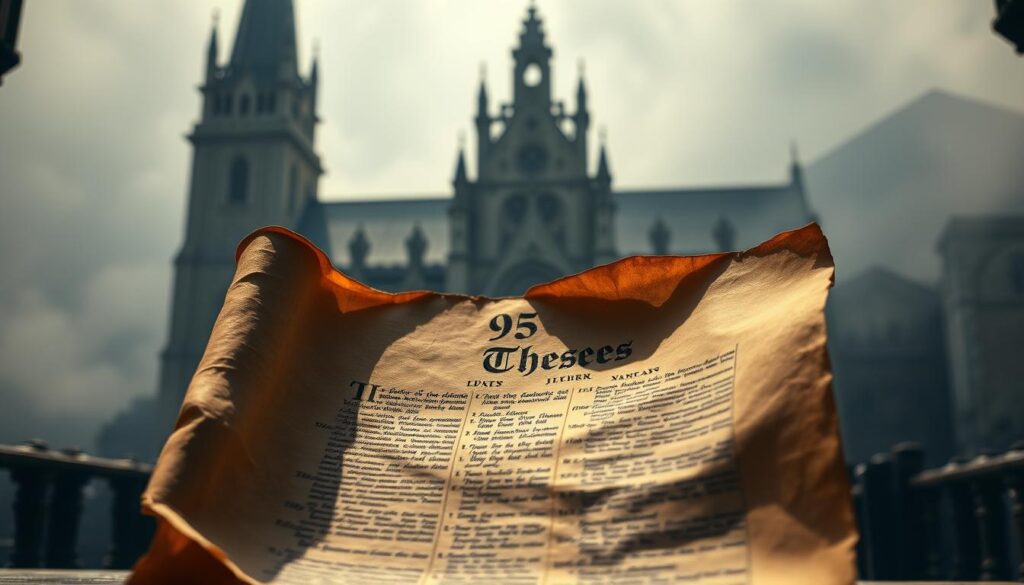
Luther’s academic critiques spread like wildfire thanks to the printing press. What began as theological debate became a rallying cry for change. By emphasizing scripture over tradition, he accidentally birthed a new branch of Christianity.
John Calvin, Henry VIII, and Beyond
While Luther stirred Germany, John Calvin built a strict moral code in Geneva. His teachings on predestination claimed God already chose who’d be saved—a idea that shaped Reformed churches for centuries.
Across the Channel, Henry VIII took a different path. When the Pope refused his divorce, the English king created his own church. This political power play proved reform wasn’t just about theology—it could also serve royal agendas.
Switzerland’s Huldrych Zwingli and radical groups like the Anabaptists pushed further. They rejected infant baptism and demanded complete separation from state control. Together, these reformers created a tapestry of beliefs that still defines many denominations today.
Exploring the protestant reformation meaning in Practice
Transformative ideas reshaped spiritual life as reformers reimagined how communities worshipped. These shifts moved beyond debates about doctrine to redefine daily religious practice. Ordinary people suddenly found themselves at the center of spiritual experiences once reserved for clergy.
Doctrinal Shifts and New Teachings
The revolutionary concept of sola fide (faith alone) turned traditional teachings upside down. Followers embraced the idea that divine grace—not rituals—secured salvation. This belief stripped away layers of institutional control, putting personal conviction front and center.
| Aspect | Traditional Approach | Reformed Perspective |
|---|---|---|
| Source of Truth | Church authority + Scripture | Scripture alone |
| Path to Salvation | Rituals + Good works | Faith + Divine grace |
| Clergy Role | Mediators | Guides |
Another groundbreaking idea—the priesthood of all believers—flattened hierarchies within church structures. Farmers could now discuss biblical passages with the same validity as bishops. This empowerment made spirituality feel accessible rather than distant.
Changing Practices Within the Church
Worship services transformed dramatically. Latin chants gave way to sermons in everyday language, letting congregations engage directly with beliefs. Hymns became communal sing-alongs rather than priestly performances.
Clergy members started families, reflecting a new view of marriage as sacred rather than secondary. Sacraments simplified to baptism and communion, focusing on essentials rather than elaborate ceremonies. These changes made religious practice feel immediate and personal.
Through these shifts, individuals built direct connections with the divine—no intermediaries required. The emphasis on personal faith and scriptural study created ripples still felt in modern spiritual life.
Church Politics: From the Catholic Church to National Churches
What happens when faith becomes a chessboard for power? The 16th century saw religious institutions and rulers redraw Europe’s spiritual map through bold political moves. Centralized authority gave way to national identities, reshaping both worship and governance.
The Role of the Catholic Church and Its Reforms
Faced with growing dissent, the Catholic Church launched its Counter-Reformation. The Council of Trent (1545-1563) became its blueprint, rejecting compromises with reformers. “If anyone says that sacraments aren’t necessary for salvation,” declared its decrees, “let them be condemned.”
New religious orders like the Jesuits emerged as intellectual warriors. Combining education with missionary zeal, they rebuilt Catholic influence globally. Their schools became hubs for training clergy and countering Protestant ideas.
| Initiative | Catholic Response | Anglican Approach |
|---|---|---|
| Leadership | Centralized Papacy | Monarch as Head |
| Scripture Access | Latin Vulgate Only | English Bible Mandated |
| Monastic Wealth | Preserved | Seized by Crown |
The Formation of the Church of England
Henry VIII’s marriage disputes sparked England’s religious revolution. His 1534 Act of Supremacy declared the king—not the pope—the authority over the English church. Monasteries dissolved, their lands filling royal coffers.
Mary I’s violent Catholic restoration backfired, earning her the nickname “Bloody Mary.” Her successor Elizabeth I crafted a middle way, blending Protestant theology with traditional rituals. This compromise stabilized the Church of England while allowing local princes greater control.
Through these changes, faith became intertwined with national identity—a legacy still visible in modern religious landscapes.
The Role of Technology and the Printing Press
Imagine information traveling faster than horseback riders for the first time in history. The printing press became the ultimate game-changer, turning theological debates into continent-wide conversations. This innovation didn’t just share ideas—it created a cultural wildfire.

Luther’s Ink-Stained Revolution
Martin Luther mastered this new media like no other. Between 1518-1525, he produced more works than 17 leading reformers combined. His secret? Writing in German instead of Latin. Farmers and shopkeepers could now debate scripture alongside scholars.
| Aspect | Pre-Printing Press | Post-Printing Press |
|---|---|---|
| Book Production | 5 pages/day | 3,600 pages/day |
| Language | Latin (10% literacy) | Vernacular (30%+ literacy) |
| Cost | Equivalent to a house | Week’s wages |
When Ideas Went Viral
Print shops multiplied to meet demand, creating Europe’s first information network. Anti-clerical cartoons spread messages to illiterate people. Authorities couldn’t burn pamphlets fast enough—copies outpaced destruction.
This symbiotic relationship between Luther and printers changed everything. For the first time, grassroots movements could challenge institutional power through mass communication. The press didn’t just spread reforms—it made them unstoppable.
Social and Cultural Impacts of the Reformation
While religious debates raged, ordinary people found themselves caught between collapsing old systems and emerging new freedoms. The clash of ideas reshaped daily life, creating both chaos and opportunity across generations.
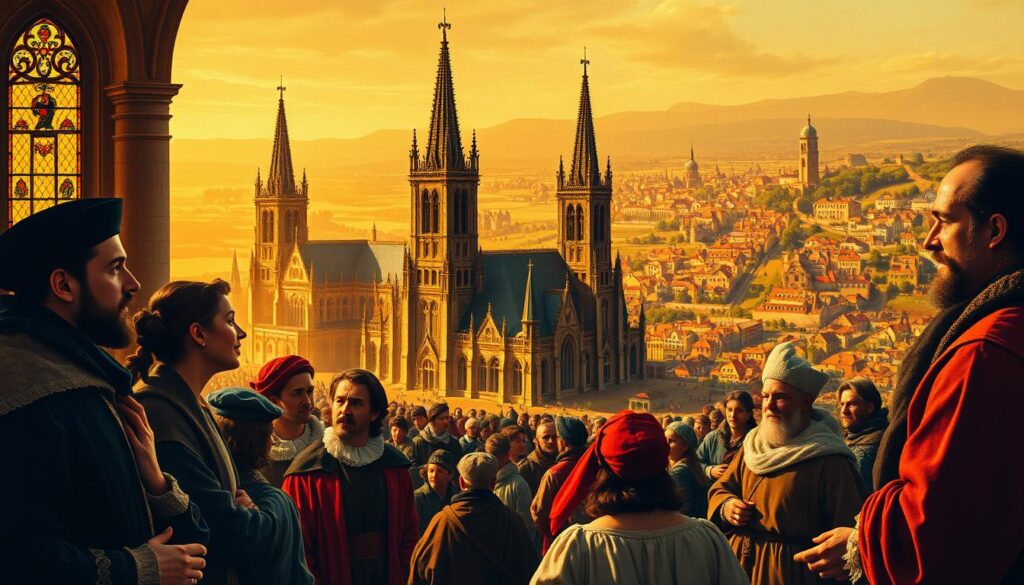
Cultural Shifts and Individual Empowerment
Decades of conflict left deep scars—the Thirty Years‘ War wiped out nearly half of Germany’s population. Yet from this turmoil came unexpected growth. Universities expanded, artists like Rubens reimagined sacred art, and Bach’s Lutheran hymns became timeless masterpieces.
New values took root in surprising ways. Dutch Calvinists saw business success as divine approval, planting seeds for modern capitalism. “A merchant’s ledger,” wrote one trader, “can honor God as much as a priest’s prayer book.”
- Literacy rates soared as Bible reading became central to faith
- Women gained educational access previously reserved for male members of elite groups
- Questioning authority became a civic duty rather than heresy
These changes rippled beyond churches. The emphasis on personal conscience laid groundwork for democratic ideals we cherish today. For the first time, many believed their individual choices shaped both earthly life and eternal destiny.
From blood-soaked battlefields to vibrant art studios, the Reformation proved ideas could rebuild the world even as they tore it apart. Its legacy reminds us that progress often walks hand-in-hand with struggle.
The Reformation’s Enduring Legacy in Modern Religion
Centuries after Luther’s bold stand, his ideas continue breathing life into spiritual communities across continents. Nearly one in three Christians now identifies with traditions born from this seismic shift, proving ancient debates still shape modern faith.
Evolution of Protestant Denominations
From German cathedrals to Appalachian revival tents, churches have adapted Reformation principles to new contexts. The original Lutheran denominations now share space with Pentecostal megachurches and Quaker meeting houses. This branching pattern follows what scholars call the “Luther cycle”—established groups spark fresh reform movements every few generations.
American history reveals this pattern clearly. Puritan settlers blended Calvinist theology with democratic ideals, creating a blueprint for religious freedom. Today, over 200 distinct Protestant branches exist worldwide, each interpreting scripture through their cultural lens.
Contemporary Reflections in Religious Practice
Modern churches balance tradition with innovation. Mainline denominations increasingly champion social justice, while evangelical groups emphasize personal salvation experiences. “Our faith isn’t museum glass,” notes a Methodist pastor. “It’s living water that flows through today’s challenges.”
Technology accelerates these changes. Online worship services and AI-powered Bible apps make spiritual matters accessible like never before. Yet core beliefs remain rooted in Reformation doctrine—scripture as ultimate authority, grace through faith alone.
As new reformers emerge, they carry forward the same revolutionary spirit that reshaped Europe centuries ago. The quest for authentic religion continues, proving some sparks never stop burning.
Conclusion
The 16th-century religious movement left ripples still felt in coffee shops and voting booths alike. Its core principle—that personal conviction matters more than institutional decrees—reshaped how societies approach truth and power.
Through translated Bibles and fiery debates, ordinary people gained tools to challenge spiritual authority. This empowerment birthed new ideas about education, governance, and individual rights. Even modern concepts like jury trials and free press carry echoes of these reforms.
Today’s diverse religious landscape owes much to those who dared reinterpret tradition. The emphasis on scriptural access and personal responsibility continues inspiring movements for justice and equality worldwide. While divisions emerged, the lasting gift remains: a reminder that questioning norms can spark progress.
From church pews to constitutional conventions, the legacy lives on. It whispers through every debate where individual conscience meets collective good—proof that bold ideas outlive their creators.
FAQ
What sparked the 16th-century religious movement in Europe?
Growing frustration with practices like selling indulgences, combined with political tensions and calls for doctrinal reform, ignited the movement. Martin Luther’s 95 Theses in 1517 became a defining catalyst, challenging the Catholic Church’s authority.
How did Martin Luther influence new religious teachings?
Luther emphasized salvation through faith alone, rejecting the idea that good deeds or payments could secure divine favor. His translation of the Bible into German empowered individuals to interpret scripture personally, shifting power away from clergy.
Why did Henry VIII create the Church of England?
Henry VIII sought to annul his marriage to Catherine of Aragon, which the Catholic Church refused. This led him to break from Rome, establishing a national church under royal control—a move driven by both personal and political motives.
What role did the printing press play in spreading ideas?
The printing press allowed reformers like Luther and Calvin to distribute pamphlets, translations, and critiques rapidly. This technology democratized access to religious debates, fueling grassroots support across Europe.
How did practices like marriage change for clergy members?
Many reformers rejected mandatory celibacy for priests, arguing that marriage aligned with biblical teachings. This shift redefined clergy roles and family dynamics within newly formed denominations.
What lasting impacts do we see in modern Christianity?
Denominations like Lutheranism, Anglicanism, and Presbyterianism trace their roots to this era. Concepts like individual interpretation of scripture and challenges to centralized authority continue to shape religious practices today.
Did the Catholic Church respond to these challenges?
Yes, the Council of Trent (1545–1563) initiated the Counter-Reformation, addressing corruption and reaffirming doctrines like papal authority. This period also saw renewed efforts in education and missionary work.
How did everyday people experience these changes?
Local rulers often determined their regions’ faith, leading to varied practices. Individuals gained access to vernacular Bibles, fostering literacy and personal engagement with spirituality—a major cultural shift.