Welcome to a journey through the core spiritual practices that shape Catholic life. These sacred rituals are far more than symbolic gestures—they’re divine encounters that anchor believers to God’s presence. Rooted in centuries of tradition, they mark pivotal moments in a person’s relationship with their faith community and the divine.
Imagine these practices as bridges between heaven and earth. Each one combines physical actions—like water, oil, or bread—with profound spiritual meaning. They don’t just represent grace; they make it tangible. Through them, Catholics experience healing, growth, and connection at every life stage.
Why do these rituals matter so much? They transform ordinary moments into sacred milestones. From a baby’s first blessing to final prayers for the departed, they weave faith into daily existence. The Catholic Church teaches that these acts strengthen believers, helping them live out their spiritual calling with purpose.
This isn’t about checking boxes on a religious list. It’s about encountering God through touch, taste, and shared tradition. Whether celebrating new beginnings or seeking forgiveness, these practices remind us that the sacred lives in the here and now.
Key Takeaways
- Sacred rituals serve as tangible connections to spiritual grace in Catholic tradition
- Physical elements like water and oil carry deep symbolic meaning
- These practices mark life’s most significant spiritual milestones
- Rituals strengthen both personal faith and community bonds
- They’re experienced through multiple senses, making faith visceral
- Modern Catholics continue finding relevance in ancient traditions
Introduction to Catholic Sacraments
What makes these sacred acts different from other religious practices? Unlike symbolic ceremonies, Catholic sacraments actually deliver divine grace through tangible actions. Think of them as spiritual power-ups—visible signs that create invisible transformations in a person’s life.
The Catholic Church organizes these sacred acts into three groups. Initiation rites start the faith journey—think welcoming rituals and first commitments. Healing practices restore spiritual health during tough times. Service sacraments equip believers to support others through marriage or leadership roles.
These traditions form a global spiritual language. Whether in Texas or Tanzania, the same core rituals connect believers. Shared experiences like baptismal waters or communion bread create unity across cultures. This bond traces back to Jesus’ teachings, making sacraments timeless bridges between heaven and daily life.
Why do physical elements matter so much? They embody a key truth—God meets people through ordinary stuff. Water cleanses, oil strengthens, bread nourishes. Each material becomes a vehicle for grace, blending the physical and spiritual realms.
More than rituals, sacraments shape Catholic identity. They mark growth spurts in faith and strengthen community ties. Through these sacred encounters, believers experience God’s presence in life’s pivotal moments—from joyful beginnings to challenging transitions.
The Seven Sacraments in Catholicism: A Comprehensive Overview
Catholic tradition organizes its sacred practices into three purposeful groups. These act like spiritual stepping stones, guiding believers through life’s journey. Each category meets specific needs—starting faith, restoring strength, and answering calls to serve.
Initiation rites build faith’s foundation. Baptism washes away original sin, Confirmation deepens spiritual gifts, and the Eucharist connects believers to Christ’s sacrifice. Together, they transform newcomers into full community members through christian initiation.
When challenges arise, sacraments healing offer renewal. Reconciliation mends relationships through forgiveness, while Anointing brings comfort during illness. Both remind Catholics that divine mercy flows endlessly, even in dark moments.
Two practices focus on serving others. Matrimony unites couples in love that mirrors Christ’s care for the Church. Holy Orders sets apart leaders who guide communities. These sacraments service turn personal commitments into acts of collective faith.
| Category | Sacred Rites | Core Purpose |
|---|---|---|
| Initiation | Baptism, Confirmation, Eucharist | Establish spiritual identity |
| Healing | Reconciliation, Anointing | Restore wholeness |
| Service | Matrimony, Holy Orders | Empower vocational callings |
This structure mirrors how faith grows—from first steps to lifelong service. Upcoming sections will explore each practice’s unique role in nurturing Catholic spirituality.
Baptism: Welcoming Into the Faith
Have you ever wondered how a simple splash of water can mark the start of a spiritual journey? This elemental act lies at the heart of sacrament baptism, Catholicism’s gateway to divine connection. Through flowing streams or gentle pours, believers receive sanctifying grace—a cleansing from original sin and rebirth as God’s children.
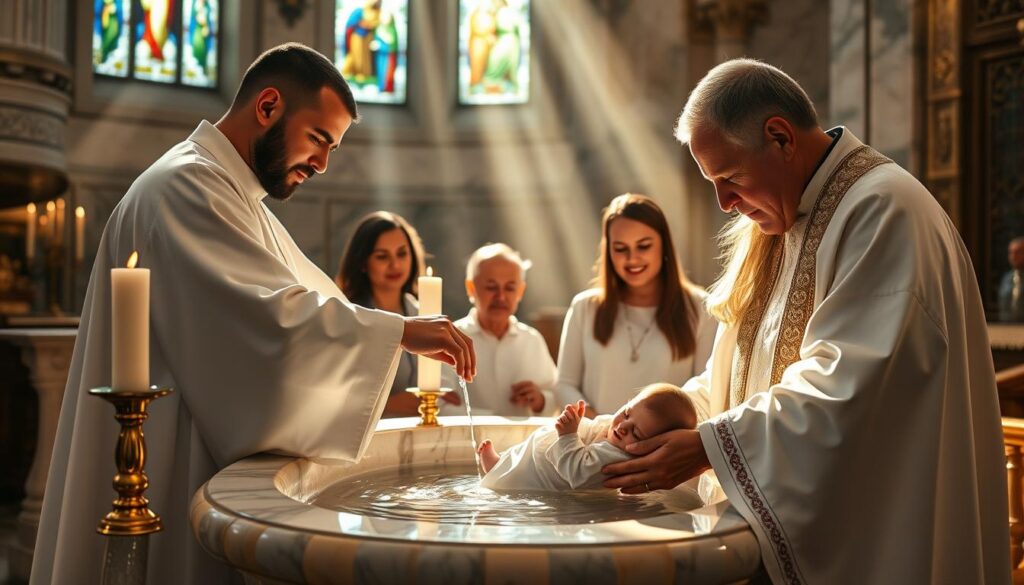
The ritual’s power comes from its layered symbolism. Water doesn’t just wash—it drowns old ways of living. “The person emerges renewed,” explains one priest, “like Christ rising from the tomb.” Whether immersing a child or adult convert, the Church sees this moment as irreversible spiritual birth.
Most Catholic families celebrate sacrament baptism during infancy, but the practice welcomes all ages. What surprises many? The Church honors baptisms from most Christian groups. That shared name spoken over the water—“Father, Son, Holy Spirit”—creates bonds across denominational lines.
Parents and godparents play crucial roles here. Their promises guide the baptized through life’s twists. As the priest pours blessed water, everyone present becomes part of a story bigger than themselves—a tradition stretching back two millennia, yet fresh as today’s sunrise.
Eucharist: Nourishment for the Soul
At the heart of Catholic worship lies a meal that transcends time. The Eucharist isn’t just another sacrament—it’s the living heartbeat of faith. Catholics believe this sacred meal literally becomes Christ’s presence through transubstantiation, where bread and wine transform into divine nourishment.
“The Eucharist is where heaven kisses earth,” explains Father Michael, a parish priest. “We don’t just remember the Last Supper—we re-live it.”
Celebrating First Holy Communion
Most children receive their first communion around age seven after months of preparation. They learn how the priest’s words during Mass make ordinary elements extraordinary. This milestone follows first confession, teaching young believers that grace requires both receiving and cleansing.
Daily Practice of Holy Communion
Unlike one-time initiation rites, this sacrament offers daily renewal. Regular participants often describe it as “soul fuel”—spiritual energy for life’s challenges. To receive properly, Catholics must:
| Preparation Step | Purpose |
|---|---|
| 1-hour fast | Focus on spiritual hunger |
| Examination of conscience | Ensure receptiveness |
| Peaceful disposition | Welcome divine presence |
Many parishes offer morning Masses, making holy communion accessible before work or school. This rhythm turns faith from Sunday event to daily conversation—a tangible way to carry sacredness into ordinary time.
Confirmation: Empowering Through the Holy Spirit
What transforms childhood faith into lifelong commitment? This sacred moment completes initiation by awakening spiritual gifts first received at baptism. Through ancient rituals, participants claim their faith as personal choice rather than inherited tradition.
Symbolism and Tradition
The laying on of hands connects modern believers to early Christians. Bishops or priests extend this apostolic practice, invoking the holy spirit’s power. Chrism oil’s sweet scent lingers as a visible seal—marking recipients as Christ’s ambassadors.
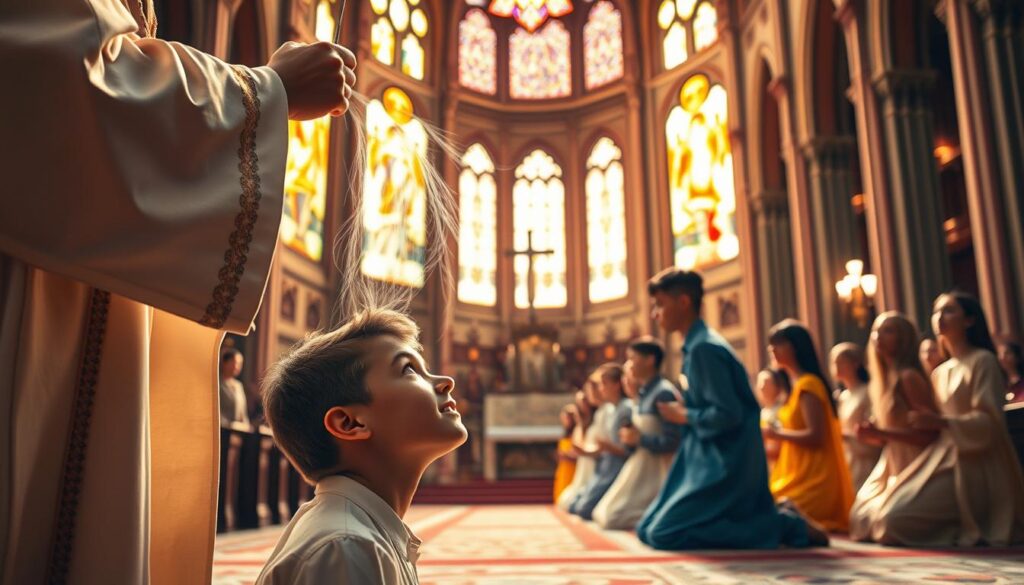
“Confirmation isn’t graduation—it’s enlistment,” says Sister Maria. “The confirmed become active defenders of their faith.”
Age, Preparation, and Rite
Most receive this sacrament confirmation around age thirteen—a bridge between childhood and spiritual maturity. Two years of preparation typically include:
| Preparation Step | Purpose |
|---|---|
| Weekly classes | Deepen doctrinal understanding |
| Service projects | Live out Gospel values |
| Retreat experiences | Strengthen personal prayer life |
Sponsors guide candidates, mirroring baptismal godparents. Choosing a saint’s name creates spiritual kinship—like Teresa for courage or Francis for creation care. When the bishop anoints each forehead, whispers of “be sealed” echo through generations, commissioning new witnesses for modern times.
Reconciliation: Healing Through Confession
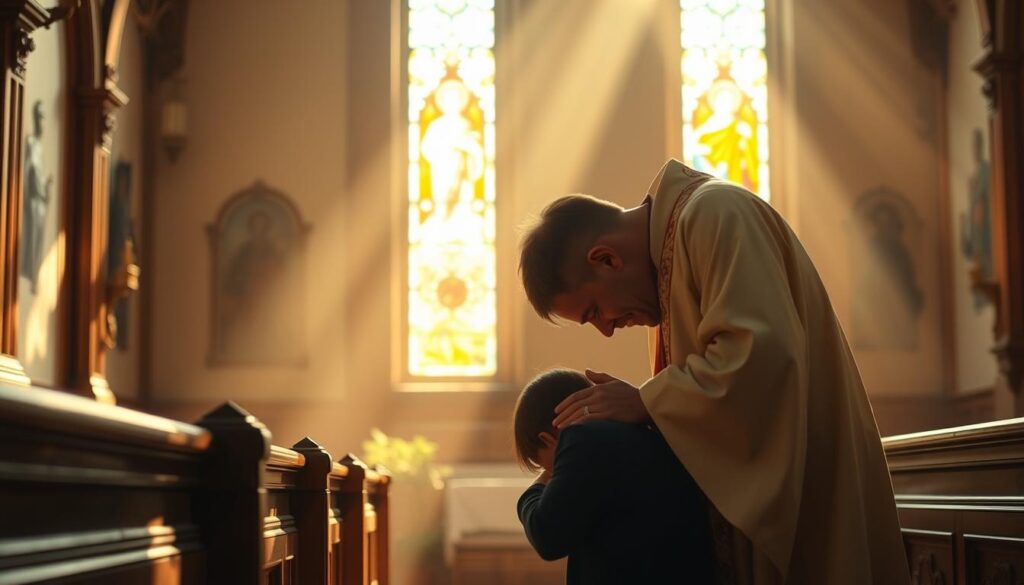
Imagine carrying invisible weights that suddenly lift—this is the relief many feel after confession. Through this sacred practice, believers mend broken connections with God and community. Unlike solitary guilt, it offers structured grace through honest self-reflection and guided healing.
Steps in the Sacrament
The journey begins with an examination of conscience—quiet reflection on thoughts and actions. In the confessional, individuals name their sins aloud to a priest, who serves as both listener and spiritual coach. “Think of me as a mirror,” one cleric explains, “reflecting God’s mercy, not human judgment.”
Three key moments define the rite:
- Confession: Specific naming of wrongs committed
- Penance: Personalized prayer or acts restoring balance
- Absolution: The freeing words: “I absolve you from your sins”
Pathway to Spiritual Renewal
Frequency varies—some seek monthly reconciliation, others during Lent or Advent. Regular participants often describe it as “divine therapy” for the soul. A Chicago parishioner shares: “Walking out lighter keeps me returning—it’s like a fresh start button.”
| Approach | Practice | Benefit |
|---|---|---|
| Weekly | Deepens self-awareness | Prevents small faults from growing |
| Seasonal | Aligns with liturgical rhythms | Renews commitment during holy periods |
Confidentiality remains absolute—priests cannot disclose conversations, even under legal pressure. This safety net encourages raw honesty, transforming shame into liberation. As one bishop reminds us: “God’s mercy outshines any mistake. Your worst chapter isn’t your final page.”
Anointing of the Sick: Embracing Grace in Illness
When life feels fragile, this sacred practice offers more than comfort—it transforms suffering into spiritual connection. The anointing sick ritual isn’t just for final moments. It strengthens those facing surgery, chronic pain, or age-related decline, reminding them they’re never alone in their struggle.
A priest performs the sacrament anointing using blessed oil, tracing crosses on the forehead and hands. These gestures echo Christ’s healing touch, linking personal trials to his Passion. “The oil isn’t magic,” explains Father Thomas, “but a visible sign of invisible grace pouring in.”
Children old enough to grasp its meaning can receive this blessing too. Unlike old perceptions of “last rites,” modern practice encourages repeated use whenever health declines. Families often report renewed peace—even amid ongoing treatments—after witnessing the ceremony.
Hospitals and homes become sacred spaces during the rite. As prayers fill the room, the sick person becomes living testimony to faith’s power in dark times. This ancient tradition proves that hope persists where medicine meets mystery.
FAQ
What is the purpose of Confirmation in the Catholic Church?
Confirmation strengthens believers’ bond with the Church and deepens their connection to the Holy Spirit. It empowers individuals to live out their faith courageously, often marked by the laying on of hands and anointing with chrism oil.
At what age do Catholics typically receive First Holy Communion?
Children usually celebrate their First Holy Communion around age seven or eight, after completing catechism classes. This milestone emphasizes understanding the Eucharist as spiritual nourishment and Jesus’ presence in the bread and wine.
How does Reconciliation help Catholics spiritually?
Reconciliation offers forgiveness of sins through confession, contrition, and absolution. It restores one’s relationship with God and the Church, fostering inner peace and a renewed commitment to living a moral life.
Who can receive the Anointing of the Sick?
This sacrament is for anyone facing serious illness, surgery, or old age. It provides physical and spiritual healing, uniting the person’s suffering with Christ’s sacrifice and offering grace for strength and comfort.
What role do Holy Orders play in the Church?
Holy Orders ordains men as deacons, priests, or bishops to serve the Church community. Through this sacrament, they receive authority to lead worship, administer sacraments, and guide others in their spiritual journeys.
Why is Baptism considered essential for Catholics?
Baptism cleanses original sin, initiates individuals into the Church, and marks them as children of God. The rite uses water and Trinitarian prayers to symbolize rebirth into a life of faith and grace.
How does Matrimony reflect Catholic teachings on love?
Matrimony unites a couple in lifelong commitment, mirroring Christ’s love for the Church. The vows and blessings emphasize mutual support, openness to children, and a shared journey toward holiness.