What makes the Protestant Bible different from other Christian traditions? The answer lies in its unique collection of sacred texts. While many recognize the Bible as Christianity’s foundational text, fewer understand how its contents vary between denominations. The Protestant version contains 39 books in its first half, aligning closely with Jewish scriptures but excluding seven writings found in Catholic Bibles.
This distinction traces back to the Reformation, when leaders reevaluated which texts held divine authority. They prioritized writings with ancient Hebrew origins, setting aside later Greek additions. These decisions weren’t just about historical accuracy—they reflected core beliefs about scripture’s role in faith. By studying this process, we uncover why certain books became central to Protestant teaching while others didn’t.
Modern readers might wonder why these differences matter. Beyond historical curiosity, they shape how believers interpret teachings and apply them today. The Protestant approach emphasizes direct engagement with scripture, a principle that continues influencing worship and theology. This guide will unpack the fascinating journey behind these choices and their lasting impact.
Key Takeaways
- The Protestant Bible’s first section contains 39 books, differing from Catholic and Orthodox traditions
- Reformation leaders based their canon decisions on Hebrew scripture origins and theological principles
- Seven additional texts in Catholic Bibles are viewed as helpful but non-authoritative in Protestantism
- Canon formation involved debates about historical context versus church tradition
- Understanding these distinctions helps explain modern denominational practices
- Scriptural authority remains a defining feature of Protestant Christian identity
Historical Context and Formation of Biblical Canons
The formation of sacred texts wasn’t a straightforward process. Early believers wrestled with questions about which writings held divine authority. Without clear guidance from Jesus or apostles, church leaders looked to existing Jewish traditions for answers.
Jewish Roots Meet Greek Influence
Many second-century thinkers believed Christians should adopt the Hebrew canon used by Jewish communities. Melito of Sardis created one of the earliest Christian lists around A.D. 170, matching Jewish scripture collections. This approach gained traction through figures like Origen, who argued:
“The Jews preserve these books as divine trust”
When Translation Sparks Debate
The Septuagint—a Greek version created in the third century B.C.—complicated matters. This translation included extra books cherished by Greek-speaking believers. Fourth-century manuscripts like Codex Sinaiticus show these texts circulating widely, even if they weren’t universally accepted.
Key tensions emerged:
- Following Jewish precedents versus valuing early Christian practices
- Balancing apostolic traditions with evolving spiritual needs
- Determining which texts taught core truths versus historical insights
These debates laid groundwork for future divisions. While most leaders excluded disputed books from official lists, many still read them for personal growth. This delicate balance between unity and diversity continues shaping faith communities today.
Comparing the Protestant and Catholic Old Testaments
At first glance, Christian Bibles seem identical—until you look closer. While both traditions share the same New Testament writings, their Old Testament collections tell a story of theological divergence spanning centuries. This difference centers on seven writings that shape how believers approach scripture.
Major Differences and Shared Scriptural Traditions
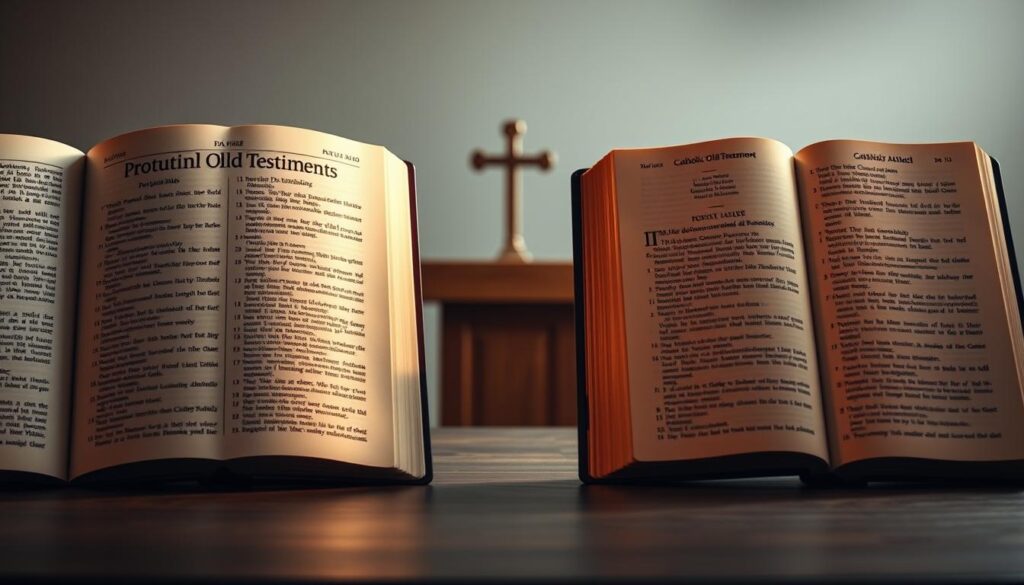
The Catholic Bible contains 46 Old Testament books, while the Protestant version has 39. These extra seven texts—Tobit, Judith, and others—appear in Greek translations but not ancient Hebrew sources. Reformers excluded them, arguing:
“Only writings with Hebrew origins carry full divine authority”
Both traditions agree on core Jewish scriptures. The split occurs over later additions that discuss ideas like purgatory. Catholics view these as part of their canon, while Protestants classify them as valuable historical works rather than doctrine-shaping texts.
The Role of Deuterocanonical Books in Each Canon
Here’s how each tradition handles disputed texts:
- Catholic practice: Reads deuterocanonical books during Mass and cites them in teachings
- Protestant approach: Studies these writings for context but avoids basing beliefs on them
Despite different canons, both groups recognize the spiritual richness in these texts. The debate isn’t about quality but what counts as binding scripture. This distinction continues influencing how churches interpret God’s word today.
Exploring the protestant old testament: Characteristics and Debates
Why does the structure of sacred writings matter? The answer lies in how communities organize their spiritual heritage. While sharing content with ancient Jewish scriptures, this biblical collection arranges texts to highlight Christian theological themes.
Unique Features Compared to the Hebrew Canon
The Reformation-era approach created a dual legacy. It preserved Jewish textual roots while reshaping how believers engage with scripture. This balance shows in three key areas:
| Hebrew Bible Structure | Protestant Organization | Theological Purpose |
|---|---|---|
| Torah (Law) | Historical Books | Show God’s covenant history |
| Nevi’im (Prophets) | Prophetical Works | Foretell Messiah’s coming |
| Ketuvim (Writings) | Poetical Literature | Guide practical faith |
Reformers prioritized books with clear apostolic connections and Hebrew origins. As one scholar noted:
“We anchor our faith in writings confirmed by both ancient sources and Christ’s teachings”
This selective process sparked debates. Some leaders argued church usage should determine canonicity, while others demanded proof of divine inspiration. These discussions shaped modern principles for evaluating spiritual texts.
Today’s biblical collection reflects this careful curation. It maintains historical continuity while serving Christian educational needs—a living bridge between ancient roots and contemporary faith.
Martin Luther’s Role in Shaping the Biblical Canon
A fiery German monk sparked a revolution in biblical interpretation that still echoes today. Martin Luther, an ordained priest and scholar, challenged church authority after witnessing the sale of indulgences—payments claiming to reduce punishment for sins. His famous 95 Theses in 1517 rejected practices like purgatory that lacked clear scriptural backing.
Reformation Impact on Canonical Decisions
Luther’s sola scriptura principle (“Bible alone”) became his measuring stick for divine authority. He argued:
“Scripture should interpret itself without external human approval”
This led him to remove seven books supporting Catholic teachings about prayers for the dead. His choices weren’t random—they targeted texts conflicting with his view of salvation through faith alone.
Challenges in Aligning With Sola Scriptura
While Protestants adopted Luther’s Old Testament canon, they ignored his doubts about four New Testament books. This selective acceptance reveals a paradox:
- Who decides which writings count as scripture?
- How do communities avoid replacing church authority with personal bias?
Luther’s decisions show how theological convictions shape sacred text collections. His legacy proves individual reformers can alter religious traditions for centuries, even when their methods raise unanswered questions.
Scriptural Authority and the Debate Over Canon Formation
Determining which writings hold divine authority remains one of Christianity’s most enduring puzzles. At the heart of this debate lies a critical question: how can believers confidently identify genuine sacred texts without relying solely on human institutions?
The Self-Authentication Dilemma
Reformers proposed that inspired books carry their own proof through the Holy Spirit’s guidance. John Calvin famously compared recognizing scripture to distinguishing colors—a natural process for faithful readers. Yet history reveals early church scholars disagreed about canonical books, with multiple lists circulating for centuries.
This theory faces practical hurdles. New believers might struggle to discern spiritual truths without guidance. Even devoted followers sometimes reach different conclusions about the same texts. As one critic noted:
“If scripture authenticates itself, why did inspired leaders debate the canon for 300 years?”
The church‘s role in preserving these writings adds complexity. While most Protestants reject institutional authority in determining the biblical canon, they benefit from centuries of collective discernment. This tension between personal conviction and communal wisdom continues shaping faith practices today.
Ultimately, the canon debate reminds us that sacred texts emerge through both divine inspiration and human participation. These discussions aren’t just historical curiosities—they influence how modern believers engage with foundational books of their faith.
FAQ
Why do Protestant and Catholic Bibles have different books?
The difference stems from decisions made during the Reformation. Martin Luther and other reformers prioritized the Hebrew canon, excluding seven deuterocanonical texts accepted by the Catholic Church since the Council of Trent. These books, like Tobit and Maccabees, remain in Catholic editions.
What role did the Septuagint play in shaping scripture?
The Septuagint, a Greek translation of Jewish texts, was widely used by early Christians. It included additional writings not found in the Hebrew Bible. Many early church leaders referenced these texts, influencing later debates about which books held authority.
How did Martin Luther’s views impact the Bible’s structure?
Luther’s emphasis on sola scriptura (“scripture alone”) led him to question certain books’ authenticity. He temporarily grouped deuterocanonical writings as “Apocrypha,” though they were later removed entirely from Protestant editions. This reinforced reliance on the Hebrew canon for theological authority.
Are there disagreements about biblical authority today?
Yes. Some argue scripture is self-authenticating, while others believe discernment by religious communities—like the Council of Florence or Trent—is essential. These debates often center on teachings like purgatory or prayer practices linked to excluded texts.
What makes deuterocanonical books significant?
These writings offer historical and theological insights, such as references to the afterlife in 2 Maccabees. The Catholic Church considers them inspired, while Protestant traditions view them as valuable but non-authoritative. Their inclusion affects doctrines and liturgical practices.
How do modern scholars view canon formation?
Many highlight its gradual, community-driven process. Early Jewish and Christian leaders debated texts for centuries. Factors like language, cultural context, and doctrinal alignment shaped decisions, revealing how evolving faith needs influenced the Bible’s final form.