The Anglican faith is a rich and diverse tradition rooted in Christian theology. Shaped by the Reformation and various historical events, Anglican beliefs have evolved into a unique blend of doctrine and practice.
At its core, the Anglican Church doctrine emphasizes the importance of scripture, sacraments, and tradition. Understanding these core tenets is essential for grasping the significance of Anglican beliefs within the global Christian community.
Key Takeaways
- Anglican beliefs are rooted in Christian theology.
- The Anglican faith has been shaped by the Reformation and historical events.
- Scripture, sacraments, and tradition are central to Anglican doctrine.
- Understanding Anglican beliefs is crucial for appreciating the Anglican Communion.
- The Anglican Church emphasizes the importance of balance between faith and practice.
Historical Background of Anglicanism
Understanding the historical context of Anglicanism is crucial to grasping its core beliefs and practices. The Anglican Church originated from the Church of England, established during the Reformation in the 16th century.
The Origins of the Anglican Church
The Anglican Church has its roots in the early Christian church in England. The separation from the Roman Catholic Church was a pivotal moment, driven by political and theological factors. King Henry VIII’s desire to annul his marriage, which was denied by the Pope, led to the English Reformation and the establishment of the Church of England, with the monarch as its head.
Key Historical Events Shaping Beliefs
Several key events have shaped Anglican beliefs over the centuries. The Reformation brought about significant changes, including the translation of the Bible into English and the simplification of worship practices. The Book of Common Prayer, introduced by Thomas Cranmer, played a crucial role in defining Anglican worship.
| Event | Date | Impact |
|---|---|---|
| Separation from Roman Catholic Church | 1534 | Establishment of the Church of England |
| Introduction of the Book of Common Prayer | 1549 | Standardized worship practices |
| English Reformation | 16th Century | Theological and liturgical changes |
Anglicanism in the Context of the Reformation
Anglicanism emerged during the Reformation, a period of significant theological and ecclesiastical change across Europe. The influence of Protestant reformers, alongside the political dynamics of the time, shaped the development of Anglican beliefs and practices. This historical context is essential for understanding the distinct characteristics of Anglicanism.
The Anglican tradition is characterized by a balance between Catholic and Protestant elements, reflecting its complex history. This balance is evident in its liturgy, theology, and governance structure.
The Book of Common Prayer
At the heart of Anglicanism lies the Book of Common Prayer, a foundational text that has shaped the spiritual lives of countless believers. This sacred book is not just a collection of prayers and liturgies; it is a guide that has influenced Anglican identity and practice for centuries.
Introduction to the Book of Common Prayer
The Book of Common Prayer is a comprehensive liturgical text that encompasses a wide range of spiritual practices and rituals. It includes daily prayers, sacraments, and various liturgies that are central to Anglican worship. The book is structured around the liturgical year, guiding Anglicans through the seasons of Advent, Christmas, Lent, Easter, and Ordinary Time.
One of the key features of the Book of Common Prayer is its provision for Morning and Evening Prayer, allowing believers to start and end their day with structured devotions. This practice fosters a deep sense of spirituality and connection with the global Anglican community.
Its Role in Worship and Daily Life
The Book of Common Prayer plays a pivotal role in Anglican worship, providing a common language and ritualistic framework that unites diverse congregations. Its liturgies are designed to be both traditional and adaptable, allowing for a rich tapestry of worship experiences.
- It guides the faithful through significant life events such as baptisms, confirmations, weddings, and funerals, offering comfort and spiritual guidance.
- The Book of Common Prayer is also integral to the daily spiritual practices of many Anglicans, with its prayers and liturgies providing a foundation for personal devotion.
- Its influence extends beyond the church walls, shaping the moral and ethical perspectives of Anglicans in their daily lives.
By incorporating the Book of Common Prayer into their daily routines, Anglicans can cultivate a deeper sense of spirituality and community, aligning their lives with the teachings and traditions of their faith.
The Authority of Scripture
Scripture plays a pivotal role in shaping Anglican theology, influencing both personal faith and communal worship. The Bible is considered the primary source of doctrine and spiritual guidance in Anglicanism.
Understanding the Role of the Bible
The Bible is revered in Anglican theology as the inspired word of God, containing all necessary truths for salvation. It serves as the foundation for doctrine, guiding the beliefs and practices of Anglicans worldwide.
Biblical authority is not limited to matters of faith; it also extends to practices and moral teachings, shaping the daily lives of adherents.
Interpretative Approaches to Scripture
Anglicans employ various interpretative approaches to understanding scripture, balancing reason, tradition, and the guidance of the Holy Spirit. This balanced approach allows for a nuanced understanding of biblical teachings.
| Approach | Description | Key Emphasis |
|---|---|---|
| Reason | Utilizing rational inquiry to understand scripture | Logical analysis |
| Tradition | Considering the historical and communal context of biblical interpretation | Continuity with the past |
| Holy Spirit Guidance | Relying on spiritual insight for understanding biblical truths | Spiritual illumination |
This multifaceted approach to biblical interpretation enriches Anglican theology, allowing for a deep and comprehensive understanding of scripture.
The Sacraments in Anglicanism
At the heart of Anglican worship are the sacraments, which symbolize grace and community. These sacred rites are integral to the spiritual lives of Anglicans, serving as a means of connecting with the divine.
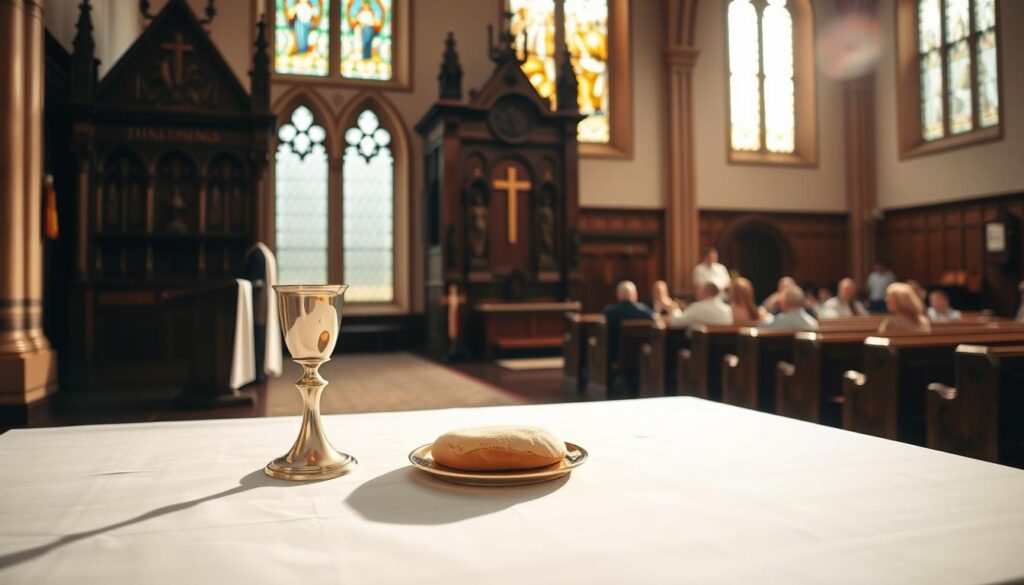
Anglicans recognize two dominical sacraments: Baptism and the Eucharist. These sacraments are central to Anglican worship and are considered essential for spiritual growth and development.
Overview of Sacraments Practiced
The Anglican tradition practices various sacraments, but the two dominical sacraments hold a special place. Baptism is the sacrament of initiation, welcoming individuals into the Christian community. The Eucharist, also known as Holy Communion, is a sacrament of nourishment, where believers partake in the body and blood of Christ.
The Significance of Baptism and Eucharist
Baptism is significant as it symbolizes the washing away of sins and the initiation into the Christian faith. It is a rite of passage that marks an individual’s commitment to Christ. The Eucharist, on the other hand, is a sacrament that fosters a sense of community among believers. It is a celebration of Christ’s Last Supper with his disciples and is seen as a means of receiving spiritual nourishment.
The Eucharist is particularly important in Anglican worship, as it is believed to be a means of grace, where Christ is present among the believers. This sacrament is a powerful symbol of unity and fellowship within the Anglican community.
The Nature of God in Anglican Belief
At the heart of Anglican belief lies a profound understanding of God, embracing the mystery of the Trinity. This foundational doctrine is central to Anglican theology, shaping their comprehension of God’s nature and role in the world.
The Trinitarian Understanding
The Anglican Church affirms the Trinitarian nature of God, believing in one God in three persons: Father, Son, and Holy Spirit. This belief is not seen as a contradiction but rather as a complex unity that encompasses diversity within the Godhead. The Trinitarian understanding is crucial for understanding Anglican worship, doctrine, and daily life.
The Trinity is a mystery that is both revered and explored through scripture, tradition, and reason. Anglicans believe that this concept is fundamental to understanding God’s relationship with humanity and the world.
The Role of Jesus Christ
In Anglican theology, Jesus Christ is seen as fully human and fully divine, a belief that is central to the doctrine of the Incarnation. This understanding is vital for Anglican soteriology, as it underscores Jesus’ role in the salvation of humanity. Through Jesus Christ, Anglicans believe that God interacts with humanity in a unique and salvific way.
The significance of Jesus Christ in Anglican belief cannot be overstated. He is considered the mediator between God and humanity, and his life, death, and resurrection are seen as the fulfillment of God’s plan for salvation. Anglicans place a strong emphasis on the person and work of Christ, which is reflected in their liturgy, sacraments, and daily devotion.
The Importance of Tradition
The importance of tradition in Anglicanism cannot be overstated, as it provides a rich context for understanding Christian doctrine. Anglicans value tradition alongside scripture, drawing on the teachings of early church fathers and the consensus of the faithful across time.
Tradition and scripture are intertwined in Anglican belief, with both playing crucial roles in shaping the church’s identity. While scripture is the primary source of authority, tradition provides a framework for interpreting and applying biblical teachings.
Tradition vs. Scripture
The relationship between tradition and scripture is complex and nuanced. Anglicans do not see these two sources of authority as being in opposition; rather, they are viewed as complementary. As Richard Hooker, a prominent Anglican theologian, noted, “Scripture is the foundation of our faith, while tradition is the guide to its interpretation.”
“The Bible is the ultimate source of authority, but it is not the only source. Tradition has its place in the life of the Church, and it is not to be despised.” –
The Influence of Church Fathers
The early church fathers have had a profound influence on Anglican tradition. Their writings and teachings are studied and revered, providing insights into the interpretation of scripture and the development of Christian doctrine.
- The Apostolic Fathers, such as Ignatius of Antioch, offer valuable insights into the early Christian Church.
- The Cappadocian Fathers, including Basil the Great, contributed significantly to the development of Trinitarian theology.
- The writings of Augustine of Hippo have shaped Anglican thought on grace, sin, and salvation.
By embracing tradition alongside scripture, Anglicans seek to maintain a connection with the broader Christian heritage, while also remaining grounded in the teachings of the Bible.
Anglican Views on Salvation
At the heart of Anglican theology is the understanding that salvation is a gift of God’s grace, received through faith and demonstrated through good works. This foundational belief underscores the complex and beautiful nature of Anglican views on salvation.
The Concept of Grace
In Anglican theology, grace is considered a fundamental aspect of salvation. It is understood as God’s unmerited favor towards humanity, a gift that is both free and universal. Anglicans believe that grace is the initiating factor in salvation, drawing individuals into a relationship with God.
The concept of grace is closely tied to the sacraments, particularly baptism, where it is believed that God’s grace is conferred upon the individual. This sacramental understanding of grace highlights its role in the ongoing process of salvation, not just as a one-time event but as a continuous aspect of the Christian life.
Faith and Works in Anglican Theology
The relationship between faith and works is a critical component of Anglican theology regarding salvation. Anglicans affirm that faith is the primary means by which salvation is received. However, this faith is not seen as being alone; rather, it is accompanied by works as a natural expression of one’s devotion to God.
- Faith is understood as the foundation of the Christian life, the means by which one is justified before God.
- Works are seen as the fruit of faith, demonstrating the authenticity of one’s beliefs and the transformative power of God’s grace.
- Together, faith and works form an integral whole, with works being a response to the grace received through faith.
As
“Faith by itself, if it does not have works, is dead” (James 2:17)
, Anglicans are called to live out their faith in practical ways, serving others and striving for justice and compassion in the world.
In conclusion, Anglican views on salvation emphasize the pivotal role of grace, the importance of faith, and the necessity of expressing that faith through works. This balanced approach underscores the richness and depth of Anglican theology, offering a holistic understanding of salvation that is both deeply rooted in tradition and dynamically lived out in the present.
Worship Practices and Styles
Worship within the Anglican tradition is marked by a blend of historical continuity and contemporary expression. This blend is evident in the variety of worship practices and styles found across the Anglican Communion.
Traditional vs. Contemporary Worship
Anglican worship ranges from traditional liturgies, deeply rooted in the Book of Common Prayer, to contemporary services that incorporate modern language and musical styles. Traditional worship often features formal liturgies and classic hymns, providing a sense of continuity with the historical roots of Anglicanism.
Contemporary worship, on the other hand, is characterized by its use of modern music, informal liturgies, and sometimes, multimedia elements. This style of worship aims to make the service more relatable and engaging for modern congregations.
| Worship Style | Characteristics | Key Elements |
|---|---|---|
| Traditional | Formal liturgies, classic hymns | Book of Common Prayer, traditional music |
| Contemporary | Informal liturgies, modern music | Modern language, multimedia elements |
The Role of Music in Worship
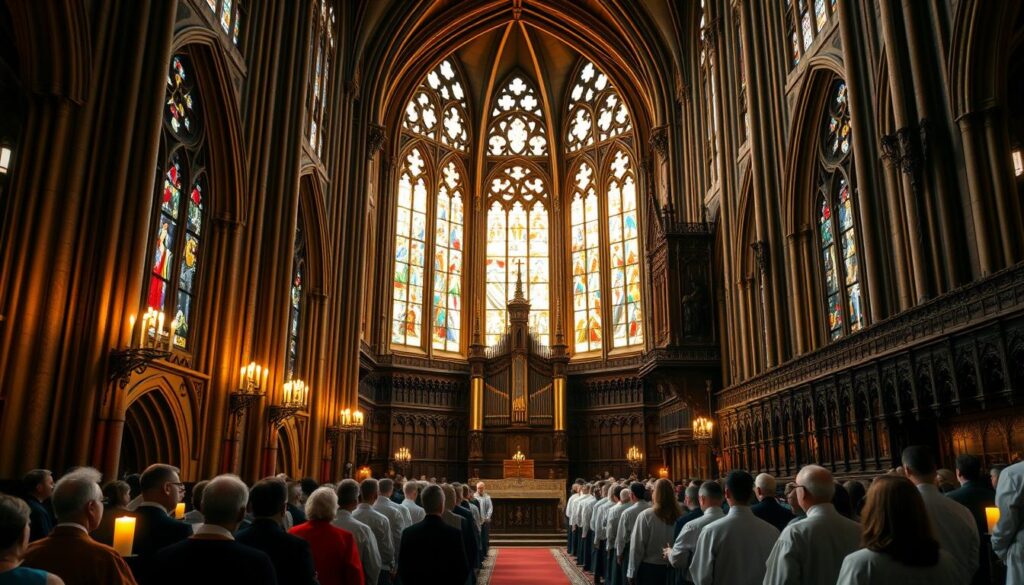
Music plays a significant role in Anglican worship, contributing to the spiritual experience and community life of the church. Traditional hymns and chant are staples in many Anglican churches, while contemporary services often feature bands and modern worship songs.
The diversity in musical styles reflects the global nature of Anglicanism, with different regions incorporating their unique musical traditions into worship.
The Global Anglican Communion
The global presence of the Anglican Communion is a testament to its enduring legacy and adaptability. As a worldwide fellowship of churches, it encompasses a rich tapestry of cultural and theological expressions.
Overview of the Global Anglican Family
The Anglican Communion is a global family of churches that shares a common heritage and faith. With roots tracing back to the Church of England, it has grown to include churches across the globe, from Africa to Asia, and the Americas.
Diversity within the Communion is one of its defining characteristics. From the liturgical practices to the cultural influences on worship, the Anglican Communion is a mosaic of different traditions.
Differences and Similarities Among Regions
Despite the geographical and cultural differences, Anglicans worldwide are united in their core beliefs and commitment to the Communion. The Chicago-Lambeth Quadrilateral – the Holy Scripture, the Creeds, the Sacraments, and the Episcopacy – serves as a foundational framework that unites the diverse regional churches.
“The Anglican Communion is a worldwide family of churches that are in communion with the See of Canterbury… sharing a common heritage of faith, worship, and mission.”
Regional differences are evident in worship styles, church governance, and social issues addressed by local churches. However, the shared commitment to communion and the pursuit of unity amidst diversity remain a unifying force.
- The Episcopal Church in the United States
- The Church of England
- The Anglican Church of Australia
- The Anglican Church of Canada
These churches, among others, form the fabric of the global Anglican Communion, each contributing their unique perspectives while remaining part of the larger whole.
Social Justice and Community Service
Anglicans are called to action through their faith, emphasizing social justice and community service as vital expressions of their beliefs. This call to action is rooted in their understanding of God’s love and the importance of serving others.
Serving the Marginalized
The Anglican commitment to social justice is reflected in their efforts to serve the marginalized and address social injustices. This includes tackling issues such as poverty, inequality, and environmental degradation. By engaging with these contemporary social issues, Anglicans demonstrate their commitment to living out their faith in practical ways.

Some of the key areas where Anglicans are making a difference include:
- Providing aid to those affected by poverty and natural disasters
- Advocating for the rights of marginalized communities
- Promoting environmental sustainability
Addressing Contemporary Social Issues
Anglicans are actively addressing various contemporary social issues. For instance, they are involved in initiatives aimed at reducing inequality and promoting social cohesion. Through their community service, Anglicans strive to create a more just and equitable society.
The Anglican approach to social justice is characterized by a commitment to compassion, empathy, and action. By living out their faith in these ways, Anglicans aim to make a positive impact on the world around them.
Anglican Beliefs and Ecumenism
The pursuit of Christian unity is a core tenet of Anglican beliefs, driving the church’s engagement in ecumenical dialogue and cooperation. This commitment to unity is rooted in the church’s understanding of itself as part of the broader Christian tradition.
Relationships with Other Christian Denominations
Anglicans have engaged in ecumenical dialogue with various Christian denominations, seeking common ground and areas of cooperation. These efforts have led to significant theological discussions and agreements, particularly with churches of the Reformation tradition.
The Anglican Communion has also fostered relationships with churches beyond its historical affiliations, including Orthodox and some Protestant denominations. These relationships are built on mutual respect, shared values, and a commitment to Christian unity.
Efforts Toward Unity in Christianity
Efforts toward unity involve both theological dialogue and practical cooperation. Anglicans participate in joint worship services, collaborative service projects, and discussions on theological issues. These activities not only promote unity but also demonstrate the church’s commitment to living out its faith in a visible way.
One notable example of ecumenical cooperation is the Porvoo Agreement, which established full communion between the Anglican Communion and certain European Lutheran churches. Such agreements represent significant steps toward Christian unity, enabling greater collaboration and mutual recognition among different Christian traditions.
Through these efforts, the Anglican Communion continues to embody its commitment to ecumenism and the pursuit of a more united Christian witness in the world.
Conclusion: The Enduring Legacy of Anglican Beliefs
The Anglican Communion’s rich spiritual heritage continues to be a guiding force in the lives of its adherents worldwide. At its core, Anglican beliefs emphasize a balance between tradition, scripture, and reason, providing a framework for living out one’s faith in a contemporary context.
Relevance in Modern Times
Anglican relevance is evident in its ongoing contribution to Christian faith and practice. The tradition’s emphasis on social justice, community service, and ecumenism underscores its commitment to addressing contemporary social issues and fostering unity among diverse Christian denominations.
Unity Amidst Diversity
The Anglican Communion’s strength lies in its diversity and unity. By embracing diverse perspectives and practices, Anglicans maintain a cohesive identity rooted in shared beliefs and values. This balance between diversity and unity is a hallmark of the Anglican legacy, enabling the Communion to thrive in an ever-changing world.
FAQ
What are the core tenets of Anglican beliefs?
Anglican beliefs are rooted in Christian theology, emphasizing the authority of scripture, the importance of tradition, and the sacraments, particularly Baptism and the Eucharist.
How did Anglicanism originate?
Anglicanism originated in the 16th century during the English Reformation, emerging from the Church of England’s break with the Roman Catholic Church.
What is the significance of the Book of Common Prayer in Anglican worship?
The Book of Common Prayer is a foundational text in Anglicanism, providing a framework for worship, daily devotion, and sacraments, shaping the spiritual lives of Anglicans worldwide.
How do Anglicans understand the authority of scripture?
Anglicans believe in the authority of scripture, interpreting the Bible through a balanced approach that considers tradition, reason, and spiritual guidance.
What sacraments are practiced in Anglicanism?
Anglicans recognize two primary sacraments: Baptism and the Eucharist, which are central to worship and spiritual life, symbolizing God’s grace and presence.
How do Anglicans understand the nature of God?
Anglicans affirm the Trinitarian concept of God, believing in one God in three persons: Father, Son, and Holy Spirit, with Jesus Christ being central to their faith and doctrine.
What role does tradition play in Anglican beliefs?
Tradition is significant in Anglicanism, informing beliefs and practices, and is seen in conjunction with scripture and reason as a guide to understanding Christian doctrine.
How do Anglicans view salvation?
Anglicans believe in salvation through God’s grace, with faith and works being integral to the process, emphasizing the importance of living out one’s faith in practical ways.
What is the diversity of worship practices within Anglicanism?
Anglican worship practices vary, ranging from traditional to contemporary styles, with music playing a vital role in enhancing the spiritual experience and community life.
What is the Global Anglican Communion?
The Global Anglican Communion is a worldwide fellowship of Anglican churches, characterized by diversity among regional churches, yet united in their commitment to Anglican beliefs and practices.
How does Anglicanism engage with social justice and community service?
Anglicans are committed to social justice and community service, addressing contemporary social issues and striving to make a positive difference, grounded in their theological understanding of God’s call to action.
What is the Anglican approach to ecumenism?
Anglicans are engaged in ecumenical efforts, seeking unity with other Christian denominations, based on a theological commitment to cooperation and mutual understanding.
How does Anglican theology relate to daily life?
Anglican theology is not just about doctrine; it’s about living out one’s faith in daily life, through practices such as prayer, service, and community engagement.