Faith in the Catholic Church revolves around sacred rituals that bridge the divine and everyday life. These practices, deeply rooted in tradition, act as visible expressions of spiritual truths. For centuries, they’ve guided believers through life’s milestones while nurturing their relationship with God.
These holy rites fall into three groups. The first—Sacraments of Initiation—includes Baptism, Eucharist, and Confirmation. These mark a person’s entry into the faith community. Next, the Sacraments of Healing address spiritual renewal through Reconciliation and Anointing of the Sick. Finally, Sacraments of Service focus on lifelong commitments like Marriage and Holy Orders.
Each ritual combines physical actions—like water in Baptism or oil in Anointing—with deeper meaning. This blend reflects teachings believed to originate with Christ. By participating, Catholics worldwide share moments of grace, unity, and purpose.
Key Takeaways
- Sacraments are divided into initiation, healing, and service categories.
- Every sacrament uses tangible elements to symbolize spiritual realities.
- These practices trace their origins to Jesus’ teachings and actions.
- They unify Catholics globally through shared spiritual experiences.
- Understanding them offers insight into core Catholic beliefs.
Introduction: Discovering the Sacred Sacraments
At the heart of Catholic tradition lies a profound mystery: ordinary materials become doorways to divine connection. These sacred rituals do more than symbolize ideas—they actively transmit grace, transforming participants through tangible encounters. Rooted in Christ’s teachings, they shape both personal spirituality and communal identity.
Overview of Catholic Sacramental Theology
Catholic theology views these rites as visible encounters with the invisible God. Unlike generic religious customs, they’re believed to carry Christ’s own promise of spiritual renewal. Water, oil, bread, and wine aren’t props—they’re vehicles through which believers receive strength and healing.
This approach reflects Christianity’s core truth: God entered human history as flesh and blood. Just as Jesus used physical touch to heal, sacraments employ earthly elements to renew souls. They make grace accessible, not abstract.
The Role of Sacraments in Faith and Life
These practices anchor spiritual growth at every stage. From infancy to old age, they mark pivotal moments with divine partnership. A baptized child joins the faith family. A couple’s marriage vows become a covenant blessed by God.
Regular participation fosters resilience. The Eucharist nourishes like daily bread, while Reconciliation offers restorative honesty. Far from optional traditions, sacraments act as spiritual lifelines—tools for building lasting relationships with God and community.
Understanding what are the seven sacraments of catholicism
Catholic spiritual life centers around three pillars of sacred practice. These groupings—Christian Initiation, Healing, and Service—map the believer’s journey from spiritual birth to purposeful living.
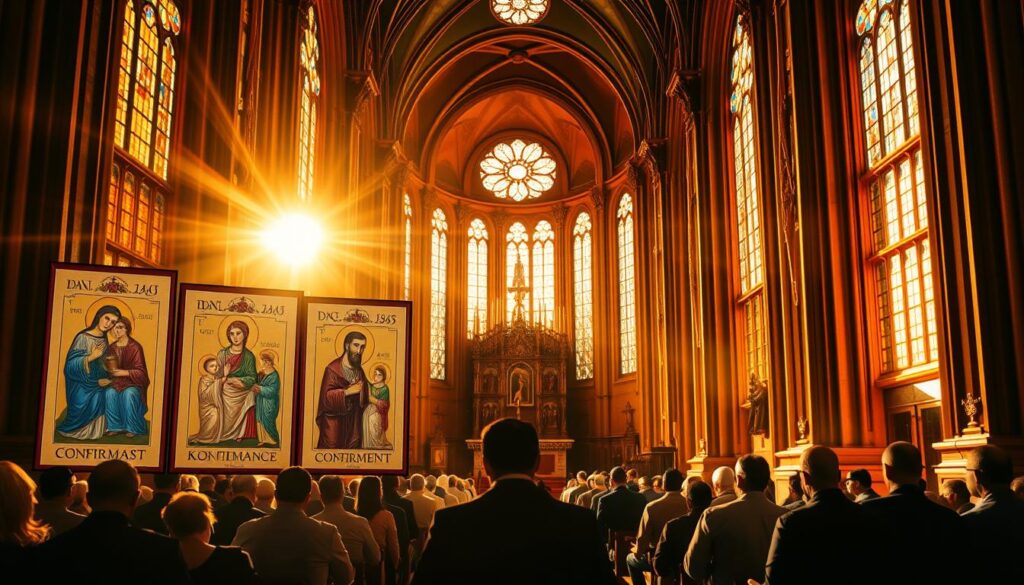
The first pillar welcomes individuals into faith through Baptism, Eucharist, and Confirmation. Together, they form a foundation for lifelong growth. Baptism washes away original sin, while Confirmation deepens one’s bond with the Holy Spirit.
When challenges arise, the second pillar offers renewal. Reconciliation mends broken relationships with God, and Anointing brings comfort during illness. These rites acknowledge our need for grace amid life’s struggles.
| Group | Focus | Ceremonies |
|---|---|---|
| Initiation | Spiritual birth & growth | Baptism, Eucharist, Confirmation |
| Healing | Renewal & comfort | Reconciliation, Anointing |
| Service | Commitment & purpose | Matrimony, Holy Orders |
The final pillar calls members to serve others. Marriage unites couples in sacred partnership, while Holy Orders dedicates leaders to guide the community. Each choice reflects a response to God’s unique invitation.
This threefold structure mirrors human needs: belonging, restoration, and meaning. Through these channels, Catholics find both personal transformation and shared identity.
Baptism: The Gateway to a New Life
From ancient rituals to modern practice, Baptism remains the cornerstone of Catholic spiritual identity. This initiation ritual welcomes individuals into the faith community through water and sacred words. It’s more than a ceremony—it’s a spiritual rebirth that leaves an indelible mark on the soul.
Symbolism of Water and Spirit Renewal
Water’s dual role—cleansing and giving life—anchors this sacrament baptism. As holy water flows over the head, it echoes Christ’s resurrection: the old self “drowns” in sin, while a renewed person emerges. A priest declares, “I baptize you in the name of the Father, Son, and Holy Spirit,” linking the baptized to God’s triune nature.
Infant Baptism Versus Adult Baptism
Most Catholics experience this ritual as infants, with parents pledging to nurture their child’s faith. Adults joining the Church undergo preparation through the RCIA program before receiving the same sacrament baptism. Both forms share the Trinitarian formula, creating a lifelong bond as a member of God’s family.
Whether received in infancy or adulthood, this sacrament can’t be repeated. Its grace permanently marks the person, offering forgiveness and a fresh start. Through this sacred act, believers join a global community united in divine love.
Eucharist: The Heart of Catholic Worship
In every Catholic Mass, a profound transformation occurs at the altar. This sacred meal isn’t just a symbol—it’s the living heartbeat of faith. Through bread and wine, believers encounter Christ in a way that unites past, present, and eternity.
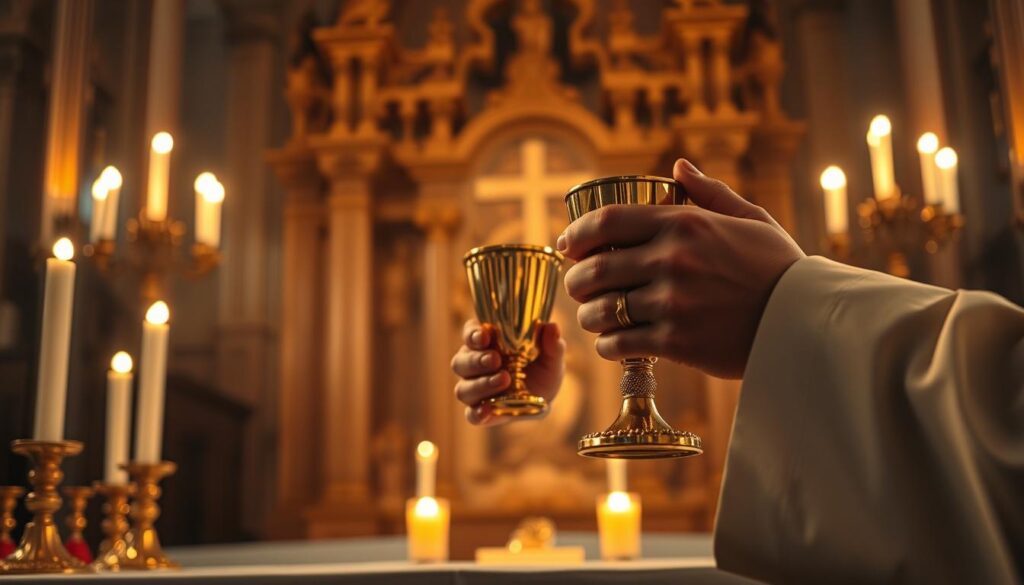
The Significance of Holy Communion
Called the “Source and Summit” of spiritual life, this sacrament nourishes Catholics like supernatural food. During Holy Communion, ordinary elements become divine sustenance. Many describe it as receiving a piece of heaven itself—a taste of eternal belonging.
Understanding Transubstantiation
At Mass, the priest speaks Christ’s words from the Last Supper. Though bread and wine keep their appearance, their essence changes completely. This mystery—called transubstantiation—lets believers experience God’s tangible presence.
Daily Spiritual Nourishment through the Mass
Children typically receive their First Communion around age seven after learning about this gift. Adults can partake daily, finding strength for life’s challenges. Each visit to the altar deepens unity with Christ and the global Church.
Whether received at a grand cathedral or a quiet weekday service, this sacrament remains timeless. It’s not just a ritual—it’s an invitation to carry divine love into every moment of life.
Confirmation: Sealing with the Gift of the Holy Spirit
Young Catholics stand at a crossroads of faith during their early teens—a moment marked by sacred oil and empowered choices. This sacrament confirmation completes their initiation into the Church, building on baptismal promises with personal commitment. Unlike childhood rituals, it invites active participation in spiritual growth.
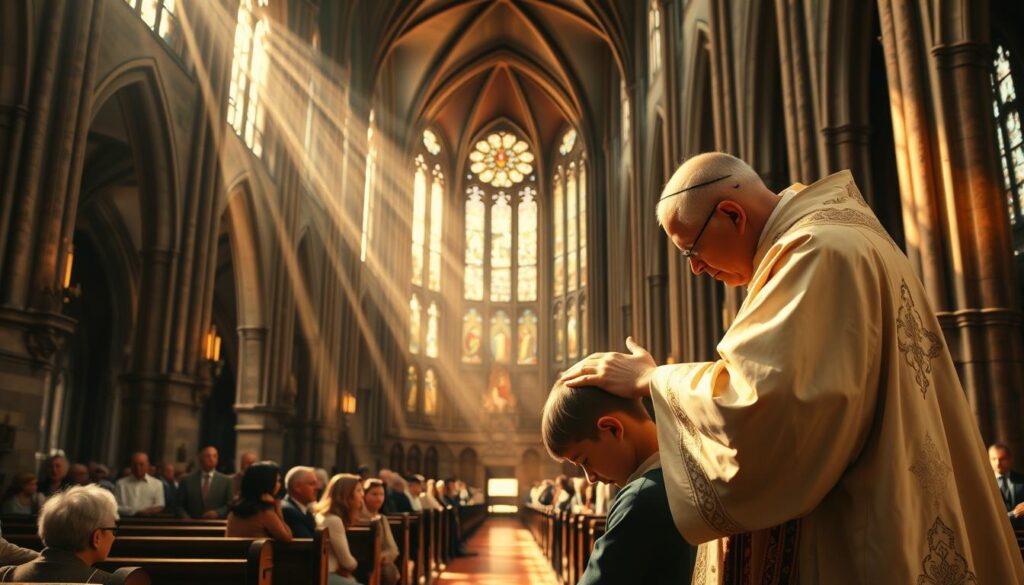
Rite of Confirmation and Spiritual Empowerment
A bishop typically presides over this ancient ceremony. Candidates renew baptismal vows as hands rest gently on their heads—a practice echoing apostolic traditions. Chrism oil, blessed during Holy Week, is traced in cross-shaped patterns on foreheads. “Be sealed with the gifts of the Holy Spirit,” the minister declares, awakening spiritual potential.
Most receive this sacrament confirmation around age thirteen after years of faith formation. Teens explore scripture, Church teachings, and service projects to prepare. Adults joining Catholicism often experience it immediately after baptism, linking initiation stages.
This sacred seal creates lifelong resilience. It equips believers to defend their beliefs and serve others courageously. Through this rite, the Holy Spirit transforms passive faith into vibrant discipleship—a journey beginning in childhood and flowering through mature dedication.
Reconciliation: The Path to Forgiveness and Renewal
In quiet moments of reflection, Catholics find a sacred space to heal broken bonds with God and others. The Sacrament of Reconciliation—also called Confession—offers more than forgiveness. It restores spiritual vitality through honest self-assessment and divine mercy.
Steps Toward Spiritual Healing
During confession, believers privately name their sins to a priest, who serves as both guide and witness. This process isn’t about shame—it’s liberation. The priest offers counsel and assigns prayers or acts of kindness to nurture growth.
Some attend weekly before receiving Communion; others seek it during Lent or Advent. What matters is heartfelt remorse. An examination of conscience helps identify areas needing grace.
Through this sacrament reconciliation, Catholics rebuild trust with God and community. It transforms guilt into strength, proving no sins are beyond redemption. Each confession becomes a fresh start—a chance to walk lighter in faith.
FAQ
At what age do children typically receive First Communion?
Most Catholic children receive their First Holy Communion around age seven or eight. This follows preparation through religious education, emphasizing understanding the Eucharist as the body and blood of Christ.
How does Confirmation strengthen a person’s faith?
A: Confirmation deepens spiritual growth by sealing believers with the Holy Spirit. It empowers individuals to live out their baptismal promises courageously and share their faith actively within their communities.
What happens during the Anointing of the Sick?
This sacrament of healing involves prayers, laying on of hands, and anointing with oil. It offers physical, emotional, and spiritual strength to those facing illness or surgery, uniting them with Christ’s suffering.
Can someone remarry after a divorce in the Catholic Church?
The Church views marriage as a lifelong covenant. Remarriage without an annulment isn’t permitted. However, pastors can guide individuals through reconciliation processes or clarify annulment eligibility.
Why is Reconciliation important for Catholics?
Through confession, believers receive God’s forgiveness, repair relationships, and renew their commitment to holiness. It restores grace and provides clarity to avoid future sins.
What role do Holy Orders play in the Church?
A: Holy Orders ordain men as deacons, priests, or bishops to serve the Church. They lead worship, administer sacraments, and shepherd communities, continuing Christ’s mission of love and service.
How does Baptism connect to joining the Church?
A: Baptism cleanses original sin, initiates individuals into the Church, and marks them as children of God. It’s the first step in a lifelong journey of faith and discipleship.