Baptist congregations emphasize a faith rooted in Scripture, individual spiritual commitment, and community practices. These groups prioritize the Bible as the ultimate authority for doctrine and daily living. This focus shapes their approach to worship, ethics, and church governance.
One defining practice is baptism by immersion, reserved for professing believers. This symbolizes personal faith rather than infant rites. Another key aspect is the separation of church and state, a principle championed since the early 1600s to protect religious freedom.
Baptist communities avoid formal creeds, stressing personal conversion and voluntary membership. Leaders like John Smyth and Roger Williams shaped these ideas through movements promoting soul liberty and local church autonomy. The 1644 London Confession later codified essential theological positions.
Today, many Baptists maintain these traditions while adapting to modern contexts. Their shared Christian faith connects diverse congregations across the United States. In the following sections, we’ll explore how these principles influence worship styles, community life, and social engagement.
Key Takeaways
- Scripture serves as the central authority for doctrine and practice
- Believer’s baptism by immersion reflects personal faith commitments
- Separation of church and state remains a foundational principle
- Non-creedal structure emphasizes individual conscience and choice
- Historical roots trace back to 17th-century religious freedom advocates
- Local congregations maintain self-governance within shared beliefs
Understanding Baptist Church Fundamentals
At the heart of Baptist identity lie two core doctrines shaping worship and community life. These principles guide how congregations interpret faith, practice rituals, and engage with society.
Scriptural Authority and Sola Scriptura
Sola Scriptura – “Scripture alone” – forms the bedrock of Baptist theology. The Bible serves as the final authority for doctrine, surpassing traditions or human interpretations. This approach fuels dynamic Bible study sessions where members directly engage with texts.
Local churches design sermons around biblical teachings rather than denominational mandates. This self-governance model allows adaptations to cultural contexts while maintaining theological consistency across the United States and around the world.
Believer’s Baptism and Immersion
Baptists practice full-body immersion baptism exclusively for those old enough to profess personal faith. This ritual mirrors New Testament accounts of Jesus’ baptism and the early church’s practices. Unlike infant christening, it symbolizes conscious commitment rather than inherited tradition.
Three key elements define this practice:
- Voluntary choice by the individual
- Public declaration through immersion
- Connection to Jesus’ death and resurrection
These fundamentals distinguish Baptist communities from many Protestant groups. They’ve particularly influenced religious culture in the United States, where separation of church and state enables diverse expressions of faith. Global Baptist networks maintain these core practices while addressing regional needs through local churches.
Historical Foundations of the Baptist Movement
In the 1600s, English dissenters reshaped Christianity through radical ideas about faith and freedom. Leaders like John Smyth and Thomas Helwys broke from state-controlled churches, forming communities where membership required personal conviction rather than birthright.
Origins in the 17th Century and Separatism
Smyth’s group fled persecution by establishing England’s first Baptist congregation in Amsterdam. Their core ideas sparked controversy:
- Voluntary adult baptism instead of infant rites
- Local churches governing themselves without bishops
- Religious liberty for all, not just approved denominations
Thomas Helwys later brought these principles home, declaring, “The king is a mortal man, not God” – a bold challenge to royal church authority. This separatist spirit took root in colonial America, shaping early religious culture.
Influence of the Great Awakening
The 1740s revival transformed Baptist growth across the United States. Preachers like George Whitefield inspired mass conversions, while itinerant ministers established new churches in frontier regions. Three lasting impacts emerged:
- Emphasis on emotional conversion experiences
- Expanded use of lay preachers and camp meetings
- Stronger focus on evangelism and missionary work
This era cemented baptism by immersion as both spiritual symbol and community event. Today’s congregations preserve this heritage through vibrant worship styles and commitment to individual faith journeys.
Key Distinctive Beliefs in Baptist Theology
Distinct theological pillars define Baptist identity beyond common Christian doctrines. Sola Scriptura remains non-negotiable, treating the Bible as life’s ultimate roadmap rather than a symbolic text. This principle fuels debates, sermons, and personal study sessions where members wrestle directly with biblical passages.
Believer’s baptism stands as a physical declaration of faith. Full immersion mirrors New Testament accounts, symbolizing resurrection and cleansing. Unlike infant rituals, it requires conscious choice – a hallmark of the movement’s emphasis on personal conviction over tradition.
Three structural elements shape congregational life:
- Self-governance without denominational oversight
- Equal voting rights for all members
- Local adaptation of worship styles
These practices reflect trust in individual discernment. Conversion experiences anchor spiritual journeys, with many describing moments of profound personal renewal. Stories from the United States show how revivals and tent meetings historically amplified this focus on heartfelt commitment.
Modern Baptists balance tradition with cultural shifts. Urban congregations might blend hymns with contemporary music, while rural groups preserve revivalist fervor. This adaptability keeps the movement relevant across the United States, even as core doctrines remain unchanged.
At its best, this theology fosters communities where faith feels alive and participatory. Members don’t just attend services – they shape them through shared leadership and active discipleship.
Exploring What Are the Beliefs of Baptist Church
Baptist communities across the United States blend shared convictions with local interpretations of faith. While Scripture remains central, regional associations help congregations navigate modern challenges without imposing rigid doctrines. This balance between unity and diversity defines their collective identity.
Local associations provide resources like training programs and disaster relief coordination. They don’t dictate theology but foster collaboration through voluntary partnerships. For example, a Texas network might host youth camps while a Midwest group focuses on urban ministry grants.
Individual experiences shape collective practices in tangible ways:
- Bible study groups often mix traditional interpretations with personal applications
- Worship music ranges from Appalachian gospel to multicultural praise bands
- Community service projects reflect local needs, from food banks to immigration aid
| Historical Practice | Modern Expression |
|---|---|
| 17th-century separatism | Interfaith dialogues on social justice |
| Camp meeting revivals | Digital evangelism through podcasts |
| Handwritten confessions | Collaborative denominational apps |
In the United States, many believers describe their faith as “lived theology” – praying at protests or starting small businesses with ethical guidelines. These actions mirror early Baptists who linked spiritual commitment to societal transformation. Today’s congregations honor that legacy while reimagining its application.
Regional conventions occasionally spark debates about cultural adaptation versus doctrinal purity. Yet most believers agree their shared values – like religious liberty and soul competency – create stronger bonds than any disagreement.
The Role of the Local Church in Baptist Practice
Local congregations form the heartbeat of Baptist practice, blending self-direction with shared spiritual purpose. Each assembly operates as its own governing body, making decisions through member consensus rather than external hierarchies. This structure stems from a deep conviction that every believer holds equal standing before God.
Congregational Governance and Priesthood of Believers
Members vote directly on matters like budget approvals, pastoral appointments, and community outreach strategies. This hands-on approach keeps ministries responsive to neighborhood needs – whether organizing food drives or launching addiction recovery programs. One pastor noted, “Our people don’t just fill pews; they fuel our mission through active participation.”
The priesthood principle reshapes leadership roles. Lay members lead Bible studies, administer benevolence funds, and even preach during services. This shared responsibility fosters spiritual growth while preventing power concentration. Over centuries, this model has adapted to cultural shifts while maintaining core values.
| Historical Practice | Modern Adaptation |
|---|---|
| 17th-century member votes | Digital polling for remote participation |
| Revival meeting planning | Social media-driven outreach campaigns |
| Rotating lay preachers | Volunteer ministry teams |
Fellowship networks help congregations collaborate without compromising autonomy. Regional associations provide resources like disaster relief training or youth curriculum packages. These partnerships strengthen community impact while respecting each local church’s unique identity.
For modern members, this system makes faith tangible. Weekly gatherings become spaces where decisions shape real-life outcomes. From approving building repairs to funding scholarships, every voice matters in sustaining vibrant spiritual life.
Separation of Church and State: A Core Value
Religious freedom stands as a cornerstone principle shaping Baptist identity since its beginnings. This commitment protects both individual conscience and collective worship from government overreach, creating space for diverse spiritual expressions.

Historical Context and Modern Implications
Early leaders like Thomas Helwys risked imprisonment to defend this ideal. His 1612 declaration – “Let them be heretics, Turks, Jews, or whatsoever, it appertains not to the earthly power to punish them” – became a rallying cry against state-controlled religion. These convictions later influenced America’s First Amendment protections.
Three modern impacts demonstrate this principle’s vitality:
- Legal safeguards preventing government interference in worship styles
- Protection for believer baptism practices against regulatory challenges
- Collaborative interfaith advocacy for conscience rights
Current debates about public funding for religious schools test these boundaries. Baptist denominations often oppose such measures, fearing compromised autonomy. Recent Supreme Court cases reveal how this 400-year-old theology still informs legal arguments about religious expression.
| Historical Precedent | Contemporary Application |
|---|---|
| Helwys’ imprisonment for dissent | Amicus briefs supporting minority faiths |
| Colonial-era tax exemptions | Nonprofit status protections |
This enduring value enables Baptist groups to maintain distinct practices like believer baptism while cooperating across denominations on shared social concerns. It remains both shield and compass – defending sacred spaces while guiding ethical engagement in civic life.
Baptist Worship and Communion Practices
Worship services pulse with heartfelt singing and communal reflection, embodying core spiritual values. These gatherings blend structured traditions with spontaneous expressions of faith, creating spaces where ancient rituals meet modern relevance.
The Significance of the Lord’s Supper
Communion serves as a vivid reminder of Christ’s sacrifice, observed with unleavened bread and grape juice. Unlike sacramental views, Baptists treat it as a symbolic act of obedience. Most congregations share this meal monthly, turning it into time for personal examination and renewed commitment.
Three elements shape its observance:
- Open participation for all professing Christians
- Emphasis on individual spiritual preparation
- Connection to Jesus’ final instructions in Scripture
Monthly Observances and Hymn Singing
Southern Baptists often pair communion with extended hymn sessions, while other groups might use contemporary worship bands. Expository preaching typically anchors services, dissecting biblical texts verse-by-verse. Spontaneous prayer requests frequently follow, allowing members to voice personal needs aloud.
| Historical Tradition | Modern Adaptation |
|---|---|
| Shape-note singing | Multimedia lyric projections |
| Quarterly communion | Monthly or weekly observances |
| Acapella harmonies | Blended instrumental arrangements |
Regional differences emerge clearly in worship styles. Some southern Baptist churches maintain strict a cappella traditions, while urban congregations incorporate jazz or gospel influences. This diversity reflects the authority local churches hold in shaping their worship experiences.
Through these practices, communities strengthen bonds while honoring historical roots. The rhythm of monthly communion and daily devotionals creates sacred time markers in believers’ lives, blending personal faith with collective celebration.
The Evolution of Baptist Theology Over Time
Theological landscapes within Baptist communities have shifted like rivers over centuries, carving new paths while maintaining bedrock convictions. Early leaders taught predestination – a strict Calvinist view of divine election. By the 1800s, figures like Andrew Fuller championed free will, steering the Baptist movement toward evangelical outreach.
Revival meetings sparked dramatic changes. Charles Spurgeon’s fiery sermons blended Calvinism with passionate appeals for personal conversion. This tension birthed hybrid doctrines – “God’s sovereignty walks hand-in-hand with human responsibility,” as one 19th-century preacher declared.
Three societal forces reshaped theological priorities:
- Urbanization demanded practical sermons addressing factory workers’ struggles
- Civil rights movements inspired ethical debates about biblical justice
- Global missions expanded perspectives on cultural adaptation
| 17th-Century Focus | 21st-Century Emphasis |
|---|---|
| Predestination debates | Social justice applications |
| Local church covenants | National conventions collaboration |
| Strict separatism | Interdenominational partnerships |
Modern conventions showcase this evolution. The Southern Baptist Convention revised its doctrinal statement in 2000 to address gender roles and technology ethics. Yet core ideas endure – Scripture’s authority and each believer’s priesthood remain non-negotiable.
Younger generations now reinterpret tradition through lenses like environmental stewardship. As historian Bill Leonard observes, “Baptists keep one foot in the Reformation and another in whatever culture they’re trying to reach.” This dance between roots and branches keeps the Baptist movement both anchored and adaptive.
Baptist Perspectives on Membership and Discipleship
Joining a Baptist community begins with a personal declaration of faith, marking both individual conviction and communal welcome. Prospective members typically share their spiritual journey publicly before baptism by immersion. This initiation reflects core faith practices – conscious choice over inherited tradition.
Newcomers often complete discipleship courses exploring biblical foundations. These classes clarify expectations like weekly worship attendance and financial support. “We’re not just adding names to a roster,” explains a Tennessee pastor. “We’re inviting people into transformative relationships.”
Three pillars sustain membership integrity:
- Regular participation in communal worship
- Accountability through small prayer groups
- Service in local outreach initiatives
Historical records show early congregations required signed covenants promising holy living. Today’s members might join tech teams or mentoring programs instead. This evolution maintains the original focus on active spiritual growth within congregations.
| Past Requirements | Current Practices |
|---|---|
| Public repentance for lapses | Confidential pastoral counseling |
| Monthly covenant renewals | Annual spiritual health check-ins |
Shared meals after baptism services symbolically reinforce community bonds. These gatherings mirror the early church’s faith practices, blending celebration with mutual encouragement. Through such traditions, personal commitment fuels collective spiritual vitality.
The Diversity Within Baptist Denominations
Baptist traditions unfold like a mosaic across the religious landscape, revealing distinct patterns within shared frameworks. While united by core principles like congregation autonomy and Scripture’s authority, various groups interpret these values differently. This diversity sparks both rich collaboration and spirited debates about doctrine and practice.
Southern Baptists vs. General Baptists
Southern Baptists, America’s largest Protestant group, emphasize biblical inerrancy and traditional social values. Their 2000 Baptist Faith & Message affirms male-led leadership and opposition to same-sex marriage. General Baptists, rooted in 17th-century English Separatism, often adopt more progressive stances on gender roles and social justice.
Key differences emerge in:
- Approach to doctrine: Literal vs. contextual Scripture interpretation
- Church structure: Centralized conventions vs. loose associations
- Cultural engagement: Political activism vs. community-based outreach
Modern Associations and Global Impact
Global networks like the Baptist World Alliance connect 47 million members across 130 countries. These groups address regional needs while respecting local congregation independence. Nigerian Baptists combat religious violence through interfaith schools, while Brazilian Baptists lead urban poverty initiatives.
| Group | Historical Roots | Modern Focus |
|---|---|---|
| Southern Baptists | 1845 split over slavery | Evangelism & seminary education |
| General Baptists | 1609 Amsterdam exile | Ecumenical partnerships |
| Cooperative Baptists | 1991 moderate split | Social justice advocacy |
Recent dialogues bridge divides through shared commitments like separation church-state principles. A Texas pastor notes, “We disagree on baptism methods but agree the government shouldn’t pick favorites.” This balance of unity and diversity keeps Baptist traditions vibrant worldwide.
Key Figures and Pioneers in Baptist History
Courageous reformers shaped Baptist identity through acts of defiance and theological innovation. Among them, two English exiles laid groundwork that still defines communities today.
Architects of Religious Liberty
John Smyth and Thomas Helwys risked everything for their convictions. After fleeing England in 1607, Smyth’s group developed believer’s baptism in Amsterdam. Helwys later penned history’s first manifesto demanding religious freedom for all, writing: “Let them be heretics, Jews, Turks, or whatsoever – they ought not to be persecuted.”
Their radical ideas faced fierce opposition:
- Rejection of infant baptism as unbiblical
- Insistence on local church self-governance
- Defiance of state-controlled religion
Enduring Legacies
These pioneers influenced America’s religious landscape through later leaders like Roger Williams. Their fight for church state separation became foundational to U.S. constitutional principles. Modern Baptists honor this heritage through global advocacy for conscience rights.
| Leader | Contribution | Modern Impact |
|---|---|---|
| John Smyth | First Baptist congregation | Voluntary membership models |
| Thomas Helwys | Religious liberty writings | First Amendment precedents |
Helwys’ imprisonment and Smyth’s exile show how history repeats when people challenge authority. Their courage continues inspiring movements defending spiritual autonomy worldwide.
Baptist Values and Practices Around the World
Global Baptist communities embody their principles through culturally adaptive expressions of faith. From Nigerian cities to Ukrainian villages, these groups maintain core commitments while addressing local needs. Religious freedom remains a rallying cry, shaping how congregations engage with diverse political systems.
In Nigeria, believers operate interfaith schools to counter religious violence. Brazilian Baptists run recycling cooperatives alongside worship services. Ukrainian congregations once held baptisms underground during Soviet-era restrictions. These actions reflect a shared DNA:
- Voluntary membership decisions
- Resistance to state interference in worship
- Scripture-guided community development
Challenges emerge where governments restrict minority faiths. Chinese house churches navigate surveillance, while Russian Baptists face registration hurdles. Yet creative adaptations thrive – Myanmar believers use coded songs to teach banned doctrines.
| Region | Practice | Impact |
|---|---|---|
| South Korea | Tech-driven evangelism | Youth engagement tripled |
| Germany | Refugee sponsorship | 17 new congregations |
| Mexico | Indigenous language Bibles | 3,000+ translations |
Historical activism fuels modern efforts. Thomas Helwys’ 1612 plea for religious freedom inspires legal defenses in India today. Southern Baptist missionaries helped draft Japan’s postwar constitution, embedding conscience protections.
This global tapestry shows how local practice preserves universal ideals. Whether fighting caste discrimination or hosting pop-up food banks, Baptists prove core values transcend borders. Their legacy thrives through flexibility – ancient truths wearing new cultural garments.
The Role of Baptism in Baptists’ Faith Practice
Full immersion baptism stands as a defining act of spiritual commitment within Baptist communities. This public declaration symbolizes personal transformation, marking both individual faith journeys and communal celebration. Unlike infant christening, it reflects conscious choice – a tradition rooted in New Testament teachings.
Rituals of Immersion and Renewal
The plunge into water visually echoes Jesus’ burial and resurrection. As one pastor explains, “We don’t just get wet – we reenact the gospel story with our bodies.” Local congregations often host these ceremonies in rivers, lakes, or specially designed baptismals, turning them into community-wide events.
Three layers of meaning shape the practice:
- Public testimony: Witnesses confirm the believer’s faith journey
- Spiritual cleansing: Water symbolizes forgiveness and new beginnings
- Church unity: The act connects individuals to centuries of tradition
Modern groups adapt rituals while preserving core symbolism. Urban churches might use heated pools for winter baptisms, while rural communities gather at sunrise for outdoor services. These variations highlight how worship styles reflect cultural contexts without compromising doctrine.
| Historical Practice | Modern Expression |
|---|---|
| 17th-century river baptisms | Indoor heated baptismal pools |
| White baptismal robes | Personalized testimony videos |
In local congregations, preparation often includes counseling sessions and written faith statements. One Texas church requires candidates to share their stories publicly before immersion. This approach strengthens community bonds while honoring each person’s unique spiritual path.
Through these living traditions, baptism remains a cornerstone of identity – bridging past convictions with present-day expressions of devotion.
Baptist Contributions to Religious Freedom and Civil Rights
For centuries, courageous voices within Baptist communities have shaped global struggles for equality and conscience rights. Their commitment to individual spiritual autonomy fueled movements challenging oppressive systems on both sides of the Atlantic.
Early English Baptists like Thomas Helwys faced imprisonment for demanding religious freedom beyond state approval. His 1612 declaration – “Let them be heretics, Jews, or whatsoever” – became a blueprint for modern human rights charters. Colonial America saw Roger Williams establish Rhode Island as a sanctuary for persecuted minorities, embedding these ideals into New World governance.
The priesthood of believers principle transformed civil rights activism. African American congregations led voter registration drives, while white pastors like Clarence Jordan broke segregation norms through interracial farming communes. Martin Luther King Jr., shaped by Baptist teachings, declared, “Injustice anywhere threatens justice everywhere.”
| Historical Impact | Modern Legacy |
|---|---|
| 1612 Helwys manifesto | Amicus briefs supporting LGBTQ+ rights |
| 1845 anti-slavery splits | Refugee resettlement programs |
| 1950s bus boycotts | Police reform advocacy |
Local membership meetings became training grounds for civic engagement. Churches taught literacy skills needed for voting tests and hosted NAACP organizers. Today, Baptist networks continue influencing policy through prison ministries and immigration clinics.
This legacy thrives where religion meets real-world needs. From 17th-century pamphleteers to modern street medics, Baptists prove faith without social action rings hollow. Their story reminds us that true spiritual freedom always seeks liberation for others.
Baptist Church: Faith, Practice, and Community Engagement
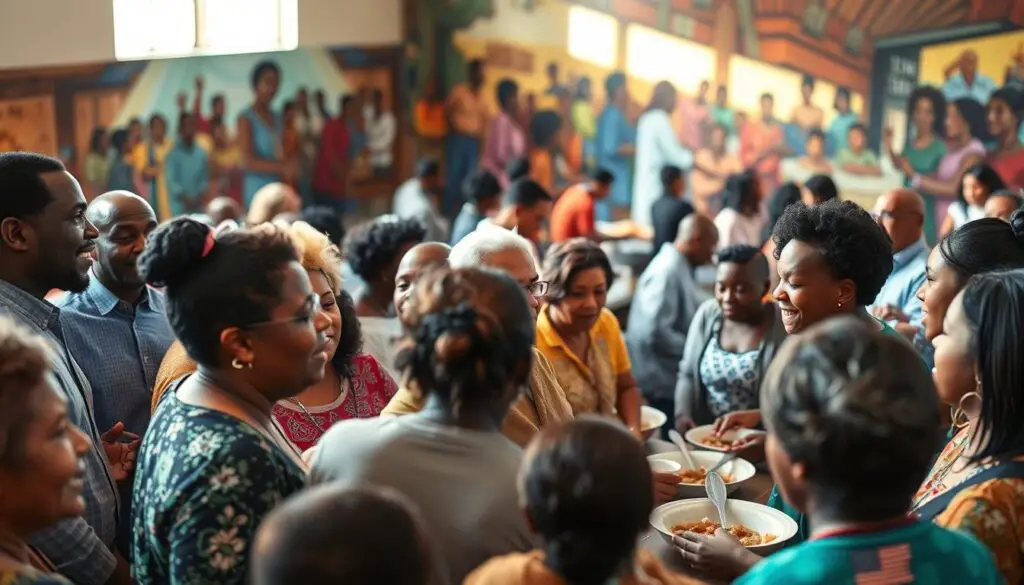
Local Baptist congregations turn spiritual convictions into neighborhood transformation through shared action. In Rhode Island, one church operates a round-the-clock food pantry staffed entirely by members. Their motto – “Hands busy serving, hearts open to all” – reflects how worship extends beyond Sunday services.
Immersion baptism becomes a community celebration here. New believers often join outreach teams within weeks, symbolizing faith made visible through service. A recent candidate shared: “Coming up from the water felt like joining a movement bigger than myself.”
Three practices strengthen communal bonds:
- Shared meals after worship services
- Neighborhood clean-up Saturdays
- Emergency fund managed by members
These efforts mirror historic patterns. Rhode Island congregations trace their community focus to Roger Williams’ 1638 vision of a “lively experiment” blending faith and civic responsibility. Today’s partnerships with schools and shelters continue that legacy.
Seasonal events like back-to-school drives and holiday toy exchanges become spiritual practices. One parent noted, “Seeing our kids wrap gifts for strangers teaches more than any sermon.” Through such engagement, immersion in faith becomes immersion in neighborly care.
Modern challenges test these traditions. Rising rents in Rhode Island pushed one church to convert classrooms into affordable studios. Members vote annually on which local issues to prioritize – this year, mental health resources topped the list.
Conclusion
Centuries after their founding, Baptist principles continue shaping spiritual landscapes through adaptable yet rooted practices. Scriptural authority remains central, guiding communities that reject rigid creeds in favor of personal conviction. Their commitment to believer’s baptism and self-governed congregations preserves a distinct identity across generations.
While honoring tradition, these groups evolve to address modern challenges. Urban food banks and digital ministries now stand alongside river baptisms and hymn sings. This balance reflects their historical DNA – resisting state control while championing justice causes.
Baptists reject complacency as fiercely as they once opposed religious tyranny. From colonial-era pamphleteers to civil rights marchers, their legacy thrives where faith fuels action. Understanding these foundations reveals why diverse expressions coexist under shared values.
Whether preserving tradition or pioneering change, this movement proves core convictions can bridge eras. Their story invites us to see unity not in uniformity, but in the vibrant tapestry of lived faith.
FAQ
How do Baptists view the authority of Scripture?
Baptists emphasize Sola Scriptura, meaning the Bible alone guides faith and practice. They reject extra-biblical creeds as binding, prioritizing personal study and local church interpretation of biblical teachings.
Why is immersion important in Baptist baptism?
Immersion symbolizes spiritual renewal and mirrors Jesus’ example. Unlike infant baptism, Baptists practice believer’s baptism, reserved for those who consciously profess faith, reflecting a personal commitment to Christian discipleship.
How do Baptists approach church governance?
Local churches operate independently under congregational governance. Members vote on decisions, reflecting the priesthood of all believers. Regional associations or conventions offer fellowship without overriding a congregation’s autonomy.
What role does religious freedom play in Baptist theology?
Early leaders like Roger Williams in Rhode Island championed church-state separation to protect conscience rights. Modern Baptists advocate against government interference in worship or doctrine, upholding individual liberty.
How did the Great Awakening shape Baptist growth?
Revivalists like George Whitefield emphasized personal conversion, aligning with Baptist values. This fueled expansion in the American colonies, fostering evangelism and lay participation that defined the movement’s grassroots energy.
What distinguishes Southern Baptists from other groups?
The Southern Baptist Convention, formed in 1845, emphasizes missionary work and conservative theology. Unlike General Baptists, they often hold stricter views on scriptural inerrancy and congregational policies.
How do Baptists practice communion?
The Lord’s Supper is a symbolic act of remembrance, typically observed monthly. Bread and juice represent Christ’s sacrifice, open to all professing believers regardless of denomination, reflecting unity in the Christian faith.
What global impact do Baptists have today?
Missionary efforts since the 18th century spread Baptist theology worldwide. Today, groups in Africa, Asia, and Latin America adapt practices to local cultures while maintaining core principles like believer’s baptism and evangelism.
How did Baptists contribute to civil rights movements?
Leaders like Martin Luther King Jr. leveraged Baptist teachings on equality and justice. Churches often served as hubs for organizing, advocating for religious freedom and societal change through nonviolent resistance.
Why do Baptists reject infant baptism?
Infant baptism conflicts with the belief that only individuals old enough to understand sin and redemption can make a genuine profession of faith. This aligns with their emphasis on personal accountability and voluntary discipleship.