Exploring the core principles of the Baptist tradition reveals a vibrant tapestry of faith and community. Rooted in early Puritan influences, this branch of the Christian faith emphasizes personal spiritual commitment and the transformative power of Jesus Christ. Today, these ideals continue to shape congregations across the United States.
Central to Baptist practice is the belief in Scripture as the ultimate authority. Unlike some denominations, decisions often rest with local church members rather than external hierarchies. This focus on congregational governance dates back to the movement’s 17th-century origins, which championed religious liberty and individual conscience.
Historically, Baptists evolved through waves of revivalism and social change. From their Puritan roots to the First Amendment’s protections, they’ve advocated for the separation of church and state. Modern congregations still prioritize believers’ baptism by full immersion, symbolizing spiritual rebirth and alignment with Jesus Christ’s teachings.
Key Takeaways
- Scripture serves as the foundation for Baptist teachings and decision-making.
- Congregational governance empowers individual churches to manage their affairs.
- Believer’s baptism by immersion reflects personal commitment to faith.
- Religious freedom remains a cornerstone of Baptist history and identity.
- Modern practices blend historical traditions with evolving community needs.
The Historical Context of Baptist Beliefs
Baptist theology grew from 17th-century debates over religious identity. Early dissenters, influenced by Puritan ideals and Calvinist teachings, sought to redefine Christianity beyond state control. This tension birthed groups like the Particular Baptists, who blended predestination with a radical focus on local church independence.
Roots in Early Puritan Movements and Calvinism
Calvinism’s emphasis on God’s sovereignty shaped early Baptist views of salvation. Leaders like John Smyth argued for believers’ baptism, rejecting infant rituals. By 1644, the London Confession formalized these ideas, though many congregations resisted creeds, preferring spirit-led interpretations of Scripture.
Transition Through Evangelical Revival and Modernism
The Great Awakening reshaped practices in the 18th century. Preachers like George Whitefield sparked evangelism efforts, while the First Amendment later cemented religious freedom as a civic right. Rhode Island’s founding by Roger Williams became a blueprint for separation of church and state.
By the 1900s, modernism challenged traditional views. Debates over biblical authority divided some churches, yet most upheld congregational governance. Today, this history echoes in self-governing parishes and ongoing advocacy for conscience-driven faith.
Primary Doctrines and Core Principles
For Baptists, the Bible isn’t just a book—it’s the living voice directing their spiritual journey. This authority shapes worship, ethics, and community life. Every decision, from personal choices to church policies, flows from Scripture’s teachings.

The Authority of Scripture in Faith and Practice
The New Testament serves as the ultimate guidebook. Baptists turn to verses like 2 Timothy 3:16-17 to affirm that Scripture equips believers for every good work. This reliance means sermons focus on biblical exegesis, and members often study passages collectively.
Congregations apply this authority to matters of faith practice. For example, many churches vote on leadership roles after prayerful scriptural reflection. This approach ensures alignment with God’s Word rather than human traditions.
The Concept of a Non-Creedal, Spirit-Led Faith
Baptists avoid rigid doctrinal statements, trusting the Holy Spirit to illuminate truth. While historic confessions exist, they’re seen as guides—not binding creeds. This freedom allows diverse interpretations within biblical boundaries.
The priesthood of all believers empowers every member to interpret Scripture. Laypeople lead prayers, teach classes, and participate in baptisms. A mechanic might preach Sunday’s sermon, illustrating how faith transcends professional clergy roles.
| Creedal Systems | Baptist Approach |
|---|---|
| Fixed doctrinal statements | Scripture as sole authority |
| Hierarchical enforcement | Spirit-led congregational discernment |
| Uniform practices | Contextual application of biblical principles |
Believer baptism embodies this ethos. By immersing consenting adults, churches visibly declare resurrection into new life through Jesus Christ. The act rejects ritualism, emphasizing personal commitment over inherited tradition.
Understanding Believers’ Baptism and Immersion
In Baptist tradition, baptism isn’t just a ritual—it’s a profound declaration of faith. This sacred act weaves personal conviction with communal celebration, creating moments where believers visibly embrace their spiritual journey.
Symbolism and the Practice of Full Immersion
When someone steps into the baptismal waters, they reenact Christ’s burial and resurrection. The plunge beneath the surface symbolizes death to old ways, while rising represents new life through faith. As Romans 6:4 explains, “We were buried with Him through baptism into death, that just as Christ was raised… we too might walk in newness of life.”
Full immersion follows New Testament patterns. Unlike sprinkling, this method mirrors Jesus’ baptism in the Jordan River. Many churches use indoor pools or natural bodies of water, ensuring the candidate is fully submerged. The congregation often cheers as the person emerges, celebrating their public commitment.
| Baptism Method | Symbolic Meaning | Common Denominations |
|---|---|---|
| Immersion | Death/rebirth | Baptist, Pentecostal |
| Sprinkling | Cleansing | Catholic, Lutheran |
| Pouring | Spiritual renewal | Methodist, Reformed |
In Texas, Riverbend Church hosts lakeside baptisms where members share testimonies before immersion. One participant described it as “feeling weighed down by my past one moment, then lifted into hope the next.” These gatherings strengthen church bonds, uniting groups in shared worship.
For Baptists, this ordinance isn’t a requirement for salvation but a joyful response to grace. It marks the start of a deeper relationship with God, witnessed and affirmed by fellow believers.
Exploring what are baptist main beliefs and Their Impact on Local Churches
Local congregations thrive through self-governance while maintaining deep connections with broader Baptist principles. This balance of independence and unity creates vibrant spiritual hubs where members actively shape their collective journey.
Church Autonomy and Congregational Governance
Each local church operates independently, choosing leaders and setting policies through member votes. This structure traces back to Roger Williams’ 17th-century Rhode Island colony, where religious liberty meant freedom from external control. Today, churches might share resources through groups like the Southern Baptist Convention but retain final decision-making authority.
Congregational meetings often determine budgets, outreach programs, and doctrinal stances. For example, a Texas congregation recently voted to fund a bilingual evangelism initiative after months of prayer and discussion. Such autonomy fosters creativity while keeping practices rooted in Scripture.
Cooperative ministries show how independence coexists with collaboration. Churches unite for disaster relief or mission trips without surrendering self-rule. “We’re like siblings,” explains a pastor from Ohio. “Different personalities, same DNA.”
| Centralized Denominations | Baptist Churches |
|---|---|
| Top-down leadership | Member-driven decisions |
| Uniform policies | Contextual adaptations |
| External oversight | Local accountability |
This model impacts daily life profoundly. Members feel ownership over their spiritual home, whether teaching Sunday school or organizing food drives. Shared values bind diverse congregations, proving that freedom and fellowship can flourish together.
Worship, Ordinances, and Community Life
Gathering around shared rituals and relationships forms the heartbeat of Baptist communities. These moments—whether breaking bread or mentoring new believers—anchor spiritual growth in everyday life.
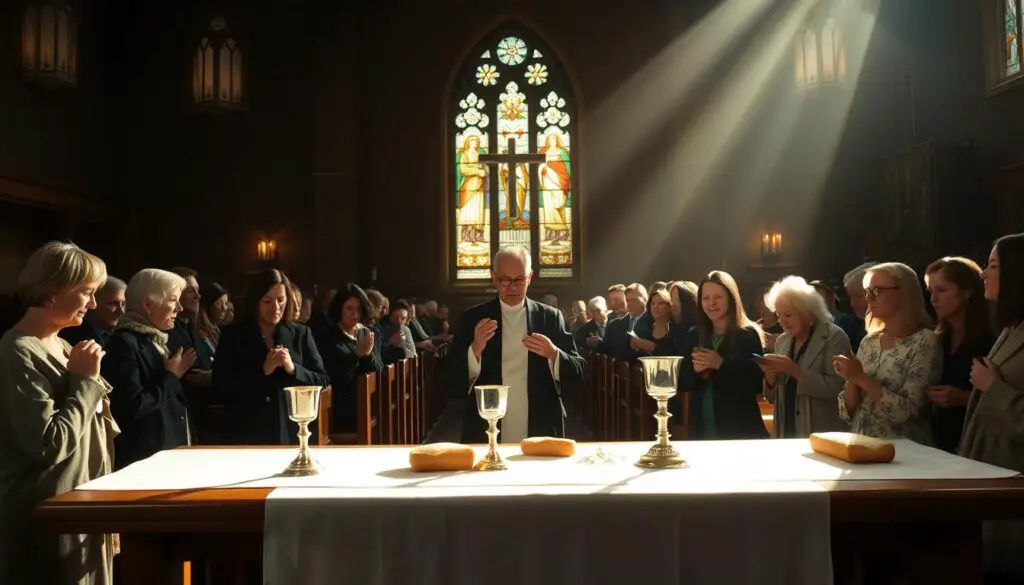
The Lord’s Supper as a Time of Remembrance
When Baptists share the Lord’s Supper, they step into a 2,000-year-old story. The bread and cup symbolize Christ’s broken body and shed blood, echoing His final meal with disciples. As 1 Corinthians 11:26 notes, this act proclaims His death “until He comes.”
Rhode Island’s earliest congregations practiced this ordinance monthly, fostering unity amid religious diversity. Today, churches often pass trays of unleavened bread and grape juice while reflecting on grace. A pastor in Nashville describes it as “remembering forward—honoring the past while anticipating eternity.”
Membership, Discipleship, and Mutual Accountability
Joining a Baptist church starts with baptism and often includes membership classes. These sessions explore doctrine, church history, and expectations for communal faith practice. New members pledge to support the congregation through service and giving.
Discipleship thrives through small groups where people study Scripture and share struggles. One Ohio church pairs seasoned believers with newcomers for monthly coffee meetings. This intentional care mirrors the priesthood of all believers, where everyone contributes to the church’s life.
- Bread & Cup: Symbols of Christ’s sacrifice, renewed with each observance
- Membership Vows: Public commitment to grow and serve alongside others
- Accountability Partnerships: Weekly check-ins to encourage spiritual consistency
From Rhode Island’s colonial chapels to Texas megachurches, these practices knit congregations into resilient spiritual families. Through worship and mutual care, they embody Christ’s love in a fractured world.
Baptists in a Modern Context: Religious Freedom and Interchurch Relations
Baptists continue shaping America’s religious landscape by championing principles forged in their turbulent past. Their commitment to liberty and self-governance now meets 21st-century challenges, from cultural shifts to interfaith partnerships.
Advocating for Separation of Church and State
Baptists have long opposed government interference in spiritual matters. This stance traces back to Roger Williams, who founded Rhode Island as a haven for conscience-driven faith. Today, groups like the Baptist Joint Committee defend the First Amendment, ensuring no church receives state favoritism.
| Policy Area | Baptist Approach | Other Denominations |
|---|---|---|
| Government Partnerships | Neutrality preferred | Some seek tax-funded programs |
| Religious Tests | Opposed since 17th century | Varies by tradition |
| Interfaith Cooperation | Collaborate without compromising doctrine | Often hierarchical agreements |
In 2022, Southern Baptist leaders opposed school prayer mandates, arguing true faith can’t be legislated. “Freedom thrives when church and state respect each other’s lanes,” explains Amanda Tyler of the BJC.
Engaging in Ecumenical Dialog and Cooperative Ministries
While valuing independence, many congregations join hands across denominational lines. After Hurricane Ian, Florida Baptists worked with Catholic Charities to rebuild homes—a partnership focused on service, not doctrinal debates.
Such efforts reflect the Baptist movement’s adaptability. Churches might differ on baptism modes yet unite for evangelism campaigns or food drives. A Nashville pastor notes, “Our authority is Christ, not consensus. That frees us to collaborate without fear.”
Balancing autonomy with unity remains tricky. Yet, as global religious tensions rise, Baptists model how liberty and cooperation can coexist—one meal packed, one soul nurtured at a time.
Conclusion
From colonial meetinghouses to modern megachurches, Baptist churches have nurtured a distinct spiritual identity. Their commitment to Scripture’s authority and believers’ baptism remains unshaken, even as practices adapt to new cultural realities. Local congregations still vote on matters big and small, honoring their principle of self-governance.
The United States owes much to early Baptist advocacy for religious freedom. Figures like Roger Williams laid groundwork for the First Amendment, ensuring faith thrives without state interference. Today, this legacy fuels both worship and civic engagement.
Cooperative ministries show how autonomy strengthens unity. Churches partner for disaster relief or youth programs while guarding local decision-making. Shared values—like immersion baptisms and Bible-centered teaching—bind diverse churches across generations.
Want to learn more? Explore how these historic principles shape vibrant faith communities. Whether through baptismal waters or congregational votes, Baptist traditions continue making waves in American spiritual life.
FAQ
How do Baptists view the role of Scripture in daily life?
Baptists emphasize the authority of Scripture as the ultimate guide for faith and practice. The Bible is seen as divinely inspired, providing clear teachings for personal ethics, church governance, and spiritual growth. This focus encourages individual study and application of biblical principles.
Why is believer’s baptism through immersion significant?
A: Immersion symbolizes a believer’s identification with Jesus’ death, burial, and resurrection. Unlike infant baptism, this practice reflects a conscious choice to follow Christ, rooted in New Testament examples. It represents spiritual cleansing and public commitment to the Christian faith.
What does "priesthood of all believers" mean for church members?
This principle affirms that every Christian has direct access to God through Jesus Christ, eliminating the need for intermediaries. It empowers individuals to interpret Scripture, participate in worship, and share responsibilities like evangelism and discipleship within congregations.
How do Baptist churches handle leadership and decision-making?
Most Baptist churches practice congregational governance, where members collectively make decisions on doctrine, finances, and leadership. Pastors and deacons serve as spiritual guides, but final authority rests with the local body, ensuring autonomy from external hierarchies.
What role does religious liberty play in Baptist history?
Early advocates like Roger Williams fought for separation of church and state, influencing the First Amendment. Baptists historically oppose government interference in religious matters, defending freedom of conscience for all faith groups. This commitment remains central to their identity.
How do modern Baptists engage with other Christian traditions?
Many participate in ecumenical dialogues and cooperative ministries, focusing on shared goals like poverty relief or evangelism. While preserving distinct beliefs, groups like the Baptist World Alliance foster unity without compromising core principles like believer’s baptism or church autonomy.
What distinguishes the Lord’s Supper in Baptist worship?
The ordinance is a symbolic act of remembrance, honoring Jesus’ sacrifice. Unlike some traditions, Baptists view it as a memorial rather than a sacramental practice. Participation is typically open to all professing believers, reflecting their emphasis on personal faith over ritual.
How do Baptists approach evangelism and community outreach?
Sharing the Gospel is a cornerstone, driven by the belief in Christ’s resurrection as humanity’s hope. Local churches often prioritize missions, disaster relief, and neighborhood programs. This outward focus stems from Jesus’ Great Commission and a desire to demonstrate faith through action.