Let’s explore a spiritual movement that reshaped Christian faith worldwide. Born from 16th-century reforms, this branch of Christianity began as a call to return to biblical foundations. Leaders like Martin Luther challenged established practices, sparking changes still felt today.
At its heart are four guiding ideas. First, scripture stands as the ultimate authority – translated into everyday language for all to understand. Second, every believer connects directly with God without needing intermediaries. Third, grace through faith alone defines salvation. Finally, communities gather around shared study rather than hierarchy.
With nearly one billion followers, this tradition impacts cultures globally. It represents about 30% of those who identify with Christianity, shaping worship styles and social values across continents. From hymn-singing congregations to modern megachurches, its influence keeps evolving.
Key Takeaways
- Originated during 16th-century reforms challenging religious authority structures
- Four foundational ideas prioritize scripture, faith, and personal connection with God
- Represents 30% of global Christian population with diverse practices
- Differs from other traditions through emphasis on biblical accessibility
- Continues shaping modern spiritual practices and community engagement
The Historical Foundations of Protestantism
A German monk’s critique of church practices sparked a movement that changed Christianity forever. In 1517, Martin Luther nailed ninety-five arguments to a Wittenberg church door. His bold act challenged the Roman Catholic Church’s sale of indulgences and reshaped spiritual life across Europe.
Defiance That Shaped a Movement
Luther’s stand at the 1521 Diet of Worms became legendary. Facing Emperor Charles V, he refused to recant his writings. “Here I stand,” he declared, cementing his role in the Protestant Reformation. By 1529, German princes protesting restrictions on Luther’s followers gave the movement its name.
Ideas That Traveled Fast
The printing press turbocharged the spread of Reformation theology. For the first time, ordinary people read scripture in their language. This broke the Catholic Church’s control over biblical interpretation. New teachings about salvation and church leadership took root across 16th-century Europe.
From Luther’s initial protests grew diverse traditions still shaping worship today. His emphasis on personal faith and accessible scripture created ripples that reach modern congregations worldwide.
Scripture Alone: The Authority of the Bible
Imagine holding ultimate truth in your hands – that’s how many believers view the Bible’s role in their spiritual lives. This radical idea transformed how communities engage with divine wisdom.
When Pages Shape Practice
The “Scripture Alone” principle means every teaching gets tested against biblical text. Unlike systems relying on human traditions, Protestant Christians treat the Bible as God’s direct communication. Early reformers printed scripture in street languages, letting farmers and merchants read God’s promises themselves.
Living by the Book
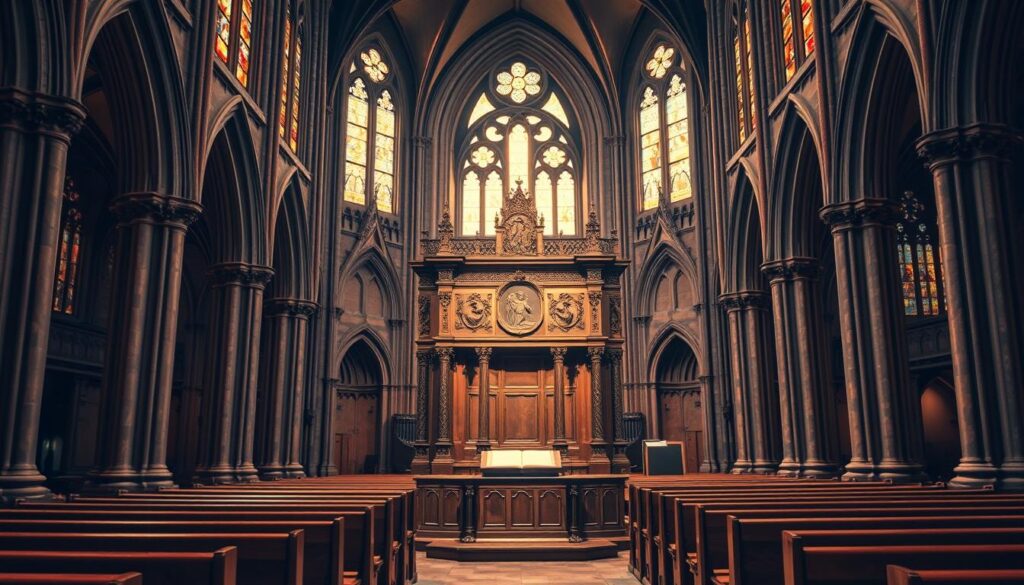
Churches using this approach often display open Bibles during services. Why? To show holy scripture guides decisions – from leadership choices to helping neighbors. Members might debate meanings, but all agree on the source of authority.
Three ways the Bible shapes daily faith:
- Sermons dissect passages line-by-line
- Study groups explore cultural contexts
- Personal reading plans encourage reflection
This focus keeps teachings grounded. As one pastor notes: “When opinions clash, we ask – what does the word of God clearly say?” The answer settles debates and unites diverse believers under shared truths.
Grace Alone: Embracing Unconditional Love
Picture a love that asks nothing in return – that’s the heart of Sola Gratia. This revolutionary idea flipped religious expectations upside down. Instead of earning divine approval, believers receive it as a completely unearned embrace.

The Concept of Unmerited Favor
Your job title? Irrelevant. Your bank account? Doesn’t matter. Protestant teachings insist God’s grace ignores résumés. A CEO and cashier stand equal here. As one reformer wrote: “We’re all beggars at heaven’s door.”
This free gift reshapes self-worth. You’re valuable because God says so – not because of achievements. It’s like getting front-row concert tickets you didn’t buy. The surprise creates joy, not guilt.
The Impact on Salvation Theology
No more spiritual scorecards. Trying to earn salvation through rituals? Protestant thinkers called that exhausting. Grace alone means breathing easy – salvation’s already handled.
But wait – doesn’t this encourage laziness? Not quite. As Martin Luther explained: “Good works don’t make a Christian, but a Christian does good works.” The difference? Actions flow from gratitude, not desperation.
Three ways this changes daily life:
- Helping neighbors becomes joyful, not obligatory
- Mistakes don’t define your worth
- Community bonds strengthen through shared acceptance
Through faith in Jesus Christ, believers find freedom. They’re no longer climbing an impossible ladder – just walking hand-in-hand with grace.
Faith is All-Important: A Transformative Encounter with God
What if your deepest questions led to unshakable trust? That’s the power of faith alone – a cornerstone of spiritual life that reshapes hearts. Unlike memorized creeds, this living confidence grows through wrestling with doubt, much like a seed breaking through rocky soil.

From Doubt to Devotion
Many believers discover faith during life’s storms. A nurse questioning suffering, a student doubting purpose – their stories often share a pattern. Moments of crisis become doorways to encountering Jesus Christ personally. As one recovering addict put it: “When my plans crumbled, God’s grace caught me.”
Martin Luther captured this bold trust perfectly:
“Faith is a living, daring confidence in God’s grace, so sure and certain that a man could stake his life on it a thousand times.”
Notice the energy – faith isn’t passive agreement but active reliance.
Three truths about this journey:
- God’s invitation comes freely, but we choose acceptance
- Doubt isn’t faith’s enemy – it’s often its training ground
- Transformative encounters ripple into daily choices
This freedom defines faith alone. No forced conversions, just open hands receiving love. Whether in quiet times of prayer or serving neighbors, that daring confidence changes everything. It turns Sunday beliefs into Monday courage.
Protestantism Main Beliefs and Their Contemporary Relevance
In bustling cities and quiet towns, ancient truths meet modern challenges. Over 800 million people now identify with this tradition, shaping how churches address today’s complex questions. From smartphone Bible apps to global aid networks, Reformation roots still bear fruit in surprising ways.
Application in Modern Christian Life
Morning commutes often include podcast sermons. Small groups video-chat across time zones. These routines show how Protestant theology adapts while keeping core principles intact. A youth pastor in Texas explains: “We still ask – what does Scripture clearly say? But now we share answers through TikTok devotionals.”
Three ways beliefs shape daily life:
- Online giving platforms support food banks worldwide
- Debates about social issues start with grace-centered dialogue
- Personal Bible reading plans sync across devices
Influence on Today’s Churches
Worship spaces now blend stained glass with LED screens. Yet the message remains unchanged. Over 60% of U.S. congregations stream services, reaching members from Seoul to São Paulo. This global network fuels initiatives like:
| Focus Area | Traditional Approach | Modern Adaptation |
|---|---|---|
| Scripture Access | Printed Bibles | AI-powered study tools |
| Community Care | Local soup kitchens | Disaster relief apps |
| Global Outreach | Missionary letters | Virtual reality church plants |
These innovations face criticism too. Some worry technology distracts from life-changing encounters. But as a Nairobi pastor notes: “Paul used Roman roads – we use Wi-Fi. The goal stays the same: share hope with the world.” The balance between old and new keeps Protestant theology relevant across generations.
The Universal Priesthood: Equality in the Church
Equality wasn’t just a concept—it became a spiritual revolution. The Reformation introduced a radical idea: every baptized believer holds equal worth before God. This principle shattered medieval hierarchies, letting factory workers and farmers share spiritual authority with seminary graduates.
Shared Ministry and Leadership
Imagine a church committee where teachers, nurses, and students collaborate with pastors. That’s the living reality of shared governance. While ministers handle sacraments and sermons, church members lead outreach programs and budget decisions. As one Lutheran deacon notes: “Our youth director’s a mechanic – and the best Bible teacher we’ve got.”
Three ways this freedom transforms communities:
- Retirees organize food drives using logistics skills
- Teens lead worship bands with original music
- Engineers design accessible church buildings
The Holy Spirit works through all believers, not just clergy. Pastors become coaches rather than CEOs – equipping members to serve. This collaborative form keeps churches nimble. When a tornado hit Ohio last year, congregants instantly mobilized relief efforts without waiting for “expert” approval.
Modern churches thrive when everyone’s gifts matter. From tech teams to prayer warriors, each person’s role strengthens the whole body. As the early reformers envisioned: true unity grows when all voices contribute.
Exploring the Diversity within Protestant Theology
The tapestry of Protestant thought weaves together countless threads of interpretation. While united by the five solae principles, followers of Martin Luther and John Calvin developed distinct expressions of faith. This led to denominations like Baptists, Methodists, and Pentecostals – each adding unique patterns to the broader fabric.
Varied Denominational Insights
Lutheran denominations emphasize sacraments like the Lord’s Supper, while Assemblies of God churches prioritize the Holy Spirit’s transformative power. Baptists champion adult baptism by immersion, contrasting with Methodist infant christening practices.
Yet all share core convictions: salvation through faith alone, scripture’s supreme authority, and living for the glory of God. A Texas megachurch pastor notes: “Our worship styles differ, but the good news remains unchanged.”
This diversity strengthens the global Christian church. From inner-city ministries to rural chapels, varied approaches meet unique community needs while upholding foundational truths. As debates continue, the shared mission to spread hope unites believers across the world.
FAQ
How did Protestant Christianity begin?
It started in the 16th century when reformers like Martin Luther challenged certain practices of the Roman Catholic Church. This movement, called the Reformation, emphasized returning to biblical teachings and salvation through faith alone.
Why is the Bible so important to Protestant Christians?
Holy Scripture is viewed as the ultimate authority for faith and life. Many believers rely on its teachings for clear guidance, trusting it reveals God’s truth without needing additional traditions.
What does "grace alone" mean in Protestant theology?
It highlights that salvation is a free gift from God, not earned by good works. This unmerited favor reflects His unconditional love, offering redemption to all who trust in Jesus Christ.
How does personal faith shape a believer’s life?
Faith is seen as a transformative relationship with God. It moves individuals from doubt to devotion, inspiring actions rooted in love, holiness, and gratitude for Christ’s sacrifice.
Do Protestant churches value leadership equality?
Yes! The universal priesthood teaching affirms that all members—not just clergy—can serve and interpret Scripture. This idea fosters shared ministry and active participation in church life.
Are there differences among Protestant denominations today?
Absolutely. Groups like Lutherans, Baptists, and Assemblies of God vary in practices and emphases. Yet they share core principles like Scripture’s authority and salvation through grace by faith.
How do Protestant beliefs influence modern churches?
They inspire outreach, worship styles, and community engagement. Many congregations focus on spreading the good news of Jesus while adapting to cultural changes without compromising biblical truths.