Navigating the guidelines that shape spiritual communities can feel overwhelming, especially with so many traditions and practices across different groups. These frameworks blend ancient wisdom with modern values, offering structure while leaving room for personal growth. At their core, they focus on fostering connection—to faith, to others, and to shared purpose.
Many denominations prioritize Scripture as the ultimate authority, encouraging members to engage deeply with biblical teachings. This approach creates a balance between individual interpretation and collective understanding. Some groups follow formal structures for decision-making, while others adopt more flexible models led by both clergy and laypeople.
These guidelines touch every aspect of community life—from worship styles to ethical choices. They’re not just about Sunday services; they shape how people support one another during challenges or celebrate milestones together. This living tradition adapts to cultural shifts while preserving core beliefs that unite millions worldwide.
Key Takeaways
- Spiritual communities use diverse governance models, ranging from formal structures to collaborative leadership
- Scripture serves as the primary foundation for ethical and theological decisions
- Guidelines address both collective worship practices and personal spiritual development
- Individual interpretation coexists with shared principles across denominations
- Modern applications of tradition emphasize community support and real-world relevance
Understanding Protestant Church Rules and Ethical Foundations
At the heart of spiritual communities lie principles that guide both collective worship and personal conduct. These foundations blend timeless wisdom with practical applications, shaping how people connect with the divine and each other.
Scripture as the Ultimate Guide
Central to these traditions is the belief that spiritual authority flows directly from sacred texts. Unlike rigid hierarchies, many groups view Scripture as their primary compass for ethical decisions. This approach empowers believers to interpret teachings while maintaining shared values.
Living by Love and Justice
Two key teachings shape daily practice:
- The Ten Commandments outline respect for divine and human relationships
- Jesus’ golden rule (“treat others as you want to be treated”) transforms rules into compassionate action
Grace Over Perfection
Recognizing human imperfection, these traditions emphasize grace as God’s unearned gift. This concept offers freedom from trying to “deserve” acceptance, focusing instead on growing through divine love. As one teacher noted: “We’re called to extend the same mercy we receive.”
These principles create a framework where faith becomes active – not just in worship spaces, but in workplaces, homes, and community interactions. They remind people that true spiritual growth happens through both personal reflection and service to others.
Rituals and Ordinances in Protestant Worship
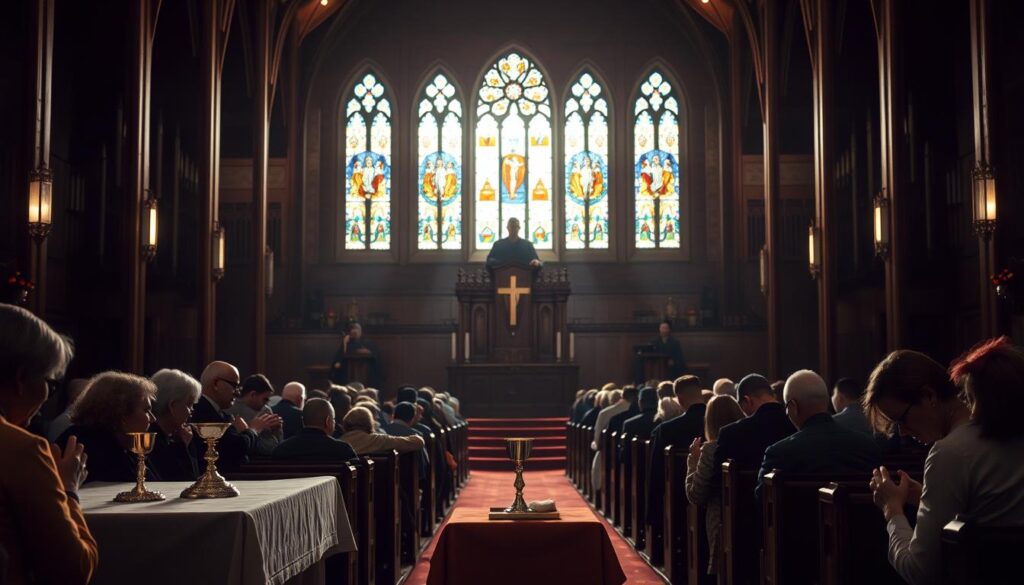
Sacred traditions shape how believers connect with their faith through symbolic acts. These practices vary across denominations but share a common purpose: to anchor spiritual life in tangible expressions of devotion.
Baptism: Entry into the Faith
Water rituals mark spiritual rebirth, with methods reflecting theological perspectives. Some groups immerse adults fully, while others sprinkle infants. Lutheran and Anglican communities often baptize babies, viewing it as God’s promise to families. Baptist traditions wait until individuals can profess personal belief, usually during adolescence.
Communion: Celebrating Christ’s Sacrifice
Shared meals using bread and juice unite worshippers across generations. One pastor describes it as “remembering forward – honoring the past while anticipating eternity.” Frequency ranges from monthly observances to quarterly celebrations, depending on a congregation’s emphasis.
Dedication and Confirmation Practices
Families in non-baptizing denominations present babies during special services, pledging to nurture their faith. Later, teens often participate in confirmation classes. These milestones help children claim their spiritual identity while learning communal values.
Tithes and Acts of Charity
Financial giving becomes worship when paired with joyful intent. Many see tithing as returning a portion of God’s gifts to support community needs. Beyond money, members volunteer time and skills – from feeding neighbors to mentoring youth.
These rituals create spiritual rhythms, blending ancient symbolism with modern relevance. Whether through water, bread, or shared resources, they remind people their faith lives through action.
Community Impact: Practices and Modern Interpretations
Faith communities shape society through both ancient traditions and fresh approaches to spiritual connection. These groups balance time-honored customs with innovative ways to address today’s challenges, creating spaces where beliefs translate into meaningful action.
Diverse Denominational Practices
From high-church rituals to contemporary gatherings, spiritual groups express devotion in countless forms. One congregation might use centuries-old hymns, while another blends modern music with interactive discussions. Despite differences, most share a focus on Scripture-centered teaching and service-oriented missions.
Preaching, Weekly Observance, and Personal Worship
Sunday gatherings often mix structured elements with spontaneous moments. Many include creative programs for younger members, helping families grow together. Beyond weekly services, believers nurture their faith through morning meditations, mealtime blessings, and bedtime reflections.
Some find spiritual depth in group Bible studies held in living rooms. Others prefer solitary journaling sessions. A pastor recently shared: “Our worship doesn’t end when the music stops – it continues in how we treat our neighbors.”
Living Out Faith in Everyday Life
Modern interpretations of sacred texts inspire food drives, environmental initiatives, and advocacy for justice. Many communities operate mentorship programs pairing elders with youth. These efforts reflect the principle that love becomes tangible through practical support.
Volunteers often say serving others deepens their own spiritual journey. Whether tutoring students or visiting seniors, these acts bridge ancient teachings with contemporary needs. As one organizer noted: “We’re called to be hope with skin on.”
Conclusion
Spiritual growth thrives where structure meets personal freedom. The guidelines shaping these communities aim to help every person encounter the transformative presence of God through Jesus Christ. While practices vary across denominations, each tradition offers unique ways to live out shared values of compassion and service.
Central to this journey is the understanding that salvation flows from divine grace, not human achievement. This truth empowers believers to serve others without pressure to “earn” approval. Every baptized individual holds equal value, whether leading worship or volunteering in local neighborhoods.
Modern communities adapt ancient wisdom to address today’s challenges. From mentoring programs to environmental initiatives, they demonstrate faith through action. The Holy Spirit guides this work, helping people reflect God’s love in practical ways.
These frameworks honor both personal conscience and collective accountability. They remind us that spiritual vitality grows when we balance timeless truths with fresh approaches to serving the world.
FAQ
How do Protestant communities view spiritual authority?
Many emphasize the Bible as the ultimate guide, prioritizing Scripture over tradition. Leaders often encourage believers to personally engage with teachings while fostering accountability within congregations.
What role do the Ten Commandments play in daily life?
They serve as ethical foundations, highlighting values like honesty and respect. Paired with Jesus’ teachings in the Sermon on the Mount, they shape moral decisions and relationships.
Why is communion significant in worship services?
It commemorates Christ’s sacrifice, symbolizing unity among believers. Practices vary—some offer it weekly, others monthly—but all focus on remembering His grace and redemption.
How do denominations differ in baptism practices?
Some baptize infants as a covenant sign, while others wait for personal confession of faith. Both approaches reflect a commitment to welcoming individuals into the faith community.
What’s the purpose of tithing and charity?
Giving supports congregational needs and aids vulnerable groups. It’s seen as an act of gratitude, aligning with biblical calls to steward resources generously and justly.
How do modern believers integrate faith into daily routines?
Through prayer, ethical choices, and service. Many prioritize humility, forgiveness, and love—viewing everyday interactions as opportunities to reflect Christ’s teachings.
Are confirmation ceremonies common across traditions?
Yes, they often mark a person’s commitment to their beliefs. These rites vary but typically involve affirming one’s faith publicly and deepening understanding of Scripture.