At the heart of Catholic spiritual life lie sacred practices designed to deepen one’s relationship with God. These rituals, rooted in scripture and tradition, serve as bridges between the divine and the everyday. Through symbolic actions and prayers, believers experience tangible connections to spiritual truths that shape their faith journey.
The Catholic Church identifies seven core practices, each with distinct purposes and meanings. Grouped into initiation, healing, and service categories, they guide individuals through life’s milestones. Baptism welcomes new members, while the Eucharist strengthens community bonds through shared worship. Confirmation reinforces personal commitment to spiritual growth.
Some rituals, like marriage or holy orders, mark lifelong commitments. Others, such as reconciliation, offer ongoing renewal. Every sacrament combines physical elements—water, oil, bread—with invisible grace, creating moments where heaven and earth intersect. This blend of action and mystery unites Catholics across generations and cultures.
Key Takeaways
- Seven sacred rituals form the foundation of Catholic spiritual practice
- Three categories organize the sacraments: initiation, healing, and service
- Visible symbols accompany invisible spiritual transformations
- Some sacraments occur once, while others renew faith regularly
- Shared practices connect global Catholic communities
- Each ritual reflects Christ’s teachings and Church traditions
Defining the Sacraments: An Overview
Catholic rituals transform ordinary moments into divine encounters through tangible symbols. These sacred acts blend physical materials with spiritual realities, making grace accessible in daily life. Unlike simple traditions, they carry divine power to shape souls and strengthen faith.
Understanding Sacramental Grace
Imagine water washing away imperfections or bread nourishing the spirit. These actions show how God’s help flows through rituals. Baptism uses immersion to symbolize rebirth, while the Eucharist turns simple meals into encounters with Jesus Christ’s living presence.
The Role of Visible Rites in Faith
Oil anointings, whispered confessions, and clasped hands at weddings—each rite mirrors heaven’s touch. The Catholic Church teaches that matter matters because God became human. Sacraments aren’t spells but invitations: divine love meets human openness, creating lasting change.
Through these practices, believers don’t just remember sacred stories. They relive them. A sip of wine becomes participation in eternity, and a spoken vow echoes divine promises. This is faith made visible, hope made tangible.
Baptism: The Gateway to a Life of Faith
The journey into Catholic spiritual practice begins with a transformative rite marking spiritual rebirth. This initiation ceremony opens doors to faith development and communal belonging. Unlike other rituals, it leaves an eternal imprint on the soul.
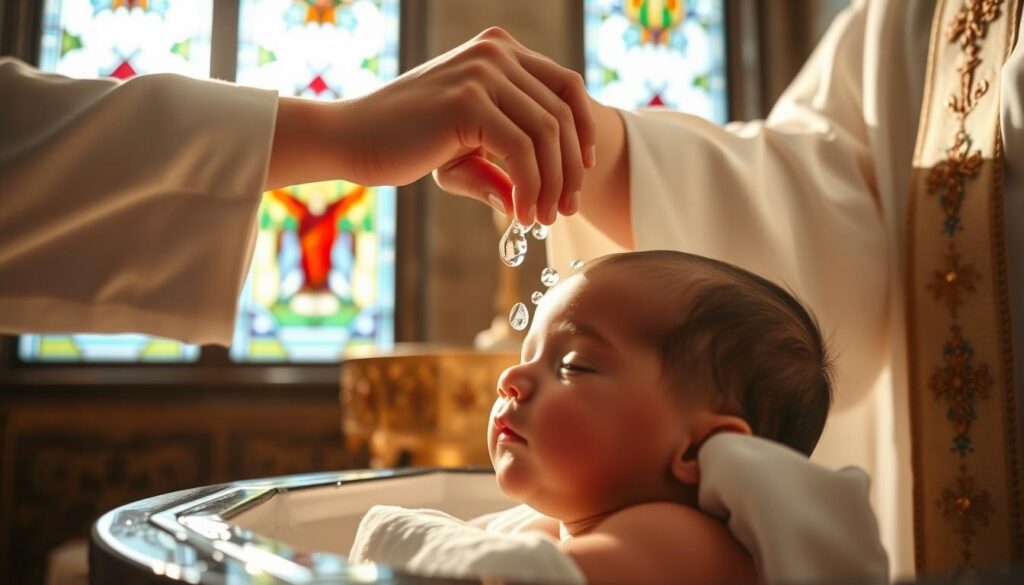
Symbolism and Ritual of Baptism
Water flows through this sacred act as a powerful metaphor. It represents both burial of past imperfections and emergence into renewed life. As the priest pours holy water three times, participants hear the Trinitarian formula—a verbal seal on their divine adoption.
Infants often receive this sacrament, symbolizing grace received before personal understanding. Adults preparing for baptism undergo catechesis, deepening their commitment to spiritual growth. Both forms celebrate God’s invitation to join His family.
The ritual creates permanent membership in the Church, recognized across Christian traditions. Whether through sprinkling or immersion, the action unites believers worldwide. One ancient teaching summarizes its power: “We become what we receive—children of light.”
Through baptism, original sin washes away as the Holy Spirit ignites new purpose. This foundational step shapes every future spiritual milestone, anchoring believers in their identity as cherished heirs of divine promise.
Eucharist: The Heart of Catholic Worship
In Catholic communities worldwide, one sacred meal stands above others in its power to unite and nourish. This sacrament, celebrated daily in countless churches, transforms simple ingredients into divine sustenance. Through Holy Communion, believers encounter Christ’s living presence while strengthening bonds with fellow worshippers.
https://www.youtube.com/watch?v=34pSVZxRW8M&pp=0gcJCfwAo7VqN5tD
Celebrating Holy Communion
Children typically prepare for their First Communion around age seven. After learning about forgiveness through Reconciliation, they approach the altar with reverence. The priest’s consecration prayer changes bread and wine into Christ’s body and blood—a mystery called transubstantiation.
Regular participation in this ritual offers ongoing spiritual renewal. Many Catholics receive Holy Communion weekly or even daily, finding strength for life’s challenges. As one ancient hymn declares: “Become what you receive, and receive what you are—the body of Christ.”
The Real Presence in the Eucharist
Unlike symbolic interpretations, Catholic teaching insists Jesus Christ becomes truly present in consecrated elements. This belief shapes how communities approach the altar—with awe and preparation. Shared participation creates unity, reminding believers they’re part of something eternal.
The Eucharist also connects modern worshippers to biblical events. Every Mass echoes Christ’s Last Supper while making his sacrifice spiritually present again. This dual nature—memorial and miracle—fuels Catholic devotion across generations.
Confirmation: Strengthening Through the Holy Spirit
Young believers step into mature spiritual roles through an ancient Church tradition. This initiation completes their baptismal journey, equipping them with divine tools for lifelong faith practice. Unlike childhood rituals, confirmation invites active participation in spiritual growth.
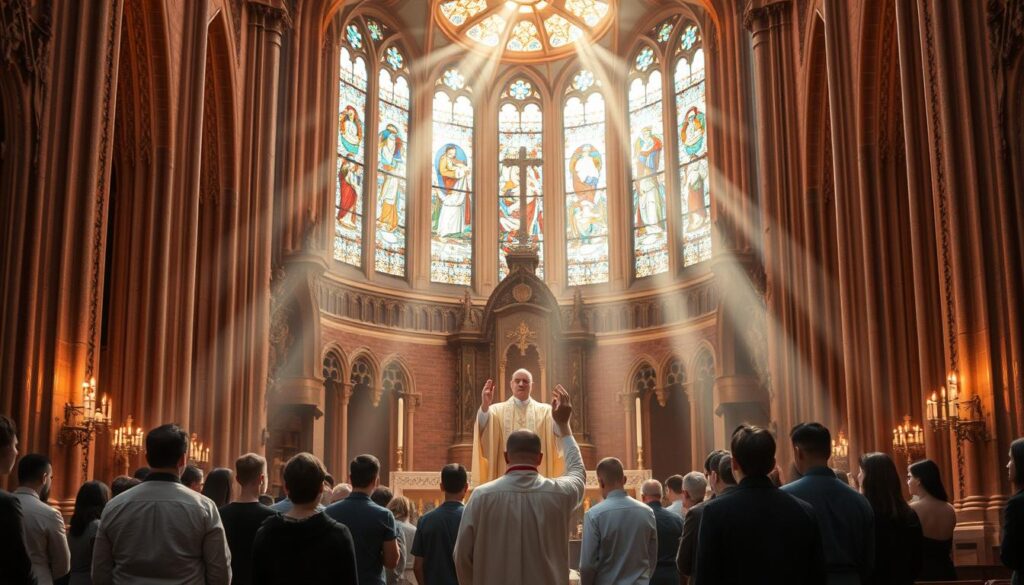
Rituals and Symbolism in Confirmation
Most Catholics receive this sacrament between age seven and sixteen. The ceremony features two powerful symbols: a bishop’s hands resting on the candidate’s head and fragrant chrism oil tracing a cross on their forehead. These actions mirror apostolic traditions dating back to early Christianity.
Choosing a confirmation name allows personal connection with a saint’s legacy. This patron becomes a guide for moral decisions and spiritual challenges. As the oil dries, participants hear life-shaping words: “Be sealed with the gifts of the Holy Spirit.”
The ritual creates permanent spiritual strengthening—like baptism’s invisible mark. Through anointing, believers gain courage to live their convictions boldly. Many describe feeling renewed purpose to serve others and defend their beliefs.
This once-in-a-lifetime event ties local parishes to global Catholic unity. Bishops often officiate, symbolizing the Church’s collective support for each confirmed member. The gifts received—wisdom, understanding, and fortitude—become lifelong companions on the path of discipleship.
Exploring What Are the Sacraments of Catholicism
Across continents and cultures, shared spiritual practices mark key moments in believers’ journeys. These sacred actions create unity among 1.3 billion adherents through common symbols and promises. Unlike ordinary traditions, they carry divine power to reshape lives.
The seven sacraments act like spiritual milestones. Baptism starts the journey, while Holy Orders guides some toward leadership. Each ritual meets believers where they are—celebrating births, healing wounds, or blessing unions.
| Aspect | Sacraments | Other Symbols |
|---|---|---|
| Purpose | Create spiritual reality | Represent ideas |
| Effectiveness | Divine power at work | Human-made meaning |
| Origin | Established by Christ | Developed over time |
| Scope | Universal for all people | Local or cultural |
Jesus himself shaped these practices as direct channels of grace. The Catechism of the Catholic Church states:
“Sacraments are efficacious signs of grace… they confer the grace they signify.”
From infancy to final breaths, these rituals support every phase. Oil soothes the sick, while shared bread strengthens communities. Visible elements—water, flames, rings—make eternal truths touchable.
Local languages fill churches worldwide, but the core actions remain unchanged. A Filipino child’s First Communion mirrors a Brazilian elder’s Last Rites. This consistency builds bridges across borders, proving faith transcends geography.
Sacraments of Healing: Reconciliation and Anointing of the Sick
In moments of struggle, Catholic traditions offer pathways to restoration through sacred rituals. These practices address both spiritual wounds and physical trials, providing divine support when believers feel most vulnerable.
Understanding Confession and Penance
The sacrament of Reconciliation, often called Confession, invites Catholics to seek forgiveness for sins through heartfelt dialogue. By confessing missteps to a priest, participants receive guidance and absolution, restoring their connection to spiritual community.
Penance—assigned prayers or actions—helps believers grow from past mistakes. Many approach this ritual weekly before Communion, while others prioritize penitential seasons like Lent. Regular practice fosters ongoing renewal, proving mercy remains available to all who show sincere remorse for sins.
The Comfort of Anointing in Times of Illness
When facing serious illness or surgery, the Anointing of the Sick brings tangible hope. A priest anoints the forehead and hands with blessed oil, praying for strength and peace. This ancient rite unites physical suffering with Christ’s Passion, transforming pain into spiritual purpose.
Once reserved for life’s final hours, this sacrament now comforts anyone enduring significant health challenges. Elderly individuals and ill children old enough to understand its meaning often experience renewed courage through its sacred symbols.
FAQ
How does Baptism connect to becoming part of the Catholic Church?
Baptism uses water to cleanse original sin and initiate believers into the Church. It’s the first step in a lifelong journey of faith, uniting individuals with Christ and the community.
Why is the Eucharist called the “Real Presence” of Jesus?
Catholics believe the bread and wine consecrated during Mass become Christ’s body and blood. This transformation, called transubstantiation, allows worshippers to receive His grace and love directly.
What role does the Holy Spirit play in Confirmation?
Confirmation strengthens believers through the Holy Spirit’s gifts, like wisdom and courage. The anointing with chrism oil symbolizes spiritual maturity and commitment to living the faith boldly.
How does Reconciliation heal relationships with God?
Confession offers forgiveness for sins through the priest’s absolution. Penance and contrition restore grace, rebuilding trust in God’s mercy and fostering inner peace.
When is the Anointing of the Sick typically administered?
This sacrament comforts those facing serious illness, surgery, or aging. Oil and prayers invite healing—physical or spiritual—and remind the person of Christ’s closeness in suffering.
What’s the purpose of Holy Orders in the Church?
Holy Orders ordains priests, deacons, and bishops to lead worship, preach, and serve the community. It perpetuates Christ’s mission through apostolic succession and sacramental ministry.
How does Matrimony reflect God’s love for the Church?
Catholic marriage mirrors Christ’s covenant with His people. The vows unite husband and wife in lifelong fidelity, with grace to support each other and raise children in faith.
Can children receive all seven sacraments?
Baptism, Eucharist, and Confirmation are typically received in childhood or adolescence. Reconciliation begins around age 7, while Holy Orders and Matrimony await adulthood.
Why are symbols like oil or water used in sacraments?
Visible elements like oil (anointing) or water (baptism) make God’s grace tangible. These rituals engage the senses, deepening believers’ connection to divine mysteries.
How do sacraments strengthen family life?
Sacraments like Matrimony or Eucharist unite families in shared faith. They provide grace to navigate challenges, celebrate joys, and grow in love for God and one another.