Clear guidance matters when picking a sacred text that fits belief and practice. This introduction explains which editions carry official approval, how the 73-book canon was affirmed by councils, and which translation you’ll hear at Mass in the United States.
Many readers prefer a version that balances accuracy and readability. For liturgy, the New American Bible appears in most U.S. parishes. For study, teachers often point to the Revised Standard Version, Catholic Edition.
Practical tips help you mark pages without damaging thin paper. Use extra-fine pens and colored pencils. Look for editions approved by the Apostolic See or a bishops’ conference to match Church teaching.
Next, we’ll explain approvals, compare translations, and share simple tools for daily reading and long-term study so modern readers can engage Scripture with confidence.
Key Takeaways
- The Church affirms a 73-book canon approved at historic councils.
- U.S. liturgy commonly uses the New American Bible.
- Revised Standard Version, Catholic Edition, is popular for study.
- Seek editions approved by the Apostolic See or bishops’ conference.
- Use fine pens and colored pencils to protect thin pages.
- Choose a translation that fits your reading and study goals.
What Bible Does the Catholic Church Use?
For reliable prayer and study, pick a version that lists all 73 books and shows formal approval.
A Catholic bible contains 73 books: 46 in the old testament and 27 in the New Testament. That total includes seven deuterocanonical books plus extra sections in Esther and Daniel.
Canon law (c. 825 §1) requires that published editions and vernacular translations have approval from the Apostolic See or a conference of bishops. Look for an imprimatur or official notice in the front matter.
“Approved translations protect readers by ensuring texts match Church teaching and liturgical needs.”
In the united states, translations such as NABRE and NRSV‑CE carry episcopal approval for prayer and study. Different translations offer varied language and notes, but all approved Catholic bibles share the same canon.
| Feature | What to Check | Why It Matters |
|---|---|---|
| Contents | 73 books listed | Confirms full canon and deuterocanonical books |
| Approval | Imprimatur or bishops’ notice | Ensures conformity with doctrine and liturgy |
| Translation | NABRE, NRSV‑CE, RSV‑CE | Language choices for reading, study, and Mass |
How Catholic Bible Approvals Work: Translation, Imprimatur, and Ecclesial Authority
Approval gives readers confidence that a published text fits liturgical and teaching needs. Canon 825 §1 assigns responsibility for vernacular translations to the Apostolic See or episcopal conferences. That legal framework shapes which english translation editions receive formal endorsement for prayer and catechesis.

Imprimatur and bishop approval: what to look for on the title pages
Check the front matter for an imprimatur or a notice from a bishops’ conference. These brief statements show an edition passed review and is approved for Catholic use.
Translation vs. paraphrase: why word-for-word matters for Bible study
A faithful translation converts original languages into clear, accurate text. Scholars prefer translations for study because they preserve doctrinal nuance.
“Proper ecclesiastical approval—including an imprimatur—indicates conformity with teaching and suitability for prayer and study.”
- Translation aims for accuracy.
- Paraphrases may aid casual reading but can lose precise wording.
- When in doubt, check the copyright page to confirm translation method.
| Item | What to check | Why it matters |
|---|---|---|
| Approval | Imprimatur or bishops’ notice | Shows conformity with canon law |
| Translation type | Formal equivalence vs. paraphrase | Impacts study accuracy |
| Language | English translation specifics | Affects clarity for local readers |
The Catholic Canon: 73 Books, the Deuterocanon, and Why It Matters
A full canon draws on Greek and Hebrew streams to form a 73‑book collection that guides worship and study.
The full list at a glance
There are 46 Old Testament books and 27 New Testament books in this canon. Included are deuterocanonical books such as Tobit, Judith, Wisdom, Sirach, Baruch, and 1‑2 Maccabees.
Deuterocanonical books explained
These texts appear in the Greek Septuagint and not always in the Hebrew Masoretic Text. Councils at Hippo, Carthage, Florence, and Trent reaffirmed their place.
How contents differ from Protestant editions
Many Protestant editions omit the deuterocanon. Historic king james version printings included an Apocrypha section, creating an 80‑book set in some copies.
“Knowing which books are present prevents confusion when verses appear only in certain editions.”
| Area | What to expect | Why it matters |
|---|---|---|
| Contents | 73 books (46 OT, 27 NT) | Matches liturgy and catechesis |
| Deuterocanonical | Tobit, Judith, Wisdom, Sirach, Baruch, 1‑2 Maccabees, added Esther/Daniel | Provides history, prayer, and wisdom themes |
| Comparison | Some Protestant editions omit these books | Check contents when choosing translations like the Jerusalem Bible family |
- Tip: Always verify the contents page when buying a study edition.
Official and Liturgical Use in the United States
Mass readings in many U.S. parishes come from a single, widely accepted English edition.
In the united states, the New American Bible (NAB/NABRE) supplies most lectionaries and is the version you hear proclaimed at Mass. That makes it a familiar choice for home reading and parish study.
New American Bible (NAB/NABRE): the translation you hear at Mass
Approved by bishops, NABRE reflects updates in language and notes for modern readers. Many parishes use lectionary texts that slightly differ from base edition wording, so listeners may notice small variations between personal copies and proclaimed scripture.
Lectionaries, RSV-2CE, and special cases
Regional and ritual diversity matters. The RSV‑2CE lectionary serves the Antilles and personal ordinariates for former Anglicans. The CTS New Catholic Bible presents a Jerusalem Bible revision aligned with lectionary norms.
“Lectionary requirements can shape published editions and their notes, helping readers match parish proclamation.”
- Tip: Match a study edition to lectionary phrasing if you serve at Mass.
- Verify edition year and approval notices before purchase.
- Remember directives on sacred names affect liturgical text language and translation choices.
Buyer’s Picks: Comparing Trusted Catholic English Translations
Choosing an English translation comes down to reading style, study goals, and notes that guide interpretation.
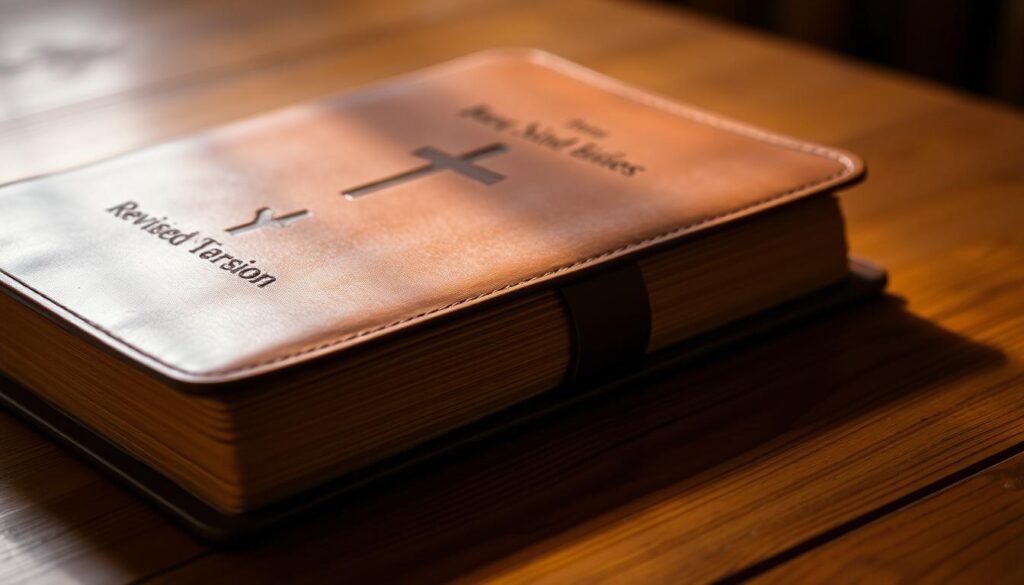
Revised Standard Version, Catholic Edition (RSV‑CE / RSV‑2CE)
Balanced and literal-leaning. Many teachers recommend this catholic edition for study. It reads clearly and appears often in catechetical material.
New American Bible (NAB / NABRE)
Modern and liturgical. This version is common in U.S. parishes. It offers extensive notes and updated Old Testament language for readers.
NRSV‑CE and Jerusalem Bible family
NRSV‑CE suits academic use with careful scholarship. The jerusalem bible editions bring literary flair and helpful introductions for study.
Study formats
Study bibles like The Great Adventure add timelines, color coding, and guides that help readers trace salvation history.
“Match edition features—notes, cross-references, margins—to your study habits for better long-term use.”
| Edition | Strength | Good For |
|---|---|---|
| RSV‑CE / RSV‑2CE | Literal clarity, reverent language | Close study, catechesis |
| NAB / NABRE | Readable prose, strong notes | Parish reading, lectionary match |
| NRSV‑CE / Jerusalem | Scholarship, literary style | Academic study, reflective reading |
Tip: Start with an RSV‑CE or NABRE and add a study edition later if you want extra notes and tools.
Practical Buying Checklist: Get the Right Catholic Bible for You
A careful checklist saves money and ensures the edition matches liturgical and study needs.

Confirm approval first. Check the contents page for all 73 books and look in the front matter for an imprimatur or a bishops’ notice. That approval protects readers and shows canonical completeness.
Match features to your habits. Decide if you want a literal translation for close study or a smoother edition for daily reading. Compare notes, maps, cross-references, and timelines to see how each edition supports long-term study and teaching.
Pick durable format and tools. Prefer sewn bindings, thicker covers, and paper that resists ghosting. If the edition uses India paper, test extra‑fine pens (Zebra) on a back page and favor colored pencils to mark passages without bleed‑through.
“Test pens and inspect binding—small checks now save hours of frustration later.”
- Create a simple color system for notes and themes.
- Choose print size and margins you’ll actually use for annotations.
- For portable reading pick a compact edition; for study choose larger layouts with study aids.
| Item | Check | Benefit |
|---|---|---|
| Contents & Approval | 73 books, imprimatur or bishops’ notice | Canonical accuracy and ecclesial approval |
| Features | Notes, maps, cross-references | Improves study and retention |
| Format & Tools | Sewn binding, paper type, pens/pencils | Longevity and clean annotation |
Nova Vulgata and Tradition: The Church’s Official Latin Reference Text
A standardized Latin text provides a stable point of comparison for modern translations.
The Nova Vulgata is the Church’s official Latin reference used in documents and liturgy. It serves as a benchmark for wording, theological terms, and liturgical norms across languages.
At Trent, the Vulgate’s authority was affirmed for the Latin tradition while scholars were still urged to consult original-language manuscripts. Modern practice follows that guidance.
From Vulgate to Nova Vulgata: what “official” means today
Popes and scholars endorse rigorous methods for translation. Textual criticism, manuscript comparison, and linguistic study guide editors in restoring ancient readings.
“Original-language texts remain the highest authority, and Latin acts as a unifying reference for global editions.”
- Nova Vulgata: a Latin standard for documents and liturgy.
- Original texts: primary authority for translators and scholars.
- Translation principles: critical scholarship ensures faithful modern versions.
| Role | Focus | Benefit |
|---|---|---|
| Nova Vulgata | Latin reference | Consistency in theological and liturgical language |
| Original-language texts | Hebrew, Aramaic, Greek | Primary basis for accurate translation |
| Translation practice | Textual criticism & manuscripts | Reliable modern editions for study and worship |
Conclusion
strong, wrap-up: A clear plan helps you read more often and learn more well. Start with one trusted edition for daily reading and a study bible for deeper dives.
Many teachers point to Revised Standard Version (RSV‑CE) for study and New American (NAB/NABRE) for lectionary alignment in the united states. For guided plans try the Great Adventure Bible or other adventure bible formats that add timelines and simple tools.
Choose an edition that lists all 73 books and shows approval. Pair clear notes, maps, and cross‑references with a compact copy for daily reading. Over time, your notes become a roadmap for ongoing bible studies and steady growth.
FAQ
What English translations are officially approved for use at Mass in the United States?
The New American Bible Revised Edition (NABRE) is the approved lectionary translation for most U.S. liturgies. Other editions like the Revised Standard Version, Second Catholic Edition (RSV‑2CE) appear in special cases, such as personal use or in certain ordinariates with episcopal permission.
How can I tell if a translation has ecclesial approval?
Look for an imprimatur and a nihil obstat on the title page or front matter. Those declarations show a bishop or competent authority reviewed the text for doctrinal fidelity. Publishers often note “Catholic Edition” and include full canon contents as well.
What’s the difference between a translation and a paraphrase for study?
Translations aim for accurate rendering of original languages, either word‑for‑word or sense‑for‑sense. Paraphrases prioritize contemporary readability over literal accuracy. For study and teaching, a formal translation like the RSV‑CE, NRSV‑CE, or NABRE is preferable.
How many books are in the Catholic canon and what are the deuterocanonical books?
The canon includes 73 books: 46 in the Old Testament and 27 in the New Testament. The deuterocanonical books—Tobit, Judith, 1 and 2 Maccabees, Wisdom, Sirach, Baruch, and additions to Esther and Daniel—appear in Catholic editions but not in most Protestant canons.
Why do these extra books matter for faith and study?
They provide historical, liturgical, and theological material used in tradition and teaching. Many early Christians and Church Fathers used these texts, and they inform sacramental theology, prayer, and moral instruction.
How do Catholic editions differ from common Protestant versions like the King James Version?
Key differences include the inclusion of the deuterocanonical books and Catholic‑oriented footnotes and cross‑references. Translation philosophy and manuscript bases also vary; KJV relies on later manuscripts and Elizabethan language, while Catholic editions use modern critical texts and contemporary English.
Which translation will I hear most often at Mass in the U.S.?
You’ll most often hear readings from the NABRE lectionary. Parishes sometimes provide missals or worship aids based on that text to match proclaimed Scripture during liturgy.
Are there special lectionaries or translations used in certain regions or groups?
Yes. Some dioceses, the Personal Ordinariates, and English‑speaking regions outside the U.S. may approve RSV‑2CE, Jerusalem Bible derivatives, or regionally adapted texts with permissions from local bishops.
Which English editions are best for study and small groups?
RSV‑CE/RSV‑2CE and NRSV‑CE are scholarly and clear for group study. NABRE offers strong study notes tied to liturgical use. The Jerusalem Bible and New Jerusalem Bible have literary strengths and helpful commentary choices.
What study editions add helpful tools like timelines, maps, and notes?
Editions such as The Great Adventure Study Bible and other study‑focused publications include timelines, character charts, maps, and developer notes that aid reading and adult faith formation programs.
How do I confirm a print edition contains all 73 books?
Check the table of contents or the publisher’s product description for the full Old and New Testament listings, including the deuterocanonical books. “Catholic Edition” labeling and an imprimatur are additional confirmations.
What features should I prioritize when buying a durable study copy?
Choose readable type size, a sturdy binding, sewn signatures, indexed tabs if desired, wide margins for notes, and paper quality that resists bleed‑through from pens and highlighters.
What role does the Nova Vulgata play in official texts?
The Nova Vulgata is the Church’s official Latin reference text. Modern English translations reference it for liturgical and doctrinal consistency, but vernacular translations use original Hebrew, Aramaic, and Greek manuscripts alongside that Latin tradition.
Where can I find trustworthy study resources and editions recommended for parish groups?
Look for publishers like Ignatius Press, Oxford University Press, and the United States Conference of Catholic Bishops (USCCB) for approved editions and companion study guides that include ecclesial endorsements and reliable commentary.