The Anglican Catholic Church is a part of the Continuing Anglican movement, which emerged in the 1970s. At its core, the church affirms the Canon of St. Vincent of Lerins, defining the Catholic Faith as “that which has been believed everywhere, always, and by all.”
This foundational statement underscores the church’s commitment to traditional Catholic beliefs. The Anglican Catholic faith is rooted in a rich history and a deep commitment to preserving the integrity of Catholic doctrine.
Key Takeaways
- The Anglican Catholic Church is part of the Continuing Anglican movement.
- The church affirms the Canon of St. Vincent of Lerins.
- The Catholic Faith is defined as “that which has been believed everywhere, always, and by all.”
- The Anglican Catholic faith is rooted in traditional Catholic beliefs.
- The church is committed to preserving Catholic doctrine.
Overview of Anglican Catholicism
With its roots in the 1977 Congress of St. Louis, the Anglican Catholic Church emerged with a distinct set of beliefs and practices. This historical event marked the beginning of a new chapter in Christian history, characterized by a commitment to traditional Catholic faith within an Anglican framework.
Historical Background
The Anglican Catholic Church was formed in response to changes within the Episcopal Church in the United States. The Congress of St. Louis was a pivotal gathering where the foundations of the Anglican Catholic Church were laid. The Affirmation of St. Louis, issued during this congress, outlined the theological and doctrinal stance of the new church, emphasizing continuity with Catholic and Anglican traditions.
The historical context of the Anglican Catholic Church’s formation is crucial for understanding its doctrine and practices. The church sought to preserve Catholic traditions and practices while maintaining the liturgical and theological heritage of Anglicanism.
Key Teachings and Principles
At the heart of Anglican Catholicism are several key teachings and principles that guide its practices and beliefs. These include:
- A strong emphasis on the authority of Scripture, alongside tradition and the sacraments.
- A commitment to the Catholic faith as expressed in the early creeds and the Book of Common Prayer.
- The importance of sacraments as a means of grace and spiritual nourishment.
The Anglican Catholic Church places a significant emphasis on the sacraments, particularly the Eucharist, which is considered central to Christian worship. The church’s liturgical practices are rooted in the Book of Common Prayer, which provides a structured framework for worship.
| Key Aspect | Description |
|---|---|
| Scripture | Considered authoritative and central to faith and practice. |
| Tradition | Valued for its continuity with the early Christian church. |
| Sacraments | Seen as a means of grace, with the Eucharist being particularly significant. |
The table above summarizes the core aspects of Anglican Catholic doctrine, highlighting the importance of scripture, tradition, and sacraments. These elements are foundational to understanding the beliefs and practices of the Anglican Catholic Church.
The Authority of Scripture and Tradition
Understanding the role of scripture and tradition is crucial to grasping the core beliefs of Anglican Catholics. The faith and practices of Anglican Catholics are shaped by their understanding of scripture and the tradition passed down through the ages.
The Role of the Bible
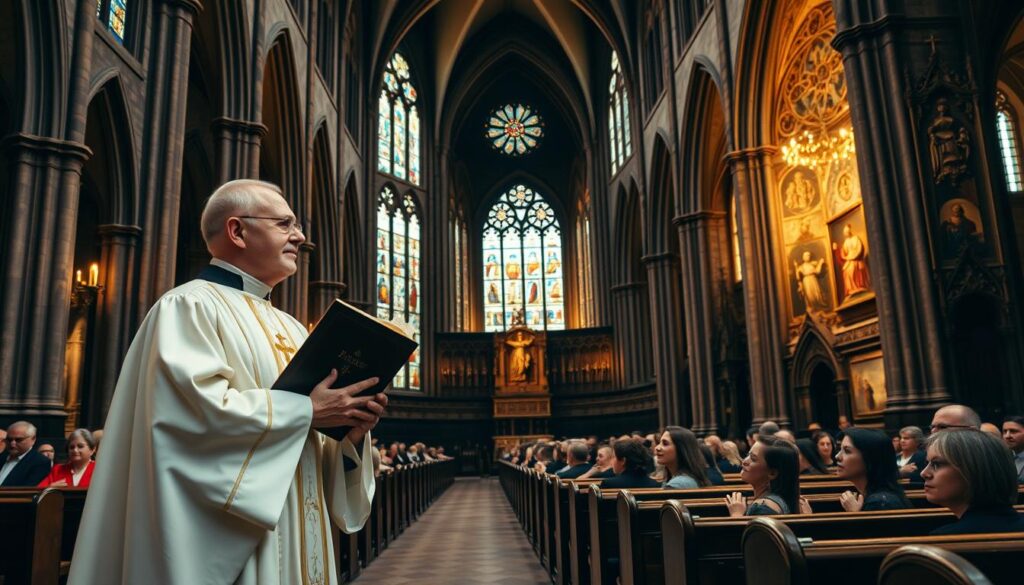
Anglican Catholics believe in the authority of Holy Scripture, which is considered the inspired word of God. The Bible is seen as a primary source of doctrine and moral guidance. It is used in worship services and is a foundational element in the education of faith.
The significance of scripture is highlighted through its use in liturgy and personal devotion. Anglican Catholics rely on scripture to understand God’s will and to guide their actions. The Book of Common Prayer, for instance, is rich in scriptural references, underscoring the importance of the Bible in Anglican worship.
The Importance of Tradition
Alongside scripture, tradition plays a vital role in Anglican Catholicism. Tradition encompasses the practices, teachings, and interpretations passed down through the church’s history, particularly from the early church fathers and ecumenical councils. It provides a link to the past and helps in understanding the present.
| Aspect | Scripture | Tradition |
|---|---|---|
| Source of Authority | The Bible as the word of God | Teachings and practices from church history |
| Role in Worship | Used in liturgy and personal devotion | Informs liturgical practices and sacraments |
| Guidance | Provides moral and doctrinal guidance | Offers interpretation and application of scripture |
The interplay between scripture and tradition is a defining characteristic of Anglican Catholicism. By embracing both, Anglican Catholics seek to maintain a balance between the written word of God and the lived experience of the faith community throughout history.
Understanding the Sacraments
Anglican Catholics place a significant emphasis on the sacraments as a means of experiencing God’s presence and grace. The sacraments are considered a vital part of Anglican Catholic worship and spiritual life.
Primary Sacraments
The Anglican Catholic Church recognizes two primary sacraments: Baptism and the Eucharist. These sacraments are seen as essential components of worship and means of grace.
- Baptism: The sacrament of baptism is considered a foundational element of the Christian faith, symbolizing spiritual rebirth and initiation into the community of believers.
- Eucharist: The Eucharist, also known as Holy Communion, is a sacrament in which believers participate in the body and blood of Christ, fostering a deep sense of communion with God and with each other.
| Sacrament | Significance | Key Elements |
|---|---|---|
| Baptism | Spiritual rebirth and initiation into the Christian community | Water, baptismal vows |
| Eucharist | Communion with Christ and the community of believers | Bread, wine, consecration |
Significance of the Eucharist
The Eucharist holds a central place in Anglican Catholic worship. It is seen as a sacrament of unity, where the community comes together to celebrate their faith and share in the grace of Christ.
The significance of the Eucharist is multifaceted, encompassing themes of thanksgiving, remembrance, and communion. It is a sacrament that is deeply intertwined with the daily lives of Anglican Catholics, providing spiritual nourishment and a sense of belonging to a larger community.
The Concept of the Trinity
Anglican Catholics affirm the Trinitarian doctrine, believing in one God in three distinct persons: the Father, the Son, and the Holy Spirit. This belief is central to their faith and influences their theology, worship, and practices.
Exploring the Nature of God
The nature of God is a profound mystery in Anglican Catholic theology. They believe that God is one essence in three coequal and coeternal persons. This understanding is rooted in biblical teachings and the early Christian tradition.
The Father is revered as the creator and sustainer of the universe. The Son, Jesus Christ, is seen as the redeemer of humanity, while the Holy Spirit is considered the sanctifier, guiding believers in their faith journey.
Jesus Christ’s Role
Jesus Christ plays a pivotal role in Anglican Catholic beliefs. He is considered the incarnate Word of God, fully divine and fully human. Through his life, death, and resurrection, Jesus provides salvation for humanity.
The significance of Jesus Christ is reflected in the sacraments and liturgical practices of Anglican Catholics. His teachings and example are central to their moral and ethical framework.

The Trinitarian doctrine not only shapes Anglican Catholic theology but also their communal and personal worship. It emphasizes the relational aspect of God, encouraging a deep and personal relationship with the divine.
The Importance of Community and Fellowship
Community and fellowship are foundational elements of the Anglican Catholic Church, shaping the spiritual lives of its adherents. The Church values the coming together of its members in various aspects of church life, creating a rich tapestry of communal worship and service.

Worship Styles
The Anglican Catholic Church encompasses a diverse range of worship styles, from traditional to contemporary, catering to the varied preferences of its members. This diversity is reflected in:
- Traditional Services: Incorporating liturgical practices that have been passed down through generations, providing a sense of continuity and connection to the Church’s heritage.
- Contemporary Services: Featuring modern elements such as contemporary music, which appeals to a broader audience and fosters a lively, engaging worship experience.
Parish Life and Activities
Parish life is vibrant and multifaceted, with numerous activities that promote fellowship and community engagement. Some key aspects include:
- Community Outreach: Many parishes are actively involved in outreach programs, serving the local community and beyond, which helps to strengthen bonds among members and with the wider community.
- Educational Programs: Offering classes, workshops, and study groups that deepen members’ understanding of their faith and the Anglican Catholic tradition.
- Social Events: Organizing various social gatherings, which provide opportunities for members to connect on a personal level, fostering a sense of belonging and camaraderie.
Through these diverse worship styles and parish activities, the Anglican Catholic Church effectively nurtures a strong sense of community and fellowship, embodying the beliefs of Anglican Catholics in action.
Ethics and Morality in Anglican Catholicism
In the Anglican Catholic tradition, ethics and morality are deeply intertwined with scripture and tradition, shaping the moral fabric of its adherents. The church teaches the importance of living a moral life, with a focus on social justice and personal ethics guided by these foundational elements.
Social Justice Perspectives
The Anglican Catholic Church emphasizes the need for its followers to engage in social justice, advocating for the rights and dignity of all people. This involves addressing issues such as poverty, inequality, and environmental degradation.
- Advocating for policies that promote economic justice and equality.
- Supporting initiatives that care for the environment and promote sustainability.
- Engaging in community service and outreach programs to support marginalized populations.
As stated by the Anglican Catholic bishops, “The pursuit of justice is a fundamental aspect of our faith, calling us to act with compassion and integrity in all our endeavors.”
“We are called to be the voice for the voiceless, to stand up for the rights of the marginalized, and to work tirelessly towards a more just and equitable society.”
Personal Morality and Ethics
On a personal level, Anglican Catholics are encouraged to cultivate virtues such as honesty, kindness, and humility. The church teaches that personal morality is not just about individual actions, but also about how these actions impact the community.
- Embracing a lifestyle that reflects the values of compassion, forgiveness, and generosity.
- Engaging in regular reflection and prayer to guide personal moral decisions.
- Seeking to build relationships that are grounded in mutual respect and understanding.
The Anglican Catholic faith emphasizes that personal morality and ethics are not static, but rather evolve through a deepening relationship with God and engagement with the community.
By living out these ethical and moral teachings, Anglican Catholics aim to embody the love and compassion of Christ in their daily lives, contributing to a more just and loving world.
The Nature of Salvation
Understanding salvation is central to Anglican Catholic belief, involving a deep connection with Jesus Christ. It is through this connection that adherents believe they receive salvation, a gift that is both freely given and pursued through devotion and good works.
Grace: The Foundation of Salvation
In Anglican Catholic theology, grace is considered the foundation upon which salvation is built. It is understood as the unmerited favor of God, extended to humanity through Jesus Christ. This grace is seen as the initiating factor in one’s journey towards salvation, enabling individuals to have faith and perform good deeds.
The concept of grace is further nuanced by understanding its different types, such as prevenient grace, which precedes human decision, and sanctifying grace, which transforms the believer. This nuanced understanding highlights the complexity and richness of Anglican Catholic doctrine regarding salvation.
Faith and Works: The Path to Salvation
Anglican Catholics believe that both faith and works are essential components of the salvation process. Faith is seen as the initial step, where one accepts Jesus Christ as their savior. Works, on the other hand, are the manifestation of this faith, demonstrating one’s commitment to their beliefs through actions.
- Faith is the foundation, providing the basis for one’s relationship with God.
- Works are the expression of this faith, showing obedience to God’s will and love for others.
- Together, faith and works form a harmonious balance that is seen as crucial for achieving salvation.
This balance is reflective of the Anglican Catholic doctrine, which seeks to maintain a middle path between the extremes of legalism and antinomianism, emphasizing both the importance of grace and the necessity of living a virtuous life.
Anglican Catholic Liturgy and Worship
The liturgy of the Anglican Catholic Church is a vibrant expression of faith, combining scripture, sacrament, and community. This blend of elements creates a rich tapestry of worship that is both deeply traditional and profoundly meaningful to its adherents.
One of the defining features of Anglican Catholic worship is its adherence to a structured liturgical calendar. This calendar guides the faithful through the year, highlighting key events in the life of Christ and the saints, and providing a rhythm to the spiritual life of the community.
Structure of Services
The structure of Anglican Catholic services is characterized by a formal liturgy that includes elements such as prayers, readings from scripture, and the celebration of the Eucharist. This structure is designed to create a sense of reverence and continuity with the broader Christian tradition.
The services typically follow a set pattern, which may vary slightly depending on the occasion and the liturgical season. For example, during Lent, the services may include additional elements of reflection and penance, while during Easter, they are marked by joyful celebration.
“The liturgy is the source and summit of the Christian life.” This quote underscores the importance of liturgical worship in the life of the Church and its adherents.
The Liturgical Calendar
The liturgical calendar is a crucial component of Anglican Catholic worship, organizing the year into various seasons and feasts. It includes celebrations such as Christmas, Easter, and Pentecost, as well as periods of preparation like Advent and Lent.
| Liturgical Season | Description | Key Celebrations |
|---|---|---|
| Advent | A period of preparation for Christmas | Four Sundays preceding Christmas |
| Lent | A period of reflection and penance before Easter | Ash Wednesday, Holy Week |
| Easter | A celebration of the Resurrection | Easter Sunday, Easter Monday |
The liturgical calendar not only structures the worship life of the community but also shapes the spiritual practices and devotional life of individual believers.
The Relationship with Other Christian Denominations
The Anglican Catholic Church engages in ecumenical dialogue with other Christian denominations, seeking unity while maintaining its distinct beliefs and practices rooted in anglican catholic doctrine.
Ecumenical Efforts
Ecumenical efforts involve collaboration and discussion between different Christian denominations to promote understanding and unity. The Anglican Catholic Church participates in these efforts, exploring ways to work together while respecting the unique traditions and beliefs of each denomination.
Dialogues with Roman Catholicism
A significant aspect of the Anglican Catholic Church’s ecumenical efforts is its dialogue with Roman Catholicism. This dialogue focuses on understanding the similarities and differences between the two denominations, with the goal of fostering greater unity and cooperation. By exploring what do anglican catholics believe in comparison to Roman Catholic teachings, the Anglican Catholic Church aims to promote mutual understanding and respect.
FAQ
What is the Anglican Catholic Church, and how does it differ from other Christian denominations?
The Anglican Catholic Church is a Christian denomination that originated from the Anglican Communion. It differs from other Christian denominations in its unique blend of Catholic and Anglican traditions, emphasizing the authority of scripture, the importance of sacraments, and the role of tradition in shaping its beliefs and practices.
What do Anglican Catholics believe about the Bible and its role in their faith?
Anglican Catholics believe that the Bible is the inspired word of God and a primary source of authority in their faith. They also recognize the importance of tradition in interpreting scripture and guiding their beliefs and practices.
What sacraments are recognized by the Anglican Catholic Church, and how are they practiced?
The Anglican Catholic Church recognizes the sacraments of Baptism and the Eucharist as primary sacraments, with other sacraments such as Confirmation, Penance, and Holy Orders also being important. These sacraments are seen as means of receiving God’s grace and are practiced in a way that is both traditional and meaningful.
How do Anglican Catholics understand the concept of the Trinity, and what role does Jesus Christ play in their theology?
Anglican Catholics believe in the doctrine of the Trinity, understanding God as a single entity in three persons: Father, Son, and Holy Spirit. Jesus Christ is seen as the Son of God, who came to earth to save humanity through his life, death, and resurrection.
What is the significance of community and fellowship in the Anglican Catholic Church?
Community and fellowship are essential aspects of Anglican Catholicism, with parish life and activities providing opportunities for members to come together in worship, service, and mutual support.
How do Anglican Catholics approach social justice issues and personal morality?
Anglican Catholics are encouraged to engage in social justice issues, such as caring for the poor and marginalized, while also being guided by traditional moral teachings on personal ethics, such as the importance of compassion, honesty, and integrity.
What is the Anglican Catholic understanding of salvation, and how is it achieved?
Anglican Catholics believe that salvation is a gift from God, received through faith, grace, and good works. They understand that faith is not just a matter of individual belief but is also expressed through actions and a commitment to living a virtuous life.
How are worship services structured in the Anglican Catholic Church, and what is the significance of the liturgical calendar?
Worship services in the Anglican Catholic Church are typically structured around the liturgy, with a focus on the Eucharist and other sacraments. The liturgical calendar provides a framework for worship throughout the year, guiding the church through the seasons of Advent, Christmas, Lent, and Easter.
How does the Anglican Catholic Church engage in ecumenical efforts with other Christian denominations?
The Anglican Catholic Church is committed to ecumenical dialogue and cooperation with other Christian denominations, seeking to promote unity and understanding among different Christian traditions, particularly with Roman Catholicism.
What are some of the key challenges and opportunities in the Anglican Catholic Church’s relationships with other Christian denominations?
The Anglican Catholic Church faces challenges in its relationships with other Christian denominations, such as differences in doctrine and practice. However, these relationships also provide opportunities for growth, learning, and cooperation, particularly in areas such as social justice and mission.