Exploring the foundations of Anglican Christianity reveals a tradition that balances ancient wisdom with modern relevance. Rooted in Scripture and shaped by centuries of thoughtful practice, this global faith community offers a unique perspective on Christian living.
At its core, Anglican beliefs draw from three key sources: biblical authority, historical creeds, and reason. This blend creates a spiritual path that honors tradition while engaging contemporary questions. Many appreciate how this approach fosters both intellectual curiosity and heartfelt worship.
The Anglican church often describes itself as a “middle way” – bridging Protestant and Catholic traditions. This via media philosophy emphasizes unity through shared sacraments and liturgy, rather than strict doctrinal uniformity. It’s why you’ll find diverse expressions of worship within Anglican communities worldwide.
Central to Anglican identity are the ancient Nicene and Apostles’ Creeds, which outline essential Christian teachings. These statements of faith coexist with a commitment to social justice and community service, reflecting the belief that spiritual growth happens through both prayer and action.
Key Takeaways
- Anglicanism blends Scripture, tradition, and reason in its approach to Christian beliefs
- Maintains core teachings through ancient creeds while adapting to modern contexts
- Serves as a theological bridge between Protestant and Catholic traditions
- Emphasizes sacramental worship and communal spiritual practices
- Balances individual conscience with collective church guidance
Foundations of the Anglican Faith
The story of Anglican Christianity unfolds like a tapestry woven through centuries. Ancient threads from the early church intertwine with Reformation-era patterns, creating a vibrant spiritual heritage that remains relevant today.
Historical Creeds and Early Church Influence
At the heart of Anglican identity lie time-tested statements of faith. The Apostles’ Creed and Nicene Creed – both dating back to the early church – serve as compasses guiding theological understanding. These ancient creeds distill core teachings about God’s nature and humanity’s redemption.
These foundational documents connect modern worshippers to believers across 2,000 years of Christian history. They provide stability while allowing room for thoughtful interpretation, reflecting Anglicanism’s balance between tradition and contemporary engagement.
The Impact of the 16th Century Reformation
The 16th century brought seismic changes that reshaped Christian practice. Anglican reformers preserved essential elements from the early church while introducing new expressions of faith. Landmark documents like the Articles of Religion and Book of Common Prayer emerged during this transformative period.
These Reformation-era works created a unique worship framework still used today. The 39 Articles of Religion particularly showcase how Anglican thought honors ancient creeds while addressing 16th century theological questions. This dual focus continues to shape a living tradition that values both its roots and ongoing growth.
Core Beliefs: What do Anglicans Believe?
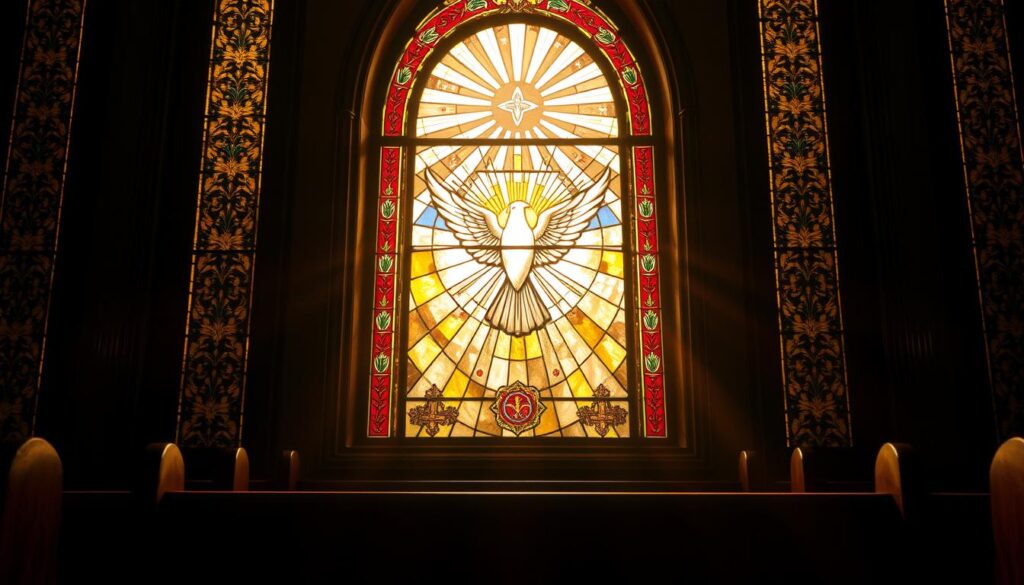
Anglican teachings offer a unique lens on Christian fundamentals through sacramental living. Central to this tradition is the concept of three persons united in one God—Father, Son, and Holy Spirit. This Trinitarian framework shapes how communities understand divine relationships and human purpose.
The Trinity, Jesus Christ, and Salvation
Jesus Christ stands at the center of Anglican theology as both fully divine and fully human. This dual nature allows believers to relate to a God who understands human struggles firsthand. Salvation comes through Christ’s sacrifice alone, received as a gift of grace rather than earned through deeds.
Anglicans emphasize that faith activates this spiritual transformation. Their view of sin focuses on broken relationships rather than eternal punishment. This perspective encourages healing rather than fear-driven obedience.
Understanding the Role of the Holy Spirit
The Holy Spirit acts as a constant guide in Anglican practice. Believers see this third person of the Trinity as the source of comfort and empowerment. Through the Spirit, ordinary moments become opportunities for spiritual growth.
Sacraments like Communion highlight Anglican comfort with mystery. While affirming Christ’s real presence in the Eucharist, they avoid rigid explanations. This balance between conviction and humility marks their approach to many doctrines.
| Belief Aspect | Anglican View | Other Traditions |
|---|---|---|
| Salvation | Grace through faith | Works-based (some) |
| Sin | Relational damage | Eternal punishment focus |
| Eucharist | Real Presence (mystery) | Literal transubstantiation |
The Role of Scripture, Tradition, and Reason
Anglican spirituality thrives on a dynamic interplay between three guiding forces. Imagine a sturdy three-legged stool supporting thoughtful faith—each leg representing Scripture, Tradition, and Reason. This balanced approach prevents spiritual wobbling while allowing room for growth.
Scripture as the Ultimate Standard
The Bible holds supreme authority in this tradition. Anglicans affirm the Old and New Testaments contain “all things necessary for salvation” while respecting their human authorship. Ancient texts come alive through historical context—read as inspired narratives rather than rulebooks.
Sixteenth-century reformers solidified this view in the Articles of Religion, stating: “Holy Scripture contains all things necessary to salvation.” This principle shapes how communities engage with biblical books, blending reverence with critical thinking.
- Tradition connects believers to 2,000 years of worship practices
- Reason invites exploration through science and scholarship
- Together, they work to interpret timeless truths
This threefold way of understanding faith welcomes both mystery and inquiry. It allows ancient psalms to converse with modern physics, creating space where faith and intellect coexist harmoniously.
Anglican Worship, Sacraments, and Community Practice
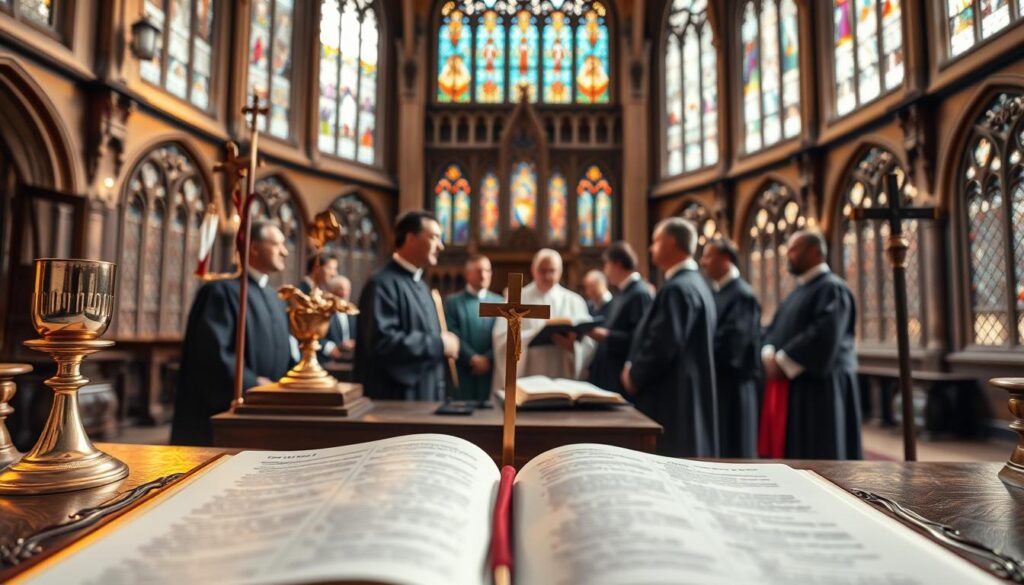
Anglican communities find their heartbeat in sacred rituals that bridge centuries. Shared worship patterns create unity across continents, while local expressions keep traditions vibrant. At the center stands the Book of Common Prayer, a spiritual compass guiding both collective ceremonies and personal reflection.
Liturgical Worship and the Book of Common Prayer
The Book of Common Prayer shapes daily spiritual life through structured prayers and seasonal liturgies. Morning and evening services follow patterns refined over 450 years, connecting modern believers to Reformation-era churches. This sacred text turns ordinary words into bridges between human longing and divine grace.
Liturgical rhythms mirror the church calendar – Advent’s anticipation, Easter’s joy, and Pentecost’s fire. These cycles help communities relive Christ’s story annually, making ancient narratives feel freshly relevant.
The Celebration of Sacraments
Two sacraments anchor Anglican practice: Baptism initiates believers into God’s family, while Communion nourishes them with spiritual food. Both acts use physical elements – water, bread, wine – to manifest invisible grace.
In Baptism, candidates renounce darkness and embrace Christ’s light. The Eucharist follows Jesus’ command to “do this in remembrance of me,” blending thanksgiving with mystery. Through these sacred moments, ordinary materials become channels of holy connection.
Mission, Episcopal Succession, and Church Governance
Anglican communities extend their roots globally through action-oriented faith. This tradition views spiritual commitment as inseparable from tangible service, blending ancient practices with modern mission strategies. Their approach to church leadership maintains continuity while empowering local innovation.
Anglican Mission and Community Outreach
Service forms the backbone of Anglican engagement with the world. New churches often emerge from food banks or literacy programs rather than pulpit-focused campaigns. Environmental cleanups and microfinance initiatives demonstrate faith through deeds, embodying Christ’s call to love neighbors holistically.
The Anglican Church structures its global mission through regional networks. Bishops collaborate across continents to address crises like refugee displacement or climate change. This cooperative model allows shared resources while respecting cultural differences in various parts of the world.
| Aspect | Episcopal Governance | Other Models |
|---|---|---|
| Leadership Structure | Bishops in apostolic succession | Elected councils or solo pastors |
| Decision-Making | Synodical process with clergy/laity | Centralized authority |
| Cultural Adaptation | Local customs within global framework | Uniform practices worldwide |
| Historical Continuity | Unbroken lineage since Apostles | Founded post-Reformation |
Through episcopal succession, leaders preserve core teachings while addressing contemporary needs. The Chicago-Lambeth Quadrilateral ensures this balance by upholding four essentials: Scripture, sacraments, creeds, and historic bishops. This system creates stability without stifling creativity in serving communities.
Conclusion
Anglican Christianity weaves ancient roots with modern relevance, creating a faith tradition that honors 95% of historic Roman Catholic and Orthodox teachings. This via media approach—the historic “middle way“—bridges sacramental depth with Protestant emphasis on grace. Shared creeds unite global communities while allowing space for local expressions.
The story of Anglicanism thrives on balance. Ancient liturgies meet contemporary life, offering stability through tradition alongside openness to divine revelation. This dual focus reflects the Latin motto semper reformanda (“always reforming”), inviting thoughtful engagement with a changing world.
At its best, Anglican beliefs foster communities where mystery and inquiry coexist. Individuals find room to grow without compromising intellectual honesty, guided by sacraments rather than rigid dogma. The tradition’s means of blending heart and mind continues to attract those seeking spiritual depth with flexibility.
For persons drawn to both historical connection and fresh perspectives, this way of Christian faith offers a welcoming home. Like its shared heritage with Roman Catholic and Orthodox traditions, Anglicanism remains a living story—rooted in the past yet branching toward new horizons.
FAQ
How do Anglican beliefs connect to early Christian traditions?
Anglicans root their faith in ancient creeds like the Apostles’ Creed and the Nicene Creed, which affirm core teachings about the Trinity, Jesus’ divinity, and salvation. These creeds reflect shared beliefs with the broader Christian tradition while honoring the early church’s theological heritage.
Did the Reformation change Anglican practices?
The 16th-century Reformation reshaped Anglican identity by emphasizing Scripture’s authority and simplifying worship. However, the Book of Common Prayer and episcopal governance maintained continuity with pre-Reformation traditions, blending Protestant and Catholic elements.
What role does the Holy Spirit play in Anglican theology?
The Holy Spirit is seen as the sustainer of faith, guiding individuals and the church community. Anglicans believe the Spirit works through sacraments, Scripture, and prayer to transform lives and empower believers for mission and service.
Why is the Book of Common Prayer important?
This historic text unites global Anglicans through shared prayers, liturgies, and sacramental rites. It reflects the church’s commitment to liturgical worship while adapting to modern contexts, ensuring doctrinal clarity and communal unity.
How do Anglicans view baptism and communion?
Baptism and the Eucharist are recognized as sacraments instituted by Christ. Baptism marks entry into the Christian community, while communion celebrates Jesus’ sacrifice and ongoing spiritual presence, fostering unity among believers.
What defines Anglican church governance?
Anglicans uphold episcopal succession, where bishops oversee dioceses as spiritual successors to the apostles. This structure balances local autonomy with global connections through bodies like the Anglican Communion.
How do Anglicans approach social justice?
Inspired by Jesus’ teachings, many Anglicans prioritize community outreach, advocating for the marginalized and addressing issues like poverty and inequality. This mission reflects their belief in living out faith through compassionate action.