The Anglican Church’s views on marriage are rooted in its understanding of Christian teachings. According to the Anglican Church in North America, marriage is a sacrament and a lifelong union between a man and a woman.
The significance of understanding Anglican marriage beliefs lies in its importance as a cornerstone of Christian life. Exploring these beliefs provides insight into the Church’s values and practices.
By examining these beliefs, we can gain a deeper understanding of the Church’s stance on marriage and its role in Christian life.
Key Takeaways
- The Anglican Church views marriage as a sacrament.
- Marriage is considered a lifelong union between a man and a woman.
- The Church’s teachings on marriage are guided by biblical principles.
- Understanding Anglican marriage beliefs provides insight into the Church’s values.
- The Church emphasizes the importance of commitment and faithfulness in marriage.
Overview of Anglican Beliefs on Marriage
Marriage, within the Anglican tradition, is understood through the lens of history, theology, and Scripture. The Anglican Church’s views on marriage have evolved over time, influenced by its rich history, theological principles, and biblical teachings.
Historical Context of Anglican Marriage
The historical context of Anglican marriage is deeply rooted in the Church of England’s history, particularly in the 1662 Book of Common Prayer, which laid out a precise theology of marriage. This foundational document has played a significant role in shaping Anglican beliefs about the sacrament of marriage.
Over the centuries, the Anglican Communion has adapted to changing social and cultural norms while maintaining its core theological beliefs regarding marriage.
Theological Foundations
The theological foundations of Anglican marriage are grounded in the understanding of marriage as a sacrament. Anglicans view marriage as a union between a man and a woman, emphasizing the importance of love, commitment, and mutual support.
The Anglican Communion’s theological stance on marriage is also influenced by its adherence to the principles of the Lambeth Conference, which has addressed issues related to marriage and family.
Influence of Scripture
Scripture plays a pivotal role in shaping Anglican beliefs about marriage. The Bible’s teachings on love, fidelity, and the relationship between spouses are central to the Anglican understanding of marriage.
Anglicans look to biblical examples and teachings, such as those found in the letters of St. Paul, to guide their understanding of the roles and responsibilities within a marriage.
The Sacramental Nature of Marriage
The sacramental nature of marriage is a cornerstone of Anglican beliefs, reflecting Christ’s love for the Church. This understanding is deeply rooted in the theological teachings of the Anglican Communion.
Marriage as a Sacrament
The Anglican Church affirms that “the Sacrament of Holy Matrimony is in its nature a union permanent and lifelong of one man and one woman” (Canon II.7: Of Christian Marriage). This definition underscores the sacramental aspect of marriage, emphasizing its permanence and the union between a man and a woman.
The sacramental view of marriage signifies that the relationship is not just between two individuals but also involves God. It is a means of grace, where the couple experiences God’s love and commitment through their mutual love and vows.
Spiritual Significance
The spiritual significance of marriage in Anglicanism lies in its reflection of Christ’s relationship with the Church. It is seen as a symbol of the love and commitment that Christ shows to his followers. This understanding elevates the marital bond to a spiritual level, where the couple’s love for each other is a manifestation of their faith and devotion to God.
Furthermore, the Anglican Church teaches that marriage is a source of strength and support for the couple, enabling them to live out their faith together. It is within this context that marriage vows are made, promising lifelong love, fidelity, and support.
The Role of Vows in Anglican Weddings
In Anglican weddings, the exchange of vows is a pivotal moment, symbolizing the couple’s lifelong commitment to each other. These vows are not just promises between the couple but are made before God, emphasizing the sacred nature of marriage.
Significance of the Vows
The vows exchanged during an Anglican wedding ceremony are rooted in tradition and scripture, reflecting the Anglican understanding of marriage as a lifelong commitment. The couple promises to “love, comfort, honour, and protect” one another, as stated in The Book of Common Prayer.
Promises Made Before God
The vows made during the ceremony are considered a sacred promise, not just to each other, but also before God. This aspect underscores the religious and spiritual dimensions of Anglican marriage beliefs.
The following table highlights key elements of the vows and their significance:
| Vow Element | Significance | Reflection of Anglican Beliefs |
|---|---|---|
| Love | Unconditional affection and care | Emphasizes the importance of love in marriage |
| Comfort | Providing solace and support | Highlights the role of mutual support |
| Honour | Respect and dignity towards each other | Reflects the value placed on mutual respect |
| Protect | Guarding and safeguarding each other’s well-being | Underscores the commitment to mutual care |
The vows in an Anglican wedding are a cornerstone of the marriage, reflecting the beliefs and values of the Anglican community regarding marriage and commitment.
Anglican View on Same-Sex Marriage
As the Anglican Church navigates contemporary debates, its views on same-sex marriage reveal a diverse and nuanced landscape. The global Anglican Communion is grappling with this issue, reflecting a broad spectrum of theological and cultural perspectives.
Historical Context
The historical context of the Anglican Church’s stance on marriage has traditionally been rooted in biblical teachings, emphasizing the union between a man and a woman. However, as societal norms have evolved, so too have the interpretations and discussions within the Anglican Communion regarding same-sex relationships.
The debate over same-sex marriage has led to a divergence in views across different Anglican provinces. For instance, some provinces have embraced the blessing of same-sex unions, while others adhere strictly to traditional definitions of marriage.
Current Practices and Variations
Currently, the Anglican Communion lacks a unified stance on same-sex marriage, with practices varying significantly across different regions. The Anglican Church in North America, for example, has taken a conservative stance, affirming that marriage is between one man and one woman, as outlined in the document “From the Beginning”: God’s Design for Marriage.
In contrast, other provinces like the Episcopal Church in the United States and the Anglican Church in Canada have adopted more inclusive approaches, allowing for the blessing of same-sex unions. This diversity reflects the complex and evolving nature of the debate within the Anglican Communion.
The table below summarizes the varying stances on same-sex marriage across some Anglican provinces:
| Anglican Province | Stance on Same-Sex Marriage |
|---|---|
| Anglican Church in North America | Opposes same-sex marriage, affirming traditional marriage |
| Episcopal Church (USA) | Permits same-sex marriage and blessings |
| Anglican Church of Canada | Allows blessing of same-sex unions |
The ongoing discussion on same-sex marriage within the Anglican Communion highlights the challenges of balancing traditional teachings with contemporary societal changes. As the global Anglican community continues to navigate these issues, the diversity of views and practices is likely to remain a significant aspect of the conversation.
Divorce and Remarriage in Anglicanism
The Anglican Church approaches divorce and remarriage with a nuanced perspective, considering both the theological implications and the pastoral needs of its members. This balanced view is rooted in the Church’s understanding of marriage as a sacramental union, while also acknowledging the complexities and challenges faced by individuals and families.
Understanding Divorce
The Anglican Communion has traditionally viewed marriage as indissoluble, reflecting its commitment to the lifelong nature of marital commitment. However, it also recognizes that divorce can occur, and thus, it provides pastoral guidance to those affected.
“The Church acknowledges that divorce is a reality in contemporary society and seeks to provide support and guidance to those whose marriages have failed.”
The Church’s teaching on divorce is informed by its theological understanding of marriage, as well as its commitment to providing compassionate pastoral care. This approach is reflected in the varying practices and disciplines within the Anglican Communion regarding divorce and remarriage.
Conditions for Remarriage
Remarriage within the Anglican Church is considered in light of the Church’s teaching on divorce and the individual’s circumstances. The decision to remarry is approached with sensitivity, taking into account the pastoral implications and the individual’s commitment to their faith.
| Condition | Description |
|---|---|
| Divorce | The Church acknowledges divorce as a reality, providing guidance for those affected. |
| Remarriage | Remarriage is considered on a case-by-case basis, with sensitivity to the individual’s circumstances and commitment to their faith. |
| Pastoral Care | The Church provides pastoral support to individuals and families affected by divorce and remarriage. |
In conclusion, the Anglican Church’s approach to divorce and remarriage reflects a balance between upholding the ideal of lifelong marital commitment and providing compassionate pastoral care to those affected by marital breakdown. This nuanced perspective is grounded in the Church’s theological understanding of marriage and its commitment to supporting its members through challenging circumstances.
The Importance of Marriage Preparation
The Anglican Church places a strong emphasis on marriage preparation to ensure a strong foundation for couples. This preparation is not just about the wedding ceremony but about building a lifelong relationship based on mutual respect, trust, and understanding.
Marriage preparation in the Anglican tradition involves several key components, including pre-marital counseling. This counseling is designed to help couples explore their expectations, values, and goals for their marriage. It provides a safe space for them to discuss potential challenges and develop strategies for overcoming them.
Pre-Marital Counseling
Pre-marital counseling is a critical aspect of marriage preparation in the Anglican Church. It is typically conducted by experienced clergy or counselors who have a deep understanding of the Church’s teachings on marriage. The counseling sessions cover a range of topics, including:
- Communication skills
- Conflict resolution
- Financial management
- Family planning
- Spiritual growth together
These sessions are not only informative but also provide an opportunity for couples to bond and deepen their understanding of each other. By addressing potential issues early on, couples can better navigate the challenges of married life.
Resources and Programs
The Anglican Church offers various resources and programs to support couples as they prepare for marriage. These may include:
- Marriage preparation courses that cover the theological and practical aspects of marriage.
- Retreats and workshops that focus on building a strong marital foundation.
- Online resources and guides that provide additional support and information.
By utilizing these resources, couples can gain a deeper understanding of the Anglican teachings on marriage and what it means to be married within the Anglican tradition. The Church’s support extends beyond the wedding day, recognizing that marriage is a journey that requires ongoing commitment and nurturing.
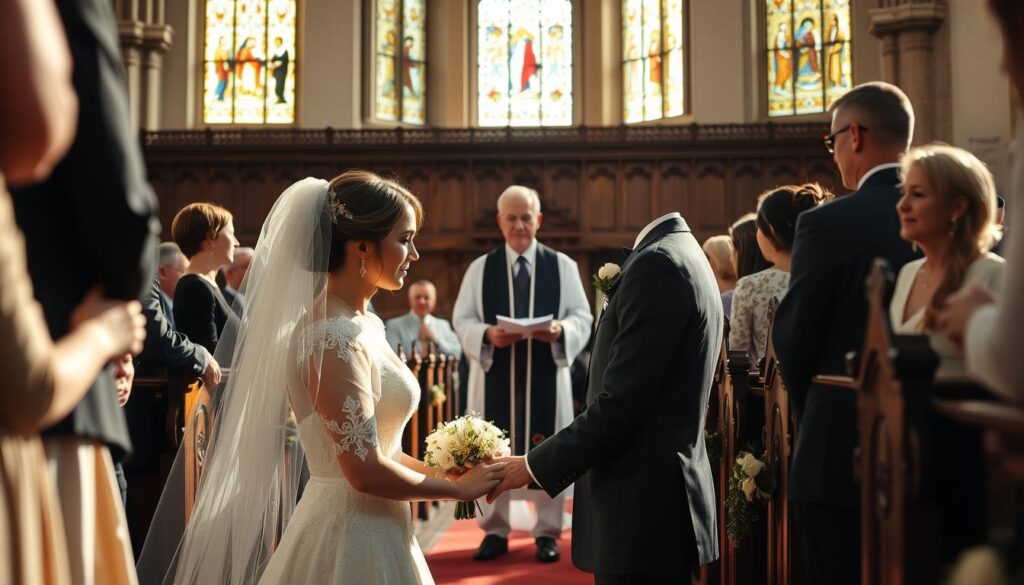
In conclusion, the Anglican Church’s emphasis on marriage preparation reflects its commitment to supporting couples as they embark on their marital journey. Through pre-marital counseling and various resources, the Church provides a comprehensive support system that helps couples build a strong, resilient marriage.
The Community’s Role in Marriage
The Anglican Church emphasizes the importance of community in nurturing marriages, celebrating milestones, and providing support. This communal approach to marriage is rooted in the understanding that a strong support system is crucial for the well-being of couples.
Support from the Church Family
The Church family plays a significant role in providing emotional and spiritual support to married couples. As stated in The Book of Common Prayer, the community is encouraged to support married couples, celebrating their anniversaries and milestones. This support is not limited to the couple’s immediate family but extends to the broader church community.
“The community’s role in marriage is multifaceted, involving emotional support, spiritual guidance, and celebration of milestones,” reflects the Anglican perspective on marriage. This approach fosters a sense of belonging and connection among couples, helping them navigate the challenges of married life.
Celebrating Anniversaries and Milestones
Celebrating anniversaries and other significant milestones is an integral part of the Anglican community’s support for married couples. These celebrations serve as reminders of the couple’s commitment to one another and their faith. They also provide opportunities for the community to come together and offer support.
By celebrating these milestones, the Anglican community reinforces the importance of marriage and the role that it plays in the lives of couples. As Dr. Rowan Williams, a former Archbishop of Canterbury, once noted, “Marriage is not just a private arrangement; it’s a public commitment that involves the community.”
This communal celebration of anniversaries and milestones strengthens the bonds within the community and provides a sense of continuity and connection among its members.
“Marriage is a sacrament that is not just between two people but involves the whole community,” said
.
Gender Roles in Anglican Marriage
Anglican marriage beliefs regarding gender roles are complex, influenced by historical, theological, and cultural factors. The traditional understanding of marriage within the Anglican Church has often been associated with distinct roles for men and women.
Traditional Roles versus Modern Views
Historically, the Anglican Church has leaned towards a traditional view of gender roles, where men are often seen as the primary providers and women as caregivers. However, this perspective is being challenged by modern views that advocate for equality in partnership.
The shift towards more egalitarian roles in marriage reflects broader societal changes and the evolving understanding of gender within the Church.
Equality in Partnership
The push for equality in Anglican marriages is not just about changing roles but also about embracing a more inclusive understanding of partnership. This includes:
- Mutual respect and understanding
- Shared responsibilities
- Support for one another’s spiritual journeys
The Anglican Church’s approach to gender roles in marriage is evolving, with many congregations embracing a more nuanced understanding that balances tradition with contemporary needs.
| Aspect | Traditional View | Modern View |
|---|---|---|
| Roles in Marriage | Distinct roles for men and women | Equality and shared responsibilities |
| Decision Making | Primarily male-led | Mutual decision-making |
| Spiritual Leadership | Often male-dominated | Increasingly shared or female-led |
The discussion around gender roles in Anglican marriages is ongoing, reflecting the diverse perspectives within the global Anglican Communion. As the Church continues to navigate these issues, the commitment to understanding and serving the needs of all its members remains paramount.
The Impact of Culture on Anglican Marriage
Anglican views on marriage are not uniform, reflecting the diverse cultural landscapes within the Communion. The global nature of the Anglican Communion means that its understanding of marriage is influenced by a wide array of cultural practices and traditions.
Cultural diversity within the Anglican Communion is a significant factor that shapes its teachings on marriage. From the indigenous cultures of Africa and the Pacific to the modern societies of North America and Europe, the Communion encompasses a broad spectrum of cultural contexts.
Cultural Diversity within Anglicanism
The Anglican Communion is a global community with diverse cultural contexts shaping marriage practices. For instance, in some African cultures, marriage is understood within the context of extended family and community ties, whereas in Western societies, the nuclear family is often the primary unit.
- In many Asian cultures, respect for tradition and elders is a significant aspect of marital relationships.
- In contrast, some Western cultures emphasize the equality and partnership between spouses.
- African cultures often integrate marriage into the broader community, with communal celebrations and rituals.
These diverse cultural practices enrich the understanding of marriage within the Anglican Communion, highlighting the complexity and richness of human relationships.
How Culture Shapes Marriage Practices
Culture significantly influences marriage practices within the Anglican Communion. For example, the way weddings are celebrated, the roles of family members, and the expectations from the married couple can vary greatly across different cultures.
The Lambeth Conference, a significant gathering of Anglican bishops worldwide, has acknowledged the importance of cultural contexts in understanding marriage. It emphasizes the need for a balanced approach that respects cultural diversity while maintaining the core teachings of Christianity.
“Marriage is a gift from God, and its celebration is a joyful occasion that brings together family, friends, and community. The way it is celebrated can vary greatly across cultures, but the essence remains the same – a commitment between two people before God.”
The challenge for the Anglican Communion is to navigate these cultural differences while maintaining unity in its teachings on marriage. By embracing cultural diversity and promoting understanding, the Communion can continue to support couples across different cultural contexts.
Marriage in the Context of Family
Marriage, as understood by Anglicans, is not just a union between two individuals but a foundation for family life that is grounded in spiritual values. The Anglican Church emphasizes the importance of family life and parenting, encouraging couples to raise their children in the faith.
Family Life as a Central Theme
Family life is a central theme in Anglican teachings on marriage. The Church views the family as a vital unit where faith is nurtured and passed down through generations. This understanding is rooted in the belief that the love and commitment between spouses is a reflection of God’s love for humanity.
The Book of Common Prayer highlights the significance of family life, providing liturgies and prayers that support family values and spiritual growth. Anglican families are encouraged to practice their faith together, creating a home environment that is welcoming and inclusive.
Parenting Within Anglican Teachings
Parenting is seen as a sacred responsibility within Anglican teachings. Parents are encouraged to teach their children the values of faith, compassion, and service. The Church provides various resources and programs to support parents in their role, including pre-baptismal and post-baptismal classes for families.
Key aspects of parenting within Anglican teachings include:
| Aspect | Description |
|---|---|
| Faith Education | Teaching children about the Christian faith and its practices. |
| Values-Based Upbringing | Nurturing values such as love, kindness, and forgiveness in children. |
| Community Involvement | Encouraging families to participate in church activities and community service. |

By focusing on these aspects, Anglican families can create a nurturing environment that supports the spiritual growth of all members. The Church’s support for families is a testament to its commitment to the well-being of its community.
Ethical Considerations in Marriage
In the Anglican tradition, marriage is viewed as a sacred institution that is built on a foundation of ethical principles, including love, fidelity, respect, and compromise. The Anglican Church teaches that these values are essential for a strong and healthy marriage.
The ethical dimensions of marriage are deeply rooted in Anglican teachings. Love and fidelity are considered foundational elements, as they foster a deep and abiding commitment between spouses. According to the Anglican Church, “marriage is built on love, fidelity, respect, and compromise” (Source: Dearly Beloved: An Anglican Theology of Marriage, Part III).
Love and Fidelity
Love and fidelity are intertwined in the Anglican understanding of marriage. Fidelity is seen as a manifestation of love, demonstrating a commitment to one’s spouse through actions and decisions. This commitment is not limited to the individual but is also a communal aspect, as the Church supports couples in their journey together.
Respect and Compromise
Respect and compromise are also crucial ethical considerations in Anglican marriage teachings. Respect involves valuing one’s partner as an individual, while compromise enables couples to navigate life’s challenges together, finding common ground and understanding.
The Anglican Church emphasizes that these ethical principles are not static but dynamic, evolving as the couple grows together. By embracing love, fidelity, respect, and compromise, couples can build a resilient and meaningful marriage that reflects the values of their faith community.
Conclusion: The Future of Marriage in Anglicanism
The Anglican Communion is navigating the complexities of modern marriage while staying true to its foundational principles. As the Church continues to discuss and refine its understanding of marriage, it remains committed to the values of love, respect, and commitment that are central to the Anglican perspective on marriage.
Emerging Trends
The Church is exploring new ways to support couples in their marital journey, drawing on biblical guidance and the experiences of its members. For insights into the biblical foundation of marriage, resources such as Bible verses about marriage offer valuable perspectives.
Tradition and Relevance
By balancing tradition with contemporary needs, the Anglican Communion aims to ensure that its understanding of marriage remains both faithful to its heritage and relevant to the lives of its members. This approach reflects the ongoing commitment to understanding what Anglicans believe about marriage in a changing world.
FAQ
What is the Anglican view on the sacramental nature of marriage?
Anglicans believe that marriage is a sacrament, a means of grace, and a reflection of Christ’s love for the Church. This understanding emphasizes the spiritual significance of marriage and its role in the life of a Christian couple.
What do Anglicans believe about the role of vows in marriage?
In Anglican weddings, vows are considered a crucial element, representing the promises made before God. These vows reflect the Anglican understanding of marriage as a lifelong commitment, emphasizing the importance of love, fidelity, and mutual support.
How do Anglicans view same-sex marriage?
The Anglican Communion has varying views on same-sex marriage across different provinces. While some provinces have chosen to bless same-sex unions, others maintain a traditional stance. The global Anglican community continues to discuss and discern its stance on this issue.
What is the Anglican approach to divorce and remarriage?
The Anglican Church teaches that marriage is indissoluble, but it also acknowledges that divorce can occur. The Church permits remarriage in certain circumstances, emphasizing the need for pastoral care and support for individuals and families affected by divorce.
How does the Anglican Church support couples preparing for marriage?
The Anglican Church places a strong emphasis on pre-marital counseling, providing resources and programs to help couples prepare for marriage. These initiatives aim to equip couples with the skills and understanding necessary for a strong, healthy marriage.
What role does the community play in supporting Anglican marriages?
The Anglican Church fosters a sense of community among married couples, promoting their well-being and commitment to one another. The Church family provides encouragement, celebration, and support, recognizing the importance of marriage in the life of the community.
How do Anglicans understand gender roles in marriage?
The Anglican Church has traditionally understood marriage as involving distinct roles for men and women. However, there is also a recognition of the importance of equality in partnership, with many Anglicans advocating for a more nuanced and context-dependent understanding of gender roles.
How does culture impact Anglican marriage practices?
The Anglican Communion encompasses a diverse range of cultural contexts, each shaping marriage practices in unique ways. The Church acknowledges the challenges and opportunities presented by cultural diversity, seeking to balance its tradition with the needs and expressions of different cultures.
What are the ethical considerations in Anglican marriage?
Anglicans emphasize the importance of love, fidelity, respect, and compromise in marriage. These values are seen as central to a healthy and Christian marriage, guiding the way couples relate to one another and navigate the challenges of married life.
How does the Anglican Church understand marriage within the context of family?
The Anglican Church views family life as a central theme, with marriage being a foundational element. The Church supports families and promotes a Christian approach to parenting, recognizing the significance of marriage in the broader context of family life.
What is the future of marriage in Anglicanism?
The Anglican Communion is engaged in ongoing discussions about the future of marriage, considering emerging trends and challenges. The Church seeks to balance its tradition with contemporary needs, ensuring that its understanding of marriage remains relevant and faithful to its core teachings.