The concept of original sin is a fundamental aspect of Christian theology, and Anglicans have a distinct perspective on this doctrine.
According to Article IX of the Articles of Religion, “man is very far gone from original righteousness, and is of his own nature inclined to evil” (BCP, p.869). This statement underscores the Anglican view that humanity is inherently flawed and in need of redemption.
Understanding the Anglican perspective on original sin provides insight into their broader theological framework and practices.
Key Takeaways
- Anglicans view original sin as a fundamental aspect of Christian theology.
- The doctrine is rooted in Article IX of the Articles of Religion.
- Humanity is seen as inherently flawed and inclined towards evil.
- The concept of original sin informs Anglican practices and theology.
- Redemption is a key theme in Anglican views on original sin.
Understanding Original Sin in Anglican Theology
In Anglican theology, the understanding of original sin is pivotal, influencing various aspects of faith and worship. The concept is rooted in biblical teachings, particularly in Romans 5:12-19 and 1 Corinthians 15:21-22, which describe the fall of humanity through Adam and Eve’s disobedience.
Definition of Original Sin
Original sin refers to the inherent tendency towards sin that humanity inherits from Adam’s fall. This doctrine is central to Anglican beliefs, emphasizing humanity’s need for salvation. The Anglican Communion defines original sin as a condition that affects every aspect of human nature, making humans prone to sin.
The concept is not just about personal sin but a state of being that is contrary to God’s will. It is understood that this condition is not just a result of personal choice but is inherent, passed down through generations.
Historical Context of Original Sin
The understanding of original sin has evolved over centuries, influenced by early Christian theologians and the writings of St. Augustine. The doctrine became more formalized during the Reformation, with Anglicans drawing on Catholic tradition while also embracing Protestant principles.
| Historical Period | Influence on Original Sin Doctrine | Key Figures |
|---|---|---|
| Early Christianity | Development of the doctrine based on biblical teachings | St. Augustine |
| The Reformation | Re-evaluation of the doctrine in light of Protestant principles | Martin Luther, John Calvin |
| Anglican Formation | Balancing Catholic tradition with Protestant thought | Thomas Cranmer |
Theological Implications
The doctrine of original sin has significant theological implications for Anglicans. It underscores the necessity of salvation through Jesus Christ and the role of baptism in cleansing from sin.
Understanding original sin also informs Anglican views on human nature, emphasizing both the fallen condition of humanity and the potential for redemption through faith and grace.
The Scriptural Basis for Original Sin
Understanding the scriptural basis for original sin requires examining key biblical passages that have shaped Anglican theology. The doctrine of original sin is intricately linked to the biblical narrative, particularly the account of the Fall in Genesis 3.
Key Biblical Passages
The biblical account of the Fall in Genesis 3 is fundamental to the understanding of original sin. This narrative, along with other scriptures such as Romans and 1 Corinthians, provides the theological framework for interpreting the doctrine.
- Genesis 3: The story of Adam and Eve’s disobedience, which is seen as the origin of sin entering the world.
- Romans 5:12-19: This passage is crucial as it explains how sin entered the world through one man and its consequences for humanity.
- 1 Corinthians 15:21-22: Here, the Apostle Paul discusses the connection between Adam’s sin and the sinfulness of humanity, contrasting it with the redemption through Jesus Christ.
Interpretations of Fall of Man
Anglican theology interprets the Fall of Man as a historical event with profound theological implications. The narrative is not just a story of disobedience but a foundational moment that shapes the understanding of human nature and sin.
The consequences of the Fall, as described in Genesis 3, include:
- Separation from God
- The introduction of sin and its effects on humanity
- The need for redemption, which is fulfilled through Jesus Christ
The Role of Adam and Eve
Adam and Eve play a pivotal role in the narrative of the Fall. Their actions are seen as representative of humanity’s relationship with God and the nature of sin.
In Anglican theology, the story of Adam and Eve is understood as:
- A literal historical event
- A theological explanation for the origin of sin
- A demonstration of human free will and its consequences
The understanding of original sin in Anglicanism is deeply rooted in these biblical narratives and their interpretation. It forms a critical part of the doctrine, influencing beliefs about human nature, sin, and redemption.
The Anglican Communion’s Viewpoint
With its diverse provinces, the Anglican Communion offers a rich tapestry of views on original sin, all grounded in a shared theological heritage. This diversity reflects the global nature of the Communion, with various cultural and theological influences shaping the understanding of original sin.
Diverse Perspectives Among Provinces
The Anglican Communion is not a monolithic entity; rather, it encompasses a wide range of theological perspectives on original sin. Different provinces may emphasize different aspects of the doctrine based on local cultural, historical, and theological contexts.
For instance, some provinces might place a strong emphasis on the Augustinian view of original sin, while others might incorporate elements from Eastern Orthodox or other Christian traditions. This diversity enriches the Communion’s overall understanding, allowing for a more nuanced exploration of the concept.
Influence of Church Tradition
The Anglican Communion’s understanding of original sin is significantly influenced by its tradition and formularies. The Church’s liturgical and doctrinal documents, such as the Book of Common Prayer, play a crucial role in shaping its theological stance.
These documents often reflect a balance between Catholic and Protestant elements, contributing to a distinctive Anglican perspective on original sin that is both rooted in tradition and open to contemporary reinterpretation.
Comparison with Other Denominations
In comparison with other Christian denominations, the Anglican Communion’s view on original sin shares some similarities with Catholic and Orthodox traditions, while also exhibiting distinct differences. For example, Anglicans, like Catholics, recognize the significance of baptism in relation to original sin, though the theological rationales may vary.
Understanding these similarities and differences can foster greater ecumenical dialogue and cooperation, as well as a deeper appreciation for the unique aspects of Anglican theology.
Human Nature and Original Sin
Understanding human nature is crucial in Anglican theology, particularly in relation to the concept of original sin. The doctrine of original sin has profound implications for how Anglicans perceive human fallibility and the inherent need for redemption through Jesus Christ.
The Concept of Human Fallibility
Human fallibility is a cornerstone of Anglican theology, emphasizing that humanity is inherently flawed due to the original sin. This flaw is not just a moral failing but a fundamental aspect of the human condition, affecting every individual.
The Impact of Original Sin on humanity is multifaceted. It not only affects individual moral integrity but also influences societal structures and relationships. The concept underscores the universal need for salvation.
The Impact on Humanity
The impact of original sin on humanity is a complex issue within Anglican theology. It is understood that this sin affects not just the individual but the collective human experience, shaping cultural, social, and religious norms.
| Aspect | Pre-Fall Humanity | Post-Fall Humanity |
|---|---|---|
| Nature | Sinless, in harmony with God | Flawed, prone to sin |
| Relationship with God | Direct, unmediated communion | Broken, requiring redemption |
| Moral Capacity | Perfect obedience to God’s will | Imperfect, prone to moral failure |
Implications for Salvation
The implications of original sin for salvation are profound in Anglican theology. The doctrine underscores the necessity of redemption through Jesus Christ, emphasizing that salvation is a gift from God, available to all humanity.
The role of faith and grace is central in this context. Anglicans believe that through faith in Jesus Christ, individuals can receive God’s grace, enabling them to overcome the effects of original sin and live a life aligned with God’s will.
Baptism and Original Sin
The sacrament of baptism is intricately linked with the concept of original sin in Anglican belief. Baptism is seen as a means of grace that addresses the effects of original sin, offering a pathway to salvation through Jesus Christ.
The Role of Baptism
In Anglican theology, baptism is not merely a symbolic act but a sacrament that conveys spiritual grace. It is through baptism that individuals are incorporated into the body of Christ, the Church. Baptism is considered essential for salvation, as it is the means by which one is cleansed from sin, including original sin.
The practice of infant baptism is significant in Anglicanism. It is based on the understanding that all humans are born with original sin and that baptism is necessary for the remission of sin. Infant baptism is seen as a way of initiating a child into the Christian community and conferring God’s grace upon them.
Infant Baptism and Original Sin
The practice of baptizing infants underscores the Anglican belief in the universality of original sin. By baptizing infants, the Church acknowledges that they too are affected by original sin and in need of God’s grace. This practice is rooted in the belief that baptism is a means of grace that cleanses from sin.
| Aspect | Infant Baptism | Adult Baptism |
|---|---|---|
| Purpose | Cleansing from original sin, initiation into the Church | Public declaration of faith, cleansing from sin |
| Significance | God’s grace is conferred upon the child | Personal commitment to faith, incorporation into the Church |
Confirmation and Its Significance
Following baptism, confirmation is a significant rite in Anglicanism. It is a sacrament in which individuals confirm their faith and are strengthened by the Holy Spirit. Confirmation is seen as a personal affirmation of the faith that was initiated at baptism.
While baptism is often associated with infants, confirmation typically occurs later in life, often during early adolescence. It represents a personal commitment to the faith and is considered a crucial step in a person’s spiritual journey.
In conclusion, baptism plays a vital role in Anglican understanding of original sin. Through baptism, individuals are cleansed from sin and initiated into the Christian community. The practices of infant baptism and confirmation underscore the complex and nuanced Anglican approach to original sin and salvation.
Redemption and Grace
Redemption and grace are fundamental themes in Anglican theology, particularly in relation to the doctrine of original sin. The Anglican Communion emphasizes the importance of understanding these concepts to grasp the full implications of original sin on humanity.
The Importance of God’s Grace
God’s grace is seen as the cornerstone of redemption in Anglican theology. It is through God’s grace that humanity is able to overcome the effects of original sin. As Richard Hooker, a prominent Anglican theologian, noted, “God’s grace is the means by which we are reconciled to Him.” This understanding underscores the significance of grace in the redemption process.
The concept of grace is closely tied to the idea of salvation. In Anglican belief, salvation is not achieved through human effort alone but is facilitated by God’s grace. This grace is understood to be unmerited favor, a gift from God that enables humanity to respond to the call of salvation.
Salvation through Jesus Christ
Salvation through Jesus Christ is a central tenet of Anglican theology. The belief is that through Christ’s sacrifice, humanity is redeemed from the consequences of original sin. As stated in the
“For as by one man’s disobedience many were made sinners, so by the obedience of one shall many be made righteous.”
(Romans 5:19), Christ’s obedience is seen as the means by which humanity is justified.
The Anglican Communion affirms that faith in Jesus Christ is essential for salvation. This faith is not merely intellectual assent but a deep, personal commitment to following Christ. It is through this faith that believers participate in the redemption made possible by Christ’s sacrifice.
The Role of Faith and Works
The interplay between faith and works is another critical aspect of Anglican theology regarding redemption and original sin. While faith in Christ is seen as the primary means of justification, good works are understood as the fruit of that faith. As Article XIII of the Thirty-Nine Articles states, “Works done before the grace of Christ and the inspiration of the Holy Spirit are not pleasant to God.”
This perspective emphasizes that true faith is accompanied by actions that reflect a life transformed by grace. Thus, in Anglican theology, both faith and works are seen as integral to the process of redemption, with faith being the foundation and works being the evidence of a living faith.
Theological Debates in the Anglican Tradition
Throughout its history, Anglicanism has grappled with the concept of original sin, leading to diverse theological discussions. The debate surrounding original sin has been a significant aspect of Anglican theology, influencing its doctrine and practices.
Historical Controversies
The Anglican Communion has experienced various historical controversies regarding original sin. These debates have shaped the theological landscape, with different provinces within the Communion holding diverse views. The influence of the Reformation and the Oxford Movement has been particularly significant in shaping these discussions.
One of the key historical controversies revolved around the interpretation of original sin in the context of baptism. Some Anglican theologians have argued that baptism cleanses individuals from original sin, while others have maintained that original sin remains a fundamental aspect of human nature even after baptism.
Modern Discussions
In contemporary times, the debate around original sin continues within the Anglican Communion. Modern discussions often focus on the implications of original sin for human responsibility and moral accountability. Some theologians argue that an understanding of original sin is crucial for appreciating the human condition and the need for salvation.
Others, however, have questioned the relevance of original sin in modern society, suggesting that it may be seen as incompatible with contemporary understandings of human nature and personal autonomy. These discussions reflect the ongoing effort within Anglicanism to reconcile traditional doctrine with modern perspectives.
Perspectives from Leading Theologians
Leading Anglican theologians have contributed significantly to the debates surrounding original sin. For instance, scholars such as Richard Hooker and John Henry Newman have provided influential insights into the understanding of original sin within the Anglican tradition.
Their work has highlighted the complexity of the issue and the need for a nuanced understanding that takes into account both the theological implications and the pastoral concerns of the faithful. By engaging with the perspectives of these theologians, the Anglican Communion continues to refine its understanding of original sin.
Original Sin and Moral Responsibility
Anglican theology grapples with the intricate connection between original sin and moral accountability. This complex relationship is central to understanding how Anglicans view moral responsibility in the context of original sin.
Understanding Free Will
The concept of free will is crucial in Anglican theology when discussing original sin and moral responsibility. Free will refers to the ability of humans to make choices that are not entirely determined by the influence of original sin. Anglicans believe that while original sin affects human nature, it does not eliminate the capacity for moral decision-making.
In this context, the role of personal responsibility comes into play. Anglicans are encouraged to take responsibility for their actions, acknowledging that they have the freedom to choose between good and evil.
Sin and Accountability
The Anglican understanding of original sin also involves the concept of sin and accountability. While original sin is seen as a universal condition, individuals are held accountable for their personal sins. This accountability is based on the belief that humans have the capacity to understand and respond to God’s law.
The relationship between sin and accountability is further complicated by the concept of grace. Anglicans believe that God’s grace is available to all, enabling individuals to repent and seek forgiveness for their sins.
The Path to Repentance
Repentance is a key aspect of Anglican theology, providing a path for individuals to address their sins and seek reconciliation with God. The process of repentance involves acknowledging one’s sins, feeling remorse, and making amends.
In the Anglican tradition, repentance is facilitated through the sacraments, particularly baptism and confession. These sacraments are seen as means of grace, enabling individuals to experience forgiveness and renewal.
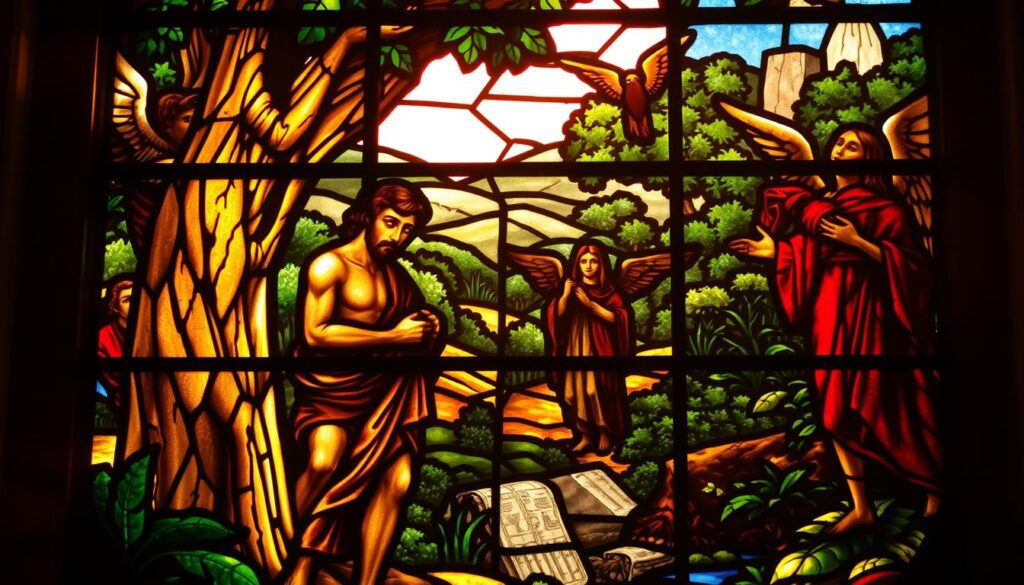
The Role of the Catechism
Understanding original sin is facilitated through the catechism, a critical component of Anglican religious instruction. The catechism serves as a foundational educational tool, providing a comprehensive overview of Anglican doctrine, including the concept of original sin.
Teaching on Original Sin
The catechism offers detailed teachings on original sin, grounding believers in the understanding of human nature and its relation to sin. It explores the biblical narrative of Adam and Eve and its implications for humanity.
“The catechism teaches us that original sin is not just a historical event but a condition that affects humanity, shaping our understanding of sin and redemption.”
The catechism also highlights the significance of baptism in the context of original sin, emphasizing the role of grace in redemption.
Resources for Further Study
For those seeking a deeper understanding, the catechism provides resources for further study. These resources include biblical references, theological texts, and guidance on prayer and reflection.
- Biblical passages related to the Fall of Man
- Theological explanations of original sin
- Prayers and reflections for personal growth
| Resource Type | Description | Benefit |
|---|---|---|
| Biblical Passages | Scriptural references to the story of Adam and Eve | Understanding the biblical context of original sin |
| Theological Texts | Explanations of original sin from Anglican theologians | Deepening understanding of the doctrine |
| Prayers and Reflections | Guided prayers for personal reflection on sin and redemption | Fostering spiritual growth |
Community Engagement and Reflection
The catechism encourages community engagement and personal reflection on the doctrine of original sin. It fosters a supportive environment where believers can explore their faith together.
Through the catechism, Anglicans are invited to reflect on their understanding of sin and redemption, engaging in a communal journey of faith.
Contemporary Issues and Original Sin
Original sin remains a pivotal doctrine in Anglican theology, affecting how the community addresses contemporary challenges. The Anglican Communion continues to grapple with the implications of original sin in various aspects of modern society.
Addressing Sin in Modern Society
The concept of original sin influences how Anglicans understand and address sin in contemporary contexts. This includes discussions around moral responsibility and the impact of sin on individual and communal levels.
In modern society, the Anglican Church seeks to provide guidance on issues such as social justice, environmental stewardship, and personal ethics, all through the lens of original sin. By understanding humanity’s fallen nature, Anglicans are called to work towards redemption and restoration.

The Role of the Church in Moral Guidance
The Anglican Church plays a significant role in providing moral guidance to its adherents. By understanding the doctrine of original sin, the Church can offer insights into the human condition and the path to salvation.
This guidance is manifested in various ways, including through liturgical practices, educational programs, and community outreach. The Church aims to support individuals in their spiritual journeys, helping them navigate the complexities of sin and redemption.
| Aspect | Traditional Understanding | Contemporary Application |
|---|---|---|
| Sin | Viewed as disobedience to God | Understood in the context of personal and social responsibility |
| Moral Guidance | Based on scripture and tradition | Applied to modern ethical dilemmas and societal issues |
| Redemption | Seen as salvation through Jesus Christ | Emphasizes personal and communal transformation |
Moving Beyond Guilt and Shame
A critical aspect of the Anglican approach to original sin is the emphasis on moving beyond guilt and shame towards redemption and grace. This involves recognizing the importance of forgiveness and the role of faith in Christ.
By focusing on the liberating power of God’s grace, the Anglican Communion encourages its members to embrace a path of healing and restoration. This approach not only addresses the individual’s spiritual needs but also fosters a sense of community and shared responsibility.
Anglican Worship and Original Sin
In Anglican worship, the concept of original sin is a recurring theme that informs their understanding of humanity and salvation. This doctrine is woven into the fabric of their liturgical practices, sermons, and community prayers, reflecting a deep-seated acknowledgment of human fallibility and the need for redemption.
Liturgical References
Anglican liturgy is rich with references to original sin, often invoking the narrative of Adam and Eve’s disobedience as a foundational understanding of humanity’s estrangement from God. The Book of Common Prayer and other liturgical resources contain prayers and confessions that acknowledge sin and seek forgiveness, grounding the worshippers in a sense of their spiritual condition.
The liturgical calendar also plays a role in reinforcing the doctrine of original sin. For instance, Lent is a period when Anglicans reflect on their sinfulness, repentance, and the journey towards Easter, symbolizing redemption through Christ.
Sermons and Teachings
Sermons in Anglican churches frequently address the topic of original sin, providing theological insights and pastoral guidance. Clergy often use biblical narratives to explore the implications of original sin on human nature and the necessity of salvation through Jesus Christ.
Teachings within the Anglican Communion emphasize the balance between acknowledging one’s sinful condition and the hope offered through faith in Christ. This balanced approach is reflected in various educational materials and catechetical resources used within the denomination.
Community Prayers
Community prayers in Anglican worship often include confessions of sin and petitions for forgiveness, reinforcing the communal aspect of the doctrine of original sin. These prayers underscore the shared human experience of sin and the collective reliance on God’s grace.
For example, during Morning and Evening Prayer, Anglicans recite prayers that acknowledge their sinfulness and seek divine mercy, fostering a sense of communal repentance and forgiveness.
| Aspect of Worship | Expression of Original Sin | Role in Anglican Practice |
|---|---|---|
| Liturgical References | Acknowledgment of sin through prayers and confessions | Grounds worshippers in their spiritual condition |
| Sermons and Teachings | Exploration of original sin’s implications on human nature | Provides theological insights and pastoral guidance |
| Community Prayers | Confessions of sin and petitions for forgiveness | Fosters communal repentance and forgiveness |
Conclusion: The Ongoing Impact of Original Sin
The doctrine of original sin continues to play a significant role in shaping Anglican identity and informing Anglican theology on original sin. As explored throughout this article, the Anglican understanding of original sin is rooted in scripture and influenced by tradition and reason.
Influence on Anglican Identity
The concept of original sin has a profound impact on Anglican identity, as it underscores humanity’s fallen nature and the need for redemption through Jesus Christ. This understanding informs Anglican worship, liturgy, and moral guidance.
Lasting Legacy in Theology
The Anglican theology on original sin has a lasting legacy in Christian theology, influencing discussions on human fallibility, salvation, and the role of faith and works. The ongoing debates and discussions within the Anglican Communion reflect the complexity and richness of this doctrine.
Future Directions for Discussion
As the Anglican Communion continues to navigate contemporary issues, the doctrine of original sin will remain a vital aspect of its theology. Future discussions will likely focus on the implications of original sin for modern society, the role of the Church in moral guidance, and the intersection of sin and accountability.
FAQ
What is the Anglican perspective on original sin?
Anglicans understand original sin as the inherent tendency towards sin that humanity inherits from Adam and Eve’s disobedience, affecting our nature and relationship with God.
How do Anglicans interpret the biblical account of the Fall?
Anglicans interpret the Fall as a historical event that had profound consequences for humanity, leading to separation from God and the introduction of sin into the world.
What role does baptism play in Anglican belief regarding original sin?
In Anglican theology, baptism is seen as a sacrament that cleanses individuals from original sin, initiating them into the Christian community and marking the beginning of their journey towards salvation.
How does the Anglican Communion view the concept of original sin?
The Anglican Communion holds a diverse range of perspectives on original sin, reflecting various theological emphases and cultural contexts across its provinces.
What is the relationship between original sin and moral responsibility in Anglican theology?
Anglican theology affirms that while original sin affects humanity’s moral capacity, individuals remain accountable for their actions and are called to repentance and faith.
How does Anglican worship incorporate the doctrine of original sin?
Anglican worship includes liturgical references, sermons, and community prayers that acknowledge original sin, seeking forgiveness and expressing gratitude for God’s grace.
What is the significance of the catechism in teaching Anglican doctrine on original sin?
The catechism plays a crucial role in educating Anglicans about the doctrine of original sin, providing a foundation for understanding the faith and fostering community engagement and reflection.
How do Anglicans understand the concept of redemption in relation to original sin?
Anglicans believe that redemption through Jesus Christ is the means by which individuals are freed from the effects of original sin, receiving forgiveness and new life.
What is the Anglican view on the interplay between faith and works in the context of original sin?
Anglican theology emphasizes that faith and works are interconnected, with faith being the foundation for a life of obedience and service, as individuals respond to God’s grace.
How does Anglicanism address contemporary issues related to original sin?
Anglicanism engages with contemporary issues by providing moral guidance, addressing sin in modern society, and encouraging a nuanced understanding of guilt, shame, and redemption.
What are the implications of original sin for salvation in Anglican theology?
In Anglican theology, original sin underscores the need for salvation, which is made available through Jesus Christ, emphasizing the importance of God’s grace and the sacraments.
How do Anglicans understand the concept of human fallibility in relation to original sin?
Anglicans see human fallibility as a consequence of original sin, acknowledging that humanity’s tendency towards sin affects all aspects of human life and relationships.