Anglican Marian theology encompasses the doctrines and beliefs of Anglicanism concerning Mary, the mother of Jesus. Anglicans honor Mary as the theotokos, a term meaning “God-bearer” or “one who gives birth to God”, due to their belief in Jesus as both human and God the Son.
The significance of Mary in Anglican theology is multifaceted. Anglicans accord her a special place within their faith, recognizing her role in the life of Jesus. This introduction sets the stage for a deeper exploration of Anglican views on Mary.
Key Takeaways
- Anglicans honor Mary as the theotokos, or “God-bearer”.
- Mary plays a significant role in Anglican theology.
- Anglican Marian theology is rooted in the belief in Jesus as both human and divine.
- The Anglican Communion and Continuing Anglican movement share a common reverence for Mary.
- Anglican beliefs about Mary are deeply connected to their understanding of Jesus.
Overview of Anglican Beliefs
Understanding Anglican beliefs requires a look into its historical context and theological underpinnings. Anglicanism, a Christian tradition that emerged from the Church of England, is characterized by a via media or “middle way” between Catholicism and Protestantism.
Understanding Anglicanism
Anglicanism is a global communion of churches that adhere to a distinct set of principles and doctrines. At its core, Anglican theology is shaped by scripture, tradition, and reason. This three-legged stool ensures a balanced approach to faith and practice.
- Scripture: Anglicans affirm the authority of the Bible in matters of faith.
- Tradition: The tradition of the Church is considered vital in understanding Christian doctrine.
- Reason: Reason is used to interpret scripture and tradition in the context of contemporary life.
Historical Background
The historical background of Anglicanism is rooted in the English Reformation. The Church of England was established by King Henry VIII, and over time, it developed its unique identity. Key events and figures, such as the Book of Common Prayer and the influence of theologians like Richard Hooker, have shaped Anglican beliefs.
Key Tenets of Faith
Anglicans affirm the Apostles’ and Nicene Creeds, which outline the fundamental beliefs of Christianity. The sacram of baptism and the Eucharist are central to Anglican worship. Additionally, the Chicago-Lambeth Quadrilateral sets out four key principles: the Bible, the creeds, the sacraments, and the historic episcopate.
- The authority and sufficiency of scripture.
- The importance of the creeds as a summary of Christian faith.
- The significance of the sacraments instituted by Christ.
- The role of the historic episcopate in maintaining church order.
By understanding these aspects of Anglicanism, we can better appreciate how the tradition views the Virgin Mary and her role in Christian faith.
The Role of Mary in Anglican Theology
In Anglican theology, Mary is recognized for her pivotal role in the narrative of Jesus Christ. The Anglican Communion has a rich and diverse tradition regarding Mary, reflecting both historical and contemporary perspectives.
Mary as Theotokos
Anglicans recognize Mary as the Theotokos, affirming her role as the mother of God. This title is seen as a Christological affirmation, emphasizing the divinity of Jesus Christ. By acknowledging Mary as Theotokos, Anglicans underscore the significance of Christ’s divine nature.
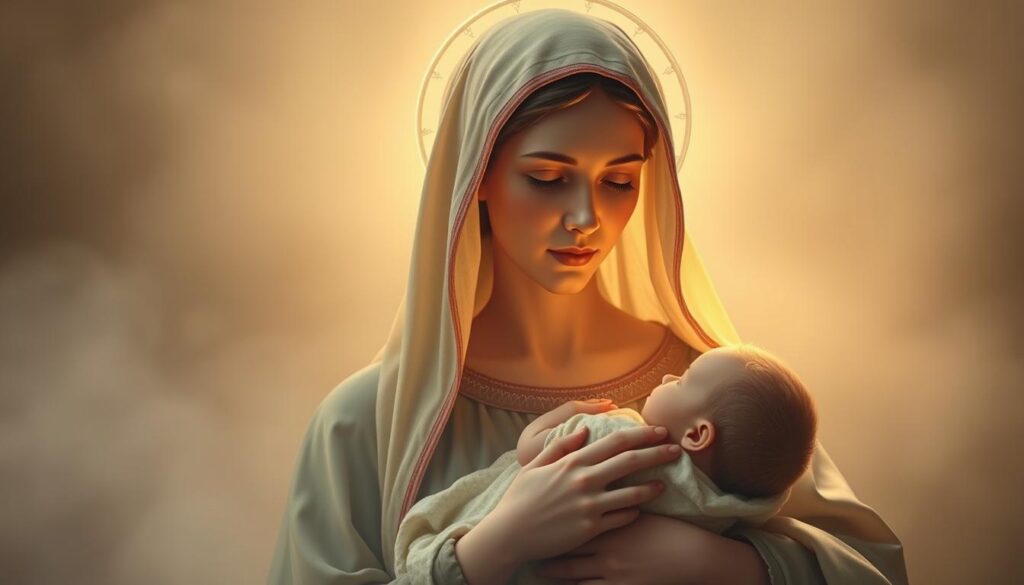
The term Theotokos, meaning “God-bearer,” has been a cornerstone in Christian theology since the early councils of the Church. It highlights Mary’s unique role in bearing Jesus, who is considered both human and divine.
Implications of Mary’s Motherhood
The implications of Mary’s motherhood are profound in Anglican theology. It is not just a biological fact but a theological statement about the nature of Jesus Christ. Mary’s motherhood is seen as a crucial aspect of the Incarnation, where God becomes human through Jesus.
Anglican theologians have long debated the extent to which Mary’s role should be venerated or celebrated. However, there is a consensus on the importance of her motherhood in understanding the mystery of the Incarnation.
By embracing Mary as Theotokos, Anglicans affirm their commitment to the core Christian doctrine of the Incarnation, emphasizing both the humanity and divinity of Jesus Christ.
The Anglican Prayer Book and Mary
The reverence for Mary within Anglicanism is partly expressed through the prayers and liturgies found in the Anglican Prayer Book. This foundational text guides Anglican worship and includes various elements that highlight Mary’s role in the Christian faith.
Inclusion of Marian Prayers
The Anglican Prayer Book, also known as the Book of Common Prayer, contains collects and readings that reference Mary, demonstrating her significance in Anglican theology. These prayers and readings are integral to Anglican liturgical practices, reflecting a deep respect for Mary’s part in the narrative of Jesus Christ.
Marian prayers in the Anglican tradition often focus on Mary’s role as the Theotokos, or Mother of God, a title that underscores her importance in Christian doctrine. By including these prayers, the Anglican Prayer Book reinforces the value of Mary’s presence in the life of the Church.
Liturgical Practices Related to Mary
Anglican liturgical practices related to Mary are diverse and reflect the broader theological themes of the Anglican Communion. The Prayer Book includes provisions for observing certain feast days dedicated to Mary, which are significant in the Anglican calendar.
These liturgical practices not only honor Mary but also serve to connect Anglicans with the wider Christian tradition. By venerating Mary through prayer and liturgy, Anglicans affirm their connection to the historical and theological roots of Christianity.
The use of the Anglican Prayer Book in worship services ensures that the Anglican perspective on Virgin Mary remains a vital part of communal religious life. Through its prayers and liturgies, the Prayer Book provides a framework for understanding and celebrating Mary’s role in the Anglican faith.
Marian Feasts in the Anglican Calendar
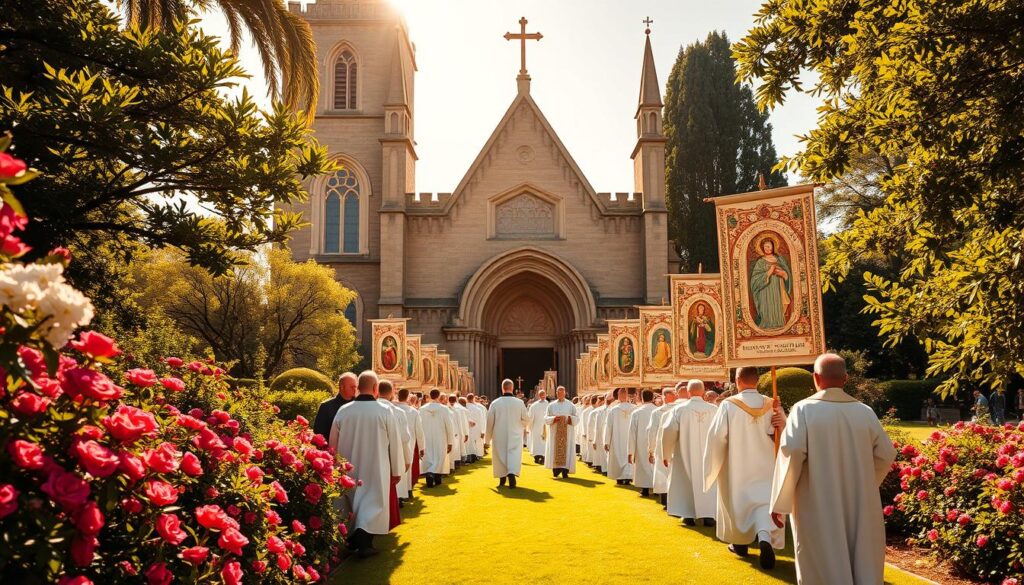
Anglicans observe various Marian feasts throughout the year, each highlighting a different aspect of Mary’s importance in Christian faith. These feasts are significant in the Anglican calendar, reflecting the theological and spiritual importance of Mary in the narrative of Jesus Christ.
Major Marian Celebrations
The Anglican calendar includes several major Marian celebrations. These are:
- The Annunciation (March 25th)
- The Purification (February 2nd)
- The Visitation (May 31st)
- The Conception of the Blessed Virgin Mary (December 8th)
Each of these feasts commemorates a key event in the life of Mary, emphasizing her role in the Incarnation and the early life of Jesus.
Importance of These Feasts
These Marian feasts are not just celebrations; they are integral to the Anglican liturgical year, reinforcing the Anglican doctrine on Virgin Mary. They serve as reminders of the theological significance of Mary’s life and her relationship with Jesus.
“The feasts dedicated to Mary are an essential part of our liturgical calendar, highlighting her unique role in the mystery of the Incarnation.” –
The celebration of these feasts underscores the Anglican faith and Virgin Mary, demonstrating a deep reverence for her place in Christian tradition.
| Feast Day | Date | Significance |
|---|---|---|
| The Annunciation | March 25th | Commemorates the angel Gabriel’s announcement to Mary |
| The Purification | February 2nd | Celebrates the presentation of Jesus at the Temple |
| The Visitation | May 31st | Honors Mary’s visit to her cousin Elizabeth |
In conclusion, the Marian feasts in the Anglican calendar are vital expressions of Anglican faith and devotion, enriching the spiritual lives of Anglicans worldwide.
The Virgin Mary in Anglican Communion
Anglican views on the Virgin Mary are shaped by the diverse cultural and theological contexts within the Communion. The global fellowship of Anglican churches presents a broad spectrum of beliefs regarding Mary, reflecting the complex and multifaceted nature of Anglican theology.
Perspectives from Different Provinces
The Anglican Communion is a worldwide communion of Anglican churches, each with its own unique perspective on Mary. For instance, some provinces place a strong emphasis on Mary’s role as the Mother of God, while others may focus more on her significance as a model for Christian discipleship.
“The veneration of Mary is not uniform across the Anglican Communion,” notes a prominent Anglican theologian. “It varies from province to province, reflecting local culture, history, and theological traditions.”
Influence of Anglican Leaders
Anglican leaders have played a significant role in shaping the understanding of Mary’s role within the Church. Figures such as Archbishop Rowan Williams have contributed to the theological discourse on Mary, highlighting her importance in Anglican devotion and doctrine.
The influence of these leaders is evident in the various liturgical practices and theological discussions within the Anglican Communion. As a result, the understanding of Mary within Anglicanism is both rich and diverse, reflecting the global nature of the Communion.
“Mary is a significant figure in the Anglican tradition, representing a model of faithfulness and obedience to God.” –
The diverse perspectives on Mary within the Anglican Communion underscore the complexity and richness of Anglican theology. By exploring these different views, one can gain a deeper understanding of the significance of Mary in Anglican belief and practice.
The Doctrine of the Immaculate Conception
The Immaculate Conception, a dogma defined by the Catholic Church, is viewed differently within the Anglican Communion. This doctrine, which states that the Virgin Mary was conceived without original sin, has been a point of theological discussion among Anglicans.
Anglican vs. Catholic Views
The Catholic Church formally defined the Immaculate Conception as a dogma in 1854, through Pope Pius IX’s bull Ineffabilis Deus. In contrast, Anglicans have not adopted this doctrine as part of their official theology. While some Anglicans may view the Immaculate Conception as a pious devotion, it is not considered a binding doctrine within the Anglican Communion.
“The Anglican Church has never formally accepted the doctrine of the Immaculate Conception, though it has been a subject of considerable interest and debate.” –
Variations in Interpretation
Within Anglicanism, there are varying interpretations regarding the Immaculate Conception. Some Anglican theologians have argued that the concept aligns with certain Anglican theological principles, while others have seen it as incompatible with their understanding of salvation and sin.
| Aspect | Anglican View | Catholic View |
|---|---|---|
| Doctrine Status | Not officially recognized | Formal dogma since 1854 |
| Theological Emphasis | Varied interpretations among theologians | Central to Marian theology |
| Liturical Inclusion | Not a standard part of liturgy | Included in Catholic liturgical calendar |
The diversity within Anglican thought on the Immaculate Conception reflects the broader theological and liturgical differences between Anglicanism and Catholicism. Understanding these differences is crucial for ecumenical dialogue and for appreciating the unique aspects of Anglican theology regarding the Virgin Mary.
Mary in Anglican Music and Art
The representation of Mary in Anglican music and art reflects the deep reverence and devotion that Anglicans have for the Virgin Mary. This reverence is beautifully captured in various hymns and artistic depictions found in Anglican churches.
Representation in Hymns
Anglican hymnody is rich with references to Mary, highlighting her role in the life of Jesus and the early Christian community. Hymns dedicated to Mary often focus on her faith, obedience, and her position as the mother of Jesus. For example, hymns like “O Mary, Mother of God” and “Ave Maria” are sung in various Anglican churches, showcasing the liturgical importance of Mary.
The use of Marian hymns in Anglican worship services underscores the significance of Mary in the liturgical calendar. These hymns are not only a form of devotion but also a way to connect with the broader Christian tradition. Mary’s presence in Anglican hymnody serves as a reminder of the values she represents, such as humility and faithfulness.
Artistic Depictions of Mary
Artistic representations of Mary are a common feature in Anglican churches, reflecting the historical and cultural significance of Mary in Christian worship. These depictions range from traditional iconography to more contemporary interpretations, showcasing Mary in various contexts.
In many Anglican churches, Mary is depicted in stained glass windows, paintings, and statues, often in a way that reflects the local culture and artistic styles. These representations not only beautify the worship space but also serve as a visual reminder of Mary’s importance in the Christian faith. The veneration of Mary through art is a testament to the enduring legacy of the Virgin Mary in Anglicanism.
The diverse ways in which Mary is depicted in Anglican art highlight the adaptability and richness of the Anglican tradition. Whether through traditional or modern art forms, Mary remains a central figure in Anglican devotion and worship.
Ecumenical Relations and Mary
Anglicans and Catholics have engaged in meaningful ecumenical discussions, shedding light on their shared beliefs and differences regarding Mary. These dialogues have not only fostered greater understanding but have also highlighted the rich diversity within Christian traditions.
Anglican-Catholic Dialogues
The ecumenical dialogue between Anglicans and Catholics has been instrumental in exploring the theological significance of Mary. As Dr. Mary Tanner, a prominent Anglican theologian, noted, “The dialogue has helped us to understand the depth of our shared faith and the areas where we continue to differ.”
“The dialogue has helped us to understand the depth of our shared faith and the areas where we continue to differ.” – Dr. Mary Tanner
Shared Beliefs and Differences
While Anglicans and Catholics share a deep reverence for Mary as the Theotokos, or Mother of God, there are significant differences in their theological emphases. For instance, the Catholic doctrine of the Immaculate Conception is not universally accepted among Anglicans. As Rowan Williams, former Archbishop of Canterbury, observed, “The veneration of Mary is a complex issue that requires careful theological consideration.”
The ecumenical discussions have underscored the importance of Mary in Christian worship and theology. By exploring their shared beliefs and differences, Anglicans and Catholics continue to deepen their understanding of the Virgin Mary’s role in the life of the Church.
In conclusion, the ecumenical relations between Anglicans and Catholics regarding Mary have enriched the theological landscape, highlighting both the unity and diversity of Christian traditions. As the dialogue continues, it is likely to yield further insights into the significance of Mary in Christian faith and practice.
Contemporary Views on Mary
Contemporary views on Mary within the Anglican Communion reflect a diverse range of theological interpretations. The Anglican doctrine on the Virgin Mary continues to be a subject of interest and debate among scholars and the faithful alike.
Influence of Modern Theologians
Modern Anglican theologians have significantly contributed to the understanding of Mary’s role in the Church. Their work has shed light on the historical and theological contexts of Marian devotion, enriching the Anglican faith and Virgin Mary discourse.
- Theologians have explored the biblical roots of Marian devotion, linking it to the scriptural narrative.
- The influence of ecumenical dialogue on Anglican views of Mary has been significant, fostering a deeper understanding between different Christian traditions.
- Contemporary theological perspectives have also addressed the relevance of Mary in modern times, highlighting her importance in Christian worship and discipleship.
Mary in Today’s Anglican Community
In today’s Anglican community, Mary remains a figure of devotion and theological inquiry. The ongoing significance of Mary is reflected in various aspects of Anglican life and worship.
- The inclusion of Marian feasts in the Anglican liturgical calendar underscores the importance of Mary in the life of the Church.
- Devotional practices and prayers that honor Mary continue to be an integral part of Anglican spirituality.
- The Anglican doctrine on the Virgin Mary is reflected in the Church’s liturgy and teaching, demonstrating a commitment to understanding and honoring her role in Christian faith.
The Anglican faith and Virgin Mary are intertwined in a rich tapestry of theology, devotion, and practice. As the Anglican Communion continues to evolve, the figure of Mary remains a constant source of inspiration and reflection.
Conclusion: Anglican Views on Mary
Anglicans have a diverse understanding of Mary, reflecting a range of views within the Communion. This diversity is evident in the various ways Mary is revered and reflected upon in Anglican theology and practice.
Key Aspects of Anglican Beliefs
At the heart of Anglican beliefs about Mary is her role as the mother of Jesus Christ, a title that has significant implications for Christian theology. The concept of Mary as Theotokos, or the Mother of God, is particularly important, as it underscores the importance of Jesus’ divinity and Mary’s unique role in the Incarnation.
Significance of Mary in Faith and Worship
Mary remains an important figure in Anglican faith and worship, with ongoing devotion and reflection. Understanding what Anglicans believe about the Virgin Mary and exploring Anglican views on the Virgin Mary reveals a rich tapestry of theological perspectives and liturgical practices that highlight her significance.
By examining these aspects, it becomes clear that Mary plays a vital role in Anglican spirituality, fostering a deeper connection with the divine and the community of believers.
FAQ
What is the significance of Mary in Anglican theology?
Mary is considered a crucial figure in Anglican theology, particularly in Christology, as she is recognized as the mother of Jesus Christ, referred to as Theotokos, meaning “God-bearer.”
How do Anglicans view the Virgin Mary?
Anglicans view Mary with reverence and respect, honoring her role in the life of Jesus Christ and her significance in the Christian faith, while also maintaining a distinct understanding that differs from Catholic and Orthodox traditions.
Are there Marian prayers in the Anglican Prayer Book?
Yes, the Anglican Prayer Book includes prayers and liturgical practices related to Mary, reflecting her importance in Anglican worship and devotion.
What are the major Marian feasts in the Anglican calendar?
The Anglican calendar includes significant Marian feasts, such as the Annunciation and the Nativity of Mary, which are celebrated with special liturgies and services, highlighting the importance of Mary in the life of the Church.
How do Anglicans interpret the doctrine of the Immaculate Conception?
Anglicans have varying interpretations of the Immaculate Conception, with some accepting it as a valid doctrine while others do not, reflecting the diversity of theological perspectives within the Anglican Communion.
What is the role of Mary in Anglican art and music?
Mary is represented in Anglican art and music through various hymns, chants, and artistic depictions, reflecting her significance in Anglican devotion and worship.
How do Anglicans and Catholics differ in their views on Mary?
While both Anglicans and Catholics revere Mary, there are differences in their understanding and expression of devotion, particularly regarding doctrines like the Immaculate Conception and the Assumption.
Are there ongoing dialogues between Anglicans and Catholics about Mary?
Yes, there are ongoing ecumenical dialogues between Anglicans and Catholics, exploring shared beliefs and differences regarding Mary, with the aim of fostering greater understanding and unity.
How do modern theologians influence Anglican views on Mary?
Modern Anglican theologians contribute to the ongoing discussion about Mary, offering fresh perspectives and insights that help shape contemporary Anglican understanding and devotion.
What is the importance of Mary in today’s Anglican community?
Mary remains a vital figure in Anglican faith and worship, inspiring devotion, prayer, and service, and serving as a model for Christian discipleship.