The Anglican faith is rooted in a rich history and tradition, drawing on the Bible as its foundational text. Anglicans also place significant emphasis on the apostolic traditions and the writings of the early Church Fathers.
Their beliefs are shaped by a combination of scripture, reason, and tradition, creating a unique and diverse faith community. At its core, Anglican faith is about living out the teachings of Jesus Christ in daily life.
Key Takeaways
- Anglicans base their faith on the Bible and apostolic traditions.
- Their beliefs are influenced by scripture, reason, and tradition.
- Anglican faith emphasizes living out the teachings of Jesus Christ.
- The community is diverse, with a rich history and tradition.
- Anglicans value the writings of the early Church Fathers.
Overview of Anglicanism
Anglicanism, a distinct Christian tradition, has its roots in the English Reformation. This historical context is crucial in understanding the development of Anglican beliefs and practices.
Definition and Origins
Anglicanism emerged as a separate entity during the 16th century, influenced by the Protestant Reformation. The term “Anglican” is derived from the Latin word “Anglicanus,” meaning “of England.” The Church of England, established by King Henry VIII, is the mother church of the worldwide Anglican Communion.
The origins of Anglicanism are closely tied to the English Reformation, which was characterized by a shift away from certain Catholic doctrines and practices. This reformation was not only theological but also political, reflecting the complex interplay between church and state.
The Worldwide Anglican Communion
Today, the Anglican Communion is one of the largest Christian bodies globally, with millions of adherents across various countries. The Communion is a fellowship of churches that are in full communion with the Archbishop of Canterbury.
The Anglican Communion is known for its diversity, encompassing a wide range of theological perspectives and worship styles. This diversity is a reflection of the Communion’s global presence, with member churches in different cultural and regional contexts.
The worldwide Anglican Communion is characterized by its commitment to certain core principles, including the authority of Scripture, the importance of tradition, and the role of reason in interpreting faith. These principles guide Anglican beliefs and practices, shaping the identity of the Communion.
Core Beliefs of the Anglican Church
At the heart of Anglicanism lies a deep commitment to certain core beliefs that shape the faith and practices of its adherents. These beliefs are rooted in a rich history and a complex interplay of scripture, tradition, and reason.

The Authority of Scripture
The Anglican Church places a high value on the authority of Scripture. Anglicans understand the Old and New Testaments as “containing all things necessary for salvation.” This belief underscores the importance of biblical teachings in guiding the faith and practices of Anglicans.
The scripture is seen as the primary source of guidance for Anglicans, influencing their understanding of God, salvation, and the Christian life. By emphasizing the authority of Scripture, Anglicans maintain a connection to the historical and theological roots of Christianity.
Tradition and Reason
In addition to the authority of Scripture, Anglican theology also values tradition and reason. Tradition refers to the practices, teachings, and interpretations that have been passed down through the history of the Church. Reason involves the use of human intellect and reflection to understand and interpret the faith.
Anglicans believe that tradition and reason are complementary to Scripture, helping to provide a comprehensive understanding of the faith. This approach allows for a nuanced and thoughtful engagement with contemporary issues and challenges.
By balancing Scripture, tradition, and reason, the Anglican Church fosters a rich and dynamic faith that is both rooted in history and responsive to the needs of the present.
The Nicene Creed and Its Significance
At the heart of Anglicanism lies the Nicene Creed, a universally accepted declaration of Christian faith. This creed is not only a cornerstone of Anglican beliefs but also a unifying statement across various Christian traditions.
Understanding the Nicene Creed
The Nicene Creed, formulated in the 4th century, is a succinct statement of Christian doctrine. It affirms belief in the Holy Trinity: the Father, the Son, and the Holy Spirit. This creed has been a foundational element in Christian worship and doctrine, serving as a common ground among diverse Christian denominations.
The significance of the Nicene Creed lies in its ability to encapsulate the core of Christian faith in a concise manner, making it a powerful tool for unity and understanding among believers.
How It Shapes Anglican Beliefs
In Anglicanism, the Nicene Creed plays a pivotal role in shaping beliefs and practices. It is recited during worship services, reinforcing the community’s commitment to the Christian faith as defined by the creed.
The creed influences Anglican doctrine by emphasizing the importance of the Trinity and the sacraments. It serves as a bridge between different Christian traditions, fostering a sense of unity and shared belief among Anglicans worldwide.
By affirming the Nicene Creed, Anglicans reaffirm their connection to the broader Christian community, highlighting the creed’s role in ecumenical dialogue and cooperation.
The Role of the Sacraments in Anglicanism
Anglicans place significant emphasis on the sacraments, which are viewed as vital channels of God’s grace. The sacraments are not just rituals but are considered means through which God’s love and redemption are conveyed to believers.
The sacraments play a crucial role in the spiritual lives of Anglicans, fostering a deeper connection with God and the community. They are integral to Anglican worship and practice, reflecting the rich tradition and heritage of the Anglican Church.
The Two Primary Sacraments
In Anglicanism, there are two primary sacraments that hold significant importance: Baptism and the Eucharist. These sacraments are considered essential for the spiritual journey of believers.
- Baptism: Baptism is the sacrament of initiation into the Christian community. It symbolizes the cleansing of sin and the beginning of a new life in Christ.
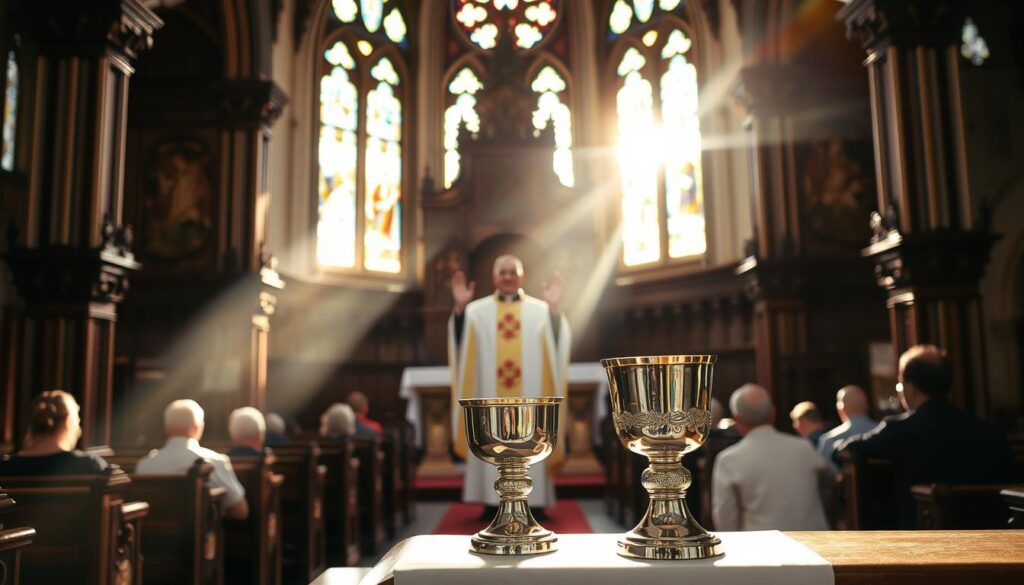
- Eucharist: The Eucharist, also known as Holy Communion, is the sacrament in which believers participate in the Last Supper, commemorating Christ’s death and resurrection. It is a central act of worship in Anglican churches.
Importance of Baptism and Eucharist
Baptism and the Eucharist are foundational to Anglican beliefs and practices. Baptism marks the entry into the Christian life, while the Eucharist nourishes and sustains believers in their faith journey.
| Sacrament | Significance | Practice |
|---|---|---|
| Baptism | Initiation into the Christian community, symbolizing cleansing of sin and new life in Christ. | Performed once, typically with water, symbolizing spiritual rebirth. |
| Eucharist | Commemoration of Christ’s Last Supper, death, and resurrection, providing spiritual nourishment. | Regularly observed, typically weekly, involving the consumption of bread and wine. |
The sacraments are vital to the life of Anglicans, providing a tangible connection to their faith and to the community. Through Baptism and the Eucharist, Anglicans experience the grace and love of God, reinforcing their beliefs and practices.
Anglican Worship Practices
Worship in the Anglican tradition is characterized by a rich liturgical heritage. This heritage is not just about following a set of rules or rituals; it’s about creating a meaningful and spiritual experience that connects the faithful with their community and with God.
Liturgy: A Unique Expression of Faith
At the heart of Anglican worship is the liturgy, which is primarily guided by the Book of Common Prayer. This book, with its roots in the 16th century, has been a cornerstone of Anglican worship for centuries, providing a structured yet flexible framework for worship services.
The Book of Common Prayer is more than just a liturgical guide; it’s a symbol of unity among Anglicans worldwide. Its prayers, confessions, and creeds form the basis of many Anglican worship services, ensuring a continuity of faith and practice across different cultures and geographical locations.

The Role of Music in Worship
Music plays a vital role in Anglican worship, enhancing the liturgical experience and fostering a sense of community among worshippers. From traditional hymns to contemporary compositions, music is used to praise, to reflect, and to pray.
The use of music in Anglican worship is diverse, reflecting the global nature of the Anglican Communion. Different cultures bring their unique musical traditions to worship, enriching the Anglican liturgical heritage.
| Aspect | Description | Significance |
|---|---|---|
| Liturgy | Guided by the Book of Common Prayer | Provides structure and unity in worship |
| Music | Diverse, reflecting global cultures | Enhances worship experience and community |
| Scripture | Central to worship services | Grounds worship in biblical teachings |
Anglican worship practices, with their emphasis on liturgy, music, and scripture, offer a unique and meaningful way of expressing faith. Through these practices, Anglicans around the world are connected in their worship and in their commitment to living out their faith in daily life.
The Anglican Perspective on Salvation
Understanding the Anglican perspective on salvation requires an exploration of its core components: grace, faith, and good works. At its core, Anglican beliefs about salvation are centered on the conviction that faith in Jesus Christ is the foundation of a person’s salvation.
The Anglican view emphasizes the importance of grace as a gift from God, highlighting that salvation is not earned but received through faith. This perspective is rooted in the understanding that God’s grace is the initiating factor in salvation, and human response to this grace is through faith and good works.
Grace and Faith
The interplay between grace and faith is crucial in Anglican theology. Anglicans believe that faith is the means by which one receives God’s grace, and this faith is not just an intellectual assent but a living, active trust in God.
- Faith is seen as a gift from God that enables believers to trust in Him.
- Grace is understood as God’s unmerited favor, which brings about salvation.
The Concept of Good Works
Good works are considered an essential aspect of the Anglican understanding of salvation. While salvation is not earned through good works, Anglicans believe that good works are a natural response to God’s grace and a demonstration of living faith.
- Good works are seen as a fruit of faith, indicating a believer’s growth in grace.
- They are considered important for the life of the believer and the community, reflecting the love of Christ.
In summary, the Anglican perspective on salvation is a balanced view that incorporates the significance of grace, faith, and good works. It emphasizes that salvation is a gift from God, received through faith, and manifested in the lives of believers through good works.
Anglicanism and Social Issues
The Anglican Communion has been actively engaged with various social justice issues, reflecting its commitment to addressing modern challenges. This engagement is rooted in the church’s theological principles, which emphasize the importance of compassion, justice, and equality.
Engagement with Social Justice
Anglicanism’s approach to social justice is multifaceted, involving various initiatives and programs aimed at promoting human rights, environmental stewardship, and social welfare. The church has been vocal on issues such as poverty, inequality, and climate change, advocating for policies and practices that reflect its values.
Key Areas of Focus include:
- Advocacy for the marginalized and vulnerable
- Promotion of environmental sustainability
- Support for human rights initiatives
The Church’s Stance on Modern Issues
The Anglican Church has taken a proactive stance on various modern issues, including LGBTQ+ rights, racial justice, and economic inequality. The church’s stance is guided by its interpretation of Christian teachings and a commitment to compassion and understanding.
For instance, the Anglican Communion has been involved in discussions around LGBTQ+ rights, with some provinces adopting more inclusive stances, while others maintain traditional views. This diversity reflects the global nature of the Anglican Communion and the complexity of its engagement with contemporary social issues.
The church continues to navigate these complex issues, seeking to balance its commitment to traditional Christian teachings with its role as a compassionate and inclusive community.
The Relationship Between Anglicans and Other Denominations
Ecumenism has become a cornerstone of Anglican faith, encouraging cooperation and mutual respect among various Christian denominations. This commitment to ecumenism reflects the Anglican belief in the importance of unity among Christians.
Ecumenism: Working Together in Faith
The Anglican Communion is actively engaged in ecumenical dialogue with other Christian denominations, seeking to strengthen relationships and promote a shared witness to the Gospel. This involves collaborative efforts in areas such as mission work, theological discussions, and community service.
Key aspects of Anglican ecumenism include:
- Dialogue with other Christian traditions to promote understanding and unity
- Cooperation in mission and service projects
- Joint theological discussions to address common issues and challenges
Respecting Other Christian Traditions
Anglicans respect the beliefs and practices of other Christian traditions, recognizing the rich diversity within the global Christian community. This respect is grounded in the Anglican understanding of the communio sanctorum, or the communion of saints, which emphasizes the unity of all believers in Christ.
By engaging in ecumenical efforts, Anglicans aim to build stronger relationships with other Christian denominations, fostering a spirit of cooperation and mutual understanding. This not only enriches the Anglican faith but also contributes to a more unified Christian witness in the world.
The Importance of Community in Anglicanism
In Anglicanism, community is not just a byproduct of faith; it is a fundamental aspect of spiritual growth. The Anglican Church emphasizes the importance of gathering together as a community to worship, learn, and serve. This communal aspect of faith is what makes Anglicanism vibrant and dynamic.
Local Parishes and Their Role
Local parishes play a crucial role in the life of Anglicans, providing a sense of community and fellowship. These parishes are not just places of worship; they are hubs of activity where members can engage in various ministries, outreach programs, and social events. By participating in their local parish, Anglicans can deepen their faith, build meaningful relationships, and contribute to the well-being of their community.
As Rowan Williams, a former Archbishop of Canterbury, once said, “The church is not just an institution, but a community of people who are called to be the body of Christ in the world.” This quote underscores the significance of community in Anglicanism, highlighting its role in embodying Christ’s presence in the world.
Building Community Through Fellowship
Building community through fellowship is a key aspect of Anglican practice. Anglicans achieve this through various means, including:
- Regular worship services that foster a sense of unity and shared purpose.
- Small group ministries that provide opportunities for deeper spiritual growth and personal connection.
- Community outreach programs that demonstrate the love of Christ in practical ways.
By engaging in these activities, Anglicans can experience a strong sense of belonging and support, which is essential for their spiritual journey. As the Book of Common Prayer reminds us, “The Church is the community of the baptized, united in Christ, and called to a life of worship, witness, and service.”
This emphasis on community is what makes Anglicanism so appealing to many. It offers a faith that is not just personal but also deeply communal, where individuals can grow together in their spiritual lives.
Resources for Learning More About Anglican Beliefs
For those interested in delving deeper into Anglicanism doctrines and theology beliefs, numerous resources are available. Exploring these can provide a richer understanding of the Anglican creed and its significance in modern times.
Recommended Literature
Several books offer insightful examinations of Anglican theology and practices. “The Anglican Tradition” and “The Episcopal Church: A Basic Manual” are valuable resources for understanding the historical and contemporary aspects of Anglicanism.
Online Resources and Churches
The official website of the Anglican Communion and various Anglican/Episcopal church websites provide a wealth of information on beliefs, practices, and community activities. Visiting these sites can offer a glimpse into the diverse expressions of Anglican faith worldwide.
FAQ
What is the foundation of Anglican beliefs?
Anglican beliefs are founded on the Bible, apostolic traditions, and the principles of reason. The authority of scripture is central, guiding Anglicans in their understanding of faith and practice.
What is Anglicanism, and how did it originate?
Anglicanism is a Christian tradition that originated from the Church of England. It developed as a distinct entity during the Reformation, blending elements of Catholicism and Protestantism.
What is the significance of the Nicene Creed in Anglicanism?
The Nicene Creed is a unifying statement of faith that outlines core Christian beliefs. In Anglicanism, it serves as a foundational expression of doctrine, affirming the faith in the Trinity and the life, death, and resurrection of Jesus Christ.
What sacraments are recognized in the Anglican Church?
The Anglican Church recognizes two primary sacraments: Baptism and the Eucharist. These sacraments are central to Anglican worship and practice, symbolizing spiritual rebirth and communion with God.
How do Anglicans understand salvation?
Anglicans believe that salvation is a process involving grace, faith, and good works. It is understood as a gift from God, received through faith in Jesus Christ, and demonstrated through acts of love and service.
How does the Anglican Communion address social justice issues?
The Anglican Communion is actively engaged with social justice, advocating for the rights and dignity of all people. The Church addresses modern issues such as poverty, inequality, and human rights, grounded in its theological commitment to love and serve.
What is the Anglican stance on ecumenism?
Anglicans value ecumenism, seeking to work together with other Christian denominations in a spirit of unity and cooperation. The Church respects other Christian traditions, promoting dialogue and collaboration.
How important is community in Anglicanism?
Community is a vital aspect of Anglican faith and practice. Local parishes play a significant role in fostering fellowship and service, providing a supportive environment for spiritual growth.
What resources are available for learning more about Anglican beliefs?
There are various resources available, including recommended books and literature, online resources, and opportunities to engage with local Anglican churches. These resources provide a deeper understanding of Anglican theology, worship, and practices.
How does Anglican worship differ from other Christian traditions?
Anglican worship is characterized by its liturgical tradition, rooted in the Book of Common Prayer. The use of liturgy, along with the incorporation of music, creates a unique expression of faith that is both reverent and celebratory.