Exploring the foundations of a vibrant religious tradition can feel like stepping into a story centuries in the making. This article unpacks the core principles that shape a community rooted in personal faith and scriptural focus. Whether you’re new to the topic or seeking clarity, let’s dive into what defines this distinctive approach to Christian practice.
At the heart of this tradition lies a deep commitment to the authority of the Bible. Followers prioritize individual connections with Jesus Christ, viewing salvation as a transformative journey rather than a ritual. This emphasis on personal choice shapes everything from worship styles to community engagement.
One defining practice is believer’s baptism, symbolizing voluntary dedication to a life guided by faith. Churches within this group often operate independently, valuing local leadership while sharing common values. The resurrection of Jesus serves as a cornerstone, inspiring hope and shaping daily decisions for millions.
Key Takeaways
- The Bible serves as the ultimate authority for teachings and practices.
- Personal faith in Jesus Christ is central to spiritual identity.
- Believer’s baptism reflects conscious commitment rather than tradition.
- Local churches maintain self-governance while sharing core values.
- The resurrection underscores hope and purpose in everyday life.
Understanding the Historical Roots of Baptist Faith
The story of Baptist faith begins in 17th-century England, where early advocates sought to reform Christian faith practices. Dissatisfied with the Church of England’s structure, these reformers emphasized personal spiritual commitment over institutional rituals. Their bold stance led to persecution, pushing many to seek religious freedom abroad.
Origins and Early Developments
In 1609, the first Baptist congregation formed in Amsterdam under John Smyth’s leadership. These groups rejected infant baptism, insisting only conscious believers should participate. Persecution forced many to settle in America, where they championed self-governed local churches.
Evolution Through Centuries
By the 18th century, Baptist ideas spread rapidly during the Great Awakening revivals. Leaders like Roger Williams fought for church-state separation, shaping modern religious liberty concepts. This focus on individual faith and biblical authority fueled global growth.
| Period | Key Event | Impact |
|---|---|---|
| 1609 | First Baptist church in Amsterdam | Established believer’s baptism |
| 1639 | Rhode Island founding | Pioneered religious tolerance |
| 1740s | Great Awakening | Boosted membership through revivals |
| 1905 | Baptist World Alliance formed | United churches across 23 countries |
Today, over 40 million members worldwide trace their spiritual heritage to these courageous beginnings. Their legacy lives in churches valuing both personal conviction and community action.
Core Doctrines and the Authority of Scripture
Scripture isn’t just studied here—it actively shapes decisions and daily practices. This approach creates a living framework where ancient texts meet modern spiritual journeys. Every teaching and tradition gets measured against biblical wisdom.
The Bible as the Ultimate Guide
For these communities, the Bible holds unmatched authority in matters of faith and church life. Unlike groups relying on formal creeds, members prioritize personal engagement with scripture. Many highlight 2 Timothy 3:16-17, which describes God’s word as “profitable for teaching and reproof.”
This direct connection empowers individuals to interpret teachings while respecting shared principles. Local congregations maintain autonomy to preserve scriptural accuracy without external pressures. Such freedom has shaped membership standards for centuries.
Scriptural Foundations of Faith
Key practices like believer’s baptism draw straight from New Testament examples. Romans 6:4 illustrates immersion as a symbol of spiritual rebirth—a choice made consciously, not by tradition. Churches often cite John 3:3-5 to emphasize personal transformation through faith.
Four ways scripture guides community life:
- Settling doctrinal questions through biblical analysis
- Designing worship services around scriptural models
- Training leaders using pastoral epistles
- Resolving conflicts with Matthew 18 principles
This focus keeps teachings consistent across generations while allowing cultural adaptation. What unites them isn’t a handbook, but a shared commitment to exploring God’s word together.
Baptist Beliefs: Practices, Faith, and Church Autonomy
In a world of rigid doctrines, some communities thrive through flexibility and personal conviction. This approach shapes how congregations operate, worship, and grow—guided by timeless principles rather than fixed formulas.
Defining Non-Creedal Belief Systems
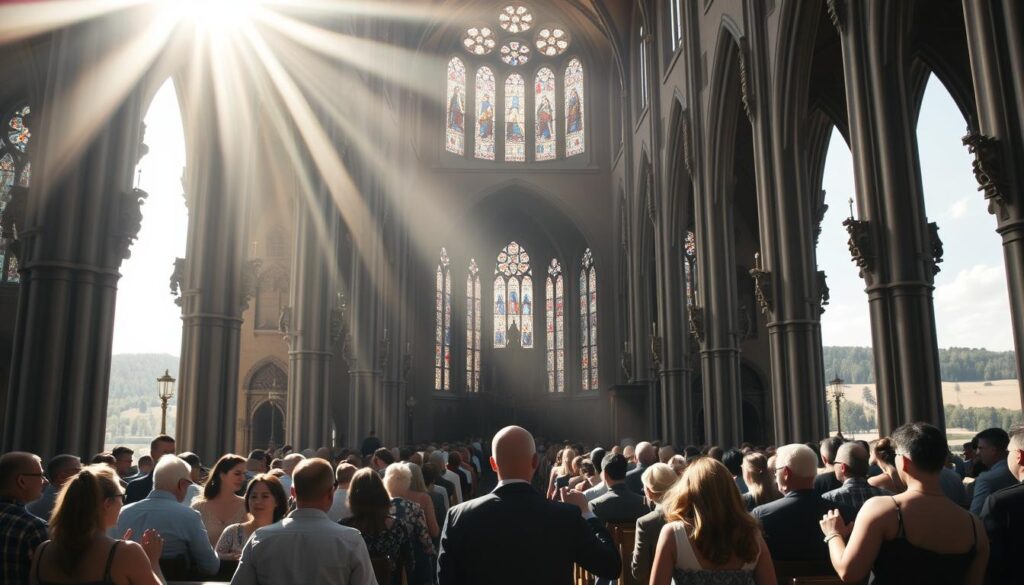
Instead of binding members to formal creeds, these groups emphasize scriptural exploration. As one pastor notes: “Our handbook isn’t laminated—it’s lived through daily engagement with God’s word.” This fosters a membership rooted in active faith, where individuals take direct responsibility for their spiritual growth.
Churches prioritize local decision-making. Members and leaders collaborate to choose pastors and set policies—a practice dating back to early congregational models. This autonomy allows adaptations while maintaining core values like believer’s baptism and voluntary membership.
Unity in Diversity Across Denominations
From Southern Baptists to independent congregations, shared foundations create surprising harmony. All affirm:
- The Bible’s ultimate authority
- Each person’s access to God
- Immersion baptism for professing believers
| Denomination | Focus | Distinct Practice |
|---|---|---|
| Southern Baptists | Evangelism | Cooperative missions funding |
| Independent | Local outreach | Elder-led governance |
| Progressive | Social justice | LGBTQ+ inclusion debates |
These differences showcase how one faith can inspire varied expressions. What unites them? A commitment to letting scripture shape both personal life and collective action.
The Significance of Believer’s Baptism and the Lord’s Supper
Two practices stand at the heart of spiritual expression for many Christians: one marks the start of a transformed life, while the other renews commitment to its source. These sacred acts bridge personal conviction with shared identity, creating moments where individual journeys intersect with communal worship.
Symbolism Behind Baptism by Immersion
Full-body immersion in water isn’t just tradition—it’s a vivid retelling of the gospel. As the person goes under, they mirror Jesus Christ’s death and burial. Rising up symbolizes His resurrection and the believer’s new life through faith.
This practice dates back to New Testament accounts, where converts publicly declared their trust in Christ. Unlike infant ceremonies, it requires conscious choice. Over 75% of historic congregations maintain this method, viewing it as essential to authentic discipleship.
The Role of Communion in Baptist Worship
The Lord’s Supper turns simple bread and juice into powerful reminders. Participants remember Christ’s sacrifice—His body broken and blood shed for salvation. Unlike some traditions, it’s seen as a memorial, not a mystical event.
Churches typically share communion monthly or quarterly. This rhythm encourages reflection without ritualism. As one member explains: “It’s like pressing ‘reset’ on my spiritual priorities.”
| Ordinance | Symbolism | Frequency | Biblical Basis |
|---|---|---|---|
| Baptism | Death/Rebirth | Once | Romans 6:4 |
| Communion | Christ’s Sacrifice | Regular | 1 Corinthians 11:24-26 |
Together, these acts form a spiritual rhythm—launching believers into purpose and regularly refocusing them on grace. They’re not requirements for salvation, but joyful responses to it.
Local Church Autonomy, Membership, and Leadership
Imagine a community where every voice shapes its future—this is the heartbeat of congregational life. These groups thrive through shared responsibility, blending ancient principles with modern collaboration.
The Practice of Self-Governance in Local Congregations
Each local church operates like a self-governing family. Members vote on budgets, choose pastors, and set outreach priorities without external mandates. This independence traces back to early congregations that resisted state-controlled religion.
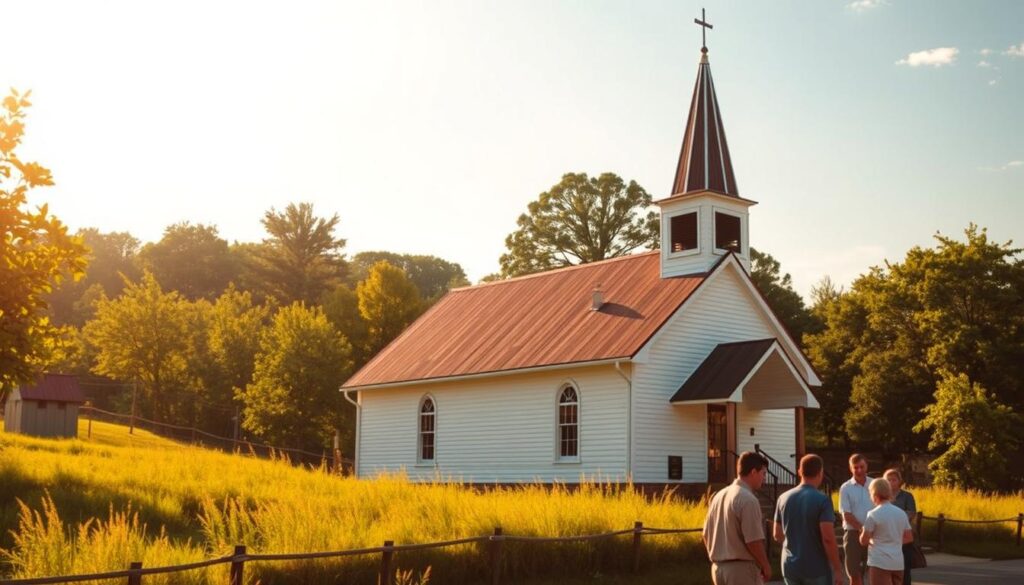
New membership begins with a personal faith story and baptism. Churches use covenants—shared promises—to maintain unity. As one deacon notes: “Our covenant isn’t rules—it’s our GPS for walking together.”
| Governance Area | Local Decision | Biblical Basis |
|---|---|---|
| Leadership Selection | Congregational Vote | Acts 6:3-5 |
| Doctrinal Standards | Scriptural Alignment | 2 Timothy 3:16 |
| Outreach Focus | Community Needs | Matthew 28:19 |
Empowering Members Through Direct Involvement
Every attender holds equal authority in spiritual matters. This priesthood believers principle means janitors and teachers share ministry duties. Sunday school programs often get designed by volunteers, not just staff.
Modern baptist churches maintain this approach through:
- Quarterly town halls for idea sharing
- Rotating leadership teams
- Skill-based volunteer matching
One Texas congregation recently redesigned their food pantry through member surveys. Such stories show how church autonomy fuels both tradition and innovation.
Separation of Church and State: Advocating Religious Liberty
In the tapestry of American freedoms, one thread stands out for its enduring impact: the principle keeping faith and governance distinct. This ideal didn’t emerge from theory but from hard-won battles fought by early advocates of conscience rights. Their legacy continues to shape how communities protect spiritual independence today.
Historical Advocacy for Religious Freedom
Persecution in Europe taught early reformers the dangers of state-controlled religion. When colonial authorities fined dissenters or seized property, leaders like Roger Williams pushed back. His 1636 Rhode Island colony became a safe haven—the first place where church and state operated separately by design.
By 1776, Baptist pastor John Leland convinced James Madison to include religious liberty in the Bill of Rights. Their partnership proved that “truth thrives best when governments don’t meddle”, as Leland wrote. This principle later inspired Supreme Court rulings protecting minority faith groups.
| Year | Milestone | Impact |
|---|---|---|
| 1639 | Rhode Island Charter | Banned religious tests for office |
| 1779 | Virginia Statute | Ended state-funded churches |
| 1947 | Everson v. Board | Applied separation nationally |
Modern Implications in Society
Today’s leaders still guard this boundary. Pastors often speak against laws that might dictate worship practices or limit outreach work. Recent court cases have addressed vaccine mandates in churches and zoning laws affecting religious schools.
Three ways congregations uphold this authority:
- Training members on religious rights
- Partnering with interfaith groups
- Supporting legal defenses for conscience cases
As one modern leadership manual states: “Our pulpits teach scripture—not party platforms.” This commitment ensures communities stay focused on their mission, free from external pressures.
Conclusion
At the crossroads of personal conviction and community identity lies a faith tradition shaped by enduring principles. Central to this approach is the Bible’s role as the foundation for church life, paired with a non-creedal practice that values individual scriptural engagement. Local congregations maintain self-governance, allowing each membership body to address cultural needs while preserving core values.
Sacred acts like communion and baptism vividly retell the story of Jesus Christ’s death and resurrection. These symbols anchor spiritual journeys in tangible expressions of salvation. Meanwhile, the historic fight for separation church and state protections continues to safeguard religious rights across modern societies.
From 17th-century reformers to today’s pastors, consistent leadership has guided baptist churches through cultural shifts. Their history reveals how adaptable structures can nurture both tradition and innovation.
What might these time-tested principles offer your understanding of faith communities? Explore how local church autonomy and shared convictions continue shaping spiritual life in unexpected ways.
FAQ
How do Baptists view the role of the Bible in their faith?
Scripture is seen as the ultimate authority, guiding all teachings and practices. Many emphasize personal study and application of biblical principles in daily life.
Why is immersion important during baptism?
Full-body immersion symbolizes a believer’s identification with the death, burial, and resurrection of Jesus Christ. It reflects a public declaration of personal faith.
What sets Baptist congregations apart in terms of governance?
Local churches operate independently, choosing their leaders and managing affairs without external control. This self-governance fosters community-driven decision-making.
How do Baptists approach communion?
The Lord’s Supper is viewed as a symbolic act of remembrance, not a sacramental ritual. Participants reflect on Christ’s sacrifice and renew their commitment to faith.
Why is religious freedom central to Baptist history?
Early advocates fought against state-mandated religion, promoting individual conscience. Today, many continue to support the separation of religious institutions from government influence.
What’s required for membership in most congregations?
Individuals typically affirm a personal relationship with Christ and undergo believer’s baptism. Active participation in the community’s mission is also encouraged.
Do all Baptist groups share identical practices?
While core doctrines like salvation through Christ unite them, traditions and styles of worship can vary widely between different associations and regions.
How are leaders selected within local churches?
Pastors and deacons are usually chosen by congregational vote. Qualifications often align with biblical standards, emphasizing character and spiritual maturity.