In the Episcopal Church, baptism is a sacrament that marks an individual’s initiation into the Christian community. Through baptism, individuals are lovingly adopted by God into God’s family, which is referred to as the Church.
Baptism is considered a pivotal moment in a person’s spiritual journey, signifying their commitment to follow Christ. As stated in the Episcopal beliefs, “In the waters of baptism, we are… given God’s own life to share and reminded that nothing can separate us from God’s love in Christ.” This sacrament is seen as a foundation for a lifelong relationship with God.
Key Takeaways
- Episcopalians view baptism as a sacrament that initiates individuals into the Christian community.
- Baptism signifies a person’s commitment to follow Christ and receive God’s love.
- The Episcopal Church believes that baptism gives individuals God’s own life to share.
- Nothing can separate individuals from God’s love in Christ after baptism.
- Baptism is a foundational moment in a person’s spiritual journey.
The Significance of Baptism in Episcopal Faith
Baptism holds a paramount position in the Episcopal faith, serving as a foundational sacrament. It is through baptism that individuals are initiated into the church community, marking the beginning of their spiritual journey. The Episcopal Church views baptism as a sacrament of initiation, where God establishes an indissoluble bond with each person.
The significance of baptism in the Episcopal faith can be understood by exploring its historical context and theological importance. Historically, baptism has its roots in the early Christian church, where it was practiced as a rite of initiation. The Episcopal Church continues this tradition, seeing baptism as a continuation of Christ’s ministry.
Historical Context of Baptism
The practice of baptism dates back to the apostolic era, where it was a symbol of cleansing and rebirth. Over the centuries, the understanding and practice of baptism evolved, influenced by various theological and cultural factors. In the Episcopal tradition, baptism is seen as a sacrament that connects the individual to the broader Christian community.
Theological Importance of Baptism
Theologically, baptism is considered a sacrament of initiation, where an individual is welcomed into the Christian community. It is a moment of spiritual rebirth, symbolizing the death and resurrection of Christ. Through baptism, individuals are incorporated into the body of Christ, receiving the gift of the Holy Spirit. This sacrament is foundational for all future church participation and ministry, as it establishes a personal relationship with God.
In the Episcopal Church, baptism is not just a ritual but a transformative experience. It is believed that through baptism, individuals are given new life in Christ, empowered to live according to God’s will. This understanding underscores the theological importance of baptism, highlighting its role in the spiritual life of Episcopalians.
Understanding the Sacramental Nature of Baptism
Baptism is a pivotal sacrament in the Episcopal Church, marking the beginning of a person’s journey with Christ. It is a sacrament that signifies an individual’s formal entrance into the congregation and the wider Church community.
In the Episcopal Church, sacraments are considered outward signs of inward grace. They are tangible ways through which God’s love and grace are conveyed to believers. Baptism, in particular, is a sacrament that involves a series of vows and affirmations, including the Baptismal Covenant.
How Sacraments Work in the Episcopal Church
The Episcopal Church recognizes two primary sacraments: Baptism and the Eucharist. These sacraments are central to the life and worship of the Church. In the context of baptism, the sacrament is understood to be a means of spiritual rebirth and initiation into the Christian community.
The process of baptism involves a ritual that includes the use of water, prayers, and the affirmation of faith. This ritual is not just a symbolic act but is believed to be a means of grace through which the individual is welcomed into the community of believers.
Baptism as a Gateway to Other Sacraments
Baptism is considered a foundational sacrament because it is a prerequisite for participating in other sacraments, particularly the Eucharist. Through baptism, individuals are initiated into the full life of the Church, enabling them to receive other sacraments and fully participate in church activities.
The Baptismal Covenant, which is affirmed during the baptismal ceremony, outlines the commitments and promises made by the individual (or on behalf of the individual, in the case of infant baptism) to live out their faith. This covenant serves as a guiding framework for the baptized individual’s journey within the Church.
The Role of the Holy Spirit in Baptism
The Episcopal Church teaches that the Holy Spirit is the agent of change in baptism, enabling believers to live out their faith. This understanding is central to the episcopal understanding of baptism, where the sacrament is seen as a transformative moment in an individual’s spiritual journey.
In baptism, the Holy Spirit is invoked to bring about a spiritual rebirth, marking the beginning of a person’s life in Christ. This is a pivotal moment in the Christian journey, as it signifies the individual’s incorporation into the body of Christ and their reception of the gift of the Holy Spirit.
The Gift of the Holy Spirit
The gift of the Holy Spirit in baptism is understood as a gracious act of God, where the individual is endowed with spiritual gifts and empowered to live a life of faith. This gift is not limited to a specific age group; both infants and adults receive the Holy Spirit in baptism, according to Episcopal tradition.
For Episcopalians and infant baptism, the belief is that the Holy Spirit works in the life of the baptized individual from a very early age, laying the groundwork for their future faith development. This belief underscores the importance of the community’s role in supporting the spiritual growth of the baptized.

Empowerment Through Baptism
Baptism empowers individuals for their Christian journey by giving them a new identity in Christ and incorporating them into the Christian community. This empowerment is not just a personal experience but is deeply communal, as the baptized are called to participate in the life and mission of the Church.
Through the Holy Spirit, individuals are given the strength to live out their baptismal promises, which include renouncing evil, professing faith in Jesus Christ, and committing to a life of love and service. This empowerment is seen as a lifelong process, with the Holy Spirit continually guiding and strengthening the believer.
Differences Between Infant and Adult Baptism
The Episcopal Church celebrates baptism in two significant ways: through the baptism of infants and adults, each with its unique traditions and meanings. This dual approach reflects the diverse ways individuals come to faith and their varying stages of spiritual development.
The Tradition of Infant Baptism
Infant baptism is a long-standing tradition in the Episcopal Church, rooted in the belief that baptism is a sacrament of initiation into the Christian community. Infants are baptized so that they can share citizenship in the episcopal baptismal covenant, membership in Christ, and redemption by God. This practice is based on the understanding that God’s grace is not limited by age and that faith is a gift that can be nurtured from a young age.
During an infant baptism, the parents and godparents make promises on behalf of the child, committing to raise them in the Christian faith. This includes a commitment to teach the child the principles of Christianity and to support their spiritual growth.
The Process for Adult Baptism
Adult baptism, on the other hand, is a public affirmation of faith by the individual being baptized. It represents a personal decision to embrace Christianity and join the Christian community. The process for adult baptism involves a period of preparation and discernment, during which the individual learns about the Christian faith and prepares to make a public profession of their beliefs.
The episcopal baptismal covenant plays a crucial role in adult baptism as well, as the individual being baptized makes a personal commitment to follow Christ and uphold the principles of the Christian faith. This covenant is a cornerstone of the baptismal liturgy, emphasizing the promises and responsibilities that come with being baptized.
In both infant and adult baptism, the episcopal baptismal covenant serves as a foundational element, outlining the commitments and promises made during the baptismal ceremony. Understanding this covenant is essential to appreciating the significance of baptism in the Episcopal tradition.
The Ritual and Liturgy of Baptism
The baptismal ritual in the Episcopal Church is a profound and meaningful ceremony. It is a moment of great joy and celebration, marking the initiation of a person into the Christian community.
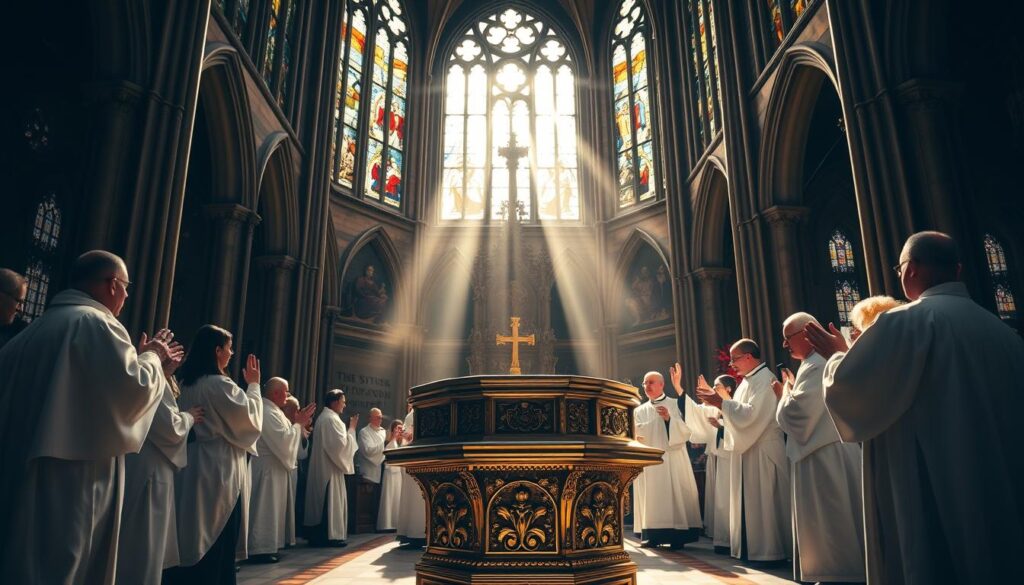
What to Expect During a Baptism Ceremony
During a baptism ceremony in the Episcopal Church, several significant elements are typically observed. The ceremony begins with the gathering of the community, where the congregation comes together to witness and participate in the sacrament.
The baptismal rite involves the use of water, which is considered essential for the sacrament. The candidate for baptism, whether an infant or an adult, is presented to the congregation.
- The celebrant, usually a priest or bishop, will then lead the congregation through a series of prayers and readings from Scripture.
- The candidate or their sponsors will make promises to renounce evil and profess faith in Jesus Christ.
- The actual baptism involves the administration of water “in the Name of the Father, and of the Son, and of the Holy Spirit.”
The Use of Water in Baptism
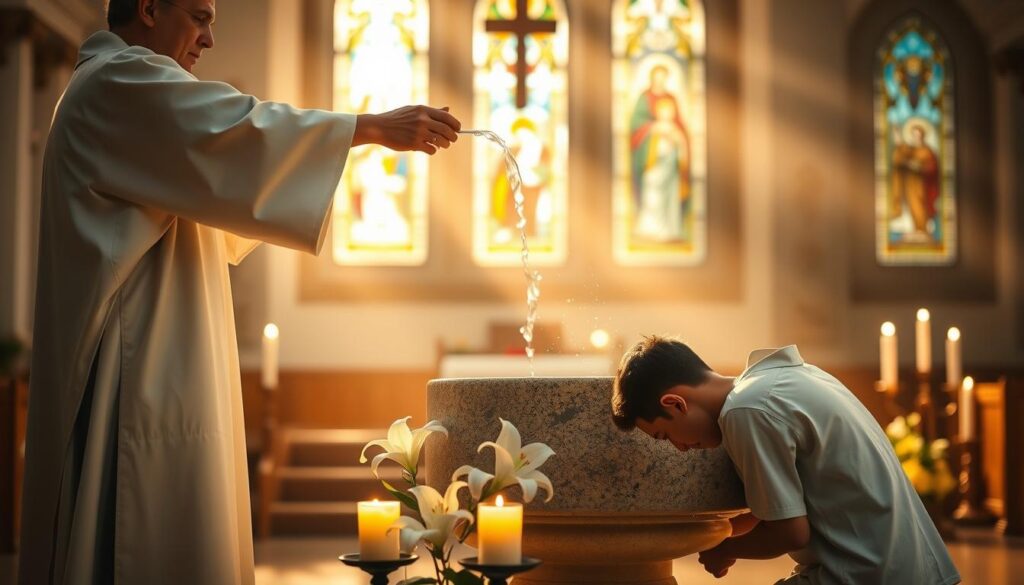
The use of water in baptism is symbolic of spiritual rebirth and cleansing. Water is used in one of two ways: by immersion or by affusion (pouring). Both methods are considered valid and are used depending on the local tradition or the preference of the candidate or their family.
The water is consecrated during the ceremony, often with a prayer invoking the Holy Spirit to sanctify the water and the candidate.
The significance of water in baptism is rooted in biblical tradition and the theology of the Episcopal Church, emphasizing the sacrament’s role in initiating a person into the Christian faith.
The Meaning of Being Baptized
Baptism is a pivotal ritual in the Episcopal Church, representing a public declaration of faith or a commitment to faith on behalf of the baptized. This sacrament is considered a once-for-all-time event, signifying a profound moment in an individual’s spiritual journey.
For Episcopalians, the act of baptism is rich in meaning, encompassing both the individual’s personal commitment and their integration into the broader church community. It is a ritual that is open to people of all ages, emphasizing the inclusive nature of the Episcopal faith.
Spiritual Rebirth and New Life
The concept of spiritual rebirth is central to understanding the significance of baptism. Through baptism, individuals are said to experience a new life in Christ, symbolizing a transition from an old life to a new one, guided by Christian principles. This rebirth is not just symbolic but is believed to be a real spiritual transformation.
The idea of new life is closely tied to the symbolism of water, which is used in the baptismal ritual. Water represents cleansing and renewal, underscoring the themes of spiritual purification and rebirth.
Inclusion in the Church Community
Baptism also signifies the individual’s inclusion in the church community. By being baptized, a person becomes a part of the Episcopal community, sharing in its beliefs, practices, and mission. This communal aspect of baptism highlights the importance of fellowship and mutual support among church members.
The table below summarizes key aspects of baptism in the Episcopal Church, including its significance, the role of the Holy Spirit, and the implications for community membership.
| Aspect of Baptism | Significance | Implications |
|---|---|---|
| Spiritual Rebirth | Symbolizes new life in Christ | Personal spiritual transformation |
| Inclusion in Community | Becoming part of the church community | Shared beliefs, practices, and mission |
| Role of the Holy Spirit | Empowerment and guidance | Spiritual growth and service |
In conclusion, baptism in the Episcopal Church is a multifaceted sacrament that encompasses personal spiritual rebirth and communal inclusion. It is a celebration of faith and a commitment to a life guided by Christian values.
The Importance of Godparents
Godparents play a significant part in the baptismal process, serving as spiritual guides and supporters. In the Episcopal Church, the tradition of having godparents is deeply rooted in the belief that the community plays a vital role in the spiritual journey of the individual being baptized.
Roles and Responsibilities of Godparents
The role of godparents is multifaceted, involving both spiritual guidance and practical support. They are chosen to support the baptized person in their faith journey, providing a model of Christian living and helping to ensure that the individual remains engaged with the church community.
Godparents are also expected to pray for the person they are sponsoring, to provide guidance, and to serve as a role model in the faith. This involves being actively involved in the person’s spiritual development, especially during significant milestones and challenges.
Choosing a Godparent in Episcopal Tradition
In the Episcopal tradition, the selection of godparents is a thoughtful process. Typically, one or more baptized persons are chosen to sponsor the candidate for baptism, especially if the candidate is an infant or younger child. These sponsors speak on behalf of the candidate, making promises to renounce evil and to believe in God.
The choice of godparent is significant because it involves selecting individuals who are committed to the spiritual well-being of the person being baptized. It is a role that requires commitment, faith, and the ability to serve as a positive influence.
By choosing godparents who are actively engaged with the church and its teachings, families can ensure that their loved ones receive the spiritual support they need as they grow in their faith.
Baptismal Covenant and Promises
The Baptismal Covenant is a cornerstone of the Episcopal faith, representing a profound commitment to Christ. It is a series of vows made during the baptismal ceremony, affirming faith and commitment to Christ.
Understanding the significance of the Baptismal Covenant is crucial for Episcopalians. It is not just a ritual but a meaningful promise that has spiritual implications. The covenant is a public declaration of one’s faith and a commitment to live according to Christian principles.
Understanding the Baptismal Covenant
The Baptismal Covenant is outlined in the Book of Common Prayer, a foundational text of the Episcopal Church. It includes a series of questions and responses that outline the core beliefs and commitments of the Christian faith.
During the baptismal ceremony, individuals (or their sponsors on their behalf if they are infants) make promises to renounce evil, believe in God, and follow Jesus Christ. These promises are not taken lightly and are considered a vital part of the baptismal sacrament.
| Promise | Description |
|---|---|
| Renounce evil | To turn away from sin and evil practices. |
| Believe in God | To affirm faith in the Holy Trinity: Father, Son, and Holy Spirit. |
| Follow Jesus Christ | To commit to living a life that follows the teachings of Jesus. |
The Promises Made During the Ceremony
The promises made during the baptismal ceremony are significant because they represent a lifelong commitment. For those baptized as infants, these promises are made on their behalf by their parents and godparents, who vow to raise the child in the Christian faith.
For adults being baptized, these promises are a personal commitment. They signify a decision to embrace the Christian faith fully and to participate in the life of the Church.
The Baptismal Covenant is a beautiful expression of faith and commitment. It is a reminder of the promises made to God and to the community of believers. As such, it is an integral part of the Episcopal understanding of baptism.
Baptism and Salvation: Episcopal Perspective
Understanding the Episcopal perspective on baptism and salvation requires exploring how faith and grace interplay in the context of this sacrament.
The Episcopal Church teaches that baptism is a sacrament essential for salvation, emphasizing the belief in one baptism for the forgiveness of sins. This belief underscores the significance of baptism as a gateway to spiritual rebirth and new life.
Faith and Grace in Baptism
In the Episcopal tradition, the sacrament of baptism is seen as a means of receiving God’s grace. It is through baptism that individuals are incorporated into the body of Christ and receive the gift of the Holy Spirit.
The interplay between faith and grace in baptism is crucial. While faith is a response to God’s grace, baptism is considered the instrument of God’s grace, initiating the individual’s journey of faith.
Assurance of Salvation Through Baptism
The Episcopal Church affirms that baptism is not just a ritual but a sacrament that provides assurance of salvation. The bond established in baptism is considered indissoluble, signifying a permanent relationship between God and the baptized individual.
This understanding is reflected in the Episcopal baptismal covenant, where individuals or their sponsors on their behalf make promises to renounce evil and to follow Christ. This covenant is a public declaration of faith and commitment, reinforcing the individual’s path towards salvation.
The significance of baptism in the Episcopal faith is further highlighted by its practice of infant baptism, where the sacrament is administered to infants, symbolizing the unconditional love and grace of God.
In conclusion, the Episcopal perspective on baptism and salvation emphasizes the sacrament’s role in initiating and nurturing an individual’s faith journey, providing a foundation for a lifelong commitment to following Christ.
Continuing the Journey: Post-Baptism Life
Baptism marks the beginning of a lifelong journey of faith and discipleship in the Episcopal tradition, rooted in episcopal baptismal theology. As individuals are baptized, they are not only welcomed into the church community but also called to a deeper commitment to their faith.
Nurturing Faith Through Community
The newly baptized, along with their sponsors and the broader church community, are encouraged to continue their Christian formation. This involves active participation in church life, engaging in prayer, and service to others. By doing so, they grow in their understanding of episcopal understanding of baptism and its implications for daily life.
Discipleship and Transformation
The Episcopal Church emphasizes the importance of ongoing discipleship and transformation. As baptized members continue on their faith journey, they are supported by the community in their spiritual growth. This support fosters a deeper connection with God and with others, reflecting the core principles of episcopal baptismal theology.
By integrating into church life and embracing the call to discipleship, the baptized are empowered to live out their faith in meaningful ways. This journey is a testament to the transformative power of baptism, as understood in the Episcopal tradition.
FAQ
What is the significance of baptism in the Episcopal Church?
Baptism is a foundational sacrament that initiates individuals into the church community, marking the beginning of their Christian journey. It is a once-for-all-time event that signifies spiritual rebirth and new life.
What do Episcopalians believe about the sacramental nature of baptism?
Episcopalians believe that baptism is a sacrament that functions as a gateway to other sacraments, and it is through baptism that individuals are incorporated into the body of Christ.
What is the role of the Holy Spirit in baptism?
The Holy Spirit is a vital component of baptism, as it is the gift of the Holy Spirit that empowers individuals for their Christian journey, providing them with the strength and guidance needed to live out their faith.
What is the difference between infant and adult baptism in the Episcopal Church?
The Episcopal Church practices both infant and adult baptism, with the main difference being the age of the individual being baptized and the role of the individual in making vows and affirmations. In infant baptism, the parents and godparents make promises on behalf of the child, while in adult baptism, the individual makes their own vows.
What is the significance of the baptismal covenant?
The baptismal covenant is a crucial part of the sacrament of baptism, as it outlines the promises and vows made by the individual (or on their behalf) to renounce evil, believe in God, and follow Jesus Christ. These vows are a public declaration of one’s commitment to the Christian faith.
What is the role of godparents in the Episcopal Church?
Godparents play an important role in the baptismal process, as they are responsible for supporting the individual being baptized (especially in the case of infant baptism) in their Christian journey, providing guidance and encouragement as they grow in their faith.
How does baptism relate to salvation in the Episcopal Church?
The Episcopal Church teaches that baptism is a sacrament that provides assurance of salvation, as it is through baptism that individuals are incorporated into the body of Christ and receive the gift of the Holy Spirit. Faith and grace are intertwined in the context of baptism, with baptism being a means of receiving God’s grace.
What happens after baptism in the Episcopal Church?
After baptism, individuals are encouraged to integrate into church life, participating in worship, community activities, and Christian formation. The Episcopal Church emphasizes the importance of ongoing commitment to discipleship and growing in faith through community support.
What is the significance of water in the sacrament of baptism?
Water is a vital element in the sacrament of baptism, symbolizing spiritual rebirth and cleansing. The use of water in baptism signifies the washing away of sin and the beginning of new life in Christ.
Can someone be baptized more than once in the Episcopal Church?
The Episcopal Church teaches that baptism is a once-for-all-time event, and therefore, an individual cannot be baptized more than once. If someone has been previously baptized, they may be received into the Episcopal Church through a different process.