The Episcopal Church, a denomination within the Anglican Communion, has been a pioneer in discussions regarding LGBTQ+ inclusion. At its core, the church’s beliefs are centered on love and respect for all individuals.
The Episcopal Church’s stance on LGBTQ+ issues is rooted in its belief that “the nature of God is love.” Through baptism, Episcopalians share in Jesus’ victory over sin and death, striving to love their neighbors and respect every person’s dignity.
The church’s historical context, theological foundations, and current practices all contribute to its views on gay marriage and the ordination of LGBTQ+ clergy.
Key Takeaways
- The Episcopal Church emphasizes love and respect for all individuals.
- The church’s beliefs are centered on Jesus’ teachings.
- LGBTQ+ inclusion is a significant aspect of the church’s stance.
- The Episcopal Church supports gay marriage and the ordination of LGBTQ+ clergy.
- The church’s views are shaped by its history, theology, and current practices.
Historical Context of the Episcopal Church
The historical development of the Episcopal Church provides valuable insights into its current beliefs and practices regarding LGBTQ+ individuals. The church’s evolution on LGBTQ+ rights is deeply rooted in its historical background, shaped by its origins, formation, and early attitudes toward homosexuality.
Origins and Formation of the Episcopal Church
The Episcopal Church was formed in the 18th century, separating from the Church of England. This separation was a result of the American Revolution, which led to the need for an independent church in the newly formed United States. The Episcopal Church’s foundation was influenced by Anglican traditions and the principles of the Book of Common Prayer, which continue to shape its liturgy and practices.
The church’s early development was marked by its adaptation to the American context, balancing tradition with the needs of a new nation. This adaptability has been a hallmark of the Episcopal Church, enabling it to evolve on various social issues, including LGBTQ+ rights.
Early Attitudes Toward Homosexuality
In its early history, the Episcopal Church, like many other Christian denominations, held conservative views on homosexuality. The church’s stance was influenced by traditional Christian teachings and societal norms of the time. However, as societal attitudes began to shift, the Episcopal Church started to reevaluate its position on LGBTQ+ issues.
The church’s journey toward greater inclusion and acceptance of LGBTQ+ individuals has been gradual, reflecting broader societal changes and internal theological debates. This evolution is a testament to the church’s commitment to respecting the dignity of every person and its willingness to engage with complex social issues.
The Episcopal Church’s historical context has played a significant role in shaping its current views on LGBTQ+ issues. By understanding the church’s origins, formation, and early attitudes toward homosexuality, we can better appreciate its ongoing journey toward greater inclusivity and acceptance.
The Evolution of LGBTQ+ Acceptance
The evolution of LGBTQ+ acceptance within the Episcopal Church is a story of gradual progress, influenced by both internal and external factors. This journey has been marked by significant milestones that reflect the changing attitudes towards LGBTQ+ individuals within the church and society at large.
Key Milestones in the Episcopal Church
The Episcopal Church has made several key decisions that have contributed to its increasingly inclusive stance on LGBTQ+ issues. One of the earliest and most significant was the 1976 resolution, which affirmed that “homosexual persons are children of God who have a full and equal claim with all other persons upon the love, acceptance, and pastoral concern and care of the church.” This resolution marked a pivotal moment in the church’s history, setting the stage for future advancements.
In recent years, the church has continued to evolve, with the 2015 General Convention decision to allow same-sex marriages being a notable example. This decision underscored the church’s commitment to inclusivity and equality for all members, regardless of their sexual orientation.
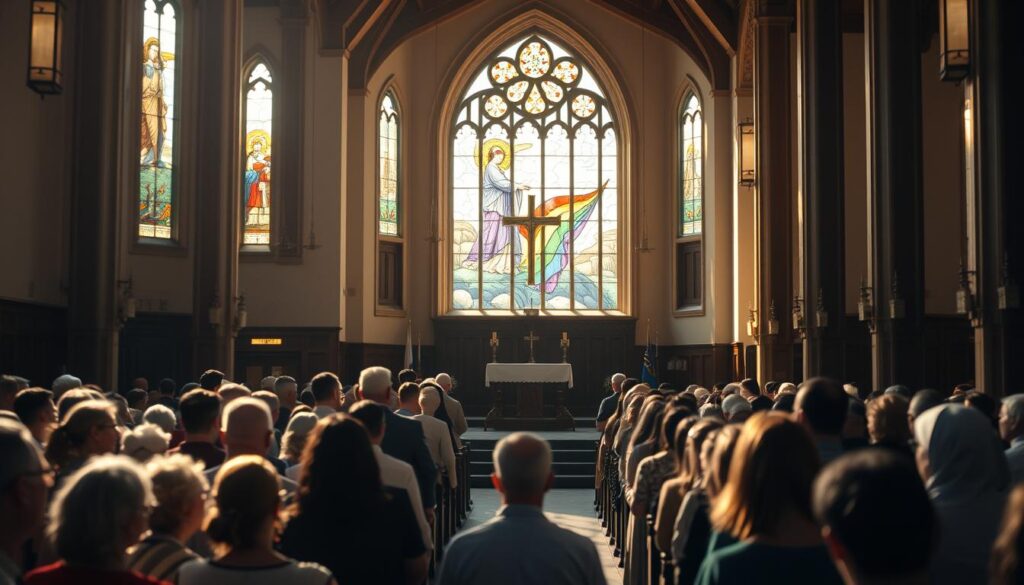
Influence of Society on Church Views
The Episcopal Church’s views on LGBTQ+ issues have been significantly influenced by societal changes. As public opinion has shifted towards greater acceptance of LGBTQ+ individuals, the church has followed suit, reflecting the broader cultural context in which it operates.
This influence is evident in the church’s progressive stance on LGBTQ+ issues, which has been shaped by ongoing dialogue and advocacy within the church and in the wider community.
| Year | Event | Significance |
|---|---|---|
| 1976 | General Convention Resolution | Affirmed the inclusion of homosexual persons in the church |
| 2003 | Consecration of Gene Robinson | First openly gay bishop consecrated, marking a significant step towards LGBTQ+ inclusion |
| 2015 | General Convention Decision | Allowed same-sex marriages, furthering the church’s commitment to LGBTQ+ equality |
The table above highlights key milestones in the Episcopal Church’s journey towards LGBTQ+ acceptance, demonstrating the church’s gradual but significant shift towards greater inclusivity.
Theological Foundations of Acceptance
The Episcopal Church’s acceptance of LGBTQ+ individuals is grounded in a rich theological framework that considers scripture, tradition, and reason. This comprehensive approach allows the church to develop a nuanced understanding of complex issues, ultimately supporting the full inclusion of LGBTQ+ persons in church life.
Understanding Scripture in Context
The Episcopal Church emphasizes the importance of interpreting scripture within its historical and cultural context. This approach recognizes that biblical texts were written in specific times and places, and their meanings can be nuanced by these contexts. By understanding scripture in this way, the church can move beyond literal interpretations that may be used to exclude LGBTQ+ individuals.
For instance, the story of eunuchs in the Gospel of Matthew is seen as an example of Jesus’ inclusive teachings. Rather than focusing solely on traditional interpretations that might condemn LGBTQ+ relationships, the Episcopal Church looks at the broader message of love and acceptance in scripture.
The Role of Tradition and Reason
In addition to scripture, the Episcopal Church relies on tradition and reason to inform its beliefs and practices. Tradition provides a link to the historical and spiritual heritage of the church, while reason allows for a thoughtful and rational consideration of contemporary issues.
Together, these three elements—scripture, tradition, and reason—form a robust theological foundation that supports the church’s inclusive stance on LGBTQ+ issues. This foundation is not static; it evolves as the church continues to reflect on its beliefs and practices in light of new understandings and changing societal contexts.
The Episcopal Church’s approach to LGBTQ+ issues is thus characterized by a dynamic interplay between theological principles and contemporary realities. This approach is reflected in its Episcopal approach to LGBTQ community, which seeks to balance tradition with compassion and understanding.
Official Church Teachings
The Episcopal Church has been at the forefront of LGBTQ inclusion, as evidenced by key resolutions and consecrations. This commitment to equality and acceptance is reflected in significant decisions made by the church.
The 1976 General Convention Resolution
In 1976, the General Convention passed a resolution that marked a pivotal moment in the church’s history regarding LGBTQ rights. This resolution was a crucial step towards recognizing the rights and dignity of LGBTQ individuals within the Episcopal Church.
The 1976 resolution demonstrated the church’s willingness to challenge traditional norms and embrace a more inclusive stance. It laid the groundwork for future actions and policies supporting LGBTQ individuals.
The 2003 Consecration of Gene Robinson
The consecration of Gene Robinson as the first openly gay bishop in 2003 was a landmark event. It symbolized a significant shift in the church’s approach to LGBTQ issues and highlighted the church’s commitment to inclusivity.
Robinson’s consecration was not only a milestone for the Episcopal Church but also a moment of considerable public interest. It underscored the church’s stance on LGBTQ rights and equality.
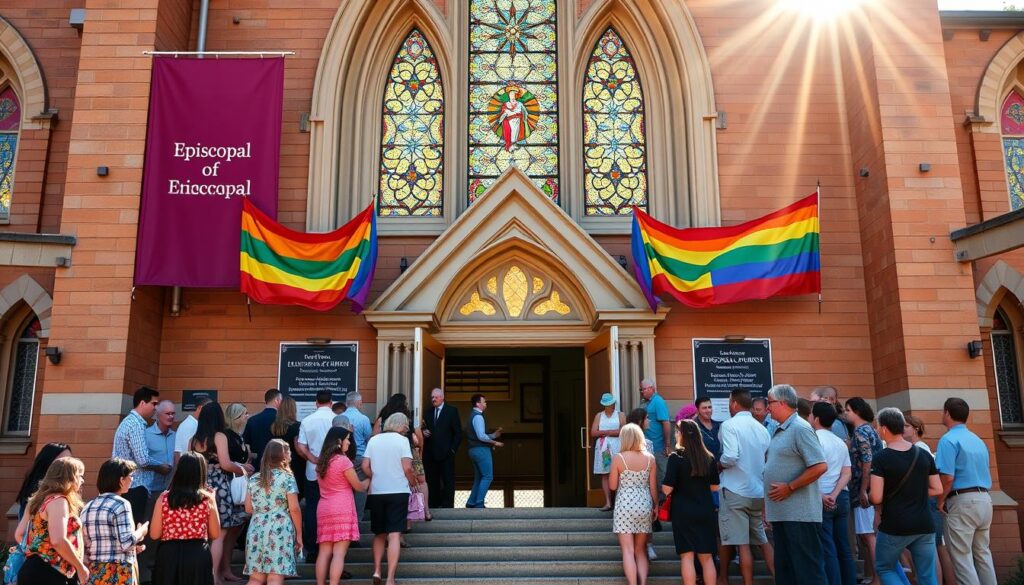
| Year | Event | Significance |
|---|---|---|
| 1976 | General Convention Resolution | Recognized LGBTQ rights, setting a precedent for future inclusivity |
| 2003 | Consecration of Gene Robinson | First openly gay bishop, marking a significant step in LGBTQ inclusion |
These events demonstrate the Episcopal Church’s ongoing commitment to LGBTQ rights and its proactive approach to challenging traditional norms. Through such actions, the church continues to evolve and embrace a more inclusive stance.
Same-Sex Marriage in the Episcopal Church
In a landmark decision, the Episcopal Church approved same-sex marriages in 2015, reflecting its evolving stance on LGBTQ+ issues.
The Episcopal Church’s approach to same-sex marriage is a significant aspect of its broader Episcopal approach to LGBTQ community, demonstrating a commitment to inclusivity and acceptance.
The 2015 General Convention Decision
The 2015 General Convention marked a pivotal moment in the Episcopal Church’s history with the approval of resolutions allowing same-sex marriages. This decision was significant as it gave clergy the discretion to choose whether to officiate at such ceremonies, balancing the rights of individuals with the autonomy of religious leaders.
The decision was seen as a major step forward in the Church’s recognition of LGBTQ+ relationships, aligning with the global trend towards greater acceptance and legal recognition of same-sex unions.
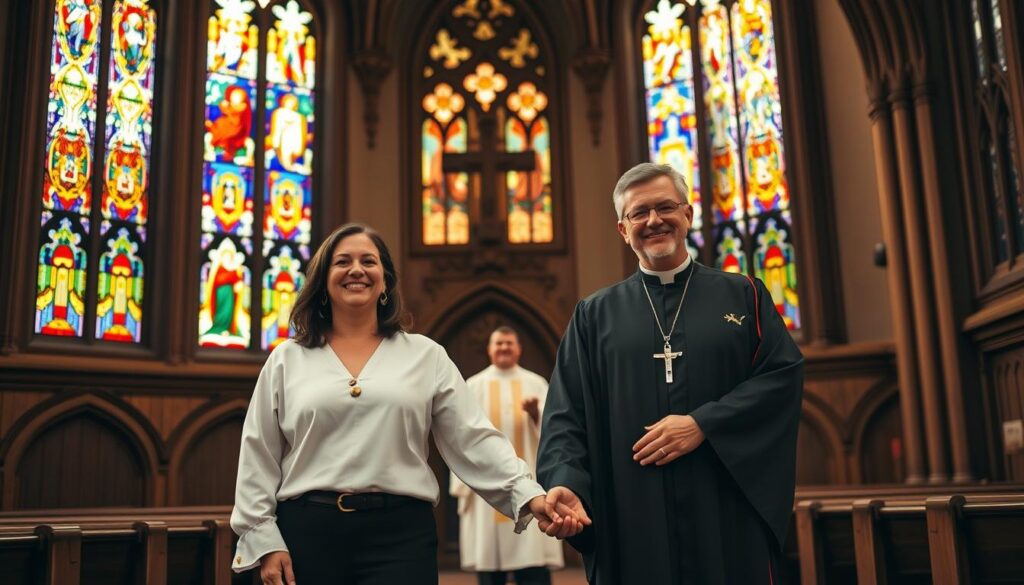
Differences Among Dioceses
Despite the General Convention’s decision, the implementation of same-sex marriage policies varies among dioceses. Some dioceses have been more progressive, fully embracing the new liturgies and practices for same-sex marriages, while others have been more cautious or even resistant to change.
This variation reflects the diverse perspectives within the Episcopal Church, highlighting the ongoing dialogue between tradition and contemporary societal values.
The differences among dioceses underscore the complexity of balancing unity with diversity within the Church, as it continues to navigate its Episcopal stance on gay marriage and broader LGBTQ+ issues.
Inclusivity in Worship and Community
The Episcopal Church fosters an environment of acceptance and love, particularly for LGBTQ+ individuals. This welcoming stance is evident in various aspects of church life, from worship services to community activities.
Affirmative Practices in Episcopal Communities
Many Episcopal communities have adopted affirmative practices that promote inclusivity. These practices include the use of inclusive language in worship services, the celebration of LGBTQ+ milestones, and the provision of resources for LGBTQ+ individuals and their families.
Inclusive worship services are a hallmark of many Episcopal churches. These services often incorporate gender-neutral language and recognize the diversity of the congregation. By doing so, the church creates a welcoming environment where everyone feels valued.
Support Groups for LGBTQ+ Individuals
In addition to inclusive worship services, many Episcopal churches offer support groups for LGBTQ+ individuals. These groups provide a safe space for people to share their experiences, find support, and connect with others who understand their challenges.
The Episcopal Church also supports various LGBTQ+ advocacy programs. These programs work to promote understanding and acceptance within the church and the broader community. By advocating for LGBTQ+ rights, the Episcopal Church demonstrates its commitment to creating a more inclusive society.
Through these affirmative practices and support groups, the Episcopal Church has established itself as a leader in LGBTQ inclusion. The church’s efforts have made a significant difference in the lives of many LGBTQ+ individuals, providing them with a sense of belonging and acceptance.
Current Debates Within the Church
The Episcopal Church is currently navigating a complex landscape of debates regarding its stance on LGBTQ+ issues. These debates reflect a broader struggle between conservative and progressive viewpoints within the church.
Conservative vs. Progressive Perspectives
The Episcopal Church’s stance on LGBTQ+ issues has been a point of contention between conservative and progressive members. Conservative factions within the church argue that traditional interpretations of scripture should guide the church’s policies on homosexuality. In contrast, progressive members advocate for a more inclusive approach, citing the church’s commitment to welcoming all individuals.
The tension between these perspectives is evident in various aspects of church life, from worship practices to clergy appointments. For instance, the consecration of Gene Robinson as a bishop in 2003 was a pivotal moment that highlighted the divide between conservative and progressive views.
Impact of Global Anglican Relations
The Episcopal Church’s relationship with the global Anglican Communion also plays a significant role in shaping its stance on LGBTQ+ issues. As a member of the Anglican Communion, the Episcopal Church must balance its commitment to inclusivity with its obligations to the wider Anglican community, which includes provinces with more conservative views on homosexuality.
This balancing act can lead to tensions between the Episcopal Church and other Anglican provinces. For example, the 2016 decision by the Church of England to permit same-sex marriages with certain conditions has influenced discussions within the Episcopal Church about its own policies.
The Episcopal Church continues to navigate these complex debates, seeking a path that respects both its commitment to LGBTQ+ inclusivity and its relationships within the global Anglican Communion.
The Role of Episcopalian Leaders
Leaders within the Episcopal Church have played a pivotal role in shaping its stance on LGBTQ+ rights. Through their advocacy and public statements, they have helped create a more inclusive environment within the church.
Prominent Figures Advocating for LGBTQ+ Rights
Several Episcopalian leaders have been at the forefront of the movement to advance LGBTQ+ rights. One notable figure is Gene Robinson, who was the first openly gay bishop consecrated in the Episcopal Church in 2003. His consecration marked a significant milestone in the church’s journey toward greater inclusivity.
Other leaders have followed in Robinson’s footsteps, continuing to advocate for LGBTQ+ inclusion. For example, Mary Glasspool became the first openly gay bishop to be consecrated as a diocesan bishop in 2016.
Statements from Church Leaders
Episcopalian leaders have issued numerous statements in support of LGBTQ+ rights. These statements have been crucial in shaping the church’s official stance and in encouraging a more welcoming environment for LGBTQ+ individuals.
For instance, the Presiding Bishop of the Episcopal Church has issued pastoral letters and public statements affirming the church’s commitment to LGBTQ+ inclusion.
| Leader | Statement/ Action | Year |
|---|---|---|
| Gene Robinson | Consecrated as Bishop | 2003 |
| Mary Glasspool | Consecrated as Diocesan Bishop | 2016 |
| Presiding Bishop | Issued Pastoral Letter Supporting LGBTQ+ Rights | 2018 |
These actions and statements by Episcopalian leaders have been instrumental in advancing LGBTQ+ rights within the church, promoting a culture of acceptance and love.
Personal Stories from Congregants
The impact of the Episcopal Church’s LGBTQ+ policies is deeply personal, as seen in the stories of its congregants. These narratives not only reflect the church’s broader stance on LGBTQ+ issues but also highlight the human experience behind the doctrines.
Testimonials of Acceptance and Love
Many LGBTQ+ individuals within the Episcopal Church have found a supportive community that embraces them for who they are. For instance, a young gay man named Alex found solace in his local Episcopal congregation after being disowned by his family. The church’s youth group became a family to him, offering love and acceptance. “For the first time in my life, I felt like I belonged,” Alex shared, highlighting the positive impact of inclusive church environments.
Similarly, Sarah, a lesbian woman, found her partner welcomed at an Episcopal church, where they were later married in a ceremony that was both joyous and affirming. The church’s recognition of their union was a powerful statement of love and acceptance, echoing the church’s commitment to inclusivity.
Experiences of Rejection and Struggle
Conversely, some congregants have faced rejection and struggle within the church. Mark, a transgender man, recounts his painful experience of being denied baptism by a conservative Episcopal priest, who cited theological grounds.
“It was like being told I wasn’t worthy of God’s love because of who I am,”
Mark recalled, underscoring the hurt that can result from exclusionary practices.
Despite these challenges, many find strength in their faith and the supportive networks within the Episcopal Church. Emily, a mother of a transgender child, found solace in an Episcopal support group for parents of LGBTQ+ children. “The church became a sanctuary for us, a place where we were understood and loved unconditionally.”
The diverse experiences of Episcopal congregants underscore the complex interplay between doctrine and personal faith. As the church continues to navigate its stance on LGBTQ+ issues, these stories serve as a reminder of the real-world impact of its policies.
Resources for LGBTQ+ Episcopalians
The Episcopal Church is committed to supporting its LGBTQ+ members through a range of resources. These resources are designed to foster a more inclusive and informed community within the church.
Organizations Supporting LGBTQ+ Advocacy
Several organizations play a crucial role in advocating for LGBTQ+ rights within the Episcopal Church. One prominent group is Integrity USA, which has been at the forefront of advocating for the full inclusion of LGBTQ+ individuals in the church. Integrity USA provides support, education, and advocacy, working to ensure that all Episcopalians feel welcome and valued.
Other organizations, such as the Episcopal Church’s Office of Government Relations, also contribute to the advocacy efforts by working on legislative and policy issues that affect LGBTQ+ individuals.
Educational Materials and Literature
The Episcopal Church offers a variety of educational materials and literature to help promote understanding and acceptance of LGBTQ+ individuals. These resources include study guides, theological reflections, and personal stories of LGBTQ+ Episcopalians.
“The love of God is not limited by our human understanding or constrained by our narrow perceptions. It is our task to love as we have been loved.” –
Some of the key educational resources include:
- Study guides on LGBTQ+ issues and theology
- Personal testimonies and stories from LGBTQ+ Episcopalians
- Literature on the history of LGBTQ+ advocacy within the Episcopal Church
| Resource | Description | Target Audience |
|---|---|---|
| Integrity USA | Advocacy and support for LGBTQ+ Episcopalians | LGBTQ+ individuals and allies |
| Episcopal Church Study Guides | Educational materials on LGBTQ+ issues | Clergy, lay leaders, and congregants |
| Personal Testimonies | Stories of LGBTQ+ Episcopalians | All Episcopalians |
These resources are vital in creating a more inclusive and supportive environment for LGBTQ+ Episcopalians. By providing education and advocacy, the Episcopal Church continues to move towards full inclusion and acceptance of all its members.
Looking to the Future
The Episcopal Church continues to evolve, and its stance on LGBTQ+ issues is likely to develop further. As the church moves forward, it remains committed to being a welcoming and affirming community.
Shaping the Church’s Future
Potential changes in church policies will be shaped by ongoing conversations about sexuality. These discussions will influence what Episcopalians believe about gays and the broader Episcopal Church views on homosexuality.
The church’s journey towards greater inclusivity is reflected in its willingness to revisit and revise its policies. As the Episcopal Church continues to grapple with these issues, its commitment to being an affirming community remains a guiding principle.
Ongoing Conversations and Progress
The Episcopal Church’s ongoing conversation about sexuality will likely lead to continued progress in its understanding and acceptance of LGBTQ+ individuals. This progress is a testament to the church’s dedication to creating a more inclusive environment.
FAQ
What is the Episcopal Church’s stance on LGBTQ+ issues?
The Episcopal Church has been at the forefront of LGBTQ+ inclusion, with a progressive stance that supports the full inclusion of LGBTQ+ individuals in church life, including the ordination of LGBTQ+ clergy and same-sex marriages.
What are the historical roots of the Episcopal Church’s views on homosexuality?
The Episcopal Church’s views on homosexuality have evolved over time, influenced by societal changes, advocacy, and theological interpretations. The church has moved from a more conservative stance to a more inclusive one, affirming the dignity of every person.
What significant milestones mark the evolution of LGBTQ+ acceptance within the Episcopal Church?
Key milestones include the 1976 General Convention resolution affirming the inclusion of homosexual persons, the 2003 consecration of Gene Robinson as the first openly gay bishop, and the 2015 decision to allow same-sex marriages.
How does the Episcopal Church interpret scripture in relation to LGBTQ+ issues?
The Episcopal Church interprets scripture in context, considering tradition and reason to develop a nuanced understanding of complex issues, supporting the full inclusion of LGBTQ+ persons.
What is the Episcopal Church’s policy on same-sex marriage?
The Episcopal Church permits same-sex marriages, with the 2015 General Convention decision allowing dioceses to choose whether to perform same-sex marriages, reflecting a more inclusive and accepting stance.
How does the Episcopal Church support LGBTQ+ individuals in its community?
The Episcopal Church provides a nurturing environment through affirmative practices, support groups, and resources, including advocacy organizations and educational materials, to support LGBTQ+ Episcopalians.
What is the impact of global Anglican relations on the Episcopal Church’s stance on LGBTQ+ issues?
The Episcopal Church’s relationship with the global Anglican Communion influences its stance on LGBTQ+ issues, as it seeks to balance its commitment to inclusivity with its obligations to the wider Anglican community.
How do Episcopalian leaders contribute to the church’s stance on LGBTQ+ rights?
Episcopalian leaders have played a crucial role in advancing LGBTQ+ rights through advocacy and public statements, promoting a more inclusive and welcoming environment.
What resources are available to LGBTQ+ Episcopalians?
The Episcopal Church offers various resources, including advocacy organizations and educational materials, to support LGBTQ+ Episcopalians and foster a more inclusive and informed community.
What is the future direction of the Episcopal Church regarding LGBTQ+ issues?
The Episcopal Church is poised to continue its journey towards greater inclusivity and understanding, with ongoing conversations about sexuality and potential changes in church policies shaping its stance on LGBTQ+ issues.