The Episcopal Church teaches that God’s nature is love, and baptism joins believers to Christ’s victory over sin and death.
This introduction sets a clear, friendly frame for how that conviction shapes the church’s pastoral approach to sexuality and inclusion. It also situates the denomination within the global Anglican Communion and notes its roughly two million members in the United States.
The article will cover governance, key milestones, marriage and ordination practices, non-discrimination measures, and resources for further reading. Readers can expect a practical, service-oriented overview that cites official acts and canons for accurate context.
Respect for the dignity of every person informs the church’s pastoral response. The aim is to offer reliable information so people can find answers with confidence and clarity.
Key Takeaways
- The Episcopal Church centers its teaching on God as love and baptismal identity.
- Its stance on inclusion is shaped by respect for human dignity.
- The denomination is part of the worldwide Anglican Communion.
- This guide reviews governance, marriage, ordination, and non-discrimination.
- Content focuses on official acts and canons for clear, factual context.
Overview: The Episcopal Church’s welcoming stance on sexual orientation and gender identity
The Episcopal Church frames its ministry around a clear promise: every person is welcomed and valued.
In 1976 the General Convention declared that homosexual persons are children of God with a full and equal claim to the church’s love, acceptance, and pastoral concern.
That language shaped a steady move toward formal inclusion. Today the church affirms, “You belong. No exceptions.” This applies to members, seekers, and those exploring identity.
The welcome shows up in parish life through open discernment for lay and ordained ministries. It also shapes pastoral programs that support individuals and families.
Official decisions, diocesan resources, and congregational practices back the message with concrete steps. The result is a community that aims to pair heartfelt acceptance with practical care church-wide.
- Recognition of human dignity and pastoral support.
- Policy and practice that reflect the 1976 commitment.
- Invitation: belonging affirmed across worship and ministry.
| Commitment | How it appears | Practical effect |
|---|---|---|
| Full and equal claim | Official General Convention language | Access to pastoral care and ministries |
| Public affirmation | “You belong. No exceptions.” | Welcoming messaging in congregations |
| Open discernment | No discrimination for ordination | Broader leadership and representation |
How Episcopal beliefs are set: General Convention, bishops, deputies, and canons
The Episcopal Church relies on a clear, representative process to make doctrine and policy. The General Convention meets every three years and brings elected delegates together to vote on measures that shape church life.
General Convention and the two legislative houses
The assembly has two main legislative bodies: the House of Bishops and the House of Deputies. The House of Bishops includes all bishops; the House of Deputies includes lay and clergy representatives from each diocese.
Changes to the Constitution and Canons need majority approval in both houses. That dual vote ensures broad participation across lay, ordained, and episcopal leadership.
Constitution, canons, and Executive Council oversight between conventions
An Executive Council, elected at the general convention, manages church business between sessions. The Presiding Bishop, chosen for a nine-year term, provides national leadership under those canons.
The episcopal church is organized into nine provinces and multiple dioceses. Some dioceses cover an entire state; others extend to Europe, the Caribbean, and Central and South America.
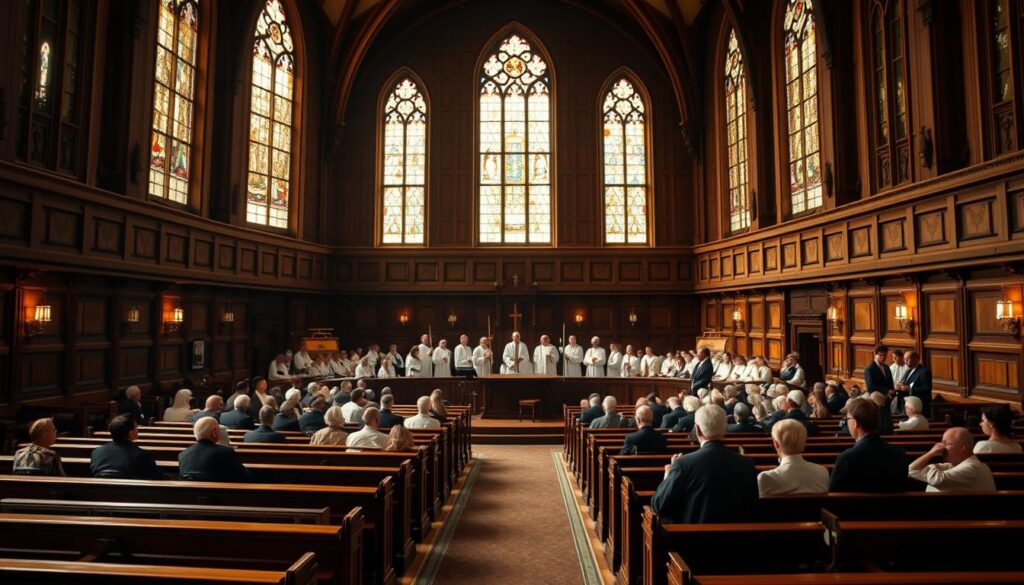
| Body | Role | Practical effect |
|---|---|---|
| General Convention | Legislates doctrine and policy | Sets national canons and liturgy |
| Executive Council | Manages business between conventions | Implements decisions and budgets |
| Dioceses and Provinces | Regional oversight | Local leadership and ministry |
Funding comes from congregational giving, with about 20% forwarded to support churchwide mission and administration. This governance structure ties decision-making to the real resources that sustain ministry and protect equal representation across gender and regional bodies—a practical way the church governs itself.
What do Episcopalians believe about homosexuality
The 1976 resolution set a lasting standard: homosexual persons are “children of God” with a full and equal claim on the church’s love, acceptance, and pastoral support.
That phrase anchors parish life. It means worship, formation, fellowship, and leadership are open to people across sexual orientation and gender. Local clergy and lay teams aim to offer practical pastoral care and respectful accompaniment.
In practice, this commitment shapes policies, liturgy, and everyday welcome. Congregations work to align official language with lived practice so members can participate fully.
“You belong. No exceptions.”
This contemporary affirmation captures the denomination’s aim: respectful inclusion in ministries, rites, and community life. Official statements and daily practice together create space for whole-person belonging in the life of the episcopal church.
Marriage equality in the Episcopal Church
A sequence of resolutions passed at the General Convention turned pastoral practice into codified policy on marriage.
2015 brought two key measures. Resolution A054 approved gender-neutral rites and authorized same-sex wedding liturgies. Resolution A036 amended the marriage canon to permit clergy to use the Book of Common Prayer rite or an authorized trial liturgy for marriage.
2018 access and pastoral arrangements
Resolution B012 guaranteed access to marriage rites in every diocese. That ensured couples may marry in their home congregations without being turned away by diocesan policy.
Pastoral accommodation and conscience
The canon protects clergy conscience. A priest who objects on theological grounds may request alternative episcopal oversight from another bishop, so pastoral care remains available to couples.
- How it works: A054 and A036 codified gender-neutral rites and changed the canon.
- Access: B012 affirms married couples can use local congregations.
- Balance: No clergy will be forced to preside; access and conscience protections coexist.
“These changes reflect formal authorization by General Convention and offer clear guidance for people planning marriage.”
Ordination and leadership: open to all without discrimination
Ordained leadership in the Episcopal Church has opened steadily over recent decades. Changes to canons and several high-profile moments created clearer paths for people called to ministry.
Key milestones that shaped access
In 1994 the General Convention added sexual orientation to non-discrimination canons for ordination. That change removed a formal barrier and signaled institutional intent.
In 2003 the church consecrated its first openly gay bishop, a landmark moment that drew national attention and marked practical movement toward equality.
By 2009 a resolution affirmed that
“God’s call is open to all.”
This removed remaining barriers to electing bishops from diverse backgrounds and orientations.
Expanding vocation and continuing progress
In 2012 the church approved transgender ordination, extending canonical inclusion across gender identity. Women have served in ordained orders since 1974, including election to the episcopate, showing a longstanding commitment to equality.
The discernment process values gifts, formation, and mentorship over exclusion. Vocational paths are a spiritual journey undertaken with prayer and guidance, and seminaries and dioceses increasingly reflect this openness.
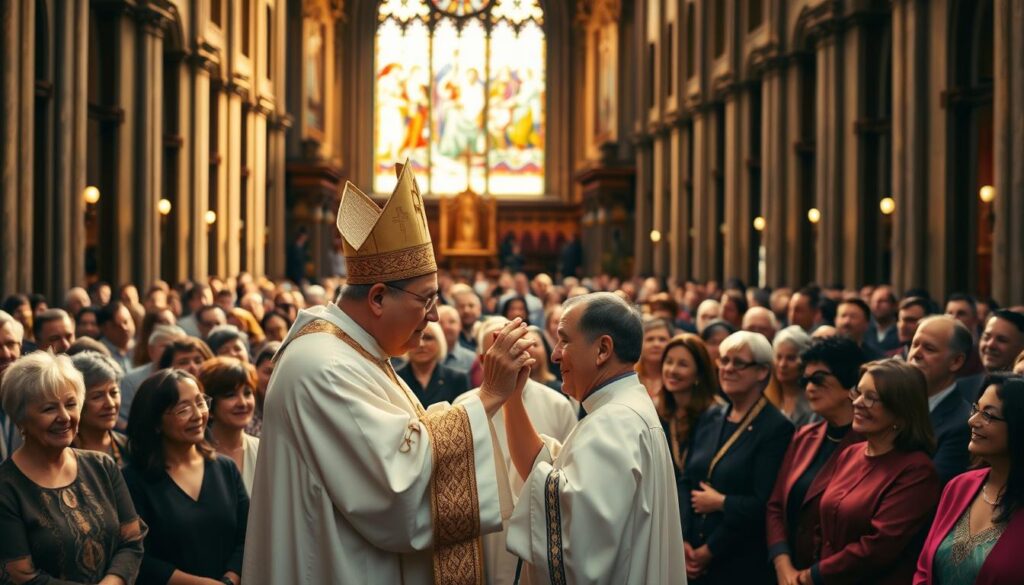
| Year | Action | Effect |
|---|---|---|
| 1994 | Added sexual orientation to canons | Non-discrimination in ordination |
| 2003 | First openly gay bishop consecrated | Visible leadership inclusion |
| 2012 | Approved transgender ordination | Broadened vocational access |
Result: Policies and practice now create real opportunities for service and leadership across the Episcopal Church, advancing inclusion and equality in ministry.
Non-discrimination, pastoral care, and protections for identity expression
Canon law names specific protections that safeguard participation in governance and ministry. The canons explicitly bar discrimination for sexual orientation, gender identity, and gender expression. These rules help ensure fair access to voting, committees, and leadership.
Administrative forms now include fields for preferred and legal names, plus options for gender identity and pronouns. Using these details in registration and directories helps congregations offer respectful, accurate welcome.
Advocacy and remaining gaps
The church publicly opposed laws that restrict restroom, locker room, and shower access for transgender and gender non-conforming people in 2018. That stance links policy to safety and dignity in public life.
Resolution A091 in 2018 — which sought to extend nondiscrimination language to clergy hiring and appointments — did not pass. This outcome means hiring protections remain uneven across some dioceses.
- Canon protections: named safeguards for identity and fair participation.
- Practical steps: inclusive forms and pronoun use in congregations.
- Advocacy: opposition to restrictive restroom laws to protect safety.
“Policies and practice together help clergy and lay leaders offer informed, compassionate care.”
Resources and community connections for LGBTQ+ Episcopalians
This section gathers national and parish resources that help people and leaders plan inclusive worship and outreach.
Integrity USA and allied support
Integrity USA works for full inclusion and offers advocacy and peer support for the LGBTQ+ community. National and local partners provide training and referral networks for ministry and pastoral care.
Media kits and parish toolkits
The Episcopal Church supplies a Pride shield, customizable 30- and 60-second videos in English, Spanish, and French, social media posts, and printable cards that congregations can use in announcements, websites, and outreach.
Worship, formation, and the Gender Justice Jam
Liturgical resources include sermons, rites, and planning guides for inclusive services and marriage rites. The 12-week Gender Justice Jam (late 2024) equips leaders to address gender and gender identity with clarity and care.
- Action steps: download media kits, schedule formation sessions, and review liturgies for Pride or seasonal use.
- Contact: The Episcopal Church, 815 Second Avenue, New York, NY; episcopalchurch.org.
“Practical resources help congregations signal welcome and support meaningful inclusion.”
Conclusion
Across decades, General Convention actions and local bodies have turned principle into practice in the episcopal church. Changes in canons, rites, and oversight now support marriage, ordination, and pastoral care, while leaving room for conscience and local decision. This steady work reflects a posture rooted in love.
In short: the church seeks greater understanding and fuller inclusion. Members, people, and families are named as children god and invited into communal life. Use church resources, connect with a local congregation, and keep learning. The episcopal church views equality and acceptance as an ongoing journey—a practical way to live out love in worship, leadership, and everyday community.
FAQ
What is the Episcopal Church’s stance on sexual orientation and gender identity?
The Episcopal Church affirms full inclusion of LGBTQ+ people. Since the 1970s the church has moved toward welcoming all persons, offering pastoral care and insisting on dignity, respect, and equal access to ministry and community life.
How are decisions about these beliefs made in the Episcopal Church?
Major policy is set by General Convention, which includes the House of Bishops and the House of Deputies. The Constitution and canons guide practice, and the Executive Council provides oversight between conventions.
What does "full and equal claim" mean in practice?
That phrase commits congregations and leaders to love, accept, and provide pastoral care to gay and lesbian persons. It supports their participation in baptism, communion, ministry, and community without exclusion.
How does the church show respect for every person’s dignity?
The Episcopal Church encourages inclusive language, honors chosen names and pronouns on forms, and supports ministry roles for people of diverse identities. Inclusion extends to worship, leadership, and community programs.
Does the church offer an explicit affirmation for LGBTQ+ members?
Yes. Many dioceses and congregations embrace a clear welcome—often summarized as “You belong. No exceptions.”—and the church provides resources for congregational welcome and pastoral support.
What changed in 2015 regarding marriage rites?
In 2015 General Convention approved gender-neutral marriage rites and adjusted canons to allow same-sex marriage. This change enabled clergy and congregations to offer marriage to same-sex couples where diocesan oversight permits.
Were there further actions about marriage access after 2015?
In 2018 the church acted to expand access so couples could use authorized rites across dioceses. Pastoral accommodations remain for clergy who conscientiously decline to officiate, and provisions exist for alternative episcopal oversight.
Can LGBTQ+ people be ordained or serve as bishops?
Ordination is open without discrimination. Key milestones include the 1994 canon change on sexual orientation, the election of openly gay bishops, and affirmation that God’s call is open to all. Transgender ordination has been affirmed in recent years.
What legal or canonical protections exist for identity expression?
Canons and resolutions name sexual orientation, gender identity, and gender expression as protected categories. The church advocates against discriminatory laws, including restrictive restroom policies, and promotes inclusive hiring practices.
How does the church support congregations seeking to be inclusive?
The Episcopal Church supplies liturgical resources, video kits, and social media materials. Programs like the Gender Justice Jam and partnerships with organizations provide training and formation for congregations.
What advocacy has the church undertaken for LGBTQ+ rights?
The church has opposed discriminatory state laws, supported marriage equality, and passed resolutions to protect identity and expression. Dioceses often engage in local advocacy on non-discrimination and civil rights.
Where can LGBTQ+ Episcopalians and allies find community and resources?
National and local groups such as Integrity USA and diocesan ministries offer support. The Episcopal Church headquarters in New York and the website episcopalchurch.org list programs, liturgies, and contact information for further assistance.
How are children and families of LGBTQ+ members welcomed?
Congregations aim to welcome children and families fully, offering baptism, education, and pastoral care. The church emphasizes that all children are beloved by God and deserving of inclusion in parish life.
Are there provisions for clergy or congregations with conscientious objections?
Yes. The church recognizes conscience rights, allowing clergy to decline officiating while ensuring couples can access authorized rites and pastoral oversight when needed.
How has leadership diversity evolved in the Episcopal Church?
The church has steadily expanded representation, with women and LGBTQ+ persons serving in ordained leadership and episcopal roles. Ongoing efforts seek to broaden inclusion across all ministries.
How can someone contact the Episcopal Church for more information?
The Episcopal Church is reachable at 815 Second Avenue, New York, NY, and via episcopalchurch.org, where visitors can find resources, diocesan contacts, and guidance on inclusion and ministry.