The Episcopal Church is known for its inclusive and welcoming stance towards LGBTQ+ individuals. At its core, the church’s beliefs are centered around love, respect, and dignity for all people.
The church’s teachings emphasize that “In Jesus, we find that the nature of God is love, and through baptism, we share in his victory over sin and death.” This foundational belief shapes the church’s approach to LGBTQ+ issues, fostering an environment of acceptance and compassion.
By striving to love their neighbors as themselves and respect the dignity of every person, Episcopalians aim to create a community that is both inclusive and supportive.
Key Takeaways
- The Episcopal Church emphasizes love, respect, and dignity for all individuals.
- The church’s beliefs are centered around the nature of God being love.
- Episcopalians strive to create an inclusive and welcoming community.
- The church’s teachings promote acceptance and compassion towards LGBTQ+ individuals.
- Baptism is seen as a shared victory over sin and death.
Understanding the Episcopal Church’s Core Beliefs
At the heart of the Episcopal Church’s approach to LGBTQ+ matters lies a complex interplay of scripture, tradition, and reason. This balance is crucial in understanding the church’s stance on various issues, including its views on LGBTQ+ individuals.
The Episcopal Church is governed by two main legislative bodies: the House of Deputies and the House of Bishops. Together, they form the General Convention, which is the church’s highest legislative body. The church’s Constitution and Canons outline the rules and procedures that guide its congregations and clergy.
The Authority of Scripture
The Episcopal Church places a significant emphasis on scripture, viewing it as a primary source of guidance. However, the church also interprets scripture within the context of tradition and reason.
The role of scripture in shaping the church’s beliefs about LGBTQ+ issues is multifaceted. Some Episcopalians interpret certain biblical passages as condemning homosexual acts, while others see these passages as being subject to interpretation or as not directly addressing modern understandings of sexual orientation and gender identity.
Tradition and Reason in Faith
Alongside scripture, the Episcopal Church values tradition and reason as essential components of its faith. Tradition encompasses the church’s historical practices and teachings, while reason involves the application of critical thinking and personal conscience.
This triad of scripture, tradition, and reason allows for a nuanced approach to complex issues, including those related to LGBTQ+ individuals. It enables Episcopalians to engage in thoughtful dialogue and to consider a wide range of perspectives when addressing contemporary challenges.
| Core Element | Description | Role in LGBTQ+ Issues |
|---|---|---|
| Scripture | Primary source of guidance, interpreted within context | Influences views on LGBTQ+ issues through specific passages |
| Tradition | Historical practices and teachings of the church | Provides historical context for understanding LGBTQ+ issues |
| Reason | Application of critical thinking and personal conscience | Facilitates nuanced discussion and consideration of diverse perspectives |
The balance of scripture, tradition, and reason in the Episcopal Church’s core beliefs fosters an environment where diverse viewpoints can be explored. This approach is particularly relevant when addressing the complex and evolving issues surrounding LGBTQ+ inclusion.
A Historical Overview of LGBT Inclusion
The history of LGBT inclusion within the Episcopal Church is marked by pivotal moments and shifting perspectives. Understanding this journey requires examining the Church’s early attitudes towards homosexuality and how these views have evolved over time.
Early Attitudes Towards Homosexuality
In the past, the Episcopal Church, like many other religious institutions, held varied and sometimes conflicting views on homosexuality. Traditional interpretations of scripture were often cited in discussions about LGBT issues, leading to a complex and sometimes challenging environment for LGBT individuals within the Church.
However, as societal attitudes began to shift, so too did the Church’s perspectives. The process of re-examination and dialogue played a crucial role in evolving the Church’s stance on LGBT inclusion.
Shifts in Perspective Over Decades
The latter half of the 20th century saw significant changes in the Episcopal Church’s approach to LGBT issues. A growing movement towards inclusivity led to important decisions and resolutions that would shape the Church’s future.
In 1976, a landmark decision was made when the Episcopal Church voted to become a fully inclusive church, affirming that “homosexual persons are children of God who have a full and equal claim with all other persons upon the love, acceptance, and pastoral concern and care of the Church.” This resolution marked a pivotal moment in the Church’s history, signaling a commitment to LGBT inclusion that would continue to evolve in the decades to come.
The journey towards full LGBT inclusion has been characterized by ongoing dialogue, theological reflection, and a commitment to social justice. As the Episcopal Church continues to navigate the complexities of LGBT issues, it remains dedicated to its core principles of love, acceptance, and compassion.
The 1976 General Convention
During the 1976 General Convention, the Episcopal Church took a bold step forward in affirming LGBT individuals’ rights. This convention was a significant moment in the church’s history, marking a turning point in its stance on LGBT inclusion.
The convention’s resolutions had a profound impact on the church’s approach to LGBT issues. By affirming the rights of gay and lesbian individuals, the Episcopal Church demonstrated its commitment to social justice and equality.
Affirmation of Gay and Lesbian Rights
The 1976 General Convention’s affirmation of gay and lesbian rights was a groundbreaking move. It acknowledged the inherent dignity and worth of LGBT individuals, aligning with the church’s broader mission to serve and love all people.
“The church’s recognition of LGBT individuals as beloved children of God marked a significant shift in its pastoral approach.”
This shift was not merely symbolic; it had practical implications for how the church engaged with LGBT issues. It paved the way for further discussions and actions within the church regarding LGBT inclusion.
The Role of the Church in Social Issues
The Episcopal Church’s involvement in social issues, including LGBT rights, reflects its understanding of faith as a call to action. By engaging with these issues, the church demonstrates its commitment to creating a more just and compassionate society.
| Year | Event | Significance |
|---|---|---|
| 1976 | General Convention | Affirmation of LGBT rights |
| 2003 | Consecration of Bishop Gene Robinson | First openly gay bishop |
| 2015 | Approval of same-sex marriage | Full inclusion in church sacraments |
The table above highlights key milestones in the Episcopal Church’s journey towards LGBT inclusion. From the 1976 General Convention to the approval of same-sex marriage in 2015, the church has continued to evolve its stance, reflecting a deeper understanding of God’s love for all people.
Current Episcopal Church Policies
The Episcopal Church’s commitment to inclusivity is reflected in its current policies regarding same-sex marriage and the ordination of LGBTQ+ clergy. This commitment is a continuation of the church’s historical stance on supporting marginalized communities.
Affirming Same-Sex Marriage
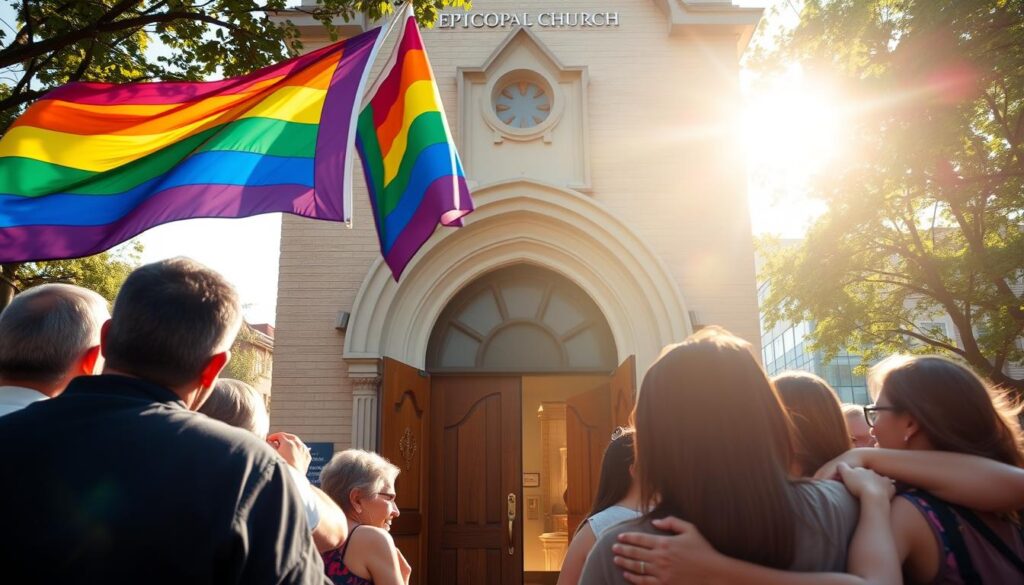
In 2015, the Episcopal Church made a significant decision by approving resolutions that allowed clergy to officiate same-sex marriages. This move was seen as a major step forward in affirming the rights of LGBTQ+ individuals within the church. The church recognizes the importance of providing equal opportunities for all members to celebrate their unions.
The decision to support same-sex marriage was not taken lightly. It involved extensive debate and consultation among church leaders and members. The outcome was a testament to the church’s ability to evolve while remaining true to its core values.
Ordination of LGBTQ+ Clergy
In addition to supporting same-sex marriage, the Episcopal Church has also made significant strides in the ordination of LGBTQ+ clergy. The church has long been a proponent of equality in all aspects of church life, including leadership positions. This inclusive approach has fostered a welcoming environment for LGBTQ+ individuals to serve in various roles.
| Year | Policy Change | Impact |
|---|---|---|
| 2015 | Approval of same-sex marriage resolutions | Allowed clergy to officiate same-sex marriages |
| 2018 | Further affirmation of LGBTQ+ rights | Strengthened support for LGBTQ+ community |
The Episcopal Church’s policies on same-sex marriage and the ordination of LGBTQ+ clergy demonstrate its commitment to being an affirming and supportive faith community. By embracing diversity and promoting equality, the church continues to be a beacon of hope for many.
The Role of Scripture in LGBTQ+ Acceptance
Understanding the role of scripture in the Episcopal Church’s acceptance of LGBTQ+ individuals requires a nuanced exploration of biblical interpretations. The Episcopal Church approaches scripture with a complex understanding, recognizing the multifaceted nature of biblical interpretations and their impact on LGBT issues.
Interpreting Biblical Texts
The interpretation of biblical texts is a critical aspect of the Episcopal Church’s stance on LGBTQ+ issues. The Church acknowledges that scripture is open to multiple interpretations, and it considers historical context, cultural influences, and theological perspectives when examining biblical teachings related to sexual orientation and gender identity.
A nuanced understanding allows the Church to affirm LGBTQ+ individuals while respecting the complexity of scripture. This involves recognizing both the historical context in which biblical texts were written and the contemporary understanding of LGBTQ+ issues.
The Impact of Modern Theology
Modern theology plays a significant role in shaping the Episcopal Church’s views on LGBTQ+ acceptance. By engaging with contemporary theological thought, the Church is able to reconcile traditional biblical interpretations with modern understandings of sexual orientation and gender identity.
The Episcopal Church’s affirming stance towards LGBTQ+ individuals is a result of this theological engagement, demonstrating a commitment to inclusivity and compassion. Through this approach, the Church fosters a welcoming environment for all, regardless of sexual orientation or gender identity.
Engaging with LGBTQ+ Issues Today
Engaging with LGBTQ+ issues is a vital part of the Episcopal Church’s mission to promote inclusivity and love. The church recognizes the importance of creating a welcoming environment for all individuals, regardless of their sexual orientation or gender identity.
Community Support and Advocacy
The Episcopal Church is committed to providing community support and advocacy for LGBTQ+ individuals. This involves various initiatives aimed at promoting understanding and acceptance within the church and beyond.
Key Initiatives:
- Providing safe spaces for LGBTQ+ individuals to share their experiences and find support.
- Advocating for LGBTQ+ rights within the church and in broader society.
- Educating clergy and laity about LGBTQ+ issues to promote understanding and empathy.
The Importance of Dialogue
Dialogue allows for the exchange of ideas and experiences, helping to break down barriers and build bridges within the community. The church encourages clergy and laity to engage in thoughtful discussions about LGBTQ+ issues, promoting a culture of empathy and understanding.
| Initiative | Description | Impact |
|---|---|---|
| LGBTQ+ Support Groups | Regular meetings for LGBTQ+ individuals to share experiences and find support. | Increased sense of community and support among LGBTQ+ individuals. |
| Clergy Training | Training programs for clergy to better understand and support LGBTQ+ individuals. | More inclusive and supportive clergy. |
| Advocacy Campaigns | Campaigns to promote LGBTQ+ rights and awareness within the church and society. | Increased awareness and advocacy for LGBTQ+ rights. |
Theological Perspectives on Sexual Orientation
The Episcopal Church encompasses a broad spectrum of theological interpretations regarding sexual orientation, reflecting its commitment to inclusivity.
This diversity is evident in the various viewpoints on the matter, ranging from conservative to progressive interpretations of Christian teachings.
Diverse Interpretations Within the Church
Within the Episcopal Church, there are multiple theological perspectives on sexual orientation. Some view the Bible’s teachings as unchanging and applicable to contemporary understandings of sexuality.
Others interpret biblical texts within their historical and cultural context, arguing for a more nuanced understanding of sexual orientation.
This diversity of thought is reflected in the Church’s ongoing discussions and debates about LGBTQ+ inclusion.
Theological Education on LGBTQ+ Matters
Theological education plays a crucial role in shaping the Church’s stance on LGBTQ+ issues. Seminaries and theological institutions within the Episcopal Church are increasingly incorporating LGBTQ+ issues into their curricula.
This education aims to foster a deeper understanding of the complex interplay between theology, scripture, and contemporary understandings of sexual orientation.
| Aspect | Traditional View | Progressive View |
|---|---|---|
| Scriptural Interpretation | Literal interpretation of biblical texts regarding sexuality | Contextual interpretation considering historical and cultural context |
| Theological Education | Focus on traditional Christian teachings | Inclusive of LGBTQ+ perspectives and experiences |
| Community Engagement | Emphasis on traditional family values | Support for LGBTQ+ individuals and advocacy for their rights |
By engaging with these diverse perspectives and prioritizing theological education, the Episcopal Church continues to evolve its understanding of sexual orientation and its stance on LGBTQ+ inclusion.
Voices from the LGBTQ+ Episcopalian Community
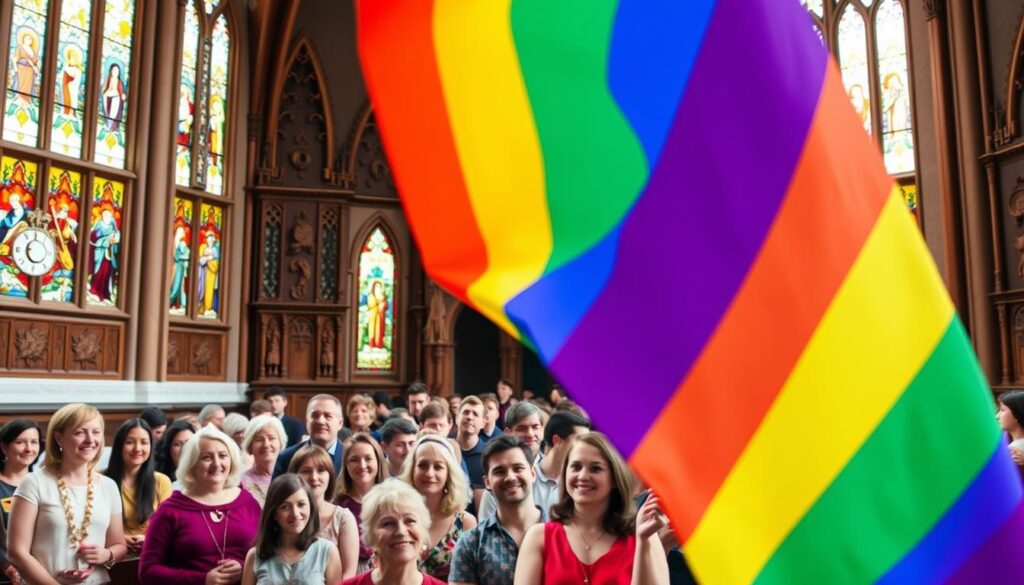
The stories of LGBTQ+ Episcopalians offer a powerful testament to the church’s commitment to diversity and inclusion. These personal narratives not only highlight the journey of individuals within the community but also underscore the church’s role in fostering an environment of acceptance and love.
Personal Stories and Experiences
LGBTQ+ Episcopalians share a wide range of experiences, from moments of profound joy to times of struggle and perseverance. For instance, “I found my true self within the Episcopal Church, where I was welcomed and affirmed.” Such stories highlight the positive impact of the church’s inclusive policies and practices.
The Episcopal Church’s affirmation of LGBTQ+ individuals is not just a policy but a lived reality for many. As one member noted,
“The church is not just a place of worship; it’s a community that supports me in all aspects of my life.”
This sense of community is crucial for individuals who may have felt marginalized or excluded elsewhere.
Building Supportive Church Communities
Building supportive communities within the church is essential for the well-being of LGBTQ+ members. This involves not just acceptance but active affirmation and support. The Episcopal Church has made significant strides in this area, with many dioceses and parishes actively working to create inclusive environments.
Key initiatives include training for clergy and lay leaders on LGBTQ+ issues, support groups for LGBTQ+ individuals and their families, and advocacy for LGBTQ+ rights within and beyond the church. These efforts demonstrate the church’s commitment to being a sanctuary of love and acceptance for all.
As the Episcopal Church continues on its path of inclusivity, the voices of LGBTQ+ Episcopalians will remain crucial. Their stories and experiences not only enrich the church community but also guide its ongoing journey towards greater understanding and acceptance.
National and Local Responses
The Episcopal Church has seen a broad spectrum of reactions to LGBT issues at both national and local levels. This diversity reflects the complex and multifaceted nature of the Church’s stance on LGBTQ+ rights.
Different dioceses have taken varied approaches, ranging from full inclusion and support of LGBTQ+ individuals to more cautious or conservative stances. This variation is a natural result of the Church’s decentralized structure, allowing for a range of interpretations and responses to LGBT issues.
Diocesan Responses to LGBT Issues
Some dioceses have been at the forefront of advocating for LGBTQ+ rights, implementing policies that support the inclusion of LGBT individuals in all aspects of church life. For example, certain dioceses have performed same-sex marriages and have actively worked to create welcoming environments for LGBTQ+ clergy and laity.
In contrast, other dioceses have taken more conservative positions, sometimes due to local cultural or theological considerations. However, even within these dioceses, there are often ongoing discussions and efforts to better understand and support LGBTQ+ individuals.
Initiatives and Programs Supporting LGBTQ+ Individuals
Across the Episcopal Church, various initiatives and programs have been established to support LGBTQ+ individuals. These include educational programs aimed at promoting understanding and acceptance of LGBT issues, as well as advocacy efforts to advance LGBTQ+ rights within the Church and broader society.
Some dioceses have also established specific committees or task forces focused on LGBT issues, providing a framework for addressing the needs and concerns of LGBTQ+ Episcopalians. These initiatives not only support LGBTQ+ individuals but also foster a more inclusive and compassionate Church community.
By examining the diverse responses across different dioceses and the various initiatives in place, it becomes clear that the Episcopal Church is actively engaged in a process of dialogue and growth regarding LGBT issues. This ongoing work reflects the Church’s commitment to being a welcoming and affirming community for all individuals, regardless of their sexual orientation or gender identity.
Looking Ahead: The Future of LGBTQ+ Inclusion in the Church
The Episcopal Church’s journey towards full LGBTQ+ inclusion continues, with the community facing both challenges and opportunities. As the church navigates these complexities, it remains committed to its core values of love, acceptance, and compassion.
Challenges and Opportunities on the Horizon
The path forward involves addressing ongoing debates and fostering a culture of understanding and respect. The episcopal church lgbt inclusion efforts are expected to evolve, with a focus on creating inclusive environments that welcome individuals from all backgrounds.
Fostering Stronger Relationships
Strengthening relationships within the faith community is crucial. By promoting dialogue and empathy, Episcopalians can work together to build a more inclusive and supportive church. The episcopalians stance on lgbt issues will continue to be shaped by its commitment to social justice and human dignity.
FAQ
What is the Episcopal Church’s stance on LGBTQ+ issues?
The Episcopal Church is affirming and supportive of LGBTQ+ individuals, with a strong commitment to equality, justice, and human dignity for all people, regardless of their sexual orientation or gender identity.
How does the Episcopal Church interpret scripture in relation to LGBTQ+ issues?
The Episcopal Church uses a nuanced approach to interpreting scripture, considering the historical context, cultural background, and the overall message of love and acceptance. The church also draws on modern theology and scholarly insights to inform its understanding of biblical texts.
What is the history of the Episcopal Church’s journey towards LGBT inclusion?
The Episcopal Church has undergone significant shifts in its perspective on LGBTQ+ issues over the decades, from a more conservative stance to a more inclusive and affirming one. Key milestones include the 1976 General Convention, which affirmed gay and lesbian rights, and subsequent decisions to ordain LGBTQ+ clergy and allow same-sex marriage.
Does the Episcopal Church support same-sex marriage?
Yes, the Episcopal Church allows same-sex marriage and has liturgies and rites for same-sex weddings. The church has also ordained LGBTQ+ clergy and bishops, and has taken steps to ensure that all individuals, regardless of their sexual orientation or gender identity, are treated with dignity and respect.
How does the Episcopal Church engage with LGBTQ+ issues today?
The Episcopal Church is actively engaged in supporting and advocating for LGBTQ+ individuals, through community support, dialogue, and advocacy. The church also provides resources and training for clergy and lay leaders to promote understanding and inclusion.
What are some of the theological perspectives on sexual orientation within the Episcopal Church?
The Episcopal Church encompasses a range of theological perspectives on sexual orientation, from more conservative to more liberal views. The church values diversity of interpretation and encourages ongoing dialogue and education on LGBTQ+ matters.
How do Episcopalians view the role of scripture in shaping their acceptance of LGBTQ+ individuals?
Episcopalians believe that scripture is a vital part of their faith, but also recognize that biblical texts must be interpreted in context. The church draws on a range of scholarly insights and theological perspectives to inform its understanding of scripture and its application to LGBTQ+ issues.
What initiatives and programs does the Episcopal Church have to support LGBTQ+ individuals?
The Episcopal Church has a range of initiatives and programs to support LGBTQ+ individuals, including advocacy and support groups, liturgies and rites for same-sex weddings, and training for clergy and lay leaders. Different dioceses also have their own programs and initiatives to promote inclusion and support.
What are some of the challenges and opportunities facing the Episcopal Church in its commitment to LGBTQ+ inclusion?
The Episcopal Church faces ongoing challenges, including building greater understanding and acceptance within the church and in wider society. However, the church also sees opportunities to strengthen relationships within the faith community, promote greater inclusion, and continue to advocate for justice and equality for all people.