This introduction names the big question many people ask today and points to an answer rooted in Scripture, the Book of Common Prayer, and Anglican teaching. The Episcopal Church frames salvation as healing and deliverance that shapes how we live now, not only a future promise.
Jesus’ call to love neighbor (Micah 6:8) shows that faith links personal trust with public mercy. Anglicans describe forgiveness, union with Christ, adoption, and new life in the Spirit as parts of that work.
Baptism and the Eucharist matter as visible signs the Church uses to strengthen faith. In the “in between” times, we live with present assurance and a hope that shapes daily choices and communal care.
Key Takeaways
- Episcopal teaching presents salvation as present well-being and future hope.
- Baptism and Eucharist are central, effectual signs of grace.
- Faith and sacraments work together in community and worship.
- Neighbor-love links personal faith with social justice and mercy.
- The tradition balances assurance now with growth over time.
Defining Salvation Today: Scripture, Jesus Christ, and the Anglican-Episcopal Lens
Scripture often frames salvation as rescue and renewed well-being, a concrete way God acts for people in the world. The biblical term covers deliverance from danger and the start of communal health and justice.
From well-being to deliverance: how the Bible speaks
Examples like the Exodus show God saving Israel from bondage. Prophetic texts extend that rescue to social and political issues that shape daily life.
Jesus Christ as the climax of salvation history
Jesus Christ is presented as the turning point in this story. His life, death, and resurrection restore right relationship and offer new life now and in the day to come.
“Salvation is both rescue and healing—present-tense well-being with public implications.”
- Word and sacrament: proclamation and the Church’s rites work together.
- History to doctrine: the story from Exodus to the cross shapes Christian teaching.
- Practical fruit: justice, mercy, and neighbor-love show salvation’s effect in community.
In short, this section frames salvation as a coherent vision that links biblical narrative, sacramental life in the church, and a way of life for people in the world.
What do Episcopalians believe about salvation
The Episcopal Church frames salvation as an undeserved gift that begins before our effort and calls for a faithful response.

Grace as God’s free gift and our response in faith
Grace is God’s initiative. It comes without merit and invites trust.
Our faith answers by receiving the gift and living a baptized life.
Reconciliation, adoption, and identity
The Catechism teaches that God forgives sins, joins us to Christ, and adopts us into God’s family.
This new identity gives citizenship in God’s kingdom and a life shaped by the Spirit.
Justification and sanctification
We are set right with God and then grow in holiness. Both happen by God’s help, not human earning.
“In Christ we are brought out of sin into righteousness and out of death into life.”
- Baptism: the sacramental term of union with Christ (creedal identity).
- Eucharist: an effectual sign that strengthens and confirms faith.
| Key Idea | What it Means | Scriptural / BCP Source |
|---|---|---|
| Grace | Undeserved gift initiating rescue | John 3:16; Catechism |
| Reconciliation | Forgiveness and union with Christ | BCP, Article XXV |
| Sanctification | Growing in holiness by the Spirit | BCP p. 368 |
Sacraments as “means of grace”: Baptism and the Eucharist in the Episcopal Church
Anglican teaching names Baptism and the Eucharist as primary channels through which God offers saving grace. These rites are called effectual signs of grace in the Articles of Religion (XXV). They use visible elements to offer the invisible free gift that joins people to Christ.
Baptism: dying and rising with Christ, entrance into the Church
Baptism unites a person to Jesus’ death and resurrection (Rom 6:3-4). The Book of Common Prayer teaches it is generally necessary for salvation and marks entry into the visible church.
Eucharist: the bread of life and cup of salvation for God’s people
The Eucharist is participation in Christ’s body and blood (1 Cor 10:16; John 6). Over the course of one’s life, regular Communion strengthens faith and imparts sanctifying grace.
Word, bishops, and priests: how the Church safeguards sacramental life
Article XIX locates the visible church in the pure preaching of the word and right administration of sacraments. Anglican order entrusts bishops and priests to preserve this practice.
“These rites quicken, strengthen, and confirm the faith of the faithful.”
- Means of grace: visible things that offer God’s saving work.
- Pastoral issues: preparation, access, and teaching shape faithful practice.
- Habit of worship: baptismal memory and Communion form lives of gratitude and service.
| Rite | Primary Effect | Source |
|---|---|---|
| Baptism | Union with Christ; entry into the Church | Rom 6:3-4; BCP p. 306; Articles XXV |
| Eucharist | Participation in Christ; sanctifying grace | 1 Cor 10:16; John 6; BCP pp. 363, 375 |
| Order | Safeguards sacramental integrity | Article XIX; Church ordinal (bishops & priests) |
Personal faith and communal life: salvation as a way of life in the world
When trust in God grows, it moves outward as a shared mission. This faith shapes how people respond to neighbors in need and to public issues that harm the vulnerable.
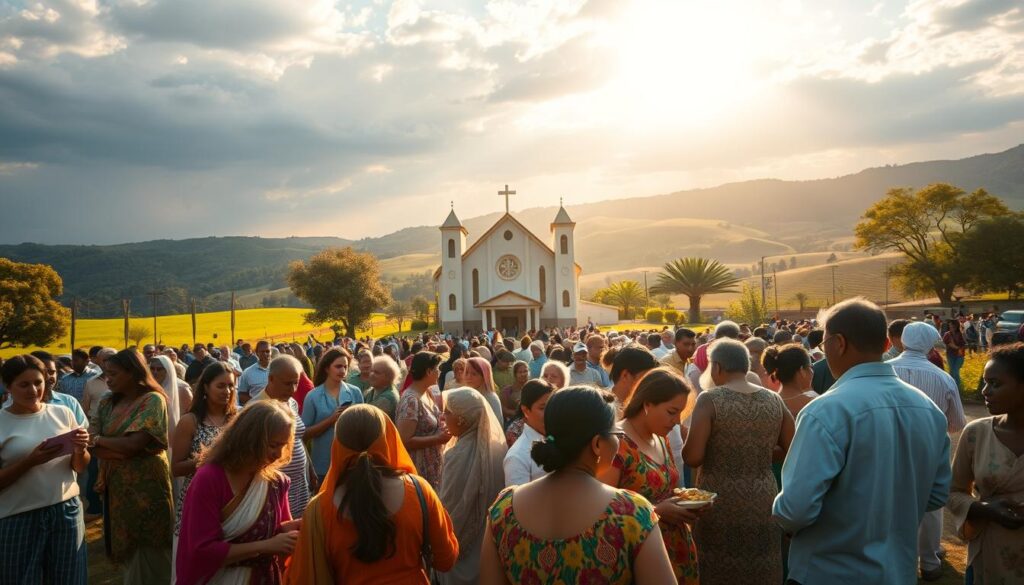
Doing justice, loving kindness, walking humbly: Micah 6:8 lived
Micah’s call comes alive in simple acts: feeding the hungry, visiting the sick, and defending dignity. These practices show that salvation is not only a private thing but a public gift to be lived.
From individual decision to shared mission: neighbor-love, service, and dignity
Personal faith grows into steady service. Churches and small groups turn worship into works of mercy that meet real need.
- Feeding ministries that welcome people without judgment.
- Advocacy for peace, housing, and health on local issues.
- Accompaniment that honors each person’s pace and story.
“Justice, mercy, and humility form a faithful way that bears witness to the Kingdom.”
Now and not yet: sanctification, hope, and the Kingdom in our time
Sanctification is the steady shaping of a life by God’s Spirit, unfolding over time in ordinary actions. The Episcopal tradition sees this growth as part gift and part response. We live with present assurance while we wait for the Kingdom’s fullness.
Sharing Christ’s life by the Spirit
Sanctification means sharing in Jesus Christ‘s life by the Spirit. Over time, grace changes habits, speech, and choices. The Eucharist deepens communion and sustains this work.
“In between times”: present assurance and future fulfillment
We experience new life now and hope for what is to come. Daily practices—prayer, Scripture, sacramental worship, and service—help. When discouragement and delays arise, pastoral care and companions remind each person that growth is God’s gift.
“Hope rests on God’s love, which nothing can separate us from.”
- Signs of the Kingdom: reconciliation, healing, and justice in the world.
- Habits that nurture growth: prayer, Eucharist, mercy, and steady worship.
- Practical hope: trust God’s timing and seek faithful companions.
| Practice | Primary Effect | Source / Example |
|---|---|---|
| Prayer & Scripture | Nourishes daily growth | Psalms, collects, daily office |
| Eucharist | Imparts sanctifying grace | 1 Cor 10:16-17; BCP rites |
| Works of mercy | Shows Kingdom signs in the world | Feeding ministries; reconciliation actions |
Conclusion
, Anglican formularies lead to a clear end: participation in Christ through Word and Sacrament is the heart of salvation in this tradition. The Catechism shapes identity so people know they are reconciled and adopted into the church. Baptism and the Eucharist remain central signs of God’s free gift.
Questions about bishops, priests, and women in ministry often touch practical issues that affect how churches offer Word and Sacrament. The call is simple: grow in service, keep close to Scripture and the Table, and join the church’s mission in your neighborhood. Trust the hope that nothing can separate us from God’s love as you live into new life and sanctification.
FAQ
What is salvation in the Anglican-Episcopal tradition?
In the Anglican and Episcopal understanding, salvation is God’s restoring work through Jesus Christ. It includes being forgiven, brought into relationship with God, and invited into new life by the Holy Spirit. Scripture, the Book of Common Prayer, and the Catechism shape this view, which balances personal faith with communal belonging in the church.
How does the Bible describe deliverance and well-being?
The Bible pictures deliverance as rescue, healing, and restoration. Passages from the Old and New Testaments show God acting to save individuals and communities. Scripture highlights both present transformation and future hope, encouraging believers to trust God’s promises and live faithfully now.
Why is Jesus Christ central to salvation?
Jesus is seen as the climax of salvation history: his life, death, and resurrection reconcile humanity to God and open the way to new life. Through Christ, people receive forgiveness, adoption as God’s children, and the gift of the Spirit that sustains ongoing transformation.
What role does grace play, and how should people respond?
Grace is God’s free, unearned gift. The Episcopal tradition emphasizes that faith responds to grace: trust, repentance, and participation in the life of the church. Good works and moral growth flow from that response, not as a way to earn favor but as the fruit of being loved by God.
How do the Catechism and the Book of Common Prayer frame reconciliation and identity?
The Catechism and prayer book teach that reconciliation restores relationship with God and the church. They stress adoption into God’s family and a new identity shaped by baptism, worship, and the corporate life of the community. Liturgy and pastoral care guide believers in living out that identity.
What about justification and sanctification?
Justification is the declaration that we are forgiven and accepted in Christ. Sanctification is the ongoing process of growing in holiness by the Spirit. Both are held together: believers are assured of God’s mercy and called to lifelong transformation.
How do sacraments function as “means of grace”?
In Episcopal practice, sacraments are channels through which God’s grace is given. Baptism and the Eucharist are primary means that shape faith, form identity, and sustain Christian life. They are more than symbols: they enact and seal God’s promises.
What does baptism signify in this tradition?
Baptism marks dying to sin and rising with Christ; it welcomes a person into the church and into the covenant life of God. It signifies cleansing, new birth, and entry into the community called to follow Jesus.
What is the meaning of the Eucharist for salvation?
The Eucharist is the sacrament of Christ’s presence and a foretaste of the Kingdom. Sharing bread and wine nourishes spiritual life, unites the church, and proclaims Christ’s saving work until he comes again. It sustains faith and service in the world.
How do bishops and priests safeguard sacramental life?
Bishops and priests provide teaching, sacramental oversight, and pastoral care. They help maintain faithful worship, interpret Scripture and tradition, and guide congregations in sacramental practice so the church remains a living sign of God’s grace.
How is salvation lived out in daily life and social action?
Salvation in this tradition moves believers toward justice, mercy, and humility. Following Micah 6:8, Episcopalians express faith through service, advocacy, and care for human dignity. Faith is both inward trust and outward action in the community.
How does personal faith connect to shared mission?
Personal trust in Christ naturally joins a person to the church’s communal mission. Individual discipleship feeds corporate work: feeding the hungry, visiting the sick, and defending the vulnerable. The church’s mission bears witness to God’s reconciling love.
What is sanctification by the Spirit in daily practice?
Sanctification happens as the Spirit shapes believers through prayer, Scripture, worship, and acts of love. It is gradual: habits change, character grows, and Christians become more Christlike while relying on God’s grace.
How do Episcopalians hold the tension of “now and not yet”?
The tradition affirms present assurance in Christ and hope for future fulfillment. Believers experience God’s kingdom now in signs like healing and reconciliation, while awaiting the final consummation when God makes all things new.
How does the Episcopal Church address contemporary issues and identity?
The Episcopal Church engages modern questions through Scripture, reason, and tradition. Bishops, clergy, and lay leaders work to apply faith to issues like poverty, race, gender, and human dignity, aiming to offer faithful responses rooted in love and justice.
How are baptism, faith, and the Church linked to new life?
Baptism initiates new life; faith makes that life active; the church nurtures and protects it. Together they form a pattern: welcome, formation, and mission that sustains Christian identity and service in the world.