The Episcopal Church has a distinct history that dates back to the Church of England, which separated from the Roman Catholic Church in the 16th century. This historical divergence has shaped the beliefs and practices of Episcopalians, including their views on the Pope.
Episcopalians have a unique perspective on the role of the Pope, differing from Roman Catholic beliefs. Understanding these differences requires a look into the historical and theological contexts that have influenced the Episcopal Church.
Key Takeaways
- Episcopalians have a different view of the Pope’s authority compared to Roman Catholics.
- The Episcopal Church originated from the Church of England’s separation from the Roman Catholic Church.
- Theological differences have shaped Episcopalian beliefs about the Pope.
- Understanding these differences requires historical and theological context.
- Episcopalians’ beliefs are influenced by their church’s history and practices.
Understanding the Episcopal Church’s Structure
The Episcopal Church, part of the worldwide Anglican Communion, has a distinct organizational structure that sets it apart from other Christian denominations. This structure is rooted in its history and theology, blending elements of both Catholic and Protestant traditions.
Hierarchical Organization and Leadership
The Episcopal Church is led by bishops, who play a crucial role in its governance. The church operates under a hierarchical system, with bishops overseeing various dioceses across the United States and beyond. This system is somewhat similar to that of the Roman Catholic Church, but with significant differences in terms of authority and doctrine.
The church’s leadership is distributed among several bodies, including the General Convention, the House of Bishops, and the House of Deputies. The General Convention, which meets every three years, is the supreme legislative body of the Episcopal Church. It is composed of the House of Bishops and the House of Deputies, with the latter representing clergy and laity from each diocese.
Role of Bishops in the Church
Bishops in the Episcopal Church are responsible for providing spiritual guidance and oversight to their dioceses. They are involved in the ordination of clergy, confirmation of members, and governance of the church. Unlike the Roman Catholic Church, where the Pope has significant authority, Episcopal bishops operate within a more decentralized framework.
The House of Bishops, one of the key components of the General Convention, plays a vital role in shaping the church’s policies and doctrines. Bishops also participate in ecumenical dialogues and interfaith relations, fostering unity among different Christian denominations.
Differences from Roman Catholicism
One of the primary differences between the Episcopal Church and the Roman Catholic Church lies in their views on papal authority. The Episcopal Church does not recognize the authority of the Pope in the same way as Roman Catholics do. This difference is rooted in the Episcopal Church’s adherence to the principles of the Anglican Communion, which emerged during the Protestant Reformation.
Additionally, the Episcopal Church has its own liturgical practices and doctrines, which, while similar to those of the Roman Catholic Church in some respects, have distinct characteristics. The church’s approach to issues such as clergy marriage, women’s ordination, and LGBTQ+ inclusion also differs significantly from that of the Roman Catholic Church.
Historical Context of Episcopalian Beliefs
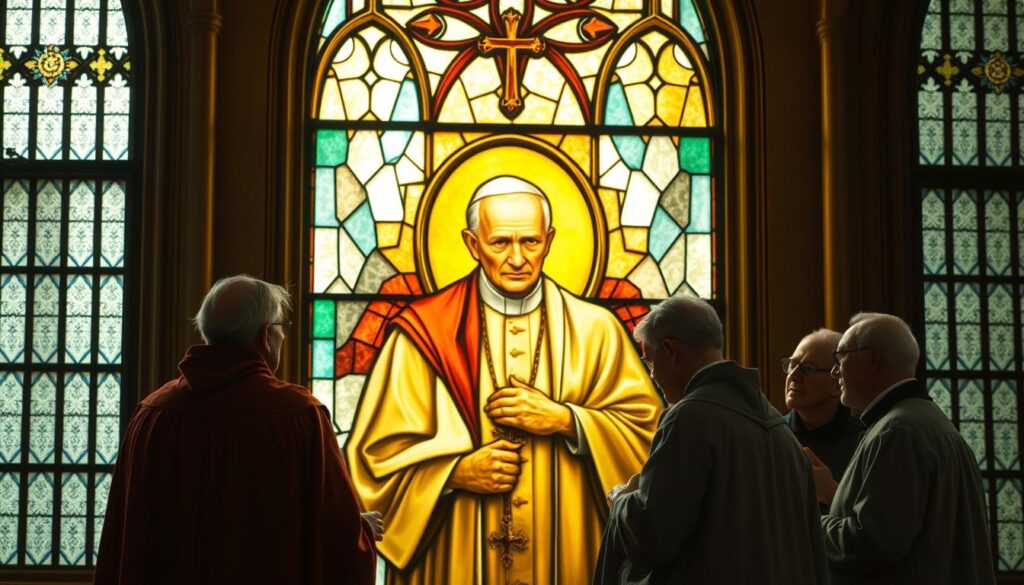
The historical backdrop of the Anglican Communion’s formation significantly influences Episcopalian beliefs about the Pope. The Episcopal Church is part of the Anglican Communion, which has its roots in the Church of England’s separation from the Roman Catholic Church in the 16th century.
The Anglican Communion and Its Origins
The Anglican Communion originated from the Church of England, which broke away from the Roman Catholic Church during the reign of King Henry VIII. This separation was driven by both political and theological differences.
- The Church of England sought greater autonomy from Rome.
- Theological disputes, such as the issue of the Papal Supremacy, played a significant role.
- The English Reformation led to the establishment of the Church of England, with the monarch as its head.
The Protestant Reformation’s Impact
The Protestant Reformation had a profound impact on the development of the Anglican Communion. Reformers sought to correct perceived errors and abuses within the Roman Catholic Church, leading to the emergence of Protestant denominations.
- The Reformation emphasized the authority of Scripture.
- It challenged certain Catholic doctrines and practices.
- The movement led to the diversification of Christian worship and theology.
Episcopal Attitudes Towards Papal Authority
Episcopalian attitudes towards papal authority are shaped by their historical and theological heritage. While recognizing the spiritual leadership of the Pope, Episcopalians do not accept the doctrine of Papal Infallibility.
- Episcopalians maintain a cautious approach to papal authority.
- The Episcopal Church values its independence in governance.
- Dialogue with the Roman Catholic Church continues, focusing on shared values and differences.
Episcopal Views on Papal Authority
The Episcopal Church approaches papal authority with a distinct perspective that diverges from Roman Catholic teachings. This difference is rooted in the church’s historical development, theological principles, and governance structure.
Recognition of the Pope’s Role
The Episcopal Church acknowledges the Pope’s role as a symbol of unity within the global Christian community. However, this recognition does not extend to accepting the Pope’s authority in matters of governance or doctrine within the Episcopal Church.
Episcopalians view the Pope as a spiritual leader, but they do not believe in the dogma of papal infallibility. This stance is a significant departure from Roman Catholic teachings, where the Pope’s infallibility is a core doctrine.
Acceptance of Papal Teachings
While the Episcopal Church respects the Pope’s spiritual guidance, it does not automatically accept papal teachings as binding. Instead, the church evaluates these teachings in the context of its own theological principles and scripture.
The Episcopal Church’s approach to papal teachings is guided by its commitment to a reasoned faith, which involves critically examining religious doctrine in light of contemporary understanding and knowledge.
Key Differences in Authority and Governance
A key difference between the Episcopal Church and the Roman Catholic Church lies in their governance structures. The Episcopal Church is governed by a council of bishops and clergy, with significant autonomy at the local level.
| Aspect | Episcopal Church | Roman Catholic Church |
|---|---|---|
| Governance | Council of bishops and clergy | Papal authority with centralized governance |
| Papal Infallibility | Not accepted | Core doctrine |
| Clergy | Ordains women and LGBTQ+ individuals | Does not ordain women or LGBTQ+ individuals |
This comparison highlights the distinct approaches to authority and governance between the two churches, reflecting fundamental differences in their theological and ecclesiastical traditions.
The Pope’s Influence on Episcopal Practices
The Pope’s impact on Episcopal practices is evident in several key areas, including liturgy and ecumenical dialogue. The Episcopal Church, as part of the Anglican Communion, maintains a distinct yet respectful relationship with the Roman Catholic Church and the Pope.
Liturgy and Worship Styles
The Episcopal Church’s liturgy and worship styles have been influenced by the Pope’s teachings, particularly in the emphasis on the sacraments. Pope Francis’s letter Desiderio Desideravi highlights the importance of the risen Christ’s presence in the sacraments, a theme that resonates with Episcopal practices.
The Episcopal Church’s Book of Common Prayer outlines the liturgical practices, which share similarities with Roman Catholic liturgy. This includes the celebration of the Eucharist, baptism, and other sacraments.
Ecumenical Dialogues and Relations
Ecumenical dialogues between the Episcopal Church and the Roman Catholic Church have been ongoing, with the Pope playing a significant role in these discussions. These dialogues aim to foster greater understanding and unity between the two churches.
“The journey towards full communion is a complex one, requiring patience, understanding, and a deep commitment to the Gospel.” –
- Shared values such as the importance of scripture and tradition
- Collaboration on social justice issues
- Efforts towards greater understanding of each other’s doctrines and practices
Shared Values and Doctrines
Despite differences, the Episcopal Church and the Roman Catholic Church share many values and doctrines. Both emphasize the importance of:
- The sacraments as a means of grace
- The authority of scripture
- Tradition and the role of the church in interpreting faith
The Pope’s influence on these shared values is evident, particularly in the areas of social justice and the call to service. The Episcopal Church, in its own practices and teachings, reflects these shared commitments.
The Relationship Between Episcopalians and Catholics
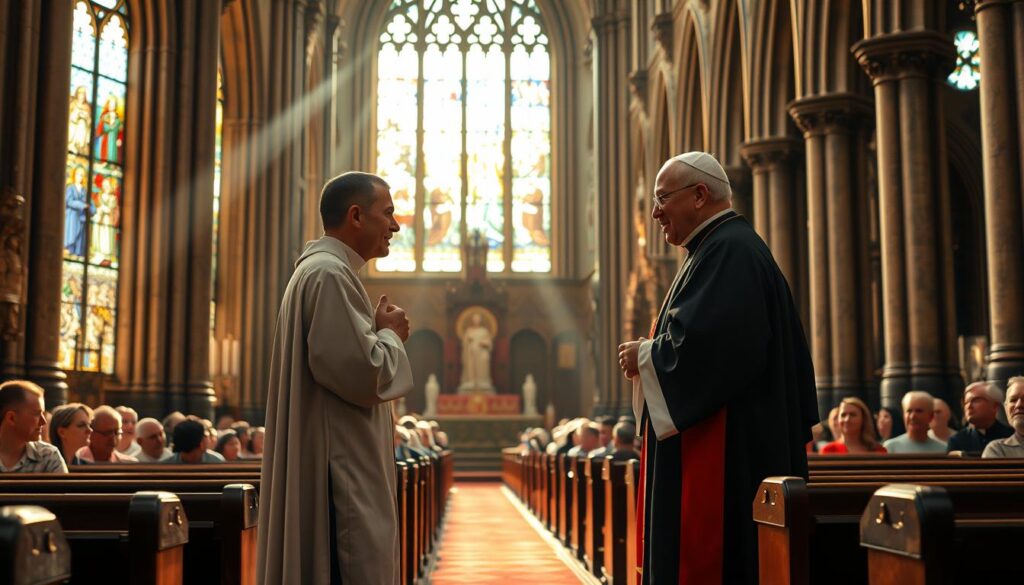
The relationship between Episcopalians and Catholics is multifaceted, influenced by historical, theological, and social factors. While both traditions share a common Christian heritage, their interactions are shaped by differences in doctrine, practice, and governance.
Common Ground and Differences
Episcopalians and Catholics have much in common, including a rich liturgical tradition and a commitment to social justice. However, significant differences exist, particularly regarding papal infallibility and the authority of the Pope. The Episcopal Church does not recognize papal infallibility, instead emphasizing the importance of conciliar governance and the autonomy of national churches.
Key areas of difference include sacramental practices and understandings of church governance. Despite these differences, both traditions are committed to ecumenical dialogue and cooperation.
Interfaith Dialogues and Efforts
Interfaith dialogues between Episcopalians and Catholics have been ongoing for decades, aiming to foster greater understanding and unity. These efforts include theological discussions, joint service projects, and collaborative community initiatives.
“We are called to work towards a visible unity, a unity that is both a gift and a task. Our journey together is marked by prayer, dialogue, and a commitment to the Gospel.” –
Such dialogues have led to significant agreements on various theological issues, though challenges remain, particularly concerning episcopal church views on the pope and papal authority.
Participation in Joint Services
One tangible expression of the relationship between Episcopalians and Catholics is their participation in joint services and ecumenical events. These shared worship experiences foster a sense of unity and cooperation, demonstrating the potential for greater collaboration in the future.
- Joint prayer services during times of crisis or celebration
- Collaborative community service projects
- Ecumenical dialogue events focusing on theological understanding
Through these efforts, Episcopalians and Catholics continue to build a relationship grounded in mutual respect, understanding, and a shared commitment to Christian values.
Key Figures in Episcopal-Catholic Relations
The history of Episcopal-Catholic relations is marked by the contributions of several important personalities who have worked towards mutual understanding. These individuals have played a crucial role in shaping the dialogue between the Episcopal Church and the Roman Catholic Church.
Notable Bishops and Leaders
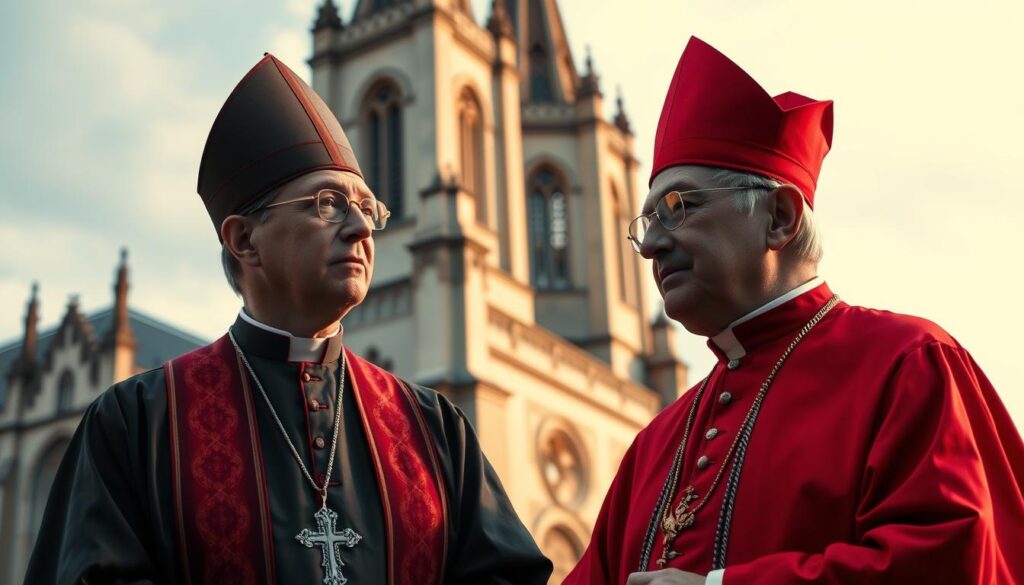
One notable figure is Bishop C. Christopher Epting, who has been instrumental in ecumenical conversations between the Episcopal Church and the Roman Catholic Church. His work has helped to foster a deeper understanding between the two denominations.
Other significant leaders have also contributed to the ongoing dialogue, including those who have participated in official ecumenical discussions and those who have worked behind the scenes to promote unity.
Contributions to Ecumenical Conversations
The contributions of these leaders have been invaluable in advancing the ecumenical agenda. Through their efforts, the Episcopal Church and the Roman Catholic Church have been able to explore areas of commonality and address differences.
“The dialogue between the Episcopal Church and the Roman Catholic Church has been enriched by the participation of dedicated leaders who are committed to the cause of Christian unity.” –
Recent Developments in Relations
In recent years, there have been significant developments in the relationship between the Episcopal Church and the Roman Catholic Church. These have included joint statements on matters of mutual concern and collaborative efforts in areas such as social justice.
| Year | Event | Significance |
|---|---|---|
| 2010 | Joint statement on climate change | Marked a significant step in collaborative efforts on environmental issues |
| 2015 | Ecumenical dialogue on sacraments | Helped to clarify understanding of sacramental theology between the two churches |
| 2020 | Joint service for unity | Demonstrated a commitment to visible unity among Christians |
These developments underscore the ongoing commitment of both churches to the pursuit of unity and cooperation.
Do Episcopalians Pray for the Pope?
The practice of intercessory prayer is deeply rooted in the Episcopal Church, encompassing prayers for leaders across various domains. This tradition is not limited to praying for local or national leaders but extends to religious figures, including the Pope.
The Practice of Praying for Leaders
Praying for those in leadership is a significant aspect of Episcopal liturgy. It is a way of acknowledging their roles and the challenges they face, seeking divine guidance and support for them. This practice is grounded in the belief that leaders, whether religious or secular, play crucial roles in shaping the world and that their decisions can have far-reaching impacts.
“The Episcopal Church’s commitment to praying for leaders is evident in its liturgical practices,” notes a prominent Episcopal priest. “It reflects a broader understanding of the interconnectedness of the community and the belief in the power of prayer to make a positive difference.”
Intercessory Prayer in the Episcopal Tradition
Intercessory prayer is a cornerstone of Episcopal worship. It involves praying not just for personal needs but for the needs of others, including those in positions of authority. This practice is seen as a way of fulfilling the Christian duty to care for and support one another.
The Book of Common Prayer, a central text in the Episcopal Church, includes prayers for various leaders and occasions, underscoring the importance of intercessory prayer in the life of the Church.
Responses from the Episcopal Community
When it comes to praying for the Pope, the Episcopal community is generally supportive. Many Episcopalians view praying for the Pope as an expression of their commitment to Christian unity and their respect for the office he holds.
As one Episcopal bishop noted, “Praying for the Pope is a way of acknowledging our shared Christian heritage and our hope for greater unity among Christians. It’s a practice that reflects our belief in the power of prayer to bring people together and to guide us towards greater understanding and cooperation.”
The practice of praying for the Pope among Episcopalians is a reflection of their broader commitment to intercessory prayer and their recognition of the importance of religious leaders in the world. It is a simple yet meaningful way of expressing their faith and their commitment to the values of compassion, understanding, and unity.
Perspectives from Episcopal Members
Episcopalians hold a wide range of views regarding papal authority, reflecting the church’s commitment to individual discernment. This diversity is a hallmark of the Episcopal Church’s approach to theology and church governance.
Personal Views on Papal Authority
Members of the Episcopal Church have varying opinions on the role of the Pope. Some view the Pope as a symbol of unity among Christians, while others see the papacy as an office that has evolved over time, with some aspects being more relevant than others.
“For many Episcopalians, the Pope represents a figure of moral authority, whose teachings on social justice and compassion are highly regarded.” This perspective is not universal, however, as some members may disagree with certain papal teachings or the manner in which the Vatican exercises its authority.
Differences in Beliefs Among Congregants
The Episcopal Church is characterized by a broad spectrum of beliefs about the Pope and papal authority. This diversity is reflected in the following table, which summarizes some of the common perspectives:
| Perspective | Description |
|---|---|
| Reverent | Some Episcopalians view the Pope with reverence, acknowledging his spiritual leadership. |
| Critical | Others are more critical, questioning certain papal teachings or the Vatican’s governance. |
| Indifferent | A segment of the Episcopal community may be indifferent, not feeling strongly about the Pope one way or the other. |
Stories of Ecumenical Engagement
Despite these differences, the Episcopal Church is actively engaged in ecumenical dialogue with the Roman Catholic Church. Joint worship services and collaborative community projects are examples of this engagement.
For instance, during the Week of Prayer for Christian Unity, Episcopalians and Roman Catholics come together in prayer, highlighting their shared faith and commitment to unity. Such initiatives foster greater understanding and cooperation between the two traditions.
In conclusion, the perspectives from Episcopal members on the Pope and papal authority are diverse, reflecting the church’s inclusive and thoughtful approach to theology and ecumenical relations.
Influential Documents and Statements
Influential documents and statements have significantly shaped the Episcopal Church’s perspective on the papacy. These documents not only reflect the Church’s stance on papal authority but also its commitment to ecumenical dialogue.
Episcopal Church Resolutions on Papacy
The Episcopal Church has passed several resolutions that directly address its views on the papacy. For instance, resolutions have been made to clarify the Church’s stance on papal infallibility and the authority of the Pope.
The Episcopal Church has a history of issuing resolutions that provide clarity on its views regarding the papacy. These resolutions are crucial in understanding the Church’s stance on issues such as papal authority and infallibility.
Official Statements on Ecumenism
Official statements on ecumenism have been issued by the Episcopal Church to foster greater understanding and cooperation between different Christian denominations. These statements often highlight areas of commonality and respectfully acknowledge differences.
The Episcopal Church has made significant official statements on ecumenism, emphasizing the importance of unity among Christian denominations. These statements underscore the Church’s commitment to interfaith dialogue and cooperation.
References in the Book of Common Prayer
The Book of Common Prayer is a foundational document for the Episcopal Church, containing liturgies and prayers that guide worship. References within this book provide insight into the Church’s theological perspectives, including those related to the papacy.
The Book of Common Prayer includes various references that reflect the Episcopal Church’s views on the papacy and ecumenism. These references are significant in understanding the Church’s liturgical and theological stance.
The Future of Episcopal-Catholic Relations
With a shared history and a commitment to faith, the Episcopal and Catholic communities are exploring new avenues for cooperation. The Episcopal Church and the Roman Catholic Church continue to engage in ecumenical dialogues, fostering a spirit of unity and understanding.
Current Collaboration Efforts
Both churches are actively involved in joint initiatives, including interfaith dialogues and community service projects. These efforts are designed to promote mutual understanding and respect, addressing common social issues such as poverty, education, and healthcare.
The Episcopal Church has been participating in ecumenical conversations, seeking to strengthen its relationship with the Roman Catholic Church. These discussions have led to a greater understanding of the shared values and doctrines between the two denominations.
Challenges Facing Interfaith Relations
Despite the progress made, there are still significant challenges to overcome. Differences in doctrine and governance continue to be major obstacles. The issue of papal authority remains a point of contention, with Episcopalians and Catholics holding different views on the matter.
However, both churches are committed to overcoming these challenges through continued dialogue and cooperation. By focusing on common goals and shared values, they aim to build a stronger, more harmonious relationship.
Vision for Future Dialogues
Looking to the future, the Episcopal Church and the Roman Catholic Church envision a path of greater understanding and unity. They plan to continue their ecumenical efforts, exploring new areas of cooperation and deepening their commitment to mutual respect and understanding.
The future of Episcopal-Catholic relations is promising, with both churches working together to address the challenges of the modern world. Through their joint efforts, they hope to create a more compassionate and just society, reflecting the teachings of their shared Christian heritage.
Conclusion: Episcopal Beliefs About the Pope
The Episcopal Church’s beliefs about the Pope are shaped by its unique history, structure, and theological perspectives. Understanding what Episcopalians believe about the Pope requires a nuanced exploration of their views on papal authority, ecumenical relations, and shared values with the Roman Catholic Church.
Key Takeaways
Episcopalians recognize the Pope’s symbolic role, but differ from Roman Catholics on papal authority. The Episcopal Church values ecumenical dialogue and cooperation, while maintaining its independence.
Understanding Differences
Recognizing the differences between the Episcopal Church and Roman Catholicism is crucial for ecumenical progress. By acknowledging and respecting these differences, both churches can work together more effectively.
Open Dialogue
The Episcopal Church invites open dialogue and continued conversation with the Roman Catholic Church. By engaging in respectful and meaningful discussions, both churches can foster greater understanding and cooperation.
FAQ
What do Episcopalians believe about the Pope?
Episcopalians recognize the Pope as the spiritual leader of the worldwide Anglican Communion, but they do not accept the doctrine of papal infallibility. They also have a different understanding of authority and governance within their church.
How does the Episcopal Church’s structure differ from the Roman Catholic Church?
The Episcopal Church is led by bishops, but it does not have a centralized authority figure like the Pope. Instead, it has a more decentralized governance structure with decision-making power distributed among its bishops and other clergy.
What is the historical context that shaped Episcopalian beliefs about the Pope?
The Protestant Reformation and the formation of the Anglican Communion played significant roles in shaping Episcopalian beliefs about the Pope. The Episcopal Church’s views on papal authority were influenced by these historical events.
Do Episcopalians accept papal teachings?
While Episcopalians may consider papal teachings, they do not necessarily accept them as authoritative. The Episcopal Church has its own decision-making processes and governance structure, which allows it to interpret and apply Christian teachings in its own context.
How does the Pope’s influence extend to Episcopal practices?
The Pope’s influence can be seen in Episcopal liturgy and worship styles, as well as in ecumenical dialogues and relations between the two churches. The Episcopal Church and the Roman Catholic Church share many values and doctrines, which provides a foundation for their interactions.
What is the relationship like between Episcopalians and Catholics?
Episcopalians and Catholics have a complex relationship with both common ground and differences. They engage in interfaith dialogues and efforts, and some participate in joint services, working towards greater understanding and unity.
Do Episcopalians pray for the Pope?
Yes, Episcopalians may pray for the Pope as part of their intercessory prayer practice, which involves praying for leaders and others in need. This practice is rooted in the Episcopal tradition and is seen as a way of showing respect and care for others.
What are some of the key differences in beliefs among Episcopalians regarding the Pope?
Episcopalians hold varying views on papal authority, with some being more accepting of the Pope’s role and others being more critical. These differences reflect the diversity of perspectives within the Episcopal Church.
What documents have shaped the Episcopal Church’s views on the papacy?
The Episcopal Church has issued various resolutions and statements on the papacy and ecumenism, which have helped shape its views on these topics. The Book of Common Prayer also contains references that relate to the Pope and the Roman Catholic Church.
What is the future of Episcopal-Catholic relations?
The future of Episcopal-Catholic relations is likely to involve continued collaboration and dialogue, as well as challenges and opportunities for growth. Both churches are working towards greater understanding and unity, and there is potential for further developments in their relationship.