The Episcopal Church is a mainline Protestant body that blends scripture, tradition, and reason. It stands inside the Anglican Communion and prays with the 1979 Book of Common Prayer.
The church follows an episcopal polity led by bishops, clergy, and lay leaders. Today the Presiding Bishop is Sean W. Rowe and the President of the House of Deputies is Julia Ayala Harris.
About 1.55 million active baptized members worship across 106 dioceses and nine provinces. This network links thousands of churches in the United States and the wider, worldwide Anglican Communion.
The Episcopal way holds a via media, mixing catholic and protestant streams. Its General Convention shapes national decisions while local leaders guide daily life. The result is a thoughtful, welcoming community where women and men serve together.
Key Takeaways
- TEC uses the 1979 Book of Common Prayer for shared worship.
- Leadership is episcopal: bishops, clergy, lay leaders collaborate.
- Roughly 1.55 million members across 106 dioceses and nine provinces.
- Part of the worldwide Anglican Communion with shared liturgy and history.
- The tradition practices a via media that values openness and reason.
Quick Answer: Core Beliefs of the Episcopal Church Today
At the heart of this faith is a focus on Jesus Christ’s life, death, and triumphant resurrection. Members join Christians around the world in the Apostles’ and Nicene Creeds.
Following Jesus Christ: life, death, and resurrection
The community affirms that jesus christ lived, died, and rose again. This shapes worship, prayer, and ethical teaching.
Belief becomes daily practice through prayer, service to neighbors, and welcome for people from varied backgrounds.
Scripture, tradition, and reason together
The episcopal church reads the Bible as the foundation for faith, yet interprets it with tradition and reason. About 70% of the book common prayer draws from Scripture, so services stay rooted in the Word.
Governance blends national direction with local adaptation: general convention episcopal sets broad policy while each episcopal diocese shapes ministries and services for its community.
- Creeds unite this church with Christians across history.
- Worship comes from Scripture and common prayer.
- Decision-making balances national and diocesan care.
“Faith here is both thoughtful and welcoming, offering space to learn and grow.”
| Core Element | Focus | Local Impact |
|---|---|---|
| Creeds | Apostles’ & Nicene | Shared identity among members |
| Scripture | Basis for worship | Guides services and ministries |
| Governance | General Convention & Diocesan bodies | Local adaptation across dioceses and years |
Scripture and the Creeds: How Faith Is Confessed
The Bible and the creeds shape how the Episcopal Church names its faith. Scripture is read aloud during liturgy, studied in small groups, and echoed through the Book Common Prayer. The tradition holds that the Bible contains what is needed for salvation and so remains central to worship and teaching.
The Bible: “read, mark, learn, and inwardly digest”
The Anglican invitation to read, mark, learn, and inwardly digest encourages both quiet devotion and thoughtful study. Members find the daily office and Gospel readings a friendly entry point for prayer and reflection.
The Book Common Prayer draws heavily on Scripture—roughly seventy percent—so worship and study stay rooted in biblical text. Local bishops, clergy, and lay leaders work together to keep teaching faithful and accessible.
The Apostles’ and Nicene Creeds in worship and life
The Apostles’ Creed often appears at baptism and in daily offices. The Nicene Creed is central at Holy Communion. Together they offer a clear statement of belief that unites churches across time.
“These creeds sum up the Gospel, affirming Jesus Christ’s incarnation, death, and resurrection.”
- Scripture: read publicly, studied in community, prayed through common prayer.
- Creeds: anchor weekly worship and lifelong discipleship.
- Start simply: open a Gospel or daily office reading to bring Scripture into daily life.
The Book of Common Prayer: Our Common Language of Worship
The 1979 Book of Common Prayer serves as the shared voice that unites Episcopal worship across the United States. It offers rites, prayers, and liturgies used in parish life, with roughly seventy percent of its text drawn from Scripture.
As a practical treasure chest, the book common prayer guides Sunday Eucharist, pastoral care, and daily prayer at home. Clergy, bishops, and lay leaders turn to it to keep services beautiful, reverent, and accessible.
When many people pray the same words, a deep sense of unity forms across regions and generations. The book common holds tradition and renewal together while allowing local adaptation.
The General Convention Episcopal updates authorized resources so worship stays faithful and pastorally responsive. Women and men, lay and ordained, lead side by side, showing the power of shared prayer.
“Pick up a BCP on Sunday or download an authorized text to follow along and discover the power of praying together.”
Sacraments and Sacramental Rites in Episcopal Life
Sacraments shape how the Episcopal Church lives out faith. They are called “outward and visible signs of inward and spiritual grace.” Simple elements—water, bread, wine, oil—become channels of comfort, strength, and mercy.
Baptism and Holy Communion stand at the heart of communal life. Baptism welcomes people into Christ’s body. Holy Communion nourishes and sends members to serve.
Baptism and Holy Communion at the center
These two great sacraments draw people into belonging and mission. They shape worship, formation, and daily practice across parishes.
Confirmation, Reconciliation, Matrimony, Orders, and Unction
The Book Common Prayer contains rites for many seasons of life. Confirmation affirms baptismal promises (pp. 413–419). Reconciliation restores relationship with God (pp. 447–452). Matrimony blesses marriage (pp. 422–438). Orders covers ordained ministry (pp. 510–555). Unction offers healing and hope (pp. 453–467).
- Clergy and bishops serve these rites as stewards.
- The whole church prays, supports, and celebrates together.
- Participation is about grace, not perfection; hospitality guides pastoral care.
“Rites in the common prayer help congregations walk with people through life’s milestones.”
If you are exploring baptism or confirmation, speak with local clergy about next steps. The church welcomes questions and offers practical preparation and care.
Worship Services: Holy Communion and the Rhythm of Prayer
Sunday worship in many parishes blends familiar structure with warm welcome. A typical service follows readings, a sermon, the creed, prayers of the people, confession and absolution, and Holy Communion at the center.
Music may be traditional or contemporary, but the Book Common Prayer gives one common form. That shared shape helps members and visitors follow along with printed leaflets or screens.
Guests may join as they feel ready. Greeters and ushers help newcomers find seating and learn responses. Clergy, lay readers, acolytes, and choir members serve together to model shared ministry.
Daily prayer and varied offerings
Worship extends beyond Sunday. Many churches offer Morning and Evening Prayer or contemplative services to weave prayer into daily life.
“Try a few services to discover how the power of common prayer can nourish your spirit and deepen community.”
- Clear liturgy so newcomers feel at ease
- Options: quiet early service, family-friendly, or evening prayer
- Welcome teams help you take part at your own pace
Via Media: The Episcopal “Middle Way”
A guiding posture here favors balance: sacrament and sermon, ritual and reform. The via media or middle way holds Protestant and catholic gifts together so life and worship stay rooted and lively.
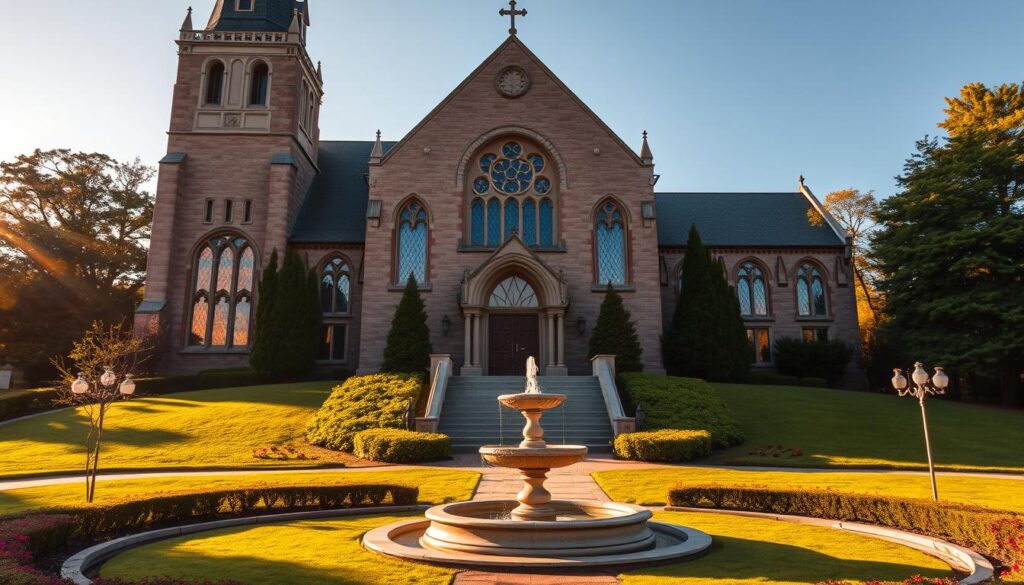
Protestant and catholic streams held together
The tradition keeps Scripture central while preserving rich liturgy. That mix lets congregations preach the Gospel and celebrate sacrament with equal care.
Reasoned, respectful discernment in community
Decision-making values collegiality among bishops, lay leaders, and clergy. Gentle listening and prayerful study guide how the church faces hard issues.
- Shared practice: worship and study shape belief and action.
- Collaborative leadership: bishop, clergy, and laity work together.
- Open questions: conversation, humility, and charity lead learning.
“The middle way invites thoughtful faith, not rigid answers.”
Join a class or forum to experience this balance: read Scripture, pray, and talk with others. The Episcopal church welcomes seekers and skeptics with patient care.
what do episcopalians believe in: A Friendly, Inclusive Church
Many parishes welcome newcomers with a clear message: “God loves you—no exceptions.”
“God loves you—no exceptions”
This is more than a slogan; it shapes daily life. The episcopal church affirms that people of all genders and orientations can serve as bishops, priests, and deacons.
Laypeople and clergy serving side by side
Local leadership blends elected vestry members, lay ministers, and clergy working together. Gifts and responsibilities are shared so members help shape worship and mission.
The use of the book common prayer and communal rites helps build a caring community where questions are welcome and growth is encouraged.
“Inclusion here is practiced in worship, governance, and parish life—not just stated.”
| Area | Practice | Impact |
|---|---|---|
| Welcome | Open invitation and pastoral care | Accessible spaces and newcomer programs |
| Leadership | Shared roles for laity and clergy | Broader participation in ministries |
| Ordained Ministry | All genders serve as bishops, priests, deacons | Reflects commitment to inclusion |
If you want to learn more, contact a local clergy or lay leader about small groups, service roles, or baptismal preparation. The church invites exploration with warmth and clear next steps.
The Holy Spirit and Christian Life
The Holy Spirit is confessed in the Nicene Creed and named as God’s active presence among us.
The Spirit empowers worship, mission, and daily discipleship across the episcopal church.
It is invoked in sacraments and prayers, anointing ministries and steadying hearts.
Communities seek the Spirit through prayer, scripture study, and shared discernment before major choices.
That practice helps leaders and members listen together with humility and courage.
“The Spirit cultivates love, joy, peace, patience, and other fruits that shape faithful life.”
Simple habits keep people attentive: daily prayer, small acts of mercy, and regular gratitude.
These practices invite the Spirit’s guidance and renew our capacity to serve.
| Role | How It Shows | Local Impact |
|---|---|---|
| Guide | Discernment in councils and prayers | Better, prayerful decisions |
| Empower | Anointing in sacraments and ministry | Bold service to neighbors |
| Sustain | Comfort and resilience in weakness | Hopeful, steady communities |
Governance: Bishops, Dioceses, and General Convention
The episcopal church governs by combining episcopal oversight with active local participation. Leadership aims for order while allowing parishes room to serve their neighbors.
Episcopal polity: bishops, clergy, and lay deputies
Bishops oversee each diocese alongside elected clergy and lay deputies. Together they form councils that set priorities, approve budgets, and offer pastoral support.
Diocesan conventions and canons shaping local life
Each episcopal diocese holds an annual diocesan convention. Delegates adopt local canons and decide mission plans that affect parish life and ministries.
Collegiality across the Anglican Communion
Every three years, deputies and bishops gather at the General Convention Episcopal to adopt church-wide canons and resources.
“Collegiality and communal discernment guide decisions across dioceses and the wider Anglican Communion.”
- The structure balances national unity with local flexibility so churches can meet local needs.
- Canons provide order and accountability while allowing pastoral wisdom and innovation.
- Members can watch sessions, follow diocesan news, or attend parish meetings to stay engaged.
| Level | Who Meets | Main Responsibilities |
|---|---|---|
| Parish | Vestry, clergy | Local ministry, budgets, worship planning |
| Diocese | Bishop, clergy, lay deputies | Annual convention, diocesan canons, clergy oversight |
| National | General Convention Episcopal (deputies & bishops) | Adopt canons, authorize resources, set church-wide policy |
Who We Are: Members, Congregations, and Communities
Congregations stretch from urban centers to rural roads, forming networks of care and worship. The episcopal church spans 106 dioceses and nine provinces and counts 1,547,779 active baptized members in 2023.
A diverse church across the United States
Many churches reflect local culture and needs while sharing common prayer and liturgy. Congregations serve neighbors through food programs, education, and pastoral care.
Members bring varied gifts: some lead music, others teach, and many serve in outreach. This mix keeps worship rooted, reverent, and relevant to daily life.
Welcoming newcomers: no prerequisites
The door is open to seekers, questioners, and long-time churchgoers alike. There are no prerequisites to visit, attend worship, or learn more.
- Introduce yourself to clergy or greeters on your first visit.
- Check parish websites for service times and fellowship events.
- Join a small group to connect with a local community of faith.
“Whether you come from another church or none at all, you’ll find a warm welcome and worship that honors tradition and openness.”
Dioceses help congregations collaborate on ministry and training, strengthening communities across regions. If you are curious, a member of a parish can guide next steps and point toward local offerings.
Women in Leadership and an Inclusive Ministry
The Episcopal Church affirms that leadership reflects the full gifts of the community. Inclusion is a principle and a daily practice across parishes, dioceses, and national bodies.
Bishops, priests, and deacons of all genders
Women and men serve together as bishops, priests, and deacons. The church recognizes calling without gender limits.
Full participation in worship and governance
Laypeople and ordained clergy of every gender vote, lead, and teach at the parish level and beyond. This role-sharing extends to diocesan councils and the General Convention Episcopal.
Official statements and local practice match: preaching, sacraments, pastoral care, and governance show real inclusion.
- Women serve in all orders of ministry, including as bishop and bishop-elect.
- Members of all genders sit on vestries and diocesan councils.
- Leadership pathways—vestry service, lay ministries, ordination—are supported by clergy mentors.
“Inclusion widens the circle of gifts and strengthens the church’s witness.”
| Area | How It Shows | Impact |
|---|---|---|
| Ministry | Women and men ordained as deacons, priests, bishops | Diverse leadership in liturgy and pastoral care |
| Governance | Lay and ordained voting at parish, diocesan, national levels | Broader voices shape policy and mission |
| Formation | Mentoring, discernment programs, training | Clear steps toward service and ordination |
Episcopalians and the Worldwide Anglican Communion
Belonging to the Anglican Communion connects local dioceses with a broad, international network of churches. The Episcopal Church is one province among many in this global family, linked by shared worship, heritage, and a common history that spans centuries.
Provinces are self-governing. Each province, including the Episcopal Church, decides local ministry and practice while sharing liturgy and pastoral resources across borders. This model values local discernment over centralized rule.
Bonds of affection tie leaders and members together. Relationships among bishops and between congregations foster learning, mission partnerships, and mutual support across the world.
A member province in a global family of churches
The Episcopal Church works with companion dioceses and international programs to deepen mutual understanding. Common prayer and shared rites hold this family together while making space for cultural variety.
Shared heritage, local discernment
Participation in the worldwide anglican communion broadens perspective and strengthens local ministry. Explore mission or companion-diocese partnerships to see how global ties enrich parish life and service.
“Friendship across borders helps congregations learn, pray, and serve with a wider, wiser vision.”
- Connect with a companion diocese to learn global practices.
- Attend joint worship or study events to experience shared prayer.
- Support mission ties that bring practical help and mutual growth.
Episcopal Belief in Practice: Baptismal Covenant Living
A baptismal pledge from the Book Common Prayer becomes a practical map for Christian life. It pairs the Apostles’ Creed with five concrete commitments that shape daily worship, witness, and service.
Renouncing evil and turning to jesus christ are not one-time acts but daily choices. Those promises shape how we speak, act, and care for neighbors.
Renouncing evil, following Jesus, serving neighbors
The covenant asks members to continue in the apostles’ teaching and fellowship, resist evil, proclaim the Good News, seek and serve Christ in all persons, and strive for justice and peace.
Works of mercy and justice flow naturally from these vows—feeding, visiting, advocating, and building compassionate communities. Common prayer and the BCP keep these commitments before us in worship.
“Small, steady acts—prayer, generosity, listening—make the covenant real.”
When we fall short, the church offers grace and a fresh start. This way invites steady growth, rooted belief, and faith lived out in ordinary days.
Key Moments and Milestones: From History to the Present
Early leadership and formal rules helped the Episcopal Church find a clear identity after the Revolution.
Roots matter. The new American body kept apostolic succession while organizing itself apart from the Church of England. Samuel Seabury’s consecration in 1784 by Scottish non-juring bishops affirmed that continuity.
In 1787 William White and Samuel Provoost were consecrated in England after Parliament allowed overseas consecrations. A constitution and canons followed in 1789, and the church held early general conventions that shaped governance for years.
The 1979 Book of Common Prayer refreshed worship with Scripture-rich rites and a renewed focus on Baptism and the Eucharist. That revision helped modern congregations connect tradition and pastoral need.
“Episcopal history is a living story, shaped by prayer, service, and faithful leadership.”
| Moment | Date | Impact |
|---|---|---|
| Seabury consecration | 1784 | Maintained apostolic succession via bishops abroad |
| English consecrations (White & Provoost) | 1787 | Allowed episcopal leadership for the new church |
| Constitution & canons | 1789 | Provided governance, led to general convention episcopal |
| 1979 Book of Common Prayer | 1979 | Revitalized worship for modern parish life |
The Episcopal Church stays linked to the wider Anglican Communion while adapting to local ministry. This brief timeline helps show how past choices still guide work across each diocese and around the world.
Services for Every Season of Life
From first blessings to funeral farewells, the episcopal church walks with people through each chapter of life. Local congregations offer rites that name change, give comfort, and renew hope.
Baptism, Holy Communion, marriage, and pastoral rites
Infants and adults find a warm welcome at baptism, which begins membership and belonging.
Regular Holy Communion nourishes faith and ties worship to daily living.
The Book Common Prayer provides clear, reverent liturgies for marriage, confirmation, and other milestones.
Prayer, reconciliation, and anointing in times of need
Pastoral rites such as Reconciliation and Unction bring forgiveness and healing during illness and grief.
Clergy and trained lay ministers prepare families, offer guidance, and help plan services with care.
Episcopal dioceses supply training and resources so congregations sustain strong ministries year after year.
| Rite | Purpose | Who Prepares |
|---|---|---|
| Baptism | Welcome into the church family | Clergy & lay sponsors |
| Holy Communion | Spiritual nourishment and unity | Priests, eucharistic ministers |
| Marriage | Blessing and covenantal support | Priest, pastoral team |
| Reconciliation / Unction | Forgiveness, healing, comfort | Clergy & pastoral caregivers |
If you need a service, have questions, or wish to plan a rite, contact a local parish. The Book Common Prayer and caring leaders stand ready to help.
Conclusion
Rooted in Scripture and the creeds, the Episcopal Church shapes life through sacramental worship and common prayer. The 1979 Book Common and the Eucharist guide communal worship and personal devotion.
The community offers a clear, inclusive welcome. Visitors are invited to ask questions, join worship, and explore faith with supportive leaders and neighbors.
Governance blends episcopal oversight with shared decision-making by clergy and lay people. That balance keeps dioceses and parishes united in mission and local ministry.
Visit a local parish, speak with clergy, or attend a service to see this faith lived out. Wherever you are on the journey, there is a place to belong, pray, and serve within this church.
FAQ
What is the core message of the Episcopal Church?
The Episcopal Church centers on Jesus Christ—his life, death, and resurrection. Worship, prayer, and service flow from that foundation, guided by Scripture, tradition, and reason working together.
How does the Book of Common Prayer shape worship?
The Book of Common Prayer provides shared liturgies, daily prayers, and rites for baptism, communion, marriage, and other milestones. It creates a common language for congregations across dioceses and supports both teaching and pastoral care.
What role do Scripture and the Creeds play?
The Bible is read and preached as central to faith, while the Apostles’ and Nicene Creeds express core Christian commitments. Together they guide belief, personal devotion, and corporate worship.
Which sacraments are most central?
Baptism and Holy Communion sit at the heart of sacramental life. Other rites—confirmation, reconciliation, matrimony, orders, and unction—also mark key moments and offer spiritual nurture.
What should I expect at a Sunday service?
Services often follow familiar liturgy with Scripture, prayers, a sermon, and Holy Communion. Many congregations offer both traditional and contemporary options while keeping a common structure that’s accessible to newcomers.
What does "via media" mean for this tradition?
Via media describes a middle way that holds Protestant and catholic streams together. It emphasizes reasoned, respectful discernment and balances tradition with reform in community life.
Is the church inclusive?
The Episcopal Church affirms a welcoming approach—committing to ministries that include people of varied backgrounds. Many congregations emphasize the message that God’s love extends to all without exceptions.
How is the church governed?
Governance relies on bishops, dioceses, and the General Convention. Lay deputies, clergy, and bishops work together under canons and diocesan conventions to shape worship, ministry, and discipline.
Can women serve as clergy?
Yes. Women serve as bishops, priests, and deacons and participate fully in worship and governance. This reflects the church’s commitment to inclusive leadership.
How does the Episcopal Church relate to the worldwide Anglican Communion?
The Episcopal Church is a member province of the Anglican Communion. It shares heritage, liturgical resources, and mission partnerships while maintaining local discernment and pastoral practices.
Who belongs to the church community?
Members include diverse people across the United States and beyond—families, singles, and communities from many cultures. Newcomers are welcome without strict prerequisites, and laypeople play active ministry roles.
What is the Baptismal Covenant?
The Baptismal Covenant calls Christians to renounce evil, follow Jesus, and serve neighbors. It shapes daily discipleship and communal commitments across parishes and ministries.
Where does the Episcopal Church come from historically?
Roots trace to the Church of England and apostolic succession. Over centuries, the church adapted liturgy and governance in the U.S., with notable milestones like the 1979 Book of Common Prayer shaping modern worship.
What services mark life’s major moments?
The church celebrates baptism, Holy Communion, marriage, funerals, and pastoral rites such as anointing and reconciliation. These services support people through joy, grief, and everyday life.
How does the Holy Spirit shape Christian life here?
The Holy Spirit empowers prayer, service, and transformation. Worship and sacramental life invite the Spirit’s presence for moral guidance, healing, and communal mission.