Anglicanism, also known as Episcopalianism in some countries, is a Western Christian tradition that emerged from the practices and liturgy of the Church of England following the English Reformation. This Christian tradition has a rich history and has developed distinct beliefs and practices over time.
At its core, Anglicanism is rooted in the Protestant Reformation, yet it retains many of the liturgical and sacramental practices of the Catholic Church. This blend of traditions has shaped Anglican beliefs and practices, making it a unique Christian denomination.
Key Takeaways
- Anglicanism is a Western Christian tradition.
- It emerged from the Church of England after the English Reformation.
- Anglican beliefs are shaped by Protestant and Catholic traditions.
- Anglicanism is also known as Episcopalianism in some countries.
- The tradition retains many liturgical and sacramental practices.
Historical Background of Anglicanism
Understanding the historical context of Anglicanism is crucial to grasping its beliefs and practices. The story of Anglicanism is deeply intertwined with the events of the Reformation in England.
Origins of the Anglican Church
The Church of England was formed in the 16th century, initially remaining in communion with Rome until the English Parliament passed the Act of Supremacy in 1534. This act declared King Henry VIII the “Supreme Head” of the Church of England, marking a significant break from Roman Catholic authority.
The Transition to Protestantism was a gradual process, influenced by various theological and political factors. The Church of England’s doctrine and practices began to take on a distinct Protestant character, while still retaining some Catholic traditions.
The Reformation and its Influence
The Reformation had a profound impact on the development of Anglicanism. Protestant reformers introduced new theological perspectives, challenging certain Catholic doctrines. This period of theological debate and reformation shaped the core beliefs of Anglicanism.
The influence of the Reformation can be seen in the emphasis on scripture and the vernacular language in worship, making the church more accessible to the laity.
Key Figures in Anglican History
Several key figures played a crucial role in shaping Anglican history and doctrine. Thomas Cranmer, an influential theologian and liturgist, was instrumental in developing the Book of Common Prayer, a foundational text for Anglican worship.
| Figure | Contribution | Significance |
|---|---|---|
| Thomas Cranmer | Developed the Book of Common Prayer | Shaped Anglican worship and liturgy |
| King Henry VIII | Declared Supreme Head of the Church of England | Marked the break from Roman Catholic authority |
| Protestant Reformers | Introduced Protestant theology | Influenced Anglican doctrine and practices |
These historical events and figures have significantly influenced Protestant Anglican doctrine and teachings, shaping the church into what it is today.
Core Beliefs of Anglicanism
The Protestant Anglican faith is founded on a rich heritage that combines the authority of the Bible with the traditions of the early Christian church. This blend of scripture and tradition forms the bedrock of Anglican beliefs, shaping their understanding of Christianity.
The Authority of Scripture
Anglicans place a high value on the authority of scripture. The Bible is seen as the primary source of guidance for Christian faith and practice. This emphasis on scripture is a key aspect of the Protestant Anglican faith, aligning with the broader Protestant tradition that emerged during the Reformation.
The scripture’s authority is not seen in isolation but is balanced with other elements of the Anglican tradition. This balance is crucial in understanding the nuances of Anglican beliefs.
Key aspects of scripture’s authority in Anglicanism include:
- The Bible as the primary source of Christian doctrine
- The importance of biblical teachings in worship and daily life
- The role of scripture in guiding personal faith and communal practices
Tradition in Anglican Faith
Alongside scripture, tradition plays a vital role in Anglicanism. The traditions of the early Christian church, including the practices and teachings of the Church Fathers, are highly valued. This appreciation for tradition is reflected in the Anglican Communion’s commitment to apostolic succession, or the “historic episcopate.”
The integration of tradition into Anglican faith is not merely about preserving historical practices but about connecting with the broader Christian heritage. It enriches the Protestant Anglican faith by providing a sense of continuity with the past.
The significance of tradition can be seen in several areas:
- The preservation of early Christian practices and teachings
- The importance of the Church Fathers’ writings in understanding Christian doctrine
- The role of apostolic succession in maintaining a link with the early church
The Anglican Communion
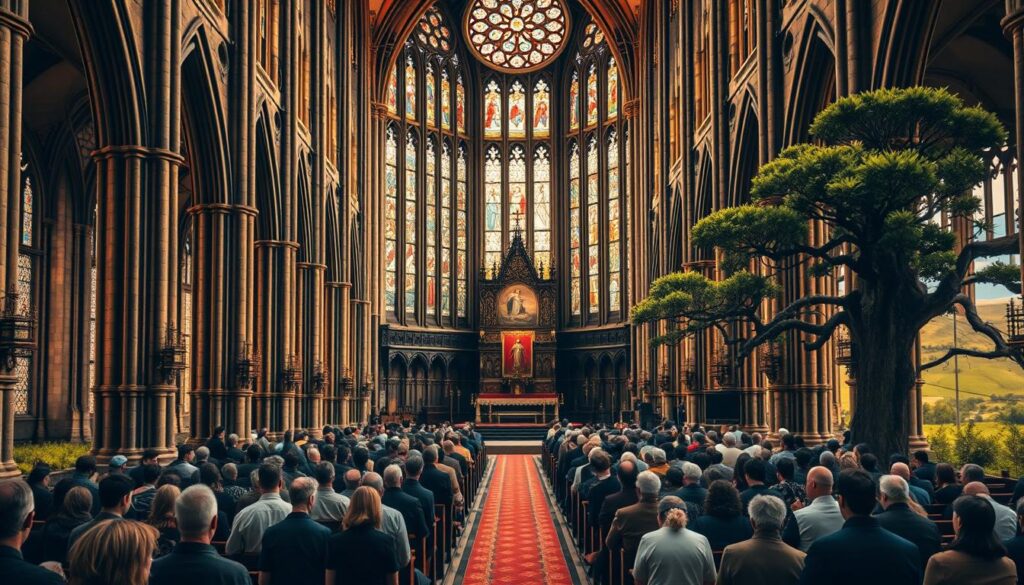
The global Anglican Communion is a family of churches that are in full communion with the See of Canterbury. This communion represents a worldwide fellowship of Anglican churches that share a common heritage and faith.
Understanding the Global Community
The Anglican Communion is a diverse group of churches spread across the globe. It includes churches from various countries, each with its own unique cultural context. Despite these differences, they are united in their adherence to Anglican beliefs and practices.
A key aspect of this unity is the communion’s commitment to the principles of the Protestant Anglican church. This commitment is reflected in their liturgy, governance, and community life.
Governance and Structure
The governance of the Anglican Communion is characterized by a balance between autonomy and unity. Each province within the communion has its own governance structure, but they are all connected through their relationship with the See of Canterbury.
“The Anglican Communion is a global communion of churches in full communion with the See of Canterbury.”
This structure allows for a degree of independence while maintaining a unified global presence.
The provinces within the Anglican Communion are autonomous, with their own decision-making processes. However, they are united in their communion with the Archbishop of Canterbury, who serves as a symbol of unity.
The Role of the Book of Common Prayer
Anglicanism is distinctively characterized by its use of the Book of Common Prayer, a comprehensive guide to worship and liturgy. This foundational text has been a cornerstone of Anglican religious life for centuries, shaping both personal devotion and communal worship.
Importance in Worship
The Book of Common Prayer is more than just a liturgical text; it is a framework that guides the worship practices of Anglicans worldwide. It contains a collection of services, prayers, and rituals that are used in most Anglican churches, providing a sense of continuity and unity across different regions and cultures.
The significance of the Book of Common Prayer in Anglican worship can be seen in its ability to balance tradition with flexibility. While it provides a structured format for worship, it also allows for variations and adaptations to suit local needs.
“The Book of Common Prayer is a treasure trove of spiritual riches, providing a deep well of liturgical resources that nourish the faith of Anglicans around the world.” –
Variations in Usage
While the Book of Common Prayer is a unifying element across Anglican churches, there are variations in its usage reflecting the diverse cultural and theological contexts of different regions. For instance, some Anglican churches may use the original 1662 edition, while others may have adopted more modern revisions.
| Region | Version of the Book of Common Prayer | Notable Features |
|---|---|---|
| England | 1662 Edition | Traditional language and liturgy |
| United States | 1979 Edition | Includes contemporary language and additional prayers |
| Canada | 1962 Edition (with supplements) | Blends traditional and modern elements |
The variations in the usage of the Book of Common Prayer across different Protestant Anglican churches highlight the adaptability and diversity within the Anglican Communion, while maintaining a common heritage and tradition.
Sacraments in Anglicanism
Sacraments are an integral part of Anglican worship, reflecting the church’s rich heritage. In Protestant Anglicanism, these sacred rites are considered essential for spiritual growth and communal worship.
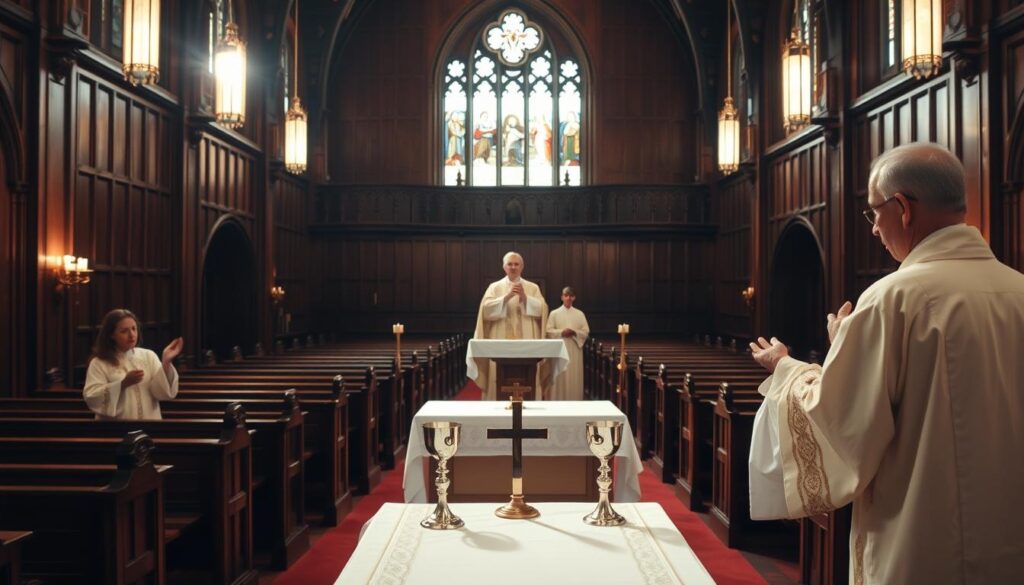
The Anglican tradition recognizes two primary sacraments: Baptism and the Eucharist. These sacraments are not only central to worship but also embody the core beliefs and values of the Anglican community.
Baptism in Anglican Practice
Baptism is considered a sacrament of initiation into the Christian faith. In Anglicanism, baptism is seen as a rite of passage where individuals are welcomed into the community of believers. It symbolizes spiritual rebirth and is typically performed with water, invoking the Trinity.
The significance of baptism in Anglican practice lies in its representation of cleansing from sin and the beginning of a person’s journey in faith. It is a ritual that is deeply rooted in scripture and tradition.
The Eucharist: Central to Anglican Worship
The Eucharist, also known as Holy Communion, is the other sacrament that is central to Anglican worship. Anglicans believe that during the Eucharist, Christ is spiritually present, nourishing the faithful through the bread and wine. This sacrament is a commemoration of the Last Supper and is seen as a means of grace.
In Anglican churches, the Eucharist is celebrated with reverence, following a liturgical structure that includes prayers, readings from scripture, and the consecration of the elements. The participation in the Eucharist is considered vital for spiritual nourishment and for being in communion with God and the community.
Both Baptism and the Eucharist are fundamental to the spiritual life of Anglicans, reflecting the church’s commitment to tradition and its connection to the broader Christian faith.
Theology: A Middle Way
At its core, Anglican theology embodies a ‘middle way’ that harmonizes faith and reason. This approach is rooted in the historical context of Anglicanism, which emerged as a distinct Christian tradition representing a middle ground between Lutheran and Reformed varieties of Protestantism.
Balancing Faith and Reason
The Anglican theological stance is characterized by its attempt to balance the authority of Scripture with the insights of reason and tradition. This balance is crucial in understanding what do Protestant Anglicans believe and how they approach complex theological issues.
By embracing both faith and reason, Anglicans seek to create a comprehensive and inclusive theological framework. This framework allows for the integration of various Christian perspectives, fostering a rich and diverse spiritual life.
Emphasis on Personal Conscience
A key aspect of Protestant Anglican doctrine is its emphasis on personal conscience. Anglicans believe that individuals should engage with Scripture and tradition in a personal and reflective manner, guided by their conscience.
This emphasis on personal conscience encourages Anglicans to take an active role in their spiritual journey, making informed decisions that align with their understanding of God’s will. It also promotes a culture of respect for individual interpretation and diversity within the community.
In conclusion, the ‘middle way’ of Anglican theology offers a unique approach to Christian faith, one that balances the demands of faith with the insights of reason and the guidance of personal conscience.
Worship Practices
The Anglican Communion’s worship practices reflect a blend of historical tradition and contemporary relevance, embodying the essence of Protestant Anglican faith.
Liturgical Worship Explained
Liturgical worship is a cornerstone of Anglican practice, characterized by a structured format that includes readings, prayers, and sacraments. This form of worship is deeply rooted in tradition, drawing on centuries of Christian practice.
The use of liturgy provides a sense of continuity and unity among Anglicans worldwide, connecting local congregations to the broader Anglican Communion.
Hymns and Music in Services
Music and hymns play a vital role in Anglican worship, enhancing the liturgical experience and facilitating communal participation. The selection of hymns often reflects the theological and cultural context of the congregation.
Many Anglican churches incorporate a variety of musical styles, from traditional hymns to contemporary worship songs, reflecting the diverse cultural heritage of the Anglican beliefs community.
- The Eucharist is central to worship for most Anglicans as a communal offering of prayer and praise.
- Liturgical worship provides a structured format that includes readings, prayers, and sacraments.
- Music and hymns enhance the liturgical experience and facilitate communal participation.
By embracing both tradition and contemporary elements, Anglican worship practices create a rich and inclusive environment that nurtures Protestant Anglican faith and fosters a sense of community among believers.
Social and Moral Teachings
At the heart of Protestant Anglicanism lies a deep commitment to social and moral teachings. These teachings are not just abstract principles but are actively lived out in the lives of its adherents.
Views on Social Justice
The Protestant Anglican Church has a strong tradition of advocating for social justice. This is reflected in its support for various community programs and initiatives aimed at addressing inequality and promoting human rights. For instance, the Anglican Church of Australia’s constitution outlines its commitment to social justice, demonstrating how these values are integrated into the fabric of Anglican belief and practice.
Key aspects of their social justice teachings include:
- Advocacy for the marginalized and vulnerable
- Support for environmental stewardship
- Promotion of peace and reconciliation
These initiatives underscore the Church’s commitment to creating a more just and equitable society.
Perspectives on Family and Relationships
Protestant Anglican churches also place a significant emphasis on family and relationships. Their teachings in this area focus on the importance of love, respect, and commitment within familial and relational contexts. The Church recognizes the diversity of family structures and relationships, advocating for understanding and support across different contexts.
The Church’s approach to family and relationships is characterized by:
- A commitment to the well-being of all family members
- Support for healthy, respectful relationships
- Guidance on navigating the complexities of modern family life
By focusing on these areas, the Protestant Anglican Church aims to provide a moral framework that supports individuals and families in their daily lives.
The Protestant Anglican Church’s social and moral teachings are a vital part of its mission to serve and inspire its community. Through its commitment to social justice and its support for families and relationships, the Church continues to play a significant role in promoting values of compassion, respect, and integrity.
Community Life within Anglicanism
At the heart of Anglicanism lies a strong emphasis on community and mutual support. This focus on communal living is a defining characteristic of Protestant Anglican practices. Through various activities and programs, Anglican communities foster an environment of fellowship and service.
Importance of Fellowship
Fellowship is a cornerstone of Anglican community life. It involves coming together as a community to support one another spiritually, emotionally, and sometimes financially. Small group gatherings and community events are common practices that help build strong bonds among members.
- Regular prayer meetings
- Social gatherings
- Community service projects
These activities not only strengthen the sense of community but also provide opportunities for members to grow in their faith together.
Outreach and Service Programs
Outreach and service are integral to Anglican traditions, reflecting the community’s commitment to serving others. Anglican churches often engage in various outreach programs aimed at helping those in need, both within their local communities and globally.
Examples of outreach programs include:
- Food banks and soup kitchens
- Support for the homeless
- International aid projects
These initiatives not only benefit those being served but also enrich the faith and understanding of the community members involved.
In summary, community life within Anglicanism is characterized by a strong sense of fellowship and a commitment to outreach and service. These aspects are fundamental to Protestant Anglican practices and Anglican traditions, fostering a vibrant and supportive community.
Modern Challenges and Adaptations
Protestant Anglicanism is navigating a rapidly changing global landscape, with the center of Anglicanism shifting to the Global South, particularly Sub-Sahara Africa. This demographic shift is influencing the church’s stance on various contemporary issues.
Addressing Contemporary Issues
The Protestant Anglican community is grappling with modern challenges such as social justice, human rights, and environmental concerns. As the global community evolves, Anglicans are re-examining their beliefs and practices to remain relevant and faithful to their core values.
Future of Anglican Beliefs
As Protestant Anglicanism continues to adapt, it is likely that the church will place greater emphasis on contextualizing its teachings to resonate with diverse cultures. Understanding what Protestant Anglicans believe will be crucial in navigating these changes, ensuring the church remains a vibrant and inclusive community.
FAQ
What is the historical background of Anglicanism?
Anglicanism emerged as a distinct Christian tradition during the Reformation in England, influenced by key figures such as Thomas Cranmer and Matthew Parker, and shaped by the Church of England’s separation from the Roman Catholic Church.
What do Protestant Anglicans believe about the authority of scripture?
Protestant Anglicans believe that the Bible is the primary source of authority in matters of faith, and that scripture should be interpreted in the context of tradition and reason.
How does the Anglican Communion function as a global community?
The Anglican Communion is a worldwide fellowship of Anglican churches, with a shared heritage and doctrine, governed by a complex structure that includes the Archbishop of Canterbury and the Anglican Consultative Council.
What is the significance of the Book of Common Prayer in Anglican worship?
The Book of Common Prayer is a foundational text in Anglican worship, providing a framework for liturgical services and reflecting the theological and liturgical traditions of Anglicanism.
How do Protestant Anglicans understand the sacraments, particularly baptism and the Eucharist?
Protestant Anglicans recognize two sacraments, baptism and the Eucharist, which are seen as essential to Christian worship and spiritual growth, and are understood in the context of scripture and tradition.
What is meant by the “middle way” in Anglican theology?
The “middle way” refers to the Anglican approach to theology, which seeks to balance faith and reason, and to avoid extremes, by drawing on a range of Christian traditions and emphasizing personal conscience.
How do Anglican worship practices reflect Protestant Anglican beliefs?
Anglican worship practices, including liturgical worship, hymns, and music, reflect the theological and liturgical traditions of Anglicanism, and are designed to foster a sense of community and spiritual growth.
What are the social and moral teachings of Protestant Anglican churches?
Protestant Anglican churches emphasize the importance of social justice, compassion, and service, and provide guidance on issues such as family and relationships, based on scripture and tradition.
How do Protestant Anglican communities engage in outreach and service programs?
Protestant Anglican communities are involved in a range of outreach and service programs, including social justice initiatives, community development projects, and charitable activities, reflecting their commitment to serving others.
How are Protestant Anglican communities adapting to modern challenges?
Protestant Anglican communities are responding to contemporary issues, such as changing social norms and global challenges, by re-examining their traditions and practices, and seeking to remain relevant and faithful in a rapidly changing world.