Protestantism began as a transformative religious movement during the 16th-century Reformation. Unlike other Christian traditions, it focuses on three core ideas: salvation through faith alone, divine grace as the source of redemption, and the Bible as the ultimate guide for believers. These principles reshaped how millions practiced their faith across Europe and beyond.
At its heart, this branch of Christianity rejects centralized church authority. Instead, it teaches that every believer can connect directly with God—a radical idea called the “priesthood of all believers.” This concept broke from older traditions and created new ways to worship.
Today, over 833 million people identify with Protestant churches worldwide. While denominations vary, they share foundational beliefs captured in the Five Solae—Latin phrases emphasizing faith, grace, scripture, Christ, and God’s glory. These ideas unite groups from Baptists to Methodists, even as practices differ.
Key Takeaways
- Protestantism originated from 16th-century reforms challenging traditional church authority
- Core beliefs include salvation through faith alone and scripture as the ultimate religious guide
- The movement introduced groundbreaking ideas like direct connection between believers and God
- Over 833 million followers make it one of Christianity’s largest branches today
- Five Solae principles unify diverse Protestant denominations worldwide
Introduction to Protestantism
Emerging from calls for reform, Protestant Christianity reshaped Europe’s spiritual landscape. This branch of the Christian church developed distinct practices and beliefs while maintaining core Christian teachings about Jesus Christ.
Definition and Overview
Protestantism refers to Western Christian groups that separated from the Catholic Church during the Reformation. Unlike medieval Catholicism, it prioritizes:
- Scripture over church tradition
- Personal faith over ritual observance
- Direct relationship with God through prayer
Historical Background
By the 1500s, many Europeans questioned the Catholic Church‘s growing political power and financial practices. German monk Martin Luther sparked change in 1517 by challenging the sale of indulgences—certificates claiming to reduce punishment for sins.
Luther’s Ninety-Five Theses spread rapidly thanks to new printing technology. His ideas ignited a movement advocating:
- Bible translation into local languages
- Simplified worship services
- Clergy reforms
Within decades, Protestant communities formed across Germany, Switzerland, and England. Though divided into denominations, they shared a commitment to biblical authority and individual spiritual responsibility.
Historical Context of the Reformation
The 16th century was a powder keg of religious tension across Europe. Rulers chafed under the Catholic Church‘s expanding influence, while ordinary people grew frustrated with corruption. This perfect storm set the stage for lasting change in Christian history.
The Role of the 16th Century
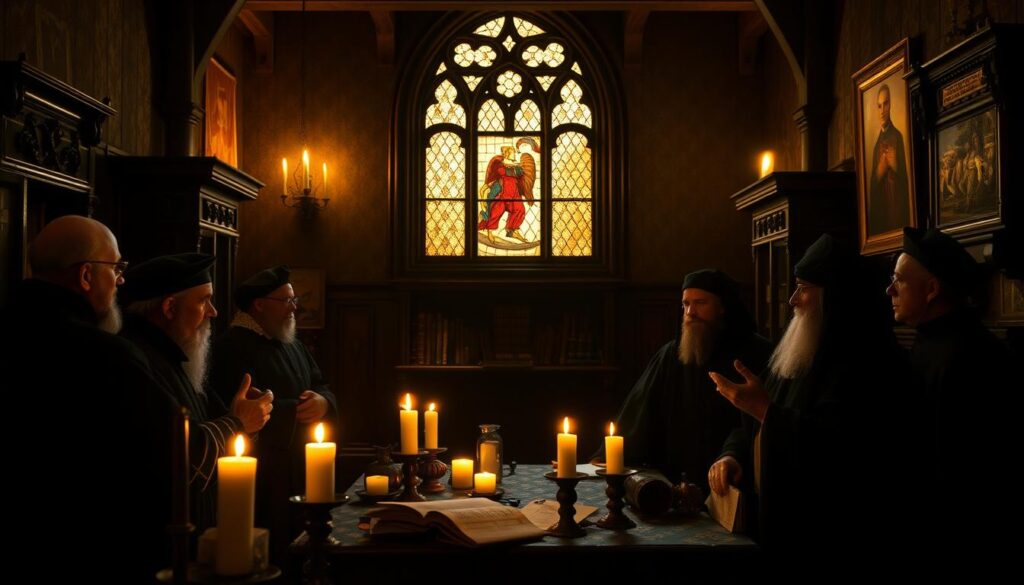
In 1529, six German princes and fourteen cities made church history by objecting to Emperor Charles V’s religious decrees. Their formal dissent at the Diet of Speyer gave birth to the term “Protestant”—though it initially described political rebels, not a religious movement.
The Catholic Church faced unprecedented challenges during this transformative century. New nation-states sought independence from Rome’s authority. The printing press spread radical ideas faster than ever before. For the first time, many believed individuals should practice faith according to their conscience.
Three key factors fueled the Reformation’s success:
- Political divisions within the Holy Roman Empire
- Growing literacy rates among middle-class Europeans
- Public anger over church financial abuses
This movement didn’t just reshape religion—it redefined power structures across the continent. The 16th century became ground zero for debates about spiritual freedom that still influence modern societies.
The 16th Century Reformation and Its Impact
October 31, 1517, marked a turning point in Christian history when Martin Luther nailed his Ninety-Five Theses to a church door in Wittenberg. This bold act challenged the Roman Catholic Church’s authority and ignited a spiritual revolution across Europe.
Martin Luther and the Ninety-Five Theses
Luther’s main target was the sale of indulgences—certificates claiming to reduce punishment for sins. He argued salvation couldn’t be bought, writing: “The true treasure of the church is the gospel of the glory and grace of God.” This idea struck at the Catholic Church‘s role as spiritual middleman.
The printing press transformed Luther’s arguments into wildfire. Within months, his writings spread through the Holy Roman Empire. Common people gained access to radical ideas about direct relationships with God through faith alone.
| Aspect | Catholic Practice | Protestant Reform |
|---|---|---|
| Salvation | Through good works + sacraments | Faith alone |
| Religious Authority | Pope + Church hierarchy | Bible + individual conscience |
| Worship Language | Latin | Local languages |
| Clergy Role | Mediators between God and people | All believers equal before God |
Luther’s reforms reshaped more than churches. They influenced education through Bible translations and sparked political changes as rulers broke from Rome. The 16th century movement created lasting divisions but also planted seeds of religious freedom we still value today.
Understanding “protestantism mean” as a Term
Let’s crack open the dictionary of history to uncover how language shaped this religious identity. The story behind the term reveals surprising political roots rather than theological debates.
Etymology and Translation
The label “Protestant” first appeared at the 1529 Diet of Speyer, where German princes opposed restrictions on Reformation teachings. This political protest gave the movement its name—though reformers initially rejected it.
Early leaders preferred “evangelical,” from the Greek euangelion (“good news”). Martin Luther insisted his followers be called “Christians who accept the gospel.” He hated the term “Lutheran,” fearing it divided the church.
Modern translation quirks still reflect this history. In German, evangelisch describes mainstream Protestant churches, while evangelikal refers to modern evangelical groups. This distinction often confuses English speakers.
Dictionaries show how meanings evolved. By 1540, “Protestant” shifted from describing political rebels to defining Christians rejecting papal authority. Today, it broadly includes denominations valuing scripture over tradition—a word transformed by five centuries of spiritual revolution.
Evolution of Protestant Denominations
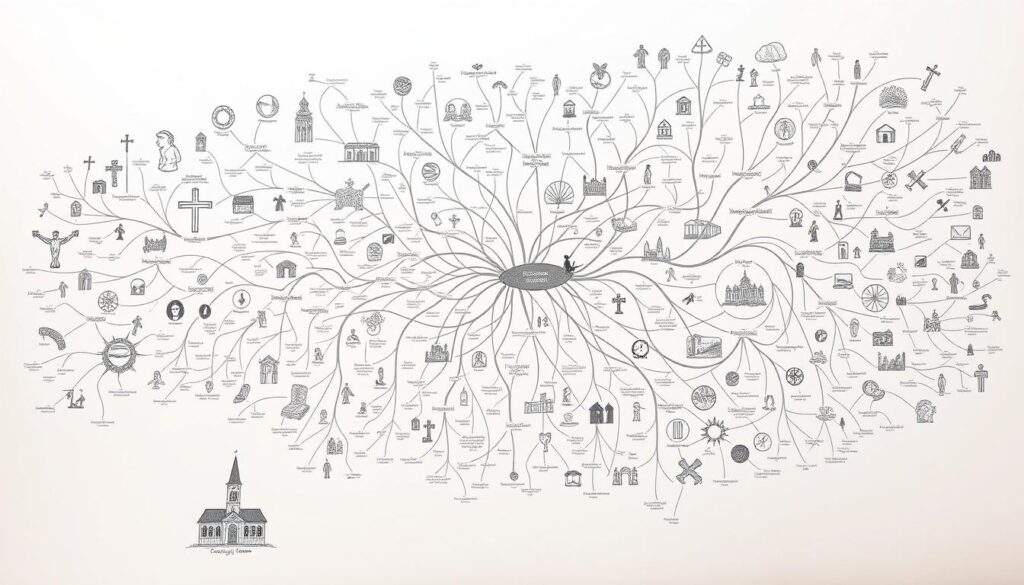
From fiery reformers to modern megachurches, Protestant branches grew like a family tree with countless branches. The 16th century sparked this diversity as leaders reinterpreted scripture and shaped new Christian denominations. Today’s landscape ranges from candlelit Anglican cathedrals to vibrant Pentecostal tent revivals.
Roots of Reformed Traditions
John Calvin’s teachings spread like wildfire across Europe. His Reformed churches took root in Switzerland, Scotland, and the Netherlands. Huldrych Zwingli and John Knox became key figures, shaping doctrines that emphasized God’s sovereignty and simple worship styles.
England’s break with Rome created another major branch. When Henry VIII established the Church of England, he blended Catholic rituals with Reformation ideas. This “middle way” became Anglicanism—a tradition balancing scripture, tradition, and reason.
Modern Protestant families show surprising variety:
- Lutherans preserve Martin Luther’s emphasis on grace
- Baptists champion believer’s baptism and local church control
- Methodists focus on social justice and personal holiness
Governance models reveal deeper differences. High church Anglicans use bishops and formal liturgy, while low church groups like Quakers meet in plain meetinghouses. Evangelical Protestant movements keep adapting, birthing new denominations that address modern spiritual needs.
Despite these variations, all share core Reformation convictions. Biblical authority and salvation through faith unite Baptists, Presbyterians, and Pentecostals alike. This unity-in-diversity makes Protestantism one of Christianity’s most dynamic expressions.
Key Theological Principles in Protestantism
At the heart of Protestant theology lie two revolutionary ideas that changed Christianity forever. These concepts broke medieval religious patterns and created new ways to understand salvation and spiritual connection.
Justification by Faith Alone
The cornerstone of Protestant belief states people gain God’s favor through faith alone—not rituals or good deeds. As Martin Luther declared: “Faith is the yes of the heart, a conviction on which one stakes their life.” This justification by faith meant salvation became accessible to farmers and kings alike.
Unlike Catholic teachings requiring sacraments and works, Protestants saw good actions as results of salvation—not requirements. This shift made faith personal rather than institutional. Modern churches still echo this idea through sermons about grace over human effort.
The Priesthood of All Believers
This radical concept declared every Christian could approach God directly. No priests needed. Suddenly, laypeople could read Bibles in their language and help lead congregations. It transformed how churches operated.
Farmers debated scripture with scholars. Women taught Sunday schools. The movement created democratic church structures where members voted on leaders. Today, this principle lives in Protestant Bible studies and volunteer-led services.
Together, these ideas form Protestantism’s DNA. They explain why many denominations value personal Bible reading and emphasize inner conviction over outward rituals. From Luther’s time to modern megachurches, faith alone and spiritual equality remain vital.
The Authority of the Bible in Protestant Worship
The Bible’s unmatched role shapes how millions experience their faith today. This focus on scripture as the ultimate authority separates Protestant traditions from other Christian groups. Early reformers called it “the living word”—a direct line to divine truth accessible to all believers.
Understanding Sola Scriptura
Sola Scriptura (“Scripture alone”) became Christianity’s game-changer during the Reformation. Unlike traditions relying on church hierarchy, this principle states the Bible is the only infallible bible source for spiritual guidance. Martin Luther famously declared: “Unless I’m convinced by Scripture, I cannot and will not recant.”
This idea reshaped worship practices across Europe. Churches replaced Latin masses with sermons explaining scripture in local languages. Congregations began prioritizing personal Bible study over ritual observances.
Three key impacts of this authority shift:
- Democratized access to religious teachings
- Encouraged literacy through vernacular Bible translations
- Redefined the church’s role as scriptural interpreter rather than gatekeeper
Modern Protestant services still reflect this legacy. From Baptist Bible studies to Methodist devotionals, the emphasis remains on engaging directly with scripture. This approach keeps the faith rooted in ancient texts while adapting to contemporary spiritual needs.
FAQ
How did the Reformation reshape Christianity in the 1500s?
The 16th-century Reformation challenged the Roman Catholic Church’s practices, emphasizing direct access to scripture and personal faith. Leaders like Martin Luther and John Calvin sparked movements that led to new Christian denominations, shifting religious authority away from traditional structures.
Why is Martin Luther’s Ninety-Five Theses significant?
Luther’s 1517 document criticized church corruption, especially the sale of indulgences. This act ignited the Reformation, promoting ideas like justification through faith alone and paving the way for evangelical Protestant traditions.
What does “sola scriptura” mean for worship practices?
This Latin phrase means “Scripture alone.” It underscores the belief that the Bible—not church leaders—is the ultimate authority in matters of faith. This principle remains central in many low-church and evangelical communities today.
How did the term “Protestant” originate?
It comes from the 1529 Diet of Speyer, where reformers “protested” against restrictions on religious freedom. The term later described groups rejecting papal authority, highlighting their focus on individual conscience and biblical teachings.
What are key differences between Lutherans and Calvinists?
Lutherans stress grace through faith, while Calvinists emphasize predestination. Both emerged during the Reformation but developed distinct doctrines, influencing denominations like Presbyterians and Reformed churches.
How does “justification by faith alone” define beliefs?
This teaching asserts salvation comes through faith in Christ, not deeds. It rejects the Catholic view of sacraments as necessary for grace, shaping evangelical preaching and worship styles.
Why is the “priesthood of all believers” important?
This idea empowers individuals to connect with God without intermediaries. It encouraged vernacular Bible translations and democratized religious participation, a hallmark of many modern Christian groups.
How has Protestantism influenced global culture?
From the Protestant work ethic’s impact on economics to advocacy for education and civil rights, its emphasis on personal responsibility and scripture has shaped societal values across continents.