Exploring the foundations of Catholic teaching reveals a rich tapestry woven from Scripture and Sacred Tradition. These dual pillars form a complete framework for understanding core principles that have guided millions for centuries. At its heart lies the conviction that every person carries inherent dignity, being created in the image of God (Genesis 1:27).
The Apostles’ Creed serves as a compass for these teachings, articulating essential mysteries like the Holy Trinity and Christ’s resurrection. This ancient declaration remains central to worship and spiritual practice, connecting modern believers to two millennia of tradition.
While acknowledging humanity’s noble origins, Catholic doctrine also addresses our need for divine grace. The concept of original sin explains humanity’s struggle to fulfill its spiritual destiny without God’s help. This balance between human potential and heavenly assistance shapes unique perspectives on salvation and daily living.
This guide will unpack how these ideas compare with other Christian traditions, particularly regarding the relationship between faith and actions. Through clear explanations of complex theology, we’ll show how ancient wisdom remains relevant in contemporary life.
Key Takeaways
- Catholic teachings blend biblical wisdom with centuries of sacred tradition
- The Apostles’ Creed outlines essential doctrines like the Trinity and resurrection
- Human dignity and spiritual growth form core aspects of Catholic anthropology
- Distinctive views on grace set Catholic theology apart from some Protestant traditions
- Complex concepts become accessible through real-world applications
Foundations of Catholic Faith
The pillars of Scripture and Tradition stand as the bedrock of Catholic belief and practice. This dual foundation shapes spiritual growth while preserving truths passed down through generations.
Core Doctrines and Sacred Traditions
Catholic theology draws equally from Sacred Scripture and Sacred Tradition, viewing both as essential channels of divine revelation. The Apostles’ Creed serves as a spiritual anchor, recited during baptism to affirm essential teachings. As St. Augustine noted, “This creed is the Church’s shield against error” – a declaration unchanged since early Christian times.
The Biblical and Historical Basis
Church Fathers like Ignatius of Antioch and Augustine connected Old Testament prophecies to New Testament fulfillment. Their writings show how:
- Genesis’ creation account informs views on human dignity
- Psalms foreshadow Christ’s redemptive mission
- Paul’s letters clarify grace’s role in Christian life
Seven ecumenical councils helped preserve these teachings through centuries. This living tradition continues guiding moral choices and worship practices today, creating continuity between ancient wisdom and modern faith journeys.
Exploring What Does Catholicism Believe In
Catholic teachings on human nature present a balanced view of dignity and redemption. Every person carries inherent worth through being made imago dei – God’s living image. This spiritual blueprint forms the basis for social teachings defending life at all stages.
The Role of Tradition and Revelation
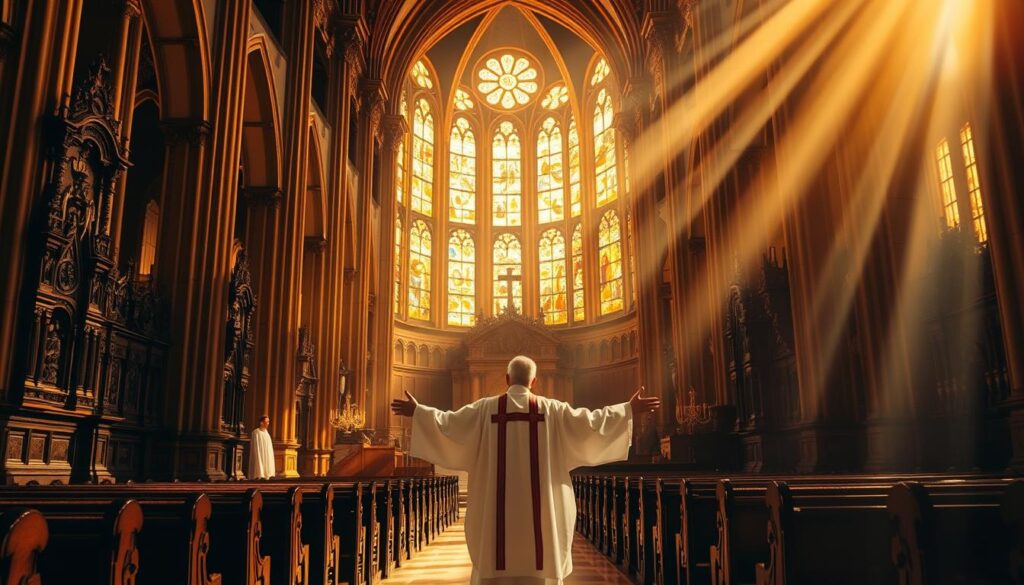
Divine truth reaches believers through two channels: Scripture and Sacred Tradition. The Church’s Magisterium safeguards this deposit of faith, ensuring consistent interpretation across generations. As St. Vincent of Lérins noted, authentic teaching must align with “what has been believed everywhere, always, by all.”
Original sin created a gap between human potential and divine purpose. Grace bridges this divide through Christ’s sacrifice, restoring humanity’s capacity for holiness. This transformative power fuels efforts for justice and compassion worldwide.
| Source of Truth | Role | Example |
|---|---|---|
| Scripture | Written revelation | Gospel accounts |
| Tradition | Lived faith practices | Liturgical rituals |
| Magisterium | Teaching authority | Papal encyclicals |
Modern applications of these principles appear in healthcare ethics and refugee advocacy. By honoring each person’s sacred origin, Catholic communities address contemporary challenges while preserving ancient wisdom.
The Central Role of Jesus Christ in Catholic Doctrine
At the heart of Catholic teaching pulses the profound mystery of Jesus Christ. His life bridges heaven and earth, offering a path to salvation through divine love. This truth shapes every aspect of spiritual practice, from Sunday Mass to personal devotion.
Jesus as Redeemer and Savior
Christ’s dual nature—fully human and fully divine—anchors Catholic understanding of redemption. As St. Paul writes, “In him all things hold together” (Colossians 1:17). His death and resurrection healed humanity’s broken relationship with God, a truth celebrated daily in Eucharistic rituals.
This act of sacrifice made Jesus the ultimate redeemer, restoring access to grace for all people. Catholics see him as both compassionate brother and cosmic savior, transforming lives through sacraments and scripture.
His Teachings and Miracles
The Gospels record over 30 miracles demonstrating Christ’s authority over nature and suffering. Healing the blind and feeding multitudes weren’t just acts of power—they revealed God’s desire for human flourishing.
Key teachings like the Beatitudes provide a blueprint for holiness. “Love your enemies” and “Feed the hungry” remain guiding principles for modern believers. Through prayer and service, Catholics nurture a living connection with Jesus that shapes their eternal destiny.
Grace, Faith, and the Journey of Christian Life
Catholic spirituality thrives on divine gifts that transform ordinary lives into sacred journeys. This section explores how heavenly assistance and human effort intertwine to shape spiritual growth.

Understanding Grace and Human Nature
Grace operates like spiritual sunlight – freely given yet requiring openness to receive. The Catechism describes it as “God’s life within us”, healing brokenness while respecting free will. Three primary forms guide believers:
| Type of Grace | Purpose | Example |
|---|---|---|
| Sanctifying | Makes soul holy | Baptismal renewal |
| Actual | Inspires good actions | Helping a stranger |
| Sacramental | Strengthens through rituals | Eucharist reception |
These gifts don’t override human nature but elevate it. As St. Augustine observed, “Our hearts are restless until they rest in You” – grace answers this longing without force.
Faith in Action Through Charity and Good Works
The theological virtues – faith, hope, charity – form the engine of Christian life. Charity (love) becomes faith’s visible expression. Soup kitchens and prison ministries aren’t just nice gestures – they’re love made tangible.
Common misunderstandings arise here. Good works don’t earn salvation but naturally flow from genuine faith. A farmer doesn’t create apples by polishing them – the fruit grows because the tree is healthy.
Modern applications abound:
- Volunteering at pregnancy centers
- Advocating for fair wages
- Protecting religious freedom
Through these actions, Catholics partner with grace – not as robots programmed for good deeds, but as willing collaborators in God’s renewal project.
Nurturing a Deep Relationship with God Through Prayer
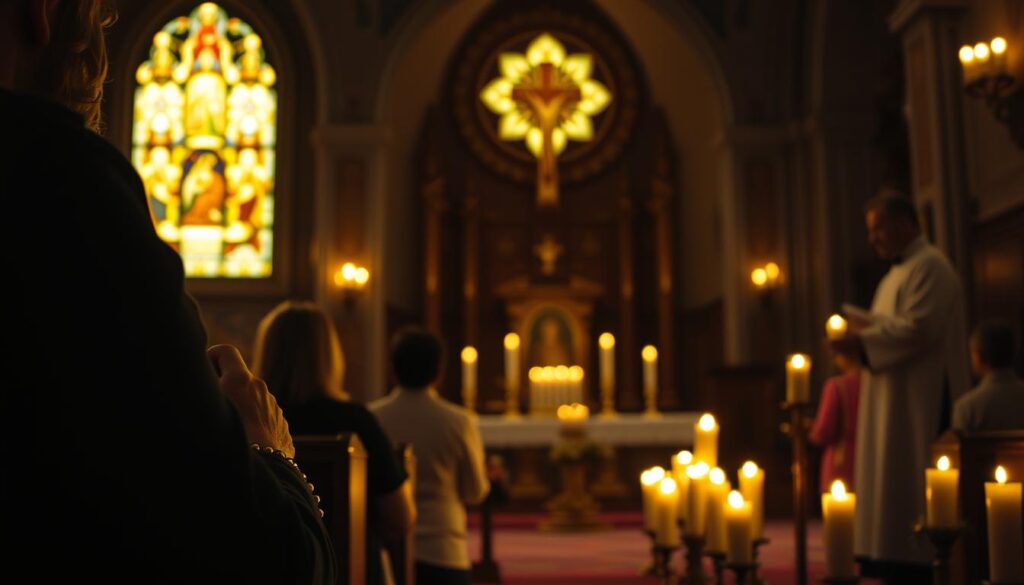
Prayer forms the living bridge between earthly struggles and heavenly hope in Catholic spirituality. St. John Damascene called it “the raising of mind and heart” – a dynamic conversation where human longing meets divine love. This sacred exchange transforms routine moments into encounters with eternity.
Prayer as Communion and Personal Encounter
At its core, prayer represents more than requests or rituals. St. Thérèse of Lisieux described it as “a surge of the heart” – raw, authentic connection. Three primary forms nurture this relationship:
| Prayer Type | Purpose | Practice Example |
|---|---|---|
| Vocal | Shared worship | Liturgy of the Hours |
| Meditation | Scripture reflection | Rosary mysteries |
| Contemplation | Silent presence | Adoration chapel visits |
The heart becomes sacred ground in this process. As the Catechism teaches, this hidden center decides whether we choose life-giving connection or spiritual isolation.
Developing a Consistent Prayer Life
Building lasting habits starts with small steps:
- Morning offering upon waking
- Mealtime blessings with family
- Nightly examination of conscience
Traditional prayers like the Our Father offer theological depth in simple words. A parishioner might say, “Reciting these ancient words links me to generations of believers.” When distractions arise, spiritual directors suggest breath prayers – short phrases synchronized with breathing rhythms.
“God thirsts that we may thirst for Him.”
Communal support through retreats or prayer groups strengthens personal practice. These connections remind believers they’re never alone in their spiritual journey.
The Sacramental Life: Signs, Rituals, and Spiritual Renewal
Sacraments form the spiritual heartbeat of Catholic practice, transforming ordinary moments into encounters with divine grace. These sacred rituals use physical elements like water, oil, and bread to convey spiritual realities beyond human sight.
God’s Visible Gifts for Life’s Journey
The Church celebrates seven sacraments that mark key milestones in faith development. Baptism washes away original sin through water and the Trinitarian formula: “I baptize you in the name of the Father, and of the Son, and of the Holy Spirit.” This initiation rite makes individuals new creations in Christ.
At Mass, the Eucharist becomes Christ’s body and blood through consecration prayers. Catholics call this transformation transubstantiation – a mystery where bread and wine retain physical properties but change in spiritual essence. As the Catechism states, this sacrament is “the source and summit of Christian life.”
| Sacrament | Purpose | Visible Sign |
|---|---|---|
| Baptism | Spiritual rebirth | Water |
| Confirmation | Strengthening faith | Chrism oil |
| Eucharist | Divine nourishment | Bread & wine |
| Reconciliation | Merciful forgiveness | Absolution words |
| Anointing | Healing & comfort | Holy oil |
| Marriage | Loving covenant | Wedding vows |
| Holy Orders | Service leadership | Laying on hands |
Sacred Objects and Daily Holiness
Sacramentals extend sacramental grace into everyday life. Blessed items like rosaries or holy water remind believers of God’s presence in ordinary moments. Unlike sacraments, these practices don’t confer grace directly but prepare hearts to receive it.
The Church teaches that sacraments work ex opere operato – through Christ’s power, not human worthiness. A priest’s personal holiness doesn’t affect baptism’s validity, just as a muddy stream still reflects sunlight. This principle ensures God’s gifts remain accessible to all.
Catholic Teachings and the Impact of Historical Councils
Sixteenth-century Europe witnessed a pivotal moment in catholic theology as the Council of Trent (1545-1563) addressed doctrinal challenges from the Protestant Reformation. This ecumenical council clarified teachings on salvation while preserving core truths about divine grace and human response.
The Council of Trent and the Doctrine of Justification
Trent’s decree rejected the idea that good works earn salvation, stating: “None of those things that precede justification… merit grace.” Instead, it defined justification as both forgiveness and spiritual renewal – a transformative process requiring cooperation with God’s gifts. The council affirmed that while faith initiates salvation, faith works together with charity to sustain it.
Insights from Church Fathers and Catholic Theologians
Early thinkers like Augustine laid groundwork for Trent’s teachings, emphasizing grace’s primacy. Centuries later, catholic theologians revealed surprising common ground. Pope Benedict XVI noted Luther’s “faith alone” formula aligns with Catholic teaching when paired with active love.
| Aspect | Catholic View | Protestant View |
|---|---|---|
| Justification | Process with human cooperation | Instant declaration |
| Grace Source | Sacraments & works | Faith alone |
| Final Authority | Magisterium & Scripture | Sola Scriptura |
Modern dialogues continue refining these understandings. The magisterium maintains Trent’s core principles while applying them to new theological questions – proving historical councils remain living guides for spiritual truth.
Modern Catholic Perspectives and Global Outreach
Modern Catholic communities bridge ancient traditions with digital-age innovation, creating vibrant networks of faith. Recent gatherings like Pope Leo XIV’s address to 1 million young believers highlight this dynamic balance. “You are the sign a different world is possible,” he declared, capturing the Church’s vision for spiritual renewal amid contemporary challenges.
Youth Engagement and the Significance of Community
World Youth Day festivals have become global phenomena, blending prayer with cultural exchange. Young adults find community works through service projects and social media groups. These efforts reflect the Catholic view that every person contributes uniquely to building God’s kingdom.
Parishes now use TikTok and podcasts to share timeless teaching. A youth minister in the United States notes: “Meeting others where they are – physically and spiritually – makes faith relatable.”
Contemporary Reforms, Media, and Global Impact
The Church addresses modern crises through clergy accountability measures and refugee support programs. Media outreach strategies maintain Sacred Tradition while using cutting-edge tools. Streaming Masses reach homebound believers, proving ancient rituals thrive in new contexts.
Global initiatives prioritize works of mercy – feeding the hungry, sheltering migrants. As one nun serving war zones observes: “In God’s order, loving others remains our highest calling across time.” These efforts show how digital spaces and sacred places unite to reveal things God continues to do through His people.
FAQ
How does Catholic theology balance Scripture and Tradition?
The Catholic Church teaches that Sacred Scripture and Sacred Tradition form a single deposit of faith. Both are seen as essential for understanding God’s revelation, guided by the Holy Spirit through the Magisterium. This approach ensures teachings remain consistent with apostolic roots.
Why is the Council of Trent significant for Catholics?
The Council of Trent (1545–1563) clarified doctrines challenged during the Protestant Reformation. It emphasized the necessity of both faith and good works for salvation, reaffirmed sacraments, and addressed issues like justification. Its teachings remain foundational in Catholic doctrine.
What role do sacraments play in spiritual renewal?
Sacraments like Baptism and the Eucharist are visible signs of God’s grace. They strengthen one’s relationship with Christ, forgive sins, and unite believers to the Church. Catholics view them as channels of divine life, rooted in Jesus’ teachings and miracles.
How does prayer deepen a Catholic’s connection to God?
Prayer is seen as a personal encounter with God, fostering trust and humility. Through consistent practices like the Rosary or liturgical worship, Catholics seek guidance, express gratitude, and grow in charity. It’s a way to align one’s heart with God’s purpose.
What is the Catholic view on salvation and human effort?
Salvation is a gift of grace through Christ’s death and resurrection. However, Catholics believe humans cooperate with grace through faith, moral choices, and acts of love. This synergy reflects St. Paul’s teaching that “faith works through love” (Galatians 5:6).
How does the Church address modern social challenges?
Through global outreach, education, and advocacy, the Church addresses issues like poverty and injustice. Initiatives often emphasize community, human dignity, and the common good. Recent reforms under Pope Francis highlight environmental care and youth engagement.
Why do Catholics emphasize Mary and the saints?
Mary and the saints are seen as models of holiness who intercede for believers. Veneration reflects unity in the Communion of Saints, a spiritual family spanning heaven and earth. This practice honors their witness without diminishing Christ’s unique role as Savior.
How does the Eucharist unite Catholics worldwide?
The Eucharist, called the “source and summit” of Catholic life, symbolizes Christ’s sacrifice and resurrection. Receiving it during Mass strengthens communal bonds and reminds believers of their mission to share God’s love across cultures and generations.