Christianity holds countless expressions of faith, and one of its most intriguing branches blends ancient rituals with Anglican identity. This tradition, rooted in deep historical ties, emphasizes sacraments, liturgy, and continuity with early Christian practices. Let’s explore its unique role within the Church of England and beyond.
Emerging in the 19th century, this movement sought to revive pre-Reformation spiritual practices while maintaining Anglican governance. Followers believed they were restoring authentic Christian worship, merging medieval devotion with reformed theology. Their efforts created a vibrant spiritual path that still thrives today.
Central to this tradition is the idea of historical connection. Leaders emphasized continuity with early church teachings, prioritizing sacraments like the Eucharist and valuing ornate worship styles. These practices aimed to reflect what they saw as the “true” Catholic faith—preserved not through papal authority but through Anglican tradition.
Key Takeaways
- This tradition bridges ancient Catholic practices with Anglican identity.
- It originated in the 19th century but draws from earlier Christian roots.
- Sacraments and liturgical beauty are central to its worship style.
- Followers view themselves as preserving historic Christian teachings.
- The Church of England serves as its primary structural foundation.
- Modern challenges include balancing tradition with contemporary needs.
Introduction to Anglo-Catholicism
Within the Anglican tradition, a vibrant movement blends ornate worship with deep sacramental focus. This approach draws from pre-Reformation roots while embracing Anglican governance. Followers see themselves as guardians of historic Christian practices, creating a spiritual home for those drawn to mystery and ritual.
Defining the Tradition
This branch of the Church of England emphasizes continuity with early Christian teachings. Members value liturgy, sacraments like the Eucharist, and devotion to saints. Unlike Roman Catholicism, they maintain independence from papal authority while sharing many theological views.
Central to their identity is the belief in the “Real Presence” of Christ in communion. They also practice Marian devotion and pilgrimage, mirroring Catholic traditions. However, their structure remains firmly Anglican, balancing reform with ancient customs.
Understanding Its Unique Place in Anglicanism
This tradition acts as a bridge between Protestant simplicity and Catholic grandeur. It appeals to those seeking:
- Sacramental depth without strict hierarchy
- Historical connections to early Christianity
- Flexibility within Anglican governance
| Aspect | Roman Catholicism | Anglo-Catholicism | Mainstream Anglicanism |
|---|---|---|---|
| Authority | Papal supremacy | Church of England | Local bishops |
| Liturgy | Latin Mass (traditional) | High-church rituals | Simpler services |
| Devotions | Rosary, saints | Similar practices | Less emphasis |
This middle way allows followers to experience Catholic spirituality while preserving Anglican identity. As one priest notes, “We’re not borrowing traditions—we’re reclaiming our heritage.”
Historical Roots and Development
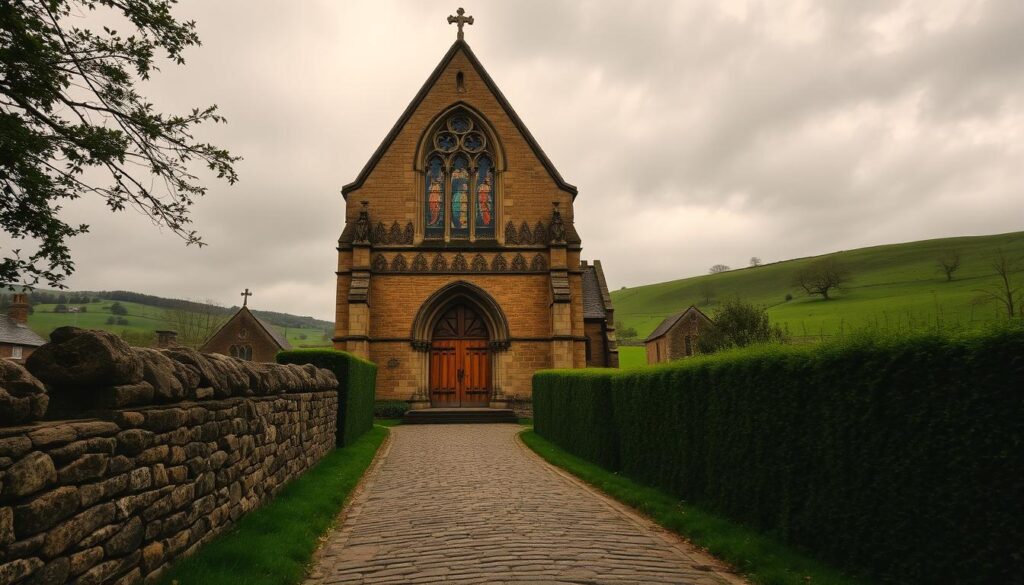
Long before modern denominations took shape, England’s spiritual landscape nurtured practices that would later define a unique Christian path. This tradition’s foundations stretch back to Augustine of Canterbury’s mission in 597 CE—a connection followers see as proof of their authentic Catholic heritage.
Medieval Foundations and Pre-Reformation Identity
Early English worship blended local customs with broader Christian practices. By the 10th century, monasteries like Glastonbury became centers of devotion that mixed Roman influences with distinctly English styles. These traditions laid groundwork for what some call a “native Catholicity”—rooted in ancient faith yet separate from later papal authority.
The Church of England maintained this balance for centuries. Henry VIII’s break with Rome in the 1530s changed politics more than theology. His Ten Articles of 1536 kept key teachings: Christ’s Real Presence in communion, confession, and honoring saints.
Reformation Era Tensions
Later monarchs pushed Protestant ideas, creating friction. Edward VI introduced simplified services, while Elizabeth I’s reforms blended old and new. Yet many parishes quietly preserved rituals like candlelit altars and priestly vestments.
This complex history gave 19th-century reformers historical footing. As one scholar noted, “They weren’t inventing—they were dusting off England’s original Catholic tradition.” Their work bridged medieval piety with Anglican structure, shaping a movement that still thrives today.
Key Beliefs and Practices
At the heart of this tradition lies a profound reverence for sacred rituals that connect believers to divine mysteries. These practices blend ancient Christian spirituality with Anglican flexibility, creating a distinctive path for worship and daily living.
Sacramental Theology and the Real Presence
Central to their belief is the real presence of Christ in the Eucharist. Unlike Roman Catholic teachings about transubstantiation or mainstream Anglican receptionism, followers embrace the mystery. As one priest explains, “We kneel before the blessed sacrament knowing Christ meets us here—no philosophical formulas needed.”
Seven sacraments form spiritual lifelines, not just symbols. Baptism, confirmation, and marriage are seen as genuine channels of grace. Private confession and anointing the sick remain vital, mirroring Catholic practices while honoring Anglican autonomy.
The Role of Liturgy and Devotional Practices
Every Sunday, the altar becomes a sacred stage. The bread and wine receive ceremonial care matching Roman Catholic standards. Worshippers might cross themselves or kneel during services, reflecting their sacramental worldview.
Daily devotions extend beyond church walls. Many pray the rosary or light candles for departed loved ones. This balance—personal faith with tangible rituals—defines their spiritual rhythm. A lay member shares, “Our liturgy isn’t performance—it’s how we touch eternity.”
The Oxford Movement and Tractarian Legacy
The 19th century brought a spiritual revolution within the Church of England. A group of Oxford scholars launched a campaign to reclaim ancient Christian roots through writings called Tracts for the Times. Their ideas reshaped Anglican identity forever.
Spark of a Spiritual Awakening
John Keble lit the fuse in 1833 with his sermon condemning “National Apostasy.” This fiery address protested government interference in church matters. Fellow Oxford thinkers joined him, arguing Anglicanism belonged to the historic Christian family—not Protestant reformers.
Giants of Theological Thought
John Henry Newman became the movement’s star thinker. His eloquent tracts defended sacraments and apostolic succession. Though his 1845 conversion to Roman Catholicism shocked followers, it clarified boundaries. As he wrote, “Truth lies in seeing connections where others see divisions.”
Edward Pusey provided stability during turmoil. His deep scholarship helped Anglo-Catholic practices take root. Meanwhile, Keble’s poetry inspired beautiful worship styles still used today.
| Leader | Role | Key Contribution | Legacy |
|---|---|---|---|
| John Keble | Spiritual catalyst | 1833 National Apostasy sermon | Revived sacramental focus |
| John Henry Newman | Theological architect | Tract 90 on church authority | Redefined Anglican identity |
| Edward Pusey | Academic anchor | Defended Anglican validity | Secured long-term influence |
These visionaries proved the Church of England could honor ancient traditions while staying independent. Their work turned altars into sacred spaces and liturgies into timeless encounters. The Oxford Movement’s impact still echoes in stained-glass windows and whispered prayers today.
Distinctive Elements of Anglo-Catholic Worship
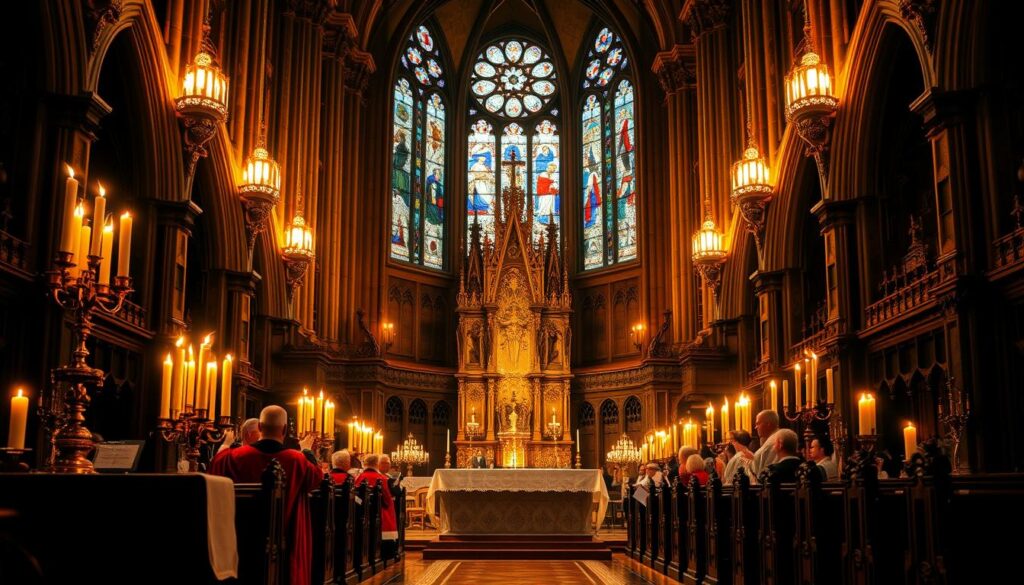
Imagine walking into a space where every sight, sound, and scent draws you deeper into sacred mystery. This immersive experience defines worship in this tradition, blending physical expressions with spiritual depth.
Use of Incense, Vestments, and Rituals
Swirling incense clouds symbolize prayers rising to heaven. Priests wear colorful vestments matching the church calendar—purple for reflection, gold for celebration. Bells ring during holy communion, marking Christ’s presence at the altar.
Seasonal colors transform worship spaces visually. Advent’s deep blue calls for preparation, while Easter white shouts resurrection joy. These elements create a liturgy that feels timeless yet alive.
Celebrating the Eucharist with Reverence
Every movement matters during the Eucharistic prayer. Priests lift the bread and wine with deliberate care, honoring the blessed sacrament. Worshippers kneel, whisper prayers, or cross themselves—physical responses to divine grace.
Special devotions like Benediction focus entirely on the consecrated host. As one member shares, “It’s not about rituals—it’s our way of meeting God face-to-face.” Private confession offers personal renewal, blending Catholic roots with Anglican warmth.
Through these practices, ancient faith finds fresh expression. The liturgy becomes a bridge—connecting earthly senses to heavenly realities while keeping community ties strong.
Anglo Catholic Worship and the Book of Common Prayer
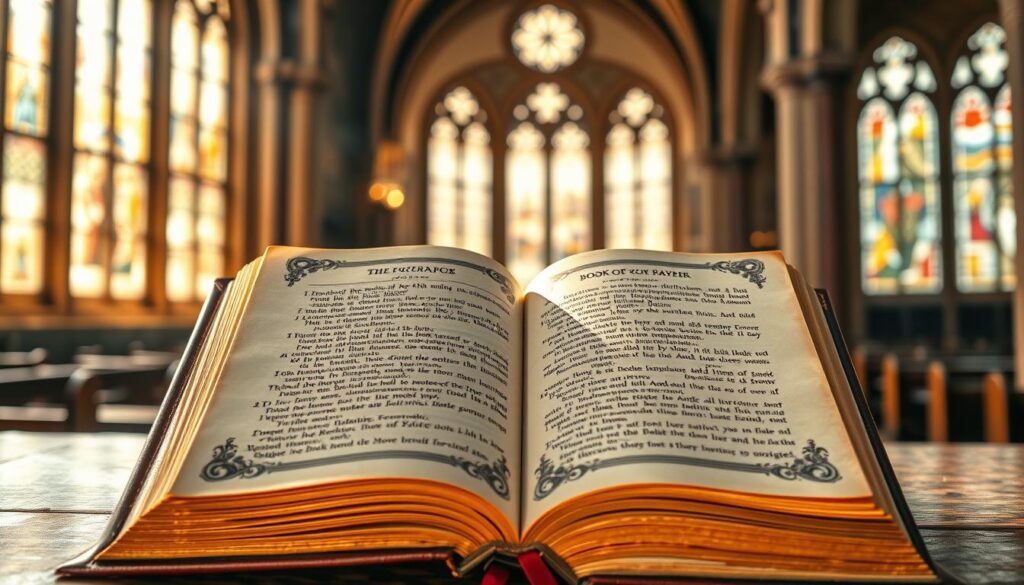
Liturgical books often become battlegrounds for theological identity—and few texts illustrate this better than the Book of Common Prayer. While Thomas Cranmer’s 16th-century masterpiece shaped Anglican worship, its Protestant roots create fascinating tensions for communities seeking Catholic spirituality.
Liturgical Variations in Practice
Walk into two Anglo-Catholic parishes, and you might hear different versions of the same prayer book. Some churches stick strictly to Cranmer’s text, finding beauty in its poetic cadence. Others add elements like Roman Catholic Proper Prefaces or Eastern Orthodox hymns. As one priest jokes, “We’re liturgical mixologists—shaking tradition with creativity.”
The Book of Common Prayer poses unique challenges. Cranmer designed its services to reflect Reformed theology, emphasizing scripture over sacraments. Yet Anglo-Catholics reinterpret phrases like “heavenly banquet” to affirm the Real Presence. This dance between text and meaning defines their worship style.
Modern Anglican resources like Common Worship offer new flexibility. Many parishes now blend:
- Traditional prayer book language
- Expanded Eucharistic prayers
- Devotions to saints
Despite these adaptations, the common prayer tradition remains foundational. Even when using Roman rites, most services keep Cranmer’s structure. A lay leader explains, “Our prayer book is like a family recipe—we add spices, but the base stays the same.” This balance preserves Anglican identity while nurturing Catholic spirituality.
Modern Developments and Internal Debates
Navigating modern challenges while preserving ancient traditions remains a defining tension for this spiritual movement. As society evolves, communities grapple with questions that test their core identity.
The Ordination of Women and Progressive Shifts
The late 20th century brought seismic changes. Many Anglican provinces began ordaining women as priests, sparking heated debates. Traditionalists argued this broke with historic practice, while progressives saw it as justice unfolding.
Some congregations left the Church of England, forming breakaway groups. Others stayed, seeking unity amid disagreement. Today, female priests lead parishes worldwide—a shift reshaping worship and leadership roles.
Balancing Tradition and Contemporary Theology
Communities now walk a tightrope between reverence for tradition and modern relevance. Many maintain sacramental focus while addressing issues like climate change or LGBTQ+ inclusion.
Creative solutions emerge: livestreamed liturgies connect younger generations, while ancient prayers address current crises. As one leader notes, “Our roots ground us—they don’t chain us.” This dance between old and new keeps the tradition alive in changing times.
FAQ
How does Anglo-Catholicism differ from other Anglican traditions?
Anglo-Catholicism emphasizes liturgical richness, sacraments, and continuity with early Christian practices. It often includes rituals like Eucharistic adoration, devotion to saints, and a focus on the Real Presence in communion, setting it apart from more reformed Anglican branches.
What role did the Oxford Movement play in shaping Anglo-Catholicism?
The Oxford Movement, led by figures like John Henry Newman in the 19th century, revived Catholic theology within the Church of England. It emphasized apostolic succession, sacraments, and ancient traditions, laying the foundation for modern Anglo-Catholic practices.
Do Anglo-Catholics believe in the Real Presence during communion?
Yes, many affirm the Real Presence of Christ in the Eucharist. This belief, rooted in sacramental theology, sees the bread and wine as more than symbols—they’re vehicles of divine grace, though interpretations vary among individuals.
How does the Book of Common Prayer fit into Anglo-Catholic worship?
The Book of Common Prayer remains central but is often enriched with additional rituals, prayers, or gestures. Anglo-Catholics might include elements like genuflection or Marian devotions while maintaining the prayer book’s structure.
Why are vestments and incense common in Anglo-Catholic services?
These practices reflect a commitment to sacramental worship and continuity with historic Christian liturgy. Vestments symbolize priestly roles, while incense represents prayers rising to God, creating a sensory experience of reverence.
What are modern debates within Anglo-Catholicism?
Issues like the ordination of women and LGBTQ+ inclusion have sparked discussion. Some seek to preserve traditional teachings, while others advocate for progressive reforms, creating tension between tradition and contemporary values.
Did the English Reformation erase Catholic practices in England?
While the Reformation simplified worship, Anglo-Catholicism later revived many pre-Reformation traditions. Elements like sacramental theology and liturgical beauty were reemphasized, blending Protestant and Catholic identities.
How do Anglo-Catholics view Mary and the saints?
Many honor the Blessed Virgin Mary and saints through prayers, feast days, and icons, seeing them as intercessors. This devotional practice aligns with Catholic tradition but is less common in other Anglican groups.