With roots stretching back to the first century, the tradition now known as Roman Catholicism remains a cornerstone of spiritual life for millions. This branch of Christianity maintains a unique connection to ancient traditions while shaping modern culture through its teachings and institutions.
Central to its structure is the papacy, a leadership model tracing authority to Saint Peter. Over 1.3 billion people across continents participate in sacraments and rituals that have evolved through centuries. The Church’s influence extends beyond religious practice, having profoundly impacted art, education, and social systems worldwide.
Seven sacraments form the foundation of spiritual life for adherents, from baptism to last rites. Clergy members guide communities through these rites while interpreting scripture and tradition. This balance between ancient customs and contemporary relevance continues to define the faith’s enduring presence.
From Gothic cathedrals to grassroots charities, Catholic institutions leave visible marks on global landscapes. The Vatican City serves as both spiritual headquarters and diplomatic entity, illustrating the Church’s dual role in sacred and secular affairs.
Key Takeaways
- Represents the largest Christian denomination, with followers on every continent
- Maintains direct historical ties to early Christian communities through apostolic succession
- Shaped Western legal systems, artistic movements, and educational frameworks
- Operates through a hierarchical structure led by the Pope and bishops
- Combines scriptural study with evolving theological interpretations
- Manages extensive global networks of schools, hospitals, and social services
Introduction to Catholicism
At the heart of Roman Catholic practice lies a dynamic interplay between ancient customs and living faith. This spiritual framework connects believers across generations through shared rituals and teachings maintained by the Church.
The Role of Tradition and Faith
Sacred Tradition operates as a living channel rather than historical artifact. It works alongside scripture to form a complete understanding of divine revelation. Early theologian St. Irenaeus outlined this dual foundation, emphasizing three pillars:
| Source | Description | Purpose |
|---|---|---|
| New Testament | Core scriptural texts | Reveal Christ’s teachings |
| Episcopal Centers | Apostolic-founded churches | Maintain doctrinal unity |
| Apostolic Tradition | Unbroken teaching lineage | Guide interpretation |
An Overview of the Roman Catholic Identity
Roman Catholic communities balance universal principles with distinct practices. The apostolic succession concept ensures leadership traces directly to Jesus’ original followers. This creates continuity in sacraments and doctrine.
Daily life for adherents involves more than ritual observance. It requires active participation in a global community shaped by two millennia of spiritual heritage. From parish activities to worldwide outreach, this identity remains both local and universal.
Historical Evolution and Key Moments
From humble beginnings in Jerusalem’s shadowed alleys to global prominence, Catholicism’s journey mirrors humanity’s spiritual quest. This faith tradition weathered persecution, shaped empires, and reinvented itself across eras while preserving core teachings.
Early Church Foundations and Apostolic Traditions
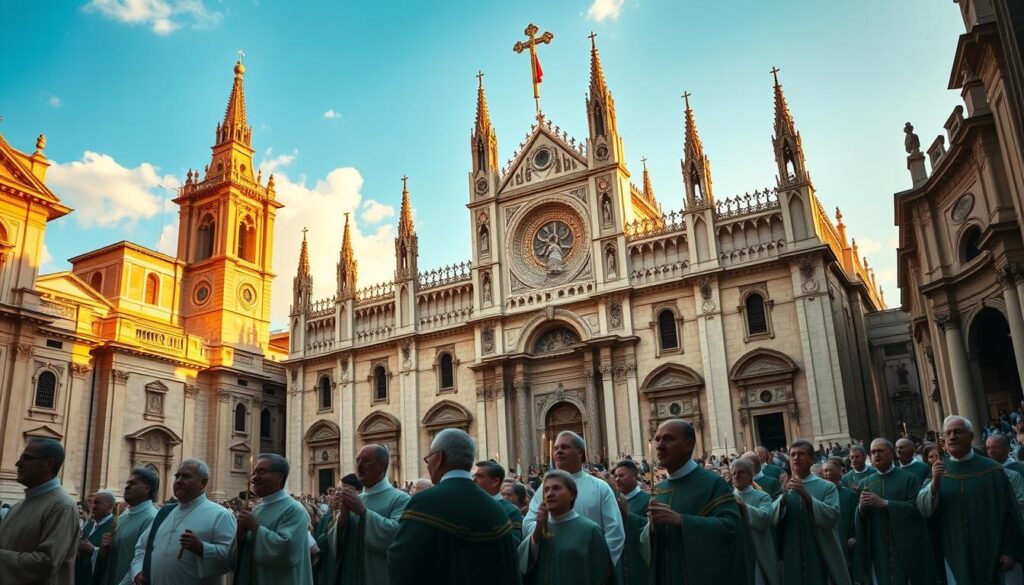
The first-century Christian community transformed rapidly after Christ’s crucifixion. Acts of the Apostles shows disciples evolving from frightened outcasts to organized missionaries. By 100 CE, leadership structures emerged to maintain doctrinal unity across growing congregations.
Emperor Constantine’s 313 CE Edict of Milan marked a turning point. Legal recognition allowed public worship spaces and standardized rituals. Early councils like Nicaea (325 CE) established foundational creeds still recited today.
Milestone Events: Second Vatican Council and Beyond
The 20th-century Second Vatican Council revolutionized Catholic engagement with modernity. Over four years (1962-1965), 2,800 bishops reimagined the Church’s role in a changing world. Key shifts included:
- Recognizing truth in non-Christian religions
- Promoting worship in local languages
- Encouraging collaboration with other faiths
This historic gathering bridged ancient traditions with contemporary challenges. Its documents continue guiding the Church through 21st-century social and technological changes.
What is Catholicism Beliefs
The Holy Trinity stands as the bedrock of Roman Catholic theology. This doctrine describes one God in three persons: Father, Son, and Holy Spirit. Early Christians struggled to explain this mystery, leading to councils that shaped foundational creeds.
“I believe in God, the Father Almighty… and in Jesus Christ, His only Son… conceived by the Holy Spirit.”
Roman Catholic teachings emphasize Jesus Christ as fully divine and human. His death and resurrection form the ultimate sign of God’s love, offering salvation from original sin. This inherited condition traces back to Adam and Eve’s disobedience, creating humanity’s need for redemption.
| Key Doctrine | Purpose | Daily Impact |
|---|---|---|
| Grace | Divine assistance for holiness | Guides moral choices |
| Resurrection | Bodily renewal at world’s end | Offers hope beyond death |
| Faith & Works | Path to eternal life | Inspires service to others |
Through sacraments and prayer, adherents seek transformation. The Church teaches that good works express faith, unlike Protestant views on salvation. This balance shapes everything from charity work to personal ethics.
Eternal life remains the ultimate goal, with Christ’s second coming as the final fulfillment. These teachings unite 1.3 billion believers across cultures, creating shared purpose amid diverse traditions.
Structure and Organization of the Church
The organizational framework of the Roman Catholic Church combines spiritual leadership with intricate governance systems. At its peak stands the Pope, recognized as Christ’s earthly representative. This pyramid-like structure ensures unified guidance for millions while accommodating regional diversity through local dioceses.
Papal Authority and the Holy See
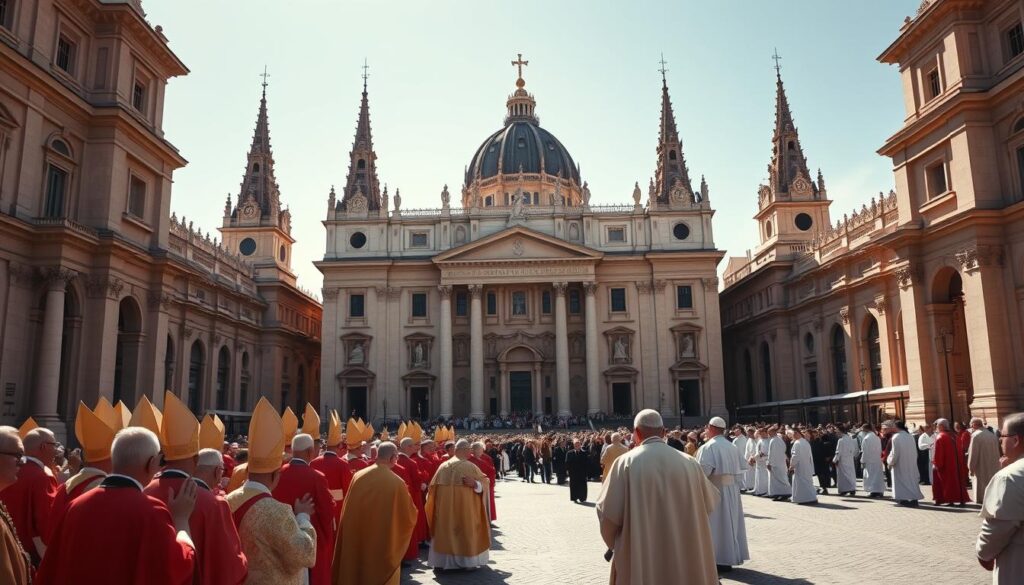
The Pope’s authority stems from apostolic succession, granting him jurisdiction over doctrine and morals. Vatican City serves as his operational base, housing the Roman Curia – a network of departments managing global operations. Key divisions include:
| Curial Department | Focus Area | Global Impact |
|---|---|---|
| Congregation for Clergy | Priest training | Ensures pastoral care standards |
| Dicastery for Evangelization | Missionary work | Expands Church presence |
| Doctrinal Office | Faith integrity | Guards theological consistency |
Cardinals serve as the Pope’s closest advisors, wearing distinctive red attire symbolizing readiness to defend faith. Their most critical duty unfolds during papal elections, where they gather in the Sistine Chapel’s sealed conclave.
Hierarchical Roles: Cardinals, Bishops, and Clergy
Archbishops oversee provinces containing multiple dioceses, while bishops manage individual regions. Parish priests form the frontline, administering sacraments and guiding communities. The Church maintains celibacy requirements for clergy, viewing total devotion as essential for effective ministry.
Deacons support priests in liturgical and charitable tasks, often handling community outreach. Laypeople complete this structure, participating through worship and volunteer roles. Together, these orders create a living network sustaining Catholicism’s global mission.
Catholic Sacraments, Doctrines, and Traditions
Sacred rituals shape the rhythm of Catholic life, marking spiritual milestones from birth to eternal rest. These practices unite communities through visible expressions of faith while nurturing personal connections with the divine.
The Seven Sacraments Explained
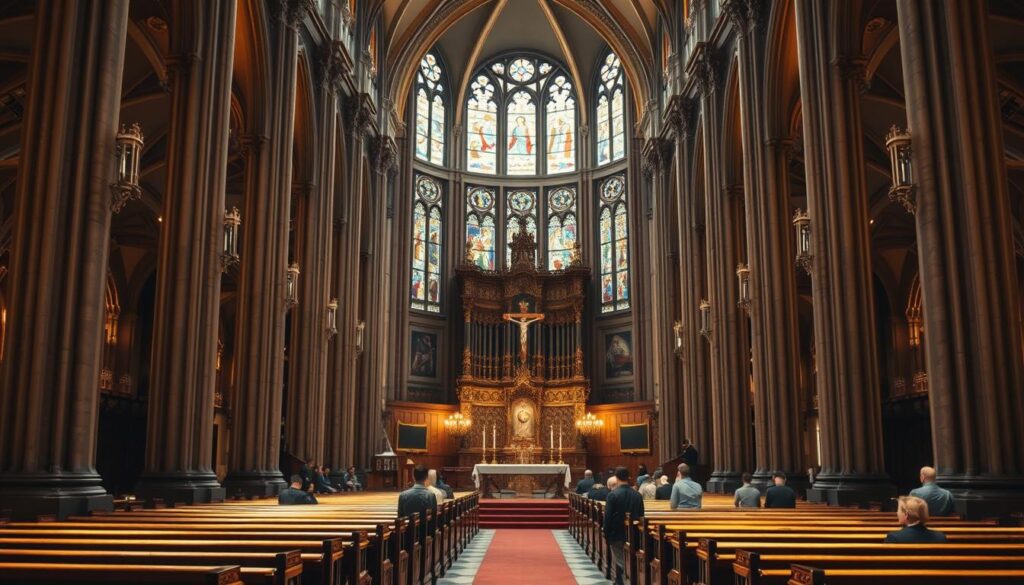
Seven sacred rites guide believers through life’s pivotal moments. Each serves as a visible sign of spiritual grace, rooted in Christ’s teachings. Here’s how they function:
| Sacrament | Purpose | Key Symbol |
|---|---|---|
| Baptism | Cleanse original sin | Holy water |
| Confirmation | Strengthen faith | Chrism oil |
| Eucharist | Divine nourishment | Consecrated bread |
| Reconciliation | Moral renewal | Absolution words |
| Marriage | Lifelong union | Wedding rings |
| Holy Orders | Clergy dedication | Laying on hands |
| Anointing | Healing comfort | Blessed oil |
Distinctive Doctrinal Beliefs and Practices
The Eucharist stands central to worship. Catholics believe in transubstantiation – bread and wine becoming Christ’s actual presence during Mass. This miracle occurs through priestly consecration prayers passed down through centuries.
Confession maintains spiritual health. Believers confess sins to priests, receiving absolution through Christ’s authority. This practice emphasizes accountability and renewal.
Rituals, Rites, and the Role of Saints
Liturgical seasons like Advent and Lent structure the year with fasting and reflection. Saints serve as heavenly allies, their feast days inspiring acts of service. Many parishes host processions honoring local patron figures.
Rosary prayers and candlelit vigils create tangible connections to the sacred. These traditions blend ancient symbolism with modern devotion, engaging both mind and senses in worship.
Modern Impacts and Social Teachings
Today’s Catholic Church navigates complex global challenges while upholding timeless values. Its social teachings address systemic inequality, advocating for human dignity across economic and political systems.
Justice Beyond Borders
For over 130 years, papal encyclicals have shaped a distinctive approach to fairness. From workers’ rights to climate action, these documents challenge structures harming vulnerable populations. Pope Leo XIV revitalized this mission, telling young Catholics they embody hope for “a different world.”
Recent efforts focus on bridging wealth gaps between nations. The Church promotes ethical trade practices and supports displaced communities through global networks. This work reflects core principles of solidarity and shared responsibility.
Balancing Tradition and Reality
While teachings on family life remain clear, daily practice often varies. Over half of U.S. Catholics report using contraception despite official guidance. Many still value spiritual traditions while adapting to modern relationship norms.
Youth engagement offers new energy. Massive gatherings with Pope Leo XIV show younger generations embracing social justice causes. They’re reimagining faith’s role in tackling issues like digital ethics and environmental care.
Through this dynamic interplay, the Church continues shaping global conversations. Its ability to unite ancient wisdom with contemporary needs keeps its message relevant across cultures and generations.
FAQ
How does the Roman Catholic Church define papal authority?
The papacy is central to Catholicism, with the Pope serving as the spiritual successor to Saint Peter. This doctrine emphasizes unity under the Holy See, guiding teachings on faith, morals, and church governance.
What role do sacraments like Baptism and Communion play?
Sacraments like Baptism and Eucharist are sacred rituals that mark key moments in a believer’s journey. They’re seen as visible signs of God’s grace, fostering spiritual growth and community bonds.
How did the Second Vatican Council change Catholic practices?
The Second Vatican Council (1962–1965) modernized traditions, encouraging active participation in the liturgy and interfaith dialogue. It shifted focus to social justice while preserving core doctrines like apostolic succession.
Why is social justice emphasized in Catholic teachings?
Rooted in Jesus Christ’s teachings, the Church advocates for dignity, equality, and care for marginalized groups. Encyclicals like Pope Francis’ *Laudato Si’* highlight environmental stewardship and poverty alleviation.
What distinguishes Roman Catholicism from other Christian denominations?
Key differences include belief in papal infallibility, devotion to Mary and saints, and adherence to seven sacraments. The Magisterium (teaching authority) also ensures doctrinal consistency across global parishes.
How does apostolic succession shape church hierarchy?
Bishops, ordained through holy orders, trace their authority back to the original apostles. This unbroken chain ensures continuity in teachings, rituals, and leadership roles like cardinals and clergy.
Are saints still relevant in modern Catholic worship?
Saints serve as intercessors and role models, celebrated through feast days and personal devotions. Figures like Saint Francis of Assisi inspire actions aligned with the Church’s social gospel.