When exploring Christian traditions, you might wonder how different groups approach sacred practices. One beautiful example combines simple elements with profound spiritual meaning. This practice centers on water, faith, and divine promises – but it’s far more than a symbolic ritual.
At its core, this tradition views the act as God’s gift rather than human effort. Unlike some interpretations, it’s not about personal worthiness or elaborate ceremonies. The focus remains on what God does through the practice, not what people do to earn favor.
Many find comfort in understanding this act as a lifelong anchor. It connects individuals to a larger story of grace that begins in infancy and continues through adulthood. This approach stems from centuries of scriptural study and remains vital in modern spiritual journeys.
Key Takeaways
- Centers on God’s action rather than human effort
- Uses water as a visible sign of spiritual promises
- Offers assurance through divine commitment
- Connects to historical Christian traditions
- Provides lifelong spiritual foundation
- Emphasizes community support in faith journeys
Biblical Foundations and Historical Insights
Christian practices often trace their roots to ancient texts and transformative moments in history. The sacred act we’re discussing draws power from God’s unchanging Word and centuries of theological reflection. Let’s explore how scripture and reformers shaped its meaning.
Scriptural References and Baptismal Promises
Nine key Bible passages form the bedrock of this practice. Jesus’ words in Mark 16:16 link belief with cleansing, while John 3:5 describes spiritual rebirth through water and Spirit. These texts show it’s more than ritual – it’s God’s active promise to wash away sins and unite believers with Christ.
| Scripture | Promise | Key Idea |
|---|---|---|
| Romans 6:4 | New life through resurrection | Union with Christ |
| 1 Peter 3:21 | Cleansed conscience | Appeal to God |
| Galatians 3:27 | Clothed in Christ | Identity shift |
Martin Luther’s Perspective on Baptism
When 16th-century reformers debated this sacrament, Luther championed its divine origin. His 1528 writings countered claims that human faith must precede the act. “It’s God’s work,” he insisted, “not our achievement.”
Luther saw Jesus as the true minister in every ceremony, whether for infants or adults. He argued that the Word’s power doesn’t depend on our feelings – like sunlight working whether we see it or not. This assurance became central to communities seeking hope amid life’s storms.
Understanding lutheranism baptism: Grace, Faith, and Biblical Promise
Many families find peace in spiritual traditions that emphasize divine action over human effort. This approach offers comfort by shifting focus from personal worthiness to sacred assurance rooted in ancient wisdom.
The Role of Faith in Baptism
Martin Luther compared faith to “open hands” receiving gifts – essential for salvation but not the source of the gift itself. “We don’t base this practice on our faith,” he taught, “but on God’s unchanging promise.” This distinction helps explain why infants receive the sacrament despite lacking conscious belief.
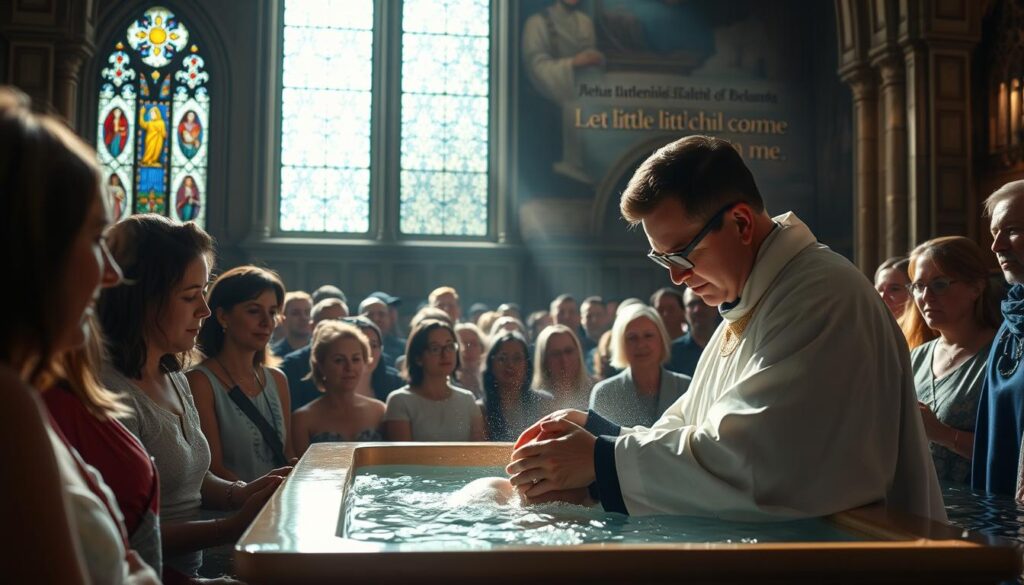
Luther pointed to John the Baptist’s prenatal recognition of Jesus as proof God can awaken faith at any age. Parents often wonder how their child benefits from the sacrament. The answer lies in trusting the Giver more than the receiver’s readiness.
Baptism as a Work of God and Not Mere Ritual
This sacred act differs from human ceremonies because its power comes from divine action. While other traditions might emphasize personal commitment, Lutherans see it as God’s initiative to cleanse sins and grant new life.
| Aspect | Lutheran Understanding | Other Traditions |
|---|---|---|
| Source of Power | God’s Word | Human Faith |
| Infant Participation | God creates faith | Requires conscious choice |
| Assurance | Based on promise | Depends on feelings |
This perspective comforts those who doubt their spiritual strength. As Luther noted: “Sunlight works whether we see it or not.” Parents find hope knowing God’s commitment doesn’t waver with life’s ups and downs.
Modern Practices and Baptismal Methods in the Lutheran Church
Families entering Lutheran communities often encounter meaningful traditions that blend ancient wisdom with modern relevance. These practices emphasize God’s initiative in spiritual life while addressing practical questions about ceremonies and family roles.
Infant Baptism: Theology and Tradition
Lutheran churches welcome infants into faith communities through early ceremonies. This tradition stems from biblical accounts of entire households receiving the sacrament. While no verse explicitly commands infant baptism, Luther noted Jesus’ instruction to include “all nations” – which naturally includes children.
Parents often ask: “How does this benefit my child?” The answer lies in divine promises rather than human understanding. Through water and scripture, God’s grace shields young ones from life’s spiritual challenges from day one.
Immersion vs. Pouring: Varied Approaches Explained
Methods vary, but all Lutheran ceremonies share two essentials: water and God’s Word. While some churches use full immersion, most pour water over a child’s head using a decorative font. The effect remains identical regardless of technique.
| Method | Common Usage | Significance |
|---|---|---|
| Pouring | 90% of ceremonies | Focuses on Word over method |
| Immersion | Special occasions | Symbolizes complete renewal |
| Sprinkling | Medical exceptions | Ensures accessibility |
Contemporary Significance for Families and Communities
Modern parents find comfort knowing their child joins a supportive church family. Godparents pledge to nurture faith, while congregations commit to guiding young members. This network becomes crucial during life’s storms.
One pastor explains: “Our ceremonies aren’t endings – they’re launchpads for lifelong spiritual growth.” Families leave with tangible reminders of divine love and community backing, making ancient practices feel vibrantly relevant today.
Conclusion
In moments of doubt, many find reassurance in traditions that anchor them to something greater. Rev. Matthew Zickler’s story shows how recognizing God’s unchanging promise in the water and Word freed him from seeking rebaptism. His experience echoes a powerful truth: spiritual security flows from divine action, not human perfection.
This understanding transforms daily living. When guilt over sins creeps in, believers recall their identity isn’t self-made – it’s given through sacred gifts. Parents raising children in the Lutheran church find peace knowing God’s commitment outlasts every storm.
Communities thrive when people embrace this grace-filled perspective. It shifts focus from personal performance to supporting others through life’s ups and downs. As one pastor shared: “Our shared baptismal story makes the church family stronger than any individual effort.”
Want to explore more? Visit a local congregation or chat with a faith leader. You’ll discover how ancient promises shape modern life – offering hope that never fades.
FAQ
Why do Lutherans baptize babies?
Lutherans believe infants receive God’s grace through water and His Word. Baptism isn’t about the child’s understanding but God’s promise to cleanse sin and welcome them into His family. Parents and the church community commit to nurturing the child’s faith as they grow.
Is immersion required for baptism in the Lutheran Church?
No. While some churches use immersion, Lutherans often practice pouring or sprinkling. The method isn’t as important as the combination of water and God’s Word, which together create spiritual renewal and connection to Christ’s sacrifice.
Does baptism guarantee salvation?
Baptism is a sacrament where God’s grace is freely given, but faith is essential. Lutherans teach that salvation comes through faith in Jesus, which the Holy Spirit nurtures. Baptism marks the start of a lifelong journey rooted in trust in God’s promises.
How does Martin Luther’s view shape Lutheran baptism today?
Martin Luther emphasized baptism as a daily “drowning” of sin and rising to new life in Christ. His teachings highlight it as God’s action, not human effort, reinforcing its role as a lifelong source of comfort and identity for believers.
Can adults be baptized in the Lutheran Church?
Absolutely. While infant baptism is common, adults who haven’t been baptized are welcomed. The focus remains on God’s promise and the gift of faith, regardless of age. Instruction often precedes adult baptism to deepen understanding of this covenant.
What role do parents play in infant baptism?
Parents pledge to raise the child in the Christian faith, teaching them Scripture, prayer, and worship. The congregation also promises support, reflecting the communal nature of Lutheran practice where everyone helps guide the child’s spiritual growth.
How does baptism connect to daily life for Lutherans?
Baptism is seen as a daily reminder of God’s forgiveness and presence. Lutherans are encouraged to “return to their baptism” through repentance and faith, viewing it as an ongoing source of strength and renewal in their walk with Christ.