In 1517, a German monk’s bold act sparked a religious revolution. This movement reshaped Christianity forever, blending ancient traditions with groundbreaking ideas about faith and salvation. Rooted in the Reformation, this tradition emphasizes Scripture as its ultimate authority while preserving core Christian teachings.
At its heart, this faith centers on grace through faith alone—a radical concept that challenged medieval religious norms. Followers maintain sacraments like communion, believing in Christ’s real presence while rejecting complex rituals. Their worship style balances reverence with accessibility, using liturgy that connects modern believers to centuries-old practices.
Church governance reflects a unique approach. Local congregations hold significant autonomy, yet remain united through shared confessions. The Book of Concord serves as their doctrinal foundation, compiling essential Reformation-era texts that still guide worship and teaching today.
Modern expressions of this faith continue evolving. Many congregations now address contemporary issues while preserving Reformation principles. From social justice initiatives to interfaith dialogue, these communities demonstrate how historical beliefs adapt to new challenges without losing their core identity.
Key Takeaways
- Originated from 16th-century Reformation efforts challenging medieval church practices
- Teaches salvation through faith rather than human effort
- Maintains traditional sacraments with simplified interpretations
- Uses historic confessions as primary doctrinal guides
- Balances congregational autonomy with global denominational ties
- Adapts ancient practices to modern spiritual needs
Introduction to Protestant Lutheranism
The 16th century brought a seismic shift in Christian thought that reshaped Europe’s spiritual landscape. At its core, this movement championed three revolutionary ideas: grace as God’s free gift, faith as humanity’s response, and Scripture as the ultimate guide. These principles became the bedrock of a tradition that still influences millions today.
Defining the Core Beliefs
Central to this faith is the conviction that no one earns divine favor. Followers teach that salvation comes solely through trust in Christ’s sacrifice, not rituals or good deeds. This “Scripture alone” approach directly challenged the Catholic Church’s emphasis on tradition and papal authority.
While rejecting certain medieval practices, congregations preserved ancient sacraments like baptism. Their worship style blended familiar liturgy with renewed focus on biblical preaching—a balance that still defines the evangelical Lutheran church experience.
The Historical Context of the Reformation
Social unrest and new printing technology helped spread reform ideas across 16th-century Europe. Political leaders seeking independence from Rome often supported these changes, creating space for alternative Christian communities to grow.
The 1521 Edict of Worms marked a turning point, officially dividing reformers from the Catholic Church. Yet this tradition maintained ties to the early church through creeds and sacraments, positioning itself as both revolutionary and rooted in history.
Historical Roots and the Reformation Movement
A theological professor’s quest for spiritual truth ignited one of Christianity’s most transformative periods. This 16th-century awakening began with personal struggles over salvation and grew into a continent-wide religious shift. At its center stood a scholar determined to reconcile ancient teachings with biblical truth.
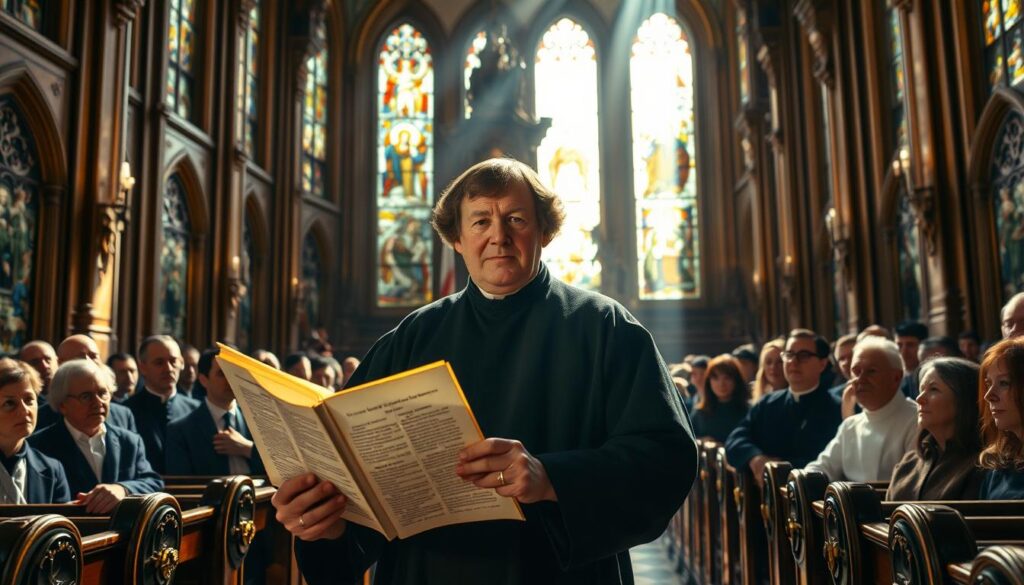
Martin Luther’s Role and the 95 Theses
As an Augustinian friar turned university lecturer, Martin Luther grappled with feelings of spiritual inadequacy. His studies led him to challenge common practices of the Catholic Church, particularly the sale of forgiveness certificates called indulgences. On October 31, 1517, he nailed ninety-five debate points to a church door in Wittenberg – an act comparing to posting campus announcements today.
The printing press transformed Luther’s academic arguments into viral content. Within months, translated versions of his theses spread across Europe. Common people began questioning religious authority while rulers saw opportunities for political independence from Rome.
The Impact of the Edict of Worms
By 1521, tensions reached breaking point. Church leaders demanded Luther recant his writings at a historic meeting known as the Diet of Worms. His refusal led to official condemnation through the Edict of Worms, banning his teachings across the Holy Roman Empire.
This declaration forced Luther’s supporters to organize independently. They developed new worship materials and church structures, laying foundations for what would become the Lutheran Church. The split created space for other reformers while preserving connections to early Christian traditions through creeds and sacraments.
Key Theological Principles in Lutheran Thought
At the heart of this Christian tradition lie two groundbreaking ideas that transformed how people understand salvation and spiritual authority. These principles answer life’s biggest questions: How do we connect with the divine? What gives our faith meaning?
Sola Scriptura and the Authority of Scripture
Sola scriptura—Latin for “Scripture alone”—declares the Bible as Christianity’s ultimate guidebook. This principle revolutionized religious practice by making the Word of God accessible to everyone, not just clergy. Church traditions matter, but they must align with biblical teachings.
Historical documents like the Augsburg Confession help interpret Scripture while guarding against modern distortions. As one reformer noted: “The Bible is the cradle where we find Christ.” This approach keeps teachings rooted in timeless truth rather than shifting cultural trends.
Justification by Faith Alone
The doctrine of justification offers a radical spiritual equation: Christ’s sacrifice + our faith = salvation. Human effort plays no role—God’s grace does all the heavy lifting. As Martin Luther famously struggled, “How can I, a sinner, stand before a holy God?”
Good works naturally flow from this life-changing belief. When the Holy Spirit transforms hearts, kindness and service become joyful responses—not desperate attempts to earn love. This truth comforts those weighed down by guilt, reminding them that Jesus Christ already completed the work.
These twin pillars—Scripture’s authority and grace-driven salvation—keep congregations anchored while addressing modern challenges. They explain why this faith tradition continues shaping lives five centuries after its founding.
Comparing Protestant Lutheranism with Other Christian Traditions
What makes Lutheran practices stand out in the Christian landscape? Their approach blends historical continuity with Reformation-era reforms, creating a distinct path among Christian denominations. This balance becomes clear when examining sacraments, governance, and theological emphases.

Sacramental Views That Break the Mold
While many Protestant churches view communion as symbolic, Lutheran churches teach Christ’s real presence in the Eucharist. This contrasts with the Catholic Church’s transubstantiation doctrine and Reformed groups’ memorialist perspective. As one scholar noted: “The meal becomes a divine encounter, not just a ritual.”
Infant baptism reveals another key difference. Unlike Baptist traditions requiring personal faith declarations, these congregations practice child baptisms. They believe grace operates through the sacrament itself—a middle ground between Catholic sacramentalism and Protestant emphasis on individual choice.
Governance and Worship Style
Church structure offers fresh insights too. Lutheran churches blend local decision-making with regional oversight, avoiding both strict Catholic hierarchy and complete congregational independence. Their worship services often feature:
- Traditional liturgies updated with vernacular language
- Robust congregational singing
- Scripture-focused sermons
This approach maintains historical ties while prioritizing accessibility—a hallmark of Protestant traditions shaped by the Reformation. Theological distinctions also emerge in discussions about free will, with Lutheran teachings emphasizing universal grace over Calvinist predestination concepts common in other Protestant denominations.
The Role of the Five Solas in Shaping Faith
Five revolutionary declarations reshaped Christianity’s DNA during the Reformation era. These sola statements became rallying cries against rigid religious systems, offering fresh ways to experience divine truth. Their influence still echoes in churches worldwide today.
Sola Gratia and Soli Deo Gloria
Sola gratia teaches that grace comes solely through divine generosity—no strings attached. As the Holy Spirit works in hearts, believers discover freedom from performance-based faith. This truth transforms how people view good works, seeing them as gratitude responses rather than spiritual transactions.
Soli Deo gloria shifts all credit to God’s account. Every act of service or worship exists to honor Jesus Christ, not human achievement. This principle empowers the priesthood of believers, reminding communities that all members share equal access to God’s grace.
Together, these solas create a spiritual ecosystem. Faith alone connects people to Christ, while scripture alone keeps teachings anchored. Modern worshippers still find these ideas revolutionary—a timeless blueprint for living grace-filled lives.
FAQ
What defines the core beliefs of this tradition?
Central teachings focus on grace, faith, and scripture. Key ideas include salvation through divine grace alone, the authority of the Bible, and the priesthood of all believers. The Five Solas—scripture, faith, grace, Christ, and God’s glory—shape its foundation.
How did the Reformation influence its development?
The 16th-century movement challenged practices like indulgences and papal authority. Martin Luther’s writings, such as the 95 Theses, sparked reforms emphasizing personal faith and accessible scripture. This reshaped European Christianity and inspired new worship models.
Why are the 95 Theses significant?
Posted in 1517, Luther’s critiques addressed church corruption and doctrinal issues like salvation through works. They ignited debates that led to broader reforms, establishing principles like justification by faith rather than rituals.
What role does "Sola Scriptura" play?
This principle asserts the Bible as the ultimate authority, not church tradition or leaders. It encourages individuals to engage directly with scripture, fostering a personal relationship with God without intermediaries.
How does it differ from Catholicism?
Key distinctions include rejecting papal authority and viewing sacraments as symbolic rather than transformative. It also emphasizes congregational participation and rejects mandatory clerical celibacy.
What is meant by "real presence" in communion?
Unlike symbolic views in some traditions, Lutherans teach that Christ is spiritually present in the Eucharist. This contrasts with Catholic transubstantiation but maintains a sacred, mystical element in the ritual.
How do the Five Solas guide worship practices?
They prioritize scripture readings, sermons explaining Biblical texts, and hymns celebrating grace and faith. Worship centers on communal learning and reflection rather than ritualistic ceremonies.
Are good works important in this faith?
While salvation comes through grace, acts of service flow naturally from gratitude. Works reflect faith but don’t earn divine favor—a balance between spiritual trust and active compassion.
How do global organizations support these communities?
Groups like the Lutheran World Federation foster collaboration, aid, and theological dialogue. They address social justice, humanitarian crises, and interfaith partnerships while preserving doctrinal unity.
Is there flexibility in interpreting doctrines today?
Some branches adapt to modern contexts, focusing on inclusivity and cultural relevance. Others maintain traditional teachings, creating diverse expressions within the broader framework of core beliefs.