The Presbyterian tradition is rooted in Reformed Protestantism, characterized by its unique form of church government by representative assemblies of elders.
The core of this tradition lies in the belief in a sovereign, triune God who has entered into a covenant to save a people for His own glory, emphasizing the authority of the Scriptures and the necessity of grace through faith in Christ.
The Westminster Standards, including the Westminster Confession of Faith and the Larger and Shorter Catechisms, shape the Presbyterian doctrine, guiding the beliefs and practices of Presbyterians today.
Key Takeaways
- Presbyterianism is rooted in Reformed Protestantism.
- The tradition emphasizes the sovereignty of God and the authority of Scriptures.
- The Westminster Standards shape the Presbyterian doctrine.
- Grace through faith in Christ is a core belief.
- The Presbyterian form of government is by representative assemblies of elders.
Overview of Presbyterian Beliefs
The Presbyterian Church is rooted in Reformed theology, emphasizing the sovereignty of God and the authority of Scripture. This foundation shapes the core principles of Presbyterian beliefs and practices.
Core Principles of Faith
At the heart of Presbyterianism are several core principles that guide its doctrine and practice. These include:
- The sovereignty of God in all things
- The authority of the Bible in matters of faith and practice
- The importance of grace through faith in Christ
These principles are not merely abstract concepts but are lived out in the daily lives of Presbyterians. As the Westminster Confession of Faith states, “God is the creator and sustainer of all things, and His sovereignty is the foundation of all Presbyterian beliefs.”
“The Scriptures are the only sufficient, certain, and infallible rule of all saving knowledge, faith, and obedience.”
The Role of Scripture in Doctrine
The role of Scripture in Presbyterian doctrine is paramount. The Bible is considered the inspired and infallible word of God, providing guidance on all matters of faith and practice.
| Aspect | Description |
|---|---|
| Authority | The Bible is the ultimate authority in matters of faith and practice. |
| Inspiration | The Scriptures are considered inspired by God, making them infallible. |
| Guidance | The Bible provides guidance on all aspects of life, from personal conduct to communal worship. |
The Westminster Confession of Faith plays a crucial role in shaping Presbyterian theology, providing a comprehensive framework for understanding God’s relationship with humanity. It underscores the significance of Scripture in Presbyterian doctrine and practice.
The Westminster Confession of Faith
As a seminal document in Reformed theology, the Westminster Confession of Faith has played a crucial role in defining Presbyterian beliefs and practices. Formulated by the Westminster Assembly between 1643 and 1649, this confession outlines the theological and doctrinal standards of Presbyterianism.
Historical Context
The Westminster Confession of Faith was developed during a time of significant religious and political change in the 17th century. The Westminster Assembly, convened by the English Parliament, aimed to reform the Church of England. The Assembly’s work resulted in the creation of this confession, which has since become a foundational document for Presbyterian churches worldwide.
The historical context in which the Confession was written is crucial for understanding its significance. It was a period marked by debates over church governance, doctrine, and the interpretation of Scripture. The Confession reflects the Reformed theology of its time, emphasizing the sovereignty of God and the authority of the Bible.
Key Tenets Explained
The Westminster Confession of Faith outlines several key tenets that are central to Presbyterian theology. These include the nature of God, the covenant of grace, and the sacraments. The Confession emphasizes the sovereignty of God in all things, affirming His control over creation, salvation, and the church.
Another critical aspect is the covenant of grace, which is seen as the framework for understanding God’s relationship with humanity. The Confession explains that salvation is a work of God’s grace, accomplished through the life, death, and resurrection of Jesus Christ.
- The authority and sufficiency of Scripture
- The nature of God as Trinity
- The significance of the sacraments
These tenets, as outlined in the Westminster Confession of Faith, continue to guide the beliefs and practices of Presbyterian churches, making it a vital part of Presbyterian Church history and Reformed theology.
Understanding the Trinity
Presbyterian theology is rooted in the doctrine of the Trinity, which describes God as a single entity in three distinct persons: Father, Son, and Holy Spirit. This foundational belief is central to Presbyterian beliefs and influences various aspects of their faith and practice.
The Nature of God
The Trinity is a complex and deeply significant theological concept that affirms the existence of one God in three coequal and coeternal persons. This understanding of God’s nature is crucial for comprehending Reformed theology and its implications for worship and daily life.
The Father, Son, and Holy Spirit are not separate entities but are distinct yet inseparable aspects of the Godhead. This unity and diversity within God are reflected in Presbyterian worship and Presbyterian church doctrine.
Importance in Worship
The doctrine of the Trinity significantly influences Presbyterian worship practices. By acknowledging the distinct roles of the Father, Son, and Holy Spirit, Presbyterians deepen their understanding of their relationship with God.
In worship, the Trinity is honored through various elements, including prayer, hymns, and sacraments. This trinitarian focus ensures that Presbyterian worship is rich and multifaceted, reflecting the complexity and beauty of the Godhead.
The significance of the Trinity in Presbyterian beliefs underscores the richness and depth of their theological perspective, shaping their approach to faith, worship, and community life.
Salvation in Presbyterian Theology
Salvation, as understood in Presbyterian theology, is a gift from God, received through faith in Jesus Christ. This foundational belief is rooted in the principles of Reformed theology, emphasizing the sovereignty of God in the salvation process.
Justification by Faith Alone
A cornerstone of Presbyterian doctrine is the belief in justification by faith alone. This principle asserts that salvation is not earned through good works or human merit but is solely the result of God’s gracious act in Christ. As such, individuals are justified before God not because of their righteousness, but because of their faith in Jesus Christ.
The concept of justification by faith alone is deeply connected to the broader context of Reformed theology, which emphasizes the authority of Scripture and the importance of faith in the Christian life. This doctrine is not only a theological concept but also has practical implications for how Presbyterians live out their faith.
The Role of Grace
Grace plays a pivotal role in Presbyterian theology, particularly in the context of salvation. It is through God’s grace that individuals are not only called to faith but are also justified and sanctified. The role of grace underscores the Presbyterian belief that salvation is entirely a work of God, from initiation to completion.
The interplay between grace and faith is crucial in understanding Presbyterian beliefs about salvation. While faith is the means by which salvation is received, it is grace that makes this faith possible. This dynamic highlights the Reformed understanding of salvation as a gracious gift from God.
| Key Concepts | Description |
|---|---|
| Justification by Faith Alone | Salvation is received through faith in Christ, not by works. |
| The Role of Grace | Grace is the means by which individuals are called, justified, and sanctified. |
| Reformed Theology | Emphasizes the sovereignty of God in salvation and the authority of Scripture. |
Church Governance and Structure
At the heart of Presbyterian polity is a unique governance model that highlights the significance of elder leadership and interchurch connections. This governance structure is foundational to the Presbyterian Church USA and other Presbyterian denominations, shaping their doctrine and polity.
The Importance of Elders
In the Presbyterian Church, elders play a crucial role in the governance and spiritual leadership of the congregation. Elected by the congregation, elders are responsible for guiding the church in accordance with its doctrine and polity. Their duties include overseeing worship, providing pastoral care, and making key decisions regarding the church’s direction.
The importance of elders is underscored by their role in maintaining the theological integrity and spiritual vitality of the church. Through their leadership, elders ensure that the church remains faithful to its Presbyterian heritage and committed to its mission.
Connectionalism in Presbyterianism
Another distinctive feature of Presbyterian governance is its connectional system. This system links local churches to broader assemblies, such as presbyteries and general assemblies, fostering unity and cooperation among churches. Through this connectional framework, Presbyterian churches engage in collaborative ministry, mission, and service, strengthening their collective witness and impact.
The connectional system is a hallmark of Presbyterianism, reflecting the denomination’s commitment to interchurch collaboration and mutual support. By participating in presbyteries and higher assemblies, local churches are connected to and supported by a broader community of faith, enhancing their ability to serve and witness in their local contexts.
In summary, the governance structure of the Presbyterian Church is characterized by the importance of elders and the connectional system. These elements are integral to the Presbyterian doctrine and polity, shaping the church’s leadership, mission, and unity.
The Sacraments in Presbyterian Practice
The sacraments hold a central place in Presbyterian worship, reflecting the church’s reformed theology. In Presbyterian practice, sacraments are considered vital elements that connect believers with God’s covenant.
Presbyterians recognize two sacraments: Baptism and the Lord’s Supper. These sacraments are significant acts of worship that embody the church’s doctrine and are rooted in Presbyterian beliefs.
Baptism: Meaning and Significance
Baptism is seen as a sign of God’s covenant with his people. It symbolizes the individual’s incorporation into the community of faith and is considered a sign and seal of God’s covenant.
In Presbyterian churches, Baptism is typically performed through the sprinkling or pouring of water on the person being baptized, symbolizing purification and the washing away of sin. This act is believed to be a means of grace, through which God nurtures the faith of the individual and the community.
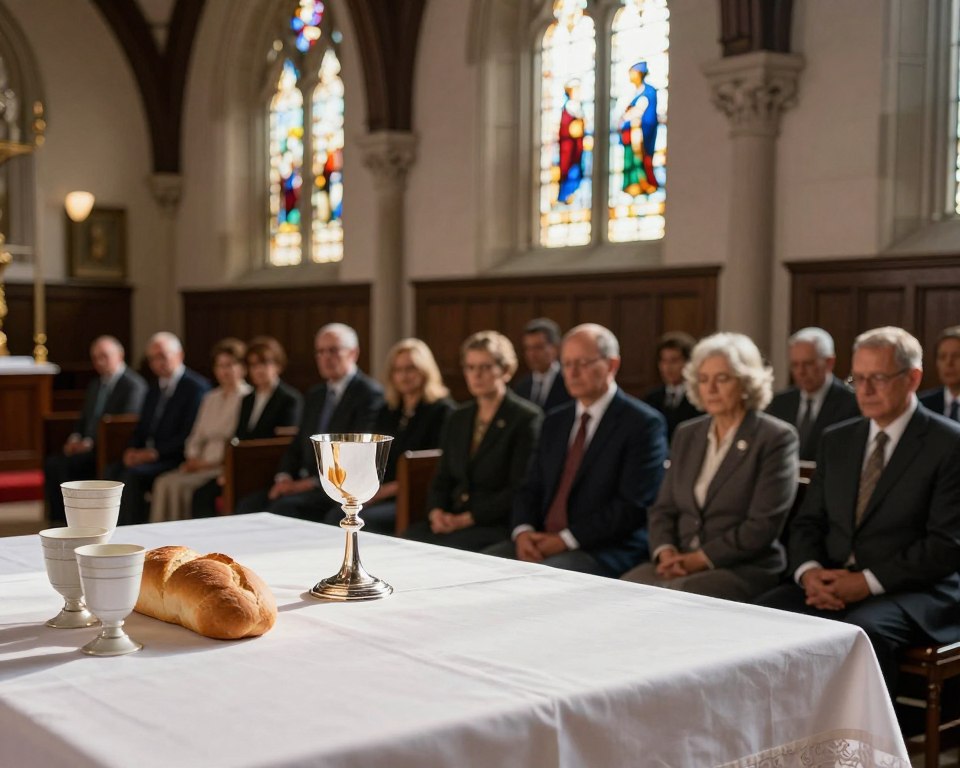
The Lord’s Supper: Understanding Communion
The Lord’s Supper, also known as Communion, is understood as a commemoration of Christ’s sacrifice. It is a sacrament in which participants receive spiritual nourishment through the bread and wine, which are believed to be symbols of Christ’s body and blood.
In Presbyterian worship, the Lord’s Supper is observed regularly, though the frequency can vary among different congregations. The sacrament is seen as a means of grace, fostering a deeper connection among believers and between the believer and Christ.
The Presbyterian Church’s understanding of the sacraments is deeply rooted in its Presbyterian Church doctrine, which emphasizes the importance of these practices in the life of the church and its members.
Presbyterian Worship and Liturgy
Presbyterian worship services are designed to be reverent and meaningful, reflecting the church’s theological heritage. The structure and elements of these services are rooted in reformed theology, emphasizing the importance of liturgy.
Elements of Worship Services
Presbyterian worship typically includes several key elements: prayer, Scripture reading, preaching, and the sacraments. These components work together to create a comprehensive worship experience.
- Prayer: Prayer is an essential part of Presbyterian worship, providing a means of communication with God.
- Scripture Reading: The reading of Scripture is fundamental, highlighting the importance of biblical teachings.
- Preaching: Preaching is a crucial element, where the Scripture is explained and applied to daily life.
- Sacraments: The sacraments, particularly baptism and the Lord’s Supper, are integral to Presbyterian worship, symbolizing spiritual truths.
Music and Prayer in Worship
Music plays a significant role in Presbyterian worship, with a rich tradition of singing psalms and hymns. The use of music enhances the worship experience, fostering a sense of community and reverence.
“Singing is a vital part of our worship, allowing us to express our faith and connect with God and each other.”
| Element | Purpose | Significance |
|---|---|---|
| Prayer | Communication with God | Deepens spiritual connection |
| Scripture Reading | Teaching biblical truths | Grounds worship in Scripture |
| Preaching | Explaining and applying Scripture | Applies biblical teachings to life |
| Music | Enhancing worship experience | Fosters community and reverence |
Social Justice and Ethical Teachings
With a strong foundation in reformed theology, Presbyterian churches actively engage in social justice and community service. This commitment is a natural extension of their faith, driven by the belief in caring for the marginalized and advocating for justice.
Commitment to Community Service
The Presbyterian Church USA is involved in various community service initiatives, reflecting its theological emphasis on serving the poor and the oppressed. Some of the key areas of focus include:
- Providing aid to marginalized communities
- Advocating for human rights and social justice
- Engaging in environmental stewardship
These initiatives demonstrate the church’s commitment to living out its faith in practical ways, addressing social needs, and promoting justice and compassion.

Views on Contemporary Issues
The Presbyterian Church USA takes a proactive stance on contemporary issues, guided by its reformed theology and commitment to social justice. Some of the issues they address include:
- Racial justice and equality
- Economic justice and poverty alleviation
- Immigration reform and advocacy
By engaging with these issues, the Presbyterian Church USA seeks to promote a more just and equitable society, reflecting its core values of compassion, justice, and peace.
The church’s approach to social justice is not limited to advocacy; it also involves direct community service and support for those in need. This holistic approach is rooted in the belief that faith should be lived out in action, serving as a witness to the transformative power of God’s love.
Conclusion: The Ongoing Relevance of Presbyterian Doctrine
The Presbyterian Church doctrine remains a vital part of the faith and practice of Presbyterians today. Rooted in the Westminster Confession of Faith, this doctrine continues to shape their understanding of God, inform their worship, and direct their engagement with the world.
At its core, the Presbyterian statement of faith is centered on reformed theology, emphasizing the sovereignty of God and the authority of Scripture. This theological framework guides Presbyterians in their beliefs and practices, providing a rich and nuanced understanding of the Christian faith.
As a living tradition, Presbyterian church doctrine continues to influence the lives of believers, offering a comprehensive approach to faith that encompasses worship, community service, and social justice. By understanding and embracing this doctrine, Presbyterians can deepen their faith and engage more effectively with the world around them.
FAQ
What are the core principles of Presbyterian Church doctrine?
The core principles include the sovereignty of God, the authority of the Scriptures, and the necessity of grace through faith in Christ, rooted in Reformed theology.
What is the significance of the Westminster Confession of Faith in Presbyterianism?
The Westminster Confession of Faith is a foundational document that outlines key tenets of Presbyterian theology, including the nature of God, the covenant of grace, and the sacraments, shaping Presbyterian beliefs and practices.
How does the doctrine of the Trinity influence Presbyterian worship?
The doctrine of the Trinity, affirming one God in three distinct persons, influences Presbyterian worship by acknowledging the distinct roles of the Father, Son, and Holy Spirit, reflected in liturgy and sacraments.
What is the Presbyterian understanding of salvation?
Salvation is understood as a gift of God’s grace, received through faith in Jesus Christ, with justification by faith alone being a central tenet, emphasizing that salvation is not earned by works.
How are Presbyterian churches governed?
Presbyterian churches are governed through a connectional system, with elders providing spiritual leadership and guidance, and participation in presbyteries and higher assemblies fostering unity and cooperation among churches.
What is the significance of the sacraments in Presbyterian practice?
The sacraments of Baptism and the Lord’s Supper are significant acts of worship, with Baptism symbolizing incorporation into the community of faith and the Lord’s Supper being a commemoration of Christ’s life, death, and resurrection.
What are the typical elements of Presbyterian worship services?
Presbyterian worship services typically include prayer, Scripture reading, preaching, and the sacraments, with music being an important aspect, featuring a rich tradition of singing psalms and hymns.
How do Presbyterian churches approach social justice and community service?
Presbyterian churches place a strong emphasis on social justice and community service, driven by their theological commitment to caring for the poor, the marginalized, and the oppressed, and reflected in various community service initiatives and advocacy.
What is the role of Scripture in Presbyterian doctrine?
Scripture is considered the inspired and infallible word of God, playing a paramount role in shaping Presbyterian theology and guiding the beliefs and practices of Presbyterians.
How does Presbyterian doctrine remain relevant in contemporary times?
Presbyterian doctrine continues to provide a theological framework that guides the faith and practice of Presbyterians, shaping their understanding of God, informing their worship, and directing their engagement with the world.