Exploring faith communities across Britain reveals a vibrant spiritual tapestry shaped by centuries of reform. These groups share a core belief: every person can interpret sacred texts personally, unlike traditions relying solely on hierarchical guidance. This principle fuels diverse worship styles and theological perspectives thriving today.
Many of these congregations trace their roots to historical movements prioritizing individual connection with scripture. Over time, they’ve evolved while maintaining foundational values like community support and scriptural focus. You’ll find both traditional denominations and newer, flexible groups adapting to modern needs.
Nine major denominational families form the backbone of this landscape, each offering unique approaches to worship and doctrine. Alongside them, independent congregations emphasizing core Reformation principles are gaining popularity. Their focus remains on fostering meaningful connections and addressing contemporary challenges.
These faith centers play vital roles beyond Sunday services. From food banks to youth programs, they strive to improve daily life for members and neighbors alike. Whether through music, outreach, or small-group studies, they create spaces where individuals from all backgrounds can grow spiritually.
Key Takeaways
- Personal scripture interpretation defines these communities’ approach to faith
- Historical reforms shaped today’s diverse denominational landscape
- Nine main tradition groups coexist with independent congregations
- Modern adaptations balance core beliefs with current societal needs
- Community service remains central to their mission
- Both traditional and contemporary worship styles thrive
Introduction to Protestantism in the UK
At the heart of these faith communities lies a simple yet revolutionary idea: every believer holds the authority to interpret sacred texts personally. This principle shapes diverse doctrines while maintaining unity through shared core values. Unlike systems relying on centralized leadership, spiritual growth here often begins with individual Bible study and prayer.
Overview of Protestant Beliefs and Traditions
Central to their doctrine is the belief that scripture alone guides Christian life. Worship customs range from formal liturgies to modern music sessions, yet most include sermons explaining biblical teachings. Many groups emphasize salvation through faith rather than rituals, echoing Martin Luther’s famous assertion that “grace alone saves.”
These communities celebrate the Invisible Church concept – the idea that true believers form one universal body beyond denominational labels. Small prayer groups and Bible studies help members develop personal connections to their faith. You’ll often find lively discussions about scriptural meanings, reflecting the value placed on individual understanding.
Modern adaptations blend traditional ideas with contemporary needs. Some congregations use multimedia in services, while others preserve centuries-old hymns. Despite these differences, all prioritize scripture’s authority and encourage active participation in spiritual journeys. This balance keeps teachings relevant across generations.
Historical Origins and Pre-Reformation Influences
Long before formal religious reforms reshaped Europe, bold thinkers planted seeds of change. Fourteenth-century scholar John Wycliff sparked early transformation by translating scripture into English. His radical vernacular Bible challenged institutional control over spiritual knowledge, letting ordinary people engage directly with sacred texts.
Pre-Reformation Influences and Early Thinkers
Wycliff’s 1380s translation work did more than change language – it shifted power dynamics. By making scripture accessible, he undermined the idea that only clergy could interpret divine truth. This democratization of faith laid groundwork for later reformers who prioritized personal Bible study over hierarchical decrees.
The Role of Humanism and Early Reform Movement
When Renaissance humanism reached England, scholars like Erasmus reshaped theological education. His Cambridge lectures emphasized critical thinking and original Greek scripture analysis. Students trained in these methods became key figures in the 16th-century reform movement.
Cambridge University’s “little Germany” group absorbed Luther’s ideas through smuggled writings. Future Archbishop Thomas Cranmer and others in this circle would later craft England’s religious identity. Their work blended humanist scholarship with demands for practical faith reforms.
Three key developments marked this era:
- Vernacular scripture translations empowering lay believers
- Humanist emphasis on original biblical languages
- Networks of reform-minded scholars sharing radical ideas
The Impact of Henry VIII and the Act of Supremacy
England’s religious landscape changed forever when a king’s personal crisis sparked a national transformation. Henry VIII’s determination to annul his marriage to Catherine of Aragon set off a chain reaction that reshaped spiritual authority across the realm.
Henry VIII’s Break with Rome
The Tudor monarch’s clash with the Catholic Church began as a battle over marital rights. After 18 years of marriage, Henry sought to divorce Catherine—his brother’s widow—to wed Anne Boleyn. When Pope Clement VII refused, the king took matters into his own hands.
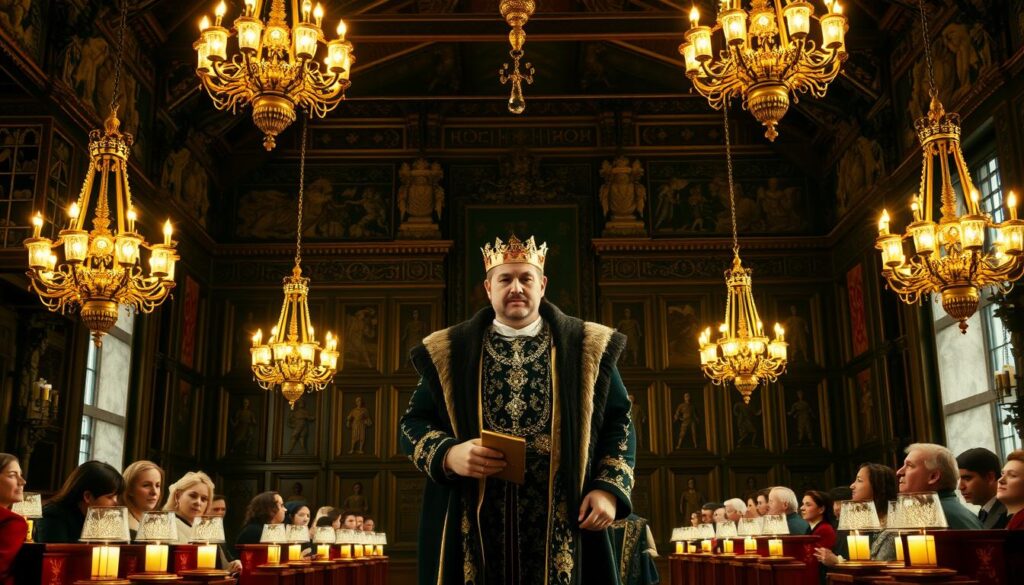
By 1533, English courts declared the union invalid. This bold move led to the Act of Supremacy in 1534, which made Henry “Supreme Head of the Church of England.” For the first time, ultimate religious power rested with the monarchy rather than Rome.
Establishing the Church of England
The new national church became a political and spiritual hybrid. Henry dissolved monasteries between 1536-1540, transferring their wealth to the Crown. This reshaped both the economy and religious practice.
Though initially driven by personal motives, the king’s actions created lasting change. Future monarchs would inherit his role as head of the church—a precedent influencing English Christianity for centuries. The stage was set for Protestant ideas to take root in British soil.
The Role of Anglicanism and the Church of England
With over 70 million followers worldwide, the Anglican church represents one of Christianity’s most widespread traditions. At its heart lies the Church of England, serving as the spiritual home for this global communion. This network shares liturgical practices while celebrating cultural diversity across continents.
Leadership, Structure, and the Book of Common Prayer
The Archbishop of Canterbury acts as a unifying figure rather than a governing authority. This unique arrangement allows national churches to adapt traditions while maintaining historical ties. Local bishops oversee dioceses, creating a hierarchy that supports both unity and regional flexibility.
Thomas Cranmer’s 1549 Book of Common Prayer revolutionized worship practices. Its 1662 revision became the standard for centuries, blending scripture with structured liturgy. The text’s elegant language still shapes services today, from baptisms to holiday celebrations.
| Edition | Key Features | Historical Impact |
|---|---|---|
| 1549 | First English-language liturgy | Standardized worship post-Reformation |
| 1662 | Refined theological language | Became mandatory until 20th century |
| Modern | Alternative services added | Accommodates contemporary preferences |
The Church of England‘s governance combines ancient structures with reformed theology. Its 39 Articles (1571) clarify doctrinal positions, distinguishing Anglican beliefs from other traditions. This via media approach creates space for diverse interpretations within a shared framework.
Parishes maintain surprising autonomy despite the hierarchy. A local vicar might lead traditional chant one week and modern worship music the next. This balance keeps the Anglican church relevant across generations and cultures.
Evolution of Other Protestant Denominations
From shared Reformation roots grew diverse branches, each shaping spiritual life through unique practices. These groups maintained core principles like scripture’s authority while developing distinct identities. Today, they form a global network of communities united in purpose yet varied in expression.

Baptist groups revolutionized sacramental practices by insisting on adult confession before baptism. Their rejection of infant rites reflects a broader emphasis on personal faith decisions. With 40 million followers worldwide, this approach continues to define their identity.
Methodist communities emerged from John Wesley’s 18th-century revival, blending social activism with spiritual discipline. Their connexional governance system links congregations while allowing local flexibility. This structure supports both unity and adaptability across cultures.
| Denomination | Founding Principle | Global Membership |
|---|---|---|
| Baptist | Believer’s baptism | 40 million+ |
| Methodist | Personal holiness | 80 million+ |
| Lutheran | Augsburg Confession | 80 million+ |
Lutheran doctrine centers on Martin Luther’s teachings, particularly around baptism and holy communion. Their liturgical practices honor tradition while engaging modern worshippers. This balance keeps ancient rituals meaningful for today’s followers.
Though differing in governance—from congregational autonomy to episcopal structures—these movements share a commitment to separating from Roman Catholic traditions. Their evolution proves faith communities can preserve core truths while embracing cultural shifts.
The Influence of the Oxford Movement on Protestant Identity
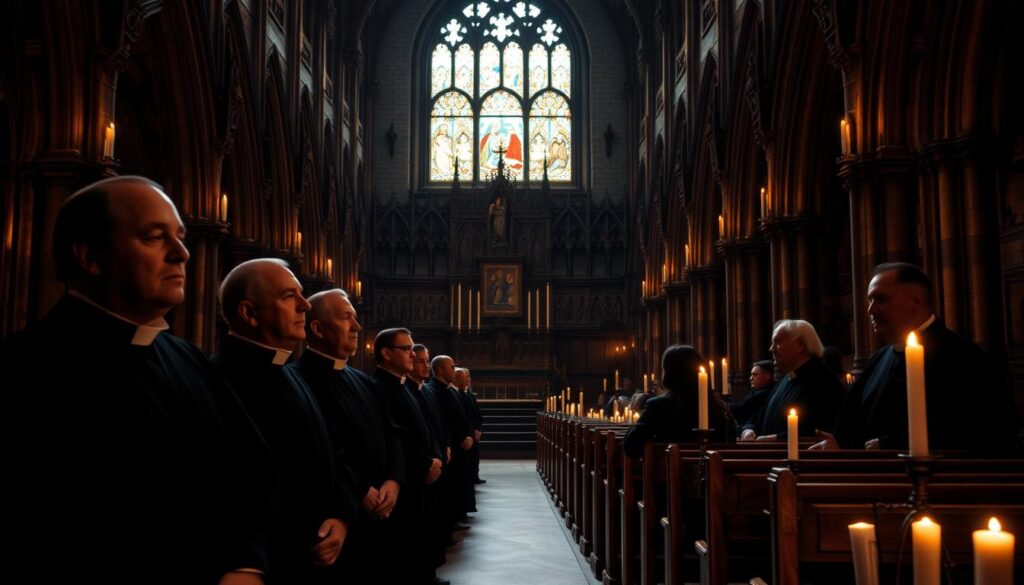
A quiet revolution in worship practices began in 1830s England, reshaping spiritual identity for generations. The Oxford Movement sought to reconnect Anglican traditions with early Christian roots, sparking debates that still echo today. At its core, this effort aimed to balance Reformation principles with older liturgical customs.
Re-emergence of Catholic Elements in Worship
John Henry Newman and fellow thinkers shocked traditionalists by reintroducing symbols like priestly vestments and incense. Their Tracts for the Times argued these practices belonged within church heritage, not just Roman Catholicism. Tract 90 famously reinterpreted the 39 articles, claiming they allowed Marian devotion and sacramental emphasis.
This shift divided clergy and congregations. Some embraced ornate rituals as spiritual enrichment, while others saw betrayal of Protestant simplicity. The tension birthed two distinct approaches: High Church Anglo-Catholicism and Low Church evangelical styles.
Modern Implications for Anglican and Protestant Practices
Today’s worship spaces reveal the movement’s lasting influence. Many Anglican parishes feature stained glass and processions, blending ancient and modern. Others maintain stark chapels focused solely on preaching—proof that both visions coexist within church networks.
| High Church Practice | Low Church Approach |
|---|---|
| Liturgical vestments | Casual attire |
| Eucharist-centered services | Sermon-focused gatherings |
| Mary veneration | Minimal saint references |
The 39 articles remain a touchstone, though interpretations vary widely. This diversity shows how communities adapt shared foundations to meet changing spiritual needs while honoring their roots.
Contemporary Worship and Liturgical Practices
Modern spiritual gatherings showcase a dynamic fusion of ancient rituals and fresh expressions. Across communities, sacred spaces now host services ranging from candlelit recitations to electric guitar-led praise sessions. This spectrum reflects ongoing efforts to honor tradition while embracing cultural shifts.
The Book of Common Prayer continues shaping worship centuries after its creation. Though updated in the 20th century, its poetic language still resonates in many parishes. Some congregations blend its structured prayers with spontaneous worship elements, creating hybrid services that bridge generations.
Approaches to holy communion reveal fascinating diversity. Traditional services might use silver chalices and kneelers, while contemporary versions feature ceramic cups and standing circles. These variations share a common thread: the belief that shared sacraments unite believers across time and culture.
| Element | Traditional Approach | Modern Adaptation |
|---|---|---|
| Liturgical Language | 16th-century English | Contemporary translations |
| Music Style | Organ hymns | Worship bands |
| Communion Practice | Weekly with wafers | Monthly with artisanal bread |
| Sacraments Recognized | Two primary rites | Seven sacraments in some parishes |
Twentieth-century reforms introduced groundbreaking changes. Churches began permitting lay leadership roles and gender-inclusive language. Many now project lyrics on screens while keeping printed prayer books available—a physical reminder of enduring roots.
Sacramental practices demonstrate this balance beautifully. While baptism and holy communion remain central, some communities incorporate additional rites like confirmation or marriage ceremonies. This flexibility allows meaningful engagement without compromising core beliefs.
Key Doctrinal Shifts from the 17th to the 20th Century
Four transformative centuries reshaped spiritual thought through heated debates and evolving practices. The 17th century brought Pietism’s emphasis on personal faith over rigid doctrine. This movement encouraged Bible study groups and heartfelt worship, challenging formal church structures.
Debates in Doctrine and Changes in Church Practices
Enlightenment ideas sparked 18th-century clashes between reason and revelation. Leaders re-examined traditional teachings about salvation and scripture’s role. Some groups embraced scientific discoveries, while others doubled down on literal interpretations.
The 19th century saw renewed focus on social justice within doctrinal frameworks. Many communities linked faith to abolition efforts and workers’ rights. These shifts revealed how teachings could address real-world suffering.
By the 20th century, modern challenges like world wars forced new theological questions. Churches adapted doctrines to address existential fears and cultural changes. This period birthed fresh approaches to ancient concepts like grace and community.
Through these years, core beliefs remained while methods evolved. Today’s diverse faith expressions reflect this dynamic journey of balancing tradition with contemporary needs.
FAQ
How did Henry VIII’s actions shape the Church of England?
Henry VIII’s break with the Roman Catholic Church over his marriage to Catherine of Aragon led to the 1534 Act of Supremacy. This law declared him the Supreme Head of the Church of England, establishing independence from papal authority and reshaping religious governance.
What role does the Book of Common Prayer play in Anglican worship?
The Book of Common Prayer, first published in 1549, standardizes liturgy for services like Holy Communion and baptism. It reflects Anglican theology, blending Protestant ideas with traditional Catholic rituals, and remains central to worship in many congregations.
How did the Oxford Movement influence Anglican practices?
The 19th-century Oxford Movement revived Catholic elements, such as ceremonial vestments and sacramental emphasis, within the Church of England. This sparked debates but also enriched Anglican identity by reconnecting with pre-Reformation traditions.
What doctrinal shifts occurred between the 17th and 20th centuries?
Key changes included broader acceptance of critical biblical scholarship, relaxed views on clergy marriage, and evolving interpretations of salvation. The 20th century also saw increased ecumenical dialogue with other Christian traditions.
How does the Archbishop of Canterbury influence Anglican leadership?
As the spiritual leader of the Church of England, the Archbishop of Canterbury oversees doctrine, ordains bishops, and promotes unity among global Anglican communities. The role combines symbolic authority with administrative responsibilities.
What distinguishes modern Anglican liturgy from other denominations?
Anglican worship often blends traditional liturgy—like structured prayers from the Book of Common Prayer—with contemporary elements such as modern music. This balance appeals to diverse congregations while maintaining historical roots.
Why did humanism impact early Reformation ideas in England?
Humanist scholars like Erasmus emphasized returning to original biblical texts and early Christian writings. These ideas inspired reformers to critique Church corruption and advocate for a faith grounded in Scripture rather than hierarchy.