Ruben Habito’s childhood in the Philippines centered on family rosary prayers and Catholic traditions. But as a teenager, he wrestled with a tough question: How could a loving God allow suffering? This doubt deepened when he saw children sleeping on Manila’s streets. His search for answers led him to physics, where he discovered the universe’s hidden connections—like light eventually returning to its source after billions of years.
This revelation shifted his understanding of divinity. Instead of envisioning a distant figure, he saw a boundless force linking all life. This insight guided him to Jesuit training and, later, to Japan. There, he encountered Zen Buddhism through Father Thomas Hand—a meeting that bridged two spiritual worlds.
Stories like Habito’s show how personal struggles often spark profound journeys. After Vatican II in 1965, the Catholic Church encouraged dialogue with other faiths. This openness allowed seekers to blend traditions without abandoning their roots. Military veterans, priests, and everyday people now find stillness through practices like meditation and prayer.
At its core, this path isn’t about choosing one belief over another. It’s about discovering shared truths: the value of silence, the beauty of mystery, and the timeless connection between all beings.
Key Takeaways
- Blending contemplative practices from different faiths can deepen spiritual understanding
- Personal challenges often lead to meaningful interfaith exploration
- The Catholic Church’s post-1965 reforms encouraged cross-religious dialogue
- Practitioners maintain their core beliefs while embracing complementary wisdom
- Stillness and meditation serve as bridges between Eastern and Western traditions
- Shared values across religions highlight universal truths about connection
Exploring Spiritual Heritage and Transformation
For centuries, spiritual seekers have discovered surprising connections between seemingly different traditions. Take Thomas Merton—a Trappist monk who spent years studying Zen meditation. His journey shows how ancient practices can breathe new life into familiar rituals.
When Silence Speaks Louder
Many find that combining prayer with meditation creates deeper awareness. A Jesuit priest once shared: “My morning rosary flows naturally into seated breathing—both become one conversation.” This blend mirrors Ruben Habito’s experience, where Ignatian exercises and Zen postures revealed identical stillness.
Tools for Modern Seekers
Practical integration often starts small:
- Pairing lectio divina with mindful breathing
- Using prayer beads as meditation anchors
- Alternating chant and silence during reflection
Thomas Moore captures this approach perfectly:
“My family roots ground me, but other religions show fresh ways to water those roots.”
Through such blending, many discover their original traditiondeepenedrather than diluted.
This way of spiritual growth isn’t about mixing ingredients—it’s realizing different paths lead to the same table. As one practitioner notes: “After twenty years, I finally see how these things complete each other.”
Embracing “zen catholicism” as a Path to Inner Harmony
Thomas Moore offers a refreshing perspective: “Zen sweeps away assumptions so I can rediscover my faith’s essence.” This approach transforms spiritual practice into a living dialogue rather than a rigid set of rules.
The Role of Meditation, Prayer, and Contemplation
Morning routines often reveal the synergy between traditions. One practitioner describes: “Breathing exercises quiet my mind before reading Psalms—both become doorways to presence.” Such integration mirrors Moore’s view of Zen as a way to revitalize ancient rituals through mindful attention.
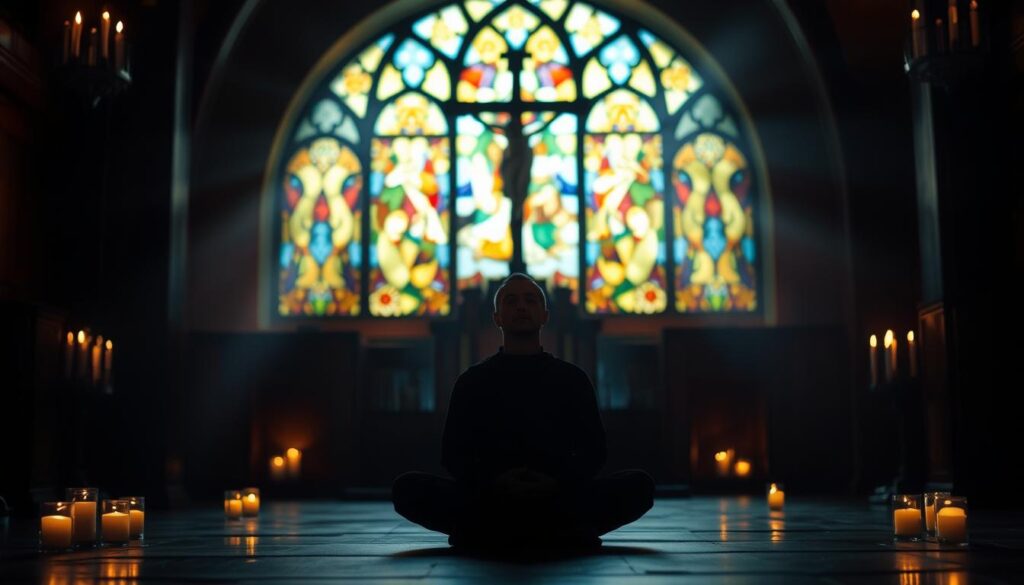
- Start sessions with centering breaths to calm mental chatter
- Use sacred texts as meditation anchors rather than analytical puzzles
- End contemplative periods with gratitude-focused prayer
Navigating Doctrinal Differences with Openness
A Benedictine nun shares her experience: “Studying Buddhist teachings didn’t weaken my vows—it made me appreciate the Eucharist’s mystery more deeply.” This echoes Moore’s advice to treat beliefs like clay rather than concrete—malleable yet substantial.
“The Miracle of Mindfulness shows how washing dishes can become holy work,” notes a theology professor. “That’s the thing—these books help us see ordinary moments as sacred ground.”
By focusing on shared goals—compassion, awareness, service—many find their original faith enriched rather than threatened. As one teacher observes: “This path isn’t about changing what you believe, but how you believe it.”
Real-Life Success Stories and Interfaith Testimonies
Stephen Williams spent 22 years maintaining order as a British soldier. Returning to civilian life at 42 left him adrift—until meditation books sparked a unexpected journey. His discovery of Buddhist practices led to three-month retreats at a French monastery, yet an old stained-glass cross there reignited childhood prayers.
From Military Discipline to Spiritual Awakening
“That cross made me whisper the Our Father like I was eight again,” Williams recalls. His Zen training became preparation for deeper Christian exploration. In Rome, 4th-century chapel frescoes and Caravaggio’s dramatic lighting stirred emotions he’d never felt during meditation sessions.
Personal Journeys: Overcoming Life’s Challenges
Thomas Moore found spiritual depth through unexpected interruptions. At Dublin Mass with his family, an elderly man’s clattering suitcase became part of the sacred experience. “The noise didn’t ruin worship—it made it real,” he explains. Both stories show how embracing life’s rough edges can deepen faith.
Experiences in Diverse Religious Settings
Williams’ eventual connection with Opus Dei surprised many. Years of silent Zen practice had honed his focus for Catholic devotion. As he notes: “Different traditions are like musical instruments—each reveals unique aspects of the same symphony.”
These testimonies remind us that spiritual growth often comes through unexpected doors. Whether through sacred art, disrupted rituals, or borrowed practices, seekers find their way home by wandering.
Conclusion
Modern seekers are discovering that ancient wisdom often speaks through unexpected voices. The stories shared here reveal a path where stillness becomes common ground—a space where breathing exercises deepen prayer, and sacred texts gain new resonance through meditation.
This approach thrives through patient practice rather than rigid formulas. As practitioners show, blending methods doesn’t dilute faith but polishes its essence. Shared tools—like mindful service or silent reflection—help bridge divides while honoring each tradition’s uniqueness.
The real magic happens when we stop comparing beliefs and start experiencing connections. A former soldier finds peace in monastery retreats. A theologian discovers holiness in daily chores. These moments remind us that spiritual growth often blooms where we least expect it.
For those called to this way, the journey offers fresh eyes to see their roots. It’s not about replacing rituals but rediscovering their heartbeat—the universal longing for meaning that unites all seekers.
FAQ
How can two distinct traditions coexist in one spiritual practice?
Many find harmony by focusing on shared values like humility, compassion, and seeking truth. Blending contemplative practices from both paths helps deepen self-awareness while honoring core beliefs.
What daily habits support this blended approach?
Simple rituals—like morning meditation paired with evening prayer—create balance. Silent reflection, mindful breathing, and gratitude journaling are practical tools that bridge inner stillness with active faith.
Are there conflicts between doctrines or teachings?
Differences exist, but openness and discernment help navigate them. Emphasizing universal principles—love, service, and connection—over rigid labels fosters unity without dismissing tradition.
Can this path benefit those in fast-paced modern lifestyles?
Absolutely. Techniques like centering prayer or zazen (Zen meditation) offer grounding amid chaos. Stories from veterans, parents, and professionals show how these practices build resilience and clarity.
How do families engage with this approach?
Shared moments of silence, nature walks, or reading spiritual texts together nurture connection. Adapting rituals to fit individual needs ensures inclusivity without pressure.
Where can I learn from others’ experiences?
Books by Thomas Merton or Shunryu Suzuki explore cross-traditional wisdom. Online communities and interfaith workshops also provide relatable stories of growth through challenge and discovery.