At the heart of Episcopal worship lies a sacred meal called the Holy Eucharist, rooted in Jesus Christ’s command to remember his life and resurrection. This practice, known as communion or the Lord’s Supper, blends ancient rituals with modern expressions of faith. The term “Eucharist” itself comes from Greek words meaning “thanksgiving,” reflecting gratitude for divine grace.
In Episcopal communities, this sacrament serves as both a spiritual nourishment and a unifying act. All baptized Christians are invited to participate, regardless of denomination. This openness reflects a commitment to inclusivity while honoring centuries-old traditions. The experience balances reverence for mystery with practical guidance for worshippers.
The Episcopal Church views communion as more than symbolic. It’s a living encounter with Christ’s presence, fostering connection between believers and their shared faith. Through bread and wine, participants join a global tradition stretching back to the earliest Christian gatherings.
Key Takeaways
- The Eucharist centers on thanksgiving for God’s love and Christ’s sacrifice
- All baptized Christians may participate, emphasizing unity across denominations
- Ancient rituals meet modern spiritual needs in Episcopal practice
- Theological foundations connect to Jesus’ Last Supper instructions
- Communion serves as spiritual nourishment and communal bonding
Understanding Holy Communion in the Episcopal Tradition
Holy Communion in the Episcopal tradition is a vibrant tapestry of ancient rituals and contemporary faith. As the principal act of Christian worship, it gathers communities weekly and during sacred festivals, linking modern believers to centuries of spiritual heritage. This practice breathes life into biblical instructions while addressing today’s diverse spiritual needs.
Historical Roots and Biblical Foundations
The church’s communion customs stretch back through Anglican history to early Christian gatherings. Jesus’ command at the Last Supper—“Do this in remembrance of me”—forms the bedrock of this sacrament. These words have guided worshipers for generations, preserving continuity with apostolic traditions while allowing thoughtful adaptations over time.
Significance in Contemporary Worship
Modern Episcopal services weave ancient liturgies with accessible language and inclusive practices. As one clergy member reflects,
“We’re not guarding relics—we’re keeping a flame alive.”
Theholy eucharistbridges personal spirituality and collective purpose, offering nourishment through Christ’s spiritual presence. This balance between reverence and relevance creates a uniquewayto experience divine connection within a supportivefaithcommunity.
The Origins of the Holy Eucharist in the Episcopal Church
The Episcopal Church traces its Eucharistic practice back to a transformative moment in Christian history. At the Last Supper, Jesus Christ established a spiritual blueprint that still guides worship today. This sacred meal became Christianity’s first liturgy—a pattern repeated across continents and centuries.
Four Actions That Changed Worship Forever
During that final evening with his disciples, Jesus took bread, blessed it, broke it, and shared it. These movements created a template Episcopal priests follow in every service. The Gospel accounts show this wasn’t just a farewell meal—it was a divine mandate to “do this in remembrance of me.”
| Action | Biblical Reference | Modern Practice |
|---|---|---|
| Took bread | Matthew 26:26 | Preparation of elements |
| Gave thanks | Luke 22:19 | Eucharistic prayer |
| Broke bread | Mark 14:22 | Fraction rite |
| Gave to disciples | 1 Corinthians 11:24 | Communion distribution |
This fourfold pattern makes every Lord’s Supper more than ritual—it’s a way to experience Christ’s ongoing presence. Early Christians called this meal “the breaking of bread,” emphasizing both physical action and spiritual unity. For Episcopalians, reenacting these steps connects modern worshippers to that original night.
The table fellowship Jesus shared with his followers models the Church’s commitment to community. Through simple elements of bread and wine, believers across time participate in the same sacred story. This continuity bridges ancient faith and contemporary spiritual hunger.
The Symbolism of Bread and Wine in Episcopal Worship

Simple elements become sacred vessels in Episcopal practice. The bread and wine at communion aren’t just props—they’re physical anchors for profound spiritual truths. This tangible approach helps worshippers grasp abstract concepts through taste, touch, and shared action.
Bread Representing the Body of Christ
The broken loaf mirrors Jesus’ sacrifice. Episcopalians see this bread as more than a symbol—it’s a living reminder of Christ’s presence among believers. As one parishioner notes,
“When I receive the host, I feel connected to every Christian who’s ever taken communion.”
Most churches use wheat-based wafers, though gluten-free options show how traditions adapt. This flexibility maintains core body of Christ symbolism while welcoming diverse needs. The act of eating becomes spiritual nourishment, echoing Jesus’ command to “take and eat” at the Last Supper.
Wine Representing the Blood of Christ
Red liquid fills chalices with covenant meaning. The wine recalls Jesus’ words about his blood christ poured out for many. Episcopal services often use real grape wine, linking to biblical roots while creating sensory connections.
Some congregations offer non-alcoholic alternatives, respecting health concerns without diluting the sacrament’s power. Like the Catholic vs Baptist approaches to communion elements, Episcopal practice balances reverence with practicality. Sharing the cup visually unites worshippers as one body sustained by divine grace.
Through these elements, ordinary materials become holy gifts. The consecrated bread and wine bridge heaven and earth—nourishing souls while binding communities across time and space.
Exploring the Real Presence in the Eucharist
Episcopal worship embraces a profound truth: Christ meets believers really present through bread and wine. This concept transcends symbolic gestures, inviting participants into spiritual communion with the divine. The sacrament becomes a sacred intersection where earthly elements and heavenly grace converge.
Mystery and Faith in the Sacrament
Episcopal teaching avoids rigid definitions of how Christ present manifests. Instead, it celebrates the mystery of divine connection through shared ritual. As one theologian observes:
“We taste grace more easily than we explain it.”
This approach distinguishes Episcopal views from both purely symbolic interpretations and other denominational frameworks. The focus remains on experiencing Christ’s spiritual nourishment rather than debating material transformations.
| View | Episcopal Perspective | Common Contrasts |
|---|---|---|
| Real Presence | Mysterious spiritual encounter | Differs from transubstantiation |
| Elements | Conduits of grace | Not merely symbols |
| Participation | Requires active faith | No automatic efficacy |
The body blood symbolism anchors worshippers in Christ’s sacrifice while allowing personal interpretations. This balance fosters unity without demanding uniform understanding. Each communion service offers fresh opportunities to encounter the living Christ through ancient patterns made new.
what do episcopalians believe about communion
The Episcopal approach to sacramental practice embraces both mystery and tangible grace. While interpretations vary, congregations unite around a core conviction: Christ becomes spiritually present when communities gather at the altar. This sacred meal transforms ordinary moments into divine encounters, nourishing participants through body blood symbolism.
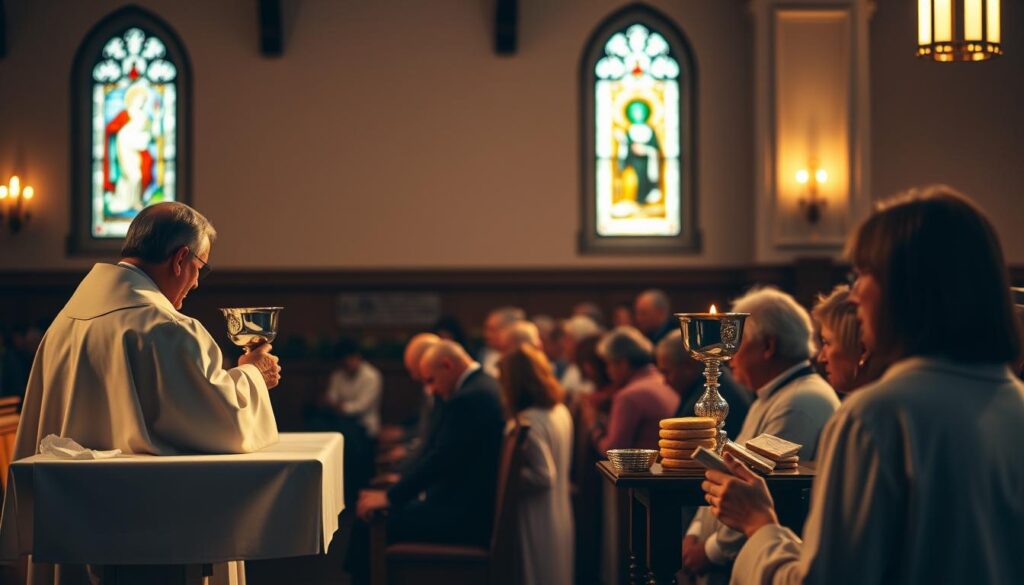
Three vital gifts flow from this practice. First, it offers forgiveness and renewal. Second, it deepens connections between believers and their Savior. Third, it provides a glimpse of eternal unity with God and others. As one priest explains:
“We don’t define the mystery—we step into it together.”
This perspective welcomes diverse theological views. Some focus on sacrament as memorial, others as mystical union. What unites Episcopalians is the experience of Christ’s active love through shared ritual. Regular participation becomes spiritual exercise, strengthening faith muscles through repetition.
The table’s inclusive nature reflects this ethos. All who seek Christ find welcome here, regardless of how they articulate their beliefs. Through bread, wine, and common prayer, Episcopalians discover grace that transcends human understanding yet transforms daily living.
The Role of the Priest in Celebrating the Eucharist
Episcopal priests serve as living links between ancient rituals and modern congregations during communion services. Their movements follow the same four actions Jesus demonstrated at the Last Supper, creating a rhythmic dance of sacred gestures.
Actions During the Offertory and Consecration
The priest begins by taking bread and wine, just as Christ did. But they also receive money and symbolic gifts from worshippers. One clergy member explains:
“We present these offerings like opening our hands—both empty and full at the same time.”
During consecration, the priest’s words become channels for transformation. They recite prayers from the Book of Common Prayer while asking the Holy Spirit to bless both elements and people. This moment blends scripted liturgy with spontaneous devotion.
| Jesus’ Action | Priest’s Role | Modern Meaning |
|---|---|---|
| Took bread | Receives offerings | Community participation |
| Gave thanks | Leads Eucharistic prayer | Divine connection |
| Broke bread | Performs fraction rite | Shared sacrifice |
Distribution of the Blessed Sacrament
When breaking the bread, priests make deliberate motions symbolizing Christ’s body given for all. Lay ministers often assist in distributing elements, showing how everyone shares in this sacred way of worship.
Invitations to receive communion use welcoming phrases like “The gifts of God for the people of God.” This practice turns ritual into relationship—a divine meal where all find nourishment and belonging.
Understanding the Sacramental Nature of Communion
In Episcopal theology, sacraments bridge the visible and invisible realms. The Holy Eucharist stands as one of two essential rites, transforming ordinary moments into channels of divine grace. Through physical elements and sacred actions, worshippers encounter spiritual realities beyond human sight.
Outward Signs of Inward Grace
The Book of Common Prayer defines sacraments as “outward signs of inward grace.” This means the bread and wine aren’t just symbols—they’re physical tools God uses to deliver spiritual gifts. As one priest explains:
“We taste forgiveness through wheat and grapes.”
| Sacramental Element | Episcopal Understanding | Contrasted View |
|---|---|---|
| Bread & Wine | Vehicles for grace | Symbolic only |
| Consecration | Holy Spirit’s work | Human remembrance |
| Participation | Means of renewal | Optional practice |
Three key truths shape this approach. First, the Holy Spirit transforms both elements and people during worship. Second, shared meals create community bonds stronger than abstract ideas. Third, regular participation fuels spiritual growth like daily bread sustains the body.
This sacramental view honors Christ’s command while making divine love tangible. Through simple acts of eating and drinking, believers receive forgiveness, strength, and deeper connection to the body blood lord who unites them all.
Communion Practices: Including All Who Are Baptized
An open table defines Episcopal communion practices. Unlike some traditions, all baptized Christians may receive communion regardless of denomination. This policy reflects Christ’s radical hospitality while honoring ancient Christian unity.
Inclusivity in Reception
Baptism serves as the common thread uniting participants. The Book of Common Prayer states this sacrament isn’t earned—it’s a gift freely given. Visitors often find relief in hearing: “You don’t need membership papers, just an open heart.”
Welcoming Different Christian Traditions
Lutherans, Methodists, and Catholics alike share the altar here. While practices vary between churches, Episcopalians focus on shared baptism rather than doctrinal differences. One pastor explains:
“Our unity at this table runs deeper than our disagreements.”
This approach respects individual consciences while building bridges. Children and adults participate side by side, embodying a faith that transcends age or background. Through communion, diverse believers taste the same grace that first drew them to Christ.
FAQ
How do Episcopalians view the presence of Christ in the Eucharist?
Episcopalians affirm the Real Presence of Jesus Christ in the bread and wine, though they emphasize mystery over precise explanations. Unlike the Roman Catholic doctrine of transubstantiation, the focus is on spiritual nourishment and communal union with Christ through faith.
Is Holy Communion open to everyone in the Episcopal Church?
Yes! All baptized Christians, regardless of denomination, are invited to receive Communion. This practice reflects the Episcopal Church’s commitment to inclusivity and unity within the broader body of Christ.
How does the Episcopal understanding of the Eucharist differ from Roman Catholic teachings?
While both traditions honor the Eucharist as central to worship, Episcopalians do not require belief in transubstantiation. The emphasis lies on Christ’s spiritual presence, the communal meal, and the Holy Spirit’s role in uniting believers through the sacrament.
Why is the priest’s role important during the Eucharistic service?
The priest acts as a spiritual leader, consecrating the bread and wine through prayers rooted in the Last Supper narrative. Their role ensures the sacrament follows historic Christian practice while inviting congregants into shared participation.
Do Episcopalians believe Communion is necessary for salvation?
While not seen as a requirement for salvation, the Eucharist is cherished as a means of grace. It strengthens faith, deepens connection to Christ’s sacrifice, and fosters unity among believers as they partake in his body and blood.
What symbolism do bread and wine hold in Episcopal worship?
The bread represents Christ’s body given for humanity, while the wine signifies his blood shed for forgiveness. Together, they embody the New Covenant, nourishing the faithful and renewing their commitment to live in love and service.
How often do Episcopalians celebrate Holy Communion?
Many Episcopal churches celebrate the Eucharist every Sunday, viewing it as the pinnacle of worship. This regular practice underscores its role in sustaining spiritual life and communal bonds within the church.