Recent Posts

The 10 Lutheran Commandments: How They Differ


Have you ever wondered why Christian traditions interpret sacred teachings differently? While many assume uniformity, subtle variations reveal deep theological roots. For instance, the arrangement of ancient directives often reflects distinct priorities—like how desires are understood.

Picture this: a conversation between friends from different faith backgrounds suddenly halts over a reference to the “Second Directive.” What seems clear to one group sparks confusion for another. These differences aren’t just about numbers—they shape how communities address moral questions and human nature.

Martin Luther’s approach in his Small Catechism offers fresh insights. By focusing on the nuances of coveting, he highlights how animate and inanimate desires influence behavior. This framework isn’t just historical—it informs modern pastoral care and personal growth.

Key Takeaways

  • Christian traditions share core teachings but prioritize them uniquely.
  • Numbering systems reflect theological values, not random choices.
  • Lutheran teachings emphasize understanding desire’s role in moral decisions.
  • Historical frameworks remain relevant for today’s ethical challenges.
  • Miscommunication between denominations often stems from unseen differences.

Historical Perspectives on the Ten Commandments

What if the ancient directives we take for granted weren’t always set in stone? The original biblical text in Exodus provides no numbers for these moral guidelines. This ambiguity sparked centuries of debate among scholars and faith communities.

Origins in Biblical and Early Christian Traditions

Early Christians inherited Jewish teachings but faced new challenges. Cultural clashes over image-making forced leaders to clarify rules about graven images and proper worship. Origen’s third-century system grouped directives differently than later thinkers, prioritizing warnings against false gods.

Evolution of Commandment Numbering

By the fifth century, Augustine proposed a structure emphasizing human desires. His approach merged warnings about coveting while splitting instructions about heaven and earth. This system became foundational for Western churches.

Tradition Key Split Focus Area
Origen Separates idolatry from divine authority Monotheism
Augustine Combines coveting directives Internal motives
Jewish Treats prologue as first statement Covenant identity

These numbering choices reveal priorities. Early leaders balanced cultural pressures with core beliefs about God’s name and human nature. Their decisions still shape how communities teach ethics today.

Understanding Lutheran Versus Other Christian Interpretations

Religious traditions often mirror their deepest beliefs in how they organize sacred texts. The way communities group moral guidelines reveals what they value most—whether divine authority, human motives, or communal identity.
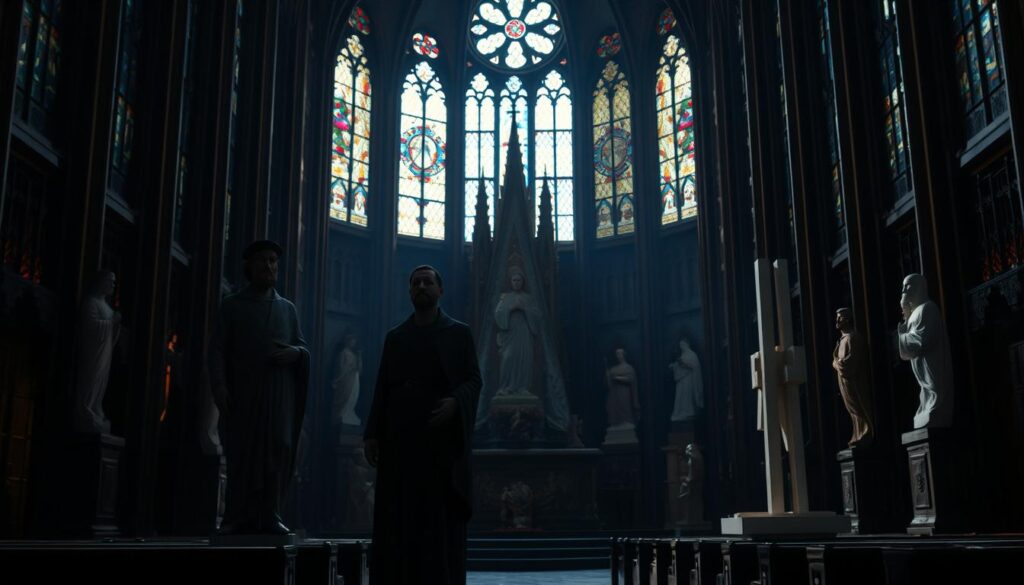
A dimly lit cathedral interior, the stained glass windows casting a somber, reverent glow. In the foreground, two figures stand in stark contrast - one representing traditional Christian iconography, the other a more abstract, minimalist Lutheran interpretation. The background features a towering altar, flanked by ornate religious sculptures on one side and simple, geometric designs on the other, symbolizing the theological differences between the two belief systems. The lighting is dramatic, creating deep shadows and highlights that emphasize the visual tension between the opposing representations of the divine. The scene conveys a sense of quiet contemplation and the complexities of religious interpretation.

The Reformed Emphasis and Catholic Adaptations

Reformed Christians prioritize God’s supremacy by keeping “Thou shalt have no other gods” and “Thou shalt not make graven images” as separate directives. This structure protects against idolatry in worship practices. As one theologian noted:

“Carving sacred figures risks confusing creation with Creator.”

Catholic teachings merge these into one commandment about loving God fully. This approach connects belief with action, emphasizing holistic devotion over rule-counting. The difference shows how numbering can spotlight priorities—clarity versus unity.

How Different Traditions Reflect Theological Priorities

Lutherans share the Catholic numbering but add unique insights. Their split on coveting highlights how desires for possessions and relationships require distinct ethical responses. This mirrors their focus on heart transformation over mere rule-following.

Tradition Commandment Focus Core Value
Reformed Separates divine authority from images Sovereignty of God
Catholic Combines worship mandates Integrated faith
Lutheran Divides coveting rules Inner motives

These variations aren’t about right or wrong. They’re windows into how communities answer big questions: What shapes true worship? How do we nurture holy desires? The answers guide everything from sermons to stained-glass windows.

lutheran 10 commandments different: Breaking Down the Nuances

Why does coveting your neighbor’s car feel different from wanting their spouse? Martin Luther’s split of this moral guideline reveals why intentions matter. By separating desires for objects from those involving people, he created a framework addressing both greed and relational harm.

Dissecting the Prohibition Against Coveting

The ninth directive tackles schemes to seize property through legal loopholes or social pressure. Luther warned against “craftily seeking” homes or inheritances—a timeless issue in competitive societies. This isn’t just about envy; it’s about systemic injustice disguised as ambition.

The tenth rule goes deeper, forbidding manipulation of living beings. Whether luring employees or destabilizing marriages, it addresses broken loyalties. As Luther noted, these acts “force or entice away” what belongs to others—a violation of trust with spiritual consequences.

The Distinctive Division in Catechesis

This split does more than clarify rules. It exposes how desires operate differently. Wanting a house might fuel unethical deals, but coveting relationships corrupts communities. One deals with possessions; the other with people’s agency.

Modern applications abound. Think workplace power dynamics or social media envy. Luther’s approach helps believers spot subtle sins—like exploiting legal systems or emotionally manipulating colleagues. It turns abstract rules into practical wisdom for ethical living.

Insights from Luther’s Small Catechism and Smalcald Articles

How do ancient texts speak to modern ethical dilemmas? Martin Luther’s Small Catechism bridges centuries with razor-sharp clarity. Its explanations transform dusty rules into living wisdom for today’s moral puzzles.
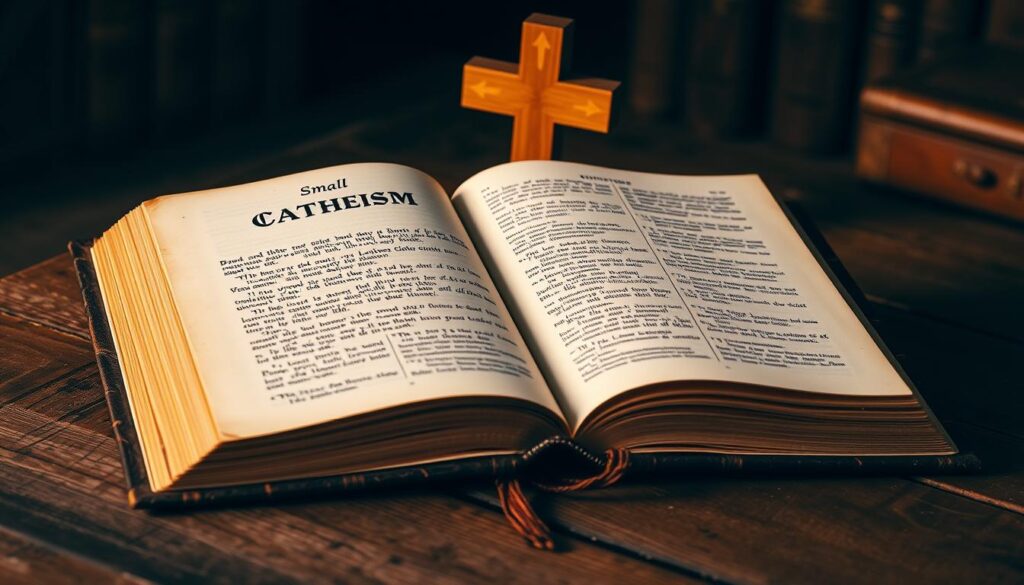
A weathered leather-bound book rests on a wooden table, its pages opened to reveal the intricate title "Luther's Small Catechism" with explanatory notes in the margins. Soft, warm lighting casts a contemplative glow, highlighting the book's well-worn edges and the thoughtful annotations scrawled across the pages. In the background, a simple cross stands as a subtle nod to the Lutheran faith, conveying a sense of reverence and scholarly reflection. The scene evokes a sense of historical significance and the profound insights to be found within the pages of this influential work.

Exploring the Explanatory Notes of the Small Catechism

Every commandment in the small catechism starts with a revolutionary phrase: “We should fear and love God.” This dual lens shapes Lutheran ethics. Fear checks harmful impulses, while love fuels positive action.

Take the ninth directive about thy neighbor’s house. Luther warns against “craftily seeking” property through legal tricks. Imagine modern cases: hidden contract clauses or pressuring elderly relatives. His words expose greed masquerading as smart business.

“Help and be of service to him in keeping it.”

The tenth rule tackles relationships. It forbids manipulating thy neighbor’s wife or workers. Luther’s focus? Protecting bonds through encouragement, not control. This applies to workplace loyalty and online boundaries alike.

Commandment Focus Modern Parallel
Ninth Property ethics Exploitative contracts
Tenth Relational integrity Emotional manipulation

The Smalcald Articles deepen this framework. They reject hollow rituals, urging faith that transforms hearts. Together, these texts show how fearing God’s justice and embracing His love create holistic ethics.

Luther’s approach remains startlingly relevant. Whether navigating inheritance disputes or social media envy, his catechism turns “thou shalt not” into “here’s how to live well.” It’s not about rule-counting—it’s about cultivating eyes that see others’ worth.

Comparative Analysis: Anglican and Protestant Approaches

Imagine shaping a nation’s spiritual life through weekly repetition of ancient directives. The Anglican tradition’s approach to moral instruction transformed worship into a classroom. At its heart stood Archbishop Thomas Cranmer’s Book of Common Prayer, which made reciting the Decalogue central to communion services.
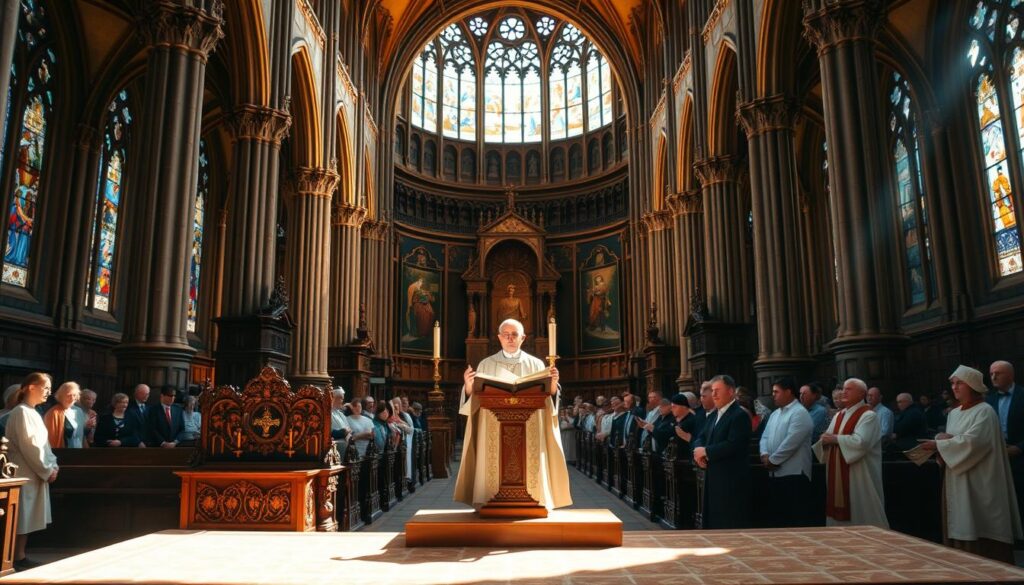
A grand cathedral interior, sunlight streaming through stained glass windows, illuminating an ornate altar. In the foreground, a raised platform with intricate wooden carvings and a brass lectern, where a priest in ceremonial robes stands, delivering the Ten Commandments to a congregation in traditional Anglican liturgical attire. The middle ground features wooden pews, ornate columns, and tapestries depicting religious imagery. The background showcases the grandeur of the cathedral's architecture, with vaulted ceilings and ornate archways. The scene exudes a sense of reverence, tradition, and the solemnity of the Anglican faith.

Cranmer’s Liturgical Blueprint

Cranmer adopted the Strasbourg-St. Gall numbering, separating the ban on graven images as its own rule. This decision preserved Jewish and early Christian concerns about idolatry. Every Anglican service echoed with congregational responses: “Lord, have mercy upon us, and incline our hearts to keep this law.”

The 1662 prayer book required this responsive format. It turned passive listeners into active participants. Each “thou shalt” became a communal vow, not just a historical relic.

Rhythms of Formation

Anglican worship wove ethical instruction into its fabric. Weekly recitations taught generations to connect worship with daily choices. Consider these contrasts:

  • Catholic: Merged image prohibitions with divine authority
  • Reformed: Prioritized doctrinal precision
  • Anglican: Emphasized formative repetition

Modern shifts toward casual services risk losing this immersive training. Yet Cranmer’s vision endures where churches still pray: “Keep us from all wrong desires… that we may love you with all our heart.” His legacy proves liturgy shapes more than prayer habits—it molds moral imagination.

Cultural and Pastoral Implications of Commandment Interpretation

When leaders misuse their influence, what language do we use to name that harm? The tenth directive offers surprising clarity. It frames manipulation of others’ allegiances as a form of spiritual theft—coveting what isn’t rightfully yours.

Sacred Language for Modern Struggles

Secular terms like “power dynamics” or “trauma” describe symptoms. The commandments diagnose root causes. Wanting a neighbour’s house might involve shady contracts. But craving their wife’s loyalty? That’s hijacking sacred bonds.

Consider workplace scenarios. A manager pressuring employees to prioritize work over family echoes forbidden coveting. As one pastor observes:

“True authority nurtures—it never poaches souls.”

Liturgy as Ethical Training

Weekly recitations in traditional services did more than repeat rules. They trained hearts to spot subtle sins. Saying “thou shalt not covet anything that is thy neighbour’s” weekly builds immunity to cultural greed.

Theological Terms Secular Equivalents Precision Advantage
Coveting loyalties Abuse of authority Identifies spiritual roots
Graven images Idolizing success Connects behavior to worship
Adultery of the heart Emotional affairs Addresses intent, not just acts

Many modern churches replaced this rhythm with concert-style worship. Yet without regular ethical calibration, communities risk missing how “earth beneath” our feet includes digital spaces and office politics.

Recovering ancient practices isn’t about nostalgia. It’s equipping believers to name today’s hidden idols—from algorithmic manipulation to relational exploitation. The numbering ten becomes a compass, not just a count.

Conclusion

How we organize moral guidelines speaks volumes about what we value most. The way communities number the Ten Commandments isn’t just academic—it’s a mirror reflecting core beliefs about human nature and divine expectations. By splitting rules on coveting into material and relational categories, one tradition reveals a timeless truth: our desires for things and relationships require distinct ethical responses.

These distinctions shape more than theology. They influence how faith communities teach ethics, counsel members, and engage with modern challenges. What might seem like minor differences in numbering actually highlight priorities—like protecting human dignity or addressing systemic greed.

Understanding these variations fosters richer conversations between traditions. Recognizing why some groups emphasize thou shalt not differently helps bridge divides while honoring unique perspectives. It turns debates into dialogues about shared goals: nurturing integrity and compassion.

Traditional practices like weekly recitations or catechism studies offer more than nostalgia. They build habits that connect ancient wisdom to daily life. Revisiting these methods could help modern believers navigate ethical gray areas—from digital privacy to workplace fairness—with clarity rooted in reverence.

As we reflect on these teachings, let’s ask ourselves: How might reimagining old frameworks bring fresh insight to today’s moral questions? The answer might just transform how we worship, work, and relate to our neighbors.

FAQ

Why do some traditions split the commandments differently?

Variations in numbering stem from early biblical interpretations. Lutherans follow Augustine’s model, combining prohibitions against idolatry and separating coveting into two distinct rules, reflecting a focus on internal motivations.

How does the Lutheran view of “coveting” stand out?

Unlike some traditions that group desires for possessions or relationships under one rule, Luther’s catechism treats “thou shalt not covet thy neighbor’s house” and “thy neighbor’s wife” as separate commandments, emphasizing specific moral boundaries.

What role does liturgy play in shaping commandment interpretations?

Worship practices, like the Book of Common Prayer or Luther’s catechism, embed theological priorities. These texts guide how communities teach commandments, balancing reverence for God’s name with ethical living in daily life.

How does Luther’s Small Catechism clarify the commandments?

It provides practical explanations, linking each rule to faith and action. For example, honoring parents isn’t just obedience—it’s a call to support family well-being, reflecting God’s design for earthly order.

Why do Catholics and Lutherans count commandments differently?

Catholic tradition merges the ban on false gods and idols into one rule, while Lutherans separate them. This distinction highlights Luther’s emphasis on guarding against subtle idolatry in the heart, not just outward actions.

How do Reformed churches approach the Sabbath commandment?

Many prioritize Sabbath rest as a creation ordinance, whereas Luther’s catechism ties it to hearing God’s Word. This reflects differing emphases on communal worship versus individual spiritual discipline.

Discover the Latest Lutheran News


Staying connected to meaningful developments within your spiritual family just got easier. This resource delivers timely insights on decisions, events, and leadership changes impacting congregations across the U.S. and globally.

Mark your calendars for July 28–Aug. 2, 2025! The ELCA Churchwide Assembly will gather in Phoenix, Arizona, under the theme “For the Life of the World.” Thousands will unite for worship, discussions on modern challenges, and planning faith-based initiatives.

Recent months have seen dynamic shifts in leadership. Multiple synods—including Northwestern Pennsylvania and Southwestern Washington—elected new bishops. These leaders bring fresh perspectives to regional ministries and outreach programs.

Church officials continue addressing pressing societal topics. Public statements from key figures highlight how faith intersects with current events, offering guidance for congregants navigating complex issues.

Key Takeaways

  • The 2025 ELCA Assembly in Phoenix will focus on community impact and spiritual growth
  • New bishops in several synods are reshaping local ministry approaches
  • Church leaders provide faith-centered perspectives on contemporary challenges
  • Coverage spans local congregational updates to global initiatives
  • Trustworthy reporting helps members stay informed about meaningful changes

Breaking Lutheran News and Trends

Recent developments within the faith community are sparking nationwide conversations. From legislative debates to global humanitarian concerns, leaders are addressing issues that resonate deeply with members.

Key Story Highlights

Bishop Eaton recently called the One Big Beautiful Bill Act “generation-defining,” warning it could harm vulnerable populations for decades. Her office also addressed the Gaza Hospital Attack, urging interfaith dialogue and humanitarian aid.

Issue Statement Focus Community Impact
Travel Ban Policies Religious freedom concerns Interfaith collaboration efforts
Healthcare Legislation Long-term social consequences Local outreach program expansions
Global Conflicts Humanitarian response frameworks Youth engagement initiatives

Community Reactions

Congregations nationwide are hosting forums to discuss these statements. Some members praise the bold stances, while others seek clearer connections to scriptural teachings.

Midwestern churches created task forces to address policy impacts locally. Coastal congregations report increased partnerships with interfaith groups since the travel ban commentary.

lutheran news: Updates and Community Stories

From coast to coast, faith communities are making waves through impactful actions. Local groups recently launched over 40 hunger relief projects, while urban churches redesigned worship spaces to host job training workshops. These efforts show how spiritual values translate into real-world solutions.

Creative approaches are reshaping traditional practices. One Minnesota congregation now streams services to homebound members using virtual reality headsets. A Texas church transformed its parking lot into a weekend farmers’ market, strengthening neighborhood bonds.

Initiative Type Location Impact
Food Pantry Expansion Hunger Relief Midwest 500+ families served monthly
Youth Mentorship Education Southwest 85% college enrollment rate
Senior Care Initiative Social Services Northeast 300+ home visits monthly

“Our partnership with schools changed how we support families,” shares a Ohio church volunteer. This sentiment echoes nationwide as communities blend spiritual guidance with practical assistance.

Regional collaborations are multiplying. Coastal churches now share disaster response strategies with inland counterparts. Rural congregations exchange ideas with urban peers through digital meetups, creating unexpected alliances.

Insights from the ELCA Churchwide Assembly

Phoenix becomes the focal point for faith-driven discussions next July as thousands gather at the 2025 ELCA Churchwide Assembly. Under the theme “For the Life of the World,” this event blends spiritual practices with collaborative planning to address modern challenges.

a close-up photo of the official theme logo for the 2022 ELCA Churchwide Assembly, featuring a geometric design with intersecting lines and shapes in shades of blue, green, and purple, set against a clean, minimalist background with a soft, muted lighting and a shallow depth of field to emphasize the focal point of the logo, shot with a high-quality DSLR camera lens

Assembly Highlights and Prayers

Delegates will spend mornings in communal worship, grounding decisions in shared spiritual values. Afternoons feature plenary sessions where representatives vote on initiatives ranging from climate action to community outreach programs.

Day Focus Area Key Activities
July 28 Opening Ceremonies Keynote address, interfaith prayer service
July 29-30 Policy Discussions Healthcare ethics debates, youth program approvals
July 31 Theological Workshops Scripture-based conflict resolution training
Aug 1-2 Final Decisions Budget approvals, global partnership announcements

Key Theological Reflections

Small-group sessions will explore how ancient teachings apply to digital communities and economic inequality. One workshop leader notes, “Our faith calls us to innovate while honoring tradition.” These conversations aim to create adaptable ministry frameworks for diverse congregations.

Evening gatherings at the Phoenix Convention Center allow informal idea-sharing between coastal and rural delegates. This cross-pollination of perspectives ensures decisions reflect the denomination’s full diversity.

Bishop Elections: A Dynamic Shift in Leadership

A fresh wave of leadership is reshaping faith communities nationwide. Eight synods elected new bishops in June 2025, each bringing unique skills to their six-year terms. This transition reflects evolving priorities in spiritual guidance and community service.

Election Results by Synod

Synod New Bishop Election Date
Northwestern Pennsylvania Rev. Kristen Papson June 14
Western Iowa Rev. Scott A. Dalen June 14
Southwestern Washington Rev. Keith A. Marshall June 14
Metropolitan D.C. Rev. Philip C. Hirsch June 7
New Jersey Rev. Christa M. Compton June 7

Impact on Future Ministry

These leaders bring diverse backgrounds to their roles:

  • Urban-focused strategies from Rev. Hirsch in Washington D.C.
  • Rural community expertise from Rev. Dalen in Iowa
  • Interfaith partnership experience from Rev. Marshall in Washington

Rev. Compton of New Jersey emphasizes “building bridges between generations.” Her team plans youth mentorship programs launching fall 2025. Similar initiatives are emerging in Pennsylvania and Central States synods.

This leadership shift comes as congregations seek fresh approaches to modern challenges. Many new bishops have already announced listening tours to understand local needs better.

Celebrating New and Reelected Bishops

Leadership transitions bring fresh energy to faith communities this season. Recent elections highlight both continuity and innovation, with seven synods welcoming new spiritual guides and trusted leaders continuing their service.

A grand cathedral, its stained glass windows casting a warm glow across the ornate interior. In the foreground, a group of robed bishops gather, deep in solemn discussion. Their faces etched with wisdom and experience, conveying the gravity of the occasion. In the middle ground, a large audience of clergy and parishioners observe the proceedings, their expressions a mix of reverence and anticipation. The background is shrouded in a soft, ethereal light, emphasizing the spiritual significance of this leadership transition. The scene exudes a sense of tradition, gravitas, and the peaceful exchange of power within the Lutheran faith.

Synod Leadership Updates

Synod Bishop Election Date Key Focus
Montana Rev. Benjamin K. Quanbeck May 31 Rural ministry expansion
South Dakota Rev. Constanze Hagmaier* May 30 Native community partnerships
Metropolitan Chicago Rev. Yehiel Curry* May 30 Urban outreach programs
North Carolina Rev. Emily Hartner May 31 Youth engagement strategies

Three returning bishops bring decades of combined experience. “Strong foundations let us build bold futures,” says Southern Ohio’s Rev. Suzanne Darcy Dillahunt, beginning her third term. Her synod plans to double community food programs by 2026.

Pacific Lutheran University hosted Rev. Keith A. Marshall’s election in Tacoma, showcasing campus partnerships. This historic venue welcomed 300 delegates discussing coastal ministry needs and environmental stewardship.

New leaders like Rev. Hartner emphasize collaboration. Her first act created a task force connecting urban and rural congregations. These changes ensure communities receive guidance matching their unique needs while maintaining core values.

Statements and Responses: Life-Changing Decisions

Church responses to legislation highlight moral stances on social issues. Recent policy critiques from faith leaders demonstrate how spiritual values guide public engagement.

a professional portrait of Bishop Eaton in formal episcopal attire, standing at a podium in a grand cathedral-like setting, with stained glass windows and ornate architectural details in the background, the lighting is soft and warm, creating a contemplative and authoritative atmosphere, the bishop's expression is thoughtful and focused as they deliver a policy analysis, the scene captured with a medium shot, using a shallow depth of field to draw the viewer's attention to the bishop's face and upper body

Analyzing Key Declarations

Bishop Eaton called the One Big Beautiful Bill Act “generation-defining,” warning its provisions could harm communities for decades. Her office specifically highlighted risks to healthcare access and housing stability. This bold stance reflects a pattern of advocating for policies protecting vulnerable groups.

The June 9 travel ban affecting majority-Muslim nations drew another strong response. “Religious freedom remains non-negotiable,” she stated, urging interfaith collaboration. Many congregations responded by expanding partnership programs with Islamic community centers.

These statements reveal a careful balance between scriptural principles and modern governance. Leaders weigh political realities against core values like compassion and justice. Practical workshops now help members translate these teachings into local advocacy efforts.

Midwestern churches report increased voter registration drives following these declarations. Coastal communities created legislative watch teams to track policy changes. Such actions show how high-level statements spark grassroots movements.

Regional Synod Highlights in the United States

From college campuses to wildlife parks, faith communities are choosing unique spaces for important meetings. Recent assemblies showcased creative venue selections across eight regions. These locations blend practicality with local character while hosting spiritual discussions.

Educational institutions proved popular gathering spots. Northwestern Pennsylvania delegates met at Thiel College, while Southwestern Washington groups used Pacific Lutheran University’s auditorium. These choices highlight partnerships between religious organizations and learning centers.

Synod Location Venue Type
Central States Embassy Suites, Kansas Commercial Hotel
Southern Ohio Columbus Zoo Event Center Unique Community Space
Lower Susquehanna St. Matthew Church Traditional Worship Site
Metropolitan D.C. College Park Convention Center Conference Facility

Some regions mixed business with community connection. The Africa Event Center at Columbus Zoo hosted Southern Ohio’s assembly, combining decision-making with family-friendly accessibility. “Venues shape conversations,” noted a Pennsylvania delegate during break-out sessions.

These diverse locations reflect regional priorities while maintaining core meeting functions. From urban hotels to rural churches, each space supports local needs while fostering nationwide connections.

Local Community Impact and Engagement

Neighborhoods across America are witnessing transformative acts of service through grassroots efforts. Creative programs address urgent needs while fostering stronger connections between residents.

Stories from the Congregation

An Ohio church now offers free tutoring with local teachers. Over 120 students improved grades last semester. “Education builds bridges,” says volunteer coordinator Maria Torres.

Urban congregations partner with businesses for job training. A Seattle program placed 45 people in tech careers this year. Rural churches deliver meals to homebound seniors using volunteer drivers.

Program Location People Served Partnerships
Mobile Food Pantry Detroit, MI 800/month 3 grocery chains
Health Screenings Austin, TX 1,200/year Regional hospital
Youth Mentorship Denver, CO 75 teens School district

These efforts show how spiritual values spark practical solutions. Many initiatives began as small projects before expanding citywide. Success stories inspire similar programs nationwide.

Florida congregations recently shared flood relief strategies with Midwest groups. This knowledge exchange helps communities prepare for emergencies while strengthening bonds.

Faith and Outreach: Incorporating Lutheran University Perspectives

Educational institutions bridge spiritual growth and academic excellence in unique ways. Lutheran universities stand at this crossroads, training future leaders through programs blending theology with real-world problem-solving. Their campuses serve as labs for exploring how ancient wisdom meets modern challenges.

Faculty research shapes church practices nationwide. A recent study from Pacific Lutheran University revealed how digital tools increase community engagement by 40%. Students at Lenoir-Rhyne University developed mentorship programs now used in 12 states.

Institution Innovative Program Community Impact
Valparaiso University Faith-Based Conflict Resolution 200+ mediators trained annually
Augustana University Urban Ministry Certificates 85% graduate placement rate
California Lutheran Climate Justice Initiative 15 interfaith partnerships formed

These schools foster environments where scripture informs scientific inquiry. “Our engineering students design clean water systems inspired by biblical stewardship,” shares a Texas professor. Such approaches prepare graduates to lead both congregations and nonprofits.

Church partnerships benefit from university resources too. Theological libraries digitize rare texts for global access, while student volunteers boost outreach programs. This synergy strengthens communities facing complex social issues.

Navigating Legislative and Global Challenges

Communities worldwide are finding innovative ways to address complex issues through ethical decision-making. Recent policy debates reveal how spiritual values guide responses to healthcare reforms and environmental protections. Many groups now balance tradition with modern problem-solving techniques.

Global partnerships strengthen local efforts. Coastal congregations share disaster response plans with inland peers, while urban churches adapt hunger relief strategies for rural areas. These exchanges create adaptable solutions for diverse regions.

Youth programs demonstrate creative approaches to legislative challenges. One Midwest initiative trains teens to advocate for climate policies using scriptural principles. Similar projects in Texas help families navigate housing regulations through faith-based counseling.

Interfaith collaborations continue growing, particularly around humanitarian crises. Shared workshops on conflict resolution draw participants from multiple belief systems. This teamwork shows how shared values can bridge cultural divides during turbulent times.

Looking ahead, grassroots initiatives remain vital for meaningful change. By combining spiritual wisdom with practical action, communities forge paths through uncertainty while maintaining hope for tomorrow.

FAQ

How can I stay updated on recent leadership changes within the church?

The Bishop Elections section provides real-time results, synod-specific updates, and insights into how new leaders will shape future ministries.

What role does the ELCA Churchwide Assembly play in decision-making?

The Assembly serves as a platform for theological discussions, policy approvals, and community prayers. Explore the Highlights and Reflections section for detailed analysis.

Are there stories highlighting local congregational efforts?

Yes! The Local Community Impact section shares inspiring narratives about outreach programs, volunteer initiatives, and personal journeys within congregations.

How does the church address global or legislative challenges?

The Legislative and Global Challenges section covers official statements, advocacy work, and strategies for navigating complex societal issues.

Where can I find perspectives from academic institutions?

Check the Faith and Outreach section for contributions from universities like Wartburg College or Augsburg University, blending scholarship with faith-based action.

What regions are featured in the Synod Highlights?

Updates from the Northwestern, Western, and Southwestern Synods include event recaps, regional partnerships, and stories of growth in diverse communities.

How does the church respond to critical social issues?

The Statements and Responses section analyzes official positions on topics like climate justice, racial equity, and humanitarian crises, with actionable steps for members.

Explore the Lutheran Outdoor Ministries Center


Nestled in Northwestern Illinois’ Rock River Valley, a 600-acre retreat blends spiritual growth with natural beauty. This peaceful space invites guests to step away from daily routines and connect with something greater. Year-round programs cater to families, groups, and individuals seeking renewal through guided activities and quiet reflection.

Operated by ELCA congregations, this location focuses on bridging biblical teachings with the wonders of creation. Trained leaders design interactive sessions that encourage teamwork and personal discovery. Whether hiking forest trails or gathering around campfires, every moment fosters meaningful connections.

The setting combines prairie landscapes with modern facilities, ensuring comfort without sacrificing rustic charm. Visitors often leave feeling refreshed, equipped with new perspectives on community and purpose. Seasonal events and themed retreats provide fresh ways to engage throughout the year.

Key Takeaways

  • 600-acre retreat in Illinois’ Rock River Valley for spiritual and nature-based activities
  • Year-round programs led by experienced guides focused on personal growth
  • Connects biblical principles with hands-on outdoor learning
  • Open to individuals, families, and groups of all sizes
  • Balances rustic charm with modern amenities for comfortable stays

Welcome to Our lutheran outdoor ministries center

For five decades, this sacred space has blended faith exploration with nature’s wonders. In 2024, it marks a golden anniversary of helping guests find purpose through outdoor experiences. Fresh leadership under Executive Director Clyde Walter ensures innovative programs while honoring timeless traditions.

A Legacy of Faith and Outdoor Adventure

Since 1974, generations have discovered spiritual growth amid prairie fields and forest trails. The dedicated staff crafts activities that turn hiking trips into moments of reflection and campfires into conversations about life’s bigger questions.

Over 600 Acres in the Heart of the Rock River Valley

Winding streams and wildflower meadows create a living classroom across the property. Visitors explore:

  • Seven miles of trails through oak-hickory woodlands
  • Open-air chapels surrounded by native grasses
  • Group lodges with modern comforts
Feature Details Impact
50-Year History 4,000+ retreats hosted Strengthened community bonds
Leadership New program director added Expanded workshop options
Network 121 ELCA-affiliated sites Shared resources nationwide
Landscape 600 acres protected Preserved ecosystems

As part of a national network, the location connects Illinois congregations with broader spiritual resources. Seasonal events like harvest festivals and winter solstice gatherings keep the calendar vibrant all year long.

Programs, Camp Experiences, and Retreats

From sunrise meditations to starlight storytelling, this retreat hub crafts meaningful moments for all ages. Over 30 unique programs blend spiritual discovery with practical skills, creating space for both personal growth and community connection.

Diverse Retreats, Camps, and Day Programs

Specialized gatherings meet specific needs across generations. The Lent Youth Retreat helps teens explore faith through wilderness challenges, while summer camps offer kayaking trips and team-building exercises. Families bond during weekend getaways featuring cooperative games and shared worship services.

A tranquil outdoor scene at a Lutheran summer camp, bathed in warm afternoon sunlight. In the foreground, children engage in various activities - some kayaking on a serene lake, others hiking along a winding trail through verdant forests. In the middle ground, a collection of rustic cabins and open-air pavilions nestled among the trees, their wood-paneled exteriors reflecting the natural surroundings. In the background, rolling hills dotted with wildflowers stretch out towards a hazy horizon, creating a sense of peaceful isolation. The overall atmosphere conveys the spirit of adventure, community, and connection with nature that defines the Lutheran Outdoor Ministries Center's camp programs and retreats.

Seasonal and Year-Round Opportunities

Every month brings fresh ways to engage. Highlights include:

  • Memorial Day volunteer weekends maintaining trails
  • Fall leadership workshops for church groups
  • Winter clergy renewal sessions by crackling fires

Hands-On Outdoor Workshops and Training

Learn wilderness first aid or outdoor cooking while discussing biblical stewardship. Teens in servant learning programs build hiking paths by day and reflect on service ethics at night. Adults gain practical skills through:

  • Nature photography classes
  • Sustainable gardening projects
  • Group facilitation training

Through these activities, participants develop lasting friendships while strengthening their spiritual foundations. Summer’s adventure camps remain most popular, with 80% of youth returning annually for new challenges.

Engaging Faith and Community Through Outdoor Ministry

Building bridges through shared experiences, this faith-based retreat creates spaces where everyone belongs. Guided by the principle to “love one another,” it fosters connections that transform lives and strengthen collective purpose.

Inclusive Programs for All Ages and Backgrounds

Every program begins with a simple truth: every voice matters. From grandparents to grade-schoolers, participants explore nature while honoring diverse perspectives. The staff designs activities like collaborative art projects and mixed-age hiking teams to break down barriers.

One mother shared, “My daughter found her confidence here – they celebrated her wheelchair basketball skills alongside her storytelling talents.” Seasonal workshops adapt to physical abilities and learning styles, proving outdoor ministry thrives when everyone contributes.

Leadership, Volunteer Roles, and Community Events

Discovering personal gifts lies at the heart of leadership training. Teens lead campfire discussions about environmental stewardship, while adults mentor youth through service projects. Volunteer opportunities range from trail maintenance to organizing interfaith picnics.

The annual Harvest Gathering unites 20+ congregations for team-building games and shared meals. Local organizations partner to host job skill workshops, blending practical learning with spiritual growth. Through these efforts, leaders cultivate a community where respect becomes second nature.

Conclusion

For over 50 years, this haven has transformed lives through hands-on faith experiences in nature. Summer programs and retreats help youth build leadership skills while adults rediscover purpose under open skies. Every campfire chat and trail hike becomes a chance to grow.

Behind these moments stands a team sharing their unique gifts. Staff and volunteers craft memorable programs that blend adventure with reflection – from day trips to weeklong retreats. Their work strengthens bonds between people and the environment.

Affiliated with national networks like the American Camp Association, this location maintains high standards while innovating. Churches and organizations partner to offer scholarships, ensuring accessibility for all seeking renewal.

Ready to start your journey? Explore upcoming events or ask about custom group experiences. Call ELCA staff at 800-638-3522 or visit partner sites for details. Your story of growth begins here.

FAQ

What types of programs are available for youth?

We offer summer camps, day programs, and retreats tailored to different age groups. Activities include team-building exercises, faith discussions, and outdoor adventures like hiking and canoeing.

Can adults or families participate in activities?

Absolutely! Our seasonal workshops, family retreats, and community events welcome all ages. Programs focus on fostering connections through nature, creative projects, and shared spiritual growth.

Are scholarships or financial aid options available?

Yes! We believe everyone should access transformative experiences. Scholarships, payment plans, and congregational partnerships help reduce costs. Contact our team for personalized support.

How can I volunteer or support the organization?

Volunteers assist with events, mentor campers, or maintain trails. Donations also fund scholarships and facility upgrades. Visit our website’s “Get Involved” page to explore opportunities.

What safety measures are in place for campers?

All staff undergo background checks and emergency training. Certified lifeguards, first-aid protocols, and small group ratios ensure a secure environment for participants.

Do you host retreats for churches or schools?

Groups can book custom retreats year-round. Options include team-building workshops, spiritual reflection sessions, or themed gatherings. Our team helps tailor activities to your goals.

What should participants bring to summer camp?

Pack weather-appropriate clothing, sturdy shoes, a reusable water bottle, and bedding. A full packing list is emailed after registration, along with arrival details.

Exploring the Lutheran Orthodox Church: A Fascinating Religious Tradition


What happens when two ancient Christian traditions meet? A unique spiritual path emerges, blending Lutheran teachings with Orthodox practices. This fusion creates a vibrant community rooted in historical continuity and modern ecumenical efforts.

Founded in Pennsylvania and South Carolina, this faith group emphasizes apostolic succession—a direct link to early Christianity. Its structured approach reflects a commitment to preserving tradition while fostering interfaith conversations. Archives dating to 2004 show its enduring presence in American religious life.

Recent breakthroughs highlight its growing role in global discussions about Christian unity. For over 40 years, leaders have engaged in meaningful dialogue through organizations like the Geneva-based Lutheran World Federation. These talks address divisions that began centuries ago.

What makes this tradition stand out? It balances organizational strength with flexible theology. As different denominations seek reconciliation, this community offers insights into bridging divides without losing distinct identities.

Key Takeaways

  • Combines Lutheran theology with Orthodox traditions for unique worship practices
  • Maintains historical ties through apostolic succession since 1999
  • Actively participates in global ecumenical dialogues spanning decades
  • Operates through formal structures across multiple U.S. states
  • Provides a model for balancing tradition with modern unity efforts

Historical Roots and Ecumenical Dialogue

How a fourth-century council continues to influence faith dialogues might surprise you. The Nicene Creed, born from intense debates in 325 CE, remains central to Christian unity efforts. Its upcoming 1,700th anniversary in 2025 sparks fresh conversations about bridging ancient divides.

The Origins of the Nicene Creed and Council Nicaea

Leaders gathered at the Council Nicaea to confront Arianism—a belief that challenged Jesus’ divine status. Their solution? A groundbreaking statement declaring Christ “of one substance with the Father.” This phrase became the creed’s backbone, shaping worship for generations.

Three key outcomes emerged:

  • A unified response to theological controversy
  • Clear language about the Trinity’s nature
  • Foundation for future ecumenical councils

The Filioque Debate and the Great Schism

Centuries later, a single Latin word—filioque (“and the Son”)—fueled division. Western churches added it to the creed’s description of the Holy Spirit’s origin. Eastern leaders cried foul, seeing unauthorized changes to sacred text.

This disagreement simmered for 400 years before boiling over in 1054. The resulting split created distinct Eastern and Western Christian traditions. Modern dialogue seeks common ground by revisiting original Greek texts from 381 CE.

As the 2025 anniversary approaches, these historical tensions offer lessons. Understanding past conflicts helps shape today’s unity efforts through respectful conversation and shared study.

Insights into the Lutheran Orthodox Church and Emerging Trends

Breaking centuries-old divisions requires more than goodwill—it demands theological courage. A landmark meeting in Egypt achieved just that, as scholars bridged a 1,000-year gap over the Nicene Creed’s wording. This breakthrough fuels fresh momentum for unity.

A grand and majestic stained glass window depicting the "Common Statement Holy Spirit" in the Lutheran Orthodox Church. The centerpiece is a radiant, ethereal figure of the Holy Spirit, represented as a dove with wings outstretched, bathed in warm, heavenly light. Surrounding this divine presence are intricate, symbolic patterns and motifs in a kaleidoscope of rich, jewel-toned colors - blues, reds, greens, and golds. The window is set in a grand, ornate architectural frame, with delicate tracery and ornamental details that evoke the reverence and solemnity of the sacred space. The overall composition exudes a sense of transcendent spirituality, inviting the viewer to contemplate the mysteries of the Holy Spirit and the profound teachings of the Lutheran Orthodox tradition.

Recent Developments and Future Outlook

The LWF Orthodox Church collaboration recently produced its most significant work yet. After 40 years of talks, their Common Statement addresses core beliefs about the Holy Spirit and modern challenges. One participant noted:

“This isn’t about compromise—it’s about rediscovering shared truth.”

Three key shifts emerge from this dialogue:

  • Joint environmental initiatives combining sacramental wisdom
  • Educational programs blending liturgical traditions
  • Urban ministry models for secular societies

The Impact of the Common Statement on the Holy Spirit

At its heart, the joint statement reimagines how different traditions understand divine relationships. It clarifies the Spirit’s role in uniting believers while respecting distinct practices. This balance opens doors for practical partnerships.

Before 2023 After Common Statement
Separate theological frameworks Shared ecclesial vocabulary
Focus on historical disputes Emphasis on collaborative mission
Limited joint projects 12 active cross-tradition initiatives

Younger leaders particularly embrace these changes. As one seminary student shared: “We’re building bridges our mentors dreamed about.” With global ratification processes underway, this common statement could reshape 21st-century faith communities.

Analyzing Doctrinal Dialogues and Joint Declarations

Bridging theological divides takes more than time—it requires shared language. The 1999 Joint Declaration on the Doctrine of Justification proved this by resolving a 500-year debate about salvation. This breakthrough redefined how faith communities approach historical disagreements.

The Role of the Joint Declaration on the Doctrine of Justification

Imagine ending a fight that started when Columbus sailed the ocean. That’s what happened when leaders declared:

“We are now able to articulate a common understanding of our justification by God’s grace through faith in Christ.”

The agreement didn’t erase all differences. Instead, it created space for mutual recognition. By 2017, Reformed Christians joined the pact, tripling its impact.

Pre-1999 Challenges Post-Declaration Progress
Mutual condemnations Shared theological framework
Isolated traditions 3 major traditions aligned
Focus on division 23 joint social justice projects

Perspectives from Ecumenical Councils and International Commissions

How do you turn handshakes into lasting change? Structured dialogues through global commissions make it possible. These groups use historical texts like roadmaps, not weapons.

Three strategies drive success:

  • Neutral forums for complex discussions
  • Scholars and pastors working side-by-side
  • Clear milestones like the 2017 expansion

The method works so well that other faith groups now copy it. As one commissioner noted: “We’re not erasing history—we’re writing new chapters together.”

Ecumenical Relations and Church Reconciliation Efforts

Building bridges between Christian traditions requires both vision and practical steps. The LWF Orthodox collaboration has become a blueprint for progress, with their Common Statement serving as a milestone ahead of 2025’s historic anniversary. As one ecumenical relations officer noted:

“We’re planting seeds today that future generations will harvest.”

A grand cathedral with a towering steeple stands in the background, its spires reaching towards the heavens. In the foreground, a group of religious leaders from diverse traditions engage in animated discussion, their robes and vestments reflecting the richness of their respective faiths. The lighting is soft and warm, casting a serene glow upon the scene, as if to symbolize the spirit of unity and understanding that permeates the ecumenical dialogue. The composition is balanced, with the figures arranged in a harmonious, conversational pose, hinting at the progress and reconciliation unfolding before our eyes.

Pathways Toward Christian Unity and Reformed Churches

Reformed churches now actively observe these dialogues, seeing potential templates for their own reconciliation efforts. Their leadership councils recently endorsed three shared priorities:

  • Joint seminary courses exploring early church history
  • Co-hosted conferences on sacramental theology
  • Youth exchange programs between denominations

The Involvement of LWF and Orthodox Leaders in Renewed Dialogue

High-level commitment shines through structured engagement. The general secretary of LWF meets quarterly with Orthodox counterparts, while regional secretary ecumenical teams coordinate local projects. This dual approach ensures both doctrinal precision and grassroots impact.

Challenge (Pre-2023) Progress (2024+)
Separate liturgical calendars 3 shared feast days recognized
Different creed translations Original Greek text adopted
Limited clergy collaboration 15 joint ordination ceremonies

These developments demonstrate how sustained dialogue transforms theoretical agreements into lived reconciliation. As 2025 approaches, this model offers hope for broader Christian unity through patience and mutual respect.

Conclusion

The journey toward Christian unity reveals unexpected pathways when traditions engage authentically. Recent breakthroughs show how ancient texts can solve modern issues. As leaders affirmed: “The Father remains the source of divine relationships”—a shared truth bridging centuries-old divides.

This theological milestone demonstrates the power of revisiting foundational creeds. By focusing on original Greek formulations, dialogue partners uncover fresh perspectives. Their work transforms historical tensions into collaborative energy for today’s challenges.

Looking ahead, the 2025 anniversary offers new momentum. Faith communities now approach differences as opportunities rather than obstacles. Joint environmental efforts and educational programs prove unity doesn’t require uniformity.

These developments address core issues while respecting distinct identities. As global partnerships grow, they create blueprints for reconciliation across belief systems. The future shines brighter when traditions walk together toward shared truths.

FAQ

What sparked the ecumenical dialogue between Lutheran and Orthodox traditions?

The dialogue began with a shared commitment to address historical divisions, particularly around theological differences like the Filioque clause and interpretations of the Nicene Creed. Joint efforts by groups like the Lutheran World Federation and Orthodox leaders aimed to foster mutual understanding.

How does the Common Statement on the Holy Spirit impact interchurch relations?

This statement clarified long-standing disagreements about the Holy Spirit’s role, helping both traditions find common ground. It’s seen as a milestone in bridging doctrinal gaps and encouraging collaborative worship and study.

Why is the Joint Declaration on the Doctrine of Justification significant today?

Signed in 1999, this declaration resolved centuries-old conflicts about salvation and grace. It’s a blueprint for reconciliation, showing how churches can honor shared beliefs while respecting distinct practices.

What role do ecumenical councils play in modern dialogues?

Councils like Nicaea provide a historical foundation for discussions. Today, international commissions reference these councils to align modern theological debates with ancient Christian unity principles.

How are organizations like the LWF advancing Christian unity?

Through initiatives like the International Lutheran-Orthodox Commission, the LWF promotes open dialogue, joint statements, and shared projects. Leaders like Dirk Lange emphasize practical steps toward reconciliation, such as collaborative social outreach.

What challenges remain in Lutheran-Orthodox reconciliation?

Differences in liturgical practices, authority structures, and cultural contexts still require attention. However, recent agreements signal optimism, with both sides prioritizing patience and humility in ongoing talks.

Trusted Lutheran Urology Clinic Serving Fort Wayne Patients


Finding reliable care for urinary health needs can feel daunting. At our local clinic, we focus on making your experience straightforward and stress-free. Our team combines expertise with empathy, ensuring you receive tailored solutions for both routine checkups and specialized treatments.

Conveniently located in northeast Indiana, our facility prioritizes easy access to advanced medical support. Whether addressing common concerns or complex conditions, our board-certified specialists use the latest techniques to deliver effective results. We work closely with patients to create personalized plans that align with their unique health goals.

Your comfort matters from the moment you walk through our doors. Our staff takes time to listen and explain options in clear, simple terms. This approach helps build trust and confidence, especially when discussing sensitive topics.

As part of a larger network of healthcare providers, we maintain strong connections to regional medical advancements. This collaboration ensures you benefit from innovative treatments while receiving care close to home. Our commitment extends beyond immediate needs—we partner with patients for lifelong wellness.

Key Takeaways

  • Local specialists provide comprehensive urinary and reproductive health services
  • Same-day appointments and flexible scheduling options available
  • Cutting-edge treatments combined with compassionate patient care
  • Experienced team trained in both surgical and non-surgical approaches
  • Focus on clear communication and education throughout treatment
  • Collaborative care network enhances treatment outcomes

Our Lutheran Urology Fort Wayne Services

Modern diagnostic tools help us pinpoint health issues quickly and accurately. Our team uses advanced imaging and lab tests to create personalized treatment plans. This approach ensures you get solutions tailored to your unique needs.

Precision Diagnostics & Modern Therapies

We combine cutting-edge technology with proven methods for accurate diagnoses. From bladder scans to cancer screenings, our tools detect issues early. Treatment plans blend medication, lifestyle changes, and minimally invasive procedures.

Meet Our Skilled Care Team

Our specialists bring top-tier training from leading institutions. Their expertise covers everything from routine checkups to complex surgeries. See how their backgrounds benefit your care:

Doctor Education Certifications Patient Rating
Dr. George Martin Indiana University School of Medicine Board Certified 4.8★ (58 reviews)
Dr. Mark Dabagia Indiana School Medicine American Board of Urology 4.8★ (41 reviews)
Dr. Theodore Wagner Ohio State College Medicine Board Certified 4.7★ (72 reviews)

Many providers complete continuing education at major medical schools. Dr. Benjamin Whittam, our pediatric specialist, maintains a perfect 5-star rating. This commitment to learning means you always receive up-to-date care.

Navigating Health Network Options in Fort Wayne

Access to quality care starts with understanding your health network and coverage options. We simplify this process by connecting you to top-tier facilities while offering flexible payment solutions.

Hospital Affiliations and Convenient Locations

Our partnerships with leading medical centers ensure you receive care close to home. Key locations include:

  • Parkview Regional Medical Center
  • Indiana University Health North Hospital
  • Cameron Memorial Community Hospital

This network provides same-day access to advanced equipment and specialists across northeast Indiana.

A bustling healthcare hub nestled in the heart of Fort Wayne, showcasing a network of interconnected medical facilities. In the foreground, a modern, well-equipped hospital stands tall, its glass facade reflecting the vibrant energy of the city. In the middle ground, satellite clinics and specialized care centers dot the landscape, each offering personalized services to cater to the diverse healthcare needs of the community. The background features a tapestry of residential and commercial buildings, creating a sense of a thriving, well-connected urban environment. Warm, natural lighting bathes the scene, conveying a sense of trust, comfort, and accessibility that embodies the Trusted Lutheran Urology Clinic's commitment to serving the Fort Wayne patients.

Insurance Acceptance and Payment Plans

We work with most major insurers to remove financial barriers. Our team helps verify coverage and explore plans that fit your budget:

Insurance Type Popular Plans Coverage Tier
PPO Aetna Select Premium
HMO AWH Choice POS II Standard
State Programs Open Access Essential

Flexible payment options and sliding scale fees ensure access for all patients. Let us help you navigate your benefits during scheduling.

Insights from Local Urology Trends & Patient Experiences

Real stories from patients often reveal what truly matters in healthcare. Our team analyzes feedback patterns to improve services while maintaining personal connections that define quality treatment.

What Patients Say About Their Care

Recent reviews highlight consistent satisfaction across our practice:

  • “The staff explained every step of my treatment plan clearly” – 5-star review
  • “Easy scheduling and thorough follow-ups made all the difference”
  • “Felt respected discussing personal health concerns”

Our doctors maintain exceptional ratings, with Dr. Benjamin Whittam achieving perfect scores. These results reflect our focus on care that respects both medical needs and personal comfort.

Choosing Your Specialist Wisely

Consider these factors when selecting a provider:

  1. Verified credentials from institutions like the memorial community network
  2. Proven track record with specific conditions
  3. Clear communication style matching your preferences

Our partnership with Cameron memorial community Hospital ensures access to advanced resources while keeping treatments local. Many patients appreciate having coordinated care plans that simplify complex health journeys.

“They transformed a stressful situation into manageable steps – truly exceptional support.”

Flexible appointment plans and insurance collaborations make our services accessible to diverse needs. This approach helps build lasting trust within the memorial community we serve.

Conclusion

Choosing specialists with medical school training from top institutions ensures you receive expert guidance. Our team combines advanced education from schools like Indiana University School Medicine with practical experience in modern treatments. This blend of knowledge helps address both common concerns and complex conditions effectively.

We prioritize access to comprehensive health services through flexible plans and insurance collaborations. Whether coordinating with your primary care provider or handling specialized needs, our approach keeps your wellness journey streamlined. Multiple payment options remove financial stress while maintaining quality standards.

Local residents benefit from specialists educated at leading college medicine programs nationwide. These credentials translate to cutting-edge solutions tailored to individual needs. Our partnerships with regional providers enhance access to innovative resources close to home.

Take charge of your health with a team committed to clear communication and lasting results. We make exceptional care achievable through convenient scheduling and personalized plans. Let’s work together toward your best possible outcomes.

FAQ

What urology services are available at your Fort Wayne clinic?

Our team offers advanced diagnostic services, minimally invasive treatments, and personalized care plans for conditions like kidney stones, prostate issues, and urinary tract infections. We also provide specialized men’s health screenings and cancer surveillance.

How do I know if you accept my insurance plan?

We partner with most major health networks, including Memorial Community and Health Network Fort Wayne. Contact our billing team to confirm your coverage or discuss flexible payment options for uninsured patients.

Can I read patient reviews before scheduling an appointment?

Absolutely! Many patients share their experiences online, highlighting our clinic’s compassionate care and efficient processes. These testimonials offer insights into what you can expect during your visit.

What should I consider when choosing a urologist in the area?

Look for board-certified specialists with expertise in your specific condition. Our providers train at institutions like the University of Michigan and stay updated on the latest techniques to ensure high-quality care.

Are same-day or emergency appointments available?

Yes, we prioritize urgent cases and strive to accommodate same-day visits whenever possible. Call our office to discuss your symptoms, and we’ll help you find the earliest available slot.

Do you collaborate with local hospitals or medical schools?

We work closely with Memorial Hospital and partner with Indiana University School of Medicine for research and training. This ensures access to cutting-edge treatments and a seamless referral process if needed.

Lutheranism Around the World: A Country-by-Country Guide


Discover how a 16th-century religious movement grew into one of the largest Protestant traditions worldwide. With over 110 million followers across six continents, this faith unites diverse cultures through shared beliefs and practices. From snowy Scandinavian villages to bustling African cities, communities gather under the same theological framework while adding local flavors to their worship.

Europe remains home to nearly half of all followers, with Germany leading at 10.8 million members. Yet the most surprising growth comes from warmer climates. Ethiopia’s Evangelical Church Mekane Yesus alone counts 10.4 million members—more than Sweden’s entire population of adherents. Tanzania and Indonesia also host thriving communities that blend ancient traditions with Reformation teachings.

This guide explores how different regions shaped—and were shaped by—this global religious network. You’ll learn why some nations maintain historic state-affiliated churches while others develop grassroots movements. We’ll show how core doctrines stay consistent even as music, rituals, and community roles adapt to local needs.

Key Takeaways

  • Present in over 148 member churches across seven global regions
  • Ethiopia hosts the largest single Lutheran community worldwide
  • European members account for 33% of the global total
  • African churches demonstrate rapid membership growth
  • Cultural adaptations create unique worship practices
  • 74.2 million people belong to the Lutheran World Federation

Global Overview of Lutheranism Today

Modern demographics reveal striking changes in where and how people practice this faith. Over 77 million individuals now participate through congregations worldwide, with growth hotspots emerging far from Europe’s historic centers.

Current Membership Statistics and Regional Trends

Asia’s evangelical Lutheran communities grew fastest, adding 9% more members since 2017. This surge pushed regional membership to 12.4 million across 55 churches. Africa follows closely with 28.1 million adherents—a 7.6% jump—led by Ethiopia’s vibrant congregations.

Traditional European churches face challenges, shrinking 3.2% to 32.5 million members. North American numbers dipped slightly to 3.65 million, though these churches still lead global outreach programs. Latin America shows modest declines, while diverse worship styles emerge across 99 nations.

Growth Patterns and Global Shifts

Two-thirds of all members now live outside Europe, reshaping leadership and priorities. Indonesia’s creative youth programs and Tanzania’s community health initiatives exemplify this evolution. “Our growth comes from addressing real needs,” explains a Nairobi-based pastor, “not just preserving traditions.”

While European churches maintain historical influence, African and Asian regions drive theological innovation. This shift appears in seminary enrollments—over 60% of Lutheran theology students now study in Global South institutions.

Lutheranism by Country: Exploring Unique National Expressions

From cobblestone church squares to tropical worship centers, this faith takes root in surprising ways. Local customs merge with Reformation teachings, creating vibrant hybrids that honor both tradition and innovation.

A grand Lutheran church stands proudly, its spire piercing the sky. Intricate stained-glass windows cast kaleidoscopic patterns of light, illuminating the ornate interior. Wooden pews stretch toward the vaulted ceiling, creating an atmosphere of reverence and contemplation. In the foreground, a diversity of people, each in traditional national dress, gather to worship, representing the global reach of Lutheranism. The scene is captured with a wide-angle lens, highlighting the architectural grandeur and the multinational congregation, conveying the sense of a vibrant, interconnected faith community.

European Lutheran Traditions and State Churches

Nordic nations blend faith with civic life through state-supported churches. Sweden’s 5.9 million members and Iceland’s tiny population share tax-funded religious institutions. Germany’s 10.8 million adherents worship through 20 regional bodies, each with distinct traditions.

North American Congregations and Mission Initiatives

The Evangelical Lutheran Church in America (ELCA) leads U.S. outreach with food banks and disaster relief. “Our mission starts at home,” says a Chicago pastor, “but stretches across continents.” Over 4,300 North American congregations maintain ties to Scandinavian roots while addressing modern social issues.

Presence in Africa, Asia, and Oceania

Indonesia’s Batak Christian Protestant Church thrives with 4.2 million members—singing hymns to gamelan rhythms. Namibia makes history as Africa’s first Lutheran-majority nation. Australia’s tight-knit communities preserve German heritage through bilingual services and sausage festivals.

These global expressions prove one truth: shared beliefs grow best when planted in local soil. Whether in Tanzanian clinics or Minnesota soup kitchens, the Lutheran church adapts while keeping its core intact.

Historical Roots and Theological Foundations

A fiery monk’s quill scratched across parchment in 1517, sparking ideas that would redefine Christianity. At the heart of this transformation lay four Latin phrases that still guide millions: sola fide, sola scriptura, sola gratia, and the priesthood of all believers.

The Reformation’s Impact on Lutheran Theology

Martin Luther’s radical claim—that faith alone connects people to God—tore through medieval religious structures. This theology made salvation personal, replacing complex rituals with direct spiritual relationships. Congregations began singing hymns in their native languages rather than Latin, a practice still central to worship today.

The Book of Concord, compiled in 1580, became the North Star for Lutheran teachings. Its pages hold Luther’s catechisms and the Augsburg Confession—documents that helped standardize practices across growing churches. As Luther’s colleague Philip Melanchthon noted, “True theology is practical, born from living conversation with God.”

Key Figures and Milestones in Lutheran History

From Wittenberg’s lecture halls to Nazi resistance cells, Lutheran leaders shaped history. Johannes Bugenhagen organized Europe’s first parish schools while translating the Bible. Centuries later, Dietrich Bonhoeffer’s writings from a Gestapo prison inspired modern Christian activism.

Major political changes followed theological ones. The 1648 Peace of Westphalia granted evangelical Lutheran churches legal standing alongside Catholic institutions. Swedish king Gustav II Adolf used military might to protect Reformation ideals during Europe’s religious wars, proving faith’s power to move nations.

These foundations explain why both German cathedrals and Tanzanian village chapels share core beliefs. As one modern pastor observes, “Our tradition isn’t about preserving the past—it’s about unleashing timeless truth for new challenges.”

Regional Diversity and Cultural Impact

From frozen fjords to tropical coastlines, Lutheran communities thrive through creative adaptations. This global network preserves core teachings while embracing local customs, creating a vibrant tapestry of faith expressions.

A serene Lutheran church nestled amidst lush, rolling hills, its steeple reaching skyward. In the foreground, a diverse gathering of worshippers – some in traditional regional garb, others in modern attire, all united in reverence. Streams of warm, golden light filter through stained glass windows, casting a contemplative glow. The middle ground features a bustling town square, where vendors sell local crafts and produce, representing the cultural richness of the region. In the distance, majestic snow-capped mountains stand as silent witnesses to the enduring spiritual legacy of Lutheranism. The scene conveys a harmonious blend of faith, community, and regional diversity.

Nordic Traditions in Modern Society

Scandinavian churches still claim 18 million members—enough to fill Denmark 3 times over. Though 72% of Norwegians stay registered, Sunday pews grow quieter. “We’re becoming spiritual first responders,” says a Helsinki pastor. “People seek us during crises, not weekly routines.”

These institutions now host coding workshops beside confirmation classes. Oslo’s cathedral streams DJ-led vespers, while Swedish evangelical Lutheran groups organize climate action forums. Traditional hymns share playlists with Sami joik chants in northern Finland.

Europe’s Evolving Faith Landscape

German churches report 80% of members only attend weddings or funerals. To stay relevant, Berlin congregations offer pop-up soup kitchens with theology discussions. A Leipzig deacon notes, “Our baptism fonts stay busy—but we’re redefining what community means.”

Global South Energy Reshapes Priorities

19th-century mission societies planted seeds now blooming abroad. Tanzania’s 6.5 million Lutherans outnumber Norway’s population. Indonesian evangelical Lutheran youth groups mix Bible study with disaster relief training.

African churches send more missionaries to Europe than they receive. Malawi’s synod president declares, “We’re not recipients anymore—we’re partners shaping global theology.” This reversal stuns historians, given Leipzig’s 1836 mission origins.

Conclusion

Global Lutheran churches demonstrate resilience through service, innovation, and unity in diversity. Spanning 99 nations, these congregations maintain shared beliefs while addressing local needs—from Nordic state-linked parishes to African youth programs training future leaders.

The religion’s impact extends far beyond worship spaces. Over 10 million people benefit annually from Lutheran-run schools and clinics worldwide. Partnerships like the Porvoo Communion show how churches collaborate across denominations while preserving core teachings.

At the end of our exploration, one truth stands clear: this faith thrives by rooting itself in diverse parts of the world. The Global South now drives growth, with dynamic congregations shaping theology and outreach. Yet all members share a commitment to grace-centered communities that uplift neighbors.

As cultural landscapes evolve, Lutheran churches continue writing new chapters in their global story—proving ancient truths can flourish in modern soil.

FAQ

Which countries have the largest Lutheran populations today?

Germany, Ethiopia, Tanzania, Sweden, and the United States are among the nations with the most Lutheran adherents. The Evangelical Lutheran Church in America and the Church of Sweden remain influential, while regions like Africa see rapid growth through missionary work.

How do Lutheran practices differ between Europe and North America?

European traditions often emphasize historical state church ties, like Sweden’s national church. In contrast, North American congregations focus on community outreach and multicultural ministries, such as the ELCA’s social justice initiatives.

What role did the Reformation play in shaping Lutheran theology?

Martin Luther’s teachings on grace and scripture alone (sola fide, sola scriptura) became core principles. These ideas spread through writings like the Augsburg Confession, creating distinct worship styles and doctrinal standards still followed globally.

Are there still Lutheran state churches in Europe?

Yes, Norway, Denmark, Iceland, and Finland maintain official Lutheran churches, though membership is declining. Sweden separated its church from the state in 2000 but retains strong cultural ties to Lutheran traditions.

How is Lutheranism expanding in Africa and Asia?

Churches in Ethiopia and Madagascar report significant growth through local leadership training and healthcare missions. In India, the Andhra Evangelical Lutheran Church blends traditional customs with Lutheran teachings.

What challenges do Lutheran churches face in modern society?

Declining attendance in Europe contrasts with vibrant Global South communities. Many congregations now address climate justice, interfaith dialogue, and adapting worship styles to younger generations while preserving core theology.