Recent Posts

Exploring the Role of Mormon Leaders


In the early 19th century, a young man named Joseph Smith experienced a spiritual awakening that would reshape religious history. His first vision, as described in historical accounts, marked the beginning of a movement rooted in revelation and community. This event laid the groundwork for what would become the Church of Jesus Christ of Latter-day Saints, a faith deeply tied to its foundational leaders.

Smith’s role extended beyond spiritual guidance. He translated sacred texts, organized congregations, and established practices that connected believers to their divine purpose. The growth of this community mirrored broader historical shifts, blending personal faith with collective identity.

Over time, leadership within the Church of Jesus Christ evolved to address changing needs. Early decisions—like westward migration and temple construction—reflected both practical challenges and spiritual convictions. These efforts cemented the movement’s place in American religious culture.

Studying these pioneers offers insights into how faith intersects with societal progress. Their stories reveal how personal inspiration can spark lasting change, shaping traditions still honored by millions today.

Key Takeaways

  • Joseph Smith’s spiritual experiences initiated a transformative religious movement.
  • The Church of Jesus Christ of Latter-day Saints grew through organized community efforts.
  • Early leaders balanced revelation with practical decision-making.
  • Historical events, like westward expansion, influenced the faith’s development.
  • Understanding this history highlights connections between faith and cultural identity.

Introduction to Mormon Leadership

The foundation of the Church of Jesus Christ relied on a distinct blend of spiritual authority and practical governance. During the Second Great Awakening—a time of intense religious exploration—early figures claimed divine guidance to shape their community. Revelations, like those recorded in the Doctrine and Covenants, framed leadership as both a sacred duty and organizational necessity.

Central to this system was the belief that authority flowed directly from Jesus Christ. Key individuals, such as Joseph Smith and Brigham Young, were seen as prophets tasked with interpreting scripture and directing followers. Their roles included:

Role Focus Key Contribution
Prophets Divine communication Translating sacred texts
Apostles Missionary work Expanding congregations
Bishops Local governance Managing resources

This structure allowed the Latter-day Saints to thrive despite external challenges. Doctrinal revelations emphasized collective welfare, inspiring practices like communal farming and temple rituals. Early missionaries traveled widely, sharing teachings rooted in Christ’s latter-day restoration.

By merging spiritual vision with clear hierarchies, leaders fostered unity during rapid growth. Their decisions—from settling Utah to standardizing worship—balanced heavenly inspiration with earthly needs. This duality remains central to understanding their enduring influence.

Early Life and Formative Influences

Born into a family of New England farmers, Joseph Smith faced instability from an early age. His parents moved seven times in two decades, struggling with crop failures and debt. These hardships forged resilience—a trait that would later define his spiritual journey.

religious revivalism in early 19th century America

Family Background and Early Challenges

The Smith family settled near Palmyra, New York, in 1816. Financial strain forced them to work odd jobs, from logging to selling handmade goods. Young Joseph often helped dig wells and clear land, balancing labor with basic schooling.

Religious diversity within the household added complexity. His mother leaned toward visionary experiences, while his father questioned organized faith. This tension created fertile ground for Joseph’s later spiritual explorations.

Religious Revivalism and Community Impact

Palmyra became a hotspot during the Second Great Awakening. Revival meetings erupted across the region, with preachers debating doctrines like baptism and salvation. Smith later described this period as a “war of words” that left him deeply unsettled.

Local enthusiasm for new beliefs influenced community dynamics. Families split over competing denominations, while newspapers mocked “excesses” of emotional worship. This climate set the stage for Smith’s quest for clarity—a search that would reshape American religious history.

Revival Feature Impact on Palmyra Connection to Future Growth
Camp Meetings Boosted religious fervor Inspired open-air preaching methods
Denominational Rivalry Created doctrinal confusion Highlighted need for unified teachings
Print Culture Spread ideas rapidly Paved way for publishing sacred texts

Decades later, these early experiences would echo in settlements like Salt Lake City, where unified community-building became central to the church’s identity. The salt lake basin’s isolation mirrored Smith’s youthful search for stability amid chaos.

Pioneering Visions and Spiritual Encounters

At age 14, Joseph Smith sought clarity amid competing religious ideas. His search culminated in a grove near his family’s farm, where he later described seeing “two Personages” surrounded by light. This event, now called the First Vision, became foundational for his followers.

First Vision and Divine Inspirations

Smith’s account details a direct encounter with divine beings. He wrote they instructed him not to join existing churches, claiming they had strayed from truth. Followers viewed this experience as proof of heavenly guidance for restoring original Christian teachings.

The Call of the Golden Plates

Four years later, Smith reported an angel named Moroni directed him to buried metal plates. These records, he claimed, contained ancient scriptures written in reformed Egyptian. Translating them required special tools called the Urim and Thummim.

Aspect First Vision Golden Plates
Purpose Clarify religious truth Preserve sacred history
Key Figures Divine beings Angel Moroni
Outcome Rejection of existing churches Book of Mormon publication

Members saw these events as evidence of Smith’s unique role. The plates’ translation produced over 500 pages of content, forming the Book of Mormon. Later presidents of the church would reference these experiences to affirm its divine origins.

Joseph Smith: Founder and Prophet

In 1827, a pivotal moment in religious history unfolded when Joseph Smith retrieved ancient records from a hillside in New York. These golden plates, translated through divine guidance, became the Book of Mormon—a text central to the faith’s teachings. This achievement marked the birth of a movement that blended spiritual vision with practical organization.

Joseph Smith translating Book of Mormon

Establishing the Church and Publishing the Book of Mormon

Smith’s translation work faced constant challenges. Critics mocked his claims, and financial struggles threatened the project. Yet by 1830, he formally organized the Church of Christ in Fayette, New York, with six original members. The book’s publication gave believers a shared scripture, anchoring their identity.

Early followers faced hostility. Mobs targeted Smith’s home, forcing the group to relocate. Despite setbacks, he maintained that divine direction would protect the community. His role as president of the church solidified his authority to lead through revelation.

Overcoming Persecution and Early Ministry Challenges

Violence escalated as the movement grew. In Missouri, locals accused members of disrupting social norms. Smith was tarred, jailed, and threatened—yet he continued preaching. He organized the Quorum of the Twelve Apostles to expand missionary efforts, ensuring the faith’s survival.

By balancing spiritual conviction with strategic planning, Smith laid groundwork for lasting growth. His ability to inspire loyalty amid chaos remains a defining feature of his legacy. Today, millions recognize his contributions to religious thought and community-building.

Influence of a mormon leader on Church Organization

As the movement expanded across the United States, its founders recognized the need for durable governance. A framework emerged that blended spiritual direction with administrative precision—a system still shaping the faith today.

Development of Apostolic Leadership

The quorum twelve apostles became central to this structure. Established in 1835, this group provided oversight for missionary work and doctrinal unity. Their roles evolved from temporary assignments to lifelong responsibilities, ensuring continuity during crises.

Key figures like Brigham Young later refined this model. He transformed the twelve apostles into a traveling leadership council, resolving disputes and organizing settlements. This approach mirrored American ideals of representative governance while maintaining divine authority.

Aspect Pre-1835 Post-1835
Decision-Making Local bishops Centralized quorum
Geographic Reach Northeast U.S. Global missions
Authority Source Individual revelation Collective deliberation

By 1844, the quorum twelve handled succession planning. When Joseph Smith died, Brigham Young rallied members through this system, declaring, “The keys of the kingdom remain with the apostles.” This transition showcased the balance between inspired vision and practical organization.

Today, these structures remain vital. The twelve apostles continue guiding policies, proving how early innovations created a legacy of adaptability and unity.

Key Doctrines, Miracles, and Revelations

Central to the faith’s growth were teachings believed to originate from divine sources. These principles shaped daily life and offered answers to profound spiritual questions. Over time, they became cornerstones of worship and community identity.

Latter-day Saints doctrinal teachings

Scriptural Contributions and Divine Revelations

The Doctrine and Covenants stands as a unique scriptural work, compiling revelations received by early figures. Alongside the Book of Mormon, it provided guidance on topics like baptism, marriage, and communal living. One entry states: “Truth is knowledge of things as they are, were, and are to come.”

Miracles played a vital role in reinforcing these teachings. Stories circulated of healings during epidemics or unexpected protection during journeys. Such accounts strengthened believers’ resolve, especially when facing mob violence.

Revelation Type Key Teachings Impact
Doctrinal Plan of Salvation Clarified afterlife beliefs
Practical Word of Wisdom Guided health practices
Social United Order Promoted economic sharing

Persecution tested these doctrines repeatedly. When mobs destroyed settlements, members relied on promises of divine justice. These trials deepened their commitment to building a society aligned with their vision.

Today, these teachings continue shaping life rhythms—from weekly worship to family traditions. They remind adherents how faith evolves while staying rooted in sacred time-tested truths.

Missionary Work and Expansion of the Faith

Missionary efforts became the lifeblood of the faith’s rapid growth during the 19th century. Driven by a divine mandate to “go ye into all the world”, believers transformed local congregations into global networks through strategic outreach.

Latter-day Saints missionary efforts

Domestic Outreach and International Missions

Early missionaries traveled on foot across America, using circuit-preacher tactics to share teachings. They distributed pamphlets translated into multiple languages, adapting messages to resonate with diverse communities. By 1850, over 50 domestic missions operated from Ohio to California.

International expansion began in 1837 with Heber C. Kimball’s mission to England. Scandinavian countries saw remarkable success—Denmark alone welcomed 3,000 converts within five years. These efforts relied on:

  • Cultural adaptation of religious materials
  • Local leadership training programs
  • Community support systems for new members

The prophet’s revelations often guided mission locations and methods. When persecution intensified in the 1840s, leaders redirected resources overseas, ensuring continued growth. Their flexible approach allowed the faith to take root in 15 nations within 25 years.

Key to this success was the leadership of the Quorum of Twelve Apostles. They coordinated complex logistics while maintaining doctrinal consistency. As Brigham Young noted: “A missionary’s heart must embrace both heaven’s light and earth’s practical needs.”

Over the years, these strategies helped the movement grow from hundreds to millions of adherents. Today, their legacy lives on through worldwide humanitarian projects and intercultural dialogue initiatives.

Succession and the Evolution of Leadership

When Joseph Smith died in 1844, the faith faced a critical test of unity. Members grappled with questions about authority and direction in a rapidly changing world. This period marked a shift from charismatic founding figures to structured governance systems.

Transition to Collective Guidance

The Quorum of the Twelve Apostles stepped forward to fill the leadership void. Brigham Young, a key man in this group, emphasized their divine mandate: “The apostles hold the keys to lead this work forward.” Their collaborative approach contrasted with Smith’s singular prophetic role.

Reinventing Governance Structures

Debates arose over succession methods. Some favored family ties, while others trusted institutional processes. The first presidency—a trio of top leaders—was reestablished in 1847 to balance tradition with new needs.

Aspect Pre-1844 Post-1844
Authority Structure Single prophet Apostolic council
Decision-Making Revelation-driven Consensus-based
Geographic Focus Midwest U.S. Global expansion

The Book of Mormon provided stability during this transition. Teachings about ancient prophet successions guided modern choices. Missionaries used these stories to reassure converts in Europe and beyond.

By 1850, the first presidency and apostles had reshaped leadership for a growing movement. Their work proved that faith could adapt without losing its core identity—a lesson still relevant today.

Contributions from Other Influential Figures

Following a period of upheaval, Brigham Young emerged as a pivotal figure who transformed religious exile into organized settlement. His pragmatic vision and unyielding determination shaped a community that thrived against harsh odds.

Brigham Young’s Pioneer Legacy

After Joseph Smith’s death in 1844, Young guided thousands westward to the Salt Lake Valley. Facing extreme weather and scarce resources, he coordinated the 1,300-mile trek with military precision. His declaration, “This is the right place,” marked the birth of a new homeland.

Young’s power extended beyond spiritual matters. He established irrigation systems, schools, and trade networks to sustain the growing population. By 1850, he petitioned Congress to create the provisional state of Deseret—a bold move showcasing his political acumen.

  • Planned 350 settlements across the American West
  • Promoted self-sufficiency through cooperative economics
  • Negotiated treaties with Indigenous tribes to reduce conflict

His personal life sparked debate. Young practiced plural marriage, a tradition he defended as divinely inspired. Though controversial, this practice reinforced social bonds during frontier hardships.

Federal tensions grew as the state of Utah sought recognition. Young balanced defiance with diplomacy, ensuring the community’s survival while navigating U.S. governance demands. His legacy remains etched in the West’s physical and cultural landscape.

Mormon Community, Culture, and Salt Lake City

Salt Lake City’s grid of wide streets and organized neighborhoods reflects its roots as a carefully planned gathering place. Founded in 1847 by pioneers seeking refuge, it became the spiritual and administrative heart of the Latter-day Saints. The city’s design prioritized communal spaces, blending practicality with sacred purpose.

Early settlers transformed the arid valley through shared labor. Irrigation systems turned desert into farmland, while cooperative projects like the Tabernacle showcased their unity. These efforts created a self-sufficient society that valued education, arts, and family life.

19th Century Features Modern Legacy
Agricultural collectives Thriving local markets
Hand-built temples UNESCO-recognized sites
Community schools Top-ranked universities

Cultural traditions flourished despite isolation. Annual events like Pioneer Day celebrate their history, featuring parades and reenactments. The Church Office Building, completed in 1972, symbolizes how administrative needs evolved alongside growth.

Today, Salt Lake City balances heritage with innovation. Its downtown temples stand near tech startups, illustrating adaptability. As one resident noted, “We honor the past while building for tomorrow.” This duality defines the community’s enduring identity.

Modern Legacy and Continuing Impact in the United States

The echoes of early visionaries still shape religious life across America. Their teachings remain an integral part of modern worship, blending tradition with 21st-century relevance. From family rituals to community outreach, these practices show how historical roots nourish contemporary growth.

Many adherents view pioneer figures as father-like guides who modeled resilience. The founder’s revelations about unity and service now inspire global humanitarian projects. Current initiatives—like disaster relief and education programs—mirror early efforts to build self-reliant communities.

Modern leaders balance innovation with reverence for the past. They reference historical documents when addressing social challenges, ensuring continuity. As one member noted: “We stand on the shoulders of those who turned wilderness into sanctuary.”

The founder’s legacy also lives through family traditions. Stories of frontier perseverance are shared like heirlooms, offering father figure wisdom to new generations. These narratives help members navigate modern complexities while honoring their heritage.

Early models of collective decision-making remain a part of daily life. Local congregations still prioritize consensus, reflecting the father-like mentorship of their founding fathers. This approach fosters adaptability—a key reason the faith thrives as both spiritual anchor and cultural force.

Conclusion

The journey of this faith community reveals how vision and resilience shape lasting traditions. From prophetic revelations to organized settlements, early figures built foundations that blended spiritual purpose with practical action. Their decisions—whether translating sacred texts or establishing governance systems—created ripples still felt today.

At its core, this movement thrived through collective effort. The gathering of believers around shared doctrines fostered unity during migrations and persecutions. Stories of sacrifice, like westward treks and temple constructions, became cultural touchstones passed through generations.

Modern practices reflect this adaptive legacy. Annual pioneer celebrations and global humanitarian work echo the community-building spirit of the past. These traditions remind members how faith evolves while honoring its roots.

By preserving historical milestones, the Latter-day Saints maintain a living connection to their origins. This ongoing gathering of narratives—both triumphant and challenging—offers guidance for future community building. As new chapters unfold, these lessons remain vital threads in the tapestry of American religious life.

FAQ

What was Joseph Smith’s role in establishing the Church of Jesus Christ of Latter-day Saints?

Joseph Smith founded the Church in 1830 after publishing the Book of Mormon. He served as its first prophet and president, organizing doctrines, leadership structures, and early missionary efforts.

How did the First Vision shape the Church’s direction?

Joseph Smith’s 1820 vision of God and Jesus Christ in New York became the foundation of the faith. It emphasized direct revelation and inspired the restoration of teachings and practices.

What challenges did early members face?

Early Saints endured persecution, mob violence, and forced relocations. These struggles tested their resolve but strengthened community bonds and commitment to their beliefs.

Why is Salt Lake City significant to the Church?

Under Brigham Young’s leadership, pioneers settled Salt Lake City in 1847. It became the Church’s headquarters and a central hub for worship, education, and cultural growth.

How does the Quorum of the Twelve Apostles function today?

The Quorum helps guide global operations and doctrinal integrity. Members serve as special witnesses of Christ and assist the First Presidency in decision-making.

What was Brigham Young’s impact on the Church?

Brigham Young led the westward migration to Utah after Joseph Smith’s death. He expanded settlements, established temples, and solidified the Church’s organizational framework.

How does missionary work support the Church’s growth?

Missionaries share teachings worldwide, emphasizing service and community. Their efforts have helped the faith grow to over 17 million members across 160+ countries.

What unique doctrines distinguish the Church?

Key beliefs include eternal families, modern revelation through prophets, and ordinances like baptism for the dead. These teachings emphasize progression and divine connection.

How has leadership succession evolved over time?

After Joseph Smith’s death, authority transferred to senior apostles like Brigham Young. Today, the longest-serving apostle automatically becomes Church president, ensuring continuity.

What cultural practices define Latter-day Saint communities?

Strong family values, volunteer service, and gatherings like weekly worship and youth programs foster unity. Temples and genealogy work also play central roles in spiritual life.

Discovering the Mormon Experience in Utah: An Insider’s Guide


Welcome to a journey through one of America’s most distinctive cultural landscapes. Utah’s heritage is deeply intertwined with the Church of Jesus Christ of Latter-day Saints, whose pioneers shaped the region through resilience and faith. This guide offers an authentic look at their legacy, blending history with modern-day traditions.

From the iconic Salt Lake Temple to the stories of early settlers, you’ll uncover how this community transformed deserts into thriving cities. The state’s capital, Salt Lake City, remains the spiritual and administrative heart of the Church, hosting landmarks that reflect centuries of devotion.

Today, members of the faith continue to prioritize family, service, and connection. Visitors can explore historic sites like Temple Square or attend local events celebrating shared values. Whether you’re curious about pioneer trails or modern practices, this guide ensures a meaningful exploration.

Key Takeaways

  • Utah’s culture is rooted in the legacy of early Latter-day Saints pioneers.
  • Salt Lake City serves as the central hub for religious and historical landmarks.
  • The Church’s influence extends to community values like family and service.
  • Historical sites offer insights into migration stories and temple construction.
  • Modern traditions provide a welcoming atmosphere for visitors.

Introduction to Utah’s Mormon Experience

Step into a story where faith and history shape every corner of the American West. The Church of Jesus Christ of Latter-day Saints has cultivated a way of life here that blends tradition with modern vitality. At its core lies Salt Lake City, a bustling hub where pioneers once carved a home from rugged terrain.

What makes this community unique? Unlike other religious groups, its identity is deeply tied to the state’s landscape. Early settlers didn’t just build towns—they forged a self-reliant society rooted in shared values. Today, you’ll find:

Time Period Focus Community Role
Pioneer Era Survival & Settlement Creating irrigation systems, schools
Modern Era Outreach & Growth Hosting global conferences, cultural events

Converts and lifelong members alike contribute to this evolving narrative. As one local leader shared:

“Our strength comes from unity—whether serving neighbors or preserving heritage.”

From temple ceremonies to youth programs, the influence of Jesus Christ remains central. Yet the culture adapts, welcoming visitors through museums, music festivals, and volunteer initiatives. It’s a living legacy, inviting all to explore its layers.

Historical Journey: From Mormon Migration to Utah Settlement

Imagine crossing vast plains in a wagon train, driven by faith to build a new home. This was the reality for thousands of early Latter-day Saints who embarked on one of America’s most remarkable migrations. Their history of resilience began with Joseph Smith’s vision and culminated in Brigham Young’s leadership across untamed frontiers.

Early Pioneering Years

The 1,300-mile exodus from Nauvoo to the Salt Lake Valley tested human limits. Harsh winters, scarce resources, and disease claimed many lives. Organized into disciplined parties, families traveled with minimal supplies—some pushing handcarts when wagons failed. One journal entry from 1847 reads:

“We buried three children today. The trail leaves no time for mourning.”

Despite these trials, settlements emerged through communal effort. Irrigation systems turned arid land into fertile fields, while shared labor built schools and meetinghouses.

Key Figures: Joseph Smith and Brigham Young

Joseph Smith laid the spiritual foundation, but it was Brigham Young who transformed vision into action. After Smith’s death, Young directed the westward migration with military precision. His famous declaration, “This is the right place,” marked the Salt Lake Valley as their promised land.

Leader Contribution Legacy
Joseph Smith Founded religious movement Doctrinal framework
Brigham Young Organized migration Established 350+ settlements

Their way of blending faith with practicality still shapes local values. Pioneer-era barns dot highways, and family stories keep their sacrifices alive.

The Evolution of the Mormon Church in Utah

Over time, foundational beliefs adapted to meet new challenges while preserving core values. The Church of Jesus Christ of Latter-day Saints refined its doctrines through revelation and societal shifts, creating a dynamic spiritual framework.

church jesus latter-day saints doctrinal evolution

Doctrinal Developments and Community Practices

Early practices like plural marriage, once central to the faith, were discontinued in 1890. This pivotal change reflected the Church’s commitment to align with broader societal norms while maintaining its unique identity. Missionary work expanded globally, with over 65,000 volunteers today sharing teachings worldwide.

Local leaders, including bishops, became essential in guiding congregations. They address spiritual needs and organize community projects—from food drives to youth programs. One bishop noted:

“Our role isn’t just about doctrine. It’s helping families thrive through practical support.”

Key doctrinal shifts include:

  • Emphasis on universal education and self-reliance programs
  • Streamlined temple ceremonies for clearer understanding
  • Increased focus on interfaith collaboration

These changes strengthened communal bonds while allowing the Church of Jesus Christ of Latter-day Saints to grow beyond its regional roots. Today, its blend of tradition and adaptability continues to shape lives across generations.

Understanding the mormon in utah Community

At the heart of Utah’s culture lies a rhythm of life shaped by shared values and close-knit bonds. For members of the Church of Jesus Christ of Latter-day Saints, faith isn’t confined to Sundays—it’s woven into daily routines. Picture grandparents teaching children pioneer-era recipes, neighbors gathering for service projects, and teenagers volunteering at food pantries. These moments create a tapestry of connection that defines their world.

Community, Faith, and Everyday Life

Families anchor this group’s identity. Weekly “family home evenings”—
dedicated to games, lessons, or storytelling—strengthen relationships across generations. One parent shared:

“We’re not just neighbors—we’re extended family. If someone needs meals during tough times, three people show up with casseroles.”

This supportive spirit extends to community events. Annual festivals like Pioneer Day blend parades with historical reenactments, celebrating both religious heritage and local pride. Even casual interactions reflect their values: businesses close early on Wednesdays for youth activities, and libraries stock family-friendly media.

Daily Practice Purpose Community Impact
Family meals Foster unity Strengthen intergenerational ties
Service projects Teach compassion Address local needs collectively
Sunday worship Renew spiritual focus Create shared rhythms

Children play a vital role in preserving traditions. From choir performances to scripture study groups, young people learn early how their actions contribute to something larger. It’s this blend of family dedication and group solidarity that keeps their legacy vibrant—and welcoming to newcomers.

Exploring Utah’s Iconic Temple Square and Historic Landmarks

Walking through Temple Square feels like stepping into a living storybook of faith and craftsmanship. This 35-acre complex in Salt Lake City blends striking architecture with serene gardens, offering visitors a glimpse into the history and spiritual heartbeat of the region.

salt lake city temple square history

Temple Square: Architectural and Spiritual Hub

The square’s centerpiece—the Salt Lake Temple—towers with its granite spires, a testament to 40 years of pioneer labor. Nearby, the Tabernacle’s domed roof creates acoustic perfection, hosting the world-famous choir. Don’t miss:

  • The Church History Museum’s interactive exhibits
  • Peaceful reflection at the Seagull Monument
  • Seasonal flower displays framing the Assembly Hall

Guided tours share stories of the land’s transformation from desert to sacred place. Evening concerts and light shows add modern magic to these historic grounds.

Other Must-Visit Historic Sites in Salt Lake City

Beyond the square, Salt Lake City preserves its heritage through well-curated landmarks. The Beehive House, once home to Brigham Young, reveals 19th-century leadership through original furnishings. At the Family History Library, visitors trace ancestral roots with free access to billions of records.

Site Highlight Visitor Tip
This Is the Place Heritage Park Pioneer-era cabins Try blacksmithing demos
Lion House Historic dining Sample pioneer recipes

Local festivals, like the Days of ’47 Parade, turn city streets into vibrant celebrations of resilience. Each site honors the past while inviting travelers to become part of its ongoing story.

The Legacy of Mormon Pioneers and their Handcart Journeys

Between 1856 and 1860, over 3,000 pioneers pushed wooden handcarts across 1,300 miles of rugged terrain. Their journey—fueled by faith—became a defining chapter in American frontier history. These settlers faced blizzards, starvation, and worn-out shoes, yet pressed forward toward the promise of a new home.

The Handcart Experience

Handcart companies, often led by recent converts, carried minimal supplies to speed their travel. One survivor’s journal recalls:

“We ate flour paste when rations ran low. The carts squeaked like ghosts in the wind.”

Nearly 250 lives were lost in the Willie and Martin companies alone during the harsh winter of 1856. Despite this, their resilience inspired future generations.

Migration Tactics and the Role of the Mormon Battalion

The Mormon Church organized wagon trains with military precision. Scouts from the Mormon Battalion—a volunteer U.S. Army unit—secured safer routes through hostile territories. Key strategies included:

  • Dividing travelers into small, self-sufficient parties
  • Establishing supply stations along trails
  • Using the Great Salt Lake Valley’s geography for defense

Tragedy struck in 1857 at Mountain Meadows, where tensions between pioneers and local groups turned deadly. This event underscored the vulnerabilities of westward migration. Today, monuments along historic trails honor both the courage and sacrifices of these early settlers.

Traditional Practices and Modern-Day Adaptations in Utah

Balancing centuries-old traditions with 21st-century life, communities in the region blend reverence for the past with practical innovation. The Church of Jesus Christ has maintained core rituals while embracing tools that resonate with younger generations. Families still gather for weekly devotionals, but now share scriptures via apps. Missionaries use social media alongside door-to-door outreach, reflecting how time-honored values adapt to new platforms.

traditional modern spiritual practices

Continuing Spiritual Traditions in a Modern World

Key practices endure across years, even as their execution evolves. Temple ceremonies retain sacred symbolism but incorporate advanced scheduling systems for accessibility. Local congregations organize service work through digital sign-ups, streamlining volunteer efforts. A youth leader in Salt Lake City remarked:

“We honor our roots by teaching pioneer stories—but we also host coding camps to prepare kids for tomorrow.”

This fusion is evident in everyday life:

  • Families preserve handwritten journals while documenting milestones on blogs.
  • Community choirs perform hymns alongside contemporary music at festivals.
  • Historic tabernacles host TEDx talks about ethical technology use.
Tradition Modern Adaptation Impact
Sunday worship Live-streamed services Global participation
Genealogy research DNA-based ancestry tools Deeper family connections

These changes reflect a broader trend across the United States, where faith groups navigate tradition and progress. By valuing both, the community ensures its legacy remains vibrant and relevant.

Mormon Art, Culture, and the Role of Family

Art and tradition intertwine in vibrant celebrations that bring generations together. From quilts stitched with pioneer motifs to children’s choirs singing hymns, creative expressions reflect a deep connection to heritage. These traditions aren’t just preserved—they’re lived through festivals, exhibits, and daily family rituals.

family cultural celebrations art

Family-Centered Values and Community Celebrations

Weekly gatherings and seasonal events turn neighborhoods into extended family networks. At the annual “Light the World” festival, kids craft lanterns while parents share stories of ancestors. One organizer explained:

“Our events let children see how their creativity honors those who came before them.”

Local museums, like the Church History Museum, showcase handmade dolls and journals from early settlers. These displays teach younger generations about resilience through art.

Cultural Exhibits and Local Festivals

Colorful parades during Pioneer Day feature floats designed by community members, blending history with modern flair. The “Art of Belief” exhibit highlights paintings by local artists, illustrating spiritual themes through contemporary styles. Key highlights include:

  • Interactive workshops where families create pottery inspired by pioneer designs
  • Youth theater productions retelling migration stories
  • Seasonal markets selling handmade quilts and woodcarvings

Through these efforts, leaders ensure cultural life remains dynamic. Whether baking pioneer-era recipes or dancing at harvest festivals, every activity strengthens bonds across ages. It’s a joyful way to honor the past while nurturing the future.

Mormon Contributions to Utah’s Educational and Economic Growth

Service and education form the backbone of community development here, driven by a network of members committed to uplifting others. Through missionary efforts and social programs, this group has shaped both local progress and global outreach. Their approach blends spiritual purpose with practical solutions.

Building Bridges Through Service

Young missionaries worldwide teach life skills alongside spiritual principles, often sparking lasting change. One volunteer in South America shared:

“We helped build schools while sharing values—education became our common language.”

Back home, church-sponsored initiatives fuel growth. Brigham Young University graduates contribute to tech and healthcare sectors, while the Perpetual Education Fund has assisted over 300,000 converts with vocational training since 2001.

Key programs driving impact:

  • Bishop’s Storehouse: Provides food assistance to 500,000+ annually
  • Deseret Industries: Offers job training through thrift stores
  • LDS Charities: Partners with 1,800+ global aid groups

These efforts strengthen the population by addressing needs holistically. Local food banks report 40% higher efficiency when collaborating with church members. Such partnerships prove that faith and progress can thrive together.

Navigating Utah’s Landscape: A Journey Through Time

The terrain tells tales of perseverance etched into every canyon and peak. The Salt Lake Valley, shaped by ancient salt lakes, reveals how natural forces and human grit built communities near Salt Lake City. Pioneers transformed this land through ingenuity—turning arid basins into thriving hubs.

Exploring the Salt Lake Valley

From Big Cottonwood Canyon’s snow-dusted ridges to Salt Lake City’s golden foothills, this area bursts with four-season wonder. Follow the Bonneville Shoreline Trail, where panoramic vistas reveal valleys carved by Ice Age waters. A seasoned hiker remarked:

“These trails connect us to those who walked here centuries before—their resilience written into the earth.”

For wildlife encounters, Antelope Island’s grasslands host bison herds grazing near the Great Salt Lake’s otherworldly shores.

The Great Salt Lake and Surrounding Regions

North America’s largest salt lake mesmerizes with mineral-rich waters and migratory bird spectacles. Paddle through wetlands teeming with herons, or bike the Legacy Parkway Trail—a paved path mirroring pioneer supply routes. Local experts recommend:

  • Golden-hour drives along State Route 65’s overlooks
  • Springtime visits to Bear River Migratory Bird Refuge
  • Historic markers detailing 1847 emigration routes near I-80

These landscapes still guide settlement patterns, just as they did for early travelers. Spend a day discovering how geography shaped the state’s identity—one mountain pass at a time.

Insights on Doctrinal Beliefs and Practices

At the core of this faith lies a dynamic interplay between timeless teachings and modern revelation. Followers of the Church of Jesus Christ of Latter-day Saints believe in a restored gospel, viewing their doctrines as a continuation of early Christian principles. Central to their beliefs is the role of Jesus Christ as both divine Savior and living guide.

Key distinctions from historic traditions include ongoing revelation through prophets. For example, early practices like plural marriage were discontinued in 1890, reflecting adaptability under divine direction. A church publication states:

“Truth is not confined to the past—it unfolds through continued spiritual communication.”

Daily life for members often blends scripture study with practical service. Many start mornings with family devotionals focused on the Book of Mormon and Bible. Weeknight activities might involve volunteering at community gardens or mentoring youth groups.

Historical Practice Modern Adaptation Purpose
Communal labor projects Digital volunteer sign-ups Strengthen unity
Handwritten journals Online family history tools Preserve legacy

Young adults often describe their faith as both grounding and flexible. One college student shared: “Our doctrines don’t change, but how we live them evolves.” This balance helps the Church of Jesus Christ of Latter-day Saints remain relevant while honoring its roots.

Modern Civilization: Balancing Heritage with Innovation

In a world where skyscrapers meet historic spires, this city thrives by weaving innovation into its cultural fabric. Salt Lake’s skyline now blends tech hubs with pioneer-era architecture, reflecting a population that values progress without erasing its roots. Community leaders guide this balance, ensuring new developments honor the land’s legacy.

Embracing Change while Honoring Tradition

Historic settlements like Sugar House District now host eco-friendly apartments alongside 19th-century storefronts. A local urban planner shared:

“We design with dual goals—preserving stories etched in brick while creating spaces for tomorrow’s families.”

Creative initiatives bridge eras:

Historic Method Modern Adaptation
Hand-dug irrigation canals Smart water systems for drought resilience
Community barn raisings Volunteer apps coordinating neighborhood projects

Cultural groups play a key role. The Pioneer Craft Collective teaches 3D printing using patterns from ancestral quilts. Over time, these efforts show how tradition fuels innovation rather than limiting it.

As the city grows, its heart remains tied to early settlement values—collaboration, stewardship, and reverence for the past. New transit lines curve around protected pioneer trails, proving modernity and heritage can coexist beautifully.

Experiencing the Mormon Legacy: Tips for Your Utah Visit

Ready to explore a legacy etched into mountains and cityscapes? Salt Lake City and its surroundings blend iconic landmarks with lesser-known treasures. Whether you’re planning a weekend trip or a week-long adventure, these tips will help you connect with the region’s spirit while respecting its traditions.

Must-See Attractions and Hidden Gems

Start at Temple Square, where guided tours reveal intricate architecture and tranquil gardens. Nearby, the Church History Museum displays pioneer artifacts and interactive exhibits. For a quieter experience, visit Gilgal Sculpture Garden—a quirky park with stone carvings inspired by faith and folklore.

Venture beyond the city to This Is the Place Heritage Park. Walk through restored 19th-century cabins or watch blacksmith demos. Families love the hands-on activities, like churning butter or making candles. Don’t miss Antelope Island’s sweeping views of the Great Salt Lake, where bison herds roam near mineral-crusted shores.

Practical Travel Tips and Visitor Insights

Spring and fall offer mild weather, perfect for hiking trails like Bonneville Shoreline. Locals suggest arriving early at popular sites to avoid crowds. Respect group gatherings during Sunday services by dressing modestly and keeping voices low.

  • Use public transit: Trax light rail connects downtown spots efficiently.
  • Join a wagon tour: Some companies follow historic pioneer routes.
  • Try local eats: Lion House Pantry serves recipes from early settlers.

Engage with history through reenactments led by knowledgeable men and women in period costumes. Their stories about handcart journeys and trailblazing men add depth to every landmark. End your day with a sunset drive along State Route 65—a scenic loop honoring the land’s rugged beauty.

Conclusion

From rugged trails to thriving cities, the story of Utah’s pioneers remains etched in its landscapes and communities. Over years, their journey evolved from handcart migrations to building a vibrant United States hub rooted in faith. Visionaries like Joseph Smith and Brigham Young laid foundations that still guide the Church of Jesus Christ of Latter-day Saints today.

Historic landmarks, from Salt Lake City temples to pioneer museums, invite visitors to connect with this legacy. Modern adaptations—like digital family history tools—show how traditions thrive alongside innovation. The community’s focus on service and family continues to shape daily life, offering warm welcomes to all.

Ready to explore? Walk the same paths as early settlers, attend cultural festivals, or reflect at serene monuments. Every canyon and chapel whispers tales of resilience. Let Utah’s heritage inspire your next adventure—a living history waiting to be discovered.

FAQ

Why did early members of the Church of Jesus Christ of Latter-day Saints settle in Salt Lake Valley?

After facing persecution in the Midwest, Brigham Young led pioneers west in 1847 seeking religious freedom. The isolated Salt Lake Valley offered a place to build a self-sufficient community aligned with their beliefs.

What makes Temple Square a must-visit landmark?

Temple Square in Salt Lake City serves as the spiritual and administrative heart of the Church. Visitors explore historic temples, attend concerts, and learn about the faith’s history through interactive exhibits and guided tours.

How did the handcart journeys shape pioneer life?

Handcart companies allowed thousands of converts to trek westward affordably. Though grueling, these journeys symbolized resilience and sacrifice, fostering a legacy of perseverance still celebrated today.

What role did the Mormon Battalion play in U.S. history?

During the Mexican-American War, over 500 volunteers from the Church joined the U.S. Army. Their march to California strengthened U.S. territorial claims and provided funds to support pioneer settlements.

How do Latter-day Saints balance tradition with modern life?

Communities prioritize family-centered values, service, and worship while embracing technology and education. Initiatives like welfare programs and global humanitarian efforts reflect their adaptive yet faith-driven ethos.

Are there lesser-known historic sites beyond Salt Lake City?

Yes! Explore This Is the Place Heritage Park for pioneer history, or visit Cedar City’s Frontier Homestead State Park. The Mountain Meadows Massacre site also offers sobering insights into 19th-century conflicts.

What cultural events celebrate the Church’s heritage?

The Days of ’47 Parade, Hill Cumorah Pageant, and Tabernacle Choir performances highlight art, music, and pioneer stories. Local festivals often feature traditional crafts, dances, and pioneer-era reenactments.

How has the Church influenced Utah’s economy?

Early settlers built irrigation systems, founded universities like Brigham Young University, and promoted cooperative industries. Today, the Church supports businesses, healthcare, and global humanitarian projects.

Can visitors attend worship services at Temple Square?

While the Salt Lake Temple is reserved for sacred ceremonies, the Tabernacle hosts weekly choir broadcasts open to the public. Meetinghouses statewide welcome visitors to Sunday services.

What’s unique about the Great Salt Lake’s connection to pioneer history?

Early settlers relied on the lake’s resources for survival. Today, its stark beauty and wetlands offer hiking and birdwatching, complementing historic trails like the Hastings Cutoff used during westward migration.

Explore Captivating Jesus Images Today


Welcome to our inspiring collection of Jesus images, where art and spirituality come together in a celebration of faith. This resource hub offers a diverse range of visuals, blending cultural traditions and artistic styles to create a unique viewing experience.

Curated from platforms like Unsplash, these images are thoughtfully selected to enhance your journey through the artistic and historical significance of each piece. Whether you’re exploring classic masterpieces or modern interpretations, every image tells a story of faith and inspiration.

Key Takeaways

  • Discover a diverse collection of Jesus images blending art, culture, and spirituality.
  • Explore visuals curated from trusted platforms for an enhanced experience.
  • Learn about the artistic styles and historical context behind each image.
  • Engage with imagery that invites reflection and deepens spiritual connection.
  • Find inspiration in the stories and meanings behind each artwork.

Introduction to the Resource Hub

Welcome to our vibrant collection of inspiring visuals, where art and spirituality intertwine to create a meaningful experience. This resource hub is designed to inspire and educate, offering a rich tapestry of visuals that reflect diverse cultural and artistic traditions.

Our mission is to provide a space where individuals can deepen their spiritual connection through visual representations. Whether you’re seeking historical insights, cultural perspectives, or modern interpretations, this hub is organized into thematic sections to guide your journey.

The layout is crafted for easy navigation, ensuring that both casual browsers and dedicated enthusiasts can explore effortlessly. As you delve into the subsequent sections, you’ll discover the various dimensions of these visuals, from traditional to innovative styles, each telling a unique story of faith and inspiration.

The Significance of Jesus Images in Spirituality

Visual depictions have long played a vital role in spirituality, offering a tangible connection to intangible beliefs. Images of Jesus, in particular, have served as powerful symbols, bridging the gap between the earthly and the divine.

Art has historically been a medium for expressing faith and inner conviction. Through paintings, sculptures, and other forms of visual art, believers have conveyed complex spiritual messages. These works not only reflect personal devotion but also collectively represent the evolution of religious thought and practice.

Aspect Traditional Modern
Purpose Primarily for worship and storytelling Includes personal reflection and cultural expression
Style Often formal and symbolic Diverse, incorporating contemporary elements
Emotional Impact Evoke reverence and awe Encourage personal connection and introspection

Historically, visual storytelling has inspired religious devotion. From intricate church murals to iconic paintings, these images have guided believers and enriched communal worship. They serve as reminders of enduring spiritual truths and the transformative power of faith.

Spiritual Symbolism

The impact of these images extends beyond individual worship. In communal settings, they foster unity and shared understanding. By conveying complex spiritual messages through art, they create a universal language that transcends words, deepening both personal and collective spiritual experiences.

Historical and Cultural Context of Jesus Images

The depiction of Jesus Christ has undergone significant transformations shaped by historical and cultural influences. From early symbolic representations to modern reinterpretations, these images reflect evolving beliefs and artistic styles.

Early Christian art often focused on symbolic rather than realistic depictions, emphasizing spiritual messages. As Christianity spread, cultural influences began to reshape these images. The Byzantine era, for instance, introduced idealized forms, while the Renaissance brought European characteristics to Jesus’ portrayal.

Aspect Traditional Modern
Purpose Primarily for worship and storytelling Includes personal reflection and cultural expression
Style Often formal and symbolic Diverse, incorporating contemporary elements
Emotional Impact Evoke reverence and awe Encourage personal connection and introspection

Historical context has profoundly influenced how Jesus is visually represented. Early images were often simple and symbolic, while modern depictions strive for diversity and authenticity. This evolution reflects changing beliefs and cultural values, making Jesus images a dynamic part of spiritual expression.

Curated Collection of “jesus image” Resources

Discover our thoughtfully curated collection of inspiring visuals, where art and spirituality come together to create a meaningful experience. This resource hub is designed to inspire and educate, offering a rich tapestry of visuals that reflect diverse cultural and artistic traditions.

Our mission is to provide a space where individuals can deepen their spiritual connection through visual representations. Whether you’re seeking historical insights, cultural perspectives, or modern interpretations, this hub is organized into thematic sections to guide your journey.

Curated Collection

The layout is crafted for easy navigation, ensuring that both casual browsers and dedicated enthusiasts can explore effortlessly. As you delve into the subsequent sections, you’ll discover the various dimensions of these visuals, from traditional to innovative styles, each telling a unique story of faith and inspiration.

Artistic Styles and Symbolism in Jesus Images

Artistic depictions of Jesus have evolved significantly over centuries, reflecting changing beliefs and cultural influences. From classical paintings to contemporary digital art, each style carries unique symbolic elements that convey deeper spiritual messages.

Traditional vs. Modern Representations

Traditional art often features formal, symbolic styles that evoke reverence and awe. In contrast, modern representations incorporate diverse, contemporary elements that encourage personal reflection and introspection.

Aspect Traditional Modern
Purpose Primarily for worship and storytelling Includes personal reflection and cultural expression
Style Often formal and symbolic Diverse, incorporating contemporary elements
Emotional Impact Evoke reverence and awe Encourage personal connection and introspection

Symbolism in art communicates deeper layers of religious sentiment and cultural identity. For example, the cross and lamb symbolize sacrifice and purity, while modern interpretations may use abstract forms to convey universal themes.

Modern artists reinterpret traditional symbols to resonate with contemporary audiences. This balance between maintaining tradition and embracing creativity ensures that spiritual art remains relevant across generations.

Discover more about the significance of these images and their role in faith by exploring our curated resources on Jesus Christ.

Jesus Christ in Art: Key Themes and Narratives

The depiction of Jesus Christ in art has captivated audiences for centuries, offering a visual journey through his life and teachings. From the crucifixion to the resurrection, these narratives have inspired some of the most iconic works in history.

Renowned artworks like Matthias Grunewald’s Isenheim Altarpiece and Michelangelo’s Last Judgment showcase the emotional depth of these stories. They highlight the role of art in expressing belief and spirituality, making complex themes accessible through visual storytelling.

Aspect Traditional Art Modern Art
Purpose Primarily for worship and storytelling Includes personal reflection and cultural expression
Style Often formal and symbolic Diverse, incorporating contemporary elements
Emotional Impact Evoke reverence and awe Encourage personal connection and introspection

These artistic expressions not only reflect historical events but also the evolution of belief systems. They continue to inspire and educate, bridging the gap between the spiritual and the human experience.

The Role of Faith and Belief in Interpreting Jesus Images

Faith and belief play a pivotal role in how we interpret depictions of religious figures. These images serve as a bridge between the spiritual and the personal, offering a visual language that resonates deeply with viewers. The way we perceive these visuals is shaped by our individual faith journeys and cultural backgrounds, making each interpretation unique and meaningful.

Personal Reflections and Spiritual Insight

Personal faith significantly influences how we connect with these images. For many, they are not just visual representations but a way to reflect on their spiritual journey. Individual experiences and reflections can evoke strong emotional responses, creating a personal connection that goes beyond the surface level of the art.

Community and Cultural Influences

Cultural and community beliefs also play a crucial role. Shared faith traditions and cultural practices often shape how these images are understood and appreciated. They become a part of communal worship and cultural identity, fostering a sense of unity and shared understanding among believers.

Faith and Belief in Art

These visual depictions encourage meaningful dialogue and deepen spiritual connections. They remind us that faith is both a personal and communal experience, offering insights into the human condition and the divine. The way we engage with these images reflects our beliefs and helps us grow in our spiritual lives.

Innovative Art Techniques Behind Inspiring Images

Modern artists are reimagining traditional religious imagery through innovative techniques, blending technology with timeless themes. This evolution offers fresh ways to engage with spiritual art, making it more accessible and relatable to contemporary audiences.

One notable example is the use of digital tools to create intricate details and vibrant colors. For instance, artists like Nicole Woodbury Preece employ the Japanese method of kintsugi to repair broken pottery, symbolizing the beauty in brokenness through the Atonement. This technique not only preserves the piece but also tells a profound story of redemption.

Innovative Art Techniques

Digital platforms have also become a catalyst for the spread of these modern interpretations. Artists can now share their work globally, reaching a diverse audience and inspiring new perspectives. This shift has led to a dynamic exchange of ideas, fostering a community that appreciates both traditional and contemporary art forms.

By embracing these innovative methods, artists provide new ways for people to connect with spiritual themes. Whether through sculpture, painting, or digital art, each piece invites viewers to reflect and find personal meaning, ensuring that spiritual art remains a vital part of our cultural landscape.

How Visuals Enhance Worship and Community Engagement

Visual art plays a vital role in enriching worship experiences, creating an immersive environment that fosters deeper spiritual connection. By incorporating visual elements, worship spaces become more engaging and reflective, drawing congregants into a shared experience of faith.

Research indicates that 75% of churchgoers believe visual arts enhance their worship experience, while churches using visual elements report a 40% increase in community engagement. These statistics underscore the transformative power of art in worship settings.

Visual symbols, such as the cross or the Chi Rho monogram, help congregants connect with spiritual concepts. For instance, the Celtic Cross, with its circle representing eternity, symbolizes the promise of eternal life, resonating deeply with communal values.

Community collaboration in creating art strengthens bonds and fosters a sense of unity. Nancy Chinn’s participatory projects, like the fabric canopy at St. Mark’s Episcopal Cathedral, exemplify how collective creativity enhances worship and engagement.

Selecting visuals that align with communal beliefs is crucial. Whether through traditional icons or modern installations, these elements create a welcoming atmosphere, bridging cultural and generational gaps within the congregation.

In summary, visual art is not just decorative; it’s a powerful tool that enhances worship, fosters community, and deepens spiritual engagement, making it an essential element of modern worship practices.

Tips for Selecting and Displaying Inspiring Images in Worship

Selecting and displaying inspiring visuals in worship settings is a thoughtful process that can deeply enhance the spiritual experience. Whether you’re part of a traditional or modern congregation, the right visuals can create a meaningful and reflective atmosphere.

Start by choosing visuals that resonate with your worship theme. Consider the message you want to convey and how the visuals align with it. For instance, a serene landscape might complement a service focused on peace, while vibrant colors could energize a celebration-themed worship.

Lighting and placement are crucial. Ensure the visuals are well-lit and positioned where everyone can see them without distraction. In traditional settings, consider framed artwork or stained glass. For modern spaces, digital screens with high-resolution images can be effective.

Authenticity is key. Use visuals that reflect your community’s values and diversity. This fosters a sense of belonging and makes the experience more personal. Clarity is also important—avoid cluttered or overly complex images that might distract from the message.

Finally, involve your community in the selection process. Gather feedback to ensure the visuals resonate with everyone. By thoughtfully selecting and displaying visuals, you create a worship environment that invites reflection and connection.

Diverse Perspectives on Jesus: Tradition and Modern Interpretations

Cultural and personal perspectives significantly influence how we interpret depictions of religious figures. These interpretations reflect a blend of tradition and innovation, offering unique insights into spiritual beliefs and artistic evolution.

Traditional portrayals often emphasize symbolic elements and formal styles, while modern representations incorporate diverse, contemporary elements. This contrast highlights the dynamic nature of religious art, which continues to evolve with changing societal values.

Art historians and theologians note that the evolution of these images reflects broader socio-cultural dynamics. Modern artists, for instance, use mixed media and abstract styles to promote inclusivity and spark public discourse, ensuring that spiritual art remains relevant across generations.

These artistic expressions not only reflect historical events but also the evolution of belief systems. They continue to inspire and educate, bridging the gap between the spiritual and the human experience.

Conclusion

Your journey through this collection has revealed the profound impact of spiritual art in connecting us to deeper truths. These visuals, crafted with care and inspiration, offer more than just aesthetic appeal—they serve as windows to the soul, bridging the earthly and the divine.

Art has always been a powerful medium for expressing faith and personal conviction. From classical masterpieces to contemporary interpretations, each piece tells a story of belief, history, and cultural identity. This resource hub invites you to explore the diverse ways these visuals can enrich your spiritual journey, fostering reflection and introspection.

We encourage you to revisit our collection and discover the unique stories each piece has to tell. Let the fusion of art, history, and faith inspire you to appreciate the timeless beauty and significance of these works. Whether seeking inspiration, education, or a deeper connection to your spirituality, this hub is here to guide and enrich your experience.

FAQ

What is the significance of belief in spiritual growth?

Belief plays a central role in spiritual growth by guiding individuals toward a deeper connection with their faith and values. It helps build resilience and provides a foundation for navigating life’s challenges.

How do visuals enhance worship experiences?

Visuals, such as inspiring images, can create a more immersive and engaging worship experience. They help focus attention, evoke emotions, and deepen spiritual reflection, making services more meaningful.

What role does faith play in interpreting religious images?

Faith influences how individuals interpret religious images, as it shapes their personal beliefs and spiritual insights. It allows for a more profound and personalized connection with the imagery.

How have artistic styles evolved in representing Jesus?

Artistic styles have evolved significantly, from traditional depictions in religious art to modern interpretations that incorporate diverse cultural influences and contemporary techniques.

Why is community important in spiritual belief systems?

Community provides support, shared experiences, and collective strength in spiritual journeys. It fosters a sense of belonging and enhances individual and group worship practices.

How can one incorporate inspiring images into their personal worship space?

Incorporating inspiring images can be done by selecting pieces that resonate personally, ensuring they reflect your beliefs, and placing them in spaces where they can be frequently enjoyed and reflected upon.

What are the key themes in modern interpretations of Jesus?

Modern interpretations often emphasize themes such as compassion, inclusivity, and contemporary relevance, while maintaining core spiritual messages and values.

How can faith inspire personal reflections and spiritual insight?

Faith can inspire personal reflections by providing a framework for understanding life’s purpose and meaning. It encourages introspection and a deeper connection with one’s beliefs and values.

What role does symbolism play in religious art?

Symbolism in religious art conveys deeper meanings and spiritual messages. It helps viewers connect with the artwork on a more profound level, enhancing their understanding and engagement.

The Inspiring Story of Jesus’ Resurrection and Its Impact


The resurrection of Jesus is one of the most transformative events in human history, shaping the foundation of Christian faith. This pivotal moment not only altered the lives of His followers but also reshaped the world’s understanding of hope and redemption. At its core, the resurrection is a story of triumph over death, offering a powerful message of renewal and eternal life.

The biblical accounts describe Jesus’ death, burial, and miraculous return to life in vivid detail. The empty tomb and His appearances to followers after His death are central to the narrative. These events are not just historical occurrences but also spiritual milestones that have inspired billions. The resurrection is celebrated as a testament to faith and the ultimate victory over death.

Key themes such as sacrifice, renewal, and eternal life emerge from this story. It’s a reminder that faith can overcome even the darkest challenges. The resurrection is more than a historical event; it’s a living hope that continues to transform lives today.

Key Takeaways

  • The resurrection of Jesus is a central event in Christian faith, symbolizing hope and renewal.
  • The empty tomb and post-resurrection appearances are key biblical accounts that highlight the miracle.
  • This event transformed Jesus’ followers into bold witnesses, spreading His teachings worldwide.
  • The resurrection underscores the promise of eternal life and the power of faith over death.
  • It serves as a foundation for Christian beliefs, emphasizing sacrifice and spiritual renewal.

Introduction: Exploring an Ultimate Guide to Faith and History

Exploring the story of Jesus’ resurrection opens a window into a profound blend of history and spirituality. This event, deeply rooted in biblical narratives, has shaped the core of Christian beliefs and continues to inspire millions. At its heart, the resurrection is a story of hope and transformation.

The journey through this guide will uncover both the historical facts and the spiritual significance of the resurrection. We will delve into the importance of the physical body and the tomb, which are central to the narrative. These elements not only ground the story in history but also highlight the miraculous nature of the event.

Modern interpretations of faith and history have been profoundly influenced by the resurrection. This guide will examine various perspectives, from scriptural accounts to scholarly research, offering a comprehensive understanding of its impact. By exploring witness testimonies and historical evidence, we aim to provide a balanced view that honors both the spiritual and historical dimensions of this pivotal event.

Historical Aspect Spiritual Significance
Burial practices in 1st-century Judea Symbolism of the empty tomb
Early Christian testimonies Promise of eternal life
Archaeological findings Transformation of Jesus’ followers

This guide is designed to be both informative and thought-provoking, offering insights for scholars and believers alike. Whether you approach this topic from a historical or spiritual perspective, the resurrection story has the power to deepen your understanding of faith and its enduring impact on human history.

The Historical Context of Jesus’ Resurrection

First-century Judea was a place of intense political and religious tension. The Roman Empire ruled the land, while Jewish leaders like the Pharisees and Sadducees held significant influence. This mix of power struggles and religious devotion created a volatile environment. It was here that the events leading to the resurrection unfolded, shaped by both historical facts and cultural traditions.

Political and Religious Backdrop in First-Century Judea

  • Roman occupation and Jewish resistance were common.
  • Religious sects like the Pharisees and Sadducees had differing views on resurrection.

Key Events Leading to the Resurrection Narrative

  • Crucifixion was a public display of Roman authority.
  • Jewish burial customs, like those in Deuteronomy 21:22–23, influenced the handling of Jesus’ body.

The concept of sin and redemption was central to the resurrection story. It symbolized victory over death and sin, offering a new perspective on life. The appearances of Jesus after his death were pivotal, transforming the understanding of his followers and early Christianity.

Historical Aspect Spiritual Significance
Burial practices in 1st-century Judea Symbolism of the empty tomb
Early Christian testimonies Promise of eternal life
Archaeological findings Transformation of Jesus’ followers

Eyewitness accounts and historical records support the timeline of events. The resurrection became a cornerstone of Christian faith, emphasizing sacrifice and renewal. It’s a story that continues to inspire hope and transformation.

Biblical Accounts and Gospel Narratives

The story of the resurrection is vividly portrayed across the four canonical Gospels, each offering unique details while sharing a common message of hope and renewal. These accounts form the cornerstone of Christian faith, providing a rich tapestry of historical and spiritual insights.

Overview of the Canonical Gospels

Matthew, Mark, Luke, and John each present distinct perspectives on the resurrection. Matthew emphasizes the divine intervention with an angel rolling away the stone, while Mark highlights the women’s courage in visiting the tomb despite the challenges. Luke focuses on the emotional journey of the disciples, and John provides intimate details, such as Mary Magdalene’s encounter with the risen Jesus.

Comparative Analysis of Resurrection Appearances

The Gospels differ in the details of the resurrection appearances but align in their spiritual significance. Women play a crucial role as the first witnesses, with Mary Magdalene being prominently featured. The disciples experience transformations, moving from fear to faith, and their testimonies become the foundation of the early church.

Aspect Details
Witnesses Women, including Mary Magdalene, were the first to witness the empty tomb.
Appearances Jesus appeared to disciples like Peter and Cleopas, providing proof of His resurrection.
Timing Events occurred over 40 days, with the Great Commission delivered before His ascension.

biblical accounts

These accounts underscore the reliability of the biblical testimonies, blending historical facts with spiritual depth. They not only shaped the Christian faith but also continue to inspire believers today, offering a timeless message of hope and renewal.

The Witnesses to a Transformed Event

The story of the resurrection is deeply rooted in the testimonies of those who witnessed it firsthand. These accounts, preserved in the New Testament, provide a compelling narrative of transformation and faith.

Testimonies of the Women at the Empty Tomb

The women who followed Jesus played a pivotal role in the resurrection story. They were the first to discover the empty tomb and spread the news of His rising. This act of courage and faith marked a significant moment in history, as women’s testimonies were not commonly valued at the time. Their bravery laid the foundation for the early church’s belief in the resurrection.

Apostolic Experiences and Early Church Creeds

The apostles, including Peter and John, had life-changing encounters with the risen Jesus. These experiences transformed them from fearful followers into bold proclaimers of the Gospel. The early church creeds, such as the one found in 1 Corinthians 15, summarize the core beliefs of the resurrection. These creeds were passed down through the years, solidifying the church’s doctrine and providing a clear message of hope for believers.

Witness Role in Resurrection Testimony
Women First to discover the empty tomb and share the news.
Apostles Received direct appearances from the risen Jesus, leading to the spread of Christianity.
Early Church Developed creeds like 1 Corinthians 15, summarizing the resurrection’s significance.

These testimonies have shaped the historical understanding of the resurrection, emphasizing its transformative power on the followers’ lives and faith. The events of that week, from the empty tomb to the apostles’ encounters, laid the groundwork for the church’s doctrine and continue to inspire believers today.

The Mystery of the Empty Tomb and Burial Traditions

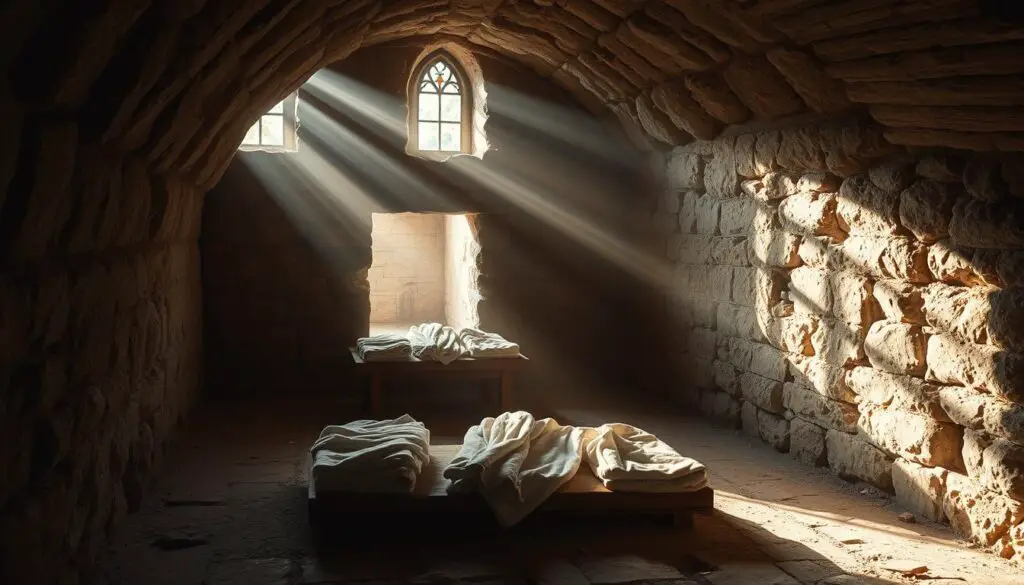
The empty tomb stands as a pivotal element in the resurrection narrative, offering both historical and spiritual significance. Archaeological findings reveal that Jewish burial customs in 1st-century Judea required bodies to be buried before sunset, with tombs sealed to prevent desecration. The discovery of the empty tomb, guarded by Roman soldiers, challenges natural explanations and supports the belief in the raised dead.

Burial traditions of the time emphasized dignity and haste, especially before the Sabbath. The large stone sealing the tomb was a common practice to prevent grave robbery. However, the accounts describe the stone being rolled away, suggesting a divine intervention that defies human explanation. This event underscores the spiritual symbolism of the empty tomb as a testament to new life and eternal hope.

Alternative theories, such as the stolen body hypothesis, have been proposed but lack substantial evidence. Historical records and eyewitness testimonies consistently affirm the empty tomb’s authenticity. The raised dead claim, supported by post-resurrection appearances, reinforces the belief in a physical resurrection and its profound spiritual implications.

Scholarly debates continue regarding the historicity of the empty tomb, yet the consensus leans toward its validity. The absence of a shrine or veneration site for Jesus’ remains further supports the belief in His resurrection. For many, the empty tomb remains a powerful symbol of faith and transformation, bridging the gap between history and spirituality.

empty tomb

Explore more about the significance of burial customs and their role in memorials in our collection of funeral Bible verses.

Jewish and Greco-Roman Perspectives on Resurrection

The beliefs about life after death in Jewish and Greco-Roman cultures provide a rich backdrop for understanding the resurrection story. These perspectives, though different, shaped early Christian thought in profound ways.

Jewish Eschatology and Burial Customs

In Jewish tradition, resurrection was tied to eschatology, the belief in a future time when God would redeem His people. This hope was rooted in scriptures like Daniel 12:2, which spoke of a resurrection at the end of days. Burial customs, such as wrapping bodies in linen and using spices, reflected a belief in the dignity of the body and the promise of a future resurrection.

The concept of resurrection was not universally accepted among Jews. The Sadducees, for example, denied any form of afterlife, while the Pharisees believed in a bodily resurrection. This diversity of belief highlights the complexity of Jewish thought on the matter.

Greco-Roman Beliefs on Immortality and Divine Appearances

In contrast, Greco-Roman cultures emphasized the immortality of the soul over the body. Plato’s philosophy, for instance, described the soul’s journey to the afterlife, where it would exist in a state of happiness or misery based on its earthly deeds. The idea of divine appearances and apotheosis—the elevation of humans to divine status—was also common, particularly in the context of Roman emperors.

Despite these differences, the early Christian message of resurrection found fertile ground in the Greco-Roman world. The emphasis on a transformed, glorified body resonated with Greek desires for physical immortality and the Roman fascination with divine manifestations.

The “third day” motif in the resurrection story aligns with Jewish expectations of divine deliverance, as seen in the prophecy of Hosea 6:2. This timeline became a cornerstone of Christian doctrine, symbolizing both fulfillment of scripture and the triumph over death. The blending of Jewish eschatology with Greco-Roman ideas of immortality created a unique framework for understanding the resurrection of Jesus Christ, making it a pivotal event in human history.

For more insights into comforting scripture, visit our collection of Bible verses about death.

Miracles, Appearances, and the Power of a New Life

The story of the resurrection is filled with miraculous events that shaped early Christianity. These miracles not only affirmed faith but also laid the foundation for the church’s growth.

The Role of Miraculous Events in Early Christianity

The transition from crucifixion to new life is a central theme in the resurrection narrative. The crucifixion, a tragic event, was transformed into a triumph of life over death. This transition is vividly described in the accounts, showcasing divine intervention and its profound impact on believers.

Event Significance
Crucifixion Symbolized sacrifice and redemption, setting the stage for resurrection.
Empty Tomb Highlighted divine intervention and the miracle of new life.
Post-Resurrection Appearances Provided proof of resurrection, transforming followers into bold witnesses.

These events inspired early Christians, leading to the rapid growth of the church. The accounts of miracles and appearances created a strong foundation for Christian practice and belief, emphasizing renewal and eternal life.

miraculous events

The power of these events continues to inspire lasting change and renewal, making them a cornerstone of Christian faith and practice.

Understanding “jesus resurrection” and Its Impact on Christian Faith

The resurrection stands as the cornerstone of Christian doctrine, validating its core beliefs through ancient prophecies and divine acts. This event is deeply rooted in both the Old Testament and New Testament, providing a foundation for faith that transcends time.

How the Risen Dead Validates Christian Doctrine

The concept of the risen dead is central to Christian belief. It fulfills Old Testament prophecies, such as Psalms 16:10 and Isaiah 53:11, which foretold of a Messiah rising from the dead. These scriptures highlight God’s plan of redemption, making the resurrection a pivotal moment in human history.

  • The risen dead concept is central to Christian doctrinal validation.
  • Old Testament prophecies, like those in Psalms and Isaiah, foretold the resurrection.
  • The appearance of the risen Jesus is indispensable to Christian belief.
Old Testament Prophecy New Testament Fulfillment
Psalm 16:10 – “You will not let your holy one see decay.” Acts 2:31 – Jesus’ body did not decay in the tomb.
Isaiah 53:11 – “He will see the light of life.” John 1:4 – Jesus is the source of eternal life.

The risen dead, as described in 1 Corinthians 15, underscores the doctrine of resurrection. Paul emphasizes that without this event, faith would be in vain. The physical evidence of the risen Jesus remains a cornerstone for many, offering hope and transformation. This belief continues to inspire and transform lives, standing as a testament to God’s power over death and sin.

risen dead

Scientific Perspectives and Historical Evidence

Exploring the intersection of science and history reveals a fascinating dialogue around the crucifixion and subsequent events. While faith provides a spiritual lens, empirical research offers a complementary view, grounded in tangible evidence and rigorous analysis.

Empirical Investigations and Archaeological Findings

Archaeological discoveries have shed light on the historical context of the crucifixion. The cross, a symbol of Roman execution, is supported by historical records and physical artifacts. For instance, the remains of a crucified man found in Jerusalem align with the timeframe, offering a glimpse into the practices of the time.

Scientific methods, including radiocarbon dating and epigraphic analysis, have authenticated ancient texts and artifacts. These findings corroborate details like the use of a sealed tomb and the presence of Roman guards, enhancing the historical credibility of the narrative.

Debates on the Historicity of the Resurrection

Scholars continue to debate the historicity of the empty tomb and post-resurrection appearances. A significant majority of historians agree on the crucifixion’s historicity, with near-universal consensus on Jesus’ death on the cross. The empty tomb, supported by multiple early sources, is considered highly probable by many experts.

The transformation of Jesus’ followers from fear to bold proclamation is a historical fact noted even by skeptical scholars. The rapid spread of Christianity in Jerusalem, despite persecution, suggests a profound impact event. The willingness of early disciples to face martyrdom for their beliefs underscores the depth of their conviction.

While some scholars argue for natural explanations, the majority acknowledge the historical veracity of the empty tomb and resurrection appearances. The interplay between reason and faith creates a robust foundation for understanding these events, blending empirical data with spiritual significance.

Theological Interpretations and Modern Challenges

Modern theology continues to grapple with the resurrection’s meaning, blending traditional beliefs with contemporary perspectives. This section explores how prophecy, scripture, and the concept of Jesus’ body shape current theological thought.

Interpreting Prophecy and the Fulfillment of Scripture

The resurrection is deeply intertwined with prophecy and scripture. It fulfills Old Testament promises, such as those in Psalms and Isaiah, which foretold a Messiah rising from the dead. These scriptures highlight God’s plan of redemption, making the resurrection a pivotal moment in human history.

  • Prophecy and scripture are interpreted in the context of the resurrection.
  • Jesus’ physical body symbolizes salvation and eternal life.
  • Contemporary theological debates focus on the resurrection’s meaning in today’s faith environment.

The role of Jesus’ body as a symbol of salvation is central to Christian doctrine. His physical resurrection underscores the belief in a transformed, glorified body, resonating with both Jewish and Greco-Roman ideas of immortality and divine manifestations.

Modern scholarship presents challenges, with some interpreting the resurrection metaphorically rather than literally. However, the majority of scholars now affirm the historicity of the empty tomb and the bodily nature of the resurrection appearances, moving away from earlier non-physical interpretations.

The renewed emphasis on the “word” of scripture informs current Christian practices. This focus has led to a deeper understanding of the resurrection’s impact on modern Christian thought and praxis, blending empirical data with spiritual significance.

Modern Scholarship and Critical Analysis

Modern scholars continue to explore the resurrection narrative through various lenses, blending historical inquiry with theological insights. This section delves into contemporary views and critical assessments, offering a balanced perspective on the topic.

Contemporary Views on the Resurrection Narrative

Recent academic studies have sparked debates about the resurrection’s validity. Some scholars propose alternative explanations, such as the “stolen body” hypothesis, while others support the traditional view. The concept of a person rising from the dead remains a focal point in religious and historical discussions.

Historical and religious studies now often incorporate interdisciplinary approaches. This blend of methodologies provides a more comprehensive understanding of the resurrection’s impact on early Christianity. The interplay between faith and historical inquiry is a key area of exploration.

Scholarly Perspective Key Arguments
Traditional View Supports the resurrection as a historical event with transformative impact.
Skeptical View Questions the historicity, proposing natural explanations for the empty tomb.
Interdisciplinary Approach Combines historical and theological analysis for a nuanced understanding.

The influence of critical scholarship has shaped both public and academic perceptions. While some scholars emphasize the historical reliability of the resurrection accounts, others highlight the role of faith in interpreting these events. This interplay between reason and belief continues to be a central theme in modern religious studies.

The spectrum of viewpoints on the resurrection narrative contributes to ongoing theological and scholarly discussions. As modern scholarship evolves, it provides new insights into one of history’s most enduring mysteries, ensuring the topic remains relevant in both academic and religious circles.

Personal Testimonies and the Transformative Impact of the Resurrection

Throughout history, the resurrection has inspired countless individuals to share their personal stories of faith and renewal. These testimonies highlight the profound impact of encountering the risen Jesus, transforming lives and shaping communities.

Experiences of Faith and Spiritual Renewal

Modern believers often describe their encounters with the resurrection as life-changing. Many find strength in integrating their faith into daily work and spiritual practices. For instance, a scholar shared how studying the resurrection deepened her understanding of forgiveness, leading to a renewed commitment to her work in ministry. Others speak of moments where their faith was renewed through personal reflections on the resurrection narrative.

How Personal Encounters Shape Belief

Personal encounters with the resurrection story continue to inspire believers. One individual described how questioning the historical accounts led to a deeper belief. “I started with doubts,” they said, “but as I explored the evidence, my faith grew stronger.” This journey of questioning and exploration is common, often leading to a more profound connection with the resurrection’s message.

Over the years, these experiences have had a lasting impact on both individuals and communities. Stories of transformation, from fear to faith, resonate across generations. The resurrection’s power to renew and inspire remains a central theme in Christian belief, connecting historical events with contemporary faith.

Conclusion

The case for the resurrection is compelling, supported by historical evidence, biblical accounts, and personal testimonies. This event stands as a cornerstone of Christian belief, offering a powerful narrative of hope and renewal. At its heart, the resurrection is a story of transformation that continues to inspire lives today.

The truth of the resurrection is deeply rooted in history and faith. It fulfills ancient prophecies and provides a foundation for Christian doctrine. The empty tomb and post-resurrection appearances are central to this narrative, offering a testament to the triumph over death and sin.

Reflecting on the impact of the resurrection, it has transformed hearts and shaped communities across centuries. It invites us to explore its significance and deepen our understanding of this pivotal moment in history. Consider the implications of the resurrection for your personal faith and life, and let its message of renewal guide you forward.

FAQ

What is the significance of the empty tomb in the resurrection narrative?

The empty tomb is a central piece of evidence in the biblical account. It symbolizes that Jesus’ body was no longer there, supporting the belief that He had risen from the dead. This event is seen as a demonstration of divine power and the fulfillment of Old Testament prophecies.

How does the resurrection relate to Christian faith and salvation?

The resurrection is the foundation of Christian faith. It represents victory over sin and death, offering eternal life to believers. Through His death and resurrection, Jesus Christ provided the ultimate sacrifice for humanity’s sins, making salvation possible for all.

What role do the disciples play in the resurrection story?

The disciples were eyewitnesses to the transformative events following the resurrection. Their testimonies, including encounters with the risen Jesus, became the cornerstone of early Christian teachings. Their faith and courage helped spread the message of the resurrection across the ancient world.

How does the resurrection appear in the New Testament accounts?

The New Testament includes detailed descriptions of the resurrection in all four Gospels. Each account provides unique details, but they all agree on the empty tomb and Jesus’ appearances to His followers. These narratives form the heart of Christian belief and practice.

What is the historical evidence supporting the resurrection?

While the resurrection is a supernatural event, historical records and archaeological findings support the credibility of the biblical accounts. The empty tomb, the transformation of the disciples, and the rapid growth of the early church are often cited as evidence of its historicity.

How does the resurrection impact personal faith today?

The resurrection offers hope and renewal for believers. It reminds us that death is not the end and that new life is possible through faith in Jesus Christ. This truth continues to inspire and transform lives, providing a foundation for trust in God’s plan and purpose.

What does the resurrection mean for the Christian church?

The resurrection is the cornerstone of the church’s teachings. It unites believers across centuries, reinforcing the message of forgiveness and eternal life. The church celebrates this event as a reminder of God’s power and love for humanity.

How does the resurrection align with Old Testament prophecies?

The resurrection fulfills numerous Old Testament prophecies, such as those found in Psalm 16 and Isaiah 53. These scriptures foretell a Messiah who would suffer, die, and rise again, confirming the divine plan of salvation and redemption.

What is the connection between the resurrection and the cross?

The cross and the resurrection are inseparable. The cross represents the sacrifice for sin, while the resurrection signifies the triumph over death. Together, they complete the story of redemption, offering humanity a path to reconciliation with God.

How has the resurrection shaped Christian doctrine?

The resurrection has profoundly influenced Christian theology, emphasizing the reality of eternal life and the hope of a future resurrection for all believers. It also underscores the authority of Jesus Christ as the Son of God and the Savior of the world.

Explore the Meaning of Jesus Praying in Your Life


Jesus’ prayer life offers a timeless model for connecting with God, providing guidance for believers today. His prayers, whether in solitude or with others, demonstrate a deep communion with the Father, emphasizing submission to God’s will and giving thanks. These moments, as seen in the Bible, show how prayer can shape and strengthen one’s faith.

This article delves into the significance of Jesus’ prayers, drawing insights from biblical examples and modern applications. By examining His prayer life, we’ll explore how it can transform our own spiritual journeys. Through practical lessons and reflective moments, we’ll discover the power of prayer in various contexts, helping us deepen our relationship with God.

Key Takeaways

  • Jesus’ prayer life serves as a model for modern believers, illustrating effective communication with God.
  • Prayer strengthens faith and provides guidance in decision-making, as seen in Jesus’ examples.
  • Jesus’ prayers highlight the importance of solitude and communal prayer, showing a balanced approach to spiritual life.
  • Prayer is essential for mental and emotional well-being, reducing stress and fostering peace.
  • Consistent prayer, as demonstrated by Jesus, helps build a deeper relationship with God and aligns actions with divine will.

Embracing the Power of jesus praying

Prayer was the cornerstone of Jesus’ ministry, providing Him with strength and direction. Through His example, we see how prayer can transform our lives and deepen our connection with the Father.

Jesus often prayed during pivotal moments, seeking guidance and truth. This practice empowered Him to navigate challenges and make decisions aligned with God’s will. By embracing this habit, we can find similar empowerment in our own lives.

Prayer reinforces our relationship with the Father and is vital for personal and spiritual growth. Jesus’ prayers, as recorded in the Bible, show how He relied on prayer for direction and strength. For instance, before making major decisions, Jesus often prayed, demonstrating the importance of aligning our actions with God’s plan.

As disciples, we are called to model Jesus’ prayer life. This means prioritizing prayer, whether in solitude or with others, to seek guidance and strength. By doing so, we can overcome modern challenges and grow in our faith, just as Jesus did.

A Glimpse at Biblical Moments of Prayer

Exploring the prayer life of Jesus reveals powerful moments that shaped His ministry and deepened His connection with God. These instances, recorded in Scripture, offer valuable lessons for believers today.

Jesus’ Example During Baptism and Special Occasions

One of the most significant moments of Jesus praying is during His baptism. As described in the Gospels, when Jesus was baptized, heaven opened, and the Holy Spirit descended upon Him. This event marked the beginning of His public ministry and demonstrated the importance of prayer in aligning with God’s will. Similarly, Jesus often prayed during special occasions such as weddings and holidays, using these times to connect with God and seek guidance.

jesus prayer

Early Morning Solitude and Reflection

Jesus’ habit of praying in the early morning hours is another notable example. He would often rise before dawn to find solitude and pray, as mentioned in Mark. This practice not only sustained His ministry but also set a precedent for believers to start their day with reflection and prayer. By prioritizing these quiet moments, Jesus showed how prayer can provide strength and clarity for the challenges ahead.

Prayer in Demanding Seasons of Life

Life is filled with challenges that test our faith and resilience. Jesus’ journey, particularly His time in the wilderness and the Garden of Gethsemane, offers profound lessons on leaning into prayer during such seasons.

Overcoming Temptation and Facing Trials

Jesus’ 40-day fast in the wilderness stands as a powerful example of enduring temptation through prayer. During this time, He faced Satan’s temptations but relied on prayer and Scripture to overcome them. This teaches us that prayer is not just a reaction to trials but a proactive stance against them.

In the Garden of Gethsemane, Jesus prayed fervently as He faced the ultimate trial—the cross. His prayer demonstrated surrender and trust in God’s plan, even in immense suffering. This moment shows how prayer can provide strength and clarity when we face our own trials.

Finding Strength in Times of Need

Prayer is a source of strength, especially when we feel overwhelmed. Jesus’ prayer in Gethsemane, though filled with anguish, maintained His spiritual resilience. This shows that even in our darkest hours, prayer can be a refuge.

For believers, prayer is not just for comfort but a means to align our will with God’s. Whether in solitude or with others, prayer helps us navigate life’s storms with faith and courage.

Trial Prayer’s Role Outcome
Wilderness Temptation Prayer and Scripture Overcame Temptation
Garden of Gethsemane Fervent Prayer Surrender and Strength
General Trials Proactive Prayer Alignment with God’s Will

Every challenge, big or small, benefits from the discipline of prayer. By following Jesus’ example, we can find the strength and guidance needed to overcome any trial, trusting in God’s plan and presence.

Prayer Before Critical Decisions

Prayer plays a vital role in guiding us through life’s most important choices. Jesus’ example of praying before making key decisions offers us a clear model to follow.

All-Night Prayers for Guidance and Clarity

One of the most powerful examples of Jesus praying before a critical decision is found in Luke’s account. Before selecting His twelve disciples, Jesus spent the entire night in prayer. This moment highlights the importance of seeking divine guidance when facing significant choices.

Prayer Before Decisions

By praying through the night, Jesus demonstrated how structured, lengthy periods of prayer can bring clarity and order to our decision-making. This practice not only helped Him align His actions with God’s will but also set a precedent for His followers.

Such moments of prayer are essential for disciples today. They help us discern God’s message and establish a clear understanding of our purpose. Prayer before critical decisions strengthens our resolve and prepares us to face challenges with courage, just as Jesus faced the cross with unwavering commitment.

Jesus’ example teaches us that meaningful prayer is not just about finding the right path but also about aligning our hearts with God’s will. By prioritizing prayer, we can navigate life’s decisions with confidence and faith, trusting in God’s plan and timing.

Experiencing Unified Prayer in Community

Prayer is a powerful tool that strengthens not only individual faith but also the bonds within a church community. When believers come together in collective prayer, they create a united front that fosters spiritual growth and mutual support.

In the Bible, Jesus often prayed with His disciples, emphasizing the importance of unity. For instance, during the Last Supper, He prayed that His followers would be one, just as He and the Father are one. This unity in prayer is a cornerstone of the church’s mission and a testament to the power of collective worship.

Fostering Church Unity Through Collective Prayer

Communal prayer bridges differences among believers, creating a shared sense of purpose. When a church prays together, it aligns its actions with God’s will, leading to transformative changes. For example, many churches have experienced growth and stability after prioritizing corporate prayer.

The story of community prayer encourages modern congregations to gather regularly. By doing so, they honor God’s name and seek His glory. Jesus’ example teaches believers to integrate prayer into both personal and corporate life, ensuring a balanced spiritual journey.

Revelations from the Garden of Gethsemane

The Garden of Gethsemane holds profound spiritual significance, offering deep insights into Jesus’ emotional and spiritual struggles. This sacred place, where Jesus faced immense distress, teaches us about the power of prayer in times of sorrow.

Learning from Jesus’ Heartfelt Moments

Jesus’ time in the Garden of Gethsemane reveals His human vulnerability. He experienced overwhelming sorrow, even sweating drops of blood, showing His deep emotional pain. Despite His distress, Jesus turned to prayer, demonstrating how faith can guide us through life’s darkest moments.

Garden of Gethsemane

Integrating Pain, Surrender, and Faith

Jesus’ prayer in the Garden illustrates the union of pain, surrender, and faith. He prayed three times, asking God to remove the cup of suffering, yet He submitted to the Father’s will. This act of surrender shows how prayer can help us align with God’s plan, even in agony.

Every person can find comfort in prayer, just as Jesus did. His example teaches us to integrate painful experiences with genuine prayer, trusting in God’s plan. This spiritual practice helps believers face challenges with courage and faith, knowing God’s truth guides them.

  • Jesus’ heartfelt prayer in Gethsemane offers lessons for modern disciples.
  • Prayer provides strength to embrace God’s will, even in suffering.
  • Surrendering to the Father’s plan is key for spiritual growth.

Through Jesus’ example, we learn that prayer is not just for comfort but a means to align our will with God’s. This truth is evident in the Garden of Gethsemane, where Jesus showed that even in the darkest times, prayer leads to strength and surrender.

The High Priestly Prayer as a Model for Disciples

The High Priestly Prayer stands as a profound example of Jesus’ deep connection with the Father and His care for His disciples. Found in John 17, this prayer reveals layers of theological depth, emphasizing salvation, unity, and divine protection. It serves as a blueprint for modern believers, guiding them in their spiritual journeys.

Insight into Salvation, Unity, and Protection

Jesus’ prayer begins with a focus on eternal life, defining it as knowing the “only true God” and Himself. He prays for His disciples’ protection from the evil one and their unity, desiring that they be as one with the Father and Himself. This unity, Jesus states, will lead the world to believe in Him, making it a cornerstone of effective discipleship.

High Priestly Prayer

Theological Depth and the Assurance of Truth

The prayer also emphasizes the importance of truth, with Jesus praying for His disciples’ sanctification through God’s Word. He desires that they be filled with joy and that His glory be manifest in them. This theological richness underscores the assurance of truth in prayer, reinforcing its role in spiritual growth and communal faith.

Aspect of Prayer Scriptural Emphasis Outcome
Eternal Life Knowing God and Jesus Salvation and Communion
Unity Believers as One Worldwide Belief in Jesus
Protection Guarding from Evil Spiritual Safeguarding

This prayer model fosters a community of true disciples grounded in the gospel, emphasizing the importance of both personal and collective prayer to sustain faith and unity. By understanding its details, believers today can apply these insights, finding strength and truth in their daily lives.

Conclusion

In conclusion, Jesus’ prayer life serves as a powerful model for modern believers, offering guidance on how to deepen their faith and navigate life’s challenges. His prayers, whether in solitude or with others, demonstrate a deep connection with God and provide strength for overcoming trials. By following His example, disciples can find the courage and wisdom needed to align their lives with God’s will.

Through intimate moments of prayer, Jesus showed how to seek God’s guidance in times of decision and difficulty. His prayers emphasize the importance of unity and surrender, encouraging believers to trust in God’s plan. As we reflect on His life, we are reminded that prayer is not just a practice but a way to experience God’s glory and find strength in every season. Let us carry forward the legacy of disciplined prayer, ensuring it remains a cornerstone of our faith journey.

FAQ

How can I deepen my prayer life by following Jesus’ example?

Jesus often prayed in solitude, showing the importance of quiet reflection. Find a peaceful spot each day to connect with God, just as Jesus did.

What can I learn from Jesus’ prayers in the Garden of Gethsemane?

Jesus’ prayers in Gethsemane teach us about surrender and faith. Even in pain, He trusted God’s plan, showing us how to face tough times with faith.

How did Jesus use prayer to prepare for major decisions?

Jesus often prayed before key decisions, like choosing His disciples. This shows the value of seeking God’s guidance in our important choices.

Can prayer really bring strength during difficult times?

Yes, prayer is a source of strength. Jesus prayed for His disciples’ protection and unity, demonstrating how prayer can uphold us in challenging seasons.

How does prayer foster unity in the church?

Praying together unites believers. Jesus prayed for His followers to be one, showing that collective prayer strengthens church unity and fellowship.

What role does faith play in effective prayer?

Faith is key in prayer. Jesus emphasized believing in God’s power, teaching us to trust Him even when outcomes aren’t clear.

How can I make prayer a consistent part of my daily life?

Start small, like dedicating a few minutes each morning to pray. Jesus’ consistent prayer life, even when busy, shows its importance.

What does Jesus’ high priestly prayer teach us about God’s love?

Jesus’ prayer in John 17 reveals God’s deep love for us. It shows His desire for our unity and sanctification through truth.

How does prayer glorify God?

Prayer glorifies God by acknowledging His power and sovereignty. Jesus’ prayers always pointed to God’s glory and our need for Him.

Can I pray for others like Jesus did?

Yes, Jesus often prayed for others, like His disciples. Praying for others’ strength and unity is a powerful way to follow His example.

Celebrating the Birth of Jesus: A Guide


Celebrating the birth of Jesus is a cornerstone of Christian faith, offering a time for reflection, joy, and connection with spiritual heritage. This guide explores the biblical, historical, and theological dimensions of Jesus’ birth, providing insights into its significance and traditions surrounding it.

The nativity story, as told in Matthew and Luke, forms the heart of Christmas celebrations. Yet, the exact date of Jesus’ birth remains a topic of debate. While December 25 is widely recognized, scholars suggest that the actual birth may have occurred in spring or fall, aligning with the biblical account of shepherds tending their flocks at night.

Historical records and theological discussions shed light on why December 25 was chosen, possibly to coincide with existing Roman festivals like the winter solstice. This section delves into these theories and explores how global traditions have embraced the celebration, blending cultural practices with religious observances.

Understanding the theological and historical contexts of Jesus’ birth enriches our appreciation of this sacred event. Whether through religious rituals or family traditions, the celebration remains a powerful reminder of faith, love, and renewal.

Key Takeaways

  • Celebrating Jesus’ birth is central to Christian faith, blending spiritual reflection with cultural traditions.
  • The Bible does not specify the exact date of Jesus’ birth, leading to scholarly debates and theories.
  • December 25 was likely chosen to align with existing Roman festivals, influencing its widespread adoption.
  • Historical and theological insights enhance our understanding and appreciation of the nativity story.
  • Global traditions continue to evolve, blending religious practices with cultural celebrations.

Biblical and Historical Perspectives on Jesus’ Birth

The birth of Jesus is a pivotal event in Christian faith, rooted in both scripture and history. The Gospels of Matthew and Luke provide the primary accounts of this event. Matthew focuses on the genealogy of Jesus and the visit of the Magi, while Luke details the census under Caesar Augustus and the shepherds’ visit. These narratives offer complementary insights into the birth of Jesus.

Historically, King Herod’s reign (37–4 B.C.) and the census under Caesar Augustus help date Jesus’ birth. Scholars debate the exact year but place it between 7 and 4 B.C. The priestly courses mentioned in 1 Chronicles 24 also play a role in determining the timeline, particularly in understanding the service of Zechariah, John the Baptist’s father.

  • The biblical accounts in Matthew and Luke provide distinct yet complementary details about Jesus’ birth.
  • King Herod’s reign and the Roman census under Caesar Augustus are key historical markers.
  • Priestly courses and the timing of Zechariah’s service offer further clues for dating Jesus’ birth.

Scholars use these scriptural and historical details to explore the actual time of Jesus’ birth, highlighting the complexity and richness of the event. The star guiding the Magi adds another layer of intrigue, showcasing the blend of divine and historical elements in the narrative.

Exploring the Timeline: When Was Jesus Born?

The question of when Jesus was born has sparked debate among scholars for centuries. While December 25 is widely recognized as His birthday, many believe His actual birth occurred in spring or fall.

Shepherds in ancient Judea typically tended their flocks during spring and fall, avoiding the cold winter months. This seasonal pattern suggests that Jesus’ birth might not have been in winter.

Astronomical observations also offer clues, with some scholars pointing to celestial events like planetary conjunctions around 6-4 BC as possible signs of His birth.

Additionally, the conception of John the Baptist, which is believed to have occurred in June, provides another timeline clue. Counting nine months later would place Jesus’ birth in March or April.

Shepherds and Seasonal Patterns

While the exact date remains uncertain, these factors contribute to the ongoing discussion about Jesus’ birth month, blending biblical clues with seasonal and astronomical insights.

Controversies Surrounding December 25th

The choice of December 25 as the date for celebrating the birth of Jesus has been a topic of debate among scholars and historians. Despite the lack of biblical evidence, this date became widely accepted, blending Christian and pre-existing pagan traditions.

Pagan Festivals and the Winter Solstice

The Roman festivals of Sol Invictus and Saturnalia, celebrated around the winter solstice, likely influenced the selection of December 25. These festivals, with their themes of renewal and feasting, provided a cultural framework that early Christians could adapt, easing the transition for pagans converting to Christianity.

Aligning Christmas with the winter solstice also symbolized the triumph of light over darkness, resonating with the spiritual message of Jesus’ arrival.

Alternative Theories: Spring or Autumn Origins

Scholars have proposed that Jesus’ birth might have occurred in spring or autumn. Shepherds tending their flocks, as mentioned in the Bible, would more likely do so during these seasons rather than in winter. Additionally, the conception of John the Baptist in June suggests Jesus’ birth could have been in March or April.

Some theories align Jesus’ birth with the Feast of Tabernacles in September, further supporting the idea of an autumn birth. These theories, though speculative, highlight the ongoing discussion about the timing of such a significant event.

The debate over the date of Jesus’ birth involves both historical traditions and calendar computations. While December 25 remains the widely recognized day, alternative theories continue to spark interest and discussion, reflecting the complexity of the event’s history and its enduring impact on modern celebrations.

Cultural and Global Celebrations of Christmas

Christmas is a vibrant tapestry of traditions, woven together by cultures from around the globe. Each country brings its unique customs, creating a rich and diverse celebration of the birth of Jesus. From festive decorations to heartfelt gatherings, these traditions reflect the blending of cultural influences with religious observance.

Traditions and Festive Customs Around the World

Christmas is celebrated differently across the world, showcasing the diversity of human culture. In Mexico, the tradition of Las Posadas reenacts Mary and Joseph’s search for shelter, while in India, homes are adorned with mango leaves and paper stars instead of traditional Christmas trees. Japan, on the other hand, embraces secular customs like Christmas lights and decorations, blending them with local festivities.

Country Tradition Description
Mexico Las Posadas A nine-day celebration reenacting the journey of Mary and Joseph.
India Mango Trees Homes decorated with mango leaves and paper stars.
Japan Secular Customs Christmas trees and decorations blended with local traditions.

These customs highlight how cultural influences merge with religious observance, creating a unique celebration in each region. Despite these differences, the core focus remains on commemorating the birth of Jesus, a unifying thread across all traditions.

Global Christmas Traditions

“Christmas is a festival that unites diverse cultures through shared traditions, creating a global community bound by faith and celebration.”

Public holidays and school calendars often align with Christmas traditions, emphasizing its significance in societal schedules. Community events and church services play a vital role in maintaining these festive customs, fostering a sense of belonging and spiritual connection. The global impact of Christmas extends beyond religion, influencing commerce and social interactions, making it a truly universal celebration.

For those seeking inspiration, Bible verses offer heartfelt reflections, enriching the spiritual aspect of the season. Whether through family gatherings or communal events, Christmas remains a time of joy, unity, and spiritual renewal.

Influence of Pagan Traditions and the Roman Calendar

The celebration of Christmas on December 25 is deeply intertwined with ancient pagan traditions and the Roman calendar. Early Christian leaders strategically aligned their holidays with existing festivals to ease the transition for pagans converting to Christianity.

Transition from Pagan Observances to Christian Celebrations

The Roman festival of Saturnalia, held in December, was a time of feasting and gift-giving. This aligns with the festive nature of Christmas. Additionally, the festival of Sol Invictus, celebrating the “Birth of the Unconquered Sun,” was also in December, influencing the choice of date for Jesus’ birth celebration.

Emperor Constantine’s conversion in 336 AD marked a turning point. He supported the Christianization of existing Roman festivals, blending pagan traditions with Christian rituals. This strategic alignment helped spread Christianity by making it more relatable to the existing culture.

Scholars note that while December 25 is widely accepted, debates continue about its origins. The incorporation of pagan elements was a deliberate effort to facilitate religious conversion, reflecting the complex evolution of Christmas traditions.

Today, Christmas combines both ancient and Christian elements, creating a unique celebration that honors its rich historical roots while remaining a cornerstone of modern Christian faith.

Unpacking the Significance of the jesus birthday

The birth of Jesus holds profound theological significance, serving as the cornerstone of Christian faith. It is a celebration that transcends time, offering timeless lessons on redemption and divine love.

Theological Implications of the Nativity

The nativity story is deeply rooted in the fulfillment of Old Testament prophecies. Jesus’ birth represents the culmination of God’s redemptive plan, as foretold by prophets like Isaiah and Micah. This event symbolizes God’s faithfulness to His promises, reinforcing the Christian belief in a divine plan for humanity.

  • Fulfillment of Old Testament prophecies
  • Embodiment of God’s redemptive plan
  • Symbol of hope and divine love

Theological Implications of the Nativity

Impact on Christian Faith and Worship Practices

The birth of Jesus has profoundly shaped Christian worship and practices. It is celebrated not just as a historical event but as a living testament to God’s grace. The nativity narrative reassures believers of God’s redemptive plan, inspiring faith and devotion.

“The birth of Jesus is not just a historical event but a spiritual renewal that continues to inspire faith and hope in believers today.”

Modern theology draws heavily from the imagery and symbolism of the nativity, emphasizing themes of humility, love, and redemption. This event deepens our understanding of the spiritual meaning behind the celebration, making it a cornerstone of Christian doctrine.

Modern Reflections: Observance and Community Impact

Christmas today is a blend of timeless traditions and contemporary practices, creating a unique celebration that resonates across generations. The essence of the season lies in its ability to unite people, fostering a sense of community and shared values.

Contemporary Celebrations and Church Practices

Modern Christmas celebrations have evolved, incorporating new customs while preserving the spiritual core. Church gatherings remain central, offering a space for collective worship and reflection. Community events, from festive markets to charity drives, highlight the season’s emphasis on giving and togetherness.

Many families blend cultural traditions with religious observances, creating a personalized experience. For instance, some include ethnic foods or decorations, reflecting their heritage. This fusion enriches the celebration, making it a vibrant tapestry of traditions.

Community Celebrations

The economic impact of Christmas is significant, with holiday shopping and tourism boosting local economies. Schools and businesses often adjust their calendars, reflecting the holiday’s cultural importance. This adjustment underscores Christmas’s role as a time for rest and rejuvenation.

Even those who don’t regularly attend church find themselves drawn to the warmth of the season. The message of hope and unity transcends religious boundaries, making Christmas a universal celebration of human connection.

  • Christmas blends tradition with modern practices, creating a unique experience.
  • Community and church gatherings foster a sense of belonging.
  • The season’s economic impact supports local businesses and tourism.
  • Christmas unites people across cultures and beliefs, emphasizing shared values.

In summary, Christmas remains a cornerstone of community life, offering a time for spiritual reflection, family bonding, and cultural exchange. Its enduring appeal lies in its ability to adapt while preserving the values of love, hope, and unity.

Conclusion

Reflecting on the celebration of Jesus’ birth, it’s clear that this event holds deep significance across cultures and traditions. While debates continue about the exact date, with theories ranging from spring to December, the essence remains unchanged.

The biblical account, historical context, and global traditions each offer unique perspectives. Despite uncertainties, the birth of Jesus remains a cornerstone of Christian faith, symbolizing hope and divine love.

Understanding both the historical background and contemporary practices enriches our appreciation. From ancient customs to modern celebrations, the spirit of unity and reflection shines through.

As we honor this sacred event, let us embrace its unifying message. The birth of Jesus is a timeless celebration of faith, love, and renewal, connecting us all in shared joy and spiritual reflection.

FAQ

Why is December 25th celebrated as the birth date of Jesus?

December 25th was chosen to align with existing Roman festivals and the winter solstice. Early Christians incorporated this date to blend pagan traditions with the celebration of Jesus’ birth.

What connects the winter solstice to Jesus’ birth?

The winter solstice, marking the shortest day, was a significant pagan event. Early Christians adopted this time to symbolize Jesus as the “light of the world,” blending cultural practices with their faith.

How does the nine-month conception period tie into Jesus’ birth?

Jesus’ conception is believed to occur in spring, with birth nine months later in winter. This aligns with the biblical account of shepherds tending flocks, common in cooler months.

What evidence supports Jesus’ birth in spring or autumn?

Some scholars suggest Jesus was born in spring or autumn based on shepherding patterns and the census mentioned in Luke. However, December 25th remains the traditional date.

How did pagan festivals influence Christmas traditions?

Pagan festivals like Saturnalia and Yule influenced Christmas customs, such as gift-giving and evergreen trees, blending into the celebration of Jesus’ birth.

What role did the Roman calendar play in setting Jesus’ birth date?

The Roman calendar’s festivals in winter likely influenced the choice of December 25th. This alignment helped integrate Christian celebrations into existing cultural practices.

How do global cultures celebrate Jesus’ birth differently?

Celebrations vary widely, from posadas in Mexico to La Befana in Italy, each adding unique cultural traditions to the universal commemoration of Jesus’ birth.

What theological significance does Jesus’ birth hold?

Jesus’ birth is seen as the incarnation of God, emphasizing divine love and humanity’s redemption, central to Christian faith and worship practices.

How has the celebration of Jesus’ birth evolved today?

Modern celebrations blend religious observances with cultural festivities, fostering community through church services, family gatherings, and acts of kindness.