In the Episcopal Church, baptism stands as a joyful celebration of belonging. This sacred act symbolizes God’s unconditional love and marks the start of a lifelong spiritual journey. Through water and the Holy Spirit, individuals become part of a larger story—one rooted in grace and shared purpose.
The Episcopal tradition views this sacrament as more than a ritual. It’s a divine embrace that welcomes people into Christ’s body, the Church. Whether infants or adults, participants receive God’s promise of eternal love and a place in the Christian family.
Community plays a vital role in this practice. Congregations gather to support new members, recognizing baptism as both personal transformation and collective renewal. The ceremony connects individuals to centuries of faith while inviting them to shape the Church’s future.
This inclusive approach reflects core values. All are invited—regardless of age or background—to experience spiritual rebirth through living waters. The event becomes a milestone where heaven and earth meet, creating bonds that last beyond time.
Key Takeaways
- Baptism in the Episcopal Church signifies adoption into God’s family and membership in Christ’s body
- The sacrament serves as both a personal commitment and community celebration
- Water and the Holy Spirit work together to create spiritual transformation
- All ages are welcome, emphasizing inclusivity across generations
- The practice ties individuals to ancient traditions while nurturing future growth
- Congregational support reinforces the shared nature of faith journeys
Understanding Baptism in the Episcopal Church
Rooted in Scripture and centuries of practice, baptism in the Episcopal Church bridges ancient wisdom with modern spiritual journeys. This sacrament flows from Jesus Christ’s own example in the Jordan River and his call to “make disciples of all nations.”
Biblical Foundations and Theology
The New Testament shapes Episcopal views of holy baptism. John’s baptism of Jesus models humility, while Paul’s letters describe it as dying and rising with Christ. Episcopal teachings emphasize baptism as God’s gift—not earned by human effort, but freely given through water and the Spirit.
Key biblical themes include:
- Rebirth through living water (John 3:5)
- Entry into the universal church (Galatians 3:27-28)
- Forgiveness and new creation (Acts 2:38)
Historical Perspective and Tradition
Early Christian immersion practices evolved into today’s Episcopal rituals. The Book of Common Prayer preserves elements from 4th-century liturgies, like renouncing evil and affirming faith. Over time, Anglican reformers simplified medieval customs while keeping core symbolism.
Modern Episcopal baptisms honor this heritage through:
- Community vows supporting the baptized
- Water poured three times (Father, Son, Holy Spirit)
- Anointing with chrism oil
This blend of history and theology creates a living tradition. Through baptism, the church celebrates God’s enduring promise while nurturing fresh expressions of faith.
what do episcopalians believe about baptism
At the heart of Episcopal practice lies baptism’s power to create sacred connections. Through flowing water and spoken vows, participants experience God’s unbreakable bond with humanity—a relationship sealed through grace rather than human achievement.
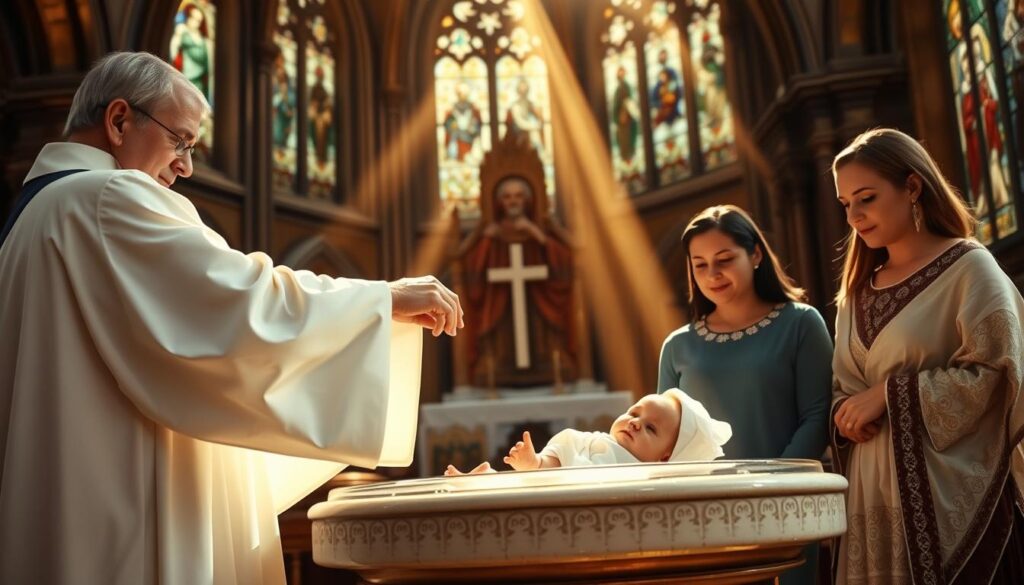
This sacrament marks spiritual rebirth, where individuals gain access to divine life itself. Like branches grafted to a vine, the baptized become channels of God’s love—transformed yet still growing. Water’s cleansing symbolism washes away old patterns while nourishing new purpose.
Three vital promises shape the ritual:
- Rejecting forces that harm spiritual growth
- Affirming faith in Jesus Christ
- Committing to serve others through prayer and action
The ceremony climaxes with the Trinitarian formula, connecting participants to Christianity’s deepest mystery. Unlike distinctive Baptist perspectives, Episcopal tradition emphasizes God’s initiative in this gift rather than personal decision alone.
Through baptism, people join a global community spanning centuries. New members inherit ancient stories while adding fresh chapters through their unique journeys. This living tradition celebrates both individual worth and collective belonging—a sacred dance of identity and purpose.
The Sacrament of Holy Baptism: Significance and Meaning
The waters of Holy Baptism ripple through time, connecting ancient promises to modern faith journeys. This sacred moment blends personal transformation with communal bonds, inviting participants into a story larger than themselves.
Spiritual Rebirth and Renewal
Through this sacrament, individuals shed old patterns like worn garments. The Apostle Paul’s declaration—“clothed with Christ” (Galatians 3:27)—comes alive as water washes away spiritual burdens. Three profound shifts occur:
- Death to self-centered living
- Rebirth into God-centered purpose
- Continuous growth through grace
This cleansing creates an unbreakable seal. Participants become permanently marked as Christ’s own—a spiritual DNA that persists through life’s twists and turns.
Community Membership and Belonging
Holy Baptism weaves individuals into a global tapestry of faith. New members join both their local parish and the universal Church spanning continents and centuries. Key benefits include:
- Access to shared worship traditions
- Support from fellow believers
- Opportunities to serve others
Congregations actively welcome newcomers, much like supportive faith communities across Christian traditions. This mutual commitment nurtures spiritual growth while honoring each person’s unique journey.
Baptism for All Ages: Infants, Children, and Adults
Life’s journey begins at different moments, and the Episcopal Church honors this truth through baptismal practices spanning generations. This sacrament welcomes individuals at every stage, from newborns to older adults, celebrating God’s grace in diverse ways.
Infant Baptism and Parental Responsibilities
When infants receive baptism, the community witnesses divine love acting first. Parents and godparents pledge to nurture the child’s faith through teaching and example. These vows create a spiritual safety net, surrounding the baptized with guidance as they grow.
Adult Baptism and Personal Commitment
For adults, baptism becomes a conscious embrace of Christian living. Years of spiritual exploration often lead to this public declaration. Candidates affirm their choice to follow Christ while receiving the church’s full support.
Children between these stages participate according to their understanding. A seven-year-old might grasp baptism as joining God’s family, while a teenager explores its call to service. Regardless of age, all experience the same core transformation—becoming Christ’s own forever.
This inclusive approach weaves together two truths: God’s grace precedes human response, and mature faith requires active engagement. Whether through parental promises or personal vows, baptism unites all ages in shared belonging.
The Role of Godparents and Sponsors
Guiding lights in the baptism journey, sponsors and godparents form a spiritual partnership with those entering Christian life. These mentors bridge personal faith and community support, ensuring candidates grow in their relationship with God.
Commitments That Shape Futures
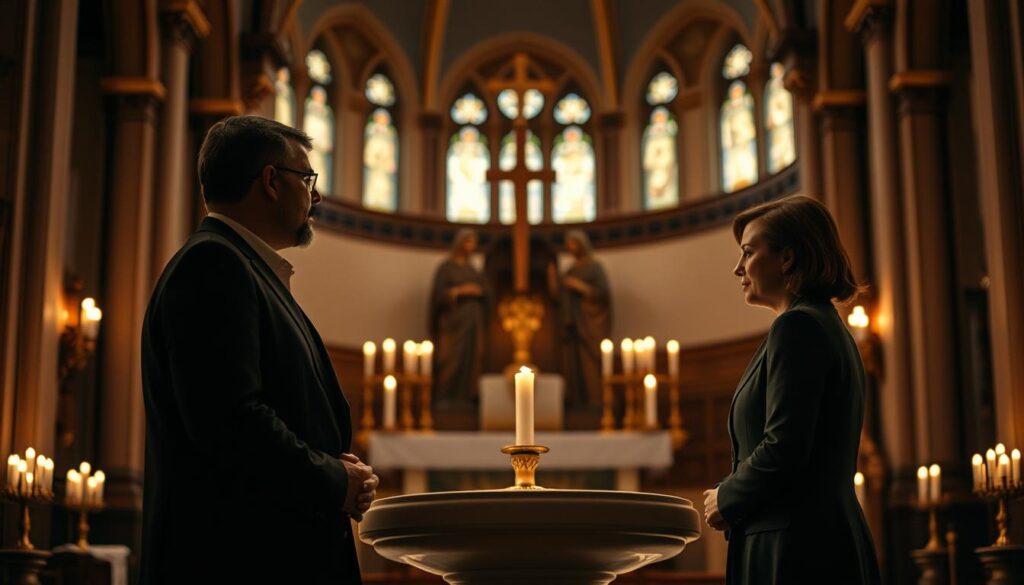
Godparents accept sacred duties when presenting a child for baptism. They vow to:
- Model Christian living through actions and words
- Pray regularly for their godchild’s spiritual growth
- Support parents in faith-based parenting
As the Book of Common Prayer states, sponsors promise to help the baptized “grow into the full stature of Christ.” This ongoing guidance lasts beyond the ceremony itself.
Selecting Spiritual Champions
Choosing sponsors requires thoughtful consideration. Ideal candidates demonstrate:
- Active participation in their faith community
- Willingness to engage in the child’s spiritual education
- Ability to model Christian values consistently
Adult candidates often select sponsors who’ve influenced their faith journey. These relationships provide encouragement during challenges and celebrations alike.
Through baptismal vows and daily support, sponsors help weave individuals into the fabric of Christian community. Their role reminds us that faith grows best when nurtured together.
Baptism and the Holy Spirit
The flame of the Holy Spirit dances through Episcopal baptismal waters, igniting faith and forging eternal bonds. This sacrament serves as a divine ignition point where earthly elements meet heavenly power, transforming ordinary moments into sacred encounters.
Baptismal Covenant and Spiritual Gifts
Through the baptismal covenant, participants enter a dynamic partnership with the Holy Spirit. This sacred agreement combines divine empowerment with human commitment, offering:
- Wisdom for life’s complex decisions
- Unshakable faith during trials
- Healing touch for broken relationships
- Strength to serve others selflessly
These spiritual gifts mirror the Pentecost story, where early Christians received abilities to spread God’s love. The Book of Common Prayer frames these promises as lifelong invitations rather than one-time exchanges.
Experiencing the Holy Spirit Through Baptism
Some feel the Spirit’s presence like a warm embrace during the water ritual. Others notice gradual changes in their priorities and passions. A teenager might discover newfound courage to stand up for classmates, while a parent gains patience through sleepless nights.
Pentecost celebrations highlight this connection, reminding believers that the same Spirit active at baptism continues guiding daily choices. Like a compass pointing north, the Holy Spirit helps navigate life’s journey while respecting individual free will.
Ongoing prayer and community worship keep this spiritual relationship vibrant. Through these practices, the baptized deepen their capacity to recognize and respond to divine whispers in ordinary moments.
Baptism as an Entrance into the Church Community
Gathered voices echo through the sanctuary as baptism transforms private faith journeys into shared celebrations. This sacrament creates visible bonds between individuals and their spiritual family, uniting personal commitment with collective responsibility.
Shared Vows, Shared Journey
Episcopal baptisms thrive on active participation. Congregations recite promises to guide new members, creating a network of support. These public vows during Sunday worship remind everyone that faith grows best in community soil.
Three reasons baptisms occur in regular services:
- Demonstrates the church’s role in spiritual growth
- Connects new believers to weekly worship rhythms
- Strengthens existing members’ dedication
| Phase | Congregational Role | Impact |
|---|---|---|
| Preparation | Prayer support | Builds anticipation |
| Ceremony | Vocal affirmation | Creates accountability |
| Ongoing | Mentorship opportunities | Ensures growth |
This public affirmation of faith weaves individuals into a living tapestry. Newcomers gain spiritual guides, while long-time members renew their purpose. Through shared meals, service projects, and prayer circles, these bonds deepen over time.
The community becomes both witness and participant. Like a chorus harmonizing individual voices, baptismal celebrations unite diverse stories under one sacred promise.
Baptismal Rituals and the Book of Common Prayer
The Book of Common Prayer shapes every Episcopal baptism into a sacred dialogue between tradition and personal faith. Its carefully crafted liturgy guides participants through ancient patterns while leaving space for heartfelt moments. From opening prayers to water blessings, each element builds toward spiritual awakening.
Central to the service is the powerful declaration: “Holy Baptism is the sacrament by which God adopts us as his children.” These words from page 858 frame the ritual as divine invitation. Congregations respond with vows to support newcomers, creating a tapestry of shared commitment.
Readings from Scripture and structured responses unite generations in common worship. The prayer book’s language emphasizes God’s unbreakable promise, calling baptism “an indissoluble bond” (p. 298). Yet local parishes may adjust music or cultural elements, maintaining core theology while honoring community needs.
Ritual actions—water pouring, oil anointing, candle lighting—become physical prayers. Through the Book of Common Prayer, ordinary water transforms into a river of grace, carrying believers into Christ’s enduring story.
FAQ
Why does the Episcopal Church baptize infants?
The Episcopal Church baptizes infants to welcome them into God’s family and affirm that grace is a gift, not earned by age or understanding. Parents and godparents make vows to nurture the child’s faith until they can claim it personally through confirmation.
How does baptism connect to the Holy Spirit?
Episcopalians believe baptism is a sacrament where the Holy Spirit strengthens the candidate, marking them as Christ’s own. This spiritual renewal empowers individuals to live out their baptismal covenant through prayer, service, and love.
What role do godparents play in baptism?
Godparents promise to support the candidate’s spiritual growth, pray for them, and encourage participation in the church community. They join parents in modeling a life rooted in Christian teachings and values.
Can adults be baptized in the Episcopal Church?
Yes! Adults seeking baptism publicly affirm their faith, renounce evil, and commit to following Jesus. The sacrament celebrates their conscious choice to join the church and embrace the baptismal covenant.
How does the Book of Common Prayer shape baptismal services?
The Book of Common Prayer outlines the liturgy, vows, and prayers for baptism. It emphasizes unity with Christ, the church’s role in nurturing faith, and the lifelong journey of discipleship.
Is baptism required for membership in the Episcopal Church?
Baptism is the primary rite of initiation into the Christian community. It signifies full membership, enabling participation in other sacraments like Holy Eucharist and serving in leadership roles.
What’s the significance of the baptismal covenant?
The baptismal covenant includes promises to worship regularly, resist injustice, and seek peace. It’s a lifelong commitment to grow in faith and serve others, guided by the Holy Spirit.
Are sponsors required for older children or adults?
Sponsors (or godparents) stand with candidates of any age, offering spiritual support and accountability. They represent the broader church’s commitment to walk alongside the newly baptized.
How does baptism unite someone with the church community?
Baptism is a public act where the congregation vows to support the candidate. It creates bonds of belonging, reminding everyone that faith is lived out together, not in isolation.
What symbols are used during an Episcopal baptism?
Water symbolizes cleansing and rebirth, while chrism (holy oil) marks the gift of the Holy Spirit. A candle represents Christ’s light, guiding the newly baptized in their Christian journey.