The Episcopal Church approaches salvation as a lifelong journey rooted in divine connection. Rather than viewing it as a single moment, this tradition emphasizes an ongoing relationship with God that shapes both personal growth and collective action. Central to this belief is the idea that divine love extends to everyone unconditionally.
Episcopal teachings frame salvation as liberation from barriers that hinder our bond with the divine. This perspective aligns with the teachings of Jesus Christ, whose resurrection symbolizes hope and renewal for humanity. The church’s inclusive stance reflects its commitment to social justice, seeing faith as a catalyst for improving communities.
Salvation here isn’t limited to doctrine—it’s woven into daily life. Members are encouraged to live out their faith through service, compassion, and advocacy. This practical approach ensures theology remains relevant to modern challenges while honoring ancient traditions.
Key Takeaways
- Salvation in the Episcopal tradition is a continuous process, not a one-time event
- God’s grace is available to all people without exception
- Faith practices connect directly to social justice and community support
- The church blends scripture, tradition, and reason in its theological framework
- Inclusivity remains central to understanding divine love and redemption
Core Doctrines and Historical Foundations
The foundations of Episcopal theology trace back to ancient narratives of divine rescue. Stories like Israel’s liberation from Egypt reveal a God who actively intervenes in human struggles. These accounts form a spiritual blueprint, showing how divine grace shaped communities long before the New Testament era.
Old Testament Roots and Salvation History
From the Exodus to prophetic teachings, the Hebrew Bible paints salvation as collective deliverance. God’s covenant with Israel through the law wasn’t about rules—it was an invitation to thrive in relationship. This salvation history continues through worship practices today, like the Easter Vigil, where ancient stories are retold to affirm their lasting relevance.
Jesus’ Life, Death, and Resurrection
Episcopal teachings see Christ’s story as the turning point in humanity’s bond with God. His sacrificial love bridges the gap between human imperfection and divine wholeness. As Christian traditions emphasize, resurrection isn’t just an event—it’s the promise of renewal for all creation.
This doctrine doesn’t erase the past. Instead, it expands Israel’s story into a global vision of healing. Through Jesus’ life and victory over death, every person gains access to reconciliation—not by earning it, but by embracing the gift.
What Do Episcopalians Believe About Salvation
In the Episcopal tradition, salvation isn’t a distant goal—it’s the daily reality of building God’s kingdom here and now. This perspective transforms how communities engage with scripture and each other.
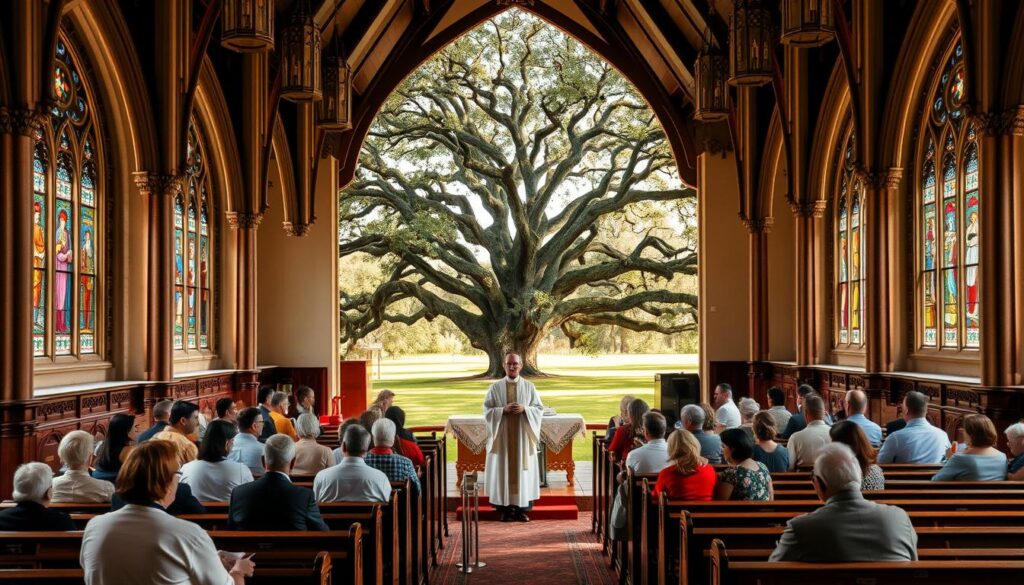
Scriptural Interpretation and Faith in Action
The Bible becomes a living guide when read through the lens of present-day justice. As one Episcopal leader notes, “Our sacred texts aren’t history books—they’re blueprints for healing broken systems.” This approach inspires practical responses like food drives, advocacy work, and interfaith partnerships.
Sunday sermons often connect ancient stories to modern struggles. The story of Ruth’s loyalty, for instance, might spark discussions about immigration reform. This action-oriented faith reflects Jesus’ command to love neighbors through tangible support.
The Role of Sacraments in the Journey of Faith
Seven sacraments anchor Episcopal worship, with Baptism and Eucharist being central. Through these rituals, grace becomes touchable. The Book of Common Prayer describes communion as “the strengthening and refreshing of our souls”—a reminder that spiritual nourishment fuels earthly service.
Baptismal vows explicitly link personal faith to social responsibility. New members promise to “seek and serve Christ in all people,” turning worship into a launchpad for community care. This sacramental rhythm helps believers see every meal shared and hand extended as part of God’s redeeming work.
Living Salvation: Community, Inclusion, and Sacred Practice
Sacred rhythms bind personal faith to shared purpose in Episcopal practice. Through ancient rituals and modern relationships, the gift of grace becomes tangible. This interplay between worship and action shapes how communities embody hope together.
Baptism, Eucharist, and the Book of Common Prayer
Baptism marks the start of a lifelong journey. As the Book of Common Prayer states, believers are “buried with Christ” and rise to new life through water and spirit. This sacrament welcomes all into a family where prayer becomes collective breath.
Weekly Eucharist deepens this bond. The bread and cup—called “the food of eternal life”—nourish both body and community. One priest explains, “We don’t just receive grace; we become it for others.”
Salvation as a Communal Way of Life
Sanctification unfolds through shared experiences. Sunday worship, service projects, and even coffee hour conversations stitch individual stories into a larger tapestry. The church thrives when diverse voices unite in purpose.
| Individual Practice | Communal Practice | Impact |
|---|---|---|
| Private prayer | Liturgical worship | Strengthens unity |
| Personal faith | Baptismal vows | Fosters accountability |
| Scripture study | Eucharistic meals | Deepens connections |
This process transforms abstract beliefs into lived truth. As members serve meals at shelters or advocate for justice, they mirror Christ’s love. Salvation here isn’t earned—it’s woven into daily choices that honor human dignity.
Conclusion
The Episcopal Church’s vision of salvation lives in the tension between today’s realities and tomorrow’s promises. This tradition sees divine grace as a gift already at work, healing broken systems while preparing for creation’s ultimate renewal. Every shared meal, justice campaign, and inclusive welcome becomes part of God’s repair project.
Central to this journey are sacraments that ground faith in tangible acts. Baptismal vows and Eucharistic gatherings remind communities that eternal life starts now—not just in heaven. Through these practices, personal spirituality fuels efforts to uplift neighbors and protect the vulnerable.
Nothing—not hardship, doubt, or even death—disconnects humanity from divine love. Episcopal teachings affirm that salvation’s scope includes all people and the Earth itself. Here, hope thrives in the messy middle: building God’s kingdom through daily choices while trusting in grace that spans all time.
FAQ
How does grace shape salvation in Episcopal theology?
Grace is central to the Episcopal view of salvation. It’s seen as God’s unconditional gift, not earned by human effort. Through Jesus Christ, grace transforms lives, fosters forgiveness, and invites people into a lifelong relationship with God. This process emphasizes trust in divine love over rigid rules.
Are sacraments like baptism essential for salvation?
The Episcopal Church teaches that sacraments like baptism and Eucharist are vital signs of God’s grace. Baptism marks entry into the Christian community, while the Eucharist nourishes faith. However, salvation ultimately rests on God’s mercy, not rituals alone.
How do Episcopalians view faith and works together?
Faith and actions are intertwined. The Book of Common Prayer guides believers to live out their faith through service, justice, and love. Good works flow naturally from gratitude for God’s grace, reflecting a heart transformed by Christ.
Is salvation seen as a one-time event or a journey?
Salvation is understood as both a moment and a lifelong journey. While baptism initiates the relationship with God, daily choices, prayer, and community shape spiritual growth. The focus is on becoming more Christlike over time.
How inclusive is the Episcopal view of salvation?
The tradition emphasizes God’s love for all people. While rooted in Jesus Christ as the path to reconciliation, Episcopalians often avoid exclusive claims about who is “saved.” Hope in God’s mercy extends beyond human understanding.
What role does the church play in salvation?
The church is a community where faith is nurtured through worship, sacraments, and shared life. It’s not a “gatekeeper” but a body that supports individuals in responding to God’s call and living out their salvation together.
How does the Episcopal Church address doubts about salvation?
Honest questioning is welcomed. The Book of Common Prayer and pastoral guidance offer reassurance that God’s grace persists even in uncertainty. Trust in divine love, not perfect belief, is the foundation.