Recent Posts

Lutheranism Teachings: A Friendly Guide


What does it mean to follow this faith tradition that started in 16th-century Germany? While many associate it with European heritage, Lutheran communities now thrive globally. From bustling cities in Africa to rural villages in Asia, millions embrace its message of grace and community.

You might be surprised to learn Africa has more members of this church than Germany. Over 15 million people across the continent gather in congregations weekly. This growth shows how spiritual ideas can transcend borders and cultures.

At its heart, this tradition focuses on personal connection rather than rules. It teaches that everyone matters and that hope comes through faith, not deeds. These principles continue to shape lives in our modern world.

Key Takeaways

  • This faith tradition has grown into a global movement with 80 million members worldwide
  • Africa now has more followers than Germany, its country of origin
  • Core beliefs center on grace and personal spiritual relationships
  • Cultural traditions differ, but shared values unite diverse communities
  • Modern applications make these ideas relevant to 21st-century life

Historical Roots and Development of Lutheranism

In 1517, a German professor named Martin Luther sparked changes that transformed religious life. As an Augustinian monk, he questioned common practices of the Roman Catholic Church like selling forgiveness certificates. His bold questions grew into a movement that redefined Christian thought across Europe.

Martin Luther and the Reformation

Luther’s famous “Ninety-Five Theses” started as academic debate points nailed to a church door. These arguments against corruption spread like wildfire through new printing technology. Though he wanted to fix the existing church, his ideas unintentionally created new Christian communities.

The name “Lutheran” actually began as a joke during heated debates. Opponents used it to mock those who agreed with Luther’s views. Ironically, the label stuck and became a badge of honor for millions.

The Book of Concord and Confessional Subscription

After Luther’s death, leaders compiled key statements into The Book of Concord in 1580. This collection became the foundation for unified beliefs across regions. Rulers and city councils signed it, creating the first standardized guide for churches.

This practice of signing faith statements—called confessional subscription—still matters today. Pastors worldwide promise to follow these historic documents, connecting modern communities to their 16th-century roots. As one leader noted: “Our shared confessions create bridges across centuries.”

Core Beliefs and Theological Foundations

At the heart of this Christian tradition lies a revolutionary idea: God’s love isn’t earned. Instead, it’s freely given through grace—a concept that reshaped religious thought centuries ago and continues to inspire millions today.

A tranquil, sun-dappled meadow, tall grasses swaying gently in a soft breeze. In the foreground, a lone figure kneels in reverent prayer, hands clasped, face uplifted with an expression of profound inner peace and transcendent grace. Beams of warm, golden light filter through the trees, casting a heavenly glow upon the serene scene. The background is blurred, creating a sense of sacred, contemplative isolation, as if the viewer has been granted a glimpse into a moment of profound spiritual connection. Elegant, minimalist composition with a focus on the central figure, emphasizing the themes of faith, devotion, and the divine.

Justification by Grace Through Faith

Imagine receiving a priceless gift you didn’t work for. That’s how Luther described salvation. His groundbreaking view stated people become right with God (righteousness) through trust in Jesus Christ, not personal achievements. This became Christianity’s “central article” in the Augsburg Confession.

Unlike some traditions that mix human effort with divine mercy, this approach sees faith as open-handed acceptance. As one pastor explains: “It’s not about how strongly you believe, but Who you’re clinging to.”

Understanding Law and Gospel

Luther saw God’s word working in two ways. The law acts like a spotlight, showing our imperfections and need for help. The gospel, however, shines as hope—announcing what Jesus Christ already accomplished through his life and resurrection.

Here’s the key difference:

  • Law: Shows what’s broken (like a doctor’s diagnosis)
  • Gospel: Provides the cure (through forgiveness and renewal)

“The law demands, the gospel gives,” Luther wrote. This balance helps believers face life’s challenges without guilt or fear.

lutheranism teachings: Key Doctrines and Practices

How do ancient rituals meet modern life in a 500-year-old faith? The answer lies in tangible practices that shape both community gatherings and personal spirituality. These traditions act as spiritual anchors, connecting believers across generations through shared experiences of divine grace.

Sacramental Life and Worship Service

Sunday mornings reveal something special. Unlike some Christian groups, this tradition maintains structured worship services filled with ancient prayers and hymns. Why? Because liturgy acts like a shared language, helping members participate actively rather than just watch.

The heart beats in two sacraments: baptism and communion. When water touches a baby’s head or bread wine passes through hands, Lutherans see God’s promises made visible. As the Augsburg Confession states, these aren’t symbols but “means of grace” – actual moments where heaven touches earth.

The Concept of Vocation and the Priesthood of All Believers

Martin Luther flipped medieval thinking upside down. He taught that service matters more than job titles – farmers and parents serve God as fully as pastors. “God doesn’t need your good works,” he wrote, “but your neighbor does.”

This “priesthood of all believers” means everyone helps others encounter divine love. A teacher grading papers or nurse changing bandages fulfills holy callings when done in faith alone.

Contextual Theology for Everyday Life

Ancient ideas stay fresh through practical application. The holy spirit works through ordinary moments – family dinners, work challenges, neighborhood conflicts. Theology becomes real when it answers “What does this mean for my life today?”

This approach keeps teachings grounded. As one modern person explained: “My faith isn’t about escaping the world – it’s about engaging it with Christ’s compassion.”

Lutheran Worship Style and Liturgical Tradition

Imagine walking into a gathering where everyone understands every prayer and song. That revolutionary idea became reality when worship moved from ancient Latin to everyday speech. This shift didn’t just change services – it transformed how communities experienced faith.
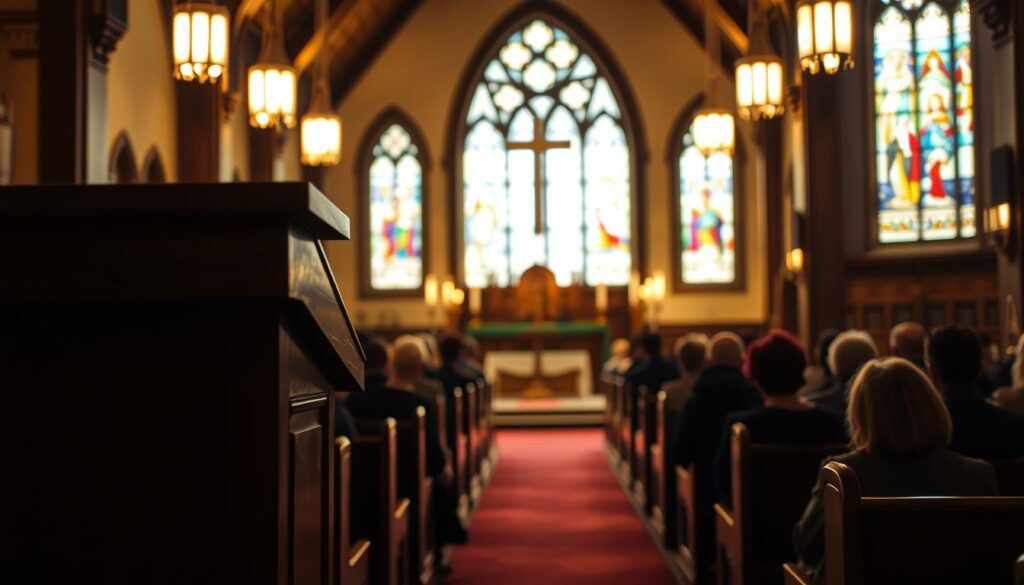
A dimly lit Lutheran church interior, bathed in warm, soft lighting. In the foreground, a simple wooden lectern, the focus of the worshipers' attention. Behind it, an ornate altar with a plain cross, the central symbol of Lutheran faith. In the middle ground, pews filled with congregants, their faces upturned in reverent contemplation. In the background, stained glass windows cast a kaleidoscope of colors, illuminating the space with a sense of sacred tranquility. The overall mood is one of humble, heartfelt worship, reflecting the Lutheran tradition of accessible, vernacular-based liturgy.

Translating the Word: From Latin to the People’s Language

Martin Luther’s team worked like modern localization experts. They translated Scripture and services into German so farmers and shopkeepers could grasp the good news directly. Luther wrote academic works in Latin but chose common German for hymns and catechisms.

The impact spread faster than a wildfire. By 1540, Scandinavian Lutheran churches had worship materials in Swedish, Danish, and Finnish. Churches doubled as literacy centers – learning to read became part of spiritual growth. A Danish bishop noted: “Our people now sing God’s word in their mother tongue while kneading bread or mending nets.”

Aspect Latin Practice Vernacular Innovation
Language Priestly Latin Local dialects
Participation Observers Active singers
Education Elite focus Community schools
Music Chant choirs Congregational hymns
Global Reach European focus Multilingual worship

Luther’s love for music shaped worship ways we still see today. Over 30 hymns flowed from his pen, blending theology with folk melodies. Modern churches maintain this tradition with pipe organs, choirs, and congregational singing that turns services into communal concerts.

This language revolution continues shaping people’s spiritual lives. From Tanzanian Swahili liturgies to Navajo-language catechisms, the commitment to understandable worship remains central. As one Minnesota pastor says: “We don’t just preserve tradition – we make it breathe in new languages every day.”

Lutheran Influence on Culture and Global Church Identity

The story of Lutheran churches isn’t confined to European cathedrals. From Midwestern barns to Tanzanian villages, these communities shape local cultures while building a shared spiritual identity. This global tapestry reveals how ancient beliefs adapt to new worlds.
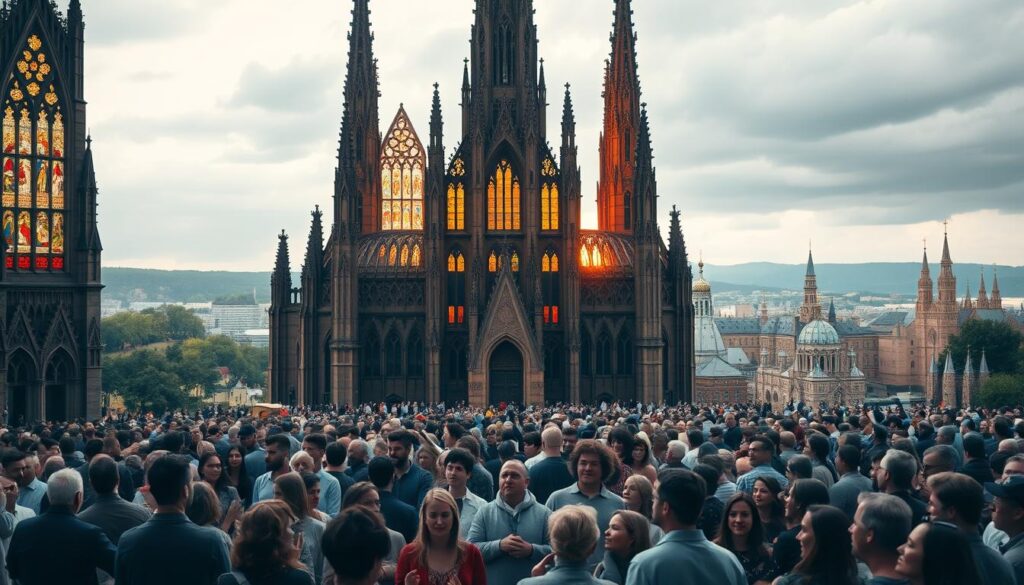
A vast, majestic cathedral stands in the foreground, its spires reaching towards the heavens. Stained glass windows cast a warm, ethereal glow upon the worshippers gathered within. In the middle ground, a diverse congregation of believers from around the world, united in faith, their faces alight with reverence and joy. In the background, a tapestry of cathedrals and churches dotting the landscape, a testament to the global reach and enduring influence of the Lutheran tradition. Soft, diffused lighting illuminates the scene, creating a sense of timelessness and spiritual transcendence.

Adaptations in American Lutheran Churches

Early Lutheran churches in America faced a puzzle. European state-supported models clashed with America’s religious free market. Immigrants from Germany and Scandinavia built ethnic enclaves, creating Norwegian-language hymnals and German schools. Over time, these groups merged into the Evangelical Lutheran Church in America (ELCA), focusing on the Augsburg Confession’s core principles.

Membership peaked in the 1950s but faces slow decline today. A pastor from Minnesota notes: “We’re learning to share our message in a multicultural society, not just preserve ancestral traditions.”

Global Growth in Asia, Africa, and Beyond

While American numbers dip, Tanzania’s churches overflow. Africa’s Lutheran population grew 400% since 1970. Why? Communities present the gospel through local customs instead of European cultural packaging. Ethiopian Lutherans blend ancient Christian traditions with vibrant worship music.

Aspect American Growth Global Expansion
Growth Driver 19th-century immigration Cultural adaptation
Membership Trend Gradual decline Rapid increase
Cultural Approach Ethnic preservation Local integration
Key Regions Midwest USA Tanzania, Ethiopia

This shift reshapes global religious news. As one Nairobi leader explains: “We’re not importing German culture – we’re living out timeless truths in our context.” From Asian megacities to South American towns, these communities prove ancient ideas still transform people’s lives worldwide.

Conclusion

The heart of this Christian tradition beats in three simple statements from Martin Luther. First, that God cares for daily needs “without any merit in me.” Second, that Jesus Christ paid humanity’s debt through his sacrifice. Third, that the Holy Spirit guides believers when human strength fails.

These ideas shape lives across continents. A farmer in Tanzania and teacher in Minnesota both find grace in shared confessions. They discover forgiveness isn’t earned but given freely—like rain on parched soil.

Modern challenges make these teachings vital. When guilt whispers “you’re not enough,” the good news replies: “Christ already is.” The church becomes a place where brokenness meets healing, not judgment.

As Luther wrote, divine love transforms ordinary people into vessels of hope. Whether serving meals or sharing faith, every act done in trust becomes sacred. That’s the quiet revolution still changing lives five centuries later.

FAQ

How did Martin Luther’s ideas challenge the Roman Catholic Church?

Martin Luther emphasized salvation through faith alone, not works. His 95 Theses critiqued practices like selling indulgences, sparking the Reformation. This reshaped how people viewed grace, scripture, and the church’s authority.

What role does the Book of Concord play in Lutheran churches?

The Book of Concord unites Lutherans globally with shared confessions, like the Augsburg Confession. It clarifies teachings on grace, sacraments, and Christ’s role, ensuring theological consistency across congregations.

Why is “Law and Gospel” central to Lutheran theology?

The Law reveals human sinfulness, while the Gospel offers forgiveness through Jesus. This balance helps believers understand their need for grace and the promise of salvation—a cornerstone of Lutheran preaching.

How do Lutheran worship services reflect their beliefs?

Services focus on scripture, sacraments, and hymns. Communion (with bread and wine) symbolizes Christ’s presence. Worship in local languages, a Reformation innovation, makes faith accessible and participatory for all.

What does “priesthood of all believers” mean for daily life?

Luther taught that every vocation—parent, teacher, worker—serves God. This empowers members to live out their faith actively, seeing their roles as ways to love neighbors and glorify God beyond church walls.

How have American Lutheran churches adapted over time?

They blend traditional liturgy with modern contexts, like contemporary music or community outreach. Groups like the ELCA and LCMS vary in social stances but share core teachings on grace and scripture.

Why is Lutheranism growing rapidly in Africa and Asia?

Mission work and translating texts into local languages play key roles. Churches address issues like poverty or justice, showing how Christ’s message meets real needs, fostering vibrant, culturally rooted communities.

Lutheranism Pronunciation: A Helpful Guide


Getting the pronunciation of theological terms right matters. Whether you’re discussing faith traditions or engaging in academic conversations, clarity builds respect and understanding. Let’s tackle one term that often trips people up: Lutheranism.

This word combines Martin Luther’s surname with the suffix “-an,” reflecting the movement he inspired. While rated a moderate 3/5 in difficulty, breaking it into syllables simplifies learning. Think of it as “Loo-ther-an-ism” – emphasizing the first syllable and softening the “th.”

Why does this matter? Properly articulating terms tied to belief systems honors their cultural and historical weight. It also helps avoid confusion in discussions about Christian denominations or Reformation history.

By the end of this guide, you’ll confidently say the word and grasp its origins. Ready to dive in?

Key Takeaways

  • Pronouncing faith-related terms correctly fosters respect and clear communication.
  • The term originates from Martin Luther’s name and the suffix “-an.”
  • Breaking the word into syllables makes it easier to master.
  • Proper articulation enhances discussions in academic or religious settings.
  • Understanding the term’s roots adds depth to its significance.

Understanding Lutheranism: Origins and Meanings

Every name tells a story, especially when rooted in transformative historical moments. Let’s explore how language and history shaped this influential religious movement.

Etymology and Historical Context

The term traces back to Martin Luther, the 16th-century German monk who challenged church practices. His surname combines Old High German liut (“people”) and heri (“army”) – a fitting origin for someone who mobilized spiritual change.

By adding “-an” to Luther’s name, followers created labels like Lutheraner (German) and Lutheranus (Latin). These words identified both believers and their practices during the Reformation.

Meanings, Synonyms, and Religious Background

Modern dictionary definitions highlight core teachings like salvation through faith alone. While “Protestantism” serves as a broader synonym, Lutheranism specifically refers to doctrines from Luther’s writings.

  • Central belief: Justification by faith, not deeds
  • Key texts: Luther’s translations and commentaries
  • Global impact: Over 70 million adherents worldwide

This background helps explain why precise terminology matters in interfaith dialogues and historical studies alike.

Essential lutheranism pronunciation Techniques

Mastering complex terms requires both knowledge and technique. Let’s explore practical methods to refine your articulation using phonetic guides and modern tools.

A serene classroom setting, with a chalkboard featuring diagrams and illustrations of pronunciation techniques. In the foreground, a teacher stands, demonstrating the proper mouth positions and airflow for specific Lutheran vowel sounds. On the desk, various objects like wooden blocks and tongue depressors provide tactile aids for students to practice. Soft, diffused lighting filters through large windows, creating a warm, educational atmosphere. The background features bookshelves and educational posters, conveying a sense of academic rigor. The overall scene is designed to visually guide the viewer through essential Lutheran pronunciation practices.

Phonetic Breakdown and Audio Examples

The word splits into four parts: LOO-ther-an-ism. Start with the long “u” sound, like in “blue.” Next, the “th” matches the soft consonant in “think.”

Dictionaries often mark stress on the first syllable. Listen to audio clips to hear native speakers emphasize “LOO” while quickly gliding through the remaining syllables. Compare British and American accents – you might notice slight variations in the middle sounds.

Self-Recording Tips and Practice Modes

Use your phone or online tools to record yourself saying the term. Play it back alongside expert audio samples. Focus on matching the “th” sound and syllable pacing.

Break practice into stages. First, say each syllable separately: Lutheranism. Then blend them gradually. Daily repetition builds mouth muscle memory, making the word flow naturally over time.

Comparing Accent Variations and Pronunciation Nuances

Language shapes how we connect across cultures. When saying faith-related words, small differences in articulation can reveal where someone learned the term. Let’s explore how accents and tools help bridge these gaps.

British vs American Pronunciation Differences

Listen closely to the middle of the term. British speakers often soften the “r” sound, while Americans emphasize it. Compare these phonetic patterns:

Accent IPA Symbols Sound Focus
British /ˈluː.θər.ən/ Softer “r,” shorter vowels
American /ˈluː.θɚ.ən/ Stronger “r,” nasal inflection

Accent Variations: UK, US, and Other Dialects

Australian and Canadian accents blend elements of both styles. Some non-English translations adapt the term entirely:

  • Spanish: El luteranismo (loo-teh-rah-NEES-mo)
  • German: Luthertum (LOO-ter-toom)

Tools and Resources for Better Pronunciation

Modern apps offer audio comparisons and practice lists. Try these:

Tool Features
Forvo Native speaker recordings
YouGlish YouTube video examples
IPA Phonetics Interactive sound charts

These resources let you hear variations side-by-side. Choose the style that fits your needs – whether chatting with scholars or attending global events.

Conclusion

Clear communication bridges understanding across beliefs and disciplines. Getting this term right connects you to centuries of tradition rooted in Martin Luther‘s reforms. Like adding a new word of the day to your vocabulary, consistent practice builds lasting confidence.

Remember its historical weight – one word represents millions who shaped Christian thought. Apply the syllable-breaking methods you’ve learned here to other faith-related terms. Keep a reliable dictionary bookmarked for quick checks during studies or conversations.

Whether discussing theology over coffee or exploring Reformation history, your articulation now reflects respect. Share this knowledge freely – after all, every word of the day mastered makes dialogue richer. You’re not just speaking clearly – you’re honoring stories that shaped our world.

FAQ

How do you say "Lutheranism" correctly?

Break it into syllables: LOO-thur-uh-ni-zum. Stress the first syllable, and use a soft “th” sound. Audio guides or dictionaries like Merriam-Webster can help nail the rhythm.

Why is Martin Luther linked to this term?

The faith traces back to Martin Luther, a 16th-century theologian. His teachings sparked the Protestant Reformation, shaping the denomination’s core beliefs and practices.

Do British and American accents affect the pronunciation?

Yes! Americans often emphasize the “LOO” sound, while British speakers might soften the “r” (e.g., LOO-thuh-ni-zum). Dialect tools like Forvo.com highlight these subtle differences.

What tools can improve my accent for religious terms?

Apps like Elsa Speak or websites offering phonetic breakdowns are great. Pair these with self-recording exercises to compare your speech against native speakers.

Are there synonyms for "Lutheranism"?

Terms like Evangelical Lutheran or Lutheran tradition are sometimes used. Context matters—check historical or theological sources for precise usage.

Can I practice without a language partner?

Absolutely! Use mirror exercises, repeat audio clips, or try shadowing techniques. Apps with instant feedback, like Speechling, make solo practice effective.

Lutheranism and the Bible: Exploring the Foundations


When Martin Luther challenged religious norms in 1517, he ignited a movement that reshaped Christianity. At its core, this Protestant tradition emphasizes direct engagement with sacred texts. Faith communities worldwide still follow his revolutionary approach to spiritual discovery.

The Lutheran Church prioritizes Scripture as its ultimate guide. Unlike other traditions, it teaches that divine truth flows solely from biblical teachings. This principle – called sola scriptura – empowers believers to interpret texts personally while maintaining historical roots.

Modern Lutheran practices reflect this balance. Worship services blend ancient rituals with active Bible discussions. Members often share insights during study groups, creating lively exchanges about faith’s role in daily life. These traditions trace back to Luther’s own translation work, which made Scripture accessible to everyday people.

Over five centuries, this focus on biblical literacy has shaped education and community-building. Churches host workshops helping members apply age-old wisdom to modern challenges. From Sunday schools to global outreach programs, the written word remains central to Lutheran identity.

Key Takeaways

  • Martin Luther’s Reformation centered on making Scripture accessible to all believers
  • The Lutheran Church upholds the Bible as its primary authority (sola scriptura)
  • Modern practices combine traditional teachings with personal interpretation
  • Bible study remains vital for worship and community engagement
  • Luther’s translation work continues influencing Christian education worldwide

Introduction to Lutheranism and Biblical Foundations

What sets this tradition apart is its belief that Scripture holds ultimate authority. While many Christian groups value sacred texts, the Lutheran Church roots every practice and belief directly in biblical truth. This approach shapes how members live, worship, and grow in their faith.

What Makes Lutheranism Unique?

Three key features define this faith community:

  • Scripture alone guides doctrine – no human-made rules override it
  • Personal connection with texts through accessible translations
  • Clear methods to interpret challenging passages

Unlike other denominations, Lutheran teaching rejects blending church customs with divine commands. A pastor from Minnesota explains: We don’t add layers to God’s word – we let it speak plainly.

Denomination Authority Source Tradition’s Role
Lutheran Church Bible only Supports Scripture
Roman Catholic Bible + Tradition Equal to Scripture
Eastern Orthodox Bible + Councils Guides interpretation

An Overview of the How-To Guide

This guide will help you:

  1. Understand the “Scripture interprets Scripture” method
  2. Compare Lutheran practices with other Christian traditions
  3. Apply biblical wisdom to modern relationships and work

You’ll discover why millions find freedom in this approach – no special training required to engage with divine messages. The focus stays on what’s written, not what’s added through tradition.

The Historical Emergence of Lutheranism

A single monk’s quest for truth sparked a religious revolution that changed Europe forever. This movement didn’t start with grand plans but grew from deep engagement with sacred writings. Its ripple effects still shape worship practices today.

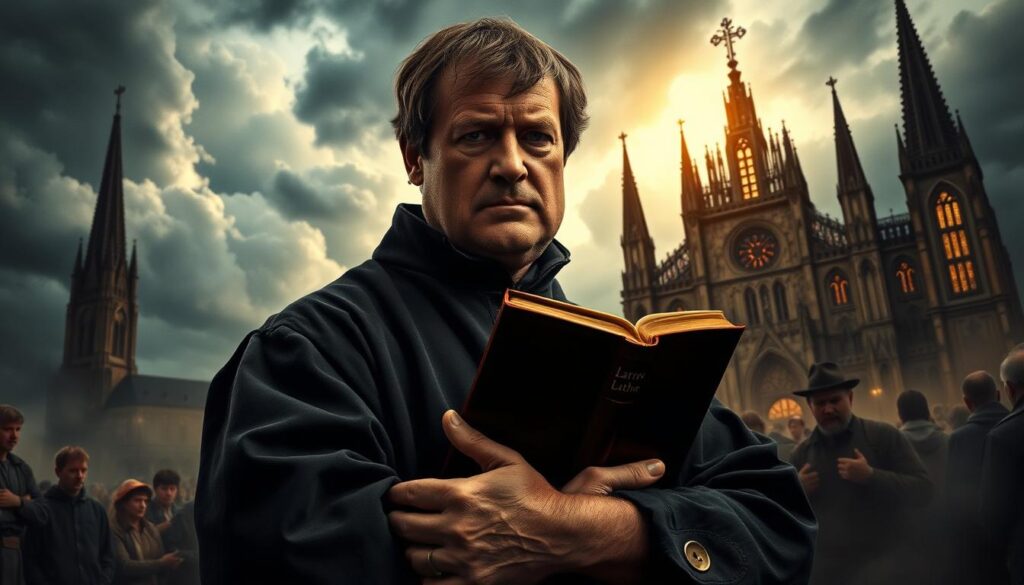
A dramatic and vivid scene of Martin Luther, the iconic figure of the Protestant Reformation, standing resolute amidst a backdrop of towering, gothic cathedrals and a stormy, turbulent sky. The foreground showcases Luther, his brow furrowed in contemplation, holding a leather-bound Bible tightly in his hands, a symbol of his revolutionary ideas and the fundamental role of scripture in his movement. The middle ground depicts the silhouettes of worshippers, both in reverence and unrest, as the light streams through the stained-glass windows, casting an ethereal glow. In the background, the imposing spires of a grand cathedral loom, representing the established Catholic Church that Luther sought to challenge and reform. The overall atmosphere conveys a sense of historical significance, spiritual conflict, and the pivotal moment in which Lutheranism emerged to shape the course of Western Christianity.

Martin Luther and the Reformation

As a devoted monk and scholar, Martin Luther noticed troubling gaps between early Christian teachings and 16th-century church customs. His role as a Scripture professor led him to question practices like indulgences. In 1517, he famously nailed 95 debate topics to a church door – sparking open discussions about faith’s true foundations.

When pressured to abandon his views at the 1521 Diet of Worms, Luther stood firm:

Here I stand. I can do no other.

Martin Luther

This defiance marked a turning point, proving ordinary people could challenge powerful institutions through scriptural understanding.

From the Edict of Worms to Modern Times

The Edict of Worms that same year officially separated Lutheran church communities from Roman Catholic authority. What began as localized reforms soon spread across Germany and Scandinavia. Early congregations prioritized:

  • Accessible worship services in common languages
  • Education programs teaching members to interpret texts
  • Leadership models based on scriptural guidance
Year Event Significance
1517 95 Theses Posted Public challenge to church practices
1521 Diet of Worms Formal split from Catholic authority
1522-1600 Northern Europe Expansion Scripture-centered communities multiply

Over the years, these principles helped shape democratic ideals and education systems. Modern church gatherings still reflect Luther’s vision – blending ancient wisdom with personal discovery through group studies and open dialogue.

Understanding the Role of Scripture in Lutheran Faith

At the heart of Lutheran belief lies an unwavering commitment to Scripture’s supreme authority. This conviction shapes how communities approach spiritual growth and doctrinal decisions. Every teaching, practice, and tradition must align with sacred texts to maintain authenticity.

The Authority of the Bible

The Lutheran Church stands firm on the principle that God’s word alone guides believers. As 2 Timothy 3:16-17 states:

All Scripture is breathed out by God… for training in righteousness.

This means human ideas or cultural trends never override divine messages. Pastors often remind congregations: If it conflicts with Scripture, it doesn’t belong in our faith.

Three key practices show this commitment:

  • Weekly group studies focusing on original text meanings
  • Sermons rooted in specific passages rather than general themes
  • Leadership training emphasizing scriptural literacy
Denomination Source of Authority Decision-Making Process
Lutheran Word of God Scripture alone
Methodist Bible + Experience Four-fold model
Anglican Bible + Tradition Three-legged stool

Modern members apply this principle daily. A youth leader shares: We teach teens to ask ‘What does God’s word say?’ before making choices. This approach builds confidence in navigating life’s complexities through ancient wisdom.

Exploring “lutheranism bible” in Lutheran Doctrine

Central to Lutheran teaching is the belief that Scripture and Christ form an unbreakable bond. This relationship shapes how communities engage with sacred texts, seeing Jesus as both their origin and ultimate message. Every chapter becomes a pathway to understanding divine grace through this lens.

A peaceful, candlelit study scene featuring a person reverently reading from a large, antique Bible on a wooden table. Soft, warm lighting illuminates the pages, casting a contemplative glow. Bookshelves line the walls, hinting at a lifetime of dedicated, Christ-centered study. An atmosphere of quiet focus and devotion pervades the space, inviting the viewer to pause and reflect on the enduring importance of Scripture within the Lutheran tradition.

Scripture is the swaddling clothes holding the treasure of Christ. Simple in form, yet rich in truth.

Martin Luther

This perspective transforms how the Lutheran church approaches sacred writings. Members learn to look for Jesus in every passage – from Genesis prophecies to Revelation’s visions. Old Testament stories aren’t just history; they’re signposts pointing to redemption.

Three practical outcomes emerge from this christocentric focus:

  • Study groups explore how texts reveal God’s salvation plan
  • Sermons highlight connections between Scripture and Jesus’ work
  • Personal reflection emphasizes grace over rule-keeping

Unlike traditions treating sacred texts as moral handbooks, Lutheran faith views them as living conversations. A Wisconsin pastor notes: We don’t just learn Bible stories – we meet Christ through them. This approach helps believers see consistent truth across different biblical eras.

Modern applications abound. Youth programs teach teens to spot Christ’s presence in Psalms. Social justice initiatives draw inspiration from Jesus’ compassion in the Gospels. Through this lens, the Lutheran church keeps ancient words vibrantly relevant today.

Principles of Biblical Interpretation in Lutheranism

Interpreting sacred texts requires clear guidelines, and Lutherans have distinct methods rooted in centuries-old principles. These approaches ensure consistent understanding while honoring divine mysteries beyond human logic.

A majestic cathedral interior, stained glass windows casting warm hues across the ornate wooden pews. In the foreground, an open Bible rests on a lectern, its pages illuminated by a soft, heavenly light. Surrounding it, intricate religious symbols and iconography - a cross, a dove, a chalice - symbolizing the core tenets of Lutheran biblical interpretation. The middle ground features a group of scholars deep in discussion, their expressions thoughtful as they ponder the scriptures. In the background, a grand pipe organ towers, its pipes reaching towards the vaulted ceiling, a testament to the reverence and centrality of the Word in Lutheran tradition. The overall scene conveys a sense of reverence, contemplation, and the timeless relevance of Lutheran principles of biblical hermeneutics.

Formal and Material Principles

The Lutheran church uses two foundational concepts for scriptural analysis. The Material Principle declares God’s grace through faith as Scripture’s central message – like a lens focusing sunlight. As one theologian notes: Every passage ultimately points to Christ’s redeeming work.

Perspicuity and the Rule of Scripture over Reason

Three key ideas shape how believers engage with texts:

  • Clear communication – God’s word speaks plainly to all
  • Human reason assists understanding but doesn’t override truth
  • Mysteries like communion remain accepted through trust

This balance prevents two extremes: cold intellectualism and vague mysticism. A Missouri pastor explains: We don’t dismiss questions, but we let Scripture have the final say. When teachings about baptism or Christ’s presence challenge logic, faith guides acceptance.

Modern study groups use these principles to explore challenging passages. Members learn to ask: How does this text reveal God’s grace? rather than demanding perfect reason-based answers. This approach keeps the Lutheran church anchored in timeless truth while navigating contemporary issues.

Martin Luther’s Influence on Bible Translation and Interpretation

Imagine holding divine wisdom in your hands – not locked in ancient languages, but speaking directly to your heart. This vision drove Martin Luther to reshape how communities interact with sacred texts. His work created pathways for ordinary people to explore spiritual truths without gatekeepers.

The Impact of His 95 Theses

Luther’s famous 1517 document did more than challenge church practices – it modeled how to test traditions against Scripture. He argued: We profit by nothing as much as by the Word… it should have free course among Christians. This principle turned pew-sitters into active truth-seekers.

Three revolutionary changes emerged from his efforts:

  • German translations replacing Latin-only access
  • Study groups where farmers debated texts alongside scholars
  • Clear methods to identify teachings conflicting with Scripture

The reformer compared Scripture engagement to nourishment: We need God’s Word daily, like bread. This mindset birthed morning devotions and bedtime story traditions still practiced in Lutheran church families today.

By making sacred writings available in common language, Luther spread the good news beyond academic circles. Modern members honor this legacy through:

  • Multi-generational Bible studies
  • Leadership training in plain-language teaching
  • Digital resources reaching global audiences

Five centuries later, Martin Luther’s translation principles still guide how the Lutheran church approaches ancient texts – with reverence for their power and commitment to making them relatable.

The Book of Concord and Lutheran Confessions

In 1580, a thick volume united German believers under shared spiritual foundations. The Book of Concord became Lutheranism’s definitive guide – not replacing Scripture but clarifying its core teachings. This collection settled debates about salvation and church practices through carefully crafted confessions rooted in biblical truth.

The Role of Creeds in Defining Faith

Lutheran faith values ancient creeds like the Apostles’ and Nicene as bridges to early Christianity. A Minnesota pastor explains: These statements don’t add to Scripture – they spotlight its unchanging heart. The Lutheran church uses them to:

  • Connect modern believers with historic Christian beliefs
  • Provide clear answers to complex theological questions
  • Guard against teachings that distort Scripture’s message
Christian Document Primary Purpose Authority Source
Book of Concord Clarify Lutheran doctrine Scripture alone
Catholic Catechism Teach church traditions Bible + Magisterium
Westminster Confession Guide Reformed theology Scripture + Covenant

Today’s Lutheran church communities study these confessions to deepen their understanding. The Book of Concord’s 10 documents – including Luther’s catechisms – help members apply biblical wisdom to modern challenges. As one study group leader notes: We’re not memorizing rules, but discovering God’s timeless promises.

By balancing historical roots with scriptural focus, these teachings keep congregations anchored in truth. They remind believers that while cultures change, divine grace remains constant – a message as vital now as in 1580.

Lutheran Worship Practices and Sacraments

Gathered in candlelit sanctuaries or modern auditoriums, Lutheran church communities share timeless rituals that bridge centuries. These practices honor historical roots while nurturing personal faith through tangible expressions of grace. Three sacred acts form their spiritual heartbeat, each offering unique ways to experience divine love.

Sacred Acts Connecting Believers to Grace

Baptism marks the start of a believer’s journey, seen as God’s promise rather than human effort. The Lutheran church teaches this water ritual washes away sin and welcomes individuals into Christ’s family. Parents often smile through tears as pastors declare: You’re reborn through grace alone.

Confession brings freedom through forgiveness. Unlike systems requiring penance, this practice focuses on Christ’s completed work. Members hear comforting words: Your sins are forgiven – go in peace. This assurance strengthens faith, replacing guilt with renewed purpose.

The Lord’s Supper forms worship’s climax. As congregants receive bread and wine, they trust Christ’s presence nourishes their souls. A pastor explains: We don’t explain the mystery – we celebrate it. This meal unites believers across generations, sustaining them through life’s challenges.

FAQ

How does Lutheranism view the authority of Scripture compared to other traditions?

Lutherans emphasize Sola Scriptura, meaning Scripture alone is the ultimate authority for faith and practice. Unlike traditions that elevate church teachings or papal decrees equally, Lutheran doctrine prioritizes the prophetic and apostolic writings as the sole infallible guide.

What role did Martin Luther play in shaping biblical accessibility?

Martin Luther translated the New Testament into German, making it accessible to everyday people. His work challenged Latin-only practices and emphasized that God’s Word should be understood by all, not just clergy. This democratized faith and fueled the Reformation.

How do Lutherans interpret controversial passages in the Bible?

Lutherans rely on the rule of faith, where clearer passages explain ambiguous ones. They also use Christ-centered interpretation, viewing Jesus as the lens through which all Scripture is understood. Reason supports but never overrules the text’s plain meaning.

Why is the Book of Concord important in Lutheran teaching?

The Book of Concord unites Lutheran confessions, like the Augsburg Confession and Small Catechism, clarifying how Scripture is applied to doctrine. It safeguards against misinterpretation while affirming core beliefs, such as justification by faith and the real presence in Communion.

How do sacraments like Baptism connect to Lutheran views of Scripture?

Sacraments are seen as “visible Word,” grounded in biblical promises. Baptism, for example, isn’t just symbolic—it’s God’s act of grace through water and the Word. Lutherans tie these practices directly to Jesus’ commands and New Testament accounts.

What distinguishes Lutheran biblical interpretation from Roman Catholic approaches?

While both value tradition, Lutherans reject teachings not rooted in Scripture. For instance, they deny papal infallibility and emphasize faith alone for salvation. The material principle (Christ’s grace) and formal principle (Scripture’s authority) guide their theology.

How did Luther’s 95 Theses influence how Lutherans engage with the Bible today?

The 95 Theses critiqued practices like indulgences, urging a return to biblical truth. This legacy encourages Lutherans to continually test traditions against Scripture, fostering a faith that’s both rooted in the Gospel and adaptable to cultural contexts.

Why is confession still practiced in Lutheran churches?

Confession reflects Luther’s emphasis on repentance and forgiveness as biblical mandates. While not requiring detailed listings of sins, it highlights God’s promise of mercy through Christ—a key theme in Lutheran teaching and the Small Catechism.

How does Lutheranism address modern ethical issues using Scripture?

Lutherans turn to biblical principles while considering context. For example, they uphold the sanctity of life but apply grace and wisdom in pastoral care. Scripture remains the norm, but interpretation involves prayer, community, and the Holy Spirit’s guidance.

The Intersection of Lutheran and Jewish Faiths


For over five centuries, two distinct religious traditions have navigated a complex journey of conflict and collaboration. What began with hopeful outreach during the Protestant Reformation shifted dramatically over time, creating ripples that still shape interfaith dynamics today.

Early interactions between these groups showed moments of potential unity. A 16th-century reformer’s writings initially expressed respect for shared biblical roots, envisioning mutual understanding. However, later texts fueled harmful stereotypes that impacted generations.

Modern efforts tell a different story. In 1994, a major Christian denomination publicly addressed historical wrongs through an official declaration. This paved the way for groundbreaking interfaith projects and educational exchanges. By 2019, new commitments strengthened partnerships focused on social justice and cultural preservation.

These evolving connections reveal how spiritual communities can transform past tensions into collaborative futures. Through honest dialogue and shared values, old divisions give way to fresh opportunities for growth.

Key Takeaways

  • Centuries of interaction show both conflict and cooperation between two major faith traditions
  • Modern declarations mark significant steps toward healing historical divisions
  • Shared scriptural roots create common ground for interfaith projects
  • Educational initiatives help address misconceptions and build trust
  • Joint social action demonstrates the power of collaborative religious efforts

Historical Foundations and Shared Values

The story of interfaith dynamics often reveals surprising twists. One reformer’s journey shows how hope and hostility can coexist in religious history.

Early Approaches and Mutual Influences

In 1523, a groundbreaking essay offered fresh perspectives. “That Jesus Christ Was Born a Jew” argued for kinship between faiths. The author wrote:

“We gentiles are relatives by marriage… they are of the same blood, cousins and brothers of our Lord.”

This work suggested shared biblical roots could bridge divides. It contrasted sharply with medieval attitudes, proposing dialogue over division.

From Openness to Opposition

Two decades later, the same thinker’s tone turned harsh. His 1543 text compared Jewish people to “the Devil incarnate” and demanded extreme measures:

Year Work Key Themes Impact
1523 “That Jesus Christ Was Born a Jew” Shared heritage, conversion through kindness Potential for unity
1543 “On the Jews and Their Lies” Persecution, deportation, destruction Centuries of conflict

This dramatic shift shaped religious history for generations. Modern scholars note how later movements used these writings to justify discrimination.

Yet the early vision of connection remains significant. It shows how spiritual bonds can outlive temporary conflicts, offering lessons for today’s interfaith efforts.

Theological Context and Doctrinal Debates

Theological disagreements often spring from deep-rooted interpretations of sacred texts. In 17th-century Europe, church leaders framed spiritual identity through strict doctrinal lenses that shaped entire communities.

A dimly lit study, bookshelves lining the walls, casting warm shadows on aged leather tomes. In the center, an ornate wooden table, where a scholar pores over ancient texts, their face illuminated by the soft glow of a desk lamp. Rays of muted sunlight filter through stained-glass windows, casting a reverent, contemplative atmosphere. Surrounding the scholar, symbols of Christian and Jewish faiths intertwine, representing the intersection of theological doctrines and interpretations of the Old Testament. A sense of intellectual discourse and spiritual exploration pervades the scene.

Scriptural Interpretation Clashes

At the heart of tensions lay conflicting views about divine promises. Many Christian thinkers argued their faith fulfilled ancient prophecies, creating a “new covenant” concept. This idea positioned older traditions as incomplete—a perspective embedded in official church teaching.

One Hamburg pastor’s 1642 statement captures this mindset: “Those who cling to outdated practices endanger both soul and society.” Such views justified strict policies limiting cultural expression and economic opportunities for minority groups.

Christian society developed unique analytical methods during this period:

  • Reading Hebrew scriptures as foreshadowing New Testament events
  • Viewing continued religious observance as rebellion against divine will
  • Interpreting diaspora experiences as punishment for rejecting theological truths

These debates weren’t abstract—they influenced laws and daily interactions. Modern religious institutions continue addressing this complex legacy through revised educational materials and interfaith partnerships.

Key Moments in Lutheran-Jewish Dialogue

The mid-20th century marked a turning point in religious reconciliation efforts. In 1969, the American Jewish Committee partnered with the Lutheran Church to launch groundbreaking academic exchanges. These seminars united scholars from all denominational branches for open theological discussions.

Seminars, Colloquia, and Academic Exchanges

Over fourteen years, six major consultations tackled tough topics like Holocaust theology and biblical interpretations. One participant noted:

“We stopped talking past each other and started hearing shared hopes.”

This structured approach built trust through face-to-face learning and collaborative work.

Notable Declarations and Public Statements

The 1994 ELCA Declaration became a landmark statement, openly addressing historical prejudices. This document acknowledged harmful teachings while committing to partnership:

Year Event Participants Outcome
1969 First Colloquium 25 scholars Dialogue framework
1983 Final Consultation 40+ leaders Reconciliation roadmap
1994 ELCA Declaration Church assembly Historic apology

Role of Visionary Leaders

Rabbi Marc Tanenbaum’s bold leadership helped address systemic issues he called “theological poison.” His counterpart Dr. Paul Opsahl guided church representatives through difficult self-reflection. Together, they proved that honest conversations could rewrite inherited narratives.

lutheran jewish: A Closer Look at Evolving Relations

The path from historical tensions to collaborative efforts reveals transformative potential. In 1994, a major Christian denomination took a bold step by addressing past harms. The Evangelical Lutheran Church in America openly condemned centuries-old anti-Judaic teachings, marking a turning point in interfaith relations.

This declaration set the stage for meaningful change. By 2019, new commitments expanded cooperation between faith groups. Leaders emphasized active engagement with diverse communities, moving beyond apologies to joint action.

Modern partnerships now tackle pressing social issues. Educational programs help both groups explore shared heritage while respecting differences. One initiative brings youth together to discuss scripture through interfaith lenses.

Rabbi Rachel Weiss noted:

“Our dialogue isn’t about forgetting history, but writing new chapters together.”

This approach has led to food drives, cultural exchanges, and advocacy work benefiting broader society.

These developments show how honesty and mutual respect can heal divisions. As communities continue collaborating, they create blueprints for others navigating complex religious landscapes.

Impact of Historical Anti-Judaism on Modern Perspectives

Dark chapters in religious history cast long shadows across generations. A reformer’s later works became dangerous tools when removed from their original context.

A dimly lit medieval cathedral, its stained glass windows casting a somber glow. In the foreground, a group of people with solemn expressions, their bodies hunched, as if weathering a storm of persecution. The middle ground reveals a crowd of robed figures, their faces obscured, representing the historical oppression and discrimination faced by the Jewish community. In the background, a shadowy figure on a raised platform, delivering a speech, symbolizing the spread of anti-Judaic rhetoric. The scene is imbued with a sense of unease and historical weight, capturing the impact of historical anti-Judaism on modern perspectives.

When Words Become Weapons

1543 marked a tragic turning point. Violent rhetoric in religious texts gave extremists seven centuries later what they craved – validation. During Kristallnacht’s horrors, a church leader distributed pamphlets quoting calls to destroy sacred spaces.

At Nuremberg trials, Nazi officials shocked the world by citing 16th-century religious arguments as justification. One prosecutor noted: “These weren’t ancient scribbles – they became murder manuals.”

Healing Through Honesty

Post-war faith leaders faced hard truths. In 1983, a global religious body made history stating:

“We confess with distress how anti-Jewish thinking prepared the way for the Holocaust.”

This breakthrough led to concrete changes:

  • Revised educational materials addressing harmful stereotypes
  • Interfaith councils reviewing liturgical language
  • Public memorials at historic persecution sites

Modern communities now teach both the beauty and danger of sacred texts. Through education and dialogue, people are rewriting old narratives into bridges of understanding.

Economic and Social Influences in Historical Context

Port cities often became laboratories for balancing belief systems with business needs. Nowhere was this tension clearer than in 17th-century Hamburg, where money spoke louder than dogma.

A bustling street in historic Hamburg, Germany, showcasing the intermingling of Lutheran and Jewish influences. In the foreground, merchants haggle and exchange goods at open-air stalls, their diverse attire and accents reflecting the city's cultural tapestry. Towering church spires and synagogue domes rise in the middle ground, their ornate architecture a testament to the region's long-standing interfaith traditions. Sunlight filters through the clouds, casting a warm, golden glow over the scene, accentuating the harmony and collaboration between the two communities. The overall atmosphere conveys a sense of prosperous coexistence, where commercial and social bonds transcend religious boundaries.

The Case of Hamburg: Commerce versus Clerical Restrictions

When Sephardic merchants arrived in 1612, they transformed the city into a commercial hub. Pastor Johann Müller’s 1644 Judaismus demanded strict limits on religious practices. But city leaders made a practical choice:

“Where strangers find hospitality and freedom, cities gain honor and power.”

– Hamburg Merchant Leader, 1628

The senate ignored theological objections, valuing economic growth over clerical concerns. This decision shaped Northern Europe’s trade networks for generations.

Social Dynamics and Interfaith Coexistence

Hamburg’s streets revealed a fascinating paradox. While preachers denounced foreign customs, shopkeepers partnered with immigrant traders. This uneasy balance created:

Factor Clerical Stance Mercantile Action
Religious Practice Restrict Permit privately
Economic Role Limit Encourage expansion
Social Integration Reject Tolerate selectively

This example shows how practical needs often reshape community relationships. The city’s success as a trading power depended on embracing diversity, even when doctrine disapproved.

Through this lens, Hamburg becomes more than a historical case study. It reveals the role of compromise in building societies where different groups coexist and prosper.

Comparative Analysis: Past Controversies and Present Hopes

History’s toughest lessons often spark tomorrow’s brightest collaborations. The Evangelical Lutheran Church in America recently reframed centuries-old debates through its groundbreaking document on interreligious relations. This shift highlights how faith communities can transform inherited tensions into shared purpose.

Reinterpreting Historical Narratives

Modern scholars approach challenging texts with fresh eyes. By focusing on Luther’s early emphasis on shared biblical roots, new educational materials help reframe divisive topics. One initiative invites learners to analyze 16th-century writings alongside modern interfaith declarations.

Modern Interfaith Initiatives and Dialogue

Programs like Germany Close Up prove dialogue creates lasting change. Young adults explore historic sites while discussing how past conflicts inform current partnerships. As one participant noted: “We’ve reached a point where honest conversations strengthen both traditions.”

These efforts show how confronting difficult history builds hope for cooperative futures. Through education and shared action, old divisions become bridges to mutual understanding.

FAQ

How did Martin Luther’s views toward Jewish communities change over time?

Initially, Martin Luther expressed hope for dialogue and shared scripture. However, later in life, his writings took a hostile turn, promoting harmful stereotypes. These later works fueled antisemitism, which many Lutheran groups now openly reject.

What role do the Old Testament and shared scriptures play in Lutheran-Jewish relations?

Both traditions value the Hebrew Bible, though interpretations differ. Lutherans often view it through the lens of Christ’s teachings, while Jewish communities focus on its ethical and legal frameworks. Recognizing these differences has become key to respectful dialogue.

What modern efforts have improved connections between these faith groups?

Joint seminars, academic collaborations, and public statements—like the Evangelical Lutheran Church’s 1994 apology—have built trust. Leaders like Rabbi Marc Tanenbaum and theologians such as Dr. Opsahl also championed mutual understanding in the 20th century.

How did economic factors influence historical interactions, like in Hamburg?

Cities like Hamburg saw commerce thrive despite religious tensions. Trade often required cooperation, creating spaces where interfaith coexistence became practical, even when clerical authorities opposed it.

Why is addressing Luther’s antisemitic legacy important today?

Acknowledging this history helps dismantle harmful stereotypes. Many Lutheran institutions now prioritize education and partnerships with Jewish organizations to promote justice and counter hate.

What gives hope for future Lutheran-Jewish collaboration?

Grassroots interfaith projects, youth exchanges, and shared social justice goals—like fighting poverty or racism—reflect a growing commitment to unity. These efforts honor past lessons while building a more inclusive society.

Discover the Lutheran Zion Church: A Vibrant Faith Community


In the heart of Elgin, Illinois, a welcoming spiritual home thrives. This community centers its mission on equipping believers with tools for growth, education, and confidence to live out their calling. At its core lies a powerful truth: divine love reshapes lives, inspiring members to spread hope in everyday moments.

Visitors often notice the warmth here extends far beyond Sunday gatherings. Relationships grow through shared service, study, and support—creating a family-like atmosphere. Whether you’re exploring faith for the first time or deepening your journey, you’ll find space to belong.

The message remains simple yet transformative. Through practical teachings and compassionate outreach, members learn to reflect Christ’s love in their neighborhoods, workplaces, and beyond. This isn’t just a place to attend—it’s a launchpad for purpose-driven living.

Key Takeaways

  • Experience a welcoming environment designed to help individuals grow spiritually and personally.
  • Engage with a mission focused on empowering believers to make a meaningful impact.
  • Discover how a message of unconditional love inspires daily actions and attitudes.
  • Join a community that values connection, service, and authentic relationships throughout the week.
  • Learn how timeless values guide members in supporting one another through life’s challenges.

Welcome to Our Vibrant Faith Community

Every Tuesday, the aroma of hot meals signals more than nourishment—it’s community in action. Our doors open wide to neighbors seeking connection, whether through shared meals, recovery groups, or collaborative projects. “We grow stronger when we lift each other up,” says a regular volunteer, capturing the spirit that fuels our outreach.

Our Mission and Core Values

At the heart of everything lies a simple trio: Belong, Believe, Become. Newcomers quickly discover this isn’t just a slogan—it’s a roadmap. Weekly dinners serve 150+ residents, while four recovery groups find safe space in our facilities. These efforts reflect our deepest conviction: every person deserves dignity and support.

Embracing Faith in the United States

While honoring time-tested traditions, we actively address modern challenges. Our dual-campus approach allows flexible engagement—families choose services that fit their rhythms. Partnerships with local schools and businesses turn our building into a hub for unity projects. This balance of heritage and innovation helps faith thrive in today’s America.

Through food pantries, mentorship programs, and interfaith dialogues, we’re rewriting what it means to be a spiritual home. Come taste the Tuesday chili, stay for the lifelong friendships—this is where purpose meets practice.

Our Worship Services and Digital Engagement

Whether you prefer singing hymns under vaulted ceilings or streaming messages from your living room, our gatherings meet you where you are. Modern tools blend seamlessly with timeless truths, creating worship experiences that resonate across generations and locations.

A vibrant livestream of a Lutheran worship service, captured with a wide-angle lens and warm, natural lighting. The pulpit stands at the center, surrounded by rows of wooden pews filled with worshippers immersed in prayer and song. Stained glass windows cast a soft, ethereal glow, while a grand pipe organ dominates the background, its intricate pipes reaching towards the vaulted ceilings. The atmosphere is one of reverence and community, inviting viewers to experience the richness of this faithful congregation's digital engagement.

Your Front-Row Seat, Anywhere

Can’t make it in person? Our live stream brings the sanctuary to you. Over 300 households join virtually each week, participating through real-time prayer requests and digital songbooks. The YouTube channel archives every service, complete with searchable sermon notes and discussion guides.

Rhythms of Worship

Three distinct service formats cater to different preferences:

Service Type Time Location Features
Traditional Sunday 9am Main Sanctuary Organ music, liturgy
Contemporary Sunday 8:45am & 10:30am Community Hall Band-led worship
Outdoor Summer Sundays 10am Clear Lake City Park Picnic-friendly

Recent teachings from Acts challenge members to live boldly. One attender shared, “The sermon on Acts 4 changed how I view everyday conversations.” All messages stay available on our YouTube channel, perfect for lunchbreak inspiration or family discussions.

Community Outreach and Scripture Exploration

Weeknights buzz with activity as neighbors gather to grow together. From toddlers tracing Bible stories to seniors sharing wisdom over coffee, every generation finds ways to connect faith with daily life. “Our programs meet people where they are,” explains a ministry leader, “whether that’s around a dinner table or walking a prayer labyrinth.”

Growing Together Through Shared Experiences

Thursday evenings showcase this blend of learning and fellowship. Families start with the Midweek Meal—a relaxed dinner where conversations flow as freely as the sweet tea. Afterward, adults explore spiritual practices like Lectio Divina, while kids act out Scripture stories through drama games.

Teens tackle real-world issues in ZYouth meetings, linking biblical principles to modern challenges. One participant shares: “We cleaned up Riverside Park last month—it showed me how service makes faith tangible.” Meanwhile, older adults host quilt-making circles that double as prayer sessions, stitching comfort for hospital patients.

Specialized groups provide safe spaces for healing and growth. The Celebrate Recovery program helps individuals rebuild lives through scriptural truths and peer support. Monthly service projects let everyone put love into action, from packing school supplies to visiting care homes.

Newcomers often marvel at how these connections deepen their understanding. As one recent attendee noted: “I came for the free meal—I stayed for the meaningful conversations about grace.”

lutheran zion church: Our Story and Impact

The story begins with a small group gathering in a rented storefront in 1947. Today, that humble circle has grown into a thriving spiritual family shaping lives across generations. “We’re not just preserving history—we’re creating it,” notes a longtime member, capturing the blend of legacy and innovation that defines our journey.

A serene timeline depicting the community impact of the Lutheran Zion Church. In the foreground, a series of snapshots showcasing the church's history - from its modest beginnings to its present-day vitality, each moment captured with warm, natural lighting. The middle ground features a collage of community outreach events, volunteers in action, and congregants engaged in worship. In the background, a stylized landscape of the church's architecture and surrounding neighborhood, rendered in soft, muted tones that evoke a sense of timelessness and belonging. The overall composition conveys the enduring legacy of the Lutheran Zion Church and its profound influence on the lives of its faithful community.

Historical Background and Vision

From hosting civil rights dialogues in the 1960s to launching modern mentorship programs, our community consistently bridges faith and action. The original vision remains clear: equip people to live out Christ’s love seven days a week. This commitment birthed initiatives like our food cooperative and addiction recovery networks that now serve 500+ families monthly.

Connecting Through Scripture and Worship

Wednesday night studies transform ancient texts into practical tools. Participants explore how biblical wisdom applies to workplace ethics, parenting challenges, and digital citizenship. Daily devotion guides help members carry these insights into each day’s routines.

Program Frequency Focus Area
Morning Prayer Circle Weekdays 7am Scripture reflection
Faith & Tech Workshops 2nd Saturday monthly Modern discipleship
Neighbor Nights Every Thursday Community service

Inspiring Service and Ministry

Our preschool embodies this mission, blending early education with compassion exercises. Toddlers learn sharing through toy drives while preschoolers create artwork for nursing home residents. “This isn’t daycare—it’s character-building,” explains a teacher.

Weekend service projects let families put faith into action together. Recent efforts include building community gardens and assembling literacy kits. Through these hands-on experiences, members discover that true faith isn’t confined to Sunday—it’s a way of moving through the world every day.

Conclusion

Your journey toward deeper connections starts here. Our vibrant family thrives when people engage—whether through weekly services, shared meals, or neighborhood projects. Stay updated on gatherings and outreach efforts by subscribing to our eBlast. Simply visit our website or email secretary@zlcb.org to join the list.

Missed a gathering? Our YouTube channel archives every uplifting message and sermon, available anytime. Recent teachings on courage and compassion have inspired many to live purposefully. New videos post weekly, featuring practical faith applications for modern life.

With multiple services and programs, there’s space for every schedule and preference. From outdoor summer worship to cozy winter studies, we create moments that matter. Together, we’re nurturing hope locally while supporting global missions—proving small acts create big ripples in our world.

Ready to grow? Step into a community where faith becomes action. Connect through our channel, join a service, or volunteer at our next outreach. Here, every handshake could spark a lifelong friendship, and every shared meal might change a life.

FAQ

How can I watch services online?

You can join our live-streamed gatherings every week through our YouTube channel. We also archive past sermons and events for flexible viewing.

What community programs do you offer?

From outreach initiatives to Bible study groups, we host events focused on fellowship, service, and deepening connections with scripture. Check our website for updates!

Are there weekday opportunities for worship?

Yes! Alongside Sunday services, we hold midweek prayer sessions and seasonal events. Our online platform lets you engage anytime, anywhere.

How does your mission guide daily activities?

Every program—whether virtual or in-person—is rooted in compassion, faith, and uplifting others. We prioritize inclusivity and sharing hope through action.

Can I access sermons after they air?

Absolutely. Visit our YouTube channel to explore recent messages, inspirational talks, and special event recordings at your convenience.

How do you support local communities?

Through partnerships, volunteer drives, and outreach projects, we strive to address needs while fostering meaningful relationships grounded in faith.

Careers at the Lutheran World Federation – Explore Opportunities


Looking for work that blends purpose with professional growth? The Lutheran World Federation (LWF) connects passionate individuals with meaningful roles across 32 countries. As part of the ACT Alliance, this global communion focuses on humanitarian aid, community development, and social justice through its Department for World Service.

Whether you’re drawn to international assignments in Geneva or local positions in field offices, the organization offers diverse pathways. Roles span program management, technical specialties, and operational support, allowing professionals from various backgrounds to contribute effectively. Their network empowers communities facing crises while fostering long-term resilience.

What sets this faith-based group apart? A commitment to valuing diverse perspectives in a multicultural environment. Employees collaborate with member churches and partners worldwide, creating solutions rooted in shared values. Every role here supports vulnerable populations, whether through direct fieldwork or strategic planning.

Key Takeaways

  • Global humanitarian organization operating in 32 countries
  • Combines professional development with community impact
  • Offers both Geneva-based and local field positions
  • Values multicultural collaboration and diverse skill sets
  • Focuses on sustainable solutions through partnerships

Explore lutheran world federation jobs and Career Opportunities

Working with a global humanitarian network offers unique chances to grow professionally while making tangible impacts. Positions adapt to emerging needs across regions, creating a constantly evolving employment landscape.

Current Vacancies and Global Reach

Opportunities shift rapidly based on project funding and regional crises. Kenya recently listed over 180 roles in community development and logistics, while other areas may show fewer postings temporarily. This reflects the organization’s focus on addressing urgent needs through flexible staffing.

Professionals can engage with initiatives in over 30 nations, from emergency response teams to education specialists. Each role supports the broader mission of sustainable development, whether coordinating supplies in conflict zones or training local farmers.

Local Recruitment versus International Positions

Geneva-based roles often involve strategic planning and require relocation, offering benefits like housing support. These positions connect global strategies with on-ground operations through partnerships with member churches.

Local offices prioritize candidates who understand regional dialects and cultural practices. A program coordinator in Guatemala, for example, might need fluency in Mayan languages to effectively collaborate with indigenous communities.

Salaries vary by location but emphasize fair compensation. Field staff often receive allowances for housing and healthcare, ensuring teams can focus fully on their humanitarian work.

Understanding the Lutheran World Federation’s Impact and Service

Behind every effective humanitarian effort lies a well-coordinated system of action. The organization’s work thrives through two key pillars: direct field operations and strategic global partnerships.

A panoramic view of humanitarian programs worldwide, showcasing a diverse array of aid and development initiatives. In the foreground, a group of volunteers engaged in community-building projects, their expressions radiating compassion and purpose. In the middle ground, scenes of food distribution, medical care, and educational programs unfolding against a backdrop of diverse landscapes and architectural styles. The background is a tapestry of global cultures, with flags and symbols representing the international reach of these vital humanitarian efforts. Warm, natural lighting casts a gentle glow, conveying a sense of hope and unity in the face of global challenges.

Humanitarian Arm: Department for World Service

The Department for World Service drives life-changing initiatives across 32 nations. This humanitarian arm balances urgent crisis response with multi-year projects that rebuild communities. Teams deliver clean water systems in drought zones while training locals to maintain them long-term.

Their programs tackle interconnected challenges. Food security projects often pair with education drives, creating lasting change. From building schools in refugee camps to restoring farmland after disasters, every effort focuses on sustainable solutions.

Membership and Collaborative Networks

As a member of ACT Alliance, the group amplifies its reach through 140+ global partners. This network enables rapid responses during emergencies like floods or conflicts. Shared resources mean aid arrives faster, with fewer duplicated efforts.

Local partnerships keep programs culturally relevant. Field staff collaborate with regional leaders and churches to design initiatives respecting traditions. A nutrition project in Ethiopia might incorporate indigenous crops, while disaster prep in Bangladesh uses community-led early warning systems.

These alliances create ripple effects beyond immediate aid. When farmers in Guatemala learn climate-resilient techniques, they train neighbors – multiplying impact village by village.

Navigating Career Pathways in the LWF Network

Building a career with this global humanitarian network requires understanding distinct application pathways. Whether aiming for headquarters or regional offices, each role demands specific preparation and alignment with core values.

Application Processes and Qualifying Criteria

International roles at the Geneva office prioritize professionals with multilingual abilities and cross-border experience. Fluency in English plus French or German strengthens applications, along with proven success in rights-based program management. Field positions focus on regional expertise – a coordinator in Nepal might need Nepali fluency and village-level project experience.

Criteria International Roles Local Positions
Key Skills Strategic planning, multilingual Cultural fluency, local dialects
Career Growth Leadership training programs Field-to-HQ advancement
Recruitment Centralized process Office-specific hiring

The organization invests in staff through skill-building activities like disaster response simulations and grant writing workshops. Regular performance reviews assess both individual growth and team impact, ensuring alignment with community needs.

Prospective candidates should check the main website weekly, as roles open based on funding and emergencies. A water engineer position could appear suddenly after a typhoon, while education specialists might be needed for multi-year development projects.

Conclusion

Building a career with purpose requires more than skill—it demands alignment with values that drive global change. The Lutheran World Federation stands out as a place where professionals merge expertise with compassion. Through strategic partnerships and collaborative networks, this global organization operates in over 30 countries, addressing urgent needs while fostering long-term resilience.

Opportunities here go beyond traditional roles. From program management to community-led activities, each position supports sustainable solutions. Employees grow through hands-on experiences, whether coordinating disaster responses or developing education initiatives.

What truly defines this organization? A culture rooted in mutual accountability. Teams operate with shared values, recognizing every contribution’s role in collective success. This approach creates environments where innovation thrives and impacts multiply.

For those ready to transform ideals into action, the LWF offers a platform to drive meaningful progress. It’s where careers become catalysts for hope in communities worldwide.

FAQ

What types of roles are available within the organization?

The organization offers diverse opportunities, including humanitarian aid, program management, advocacy, and administrative roles. Positions often focus on disaster response, sustainable development, and human rights across its global programs.

How do local recruitment and international positions differ?

Local roles prioritize hiring individuals with community-specific knowledge, while international positions often require broader experience in cross-cultural settings. Both emphasize alignment with the organization’s values and goals.

What is the Department for World Service?

This department serves as the humanitarian arm, coordinating emergency relief, long-term development, and advocacy efforts. It partners with communities, governments, and networks like the ACT Alliance to drive impactful change.

Does the organization collaborate with other groups?

Yes! It works closely with member churches, NGOs, and global alliances such as ACT Alliance. These partnerships strengthen its ability to address crises and promote sustainable solutions worldwide.

What qualifications are needed to apply for roles?

Requirements vary by position but often include relevant education, field experience, language skills, and a commitment to human dignity. Leadership roles may demand prior management experience in humanitarian or development contexts.

How can I stay updated on job openings?

Regularly check the official careers page or subscribe to newsletters. Some roles are also advertised through partner networks like ACT Alliance or regional member churches.