Recent Posts

Find the Best Lutheran Organizations in the US


Discovering faith-driven groups that align with your values just got easier. Across America, communities benefit from historic Protestant traditions rooted in service and fellowship. These groups blend spiritual growth with practical support, offering everything from food banks to youth mentorship programs.

Many follow teachings tracing back to the 16th-century Reformation. Their work often connects local efforts with global partnerships. For example, some collaborate with international networks serving millions worldwide. Others focus on neighborhood initiatives like disaster relief or educational workshops.

What makes these groups stand out? Their ability to unite worship with action. You’ll find vibrant hubs where Sunday services transition seamlessly into weekday volunteer projects. Whether you prefer intimate gatherings or large-scale ministries, there’s a place for every passion and skill set.

Key Takeaways

  • Faith-based networks operate one of America’s largest community service systems
  • Global partnerships enhance local outreach through shared resources
  • Teachings emphasize both personal spirituality and social responsibility
  • Options range from small congregations to international coalitions
  • Our directory simplifies finding groups matching your interests

Overview of Lutheran Organizations in the US

Rooted in centuries-old traditions, these groups continue to impact modern society through faith-driven action. Their story begins with Martin Luther’s 16th-century Reformation, which reshaped religious thought and sparked global social change.

History and Denominational Background

Two major branches shape today’s landscape: the Evangelical Lutheran Church in America (ELCA) and the Missouri Synod (LCMS). While both share foundational beliefs, their approaches differ. The ELCA, formed in 1988, prioritizes social justice and ecumenical partnerships. The LCMS, established in 1847, maintains stricter theological interpretations.

Denomination Members Primary Focus Year Founded
ELCA 3.3 million Community partnerships 1988
LCMS 1.8 million Traditional theology 1847

Core Values and Mission

“We don’t just feed bodies—we nourish potential,” says a regional director. This philosophy drives programs addressing food insecurity, healthcare gaps, and workforce development. Key principles include:

  • Dignity through comprehensive support
  • Collaborative problem-solving
  • Adapting historical wisdom to modern needs

Since 1997, Lutheran Services in America has united 300 nonprofits under this shared vision. Their network spans addiction recovery centers, senior living communities, and disaster response teams—proving ancient ideals can solve contemporary problems.

Discover lutheran organizations in the United States

Finding compassionate communities across America is now at your fingertips. A powerful tool bridges the gap between those seeking support and faith-driven groups making a difference. This resource simplifies connecting with programs that transform lives daily.

a directory of lutheran organizations in the united states, viewed from an angle as if the viewer is standing in a lutheran church sanctuary. the foreground features a large, open book with a list of lutheran churches and organizations. the middle ground shows wooden pews, a pulpit, and other church furnishings. the background depicts stained glass windows, illuminating the space with warm, natural lighting. the overall atmosphere is one of reverence, community, and a sense of rich, lutheran heritage.

Directory Features and Benefits

The platform reveals staggering reach: one in 50 Americans access these programs yearly. With $26 billion invested annually, the network fuels initiatives from veteran support to disability care. “Every search brings someone closer to life-changing resources,” notes a recent user testimonial.

Key advantages include:

  • Location-based filters pinpoint nearby assistance
  • Service categories spanning childcare to senior living
  • Real impact stories showcasing successful outcomes

Searching works seamlessly—enter your zip code or select from 12 service types. Results display contact details, operating hours, and volunteer opportunities. The interface even highlights new programs expanding in your area.

Beyond individual connections, the directory reveals how local efforts unite into national change. Neighborhood food banks link to statewide hunger prevention campaigns. Tutoring programs share strategies through regional workshops. This collaborative spirit amplifies every community’s voice.

Comprehensive Directory Structure

Locating meaningful community resources shouldn’t feel like solving a puzzle. Our directory connects you with 300 specialized programs across 1,400 locations through smart design. Whether you’re seeking spiritual guidance or practical support, the system matches needs with solutions in three clicks or less.

Smart Searching Made Simple

Start with your location—enter a zip code or city name. The map instantly displays nearby evangelical Lutheran churches and service hubs. Filter results using 12 main categories like:

  • Healthcare clinics
  • Disaster response teams
  • Youth mentorship initiatives

“I found senior meal delivery for my grandparents in 90 seconds,” shares a recent user from Ohio.

Tailored Results for Specific Needs

Advanced options help refine your search. Looking for health and human services aligned with specific beliefs? Select denominational preferences or service types:

Filter Type Examples Typical Results
Location Urban/rural 35+ options within 25 miles
Service Type Food banks, counseling Specialized programs
Denomination ELCA vs LCMS Philosophy-matched support
Keywords “Refugee assistance” Local/global partnerships

Member profiles detail leadership contacts and volunteer opportunities. Many include success stories showing how donations create change. The directory grows weekly—check the “New Programs” section for fresh ways to engage.

Diversity in Denominations and Perspectives

The Lutheran tradition thrives through a tapestry of global connections and local expressions. While sharing core beliefs, different groups interpret teachings through unique cultural and theological lenses. This diversity creates a vibrant ecosystem where ancient faith meets modern needs.
Vibrant Lutheran World Federation network, a tapestry of diversity and unity. Majestic church spires reaching skyward, adorned with intricate stained glass. Congregants from all walks of life gather, their faces radiating a sense of community and shared faith. The warm glow of candlelight casts a reverent atmosphere, as a choir's harmonious voices fill the air. In the background, a sweeping landscape of rolling hills and lush greenery, symbolizing the organization's expansive global reach. Captured through a wide-angle lens, this scene conveys the Lutheran church's dedication to fostering diverse perspectives and inclusivity within its denominations.

Lutheran World Federation and International Councils

Four major networks unite believers across continents. The Lutheran World Federation (LWF) leads with 74 million members—equivalent to 1% of Earth’s population. Since 1947, it’s grown from 47 founding groups to 145 church bodies in 98 countries. “Our strength lies in bridging Scandinavian liturgical traditions with African community practices,” notes an LWF regional director.

Three other councils expand this global network:

  • International Lutheran Council: Represents 7 million members favoring traditional worship styles
  • Confessional Evangelical Lutheran Conference: Focuses on strict doctrinal adherence across 32 church bodies
  • Global Confessional and Missional Lutheran Forum: Connects outreach-focused groups in 15 nations

These networks enable resource sharing while respecting local customs. A congregation in Texas might partner with Kenyan farmers on sustainable agriculture projects. Meanwhile, an ELCA church in Minnesota exchanges youth ministers with German counterparts. Such collaborations keep communities rooted yet globally aware.

Denominational differences often reflect regional values. The LCMS emphasizes scriptural literalism popular in Midwestern communities, while ELCA groups on the coasts frequently address social justice issues. This variety ensures everyone finds spaces aligning with their spiritual journey.

Faith-Based Services and Community Impact

Transforming communities starts with empowering every individual. Faith-based networks deliver health and human services that uplift entire neighborhoods. These programs address physical, emotional, and spiritual needs simultaneously.
a serene, well-lit interior of a Lutheran community center, featuring a reception desk in the foreground with a welcoming attendant, a large stained glass window in the middle ground providing a warm, faith-inspired ambiance, and groups of people engaged in various faith-based activities like counseling, support groups, and educational sessions in the background, conveying a sense of community, inclusion, and spiritual well-being.

Empowering Families and Individuals

Evidence-based programs help children thrive through tutoring and mentorship. Over 300 initiatives provide stability for families facing housing challenges or job loss. “We build bridges from crisis to confidence,” explains a program director in Michigan.

Healthcare initiatives blend medical expertise with compassionate support. Clinics offer sliding-scale fees while respecting personal beliefs. Specialized care helps people with disabilities achieve independence through skill-building workshops.

“True healing happens when we treat both bodies and spirits.”

Veterans find renewed purpose through career training and peer networks. Community gardens teach sustainable living while addressing food insecurity. These efforts create ripple effects—stronger families foster safer neighborhoods.

By pooling resources across states, faith-driven networks tackle root causes of poverty. Their approach ensures every dollar helps multiple lives. From diaper banks to addiction recovery, services adapt to local needs while maintaining nationwide impact.

Innovation in Health and Human Services

Breaking new ground in community care requires fresh thinking and teamwork. Across the US, forward-thinking groups are redefining how support reaches those who need it most.

Collaborative Partnerships and Initiatives

Cutting-edge health solutions emerge when hospitals team up with universities and local charities. One program in Chicago connects medical leaders with housing experts to reduce emergency room visits. “When we address root causes like unstable housing, health outcomes improve dramatically,” notes a program coordinator.

The services America network tests new ideas through pilot projects before expanding them. Recent successes include mobile clinics serving rural areas and AI tools predicting medication needs. These innovations maintain compassionate care traditions while embracing modern technology.

Strategic partners range from tech startups to neighborhood schools. In Ohio, a pharmacy chain works with faith-based groups to deliver prescriptions and nutritional guidance. Such collaborations create seamless support systems addressing multiple needs at once.

“True progress happens when we stop working in isolation.”

Successful models get shared nationwide through digital platforms and regional workshops. This approach helps healthcare breakthroughs benefit urban and rural communities equally. From diabetes prevention to mental health support, leaders ensure no community gets left behind.

Policy, Advocacy, and Community Leadership

Shaping national policy requires more than good intentions—it demands strategic action. For 28 years, Lutheran Services in America has bridged grassroots efforts with Capitol Hill decision-making. Their Washington, DC headquarters positions them at the crossroads of faith-driven service and legislative change.

“Policy isn’t just about laws—it’s about lives,” explains a veteran advocate. This network amplifies community needs through a $26 billion coalition, addressing challenges facing veterans, refugees, and families. Unlike temporary fixes, their work targets systemic barriers to create lasting opportunities.

Three key strategies define their approach:

  • Direct engagement with lawmakers on healthcare and disability rights
  • Cross-sector partnerships tackling root causes of poverty
  • Training local leaders to advocate effectively in their communities

The organization’s strength lies in translating neighborhood experiences into national policy solutions. Recent successes include expanding access to senior nutrition programs and refugee resettlement support. By uniting diverse voices across the services America network, they ensure ethical considerations shape economic debates.

“Real change happens when we listen to those facing challenges daily.”

Through this dual focus on local action and federal advocacy, the network creates pathways for vulnerable populations to thrive. Their model proves that compassionate leadership can reshape systems while honoring community wisdom.

Supporting Older Adults and Vulnerable Populations

Rural communities often face unique challenges in accessing essential services. Faith-driven groups address these gaps through tailored programs reaching isolated areas. Their approach combines modern solutions with time-tested compassion.

Bridging the Rural Care Gap

Mobile clinics deliver healthcare to remote towns, offering check-ups and medication management. These rolling units partner with local pharmacies to reduce travel burdens for older adults. “We meet people where they are—literally,” says a nurse practitioner serving Appalachian communities.

Volunteer networks provide companionship and practical help. Drivers deliver meals to homebound seniors, while tech mentors teach video calls to connect families. Partnerships with farmers’ markets ensure fresh produce reaches food-insecure households.

Creative collaborations amplify impact. Libraries host wellness workshops, while churches transform into temporary care hubs during harsh winters. These efforts prove that geography doesn’t limit dignity—only imagination does.

FAQ

What core values guide faith-based service groups in America?

These groups prioritize compassion, dignity, and justice rooted in their theological foundations. They focus on empowering individuals, supporting families, and addressing systemic challenges like poverty or healthcare access through community-driven solutions.

How can I find trusted networks supporting vulnerable populations?

Use directories with advanced filters to search by location, service type (e.g., refugee assistance, senior care), or denominational ties like the Evangelical Lutheran Church or Missouri Synod. Many platforms highlight ratings, partnerships, and impact reports for transparency.

What role do these groups play in healthcare innovation?

They collaborate with hospitals, nonprofits, and policymakers to create scalable models for mental health support, rural care access, and aging-in-place programs. Initiatives often blend faith-based principles with data-driven strategies to improve outcomes.

How do they advocate for policy changes affecting communities?

Leaders engage in grassroots campaigns and national dialogues on issues like immigration reform, affordable housing, and disability rights. Their advocacy combines lived experiences of those they serve with research to influence equitable legislation.

Are there programs specifically for refugees or older adults?

Yes. Many networks offer language classes, job training for newcomers, and senior-focused services like meal delivery or social engagement activities. Rural areas often receive targeted outreach to combat isolation and resource gaps.

Do these organizations partner with non-religious entities?

Absolutely. Partnerships with universities, corporations, and government agencies drive innovation in education, disaster response, and workforce development. Shared goals like poverty reduction or climate resilience build bridges across sectors.


Lutheran Outpatient Lab Hours: Convenient Locations & Hours


Finding reliable medical testing shouldn’t add stress to your day. This guide helps you access care when you need it most, with clear details about where to go and when facilities are open. Whether you’re scheduling routine tests or urgent screenings, we’ve organized essential information to simplify your planning.

Multiple locations across the Lutheran network offer flexible scheduling. For example, the Wheat Ridge facility operates weekdays from 8 a.m. to 4 p.m., while other sites like Hillsboro Hospital provide weekend availability. Extended hours at select centers accommodate early mornings or late afternoons, perfect for busy families and working professionals.

Each site’s address is carefully listed to help you choose the closest option. The Lutheran Medical Center campus near Wadsworth Boulevard and 32nd Avenue, for instance, serves the Denver area efficiently. With services ranging from bloodwork to specialized tests, these labs prioritize both accuracy and convenience.

Key Takeaways

  • Multiple locations offer weekday and weekend hours for flexibility
  • Extended operating times at select centers fit busy schedules
  • Clear addresses help identify the nearest facility quickly
  • Services cover routine tests and urgent medical needs
  • Plan visits using specific hours listed for each location

lutheran outpatient lab hours: Availability and Scheduling

Efficient healthcare access starts with knowing when and where to go. Most facilities welcome patients starting at 7:00 a.m. on weekdays, with closing times stretching to 6:00 p.m. This setup helps working adults balance health needs with job commitments.

Weekend options vary across sites. For example, the Arvada center opens Saturdays until noon, while others remain closed. Always verify your preferred location’s schedule online or by phone before heading out.

Location Weekday Hours Weekend Hours Appointment Needed?
Denver Central 7:00 a.m. – 6:00 p.m. Closed Walk-ins only
Lakewood Branch 8:00 a.m. – 5:00 p.m. Sat: 9:00 a.m. – 12:00 p.m. Specialized tests
Thornton Clinic 7:30 a.m. – 4:30 p.m. Closed None

Walk-in services work for basic bloodwork, but complex tests often need advance booking. Your provider can clarify preparation steps like fasting or medication pauses. This coordination ensures accurate results without guesswork.

Multiple time slots let you pick what fits your rhythm. Need an early start? Grab a 7:00 a.m. slot. Prefer evenings? Select locations stay open late. Flexibility keeps healthcare manageable, even during hectic weeks.

Navigating Lab Service Locations and Details

Choosing the right facility for medical tests depends on both timing and location details. Some centers cater to quick weekday visits, while others accommodate weekend warriors or late-night needs. Let’s explore how different settings serve unique purposes.

Hospital Lab Hours Overview

Hospitals often provide the widest range of services. Boscobel Hospital operates weekdays from 8 a.m. to 4:30 p.m., ideal for standard check-ups. Hillsboro’s St. Joseph’s location adds weekend availability from 8 a.m. to 3:30 p.m., perfect for urgent weekend tests.

Friendship Moundview Hospital opens earlier at 7:30 a.m., helping beat morning traffic. Most facilities close during holidays, but Hillsboro offers limited holiday hours for pressing needs.

Clinic Lab Hours Explained

Clinics shine with flexible scheduling. The Winona Campus stays open until 9 p.m. on weekdays – great for after-work visits. Saturday morning slots at La Crosse (7-11 a.m.) and Onalaska (7 a.m.-noon) help busy families.

Location details matter for personalized care. Postville Clinic extends Tuesday hours until 7 p.m., while Fayette Clinic maintains consistent 8-5 weekdays. Check each site’s schedule to match your routine.

Whether you prioritize extended hours or specialized attention, understanding these options helps you navigate healthcare smoothly. Always confirm your preferred location’s availability before heading out.

Understanding Appointment Procedures and Insurance Information

Streamlined booking systems make medical testing straightforward. Whether scheduling routine bloodwork or specialized screenings, knowing your options saves time and reduces stress. Let’s explore how to arrange visits and handle insurance details smoothly.

A sleek, modern doctor's office with an appointment scheduling desk in the foreground. The desk features a large digital calendar display and a friendly receptionist assisting a patient. In the middle ground, patients sit comfortably in plush chairs, reviewing insurance information on their tablets. The background showcases the clean, minimalist design of the space, with large windows allowing natural light to flood the room. Soft, warm lighting creates a welcoming atmosphere, and discreet signage directs patients to the appropriate services. The overall scene conveys efficiency, professionalism, and a patient-centric approach to healthcare.

Booking and Scheduling Lab Appointments

Three simple methods help you secure time slots:

  • Online portals (via facility websites) for 24/7 access
  • Phone reservations during business hours
  • Walk-in availability at select locations

Specialized tests often need scheduled appointments. Your care team will explain preparation needs like fasting periods. Most outpatient care centers operate Monday-Friday from 8 a.m. to 5 p.m.

Verifying Insurance Coverage

Confirm your benefits before visiting. Use this checklist:

Priority Action Item
1 Contact insurer about test coverage
2 Ask about copayment amounts
3 Verify authorization requirements

While Children’s Colorado accepts most plans, individual coverage varies. Privacy protections ensure your data stays secure throughout the process.

Special Considerations for Pediatric and Urgent Care Labs

Healthcare for young patients demands tailored approaches that balance medical precision with emotional comfort. Facilities serving children prioritize both technical expertise and compassionate environments to ease family stress during testing.

Children’s Outpatient Care Services

The Wheat Ridge location offers specialized outpatient care for infants through teenagers. Certified pediatric specialists use age-appropriate techniques – think colorful rooms and distraction methods – to transform routine blood draws into calmer experiences. “We want every child to feel safe here,” explains a staff member. “That starts with understanding their unique needs.”

Appointments run weekdays 8 a.m. to 5 p.m., allowing families to schedule around school or work. Services extend beyond basic tests to include developmental screenings and chronic condition monitoring. This center serves seven surrounding communities, reducing travel time for west Denver families.

Urgent Care Lab Protocols

When immediate testing becomes necessary, extended hours help families act quickly. Though currently closed, standard urgent care operations typically run daily until 8 p.m. – perfect for sudden fevers or injuries needing same-day results.

Key features include:

  • Rapid-result testing for strep throat and flu
  • Child-sized equipment to ensure comfort
  • Clear prep instructions sent via text/email

Parents should always call ahead for urgent needs. While walk-ins are welcome during operational periods, brief phone consultations help staff prepare specialized tools for younger patients.

Directions, Parking, and Community Access

Reaching your healthcare destination should be straightforward – especially when managing busy schedules. Let’s simplify your journey with practical navigation tips and service details.

A modern, well-equipped medical center situated in a vibrant, accessible community. The exterior features a sleek, contemporary design with expansive windows and a prominent entrance. The building is nestled among lush landscaping, including manicured gardens and shady trees. In the foreground, a spacious parking lot with clearly marked spaces and signage. In the middle ground, a paved walkway leads to the main entrance, flanked by benches and decorative lighting. The background showcases the surrounding neighborhood, with a mix of residential and commercial buildings, creating a welcoming and integrated atmosphere. The scene is bathed in warm, natural lighting, conveying a sense of comfort and professionalism.

Campus Navigation and Parking Tips

The Wheat Ridge facility sits west of Wadsworth Boulevard and 32nd Avenue. From 32nd Avenue, turn north onto Lutheran Parkway and follow signs marked with blue arrows. You’ll spot ample parking immediately – no coins or apps required.

Once parked, head to the Medical Pavilion’s second floor. Bright yellow signs guide you from the elevator to reception. Early birds appreciate the 7:30 a.m. arrival option, beating rush-hour traffic.

This location serves seven neighboring areas:

  • Wheat Ridge
  • Lakewood
  • Golden
  • Arvada
  • Edgewater
  • West Denver
  • Foothills communities

Families previously driving 45 minutes now access specialized services locally. One parent shared: “Finally, quality care without the cross-town hassle.” The community-focused design keeps stress low and convenience high.

Extended Lab Hours at Partner Locations

Busy schedules shouldn’t block access to essential health services. Partner facilities expand testing opportunities beyond typical 9-to-5 windows, helping you prioritize wellness without disrupting daily routines.

A modern, well-equipped medical laboratory with extended hours. The foreground features a group of healthcare professionals in scrubs and lab coats attending to patients. The middle ground showcases an array of diagnostic equipment, including microscopes, centrifuges, and computer terminals. The background depicts a spacious, well-lit room with large windows, allowing natural light to flood the space. The atmosphere conveys a sense of efficiency, professionalism, and a commitment to providing comprehensive healthcare services, even during extended hours. The lighting is warm and inviting, creating a welcoming environment for both patients and staff.

Partner Hospital Lab Timings

Collaborative networks ensure broader access to diagnostic services. Several affiliated centers now offer evening slots until 8 p.m. and Saturday morning availability. This helps working parents squeeze in appointments between soccer games and conference calls.

Check this table for popular partner sites:

Hospital Weekday Hours Weekend Hours Specialty Services
Summit Health 7 a.m. – 8 p.m. Sat: 9 a.m. – 2 p.m. Pediatric bloodwork
Pine Ridge Medical 6:30 a.m. – 7 p.m. Closed Metabolic panels
Green Valley Regional 8 a.m. – 6 p.m. Sun: 10 a.m. – 4 p.m. Genetic testing

Results sync directly with your primary provider, maintaining care continuity. One nurse practitioner notes: “Our partners use the same secure systems – your doctor gets updates fast.”

Always confirm a location’s current schedule online before visiting. Holiday hours may differ, but most sites post updates 30 days in advance. With multiple locations offering varied hours, you can choose what fits your rhythm best.

Conclusion

Accessing essential health services should fit seamlessly into your life. With multiple locations offering varied schedules, quality care remains within reach for every family. Early morning slots, weekend availability, and extended evening options help you prioritize wellness without disrupting work or school routines.

The community-centered approach brings testing closer to home. Reduced travel time means less stress and more time for what matters most. Each facility maintains strict privacy standards, protecting your health information from scheduling through results delivery.

Before visiting, check your preferred center’s latest details online. The official website provides real-time updates on services and insurance requirements. Proactive planning ensures smooth visits and accurate outcomes – because your health deserves thoughtful attention.

FAQ

What are the operating hours for outpatient lab services?

Most locations offer weekday hours from 7:00 AM to 6:00 PM, with select clinics open Saturdays. Check your nearest facility’s website for exact times or holiday adjustments.

How do I schedule an appointment for lab work?

Book online through the patient portal, call your care team, or visit in person. Walk-ins are welcome at many sites, but appointments reduce wait times.

Does my insurance cover outpatient lab tests?

Coverage varies by plan. Bring your insurance card and a photo ID to verify benefits. Staff can assist with pre-authorization if required by your provider.

Are there special lab services for children?

Yes! Pediatric-friendly locations have staff trained to work with kids. Parents can request numbing creams or distraction tools to ease anxiety during blood draws.

What should I know about urgent care lab needs?

Urgent care centers handle same-day tests like strep or flu screenings. For critical emergencies, visit the hospital ER instead for immediate attention.

Where can I find parking near lab locations?

Facilities provide free lots or validated garage parking. Look for signage directing you to patient entrances, and allow extra time during peak hours.

Do partner hospitals offer extended lab hours?

Affiliated hospitals often run labs until 8:00 PM on weekdays. Some even have weekend availability—call ahead or check their online schedule for details.

How is patient privacy maintained during lab visits?

All sites follow strict HIPAA guidelines. Results are shared securely through encrypted portals or directly with your healthcare provider.

Find a Lutheran OBGYN Near You for Exceptional Care


Choosing the right healthcare partner for your reproductive health journey matters. This guide helps you connect with providers who blend medical expertise with compassionate, values-driven care. Whether you’re seeking routine checkups, prenatal support, or specialized treatments, you deserve a team that listens and evolves with your needs.

Many healthcare systems prioritize speed over connection, but faith-based networks often stand apart. Their approach treats patients as whole people—addressing physical, emotional, and spiritual well-being. You’ll find obstetricians and gynecologists here who specialize in life-stage care, from adolescence to menopause.

Modern clinics in these networks combine cutting-edge technology with personalized attention. For example, Advocate Lutheran General Hospital offers advanced screenings and specialty centers designed exclusively for women. This ensures you receive up-to-date care without sacrificing warmth or understanding.

We’ll walk you through selecting a practice that aligns with your priorities. Discover how to evaluate services, check credentials, and locate trusted providers nationwide. Plus, learn why choosing a values-aligned team can make all the difference in your healthcare experience.

Key Takeaways

  • Faith-based care networks prioritize holistic well-being alongside medical treatment.
  • Providers specialize in tailored support for every life stage, from puberty to post-menopause.
  • Advanced technology and specialty centers enhance diagnostic accuracy and treatment options.
  • Location-finding tools simplify connecting with trusted clinics across the U.S.
  • Values-driven practices often emphasize longer appointment times and personalized attention.

Exceptional Lutheran OBGYN Services

Your health journey deserves care that understands both body and spirit. Leading medical centers like Advocate Lutheran General Hospital design specialty programs addressing women’s distinct needs through every phase of life. Their teams combine clinical excellence with thoughtful support for families.

Whole-Person Care for Modern Needs

Preventive services form the foundation of lasting wellness. Annual exams include Pap smears, breast health referrals, and bone density checks. Vaccinations like HPV guard against future risks while screenings catch issues early. For expectant mothers, obstetric care blends genetic counseling with ultrasound monitoring—always prioritizing safe delivery plans.

Complex conditions receive targeted solutions. Specialists treat endometriosis and fibroids using hormone therapy or outpatient surgeries. Menopause management balances symptom relief with long-term health strategies. Each plan adapts to your medical history and lifestyle goals.

Customized Support When It Matters Most

Fertility challenges and high-risk pregnancies demand expert attention. Clinics offer advanced diagnostics paired with emotional guidance through sensitive decisions. Pelvic floor therapies and PCOS management programs restore comfort and confidence.

Need immediate assistance? A streamlined phone system connects you directly to nurses and schedulers. Same-day appointments ensure urgent concerns get prompt attention. Whether planning a family or navigating hormonal changes, your care team stays accessible and informed.

Why Choose a Lutheran OBGYN?

Healthcare choices shape more than medical outcomes—they influence how supported you feel during life’s transitions. Providers in faith-based networks build care plans around your unique physical, emotional, and cultural needs.

A serene and inviting scene of a holistic women's health care clinic. In the foreground, a warm and welcoming reception area with natural light filtering through large windows, calming earth-toned furnishings, and a soothing water feature. In the middle ground, a team of attentive, compassionate healthcare professionals - a Lutheran OBGYN, a midwife, and a women's health specialist - discussing treatment options with a diverse group of patients. In the background, a tranquil garden oasis with lush greenery, a meditation space, and various holistic wellness amenities. The atmosphere exudes a sense of trust, empowerment, and a wholistic approach to women's healthcare.

Expert Care in Every Stage of Life

From first menstrual cycles to post-menopause, specialists offer age-specific guidance. Teens receive education about hormonal changes, while adults get support for family planning or managing endometriosis. Practices like Advocate Lutheran General Hospital provide continuity through life’s shifts.

Advanced Screening and Treatment Options

Cutting-edge tools detect issues early. 3D mammography and genetic testing identify risks before symptoms appear. A breast health quiz personalizes screening schedules based on family history and lifestyle factors.

Service Technology Benefit
Cancer Screening 3D Imaging 94% Accuracy
Fertility Testing Hormone Panels Same-Day Results
Pelvic Health Ultrasound Therapy Non-Invasive

Friendly, Multilingual Patient Navigators

Overcoming language barriers matters. Bilingual staff fluent in Polish and Korean simplify appointment scheduling and insurance questions. These guides coordinate care between specialists—at no extra cost—so you focus on healing.

Locating Your Lutheran OBGYN

Connecting with healthcare providers should feel straightforward and stress-free. Modern practices simplify this process through multiple access points tailored to your daily routine.

Quick Contact Options

Dedicated phone lines ensure direct communication with clinic staff. For example, Red Rocks providers at 255 Union Blvd #200 in Lakewood, CO, offer same-day scheduling at (303) 763-5111. Many offices provide text alerts for appointment reminders and prescription updates.

Seamless Navigation Tools

Interactive maps on practice websites display parking zones and public transit routes. Some clinics share video tours of their facilities to help first-time visitors feel oriented. Detailed driving instructions from major highways eliminate guesswork—especially helpful for urgent visits.

Urban and suburban locations nationwide maintain consistent quality standards. Providers often coordinate with nearby hospitals for specialized procedures, ensuring continuity in your care journey. Whether you need routine exams or complex treatments, accessible location options keep health management convenient.

Our Trusted “lutheran obgyn” Providers and Facilities

Finding healthcare professionals who prioritize both expertise and empathy transforms your medical experience. At Red Rocks Women’s Health, five specialists lead a team dedicated to personalized care through every life chapter.

A group of trusted, compassionate Lutheran OBGYN providers standing confidently in a warm, welcoming clinical setting. Soft, natural lighting illuminates their serene expressions as they offer reassuring gestures, conveying the highest standards of personalized, faith-based women's healthcare. In the background, a modern, state-of-the-art medical facility radiates a sense of professionalism and expertise. The overall scene evokes an atmosphere of trust, comfort, and exceptional care tailored to the unique needs of the Lutheran community.

Meet Our Skilled Specialists

Dr. Jennifer O. Grube and Dr. Lucy K. Rice bring over 25 combined years of experience in high-risk pregnancy management. Dr. Gwang-Yi Hwang specializes in minimally invasive surgeries, while Dr. Kelle S. Oberle focuses on adolescent health education. Dr. Michael P. Johnson leads research in hormonal balance therapies.

Service Specialty Advanced Technology Patient Benefit
Prenatal Monitoring 4D Ultrasound Real-Time Insights
Fertility Assessments AI-Powered Analysis 98% Accuracy Rate
Menopause Management Bioidentical Hormones Customized Relief

Modern Comforts, Thoughtful Design

Our Lakewood location at 255 Union Boulevard features private consultation rooms and same-day lab processing. Free parking spots near Suite 200’s ground-floor entrance simplify visits. Need directions? Interactive maps on our website show real-time traffic updates and bus routes.

Reach our scheduling team at (303) 763-5111 weekdays from 7 AM to 5 PM MT. Nurses answer urgent calls within 90 seconds—no automated menus. Whether you’re managing endometriosis or planning a family, we make access effortless.

Conclusion

Your health deserves a team that listens deeply and acts thoughtfully. Faith-based networks deliver care blending medical expertise with respect for your personal values. From first exams to complex hormonal changes, specialists provide consistent support tailored to life’s transitions.

Modern clinics prioritize accessibility through same-day scheduling and clear communication channels. Advanced screenings and multilingual support remove barriers to quality care. Whether managing endometriosis or planning a family, you’ll find clinics equipped with both technology and empathy.

Nationwide locations and streamlined phone systems make connecting simple. Providers invest time to understand your history, beliefs, and goals—creating trust that transforms healthcare experiences.

Ready to feel truly heard? Reach out today to discover how values-driven practices combine clinical excellence with whole-person compassion. Your journey toward confident, personalized care starts here.

FAQ

What services do Lutheran OBGYN providers offer?

Providers offer comprehensive care, including prenatal visits, gynecologic exams, family planning, and menopause management. Advanced screenings and minimally invasive surgeries are also available.

How do I find a Lutheran OBGYN near me?

Use the online location tool or call the main helpline for assistance. Patient navigators can help match you with nearby clinics and specialists in your network.

Are multilingual staff available at these facilities?

Yes! Many locations offer multilingual support to ensure clear communication. Ask about language preferences when scheduling your appointment.

What insurance plans are accepted?

Most major insurance plans are accepted, including Medicaid and Medicare. Contact billing specialists to verify coverage or discuss flexible payment options.

Can I tour facilities before choosing a provider?

Absolutely! Schedule a virtual or in-person tour to explore modern exam rooms, birthing suites, and diagnostic centers. Our team prioritizes comfort and safety.

How soon can I get an appointment for urgent concerns?

Same-day or next-day visits are often available for pressing issues like abnormal bleeding, pelvic pain, or pregnancy-related symptoms. Call directly for priority scheduling.

Explore Lutheran Readings for This Sunday


Discover how structured biblical engagement deepens faith and unites believers across congregations. This guide helps you connect with carefully curated texts that shape worship experiences in many Christian traditions. These passages follow patterns established through centuries of church practice, offering fresh insights each week.

The LCMS lectionary serves as a spiritual roadmap, aligning scripture with the church calendar. This approach ensures believers explore God’s redemptive story through balanced selections from Old Testament prophecies, Psalms, Epistles, and Gospels. By engaging these texts, worshipers gain a holistic view of biblical truth.

Pre-service study creates meaningful connections during corporate gatherings. Many find that reviewing the appointed passages beforehand enriches their participation. Historical records show this practice dates back to early church fathers who valued thematic scripture alignment.

Key Takeaways

  • LCMS-curated texts enhance yearly worship rhythm
  • Shared themes unite global congregations
  • Scripture selections reveal salvation history
  • Pre-service preparation deepens worship impact
  • Lectionary roots trace to ancient church practices
  • Textual connections build doctrinal understanding

Unless otherwise indicated, all Scripture quotations are from the ESV Bible® (The Holy Bible, English Standard Version®), copyright © 2001 by Crossway Bibles, a division of Good News Publishers. Used by permission. All rights reserved.

Understanding the Context of Lutheran Readings

The rhythm of worship in many congregations follows a carefully designed pattern rooted in centuries of tradition. A three-year cycle guides communities through key biblical themes, ensuring comprehensive engagement with Scripture. From Advent’s hopeful anticipation to Pentecost’s fiery celebration, this system connects believers to Christianity’s central narrative.

Scriptural Significance in the Lutheran Tradition

Each liturgical year features intentional pairings of Old and New Testament texts. For example, Genesis 11’s Tower of Babel story precedes Acts 2’s Pentecost account, showing how God bridges human divisions. During the Pentecost season—spanning June through November—churches focus on the early church’s growth as recorded in Acts.

Psalms act as spiritual bridges between lessons. They provide emotional resonance while preparing hearts for Gospel truths. This layered approach helps worshipers see Scripture’s unified message across generations.

The Role of Worship and Service in Liturgical Practice

Services blend Bible passages, hymns, and sacraments into a cohesive experience. Hymn lyrics often echo the day’s themes, reinforcing key ideas through melody. This multisensory approach roots theology in daily life while honoring historical practices.

The structure mirrors core beliefs about grace and redemption. Every element points to Christ’s work, creating continuity between ancient believers and modern congregations. Such intentional design transforms weekly gatherings into transformative encounters with divine truth.

Exploring Key Scripture Passages for Reflection

Scriptural insights from diverse biblical books often reveal unified themes of prayer, faith, and divine response. This week’s selections from Genesis, Colossians, and Luke weave together powerful lessons about approaching God with boldness and trust.

Insights from Genesis, Colossians, and Luke

Genesis 18 showcases Abraham’s courageous dialogue with God, modeling persistent intercession. His negotiation for Sodom’s survival highlights both human compassion and divine mercy. This account invites believers to approach prayer with holy confidence.

A serene, contemplative scene of an open Bible on a wooden table, surrounded by scattered pages of handwritten scripture reflections. The pages are illuminated by a warm, natural light streaming through a nearby window, casting a soft, diffused glow. In the background, a bookshelf lined with leather-bound volumes suggests a quiet study or library setting. The overall atmosphere is one of peaceful introspection, inviting the viewer to engage with the sacred texts and meditate on their meaning.

Colossians 2:6-15 offers practical wisdom for spiritual growth: “Continue to live your lives in him, rooted and built up in him”. The passage contrasts empty traditions with Christ-centered living, urging believers to embrace God’s fullness through faith.

Luke 11:1-13 features Jesus’ famous prayer lesson. His instruction to “ask, seek, knock” underscores God’s eagerness to answer. The text culminates with a promise: the Father gives the Holy Spirit to those who persistently request spiritual gifts.

How Biblical Narratives Shape Worship

These passages collectively demonstrate how scriptural patterns influence corporate worship. Like Peter’s Acts 2:14 sermon connects Pentecost to prophecy, Abraham’s boldness foreshadows Christ’s mediation. Ancient stories become fresh invitations to engage God personally.

When congregations explore these texts together, they discover timeless truths about divine character. The interplay between Old Testament narratives and New Testament teachings creates a rich tapestry of faith that strengthens modern spiritual practices.

Lutheran Readings for This Sunday

This week’s worship services unite believers through scriptural conversations about prayer’s transformative power. Four texts create a vibrant tapestry of divine promises and human response, guiding congregations toward confident faith.

Overview of the Service and Readings

July 27’s selections reveal God’s desire for relational prayer. Genesis 18 features Abraham’s bold negotiation, demonstrating how heartfelt appeals align with divine purposes. The passage challenges worshipers to approach God with holy audacity.

Scripture Passage Theme Connection to Worship
Genesis 18:20-33 Bold Intercession Encourages persistent prayer
Psalm 138 Thanksgiving Bridges OT and Gospel themes
Colossians 2:6-15 Rooted Faith Guides daily Christian living
Luke 11:1-13 Prayer Model Shapes corporate prayer practices

Psalm 138’s joyful praise answers Genesis’ sobering narrative, reminding believers of God’s unwavering faithfulness. Paul’s letter to the Colossians reinforces this truth, urging Christians to remain “built up in him” amid cultural pressures.

Connecting Scripture to Contemporary Worship

Modern services echo Luke 11’s radical prayer lesson through responsive liturgies and communal confessions. When congregations recite “Your kingdom come”, they join disciples across centuries in seeking God’s will.

The Acts narratives, featured throughout the church year, model how Spirit-led communities transform challenges into opportunities. This week’s emphasis on asking and receiving mirrors the early church’s reliance on divine guidance.

Sacramental elements like communion become tangible expressions of Colossians’ call to “abound in thanksgiving”. By weaving these texts into every hymn and confession, services become immersive journeys into scriptural truth.

Liturgical Calendar and Seasonal Reflections

The church’s annual rhythm offers believers a sacred journey through salvation history. This structured pattern connects biblical events with modern faith practices, creating continuity across generations. Each season builds anticipation for God’s promises while celebrating their fulfillment.

A serene liturgical calendar unfolds in rich, jewel-toned hues. The foreground showcases the symbolic colors of the seasons - vibrant greens, deep purples, radiant whites, and burnished golds. Tactile textures of brocade, satin, and velvet create a sense of tactile warmth. In the middle ground, stylized illustrations of holy symbols, from crosses to candles, are arranged in a contemplative pattern. The background features a softly blurred landscape of churches and cathedrals, their spires reaching heavenward. Soft, diffused lighting imbues the scene with a reverent, contemplative atmosphere, inviting the viewer to pause and reflect on the rhythms of the liturgical year.

From Advent to Pentecost: A Glimpse at the Year’s Readings

Advent’s December scriptures like Jeremiah 33:14-16 ignite hope for Christ’s coming. By Christmas Eve, Isaiah’s prophecy meets Matthew’s account of Jesus’ birth, showing how ancient words find fresh meaning. The calendar then moves through Epiphany’s revelations and Lent’s reflective preparation.

Pentecost Sunday (June 8, 2025) features Genesis 11’s divided languages alongside Acts 2’s unifying Spirit. This contrast highlights God’s power to transform confusion into community. The subsequent months focus on practical discipleship, with texts like Luke 17:11-19 emphasizing gratitude in daily Christian living.

How Today’s Readings Align With Past and Future Celebrations

Current passages often echo earlier themes. For example, Christmas Eve’s Isaiah 7:10-14 resurfaces during Lent, reinforcing messianic expectations. Luke 17:11-19 appears multiple times yearly, reminding worshipers to balance faith with thanksgiving.

Three key connections shape the calendar’s flow:

  • Old Testament promises fulfilled in New Testament events
  • Seasonal emphases on repentance, joy, or mission
  • Repeated stories that deepen spiritual understanding

This cyclical approach helps communities rediscover timeless truths while addressing contemporary challenges. Every year becomes a new opportunity to grow in grace and knowledge.

Integrating Worship, Circumcision, and Thanksgiving Themes

Special celebrations throughout the church year weave together themes of covenant, gratitude, and divine identity. These moments connect ancient practices with modern faith, revealing how God’s story unfolds across time. January observances and autumn thanksgiving services particularly highlight this rich interplay.

A serene sanctuary filled with warm, natural light streaming through stained glass windows. In the foreground, an ornate altar draped with richly colored tapestries, adorned with symbolic elements of worship, circumcision, and thanksgiving. In the middle ground, rows of wooden pews face the altar, inviting congregants to kneel in solemn reverence. The background features elegant architectural details, such as arched ceilings and intricate moldings, creating a sense of timeless spiritual grandeur. The overall mood is one of reverence, gratitude, and the interconnectedness of religious traditions.

Historical and Theological Perspectives

The Circumcision and Name of Jesus (January 1) marks Christ’s full embrace of human covenant obligations. As Paul notes in Galatians 3:27, “All who were baptized into Christ have clothed themselves with Christ”. This event fulfills Old Testament law while foreshadowing spiritual renewal through baptism.

Palm Sunday’s extended Luke 22:1-23:56 reading immerses worshippers in Christ’s final days. The passion narrative bridges Lenten reflection and Easter joy, emphasizing sacrifice as the ultimate act of divine love. This passage anchors the Pentecost season’s focus on Christ’s ongoing work through the Church.

Celebration Date Key Passage Theological Emphasis
Circumcision of Christ January 1 Luke 2:21 Fulfillment of covenant
Palm Sunday March/April Luke 22:1-23:56 Sacrificial love
Thanksgiving Day November Deuteronomy 8:10 Gratitude in provision

Thanksgiving services draw from Deuteronomy’s wilderness lessons and Luke’s healed lepers. These texts remind believers that true thanksgiving flows from recognizing God’s faithfulness in both scarcity and abundance. Colossians 2:11’s spiritual circumcision metaphor ties these themes together, showing how Christ transforms hearts.

Through these celebrations, the Pentecost season becomes a tapestry of grace. Each event invites deeper reflection on how divine promises shape communal worship and personal devotion.

Conclusion

Engaging with sacred texts shapes spiritual growth across seasons. These intentional selections help believers trace God’s faithfulness through time. The liturgical calendar becomes a compass, guiding communities through salvation’s full story from hope to fulfillment.

Weekly passages form a living dialogue between ancient wisdom and modern faith. Themes like persistent prayer and divine mercy reappear each year, offering fresh relevance. This rhythm connects personal devotion with global believers who share these sacred patterns.

Preparing with these texts opens hearts to God’s voice. Generations have found strength in their timeless truths – the same words that now strengthen your journey. Let these scriptures become regular companions, revealing new layers of grace in every season.

As you explore these traditions, remember their power lies in Christ’s name and promise. Through structured engagement, ordinary moments become encounters with eternal truth that transform how we live and worship.

FAQ

What is the significance of Luke 17:11 in Lutheran readings?

This passage highlights Jesus healing ten lepers, emphasizing themes of gratitude and faith. It’s often used to explore how worship connects believers to God’s mercy and transformative power.

How do Lutheran services incorporate Acts 2:14 during Pentecost?

Acts 2:14 marks Peter’s sermon at Pentecost, celebrating the Holy Spirit’s arrival. Lutheran liturgy uses this text to reflect on unity, renewal, and the church’s mission in modern contexts.

Why are Old Testament readings like Genesis paired with New Testament texts?

Pairing scriptures like Genesis with Colossians or Luke reveals continuity in God’s promises. This approach helps worshippers see how biblical narratives build toward Christ’s redemptive work.

How does the liturgical calendar shape weekly readings?

Seasons like Advent, Christmas, and Pentecost guide selections to align with theological themes. For example, Christmas Eve focuses on Luke 2, while Lent highlights repentance and renewal.

What role does thanksgiving play in Lutheran worship services?

Thanksgiving is central, reflecting gratitude for grace and community. Passages like Luke 17:11-19 or Colossians 3:15-17 often inspire prayers and hymns of praise.

How are themes like circumcision addressed in contemporary services?

While circumcision appears in texts like Genesis 17, Lutheran teachings often reinterpret it as a symbol of spiritual commitment—emphasizing baptism and covenant relationships today.

Why do some services include lengthy readings like Luke 22:1–23:56?

Extended Passion narratives during Holy Week immerse congregations in Christ’s sacrifice. These readings deepen reflection on redemption and discipleship through storytelling.

Lutheranism: Exploring the Main Beliefs


Welcome to a journey through one of Christianity’s most enduring traditions. For over five centuries, this faith has shaped spiritual lives across continents, connecting people through shared values and practices. Today, its influence stretches far beyond its European roots, thriving in vibrant communities from Africa to Asia.

With 58 million followers worldwide, this tradition unites diverse cultures under a common framework. In the U.S., nearly 9 million members reflect America’s multicultural fabric, including African-American, Hispanic, and Indigenous communities. What keeps such a global community united? The answer lies in timeless principles centered on grace and personal connection with the divine.

This guide will walk you through the essentials in simple terms. You’ll discover how historical events shaped modern practices and why these teachings remain relevant. Whether you’re new to the topic or refreshing your knowledge, we’ll explore ideas that continue to inspire millions.

Key Takeaways

  • 58 million followers make this one of the largest Protestant traditions globally
  • Thriving communities exist across Africa, Asia, and the Americas
  • Core principles emphasize divine grace and personal faith
  • Historical roots dating to the 16th century shape modern practices
  • Cultural diversity coexists with shared spiritual foundations

An Introduction to Lutheranism

Imagine stepping into a 16th-century debate that reshaped Christianity forever. A German monk named Martin Luther questioned common religious practices, sparking what we now call the Protestant Reformation. His goal? To help people rediscover the heart of the Christian message – that faith alone connects us to divine love.

Luther never planned to create a new church. He simply wanted to fix what he saw as misunderstandings in existing teachings. “Why call yourselves Lutherans?” he once argued. “The true teacher is Jesus Christ.” The name stuck anyway, becoming a badge of honor for those valuing scripture over tradition.

Today, this tradition thrives from Scandinavian villages to Tanzanian cities. What unites such a diverse community? A shared focus on grace as God’s free gift. Whether worshipping in Swahili or Spanish, congregations celebrate the same core idea: humans don’t earn divine favor – they receive it.

Modern followers blend ancient rituals with local customs. Kenyan choirs mix hymns with drum rhythms. Minnesotan potlucks serve lefse alongside hotdish. Through it all, the message remains clear – spiritual life grows from faith, not rules or rankings.

This approach transformed how millions relate to the sacred. By putting scripture in everyday language and music in congregants’ hands, Luther’s reforms made spiritual connection personal. The church became less about authority – more about community discovering grace together.

Historical Foundations and the Protestant Reformation

A monk’s quest for truth led to a seismic shift in Christianity’s landscape. At the dawn of the 16th century, Europe’s religious institutions faced growing scrutiny. The stage was set for change – and one scholar’s courage would rewrite history.

Martin Luther’s Role in Reformation

As an Augustinian monk teaching in Wittenberg, Martin Luther noticed something troubling. The Roman Catholic Church had begun selling forgiveness through indulgences – payments promising shorter stays in purgatory. “When coins in the coffer ring, souls from purgatory spring,” joked preachers collecting funds for St. Peter’s Basilica.

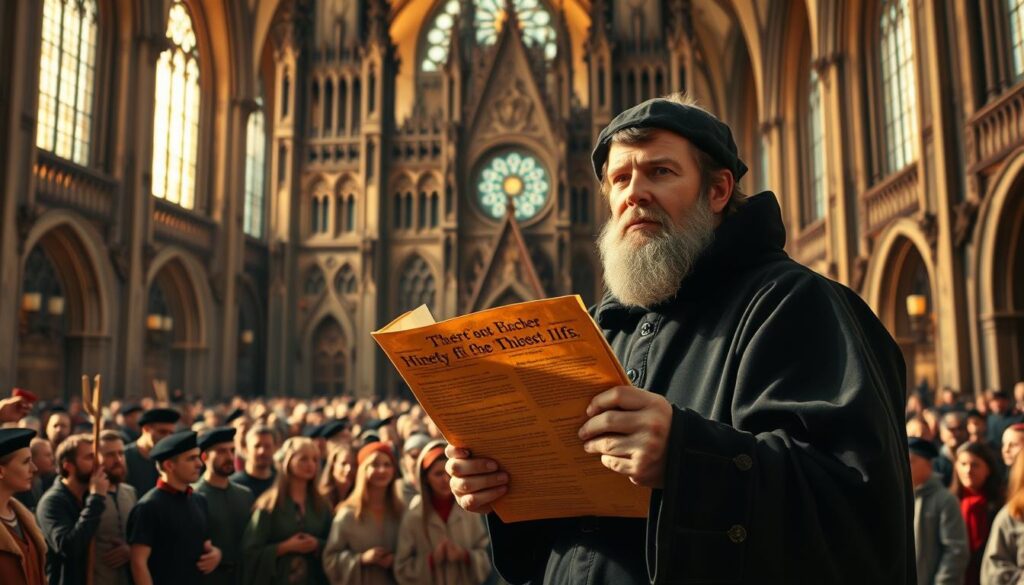
A majestic, hand-painted depiction of Martin Luther's Ninety-Five Theses, set against the backdrop of a grand cathedral in the late 15th century. In the foreground, Luther stands resolute, his weathered face etched with determination as he holds the parchment scrolls, the iconic Wittenberg church looming behind him. The middle ground is filled with a crowd of clergy and townspeople, their expressions ranging from shock to reverence, as the historic moment unfolds. Warm, golden light filters through the stained glass windows, casting a reverent glow over the scene, capturing the weight and significance of this pivotal event that would shape the course of the Protestant Reformation.

Luther’s famous Ninety-Five Theses, nailed to a church door in 1517, questioned this practice. Written in Latin for academic debate, his ideas went viral when translated into German. Printers spread them like wildfire – a 16th-century Twitter storm challenging church authority.

The Birth of a New Faith Identity

What began as reform efforts soon outgrew the Catholic Church. After Luther’s excommunication in 1521, followers organized independent congregations. Critics first used “Lutheran” as an insult, but the label stuck. By mid-century, over half of Germany identified with this growing movement.

The Protestant Reformation reshaped Europe’s spiritual map. From town squares to royal courts, people debated faith’s true meaning. Luther’s stand sparked more than doctrinal changes – it redefined how communities worshipped and governed themselves for centuries.

Understanding lutheranism main beliefs

At the heart of this tradition lies a radical idea: divine love isn’t something you earn – it’s a gift you receive. This truth reshapes everything from personal spirituality to community life, offering freedom from endless self-improvement cycles.

Trust Over Transactions

Picture a parent catching their child mid-fall. Faith alone works like that outstretched hand – not about perfect knowledge or feelings, but trusting someone else’s strength. “We’re justified through faith,” Lutherans believe, “because trust connects us to Christ’s forgiveness.”

Two Sides of Scripture

The Bible acts like both a mirror and medicine. God’s law reflects our sin like a bathroom mirror shows morning bedhead. It highlights our need for help. The gospel then offers healing – announcing what God’s grace already accomplished through Jesus.

Consider traffic laws. They keep order but can’t fix reckless drivers. Similarly, grace faith teaches that rules reveal our flaws, while divine mercy provides the fix. This approach transforms guilt into gratitude – motivation comes from being loved, not fearing punishment.

Sunday mornings showcase this balance. Services often pair confession (“We messed up”) with communion (“You’re forgiven”). It’s daily reality for millions: imperfect people relying on perfect grace, finding hope stronger than their struggles.

Core Doctrines and Theological Principles

What holds a global faith community together across centuries? For Lutherans, the answer lies in three foundational anchors: God’s triune nature, humanity’s need for grace, and scripture’s enduring truth. These principles form a spiritual compass guiding everything from Sunday worship to Monday decisions.

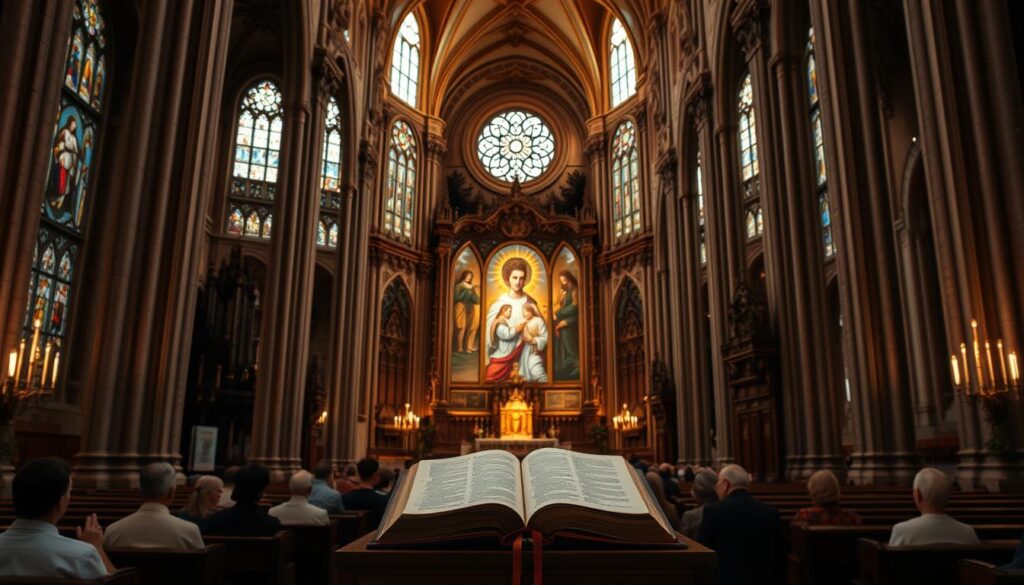
A grand cathedral interior with ornate architectural details, stained glass windows, and intricate stone carvings. In the foreground, a triptych altarpiece depicts the holy Trinity - Father, Son, and Holy Spirit - in a serene, ethereal composition bathed in soft, warm lighting. The middle ground features worshippers reverently studying a large, leather-bound Bible on a podium, symbolizing the centrality of scripture. The background showcases the grandeur of the space, with soaring arches, ornate columns, and an atmosphere of spiritual contemplation.

Central to their teaching stands the Trinity – one God as Father, Son (Jesus Christ), and Holy Spirit. Lutherans believe this divine relationship shapes human purpose: “We exist because God loves, redeems, and sustains.” The Bible, seen as God’s living word, reveals this truth through stories of ancient shepherds and modern seekers alike.

Three Latin phrases capture their distinct perspective:

  • Sola Gratia (Grace Alone): Like sunlight reaching both roses and weeds, divine love comes undeserved
  • Sola Fide (Faith Alone): Trusting Christ’s sacrifice bridges our imperfections
  • Sola Scriptura (Scripture Alone): The Bible remains faith’s final authority

This framework acknowledges human struggles. Lutherans believe sin affects everyone, like static distorting a radio signal. Yet hope emerges through Jesus Christ’s resurrection – proof that death’s grip breaks. Eternal life becomes less about destination, more about walking with the Holy Spirit now.

These doctrines transform daily life. A nurse finds patience through grace. A student studies scripture as God’s word. Families argue less about being right, more about showing love. It’s faith made practical – ancient truths nurturing modern hearts.

Luther’s Impact on Worship and Liturgy

Picture a 16th-century congregation suddenly hearing scripture in their mother tongue. Martin Luther’s bold move to translate worship into everyday language turned Sunday services from mysterious rituals into heartfelt conversations. This shift empowered farmers and merchants alike to engage directly with sacred texts – no Latin degree required.

Translation of Scriptures and Liturgical Language

Gone were the days of mumbling unfamiliar phrases. Luther’s German Bible and hymns let people worship with understanding. Imagine the thrill of singing “A Mighty Fortress” in your own dialect! This accessibility became Lutheranism’s hallmark, blending ancient traditions with clear communication.

Modern Lutheran services retain this balance. The liturgy flows like a well-loved road – familiar turns guiding participants through confession, praise, and thanksgiving. Hymnals brim with centuries-old chorales and modern tunes, proving faith’s language evolves without losing its soul.

Sacramental Life in Lutheran Churches

At the communion rail, something extraordinary happens. Lutherans receive bread and wine believing Christ’s presence permeates the meal. “It’s not symbolic, nor magical,” explains Pastor Sarah Jensen. “Through ordinary elements, we touch divine love.”

The Lord’s Supper occurs weekly in many congregations, a tactile reminder of grace. Unlike some Protestant groups viewing communion as mere memorial, Lutherans see it as God’s kitchen table – where forgiveness gets served alongside rye bread and grape juice.

This sacramental rhythm shapes community life. Baptismal fonts anchor church entrances, water whispering promises. Altars become family reunion spots where heaven and earth share holy communion. Through these tangible acts, abstract theology becomes lived experience.

The Role of Confessional Documents

Imagine building a house without blueprints—how would it stand firm? Early Lutheran communities faced similar questions. Their answer came through confessional writings that unified diverse groups like architectural plans guide builders. These texts became the glue holding together a movement spanning continents and centuries.

A finely bound leather book rests on an ornate wooden lectern, its cover embossed with the gilded title "The Book of Concord". Rays of warm, natural light stream through stained glass windows, casting a reverent glow upon the tome. In the background, rows of carved oak pews and a majestic vaulted ceiling evoke the solemn atmosphere of a historic Lutheran church. The scene conveys the significance and weight of these foundational confessional documents, which have shaped the faith and theology of Lutheranism for centuries.

In 1530, Philipp Melanchthon drafted the Augsburg Confession—a bold statement presented to Emperor Charles V. Picture nervous reformers handing their manifesto to Europe’s most powerful ruler. This document outlined core teachings, defending their reforms as truly Christian. It’s still recited in congregations worldwide, proving ideas outlast empires.

Fifty years later, leaders compiled The Book of Concord. This collection settled debates about baptism, communion, and scripture’s role. Over 80 regional authorities endorsed it—like signing a spiritual constitution. Today, pastors pledge to follow its guidance, ensuring church practices align with historic roots.

How do these ancient texts stay relevant? They act as guardrails, not cages. “Our confessions point to Christ,” explains theologian Maria Gomez. “They help us interpret the Bible faithfully without inventing new truths.” From Minneapolis to Jakarta, these writings remind communities they’re part of something bigger than local customs.

Sunday school teachers use simplified versions. Seminary students debate their nuances. Through every generation, the book concord remains a compass—steering believers toward grace-centered faith while honoring scripture’s supreme authority.

Lutheranism and Ecumenical Relationships

The path from conflict to collaboration reveals deep spiritual connections. After centuries of division, the Roman Catholic Church and Lutheran communities began historic talks in the 1960s. Like estranged family members rediscovering shared roots, these dialogues focused on common ground rather than old arguments.

A major breakthrough came in 1999. Both groups signed a Joint Declaration agreeing that divine grace – not human effort – forms faith’s foundation. This milestone healed wounds from the Reformation era. By 2017, joint events commemorated Luther’s reforms while celebrating Christian unity.

Unity Without Uniformity

Today, Lutherans and Catholic Church members often volunteer side-by-side in food banks. They study scripture together. Yet full merger remains unlikely – and unnecessary. “Our differences matter less than Christ’s love,” notes ecumenical advisor Rev. Michael Chen.

This relationship thrives because both groups prioritize core gospel truths. Lutherans maintain distinct worship styles and teachings while embracing cooperation. It’s like neighbors tending separate gardens but sharing tools. Through mutual respect, ancient divisions now nurture hope for all church communities.

FAQ

How does Lutheranism differ from the Roman Catholic Church?

Lutherans emphasize salvation through God’s grace alone, received by faith, rather than relying on good works or church traditions. Unlike the Roman Catholic Church, Lutheran teachings reject papal authority and prioritize Scripture as the ultimate guide. Practices like private confession are optional, not mandatory.

What role did Martin Luther play in shaping Lutheran beliefs?

Martin Luther, a 16th-century German monk, sparked the Protestant Reformation by challenging Catholic doctrines. His writings, like the 95 Theses, emphasized justification by faith, Scripture’s authority, and Christ’s centrality. His translation of the Bible into German made God’s Word accessible to everyday people.

Do Lutherans believe in sacraments like Holy Communion?

Yes, Lutherans recognize two sacraments: Baptism and the Lord’s Supper (Holy Communion). They teach that Christ is truly present “in, with, and under” the bread and wine, offering forgiveness and strengthening faith. This differs from symbolic views in some Protestant traditions.

What is the Book of Concord, and why is it important?

The Book of Concord contains key Lutheran confessional documents, including the Augsburg Confession. It unites churches around core teachings like grace, faith, and Scripture’s authority. Many Lutheran bodies, such as the Evangelical Lutheran Church in America, still use it today.

How do Lutheran worship services reflect their theology?

Worship centers on Scripture, preaching, and sacraments. Liturgies often blend traditional hymns with modern elements. Luther’s emphasis on vernacular language ensures services are accessible, fostering a personal relationship with God through Christ’s promises.

Are Lutherans open to dialogue with other Christian traditions?

Yes! Groups like the Lutheran World Federation engage in ecumenical talks, including with the Roman Catholic Church. Joint statements, like the 1999 Declaration on Justification, highlight shared beliefs while respecting differences in practice and structure.

Lutheranism: Rituals and Worship Practices Explained


Discover the vibrant traditions of a Protestant movement that reshaped Christianity over five centuries. With roots tracing back to 16th-century reforms, this faith community now serves over 77 million believers worldwide. Its practices blend ancient customs with fresh perspectives, creating worship experiences that resonate across generations.

At the heart of this tradition stands Martin Luther, whose bold reforms during the Reformation redefined how communities connect with the divine. Rather than abandoning centuries of Christian heritage, his approach reimagined sacraments and scripture interpretation. This balance between continuity and innovation remains central to its identity today.

Sunday services showcase this unique blend through music, prayer, and shared participation. Congregants don’t just observe – they actively shape worship through hymns and responsive readings. This collaborative spirit reflects the movement’s core belief in accessible spirituality for all.

Our guide will unpack these traditions step by step. You’ll explore historical foundations, understand modern adaptations, and discover what makes this denomination’s practices stand out. Whether you’re new to Protestant traditions or deepening your faith journey, we’ll make complex ideas easy to grasp.

Key Takeaways

  • Originated from 16th-century reforms that transformed Christian practices
  • Combines historical traditions with innovative theological perspectives
  • Emphasizes active congregational participation during services
  • Maintains global influence with 77+ million adherents worldwide
  • Features distinctive approaches to sacraments and scripture
  • Musical heritage plays vital role in worship experiences

Understanding the Historical Roots of Lutheran Worship

How did a single document nailed to a church door reshape centuries of Christian tradition? Martin Luther’s 95 Theses sparked a spiritual revolution that redefined relationships with the divine. His reforms preserved core Christian elements while challenging practices he saw as disconnected from biblical foundations.

Martin Luther and the Reformation Impact

The German monk’s theological breakthroughs centered on direct access to God through scripture. Luther argued that only baptism and communion met Christ’s sacramental criteria, rejecting five Catholic rites. “Christ’s sacrifice needs no repetition,” he declared, transforming communion from ritual re-enactment to grateful remembrance.

Evolution From Catholic Traditions

While maintaining ancient liturgical structures, Luther’s reforms introduced radical changes. Latin services became German gatherings where farmers could sing alongside nobles. Altars turned toward congregations, and priests became pastors who explained scripture in everyday language.

This shift created worship experiences emphasizing shared understanding over mysterious rituals. By blending Catholic heritage with Protestant insights, Luther built a bridge between medieval faith and modern spiritual practice that still supports 77 million believers today.

Exploring Core Sacraments in Lutheran Rituals

What transforms ordinary water and bread into sacred moments of divine connection? For Lutherans, sacraments bridge heaven and earth through physical elements charged with spiritual power. These practices anchor believers in God’s grace while uniting communities through shared sacred acts.

A tranquil, softly lit scene of a traditional Lutheran church interior. In the foreground, a baptismal font with clear, gently rippling water stands prominently. Behind it, an ornate altar with simple, elegant communion elements - a silver chalice and a platter of unleavened bread. Warm, golden light filters through stained glass windows, casting a serene ambiance. Wooden pews and a pipe organ in the background suggest a solemn, reverent atmosphere, capturing the essence of Lutheran sacraments of baptism and communion.

Baptism: Gateway to God’s Grace

Lutherans view baptism as God’s active work, not human effort. This sacrament washes away sin and sparks faith through water combined with God’s promise. Infants receive baptism because grace comes first – divine love activates belief before understanding develops.

Three key gifts flow from baptism:

  • Complete forgiveness of past and future mistakes
  • Victory over spiritual death through resurrection hope
  • Ongoing guidance from the Holy Spirit

The Lord’s Supper: Communion and Community

Communion tables become holy meeting places where Christ’s presence transforms basic elements. Unlike other traditions, Lutherans affirm Jesus is “in, with, and under” bread and wine without changing their substance. This mysterious union nourishes faith while binding believers together.

Sacrament Lutheran View Catholic View Reformed View
Baptism God initiates faith Removes original sin Symbol of commitment
Communion Christ’s real presence Transubstantiation Memorial meal
Purpose Means of grace Channel of merit Spiritual reminder

Preparation for communion often includes confession and absolution. Many congregations share the cup and loaf weekly, seeing this meal as essential spiritual nourishment rather than occasional ritual.

Liturgy, Music, and Community in Worship

How does ancient liturgy meet modern faith communities? The Divine Service connects centuries-old patterns with today’s spiritual needs through four movements: gathering, hearing scripture, sharing sacraments, and going forth renewed. This rhythm turns Sunday services into transformative journeys rather than passive observances.

Sacred Music’s Teaching Power

Martin Luther called music “a living, breathing sermon.” His hymns taught theology to farmers and kings alike through memorable melodies. Today, Lutheran churches maintain this legacy with:

  • Chorales blending 16th-century poetry with modern instrumentation
  • Hymn texts that unpack complex doctrines in singable verses
  • Choirs leading congregations rather than performing separately

Everyone Plays a Part

Sunday mornings buzz with collective energy as members share responses, prayers, and songs. This active involvement stems from Luther’s radical idea: all believers form a spiritual priesthood. Unlike spectator-style services, Lutheran worship expects voices to unite in declaration and praise.

Traditional Elements Modern Adaptations Community Impact
Liturgical responses Projected lyrics Shared memory creation
Organ accompaniment Multicultural hymns Cross-generational bonds
Chanted psalms Small group worship Neighborhood outreach

This balance preserves historical roots while nurturing fresh expressions. Whether through a grandmother’s favorite hymn or a teen’s guitar-led chorus, the congregation’s collective voice keeps the faith alive across generations.

Theological Insights and Sermons in Lutheran Worship

Three Latin phrases revolutionized Christian thought and still shape spiritual life today. Sola Scriptura, Sola Fide, and Sola Gratia form the bedrock of Lutheran theology, guiding how communities encounter divine truth. These principles transform Sunday services into dynamic conversations between heaven and earth.

Scripture, Proclamation, and the Word of God

Sola Scriptura places the Bible at Christianity’s center. Pastors spend hours wrestling with Greek texts to craft messages that bridge ancient wisdom and modern struggles. One minister notes: “Our sermons aren’t lectures – they’re lifelines connecting people to God’s living words.”

This scriptural focus shapes every worship element:

Sola Principle Key Emphasis Worship Impact Theological Significance
Scriptura Bible as ultimate authority Verse-by-verse preaching God speaks through scripture
Fide Faith as gift Interactive prayers Trust precedes understanding
Gratia Unmerited favor Communion frequency Grace fuels transformation

The doctrine of justification pulses through hymns and sacraments. Believers sing about being “clothed in Christ’s righteousness” while holding bread that embodies divine mercy. This theology of gift permeates liturgical responses and personal devotions alike.

Modern preachers balance academic rigor with relatability. A seminary professor explains: “We mine scripture’s depths but deliver nuggets everyone can grasp.” Projected lyrics and discussion groups help new generations engage with timeless truths.

Through the Spirit’s power, spoken words become transformative encounters. As voices join in creedal declarations, Lutheran understanding comes alive – not just in minds, but in hearts and hands serving neighbors.

Modern Interpretations: Cultural and Contextual Worship Practices

Global diversity meets ancient tradition in modern faith communities. The Lutheran World Federation unites 124 churches across 69 nations, guiding 57 million believers through cultural shifts. Their Nairobi Statement offers a compass for worship that honors heritage while embracing local flavors.

A modern Lutheran church interior, softly lit by natural light filtering through stained glass windows. In the foreground, a diverse congregation engages in a contemplative, yet expressive, worship service. Congregants sway gently, some with raised hands, others kneeling in prayer, reflecting the cultural adaptations of traditional Lutheran rituals. The middle ground features a central altar adorned with simple, yet meaningful, decorations that blend indigenous and Lutheran symbols. In the background, a large, wooden cross stands as a unifying focal point, casting a warm, inviting glow upon the scene. The overall atmosphere conveys a sense of inclusive, community-driven worship that celebrates the intersection of Lutheran faith and local cultural traditions.

“The core of worship is the people gathering together so that they can talk to God all together.”

Four Dimensions of Faithful Adaptation

Churches navigate cultural engagement through four lenses:

Dimension Focus Modern Example
Transcultural Universal truths Apostles’ Creed in 100+ languages
Contextual Local relevance Djembe drums in Kenyan services
Countercultural Gospel challenges Anti-racism liturgies
Cross-cultural Global exchange Swedish/Mexican hymn swaps

Urban congregations might project Psalms onto brick walls while rural groups sing under mango trees. Bilingual services blend Spanish guitar with German chorales. One pastor notes: “Our Zambian liturgy feels both new and ancient – like rediscovering family recipes.”

Technology bridges distances without losing connection. Livestreamed services reach homebound members, while apps share prayer requests across time zones. Yet the heart remains unchanged – bread broken among friends, water poured over newborns, voices united in hope.

Deep Dive: lutheranism rituals and worship

How do ordinary moments become sacred encounters? For believers, daily life brims with chances to reconnect with divine promises. Simple acts like rinsing dishes or showering transform into spiritual touchpoints through intentional reflection.

A serene, dimly lit church interior with ornate lutheran baptistery at the center. Soft, warm lighting casts a reverent glow over the scene. In the foreground, a lutheran minister stands beside the baptistery, hands outstretched over a child being gently lowered into the sacred waters. Congregation members observe solemnly from the pews, their faces illuminated by flickering candles. The stained glass windows in the background cast a heavenly, ethereal light, adding to the solemn, spiritual atmosphere. Subtle details of lutheran symbolism and architecture accentuate the ritual's significance.

Daily Remembrance and Spiritual Renewal

Martin Luther taught that every splash of water could recall baptism’s grace. This practice turns routine hygiene into:

  • Moments to reaffirm identity in Christ
  • Opportunities to release burdens through forgiveness
  • Chances to realign with spiritual priorities

Practical Applications in Worship Service

Sunday gatherings feature structured pathways for renewal. Public confession unites congregations in acknowledging shared humanity. A typical service includes:

  1. Corporate admission of shortcomings
  2. Pastoral assurance of pardon
  3. Silent personal reflection

Private confession offers individualized care. Ministers maintain strict confidentiality, creating safe spaces for deep spiritual work. One member shares: “Speaking my struggles aloud lifted weights I didn’t know I carried.”

These practices bridge Sunday worship with Monday challenges. Whether through liturgical responses or home devotions, believers find consistent rhythms to nurture their journey.

Balancing Tradition with Contemporary Practice

Tradition and innovation aren’t opposites but partners in Lutheran spiritual life. Communities honor centuries-old patterns while embracing fresh expressions that speak to modern hearts. This dynamic balance keeps faith vibrant across generations.

Innovative Liturgical Elements and Community Reflection

Many Lutheran churches now blend projected lyrics with hymnals, letting digital tools enhance ancient creeds. Global musical styles mingle with pipe organ classics, creating soundscapes where grandparents and teens sway together. Creative adaptations often emerge from local needs – urban congregations might host art walks between services, while rural groups organize farm-to-table communion meals.

Interactive prayer walls and app-based devotionals complement traditional liturgies. One Missouri congregation reports: “Our youth designed a Spotify playlist linking hymns to current worship songs.” These innovations always orbit around core practices like baptism and shared scripture reading.

Service projects have become living extensions of Sunday gatherings. Food drives morph into community gardens, and Bible studies spark job-training programs. By weaving timeless truths into today’s challenges, Lutheran communities prove that faithful relevance requires both roots and wings.

FAQ

How does Lutheran worship differ from Catholic traditions?

Lutheran worship retains elements like sacraments and liturgy but emphasizes justification by grace through faith. While both use Scripture, Lutherans reject concepts like purgatory and prioritize congregational singing. The Lutheran World Federation highlights this balance of tradition and reform.

What role do sacraments like Baptism play in Lutheran practice?

Baptism is seen as a gift of God’s grace, marking entry into the Christian community. It’s paired with the Lord’s Supper, where bread and wine symbolize Christ’s presence. These sacraments nurture faith and unity, central to Lutheran theology.

Why is music integral to Lutheran services?

Martin Luther championed hymns to engage congregations. Classics like A Mighty Fortress blend theology with melody, fostering participation. Music reinforces teachings and connects modern worshippers to historical roots, a hallmark of Lutheran hymnody.

How do congregations balance tradition with modern practices?

Many churches, like Savior Lutheran Church, blend traditional liturgy with contemporary music or multimedia. This approach keeps services relevant while honoring core beliefs like Scripture alone and sacramental reverence.

What’s the significance of the Lord’s Supper in Lutheran worship?

The Supper embodies Christ’s promise of forgiveness. Lutherans believe in real presence—Christ’s body and blood are “in, with, and under” the elements. This ritual renews faith and strengthens communal bonds, reflecting Lutheran sacramental theology.

How does the Lutheran Church address social justice today?

Rooted in grace, many congregations advocate for equity and service. The Evangelical Lutheran Church in America, for example, partners with global initiatives, linking faith to action. This reflects Luther’s view of faith active in love.

How do sermons integrate Scripture into Lutheran worship?

Sermons focus on interpreting the Bible’s teachings, emphasizing Christ’s redemption. Pastors connect ancient texts to daily life, encouraging reflection. This aligns with Luther’s belief in the power of God’s Word to transform hearts and minds.

What does "justification by grace through faith" mean practically?

It underscores that salvation is God’s gift, not earned by works. This doctrine shapes Lutheran identity, fostering humility and gratitude. Worship practices, like confession and absolution, visibly express this theology of unmerited grace.