Recent Posts

Understanding the Lutheran 10 Commandments


For centuries, divine laws given to Moses on Mount Sinai have shaped spiritual lives. These instructions weren’t just rules—they defined what it meant to belong to God. Martin Luther reimagined their purpose, shifting focus from rigid obedience to heartfelt gratitude for grace already received.

Luther saw these guidelines as responses to salvation, not requirements to earn it. His teachings emphasized that faith transforms how we live, turning duty into joyful service. This perspective freed believers from fear of failure, inviting them to embrace love as their compass.

Originally recorded in Exodus and Deuteronomy, these principles reveal humanity’s need for divine guidance. They expose our shortcomings while pointing toward a better way. Luther placed them first in his catechism to show how God’s standards highlight both our struggles and His mercy.

Today, they remain vital for nurturing relationships—with God and others. Instead of condemning, they offer clarity. They mirror our imperfections while directing us toward compassion, honesty, and reverence.

Key Takeaways

  • Luther viewed divine laws as expressions of gratitude, not tools to earn salvation
  • These teachings act as both a mirror for self-reflection and a roadmap for daily living
  • Their origins trace back to Exodus, defining ancient Israel’s identity as God’s people
  • They guide how we honor spiritual connections and human relationships alike
  • Lutheran teachings use them to demonstrate reliance on grace rather than personal perfection

Introduction to the Lutheran 10 Commandments

In the 1500s, Martin Luther noticed something troubling. Many churchgoers—and even priests—struggled to explain basic beliefs. During visits to Saxon churches between 1527 and 1528, he saw how disconnected faith had become from everyday life. This sparked his mission to simplify spiritual teachings for ordinary people.

Luther didn’t want these ancient guidelines to feel like a checklist. Instead, he framed them as love letters from a caring God. His catechisms transformed rigid rules into practical wisdom. “God’s word isn’t a hammer,” he taught, “but a lamp for our path.”

This approach changed everything. Believers began seeing divine laws as tools for growth, not guilt. They discovered how grace turns duty into delight—like following a trusted friend’s advice rather than fearing punishment.

Today, Luther’s insights still help modern seekers. They show how timeless principles can guide decisions about work, relationships, and purpose. By rooting obedience in gratitude, he made faith feel less like a test and more like a journey home.

Historical Context and Origins

Thunder echoed across Mount Sinai as a newly freed nation gathered below. Fresh from their escape from Egyptian slavery, the Israelites received more than rules—they received a blueprint for building a society. Carved into stone tablets, these directives answered a burning question: What does freedom look like when guided by divine love?

A grand, ornate stone tablet stands prominently, carved with the iconic Ten Commandments in an ancient, elegant script. The tablet is situated in a dimly lit, cavernous cathedral-like interior, with towering columns and stained glass windows casting warm, reverent light. In the foreground, a group of scholars and theologians gaze upon the tablet, deep in contemplation, their expressions reflecting the weight and significance of this historical, religious artifact. The scene evokes a sense of reverence, erudition, and the enduring legacy of this foundational spiritual code.

The moment marked a turning point. After witnessing miracles like the Red Sea parting, the people needed structure to match their newfound liberty. The laws weren’t about restriction but identity—defining how to live as God’s chosen community. They addressed every aspect of life, from honoring sacred bonds to treating neighbors fairly.

Found in Exodus 20 and Deuteronomy 5, these principles served dual purposes. They set boundaries while nurturing compassion. For example, laws against theft or falsehoods protected dignity in a culture where power often dictated work and justice. This covenant framework helped tribes wandering the desert become a nation rooted in shared values.

Centuries later, reformers like Luther would revisit this foundation. They saw timeless wisdom in how the commandments balanced divine authority with human dignity. Their delivery at Sinai wasn’t just a historical event—it became a model for how moral truths can shape societies across generations.

Luther’s Perspective on the 10 Commandments

Imagine a world where spiritual guidance fits in your pocket. That’s what Luther achieved with his Small Catechism—a handbook for daily living. He designed it to help families discuss divine principles over meals and farmers reflect on truth during field work.

Teaching Through Faith and Grace

Luther flipped the script on religious instruction. Instead of demanding perfect obedience, he showed how grace reshapes our understanding of rules. His teachings framed divine guidelines as gifts, not ultimatums. “When we grasp God’s mercy,” he wrote, “our hearts learn to dance with His ways.”

This approach transformed fear into freedom. Believers stopped seeing moral standards as impossible hurdles. They became signposts pointing toward healthier relationships—with heaven and neighbors.

The Role of the Catechism in Lutheran Education

The Small Catechism became Luther’s masterclass in practical faith. Its genius lay in three clear purposes for divine law:

  • A curb that protects communities from harm
  • A mirror revealing our need for help
  • A guide for loving others well

Parents used its simple language to teach children. Teachers built lessons around its questions. By starting with our struggles, then revealing God’s solution, Luther’s method still helps people grow without shame.

Analysis of the First Commandment: No Other Gods

At the core of spiritual devotion lies a simple yet profound directive: prioritize the divine above all else. This principle challenges us to examine what truly holds power over our choices and values.

Foundational Principles of Fear and Love of God

Luther’s explanation cuts through surface-level religion. He taught that whatever controls our deepest fears and hopes functions as our god. This could be success, relationships, or even personal safety—good things that become problematic when elevated above their proper place.

A grand cathedral interior, sunlight streaming through stained glass windows, casting kaleidoscopic patterns on the marble floors. In the foreground, a stone altar adorned with intricate carvings and a single, ornate cross. Flanking the altar, two towering statues of stern, commanding figures, representing the authority and presence of the divine. In the middle ground, rows of wooden pews facing the altar, conveying a sense of reverence and contemplation. The background shrouded in a soft, hazy glow, emphasizing the sacred and transcendent nature of the space. The scene evokes a deep, solemn atmosphere, inviting the viewer to ponder the significance of the First Commandment and the weight of worshiping no other gods before the Almighty.

The phrase “fear love god” describes healthy devotion. Imagine a child’s mix of respect and affection toward a caring parent. This reverent trust shapes how we approach life’s uncertainties. When anchored here, other moral choices flow naturally from gratitude rather than obligation.

Historical and Theological Insights

Ancient cultures worshipped visible idols, but modern “gods” often hide in plain sight. Career ambitions or social approval can quietly demand our ultimate loyalty. Early reformers noticed how easily human hearts shift focus from eternal truths to temporary comforts.

This commandment’s brilliance lies in its preventive power. By addressing our core relationship with God, it reduces the need for endless rules. As one theologian noted: “Get the first thing right, and everything else finds its rhythm.”

Understanding the Second Commandment: Respecting God’s Name

What’s in a name? For ancient cultures, everything. When God revealed His name to Moses, it wasn’t just identification—it was an invitation to trust and intimacy. This act transformed how people related to the divine, moving from distant awe to personal connection.

A grand cathedral interior, illuminated by soft, natural light filtering through stained glass windows. In the foreground, an ornate altar with intricate carvings and a central cross, symbolizing the reverence for God's name. In the middle ground, wooden pews arranged in orderly rows, inviting contemplation. The background features towering stone columns and arched ceilings, creating a sense of grandeur and spiritual solemnity. The overall atmosphere is one of reverence, awe, and a deep respect for the divine.

Luther’s take on this commandment goes beyond avoiding curses. He starts with “fear and love God,” framing respect as the foundation. Instead of just banning misuse, he encourages using God’s name in prayer during hard times and praise during joyful ones. It’s like being handed a friend’s house keys—you handle them carefully because the relationship matters.

In Moses’ day, knowing someone’s name meant having access to their character and power. By sharing His name, God showed He wanted closeness, not formality. Luther highlights this by urging believers to “call upon it in every trouble,” turning divine names into lifelines rather than legal terms.

This principle reshapes daily speech. Casual phrases like “OMG” lose their humor when we grasp the weight behind that name. But it’s not about walking on eggshells—it’s recognizing the gift of being known by the Creator. When we fear and love deeply, our words naturally reflect honor.

Modern culture often treats names as disposable labels. Yet Luther’s approach reminds us: how we use God’s name reveals what we truly value. It’s less about rules and more about nurturing a bond built on reverence and gratitude.

The Significance of the Third Commandment: Keeping the Sabbath Holy

What if rest could be revolutionary? The third commandment invites us to pause not just our work, but our endless striving. Rooted in Genesis, where God rested after creation, this principle offers more than downtime—it’s a weekly reminder that our worth isn’t tied to productivity.

Rest, Worship, and Learning as Divine Practices

Luther saw Sabbath-keeping as active renewal, not passive idleness. He taught that setting aside a day helps us “fear and love God” by recentering on what matters. This isn’t about strict schedules, but creating space to hear sacred teachings and reflect. Like resetting a compass, it aligns our priorities with divine wisdom.

Modern Relevance of the Sabbath in Daily Life

In our always-on culture, this ancient practice feels radical. The third commandment challenges the myth that busyness equals importance. Whether Sunday or Tuesday, choosing rest declares trust in higher provision. It transforms ordinary moments into opportunities to grow—a countercultural act of faith in a world obsessed with hustle.

By embracing this rhythm, we honor both our limits and God’s limitless care. As Luther noted, gladly receiving spiritual word and wisdom isn’t a duty—it’s how we remember whose we are.

FAQ

How do the biblical laws emphasize a relationship with God?

These teachings prioritize trust and devotion, encouraging individuals to center their lives on divine love rather than fear. They remind believers to rely on God’s guidance in all aspects of life.

What makes Martin Luther’s approach to biblical laws unique?

Luther focused on how faith and grace shape obedience, rather than strict rule-following. He believed understanding God’s mercy helps people live joyfully, honoring others through their actions.

Why is rest emphasized in the Sabbath teaching?

Rest creates space for spiritual renewal, worship, and connecting with community. It’s a gift that fosters gratitude and balance, helping people reflect on what truly matters in daily life.

How can someone respect God’s name in modern times?

This involves speaking and acting with integrity, avoiding careless or harmful words. It also means living in a way that reflects kindness and humility, honoring sacred values.

What role does the catechism play in learning these principles?

Luther’s Small Catechism offers clear, accessible explanations for all ages. It helps families and communities discuss how to apply timeless truths in meaningful, practical ways.

How do these teachings address honesty and fairness?

They encourage truthfulness in speech and actions while promoting justice. Protecting others’ reputations and resources builds trust and strengthens relationships.

Why is historical context important for understanding these guidelines?

Knowing their origins reveals how they’ve shaped moral frameworks across generations. It also highlights their adaptability to cultural changes while preserving core truths.

The Lutheran Missouri Synod: A Closer Look at This Christian Denomination


One of America’s largest conservative Protestant groups traces its roots to 19th-century German immigrants. Today, this faith community blends deep theological traditions with active engagement in modern society. With over 1.7 million members nationwide, it ranks as the second-largest Lutheran body in the U.S., offering a unique perspective on Christian practice.

Headquartered in Kirkwood, Missouri, the organization oversees thousands of congregations across all 50 states. Its structure includes 35 regional districts, each supporting local churches while maintaining shared doctrinal standards. This balance of centralized leadership and grassroots flexibility helps preserve unity amid cultural shifts.

Founded by immigrants seeking religious freedom, the denomination has grown from its humble Midwestern beginnings into a nationally influential institution. Its commitment to biblical authority distinguishes it from more progressive branches of Protestantism, creating a distinct identity within American Christianity.

Key Takeaways

  • Second-largest Lutheran denomination in the U.S. with 1.7 million members
  • Headquartered in Missouri with congregations in all 50 states
  • Maintains traditional theological views while adapting to modern challenges
  • Originated from 19th-century German immigrant communities
  • Operates through 35 regional districts for localized support

Historical Roots and Founding of the LCMS

In the early 19th century, waves of German settlers brought more than their belongings to American shores—they carried deep-rooted spiritual traditions. By the 1830s, scattered communities of European immigrants sought to preserve their faith while adapting to frontier life. This blend of cultural identity and religious devotion laid the groundwork for a new chapter in American Christianity.

German Immigrant Beginnings

Pioneer families faced unique challenges maintaining their spiritual practices. Without organized leadership, many feared their traditions might fade. A group of pastors recognized this crisis, declaring: “Our people need structure to keep the faith alive across generations.”

Establishment in Chicago

Twelve determined clergymen made history on April 26, 1847, uniting fourteen congregations from six states. Their meeting in Chicago birthed the German Evangelical Lutheran Synod of Missouri, Ohio and Other States—a name reflecting both their origins and vision. This collaboration created a framework supporting thousands of believers while safeguarding doctrinal integrity.

Over time, the organization expanded beyond its initial Midwest stronghold. Its founding principles—unity through shared beliefs and adaptability to local needs—continue shaping its identity today. What began as a solution for immigrant communities now serves diverse populations across America.

Overview of the Lutheran Missouri Synod

Spanning from coast to coast, this denomination maintains a robust network of nearly 6,000 worship communities. Recent figures show over 1.7 million baptized individuals participating in these faith groups nationwide. These numbers make it America’s second-largest Lutheran body, trailing only the Evangelical Lutheran Church in America.

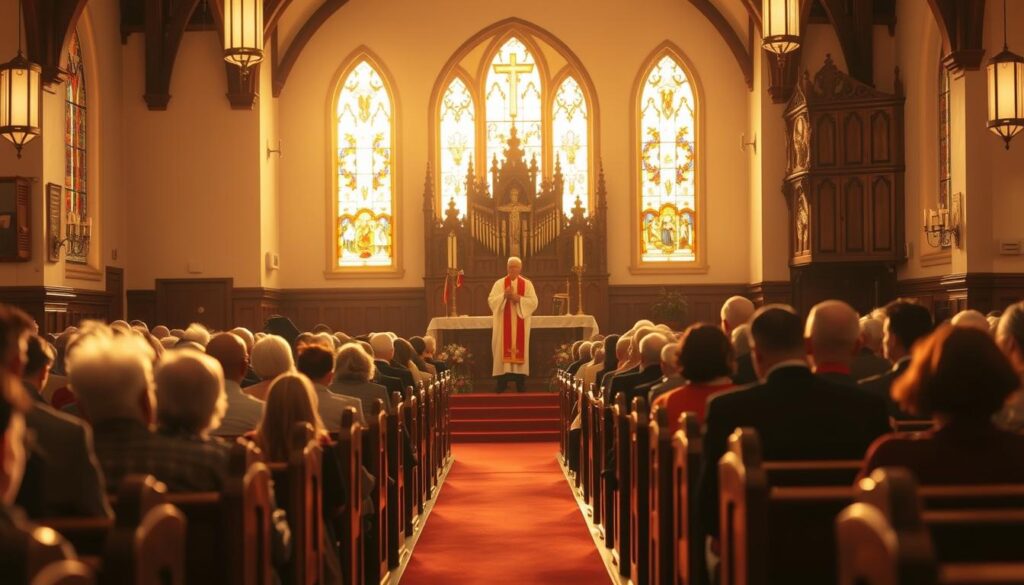
A cozy, well-lit Lutheran Missouri Synod church interior, bathed in warm, golden light filtering through stained glass windows. In the spacious sanctuary, a congregation of devout worshippers, dressed in their Sunday best, sits attentively in polished wooden pews, listening intently to the sermon delivered by a robed pastor at the ornate, pulpit. The altar is adorned with intricate carvings, candlesticks, and a large cross, reflecting the reverence and tradition of this Christian denomination. The atmosphere is one of solemn reflection and communal fellowship, capturing the essence of a Missouri Synod congregation gathering.

What sets this group apart? Unlike some modern religious organizations, it holds firmly to historical Christian teachings. A denominational leader explains: “We view Scripture as God’s unchanging truth—our anchor in shifting cultural tides.” This commitment shapes everything from worship styles to community outreach programs.

The structure balances independence with unity. Local churches make their own decisions about ministries and budgets. Yet all follow shared doctrinal standards set by national leadership. This approach helps communities address unique needs while maintaining core beliefs.

Feature LCMS ELCA
Total Members 1.7 million 3.3 million
Theological Stance Conservative Liberal
Global Partners International Lutheran Council Lutheran World Federation

Through international partnerships, the denomination connects with like-minded groups across 35 countries. These relationships allow shared resources while preserving distinct identities. It’s a model that’s worked for generations—and continues evolving today.

Saxon Immigration and Early German Influences

When religious ideals clashed with changing European norms, hundreds of families made an extraordinary choice. In 1838, entire communities packed their lives into trunks, driven by unwavering commitment to their faith. This mass exodus from Saxony marked a turning point for traditional Christian practices in America.

Martin Stephan and the Immigrant Journey

Pastor Martin Stephan became the unlikely architect of this daring migration. His fiery sermons denounced modern theological compromises, declaring: “We must preserve pure doctrine or perish as a people of God.” Over 600 followers risked everything—families sold farms, craftsmen abandoned workshops, and elders faced uncertain futures.

The ocean voyage tested their resolve. Four ships battled winter storms, with one vessel vanishing beneath the waves. Survivors reached New Orleans after two harrowing months, only to confront sweltering heat and unfamiliar customs. Many wondered if their sacrifice would prove worthwhile.

Missouri’s wilderness became their proving ground. Settlers transformed Perry County’s dense forests into thriving faith communities within years. Though Stephan’s leadership later collapsed amid scandal, his followers forged ahead. Their tight-knit settlements became incubators for doctrinal traditions that still shape the evangelical Lutheran identity today.

This pilgrimage established crucial patterns—prioritizing theological education, maintaining German-language services, and resisting cultural assimilation. Children learned catechism beside freshly cleared fields, ensuring their parents’ convictions took root in new soil. What began as escape became enduring legacy.

Missionary Efforts and Wilhelm Löhe’s Legacy

A grand cathedral stands in the foreground, its ornate spires reaching towards the heavens. In the middle ground, a group of missionaries in traditional robes gathers, engaged in fervent discussions. The background depicts a sprawling landscape, rolling hills dotted with quaint villages and winding roads, symbolizing the expansive reach of their evangelical efforts. Warm, golden light filters through stained glass windows, casting a reverent glow over the scene. The composition evokes a sense of dedicated purpose, the missionaries' unwavering commitment to spreading the teachings of their faith. This image captures the essence of Wilhelm Löhe's influential missionary work and his lasting legacy within the Lutheran Missouri Synod.

In the quiet Bavarian town of Neuendettelsau, a pastor’s vision sparked a transatlantic movement that would reshape American Christianity. Wilhelm Löhe saw German immigrants struggling to maintain their faith in unfamiliar territory. His solution? Train leaders who could bridge cultural divides while preserving doctrinal purity.

Training Pastors for the New World

Beginning in 1841, Löhe transformed his parish into a missionary hub. He famously declared: “We don’t just send prayers across the ocean—we send servants equipped to build God’s kingdom.” Within two years, his first theological students boarded ships bound for America, carrying Bibles and practical training.

The Bavarian leader’s systematic approach produced remarkable results:

  • Over 80 trained clergy established congregations across Ohio, Michigan, and Indiana
  • Frankenmuth became a model settlement combining worship, education, and community development
  • Concordia Theological Seminary emerged as a cornerstone for pastoral education

This network of doctrinally sound churches provided spiritual homes for thousands of immigrants. Löhe’s graduates didn’t just conduct services—they published hymnals, started schools, and coordinated relief efforts. Their work created lasting connections between European traditions and American innovation.

Today, this legacy lives on through international partnerships and educational institutions. The seminary Löhe helped found continues training leaders who value both scriptural authority and compassionate service. As one modern scholar notes: “His blueprint for mission work remains shockingly relevant—local solutions with global vision.”

Evolution of Confessional Lutheran Doctrine

While many religious groups adapted to cultural shifts, one church held firm to its foundational texts. The denomination’s constitution required strict loyalty to the Book of Concord—a collection of Reformation-era documents outlining core beliefs. This commitment created clear boundaries: no cooperation with churches holding different doctrines, and only approved materials in worship or education.

A serene cathedral interior, bathed in warm, golden light filtering through stained glass windows. In the foreground, an ornate wooden pulpit stands, a testament to the solemnity of Lutheran worship. Intricate carvings and symbolic motifs adorn the structure, reflecting the rich tradition of confessional Lutheran doctrine. In the middle ground, rows of pews create a sense of reverence and contemplation, inviting the viewer to meditate on the tenets of this Christian denomination. The background features a massive pipe organ, its pipes reaching towards the vaulted ceiling, symbolizing the importance of music and liturgy in the Lutheran faith. The overall atmosphere conveys a profound sense of history, devotion, and the timeless principles that define confessional Lutheranism.

This approach set the group apart during 19th-century theological debates. As other Lutheran bodies embraced “American Lutheranism,” leaders argued: “Truth isn’t shaped by trends—it’s revealed through Scripture and our confessions.” Their stance preserved traditional practices but sometimes limited partnerships with broader Christian movements.

Educational systems became vital for passing down confessional Lutheran doctrine. Seminaries trained pastors to teach catechism classes, while schools reinforced biblical literacy. A modern theologian notes: “Our classrooms aren’t just about facts—they’re where children learn to see the world through Lutheran eyes.”

Balancing tradition with relevance remains an ongoing challenge. The church updates how it communicates ancient truths without altering their substance. Through this careful evolution, it maintains what members call “timeless faith for changing times”—a distinctive blend of historical conviction and contemporary engagement.

The LCMS and the Book of Concord

At the heart of this denomination’s identity lies a 16th-century document collection that still shapes every sermon and sacrament. The Book of Concord isn’t just historical—it’s the living framework guiding theological decisions across thousands of congregations. Leaders describe it as “the North Star for biblical interpretation,” ensuring consistent beliefs from urban megachurches to rural chapels.

A weathered leather-bound book rests on a sturdy oak table, casting a warm glow in a sunlit study. The Book of Concord's ornate cover shimmers with intricate gold detailing, hinting at the theological depth within. Surrounding the tome are scattered pages, pens, and inkwells, suggesting a scholarly contemplation of its doctrinal foundation. The scene is bathed in soft, natural light, evoking a sense of reverence and intellectual exploration. A large, stained-glass window in the background casts a kaleidoscope of colors, symbolizing the rich heritage and spiritual significance of the Lutheran faith.

Foundational Doctrinal Commitments

Every pastor and congregation formally promises to follow these Reformation-era writings. “Our confessions aren’t museum pieces,” explains a seminary professor. “They show how Scripture answers life’s toughest questions—then and now.” This pledge creates remarkable unity, with 21st-century worship rooted in 500-year-old principles.

The collection’s Law and Gospel distinction shapes weekly messages. Preachers first reveal humanity’s shortcomings through God’s commands, then proclaim forgiveness through Christ’s sacrifice. This pattern—used since Martin Luther’s time—helps believers balance repentance with hope.

While Catholic and Protestant groups debate salvation, this church stands firm on justification by faith alone. Members see the Word of God as their ultimate authority, filtered through the confessions’ time-tested lens. As cultural trends shift, these documents act like theological guardrails—keeping practices anchored while allowing fresh ways to share eternal truths.

Transformation: From German to English Worship

Over three decades, a quiet revolution reshaped Sunday mornings. For the first thirty years of the 20th century, congregations balanced ancestral traditions with their children’s American identity. German-language services preserved heritage, but younger members craved English—the language of their schools and workplaces.

World War I accelerated change. Anti-German sentiment made some communities rethink their public image. A pastor from Indiana recalled: “We kept our doctrine but changed how we shared it—like pruning a tree so it grows stronger.”

By 1930, most evangelical Lutheran churches offered bilingual services. Hymnals began printing English verses beside German texts. This shift wasn’t about abandoning roots—it aimed to connect faith with daily life.

Today, the transition serves as a model for cultural adaptation. While preserving core teachings, the church found new ways to unite generations. What began as a practical choice became a testament to enduring faith through changing times.

FAQ

What distinguishes the LCMS from other Lutheran groups?

The LCMS emphasizes strict adherence to biblical teachings and historic Lutheran confessions like the Book of Concord. Unlike some denominations, it practices closed communion and maintains traditional views on ordination and liturgy.

Why did early members immigrate to America?

German settlers sought religious freedom and opportunities to preserve their confessional beliefs. Leaders like Martin Stephan and Wilhelm Löhe organized communities to establish churches aligned with their doctrinal convictions.

How did worship practices change over time?

Early services were conducted in German, reflecting immigrant roots. By the mid-20th century, most congregations transitioned to English to connect with younger generations while retaining liturgical traditions.

What role does the Book of Concord play?

It serves as the doctrinal foundation, unifying teachings on sacraments, scripture, and grace. Pastors and congregations pledge to uphold these confessions as authoritative guides for faith and practice.

Are women allowed to become pastors in the LCMS?

No, the denomination reserves the pastoral office for men based on its interpretation of New Testament teachings. Women, however, actively serve in other leadership and educational roles.

How does the LCMS approach missionary work?

Missions focus on both global outreach and local community service. Training through institutions like Concordia Seminary equips clergy and laypeople to share the Gospel while addressing practical needs.

What is closed communion?

This practice restricts participation in the Lord’s Supper to those who share the LCMS’s doctrinal beliefs. It reflects the conviction that communion unites believers in both faith and practice.

Do LCMS churches use contemporary worship styles?

While some congregations incorporate modern music, many retain traditional liturgies and hymns. Worship style varies but remains rooted in sacramental and scriptural centrality.

Lutheran Medical Group: Quality Healthcare


Finding a healthcare provider that combines expertise with genuine compassion can feel overwhelming. At our organization, every decision revolves around your well-being. We’ve designed our approach to ensure you receive personalized attention from skilled professionals who prioritize both physical healing and emotional comfort.

Our facilities blend advanced technology with calming spaces to create an environment that supports recovery. Whether managing chronic conditions or seeking preventive care, patients benefit from evidence-based treatments tailored to their unique needs. Families appreciate our transparent communication and collaborative decision-making process.

What truly sets us apart is our commitment to treating individuals, not just symptoms. From routine check-ups to complex procedures, our team delivers consistent excellence while maintaining the human touch that defines exceptional care. We believe everyone deserves access to services that empower healthier, fuller lives.

Key Takeaways

  • Patient-centered care focuses on individual needs and family involvement
  • Modern facilities combine advanced technology with comforting environments
  • Transparent communication builds trust throughout treatment plans
  • Preventive and specialized services support long-term wellness goals
  • Compassionate professionals prioritize both physical and emotional health

Overview of Lutheran Medical Group Services

Access to complete care transforms lives and strengthens communities. For decades, our organization has built its foundation on compassionate service and clinical excellence. What started as a small practice has evolved into a network supporting diverse health needs while staying true to its original mission: improving lives through exceptional care.

Rooted in Community, Focused on Progress

Our journey began with neighborhood clinics addressing urgent needs. Today, we combine this grassroots spirit with modern medicine. Core values like integrity and patient-first thinking guide every decision. This balance allows us to deliver both advanced treatments and the personal touch families deserve.

Services Designed for Life’s Stages

From routine check-ups to complex surgeries, our offerings grow with your needs. Key areas include:

  • Preventive wellness plans to maintain vitality
  • Specialty care for chronic conditions
  • Emergency support when unexpected issues arise
  • Diagnostic tools that provide clear answers

Teams collaborate across disciplines, ensuring seamless coordination. We continuously expand our capabilities, embracing innovations that make care more effective and accessible.

Patient-Centered Care Philosophy

True healing begins when care feels personal and purposeful. Our approach puts individuals and families at the heart of every decision, creating partnerships that extend beyond diagnosis charts. Listening becomes treatment, and understanding becomes medicine in this model.

A serene, well-equipped medical office with a warm, inviting atmosphere. In the foreground, a caring doctor listens intently to a patient, their body language conveying empathy and attentiveness. The middle ground features a modern, ergonomic layout with comfortable seating and soothing decor, creating a sense of tranquility. The background showcases large windows that flood the space with natural light, symbolizing the openness and transparency of the patient-centered care philosophy. The overall scene exudes a calming, professional ambiance that puts the patient at ease and reinforces the clinic's commitment to quality healthcare.

Compassionate, Personalized Attention

We start by learning your story – not just symptoms. Teams allocate extra time for conversations, ensuring your voice shapes treatment plans. Cultural traditions, work schedules, and personal goals all become part of health discussions.

Emotional support flows naturally through every interaction. Providers explain options using clear language, never medical jargon. You’ll leave appointments feeling informed, not overwhelmed.

Community Involvement and Support

Care extends into neighborhoods through partnerships with local organizations. Free screenings, wellness workshops, and mentorship programs address health gaps. See how these efforts create ripples of change:

Initiative Purpose Impact
Mobile Health Units Bring care to underserved areas 500+ annual check-ups
Nutrition Classes Teach healthy eating habits 40% participant improvement
Senior Fitness Programs Promote active aging 72% mobility increase

These programs demonstrate our belief that health thrives where communities connect. By addressing social factors alongside medical needs, we help build stronger foundations for lasting wellness.

Medical Services and Specialties

Your health journey deserves a partner who understands both science and humanity. Our network delivers comprehensive care through primary clinics, specialty departments, and advanced treatment options. Every service focuses on precision, comfort, and your long-term wellness goals.

Primary Care and Specialty Clinics

Routine check-ups and preventive screenings form the cornerstone of good health. Our primary care teams manage chronic conditions while coordinating with specialists when needed. This collaborative approach ensures nothing falls through the cracks.

For complex needs, board-certified physicians lead specialty clinics in areas like cardiology, orthopedics, and cancer care. These experts combine deep knowledge with compassionate communication, tailoring plans to your unique situation.

Surgical and Diagnostic Services

When surgery becomes necessary, our teams use minimally invasive techniques to reduce recovery times. Outpatient procedures let you heal at home, while inpatient care provides round-the-clock support for serious cases.

Advanced diagnostics like MRI scans and genetic testing give clear answers fast. Accurate results empower physicians to create targeted treatments, putting you on the path to healing sooner.

Advanced Medical Technology and Innovation

Breakthroughs in medical science are transforming how we approach complex health challenges. Our organization combines leading-edge tools with compassionate care to deliver solutions that were unimaginable just a decade ago.

a highly advanced medical laboratory, filled with state-of-the-art diagnostic equipment and cutting-edge technology. In the foreground, a sleek, futuristic medical scanner hovers over an examination table, its intricate mechanisms and glowing panels radiating a sense of precision and innovation. In the middle ground, holographic displays project detailed anatomical visualizations, allowing doctors to analyze patient data with unparalleled clarity. The background is a blend of gleaming metal surfaces, clean-room sterility, and subtle, ambient lighting that creates a serene, futuristic atmosphere. The overall scene conveys a sense of medical excellence, where the latest advancements in healthcare technology come together to provide the highest level of patient care.

Therapeutic Advancements

Precision medicine now allows treatments tailored to your unique genetic profile. This approach improves outcomes for conditions like cancer while reducing side effects. Robotic-assisted surgeries and targeted therapies offer faster recovery times compared to traditional methods.

Digital tools enhance every step of your care journey. Secure patient portals let you access test results instantly. Remote monitoring devices help manage chronic conditions from home, putting you in control of your health.

Cutting-Edge Research Initiatives

We partner with top research institutions to bring experimental treatments to our community. Current studies explore aging cell therapies and rare disease compounds. These collaborations ensure you receive tomorrow’s breakthroughs today.

Our diagnostic labs use genomic testing to map disease risks early. This proactive strategy helps prevent illnesses before symptoms appear. By tracking cellular changes over time, we create personalized prevention plans that evolve with your needs.

Expert Physicians and Healthcare Providers

Exceptional care begins with the hands that deliver it. Our network brings together professionals who combine deep knowledge with heartfelt dedication. They don’t just treat conditions – they build relationships that foster trust and healing.

A team of expert physicians and healthcare providers in a modern medical clinic. Depicted in a bright, well-lit environment with a warm, professional atmosphere. Subjects wear pristine white coats, stethoscopes, and display an air of expertise and compassion. Subjects positioned in the foreground, with a blurred background showcasing state-of-the-art medical equipment and facilities. Subjects making eye contact with the viewer, conveying a sense of approachability and dedication to patient care. Soft, diffused lighting from overhead sources, creating an inviting and reassuring ambiance. Captured with a wide-angle lens to emphasize the team dynamic and collaborative nature of the medical practice.

Board-Certified Experts

Every physician in our team holds certifications from recognized national boards. They complete years of specialized training before joining our network. Many bring experience from top-ranked institutions, ensuring you receive world-class expertise close to home.

We evaluate professionals beyond technical skills. Compassion and communication abilities weigh equally during selection. This approach creates a provider team that listens intently and explains clearly.

Ongoing education keeps our experts at medicine’s forefront. They attend conferences and complete annual training on emerging treatments. This commitment means you benefit from the latest advancements in your care plan.

Need help finding the right match? Our searchable directory simplifies connecting with specialists. Filter by location, language, or treatment focus. Detailed profiles highlight each professional’s background and approach to health.

Collaboration strengthens every treatment strategy. Physicians consult across specialties to address complex cases. This teamwork ensures coordinated care that considers your whole well-being – physical, emotional, and social.

lutheran medical group: Trusted Health Provider

Trust in healthcare grows from consistent actions and proven results. For years, our teams have built relationships through service excellence and compassionate attention to detail. Recognition from national organizations confirms what patients already know – we deliver care that makes a difference.

a middle-aged doctor in a white coat and stethoscope, standing confidently in a well-equipped medical office with state-of-the-art equipment and soothing decor. The doctor's expression conveys warmth, compassion, and expertise, creating a sense of trust and reassurance. The lighting is soft and natural, highlighting the doctor's attentive gaze and the calming atmosphere of the space. The composition places the doctor in the foreground, with the medical equipment and decor in the background, emphasizing the doctor's role as a trusted health provider.

Recognized for Outstanding Performance

Recent honors include multiple Top Workplaces USA awards and regional distinctions for clinical safety. These achievements reflect our daily commitment to:

Award Focus Area Patient Impact
Clinical Excellence Medal Treatment Outcomes 98% Satisfaction Rate
Safety Pioneer Award Infection Prevention 62% Risk Reduction
Community Choice Honor Accessibility 85% Coverage Expansion

Voices From Our Community

“The team helped me recover from heart surgery while respecting my work schedule,” shares Mark T., a local teacher. Stories like his reveal how personalized approaches create life-changing results.

Families often return decades after their first visit, bringing new generations. This enduring trust stems from seeing complex cases resolved and simple needs met with equal dedication. Our providers measure success through healed bodies and strengthened hope.

Comprehensive Care and Patient Support

Navigating healthcare challenges requires more than clinical expertise—it demands unwavering support at every step. Our teams work behind the scenes to simplify logistics so you can focus on what matters most: your well-being.

Your Partner in Health Management

We’ve transformed support services into a seamless extension of clinical care. Dedicated specialists help decode insurance policies and explore payment options. No one should delay treatment due to financial concerns, which is why we offer sliding-scale fees and interest-free plans.

Our digital tools put power in your hands. The secure portal lets you:

Feature Benefit Availability
Instant Records View test results anytime 24/7 access
Virtual Consultations Discuss concerns remotely Weekdays 8am-8pm
Prescription Renewals Request refills online 48-hour turnaround

“The billing team found discounts I didn’t know existed,” shares Maria L., a mother of three. Stories like hers drive our mission to remove barriers between people and quality care.

Beyond paperwork, we address practical needs. Transportation vouchers and multilingual interpreters ensure everyone receives attention comfortably. Educational workshops explain treatment options using clear visuals and relatable examples.

Your voice guides every decision. Patient advocates meet weekly with clinical teams to share feedback and improve services. This collaboration creates solutions that truly work for those we serve.

Navigating the Service Directory

Finding care that fits your needs shouldn’t require detective work. Our streamlined service directory puts the right professionals at your fingertips, whether you’re managing chronic conditions or seeking preventive solutions. We’ve designed this tool to simplify your journey toward better health.

How to Find a Provider

Start by entering your location and insurance details. Our search filters let you sort professionals by specialty, languages spoken, or appointment availability. Detailed profiles showcase each provider’s certifications, treatment philosophies, and patient ratings.

Scheduling Appointments and Procedures

Once you’ve found your match, booking is effortless. Choose from three convenient options:

Method Benefits Availability
Online Portal 24/7 access Instant confirmation
Mobile App Save favorite providers Same-day slots
Phone Support Personal guidance Weekdays 7am-7pm

“The app helped me schedule my mammogram during lunch breaks,” shares Karen R., a local center employee. Our team updates provider calendars daily, ensuring you see real-time availability. Urgent needs? Look for lightning bolt icons marking immediate openings.

Integrating Wellness and Preventative Health Approaches

Wellness is more than treatment—it’s about nurturing lifelong habits. Our programs help people take charge of their well-being through education and early action. By focusing on prevention, we build stronger foundations for vibrant living.

Health and Wellness Programs

Custom classes meet patients where they are in life’s journey. Expectant parents learn childbirth techniques through hands-on workshops. Seniors discover exercises to maintain independence while managing chronic conditions.

Regular screenings and assessments catch issues early. Vaccinations and lifestyle coaching reduce risks before they escalate. These strategies empower patients to make informed choices about their health.

Community Partnership Initiatives

We bring care beyond clinic walls through neighborhood collaborations. Local schools host nutrition workshops teaching kids to build balanced meals. Businesses gain stress-management tools that boost employee productivity.

Free mobile clinics provide screenings in underserved areas. Preventive care becomes accessible through these outreach efforts. Together, we create healthier communities where everyone thrives.

FAQ

How do I find a provider that fits my needs?

Our online directory lets you search by specialty, location, or insurance accepted. You can also call our support team for personalized recommendations based on your health goals.

What types of specialty clinics are available?

We offer cardiology, orthopedics, women’s health, and chronic disease management clinics. Each clinic is staffed with experienced specialists focused on tailored treatment plans.

Do you accept same-day appointments for urgent care?

Yes! We prioritize timely care and offer same-day visits for urgent needs. Contact our scheduling team or use the patient portal to check availability.

Are telehealth options available for routine check-ups?

Absolutely. Virtual visits are offered for follow-ups, consultations, and non-emergency care. Secure, easy-to-use platforms ensure you get care from home.

What wellness programs support preventative health?

We host nutrition workshops, fitness classes, and chronic condition management seminars. Many programs are free and open to the local community.

How does your team stay updated on medical advancements?

Our physicians participate in clinical trials and ongoing training. We invest in technologies like minimally invasive surgical tools and AI-driven diagnostics to enhance outcomes.

Can I access my health records online?

Yes. Our patient portal provides 24/7 access to test results, visit summaries, and prescription refills. You can also message your care team securely.

Does your network include pediatric or senior care services?

We provide age-specific care across all life stages, including pediatric check-ups, adult primary care, and geriatric support focused on mobility and chronic conditions.

What community partnerships do you offer?

We collaborate with local organizations for food drives, health fairs, and free screenings. These initiatives aim to address broader social factors impacting wellness.

How are surgical procedures scheduled?

After a consultation, our coordinators handle insurance approvals, pre-op instructions, and surgery dates. Transparent communication ensures you’re informed every step.

Discover Retirement Bliss at Lutheran Towers


Finding the right senior living community can transform retirement into a vibrant chapter of life. At this welcoming residence, residents enjoy a blend of independence and personalized care, creating an environment where every day feels fulfilling. The focus on affordability and comfort ensures seniors find a true home tailored to their needs.

What sets this community apart? It’s the thoughtful balance between modern amenities and compassionate support. From spacious housing options to engaging social activities, every detail prioritizes well-being. Residents thrive in an atmosphere that encourages connection while respecting their autonomy.

The lifestyle here goes beyond basic care. A dedicated team works to create meaningful experiences, whether through wellness programs or cultural events. This approach fosters a sense of belonging, making it easy to build friendships and enjoy life’s simple pleasures.

Key Takeaways

  • Combines independence with personalized care for a balanced lifestyle
  • Offers affordable housing solutions without compromising quality
  • Focuses on resident well-being through modern amenities and activities
  • Provides a welcoming environment that fosters social connections
  • Prioritizes safety and comfort in every aspect of community living

Welcome to the Lutheran Towers Community

Nestled in downtown Orlando, this senior living community redefines retirement with urban energy and thoughtful design. Catering exclusively to those aged 62+, it combines city convenience with budget-friendly housing solutions. The historic Church Street location puts museums, parks, and medical centers within easy reach.

Rooted in Service, Focused on Tomorrow

For decades, the community has helped retirees thrive through changing needs. What began as simple apartments now offers five levels of care – from independent studios to memory support. This evolution reflects their commitment to lifelong comfort.

Smart Financial Choices

Most units feature subsidized rents covering utilities like water and electricity. Only phone and cable cost extra. With no application fees, moving in becomes stress-free. ADA-accessible layouts and smoke-free buildings show how health and accessibility shape every decision.

Residents appreciate having grocery stores and pharmacies nearby. The walkable neighborhood means fewer errands require car trips. For those who drive, secure parking adds peace of mind.

Why Choose Lutheran Towers for Your Retirement?

Retirement should feel like a fresh start filled with comfort and connection. Here, residents enjoy a smoke-free environment designed to promote wellness while building lasting friendships. Every detail focuses on creating a supportive atmosphere where individuality thrives.

A tranquil senior care community nestled among lush gardens and towering trees. A warm, inviting atmosphere with well-manicured paths, cozy seating areas, and residents enjoying leisurely activities. The scene is bathed in soft, natural lighting, captured through a wide-angle lens to showcase the community's serene and welcoming ambiance. Elderly residents stroll or relax on benches, surrounded by the comforts of a nurturing environment that prioritizes their well-being and quality of life. This is a place of comfort, community, and the chance to embrace the joys of retirement.

Health-First Living Spaces

The community’s smoke-free policy ensures cleaner air for all. This choice reflects their commitment to creating spaces where lungs stay healthy and energy levels remain high. Shared areas buzz with activity while maintaining strict air quality standards.

Tailored Care That Adapts

Professional support blends seamlessly into daily life here. With 12-16 hour nursing availability, help arrives quickly when needed. Medication management systems and personal care assistance let residents focus on what matters most – living fully.

Service Benefit Availability
Nursing Support Immediate medical attention Daytime & Evening
Medication Management Reduced medication errors 24/7 Supervision
Daily Living Assistance Maintained independence Custom Schedules
ECC Licensed Care Aging-in-place support Ongoing Access

Families appreciate the peace of mind that comes from knowing loved ones receive proper care. The ECC license means health services evolve as needs change. This forward-thinking approach lets residents enjoy today while planning for tomorrow.

Features and Amenities That Enhance Quality of Life

A thriving retirement lifestyle is built on thoughtful details that make each day comfortable and engaging. Modern conveniences blend with social opportunities to create spaces where residents feel truly at home.

Modern Apartment and Room Amenities

Every apartment combines practicality with comfort. Private bathrooms, air conditioning, and high-speed Wi-Fi come standard. Kitchenettes allow light meal prep, while furnished options simplify moving.

Apartment Feature Community Amenity Daily Benefit
Wi-Fi & Cable TV Fitness Programs Stay Connected
Kitchenette Movie Nights Social Engagement
Furnished Options Arts Workshops Creative Expression
Telephone Line Game Rooms Shared Fun

Community-Sponsored Programs and Activities

Residents enjoy a rotating calendar of events. Morning yoga sessions meet afternoon book clubs, while movie nights draw crowds. The facility’s activity rooms buzz with creative energy daily.

Outdoor gardening programs and walking groups keep bodies active. Resident-led committees shape new activities, ensuring everyone finds their niche.

Transportation, Parking, and Concierge Services

Wheelchair-accessible minibuses run scheduled trips to stores and banks. Drivers assist with packages, making errands stress-free. On-site parking remains available for those who drive.

Concierge staff handle mail sorting and appointment reminders. This service lets residents focus on enjoying retirement rather than daily chores.

Independent Living and Comprehensive Care Services

Aging gracefully requires living spaces that evolve alongside personal health requirements. This community delivers flexible solutions through five distinct care levels, ensuring residents find tailored support at every stage. Whether seeking vibrant independence or specialized medical attention, services adapt to individual needs seamlessly.

Cozy and inviting independent living suite, filled with natural light streaming through large windows. Comfortable living room with plush armchair and sofa, adjacent kitchenette with sleek appliances. Warm wooden accents, soft neutral tones, and tactile textures create a serene, homey atmosphere. In the background, a beautifully landscaped courtyard with lush greenery and a tranquil water feature. Captured with a wide-angle lens to showcase the spaciousness and flow of the open-concept design. The overall mood is one of contentment, security, and the promise of an enriching retirement lifestyle.

Homes Designed for Changing Needs

Choose between cozy studio layouts or spacious one-bedroom apartments, including ADA-compliant units for enhanced accessibility. Each space features emergency call systems and grab bars, blending safety with comfort. Residents personalize their environment while enjoying maintenance-free living.

Specialized Support When Needed

Three tiers of professional care services provide peace of mind. Assisted living teams help with bathing and dressing while respecting personal routines. Memory care neighborhoods use color-coded pathways and sensory activities to support cognitive health. Skilled nursing staff manage complex medical needs through on-site clinics and rehabilitation programs.

The Continuing Care Retirement Community model lets seniors transition between support levels without relocating. Medication management systems and 24-hour supervision ensure safety, while social workers coordinate home health visits. Families appreciate how assistance scales naturally as needs change, preserving dignity through every life chapter.

Explore Local Attractions and Neighborhood Benefits

Location shapes lifestyle, especially during retirement years. At 300 East Church Street, residents enjoy walkable access to Orlando’s most beloved spots. From peaceful parks to bustling cultural hubs, every day brings new opportunities for discovery.

a serene senior living neighborhood with well-manicured lawns, lush greenery, and neatly arranged homes. The foreground features a picturesque walking path flanked by blooming flowerbeds and benches, inviting residents to stroll and enjoy the peaceful surroundings. In the middle ground, a collection of single-story, cottage-style homes with charming architectural details, such as gabled roofs and front porches, create a warm and inviting atmosphere. The background is framed by a backdrop of towering trees, casting soft, dappled light across the scene. The overall mood is one of tranquility, comfort, and a sense of community, perfectly capturing the benefits of retirement living in this idyllic neighborhood.

Nearby Healthcare Facilities and Hospitals

Health needs stay prioritized with 22 hospitals within 25 miles. Orlando Regional Medical Center sits just one mile away, offering emergency and specialty care. For specialized treatments, the Colon & Rectal Clinic of Orlando provides expert services nearby.

Medical Facility Distance Specialty
Orlando Regional Medical Center 1 mile Comprehensive Care
Colon & Rectal Clinic 1 mile Digestive Health
Emory University Hospital Midtown 0.4 miles General Medicine
Wellstar Atlanta Medical Center 1 mile Surgical Services

Local Dining, Recreation, and Cultural Landmarks

Lake Eola Park’s swan-filled paths lie just three blocks away – perfect for morning strolls. Food lovers enjoy diverse options, from Starbucks’ lattes to The Glass Knife’s artisanal desserts. Cultural hotspots like Dr. Phillips Center host shows minutes from home.

Destination Type Distance
The Glass Knife Upscale Café 3.9 miles
McDonald’s Casual Dining 3.6 miles
CVS Pharmacy Essentials 1.1 miles
Lake Eola Park Recreation 0.3 miles

Curious about pricing or ready to tour? The community team makes scheduling easy. Just call to explore how this prime location enhances senior living with convenience and charm.

Conclusion

Retirement becomes a celebration of life at communities where every detail supports joyful living. Lutheran Towers stands out by blending personalized care with opportunities for connection, creating spaces where residents write new life chapters full of purpose.

The community’s approach to senior living balances independence with reliable support. From wellness programs to accessible transportation, services adapt as needs evolve. This flexibility lets people focus on what matters – enjoying friendships, hobbies, and Orlando’s vibrant culture.

Families appreciate the peace of mind that comes from 24/7 nursing availability and safety-focused designs. Residents thrive knowing help exists if required, yet everyday life feels refreshingly spontaneous. Affordable pricing and inclusive amenities remove financial stress, making retirement both comfortable and sustainable.

Ready to experience this welcoming environment? A single call starts your journey toward a home that celebrates every resident’s story. Discover how Lutheran Towers turns golden years into moments worth cherishing.

FAQ

What makes this community stand out for retirees?

Residents enjoy a vibrant, smoke-free environment with client-focused support, modern amenities, and engaging programs designed to foster connection and wellness.

Are there affordable housing options available?

Yes! The community offers subsidized rent options for qualifying seniors, ensuring accessibility without compromising quality or comfort.

What types of care services are provided?

From independent living to memory care and skilled nursing, personalized assistance is available to meet evolving health needs while promoting dignity and independence.

What amenities are included in the apartments?

Modern studios and one-bedroom units feature kitchenettes, emergency call systems, and accessible designs. Shared spaces include lounges, fitness areas, and landscaped grounds.

How does the community stay connected to local attractions?

Conveniently located near hospitals, restaurants, and cultural landmarks, free transportation services help residents explore Orlando’s dining, parks, and entertainment with ease.

Are social activities offered for residents?

Absolutely! Daily programs include fitness classes, arts and crafts, educational workshops, and group outings to foster camaraderie and an active lifestyle.

Is parking available for visitors or residents?

Yes, secure parking and concierge services are provided to simplify daily errands and ensure hassle-free visits from family and friends.

Lutheran North Football: Scores, News, and More


Welcome to your ultimate hub for athletic program updates in the St. Louis area. At 5401 Lucas and Hunt Road, a dedicated group of student-athletes proudly represents their community on the gridiron. Competing in Missouri’s Class 2 District 5, this team blends skill, teamwork, and local pride into every game.

Our platform delivers real-time scores, detailed player stats, and breaking developments. Whether you’re tracking seasonal progress or celebrating standout performances, we’ve got you covered. The program’s deep roots in the region foster unmatched support from families, alumni, and sports enthusiasts alike.

From preseason drills to playoff pushes, discover what makes this team special. Explore schedules, honor roll achievements, and league standings all in one place. Stay connected with every thrilling moment as these athletes write their chapter in Missouri high school history.

Key Takeaways

  • Central resource for game results, rosters, and seasonal updates
  • Strong community ties through local engagement and school spirit
  • Immediate access to live scores and player performance metrics
  • Strategic St. Louis location enhancing fan participation
  • Comprehensive tracking of tournaments and district competitions

Latest Lutheran North Football News and Scores

Get ready for action-packed updates from the gridiron! The Crusaders kick off their season with fresh energy, facing rivals like Blair Oaks in highly anticipated matchups. Historical data shows these games often deliver nail-biting finishes – last year’s 28-34 clash had fans on edge until the final whistle.

Breaking Down the Numbers

Our analytics spotlight crucial trends. Recent victories against Maryville (41-14) revealed an 88% offensive efficiency rate, while defensive stands limited opponents to single-digit scores in multiple contests. Key matchups to watch:

  • Blair Oaks: 42% red-zone success rate vs Crusaders’ 58% defensive stops
  • Cardinal Ritter: 74% passing accuracy in last season’s showdown

What’s Next on the Schedule

Mark your calendars for September showdowns that could shape playoff chances. Real-time updates will track every touchdown and tackle, while post-game breakdowns examine strategic plays. “Our focus is executing fundamentals under pressure,” shares a team captain during recent drills.

Weekly stats reports compare player progress across divisions, helping fans spot rising stars. Don’t miss our interactive schedule tracker – your go-to resource for game times and venue details.

Inside the Lutheran North Football Program

At the heart of every successful squad lies a blueprint for excellence. This program thrives on two foundational pillars that shape both players and supporters. Through structured values and shared experiences, athletes develop skills that extend far beyond the field.

A dynamic scene of a Lutheran North football team, radiating with a winning mindset and unbreakable team spirit. In the foreground, players stand shoulder-to-shoulder, their faces alight with determination and camaraderie. Hands clasped, they form an unbreakable bond, ready to face any challenge. In the middle ground, the team gathers in a tight huddle, strategizing their next play, their coach's voice echoing with words of encouragement. The background depicts the football field, bathed in warm, golden lighting that casts a triumphant glow over the scene. The players' uniforms, emblazoned with the Lutheran North insignia, flutter in the gentle breeze, symbolizing their unwavering commitment to the game and to each other.

Embracing a Winning Mindset

The WIN philosophy creates competitors who chase victory in every drill and game. Coaches focus on three key areas:

Focus Area Player Impact Program Goal
Collective Success 75% improved teamwork scores Top-tier district ranking
Personal Growth 90% meet fitness benchmarks College-ready athletes
Mental Toughness 68% faster decision-making Clutch performance

“We don’t just play – we prepare to dominate,” says a veteran coach during preseason training. This approach helps athletes break personal records while boosting the team’s standing in crucial matchups.

Building Bonds Beyond the Field

The ENJOY principle turns games into community celebrations. Recent initiatives include:

  • Joint workouts with basketball players
  • Youth skills clinics for local kids
  • Fan appreciation tailgates

These efforts strengthen ties between the sports community and residents. Players gain leadership experience mentoring younger athletes, while fans enjoy unique access to their favorites. It’s this blend of competition and connection that makes the program a regional standout in high school sports.

Strategies for Growth and Athlete Development

Building champions requires more than drills and playbooks – it demands a system that shapes character alongside athletic skill. The program’s GROW philosophy creates a roadmap where personal progress and collective success go hand in hand. This approach helps young athletes thrive during the fall season and beyond.

Three Pillars of Progress

Coaches implement structured development through three interconnected focus areas:

Development Area Training Focus Season Impact
Program Growth Faith-based leadership 85% team culture improvement
Team Unity Synchronized skill drills 72% faster play execution
Personal Excellence Academic/athletic balance 63% GPA improvement

“We measure success by how our players grow as people, not just athletes,” shares a veteran coach. This mindset helps athletes build resilience during tough matches while maintaining academic priorities.

Training blends pro-level techniques with mentorship programs. Weekly leadership workshops and community service projects help players develop life skills that outlast any football season. The result? Well-rounded graduates ready for college challenges and leadership roles.

As temperatures drop each fall, the program heats up with position-specific clinics and team-building retreats. These initiatives create bonds that translate to seamless coordination on game days – and lifelong friendships off the field.

Conclusion

When teamwork meets tradition, something special happens. The program at Lucas and Hunt Road exemplifies this blend, delivering standout results in high school sports while fostering community connections. Each fall season brings fresh opportunities for athletes to shine under Friday night lights and beyond.

This page remains your trusted source for real-time schedules, player milestones, and program updates. Through the WIN, ENJOY, and GROW philosophies, participants develop skills that translate to life victories – not just scoreboard triumphs.

Families and fans find everything they need here: accurate information, game highlights, and insights into the pro-level training methods. As autumn leaves turn, the Crusaders’ dedication to excellence continues setting benchmarks in Missouri athletics.

Beyond tackles and touchdowns, the program builds leaders who carry its values forward. Bookmark this page to stay connected with a team that proves high school sports can shape character as powerfully as they create memories.

FAQ

Where can I find live updates for games?

Follow the team’s official social media accounts and website for real-time score alerts, play-by-play commentary, and post-game highlights. Local sports networks also cover key matchups.

How does the program build team culture?

Coaches prioritize the WIN philosophy (Work Ethic, Integrity, Next-Play Mentality) to foster resilience and unity. Players engage in community service, leadership workshops, and team-bonding activities.

What opportunities exist for athlete development?

Year-round training includes strength conditioning, position-specific drills, and film analysis. Athletes set personal goals with coaches, focusing on skill growth and academic accountability.

Are there events for fans to support the team?

Yes! Home games, charity fundraisers, and seasonal pep rallies welcome community participation. Check the schedule for themed nights and alumni meetups.

How are statistics tracked during the season?

The coaching staff uses advanced analytics tools to monitor player performance. Key stats like rushing yards, tackles, and completion rates are updated weekly on the team’s online portal.

Can students join without prior experience?

Absolutely. The program encourages athletes at all skill levels to try out. Coaches emphasize fundamentals and adaptability, helping newcomers grow into confident contributors.

Lutheranism: The Christian Denomination You Should Know


Let’s explore a belief system that reshaped religious history and continues to inspire millions. Born during the 16th-century Reformation, this tradition emphasizes grace as the cornerstone of spiritual life. Today, it connects over 80 million people worldwide through shared values and worship practices.

You might be surprised to learn where this faith thrives most. While Northern Europe remains a stronghold, vibrant communities now flourish across Africa and Asia. In fact, more members gather in Ethiopian churches than in Germany, where the movement began.

This guide will unpack what makes these beliefs unique. We’ll travel from Martin Luther’s revolutionary ideas to modern-day practices that shape daily life for believers. You’ll discover how faith communities adapt ancient teachings to contemporary challenges while preserving core principles.

Key Takeaways

  • Global reach spans 80 million members across six continents
  • Central teaching focuses on divine grace through faith alone
  • Historical roots trace back to 1517 Reformation beginnings
  • Modern practices blend tradition with local cultural influences
  • North American communities rank among largest global populations
  • Guide structure progresses from history to current-day applications

Understanding Lutheranism Christianity: Core Beliefs for Beginners

What makes Lutheran teachings stand out in the world of faith traditions? At their core lies a radical idea: salvation comes through trust, not tally sheets of good deeds. This principle, called sola fide, flips conventional wisdom about divine connection.

Lutherans view scripture as their ultimate guidebook. Unlike some denominations, they don’t layer extra traditions onto biblical teachings. As one scholar put it:

“The Bible isn’t a starting point – it’s the whole conversation.”

Three key ideas shape this belief system:

  • God’s grace flows freely, like an unlocked treasure chest
  • Jesus bridges the gap between heaven and earth completely
  • Every believer holds direct access to the divine

This last concept – the priesthood of all followers – reshapes how communities gather. Worship becomes a shared experience rather than a performance. Hymns, sacraments, and sermons all point to one truth: grace changes everything.

While other Christian groups debate rules and rituals, Lutherans focus on what’s already been done for them. It’s like receiving a priceless gift with no strings attached. This perspective creates a unique blend of humility and confidence in daily spiritual life.

Origins and History of the Lutheran Tradition

In 1517, a bold act by a German monk ignited a spiritual revolution across Europe. Martin Luther, an Augustinian friar, nailed ninety-five arguments to Wittenberg’s church door – a common practice for academic debates. Little did he know this day would mark the start of a global movement.

A close-up view of Martin Luther's famous 95 Theses, the handwritten document that sparked the Protestant Reformation in 16th century Europe. The parchment is illuminated by warm, flickering candlelight, casting a somber, introspective mood. The text is legible, with Luther's distinctive handwriting and the Latin phrases that challenged the Catholic Church's practices. The background is a dimly lit, wood-paneled study, hinting at the historical significance and intellectual weight of this pivotal moment. The composition draws the viewer's attention to the document, inviting contemplation of the ideas that forever changed the course of Christian history.

Martin Luther and the 95 Theses

Luther aimed to reform the Roman Catholic Church, not create new denominations. His main grievance? The sale of forgiveness certificates called indulgences. “When coins clink in the collection box,” he wrote, “greed and avarice increase.”

Three radical ideas challenged church authority:

  • Salvation through grace alone
  • Scripture as ultimate authority
  • Direct connection between believers and God

The Protestant Reformation’s Impact

Luther’s German Bible translation changed everything. For the first time, farmers could read scripture themselves. Local rulers saw political advantages in supporting this teaching – it reduced Rome’s influence.

Aspect Catholic Practice Lutheran Reform
Salvation Good works + sacraments Faith alone
Bible Access Latin-only Vernacular translations
Leadership Pope-centered Congregational input

Critics coined the term “Lutheran” as an insult. But the name stuck. By Luther’s death in 1546, his ideas had reshaped European religion forever. The Reformation created new worship styles while preserving ancient Christian truths.

The Augsburg Confession and The Book of Concord

How did a single document become the cornerstone of an entire belief system? In 1530, Philipp Melanchthon – Martin Luther’s closest ally – drafted the Augsburg Confession to clarify core principles. Presented to Emperor Charles V, this bold declaration outlined 28 articles defending reforms while affirming shared truths with the Roman Catholic Church.

Key Documents Explained

Fifty years later, leaders compiled ten foundational texts into The Book of Concord. This collection blended ancient creeds with Reformation-era writings:

Document Type Examples Purpose
Ancient Creeds Apostles’, Nicene Connect to early church
Luther’s Works Small Catechism Teach core beliefs
Debate Responses Apology of Augsburg Defend positions

Doctrinal Impact Through Centuries

Over 80 political leaders endorsed these teachings, creating unity across regions. Pastors still pledge allegiance to these texts today – a practice called confessional subscription. As one historian noted:

“These documents act like guardrails, keeping communities aligned while allowing cultural adaptation.”

The Confession’s Article IV remains pivotal: grace through faith alone defines salvation. This principle continues shaping worship and teaching in modern congregations worldwide.

Core Doctrines: Justification by Grace and Faith

What holds a belief system together through centuries of change? For followers of this tradition, the answer lies in two words: unearned favor. The Augsburg Confession crystalizes this idea in Article IV, calling it the “hinge pin” of spiritual life.

Salvation by Grace Through Faith

Martin Luther revolutionized religious thought by insisting heaven’s door opens through trust, not transactions. Unlike some medieval practices, this view removes bargaining chips from salvation. As Luther famously declared: “The church stands or falls on this truth.”

Imagine receiving a birthday gift you didn’t deserve – that’s how believers describe God’s mercy. This free promise reshapes relationships, creating what Luther called “joyful beggars” sharing bread they didn’t bake.

The Three Pillars of Belief

Three Latin phrases anchor these teachings:

  • Sola gratia – Grace alone saves
  • Sola fide – Faith alone receives
  • Sola scriptura – Scripture alone guides

These principles form a spiritual safety net. Followers embrace being “saints and sinners at once” – flawed yet forgiven. Modern communities still turn to Luther’s Small Catechism, using its Q&A format to explore life’s toughest questions through grace-colored lenses.

FAQ

Who started the Lutheran tradition?

Martin Luther, a German monk and theologian, began the movement in 1517 by challenging certain practices of the Roman Catholic Church. His 95 Theses sparked the Protestant Reformation.

What is the Augsburg Confession?

Written in 1530, this document outlines core Lutheran beliefs, like salvation through faith and God’s grace. It remains a foundational text for churches like the Evangelical Lutheran Church in America.

How does Lutheran doctrine view salvation?

Lutherans teach that people are saved by God’s grace alone through faith in Jesus Christ. Good works matter but don’t earn salvation—they’re a response to God’s love.

What are the “Three Solas” in Lutheran belief?

The Three Solas are Sola Gratia (grace alone), Sola Fide (faith alone), and Sola Scriptura (Scripture alone). They emphasize reliance on God’s gifts rather than human effort.

How do Lutheran practices differ from Catholicism?

Key differences include rejecting papal authority, prioritizing Scripture over tradition, and viewing communion as both a symbolic and sacred act. Lutherans also emphasize congregational singing in worship.

What role does the Book of Concord play?

This collection of doctrinal statements, including the Small Catechism by Martin Luther, unites Lutheran churches worldwide. It clarifies teachings on baptism, communion, and forgiveness.

Do Lutherans baptize infants?

Yes, infant baptism is practiced as a sign of God’s promise. Lutherans believe baptism initiates children into the church and reflects God’s grace, not personal merit.

How is communion celebrated in Lutheran churches?

Communion involves bread and wine, seen as Christ’s true presence. It’s a sacrament of forgiveness and unity, open to all baptized members.